


GreenCoin Edition – Decentralized Blockchain Carbon Credit
1. Inspiration
Around the world, smallholder farmers play a major role in feeding communities and protecting the environment through sustainable farming. However, many farmers remain excluded from carbon markets and climate finance, even when their practices help reduce emissions and improve the environment.
We were inspired to build GreenCoin Edition to bridge this gap by connecting sustainable farming with technology. Our vision is to ensure that farmers who contribute to climate action can also benefit economically from the impact they create.
2. What it does
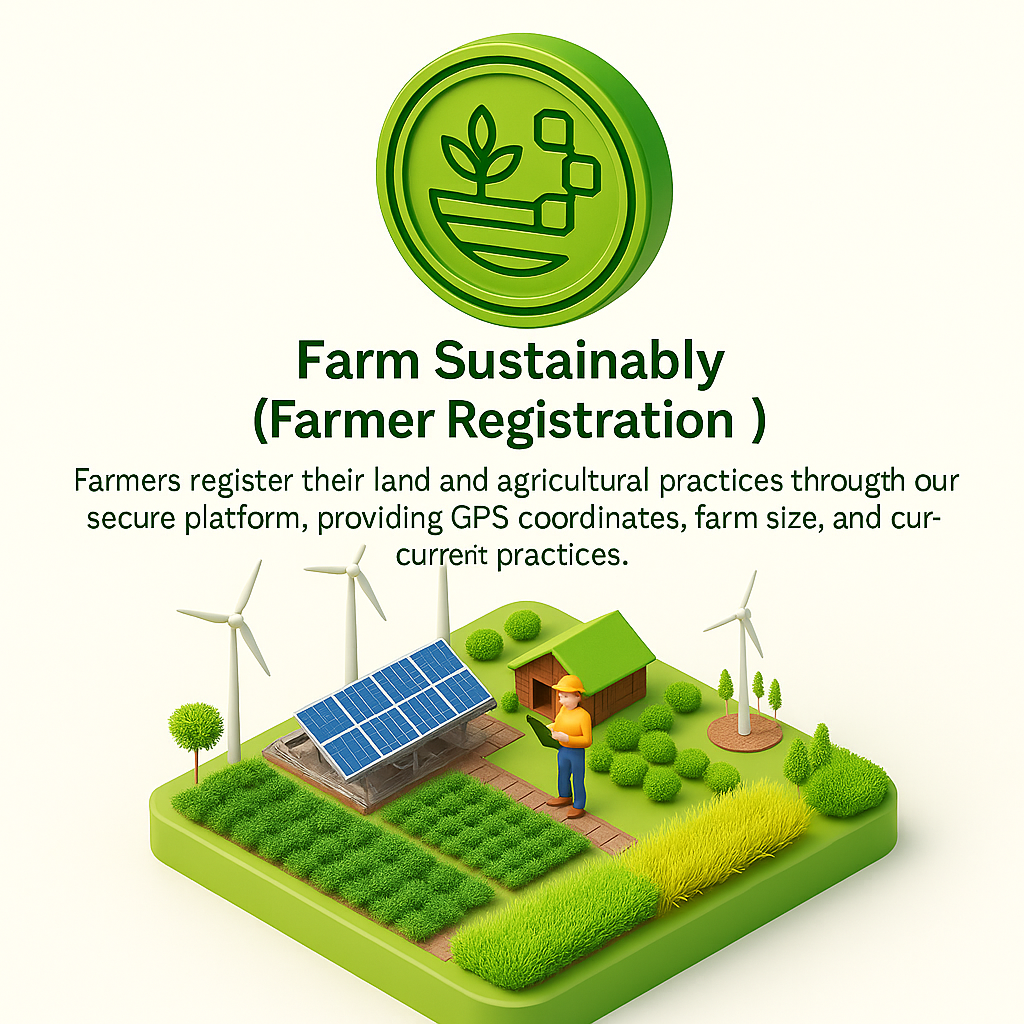
GreenCoin Edition is a blockchain-powered platform that rewards farmers for adopting climate-friendly farming practices such as agroforestry, composting, reduced tillage, and crop rotation.
The platform aims to:
- Allow farmers to register their farms and sustainable practices.
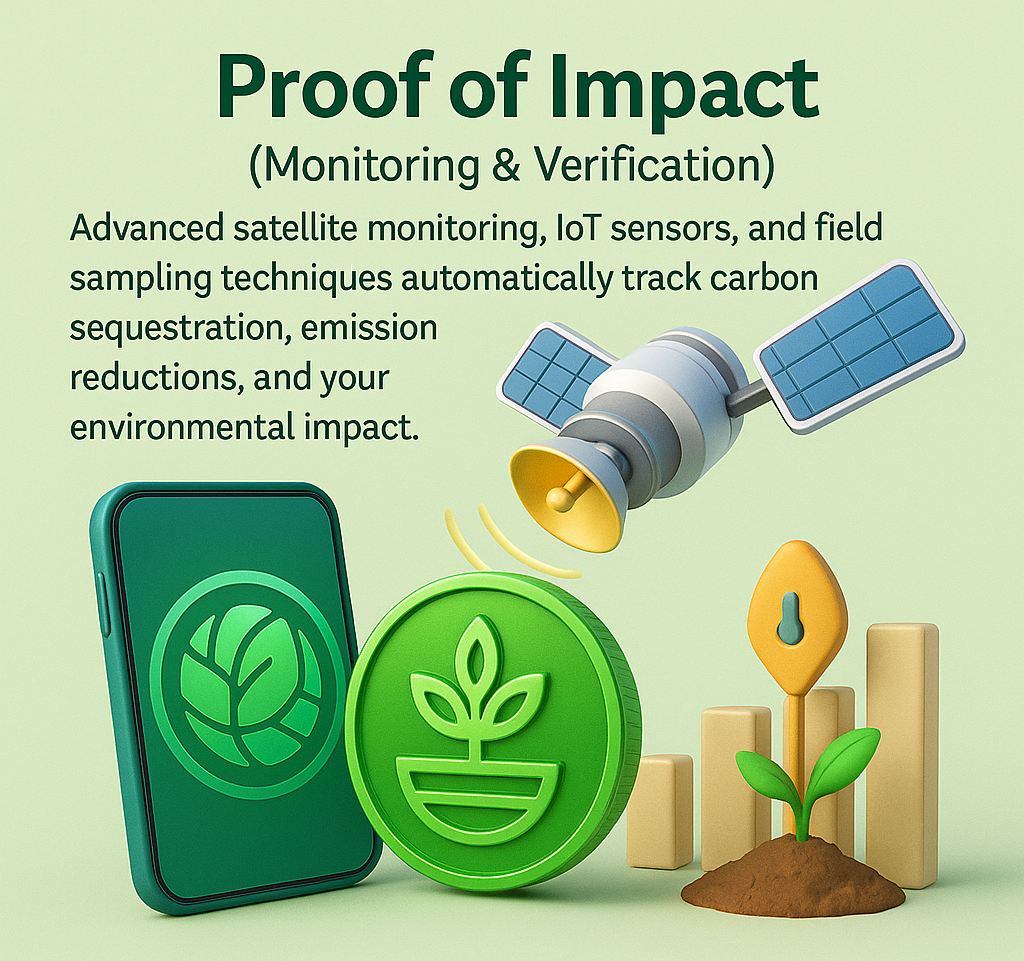
- Monitor environmental impact using satellite data, IoT and AI-supported MRV (Measurement, Reporting and Verification).
- Support the verification of carbon reductions.
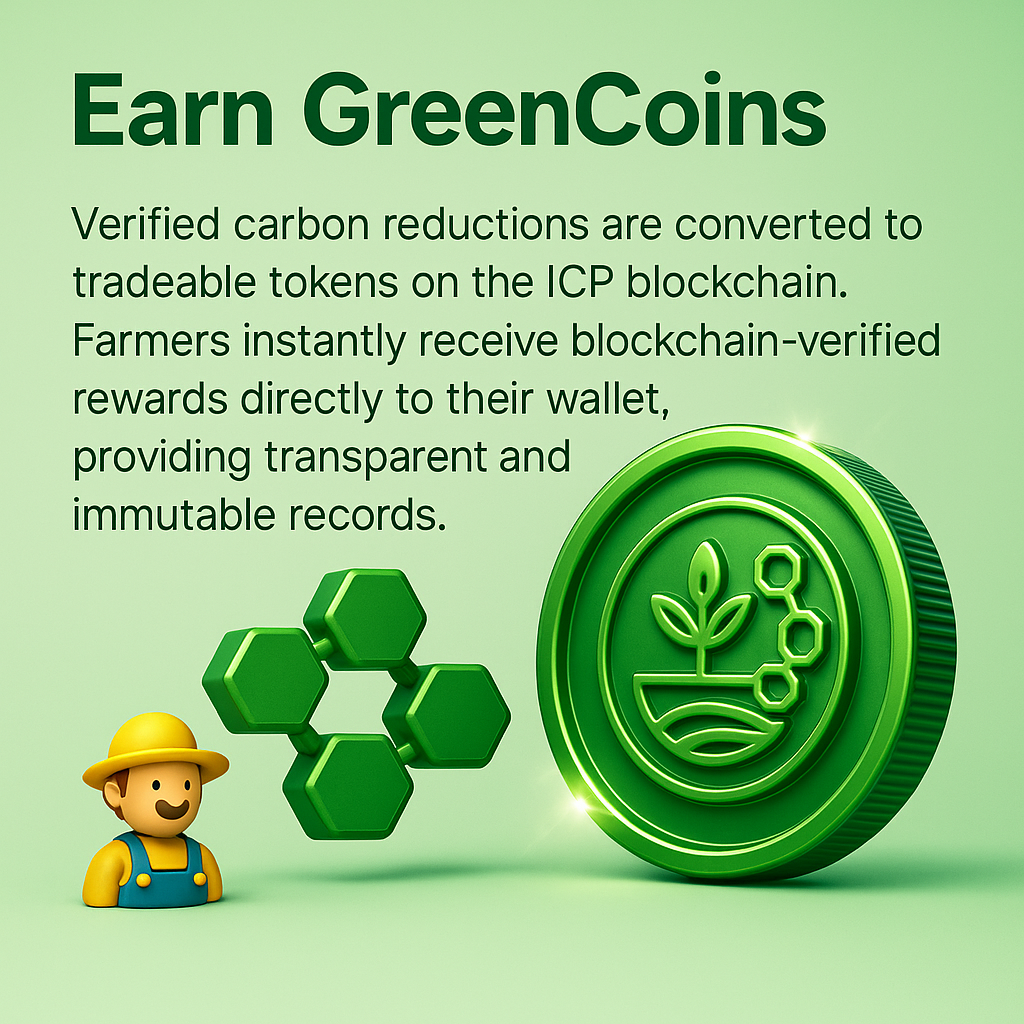
- Tokenize eligible, verified carbon credits into digital GreenCoins.
- Enable farmers to use their rewards for farm inputs, exchange them where supported, or reinvest in sustainable farming.
- Promote transparency and traceability through blockchain technology.
GreenCoin is designed to make climate finance more accessible while supporting environmental conservation and farmer livelihoods.
3. How we built it
We are building GreenCoin Edition on the Internet Computer Protocol (ICP), using blockchain technology to support transparent records and digital asset management.
Our approach brings together:
- Blockchain: For recording transactions, tracking tokenized assets and supporting transparent reward distribution.
- Satellite data: To support land monitoring and environmental impact assessment.
- IoT and AI: To support data collection, analysis and carbon measurement workflows.
- Farmer platform: For farm registration, sustainable practice tracking, impact updates and rewards.
- Verification workflow: To help ensure that only eligible and verified carbon reductions qualify for credit issuance.
The platform combines climate intelligence, digital infrastructure and farmer-centered design to connect real-world environmental action with financial opportunities.
4. Challenges we ran into
One of our biggest challenges has been connecting environmental science with blockchain technology in a way that is reliable, transparent and practical for farmers.
Some of the challenges include:
- Measuring carbon reductions accurately across different farms and farming practices.
- Accessing reliable environmental data, particularly in rural areas.
- Designing verification systems that reduce the risk of false or duplicated carbon claims.
- Making blockchain technology simple and accessible to farmers.
- Building a sustainable reward and carbon credit model that protects farmer interests.
- Addressing carbon market requirements, trust, transparency and long-term sustainability.
We have learned that tokenization alone is not enough. Credible measurement, verification and market integrity are essential.
5. Accomplishments that we're proud of
We are proud of developing a technology-driven solution that connects climate action, agriculture and financial inclusion.
Our accomplishments include:
- Building the GreenCoin Edition platform and its core concept around verified environmental impact.
- Developing a farmer-centered approach to sustainable practice registration and rewards.
- Advancing the integration of blockchain, climate intelligence and carbon credit tokenization.
- Growing our farmer onboarding efforts, with 1,000+ farmers onboarded, according to our current campaign figure.
- Creating a model that can support farmers in turning sustainable practices into measurable economic opportunities.
- Contributing to conversations around climate innovation and inclusive carbon markets in Africa.
6. What we learned
Through GreenCoin Edition, we learned that climate innovation requires more than technology. It requires trust, community participation and a clear understanding of the challenges farmers face.
We learned the importance of:
- Building solutions around the real needs of farmers.
- Ensuring environmental claims are backed by credible evidence.
- Making complex technology easy to use.
- Designing fair and transparent reward systems.
- Understanding carbon market standards and verification requirements.
- Building partnerships across agriculture, technology, climate science and finance.
Most importantly, we learned that farmers should not simply be participants in climate action; they should be among its beneficiaries.
7. What's next for GreenCoin Edition
Our next step is to strengthen GreenCoin Edition into a scalable and trusted climate finance platform for smallholder farmers across Africa.
Our priorities include:
- Strengthening MRV: Improve carbon measurement, monitoring and independent verification.
- Expanding farmer onboarding: Reach more farming communities and support local languages.
- Enhancing climate intelligence: Introduce more localized weather insights, predictive analytics and farm-level recommendations.
- Growing the GreenCoin ecosystem: Develop practical reward redemption, farm input partnerships and supported exchange opportunities.
- Building climate risk protection: Advance our GreenCoin Carbon Income Protection (GCIP) concept to explore protection for eligible expected carbon-credit income under clearly defined conditions.
- Expanding partnerships: Work with carbon project developers, verification bodies, agricultural organizations, investors and climate institutions.
- Scaling responsibly: Strengthen governance, regulatory compliance, carbon market integrity and long-term sustainability.
Our vision: A future where every verified climate action creates value, every farmer has an opportunity to participate in climate finance, and sustainable farming becomes an engine for environmental and economic growth.
Built With
- blockchain
- express.js
- icp
- node.js
- postgresql
- react
- tensorflow

Log in or sign up for Devpost to join the conversation.