-
-
tab
-
tab
-
tab
-
tab
-

test link

Inspiration
Climate change is not only a global problem but also a local one. Communities often lack accessible tools to act together, and young people rarely get engaging ways to learn about sustainability. GreenCity was inspired by the idea of turning local ecological activities into a platform where citizens, organizations, and governments work together — supported by AI to make the experience interactive, educational, and impactful.
In Australia, this challenge is especially relevant. Rural and regional towns often face unique environmental pressures: bushfires, droughts, and waste management difficulties. At the same time, many communities and First Nations groups already lead strong ecological initiatives. GreenCity seeks to amplify and connect these efforts by giving Australians a tool to coordinate, learn, and act together on sustainability.
What it does
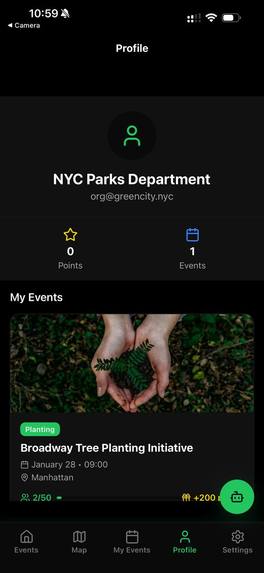
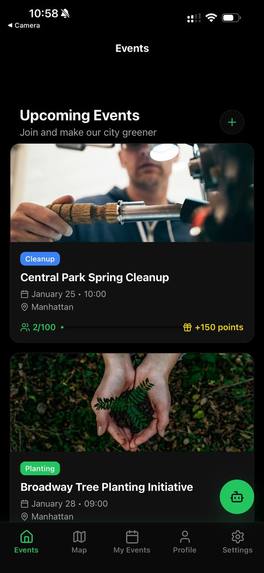
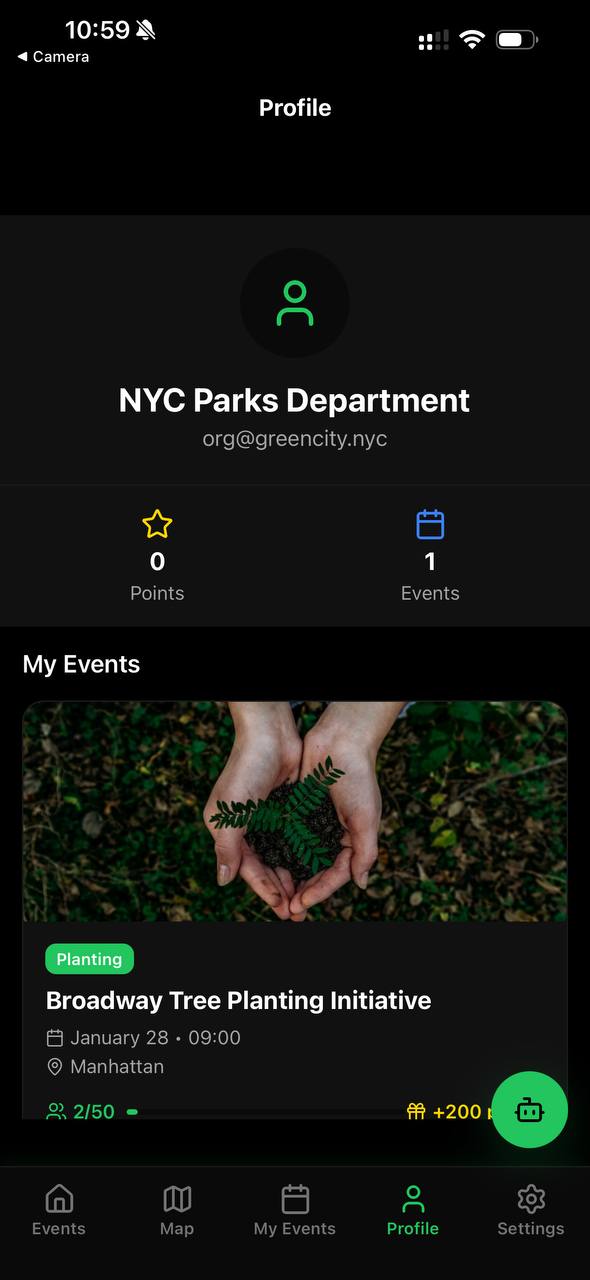
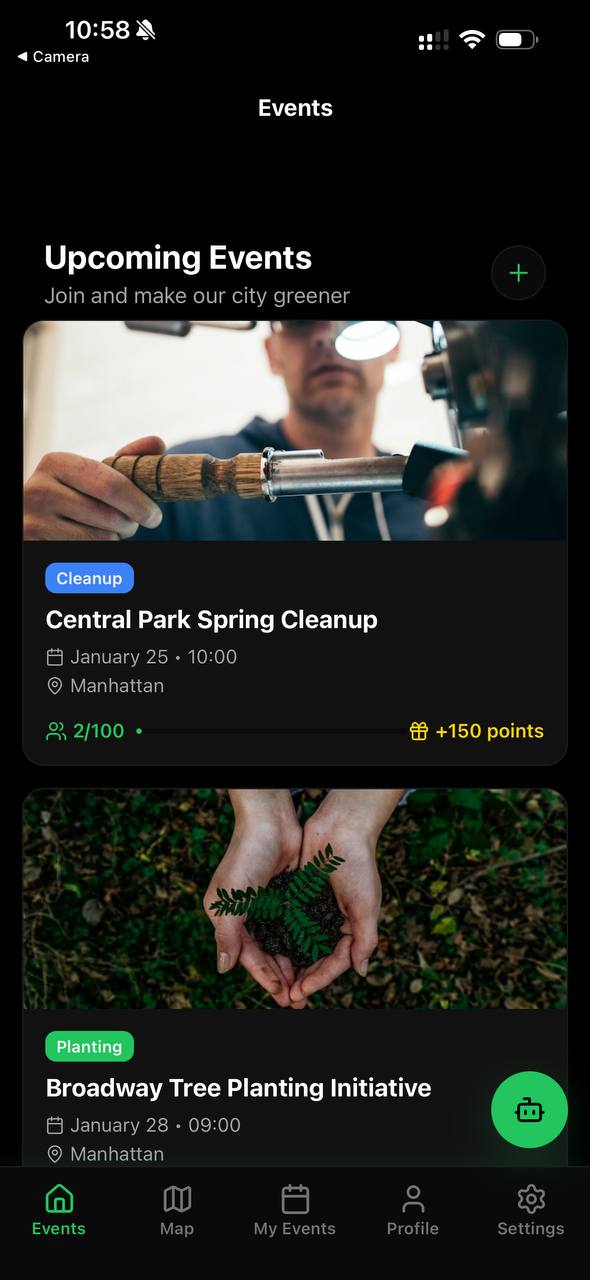
GreenCity is a mobile app where citizens can join ecological events, receive rewards, and propose their own initiatives.
- Participants register, track their events, and earn tokens, coupons, or recognition for their contributions.
- Organizers (NGOs, foundations, or local governments) can host events, set prizes, and approve citizen proposals.
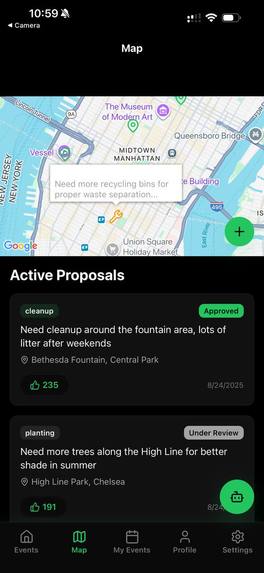
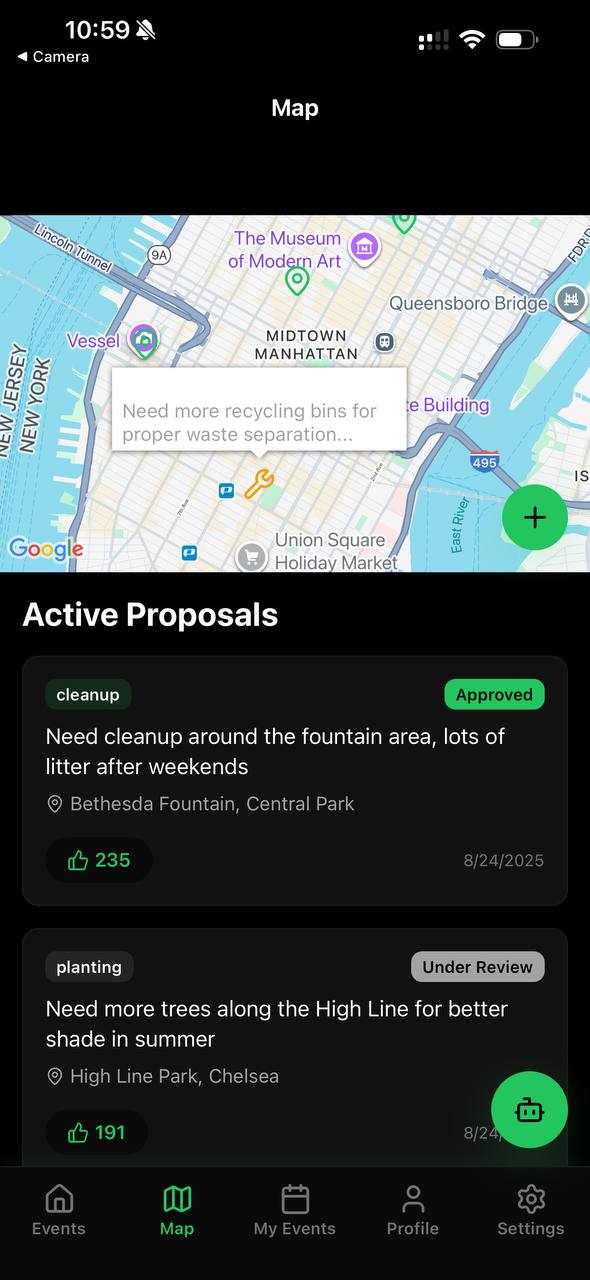
- A map interface allows citizens to suggest ideas and vote on initiatives, creating a direct line between communities and local authorities.
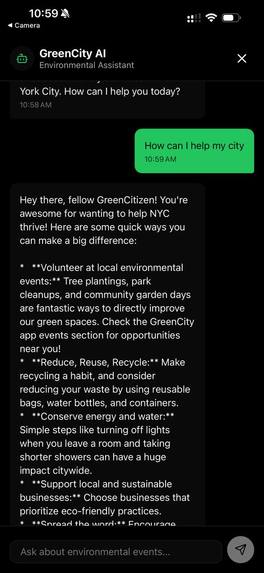
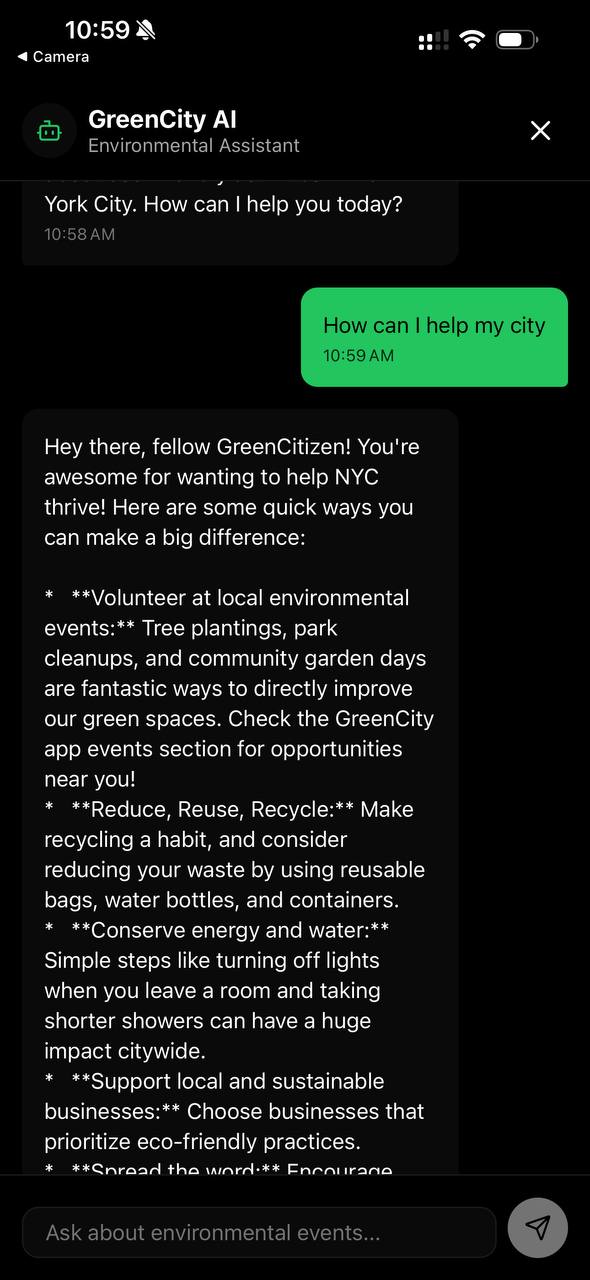
- A chatbot powered by the Gemini API makes ecology more interactive: users can discuss events, ask about sustainability, or explore how to contribute. This is especially relevant for engaging children and young people in climate literacy.
For Australia, this means:
- Local councils could use GreenCity to promote clean-up days or bushfire recovery volunteering.
- Schools and youth programs can integrate eco-quests into education, making sustainability fun and rewarding.
- Rural communities gain a central hub for proposing and coordinating initiatives, strengthening civic bonds.
The result is a civic-tech platform that combines participation, education, and rewards into one ecosystem.
How we built it
The prototype was built using React Native with Expo for the mobile frontend, MongoDB for data storage, and a Node.js backend. The chatbot is integrated through the Gemini API. The app features a minimalist black-and-green UI that emphasizes clarity and accessibility. Development was accelerated with Kiro AI, which helped debug and optimize code by generating hooks and suggesting cleaner workflows.
How to test it
GreenCity is currently available as a mobile demo. To try it out:
- Open the Expo Go app on iOS or Android.
- Scan the provided QR code in our submission.
- Loading may take some time — if it times out, just retry until resources are fully loaded.
The demo includes both participant and organizer accounts, so you can explore the full flow of creating, joining, and voting on events.
Challenges we ran into
- Integrating multiple account types (participants and organizers) with distinct workflows.
- Designing a map-based voting system that feels intuitive on mobile.
- Ensuring scalability for both community-driven ideas and organizer moderation.
- Creating an engaging experience for youth without losing focus on real ecological impact.
- Localizing impact: tailoring global climate-tech tools to Australian regional needs like bushfire resilience and waste reduction.
Accomplishments that we're proud of
- Built a fully functional prototype with user and organizer flows, event creation, map proposals, and rewards.
- Designed a chatbot that brings ecological education directly into the user experience.
- Created a civic-tech platform that empowers citizens to not just participate but also influence local ecological decisions.
- Developed a clean, modern UI that makes the app feel accessible to all ages.
- Connected the concept to Australian contexts, showing how tech can support rural and regional communities.
What we learned
We learned how powerful AI can be when integrated not only into the development process but also into user experiences. Chatbots can make climate literacy interactive, while AI-assisted coding tools like Kiro save time and improve stability. We also learned the importance of balancing gamification and civic responsibility in order to keep people engaged.
From the Australian perspective, we learned that technology must adapt to local realities: regional communities have strong traditions of volunteering and ecological action, and digital tools should amplify — not replace — those cultural strengths.
What's next for GREENCITY APP
- Scaling the platform from one city to global communities.
- Partnering with local governments, NGOs, and sponsors to bring real rewards and impact.
- Expanding AI features, such as automated attendance verification and personalized eco-quests for young people.
- Integrating datasets on carbon footprint and pollution to make user impact measurable.
- Growing GreenCity into a hub where education, action, and civic participation meet to fight climate change together.
- Exploring partnerships in Australia with Landcare, rural councils, and schools to run pilot programs that demonstrate measurable community benefit.



Log in or sign up for Devpost to join the conversation.