-
-
Overview_1
-
Overview_2
-
Transportation & Routing_1
-
Transportation & Routing_2
-
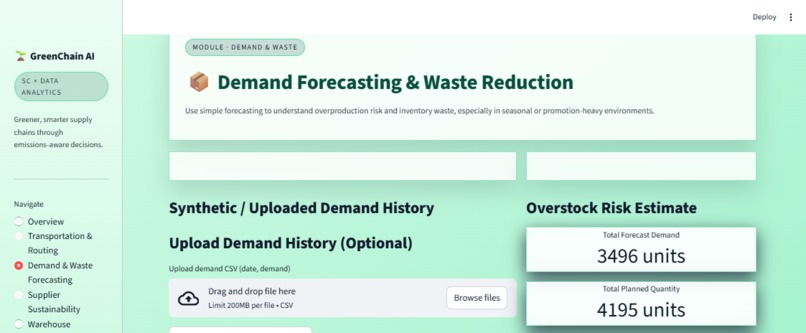
Demand & Waste Forecasting_1
-
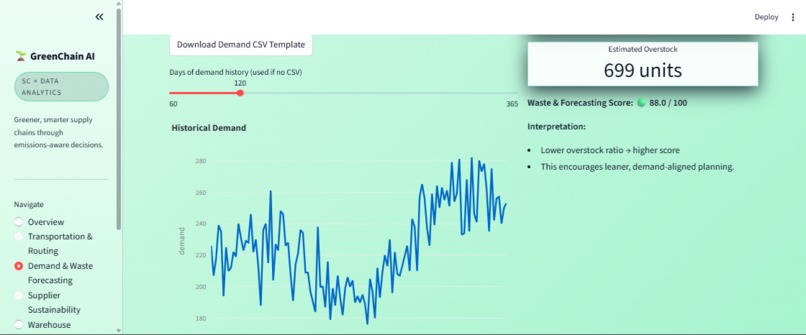
Demand & Waste Forecasting_2
-
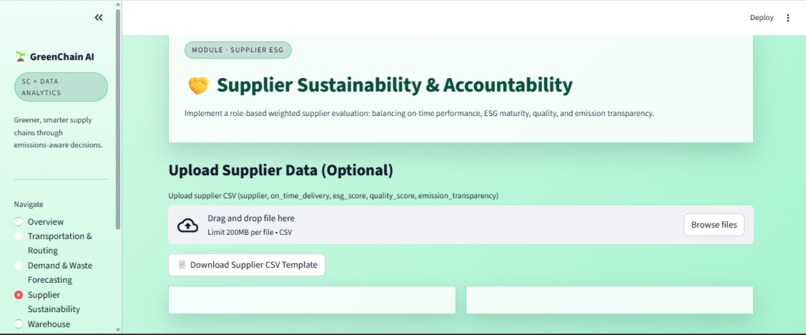
Supplier Sustainability_1
-
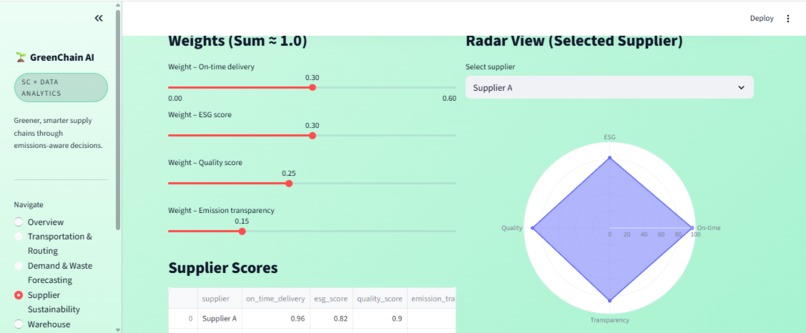
Supplier Sustainability_2
-
Warehouse Energy & Ops_1
-
Warehouse Energy & Ops_2
-
Download Report_1
-
Download Report_2
Inspiration
Coming from the decade of supply chain experience, and working as an EDI Project manager for a manufacturing company, I can totally relate to how difficult it is to manage environmental compliance. During my tenure, I learned elements of Six Sigma principles, which emphasize reducing, reusing, and recycling industrial waste. I clearly see many opportunities where these principles can be applied to improve environmental compliance, carbon-footprint tracking, and sustainability reporting. I had worked in production support, where we constantly troubleshoot issues, and that experience made me learn the pain points in different parts of the supply chain face on a day-to-day basis, and most organizations find this difficult to handle. The experience I gained over these many years gave me the confidence to try this application and build it for a societal cause as well, with the intention that the industry can benefit. In the current world, most of the tools that we have are either too complex, expensive, or disconnected from real-time business workflows. We wanted to build something simple, intelligent, and accessible, and an AI-powered assistant that helps teams make greener decisions effortlessly.
What it does
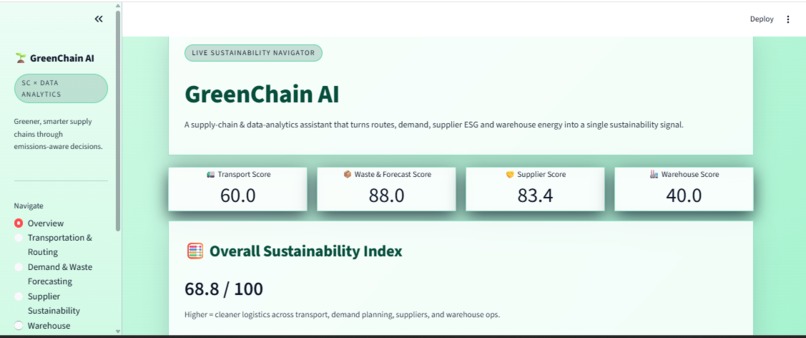
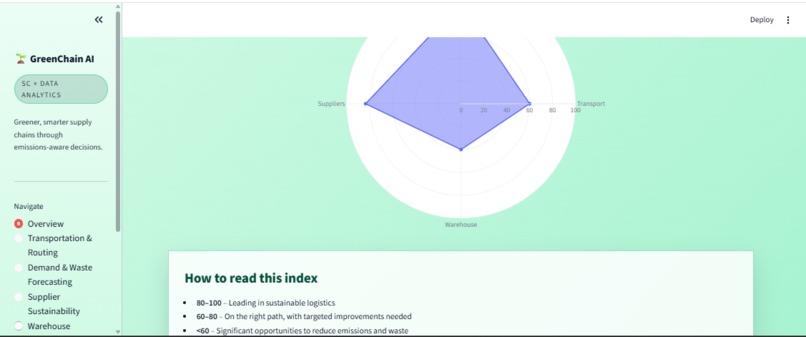
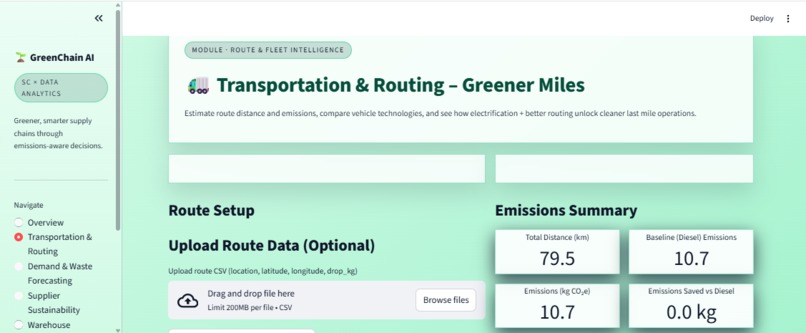
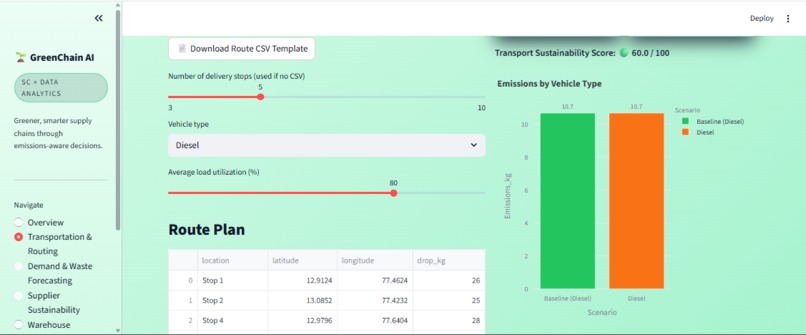
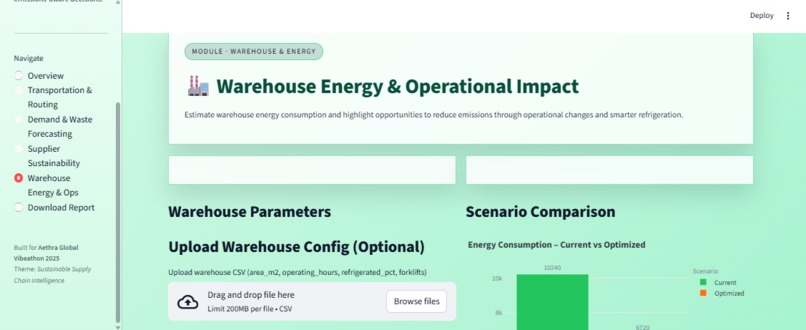
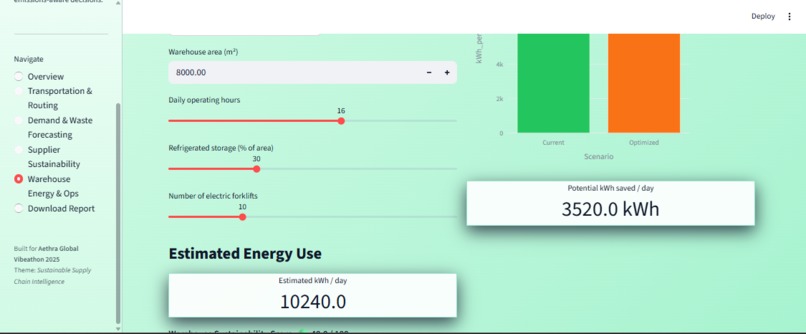
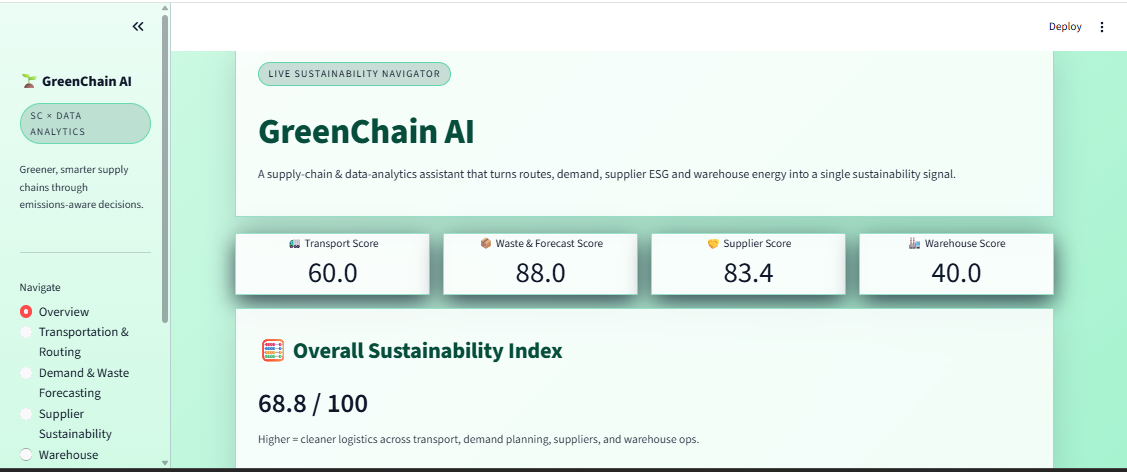
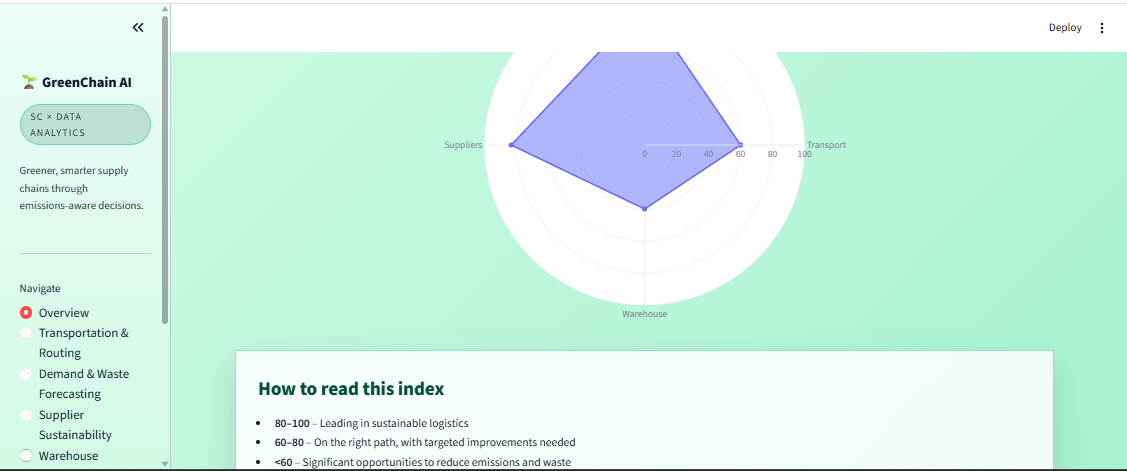
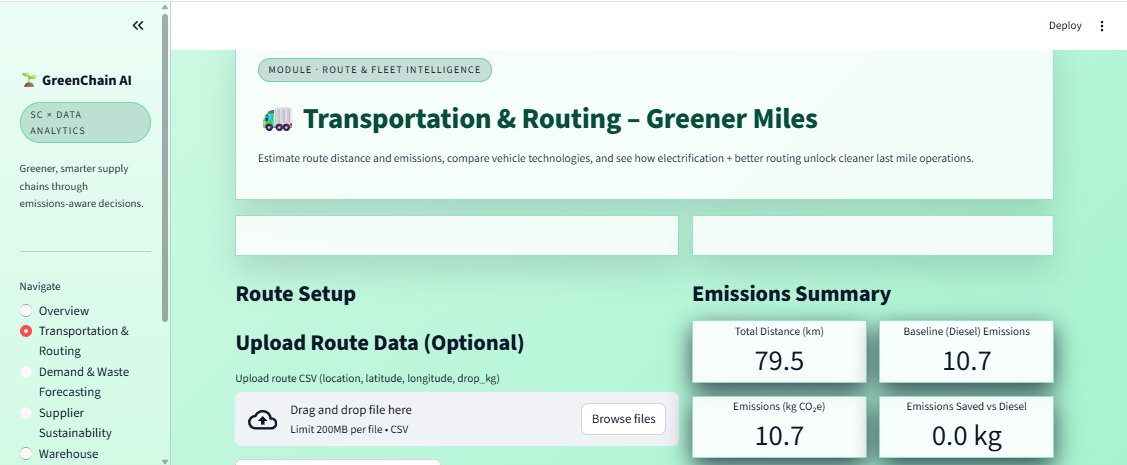
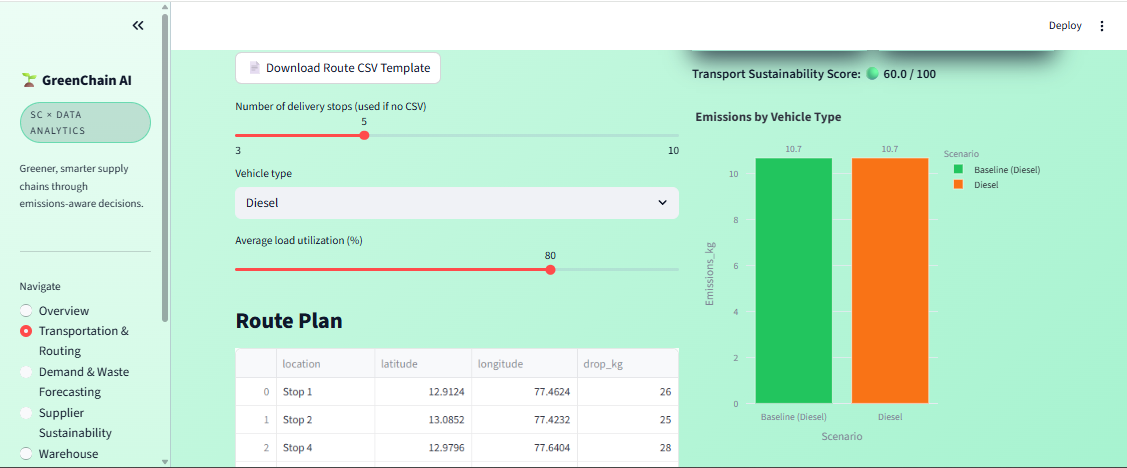
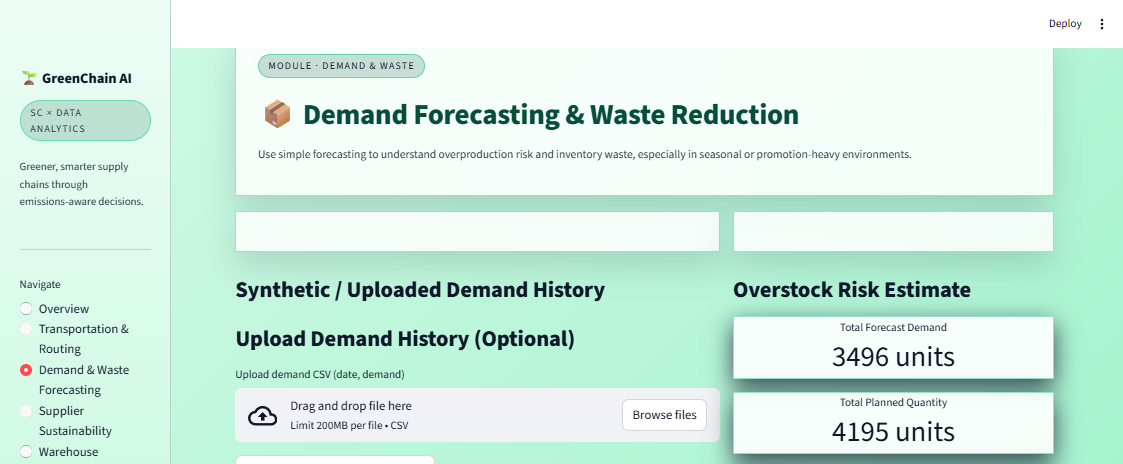
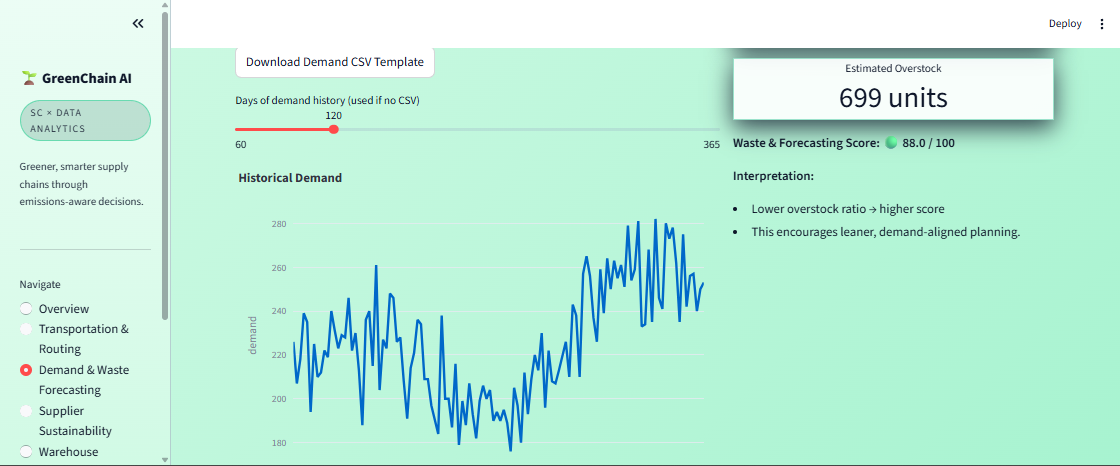
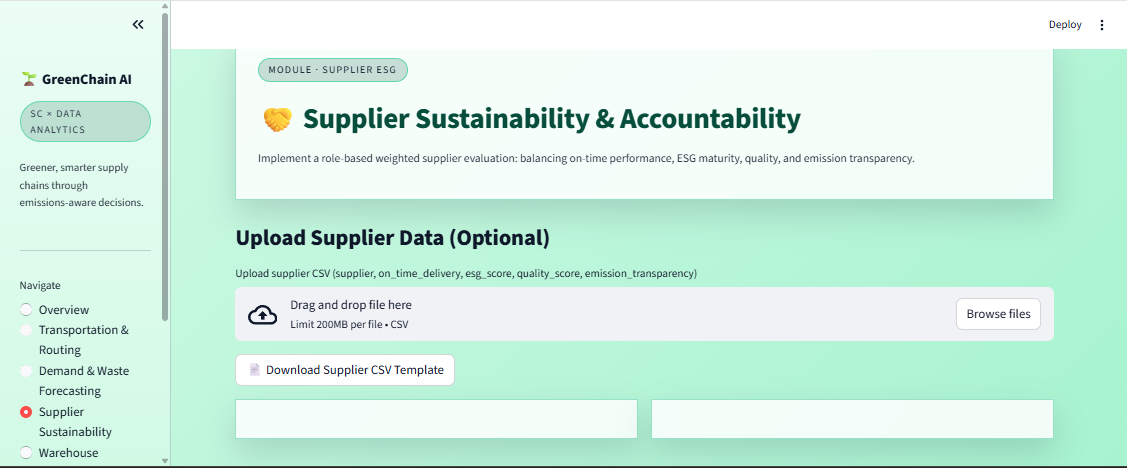
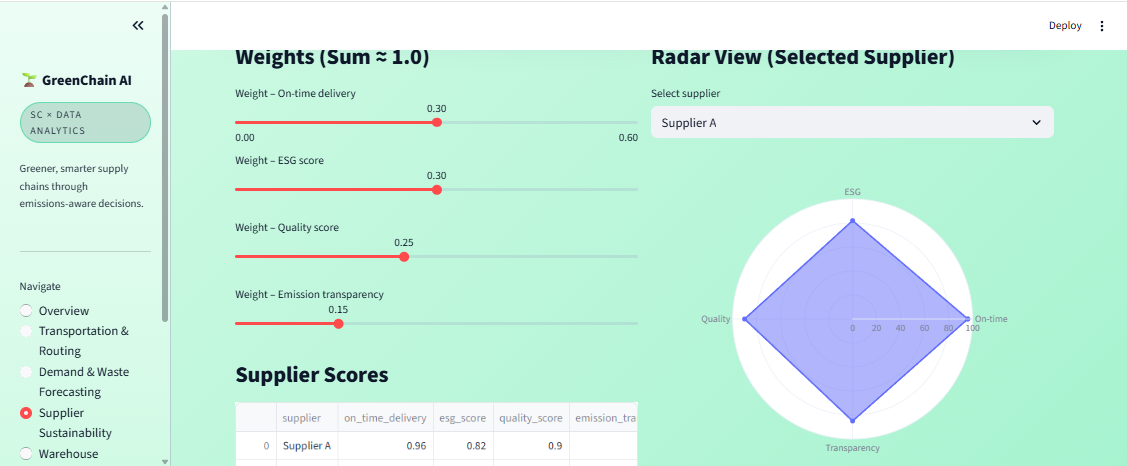
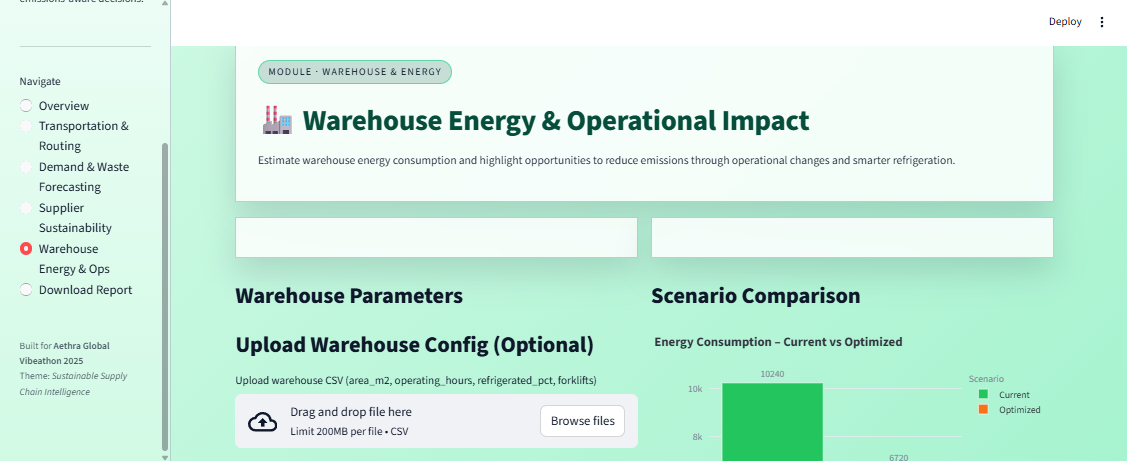
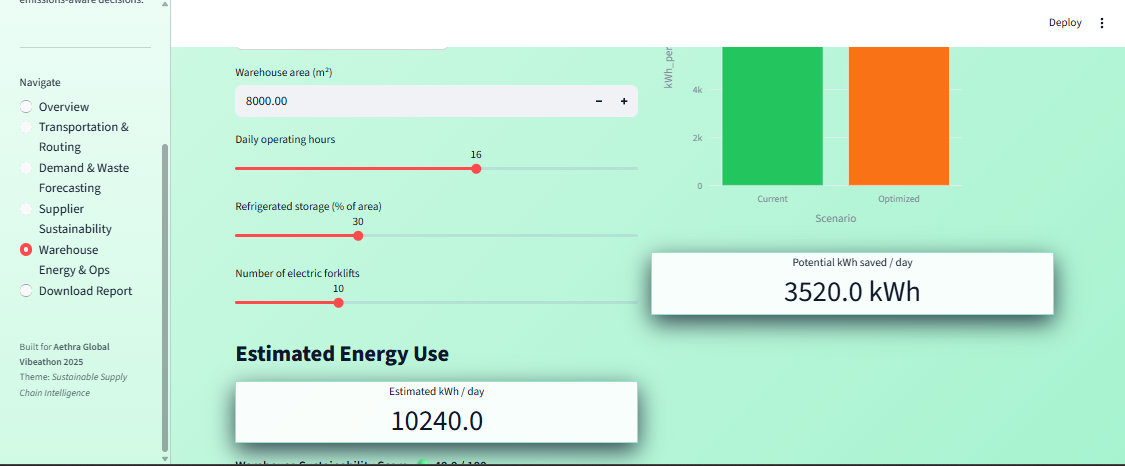
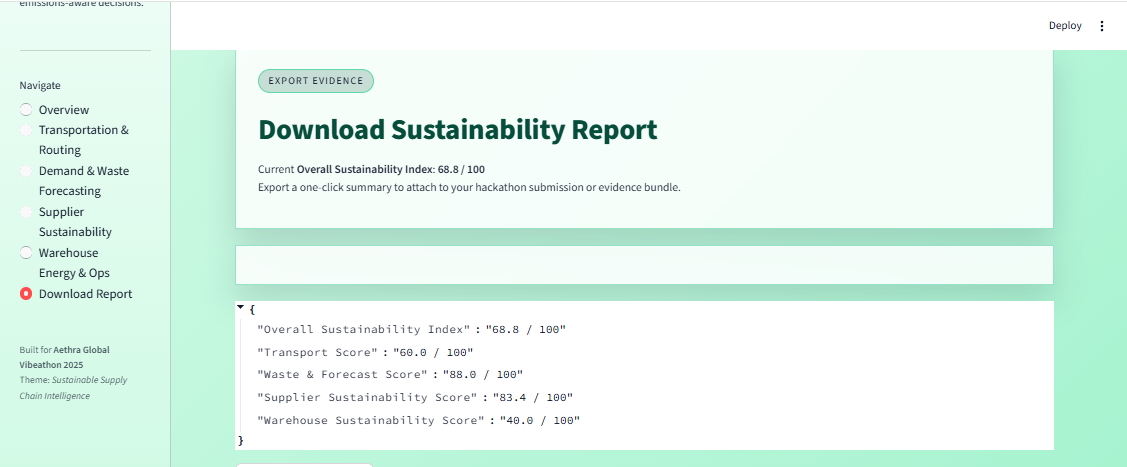
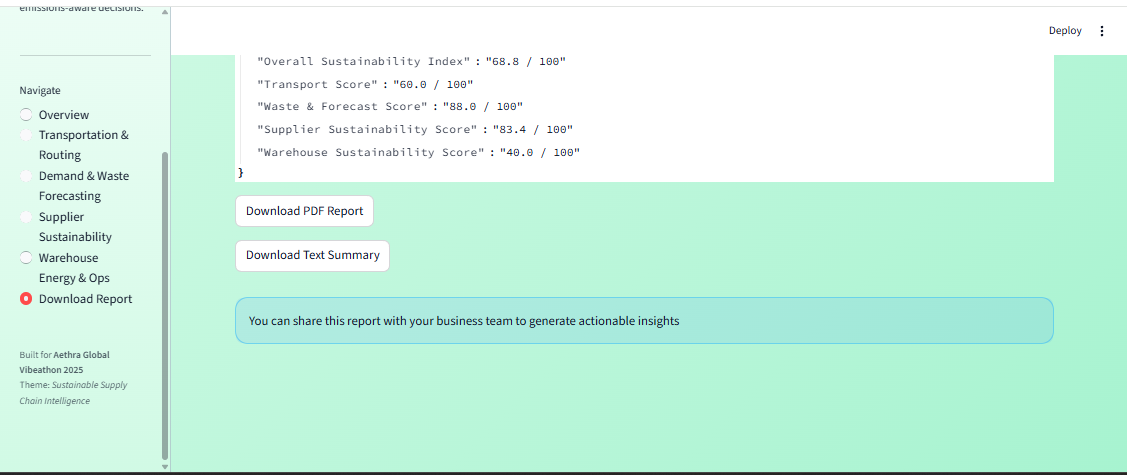
Greenchain AI is an intelligent sustainability partner that helps organizations analyze and classify sustainability-related documents, generate carbon-impact insights from raw data, and, at the same time, provide AI-driven recommendations for greener operations. It also summarizes policies, compliance requirements, and ESG guidelines for the users. Greenchain AI has 4 modules, excluding the overview and report module. The first module is Transportation & Routing, where it estimates route distance and emissions, compares vehicle technologies, and sees how electrification + better routing unlock cleaner last-mile operations. It has an emission summary, route plans. The second module is Demand and Waste Forecasting, which uses simple forecasting to understand overproduction risk and inventory waste, especially in seasonal or promotion-heavy environments. The third module is Supplier sustainability and accountability, which implements a role-based weighted supplier evaluation: balancing on-time performance, ESG maturity, quality, and emission transparency. The fourth module is Warehouse Energy & Operational Impact, which estimates warehouse energy consumption and highlights opportunities to reduce emissions through operational changes and smarter refrigeration. All 4 modules have the option of uploading the data as CSV specific to the module they are in, like route data or demand history or supplier data, or warehouse config, and it has a template that explains what the expected format is to upload to get accurate results.
How we built it
This app was built using Python as core language and Streamlit for interactive UI experience. This does include libraries like pandas, numpy for calculations, and plotly for charts. I have also used Gemini API for natural language understanding, summarization, and insights.
Challenges we ran into
Pushing the app to production had issues with the version compatibility. Python 3.13 package was not compatible with Streamlit. I had to upgrade the requirements.txt to the most premium version of everything to make it work in production. It took more time than I thought. Exploring the theme and background color and tweaking them took sometime.
Accomplishments that we're proud of
Devpost Aethra's Vibethon allowed me to build and complete a fully functional app from scratch, though I have built a lot of projects during my college coursework, but this one is very special as it was something that I tried from scratch with no guidance from my professor but the knowledge and hands-on we gained via assignments and rigorous projects helped me to achieve this today. I am also proud that the app I built supports a societal cause and contributes to a greener future.
What we learned
Deployment realities, specifically around Python versioning and Streamlit. It tested my patience, yet I learnt to solve the issue and get my app running. Building an app is not just writing code and deploying it in production, but also understanding the importance of the UI/UX experience that it gives to the users.
What's next for Greenchain AI
I have a few enhancements planned on my mind, like integrating automated carbon-footprint calculators using real-world emissions factors, and adding Excel and PDF filetypes other than CSV. Even email ingestion capabilities can be added. I could also add dashboards around ESG metrics tracking and reporting. Cloud deployment is another excellent option, so that it gets accessible for organizations and individuals.

Log in or sign up for Devpost to join the conversation.