-
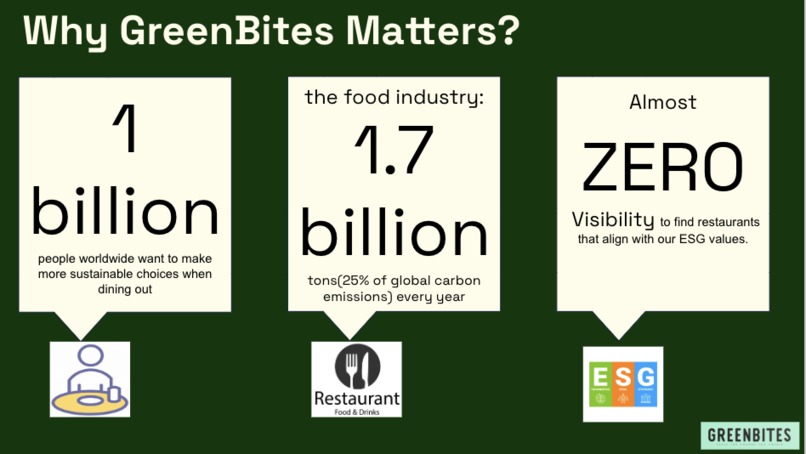
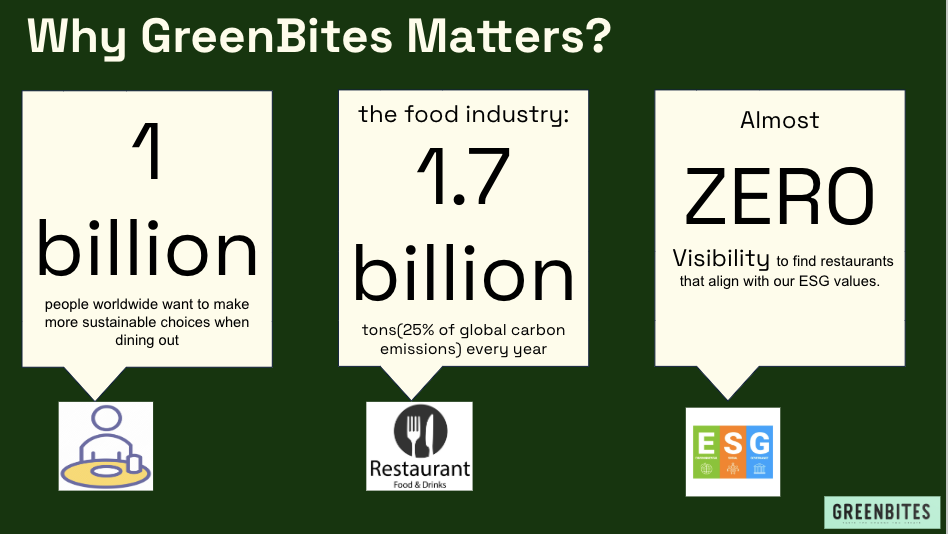
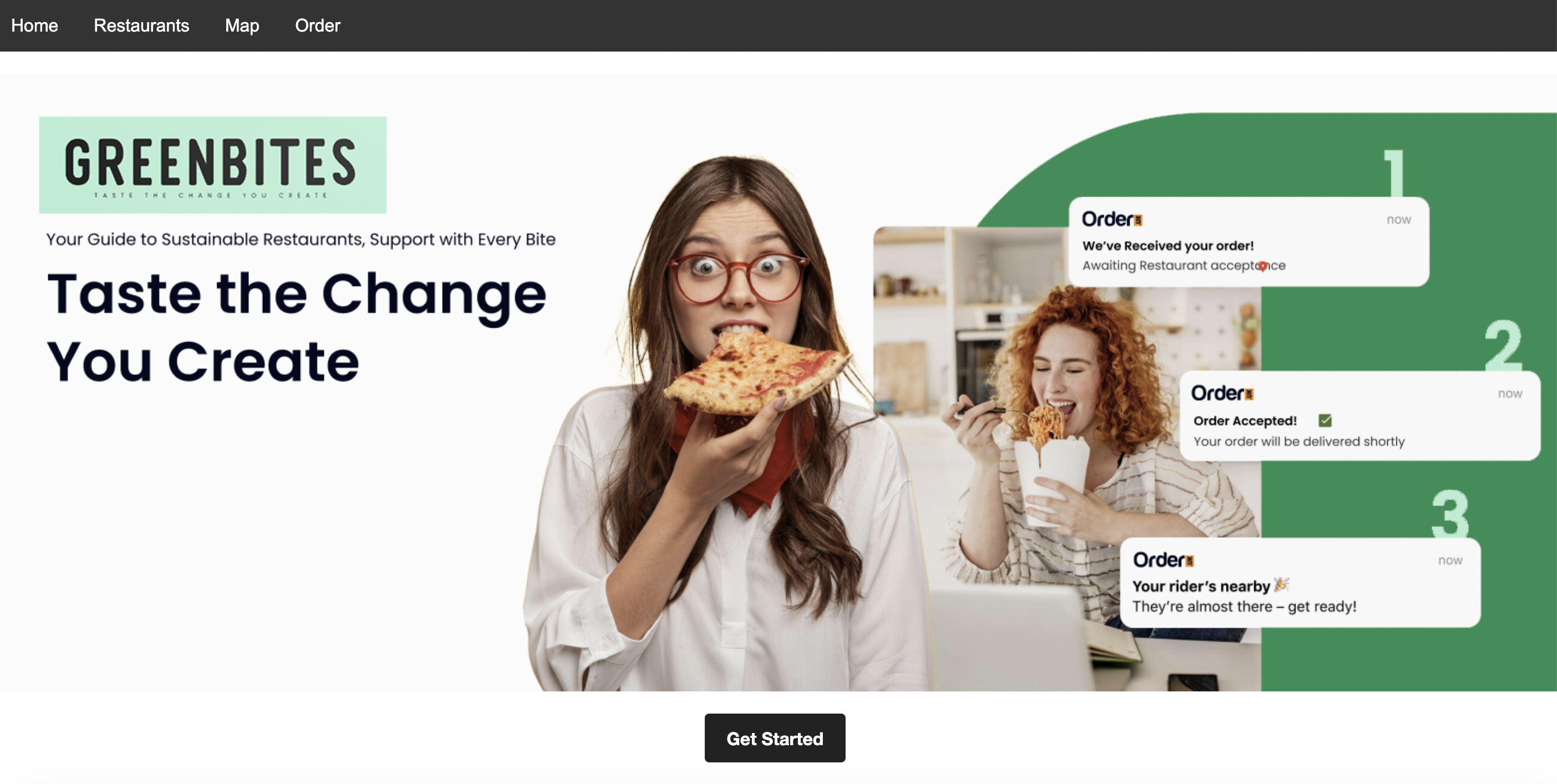
Why GreenBites Matters?
-
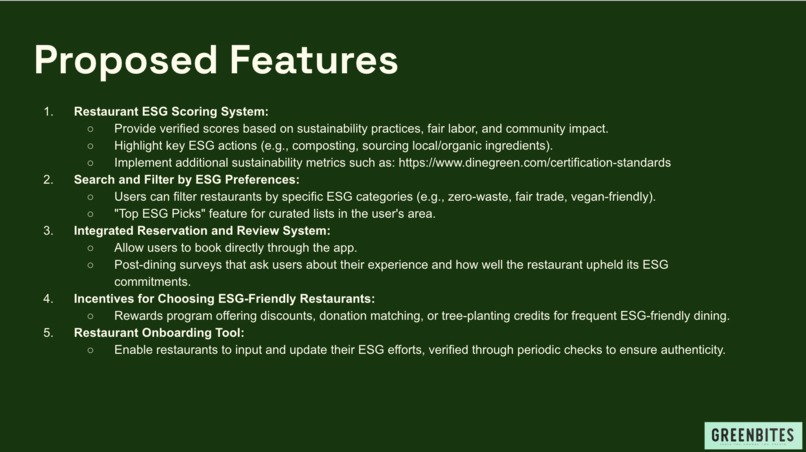
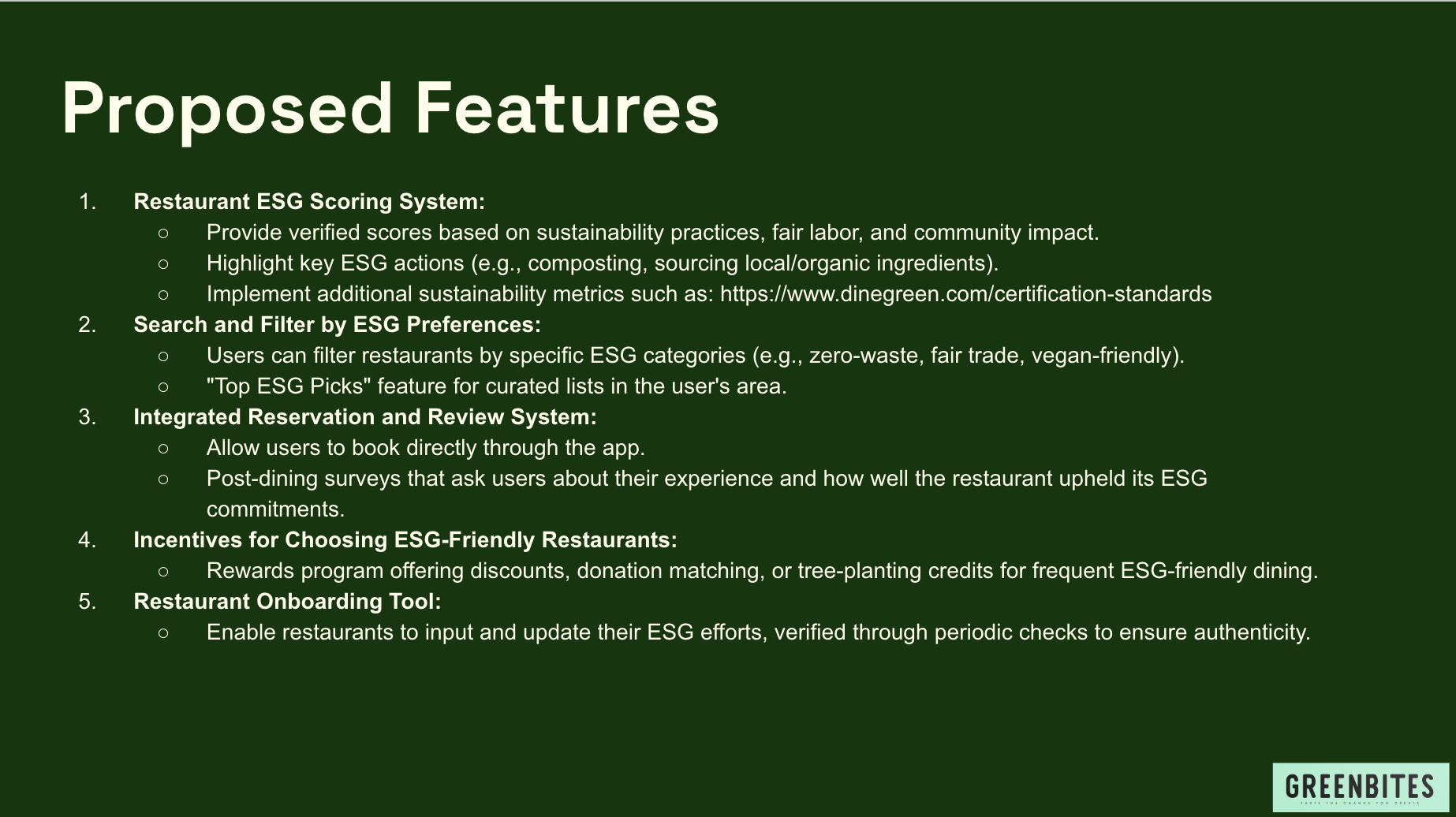
Proposed Features
-
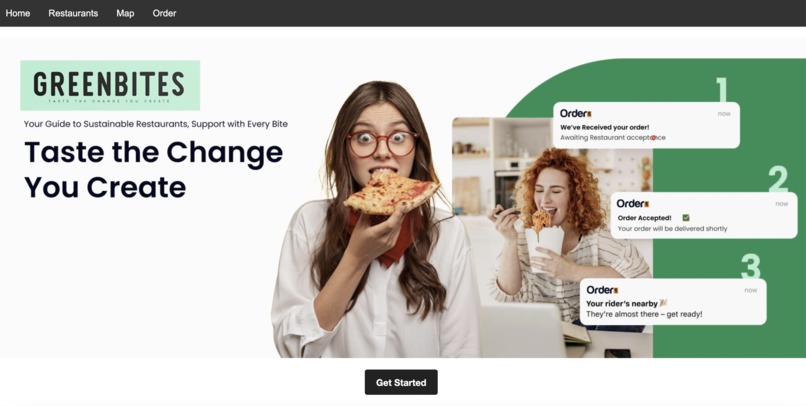
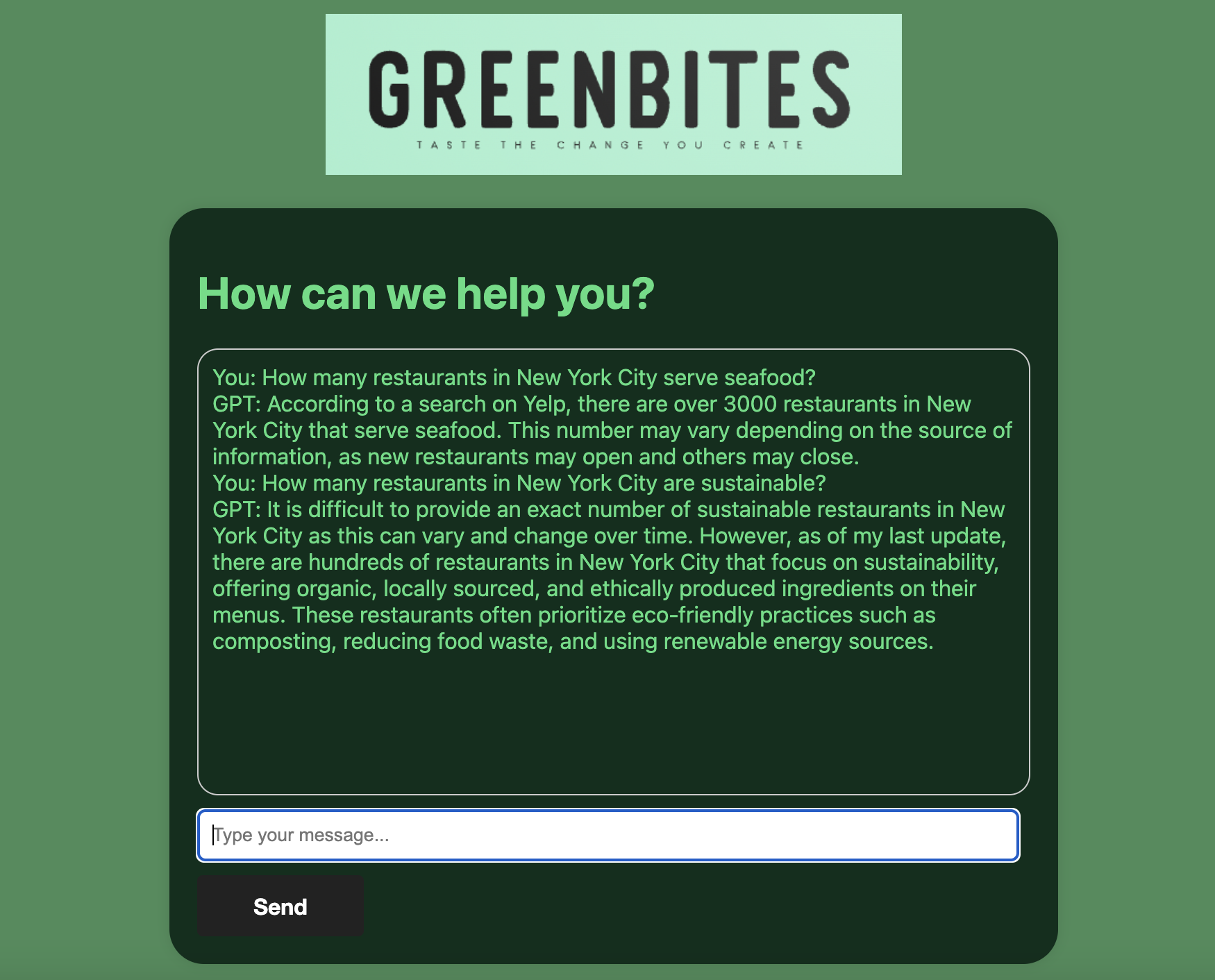
AI Prompt
-
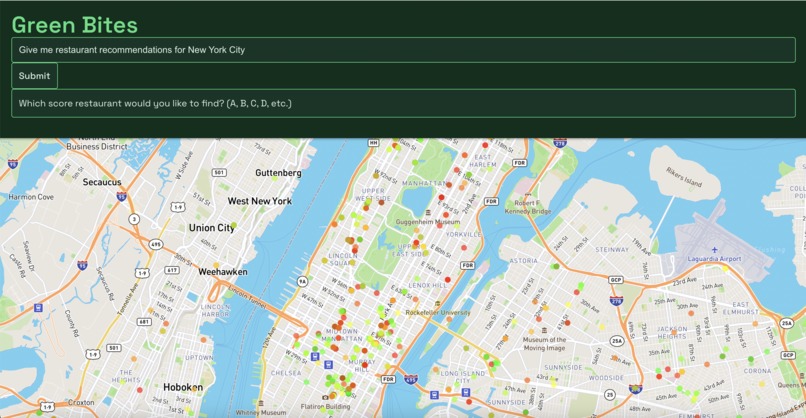
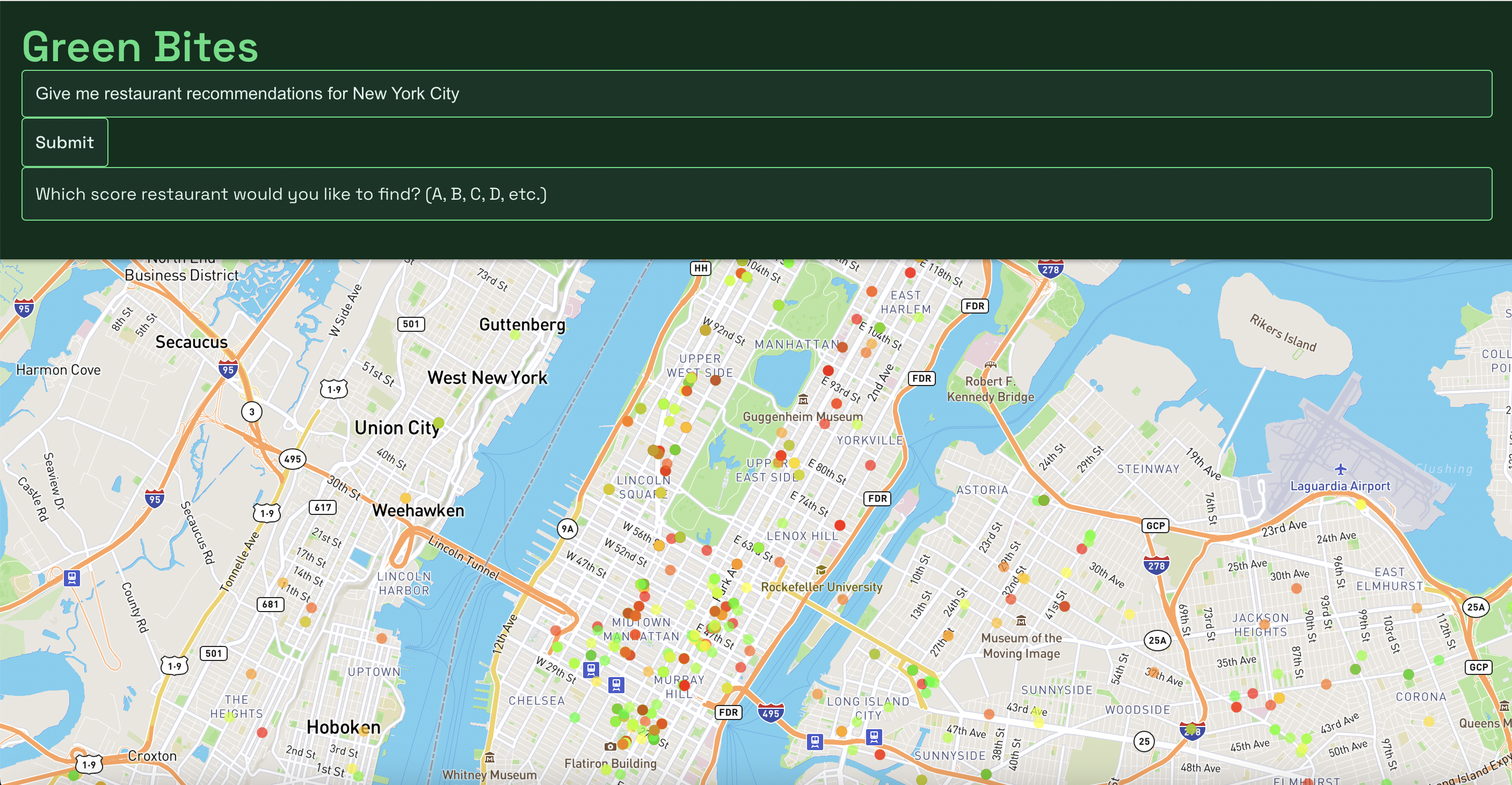
Interactive Map
-
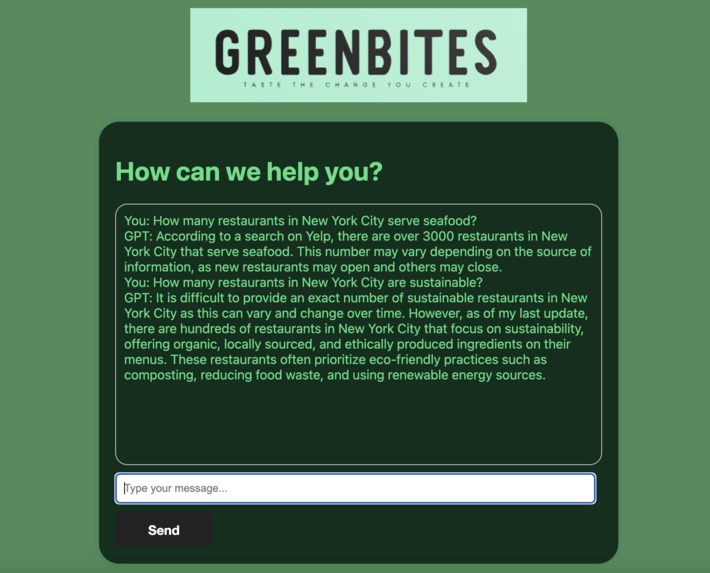
FAQs
-
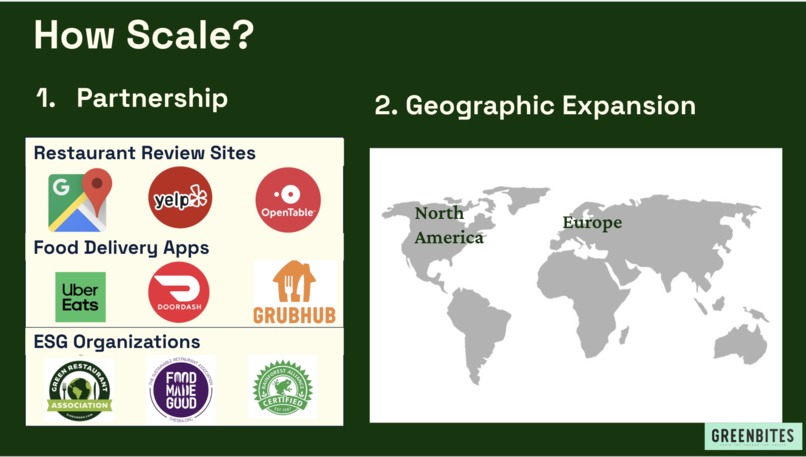
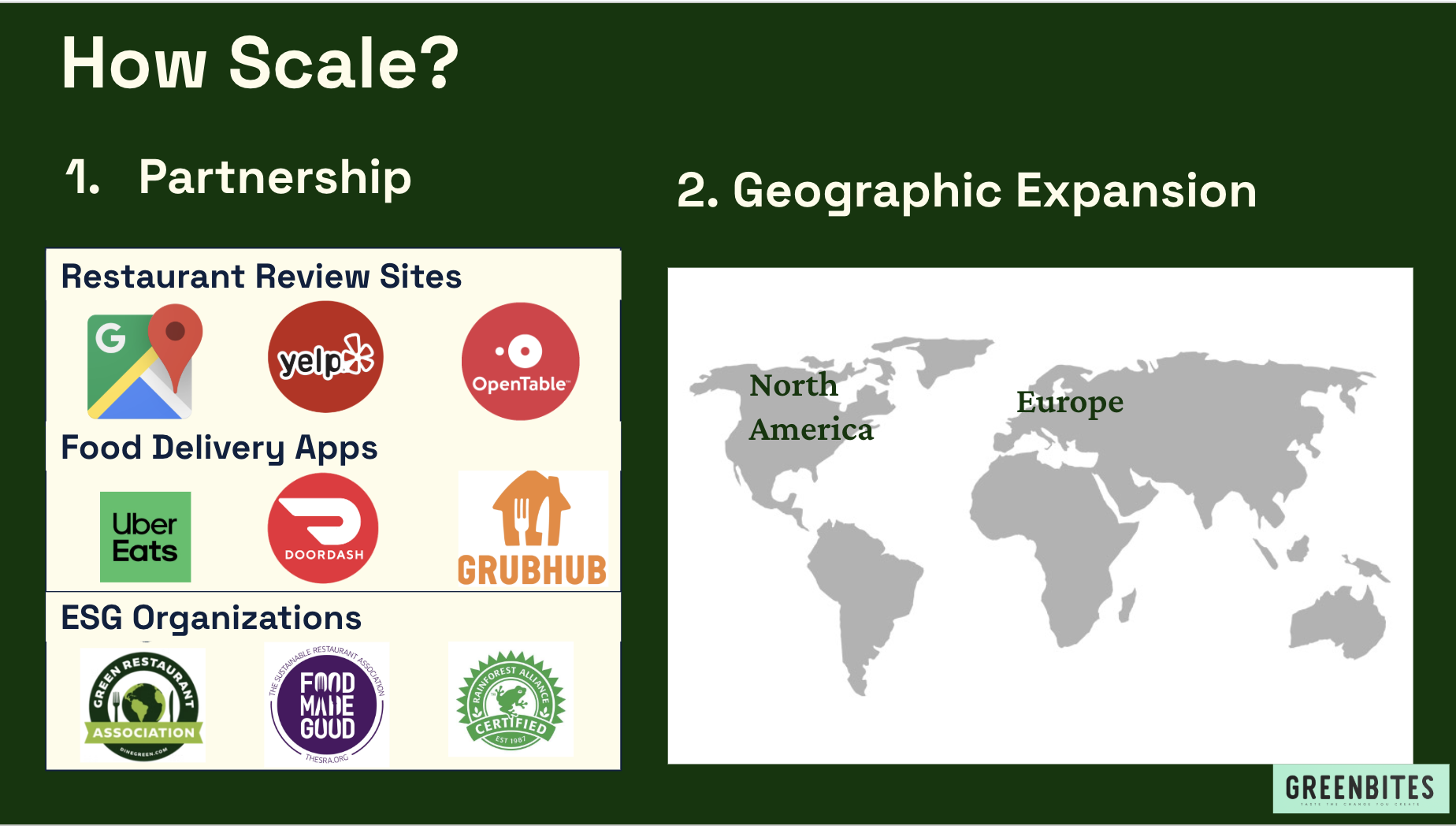
How Scale?
Dataset [link] https://opendata.cityofnewyork.us/ Goal Design a B2C website that empowers ESG-sensitive consumers to make informed dining choices by highlighting restaurants with strong environmental, social, and governance (ESG) practices.
User Types
- Restaurants Restaurants showcasing their ESG practices to attract like-minded customers.
- Consumers ESG-sensitive diners seeking to support sustainable and ethical dining establishments
Pain Points Consumers lack transparency and easily accessible information about restaurants’ ESG practices. Consumers want a seamless way to find and book ESG-friendly restaurants without spending excessive time researching. Restaurants struggle to highlight their sustainability efforts to a targeted audience.
User Stories As a restaurant, I want to showcase my ESG efforts, so I can attract environmentally and socially conscious customers. As an ESG-sensitive diner, I want to discover restaurants that align with my values, so I can make ethical dining choices.
Proposed Features Restaurant ESG Scoring System: Provide verified scores based on sustainability practices, fair labor, and community impact. Highlight key ESG actions (e.g., composting, sourcing local/organic ingredients). Search and Filter by ESG Preferences: Users can filter restaurants by specific ESG categories (e.g., zero-waste, fair trade, vegan-friendly). "Top ESG Picks" feature for curated lists in the user's area. Integrated Reservation and Review System: Allow users to book directly through the app. Post-dining surveys that ask users about their experience and how well the restaurant upheld its ESG commitments. Incentives for Choosing ESG-Friendly Restaurants: Rewards program offering discounts, donation matching, or tree-planting credits for frequent ESG-friendly dining. Restaurant Onboarding Tool: Enable restaurants to input and update their ESG efforts, verified through periodic checks to ensure authenticity.
Differentiators A transparent and verified ESG scoring model builds trust with users. Rewards and incentives encourage adoption and repeat use, fostering a sense of impact for consumers. Scalable design allows the app to expand into global markets with region-specific ESG benchmarks.
Adoption Strategy Partner with well-known ESG organizations for data validation and credibility. Leverage targeted marketing campaigns emphasizing how the app helps users "dine ethically and make a difference." Build a strong rewards program to encourage initial downloads and ongoing engagement.
Adoption Metrics Adoption Rate: Percentage of target users who download and regularly use the app within the first 6 months. Customer Satisfaction (CSAT): Measured through post-dining feedback on ease of use and restaurant recommendations. Retention Rate: Percentage of users who continue using the app after their first few interactions.
Built With
- api
- chatgpt
- react


Log in or sign up for Devpost to join the conversation.