-
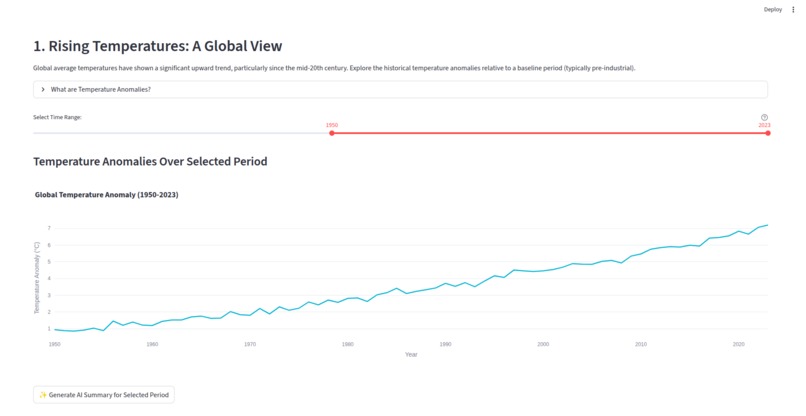
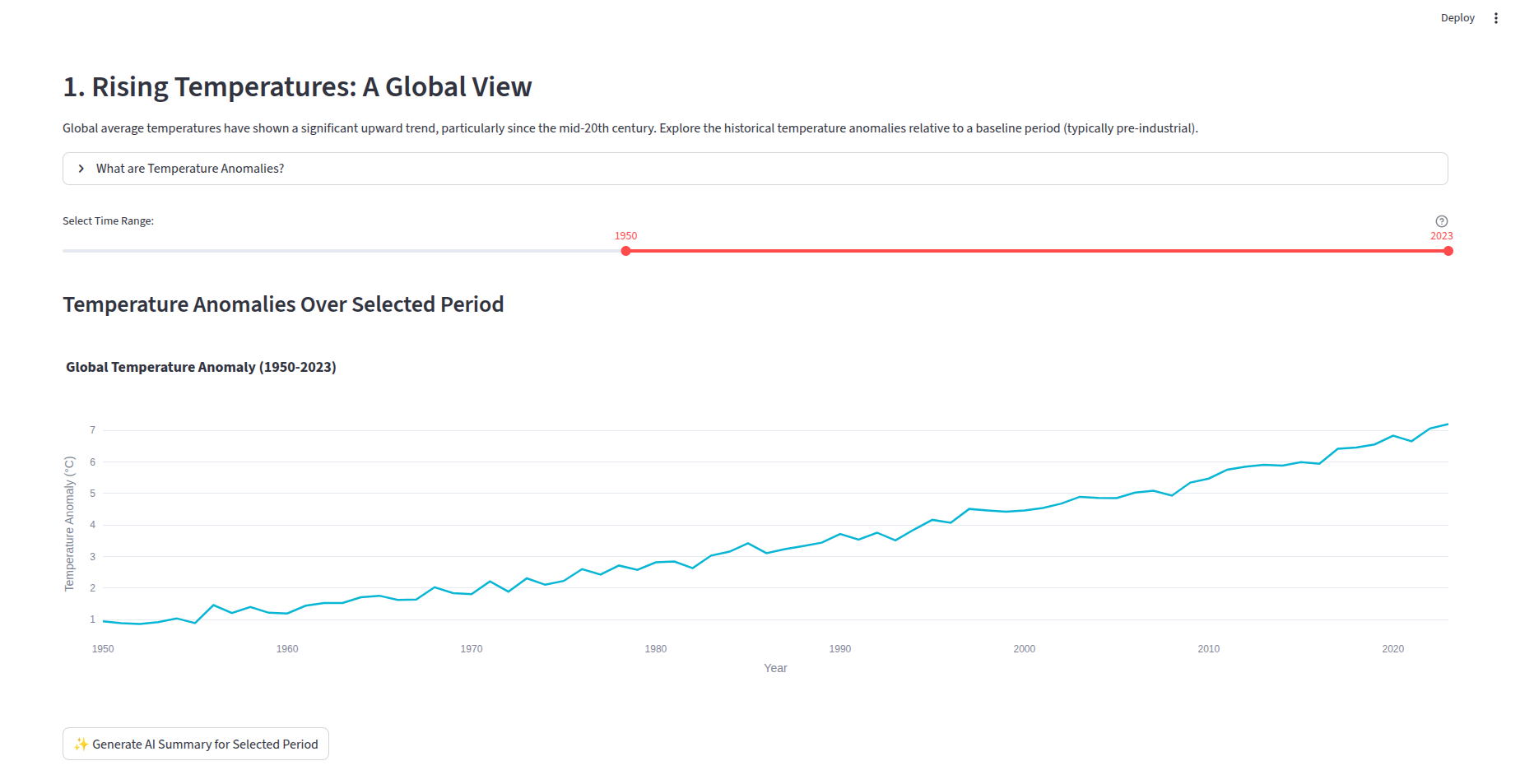
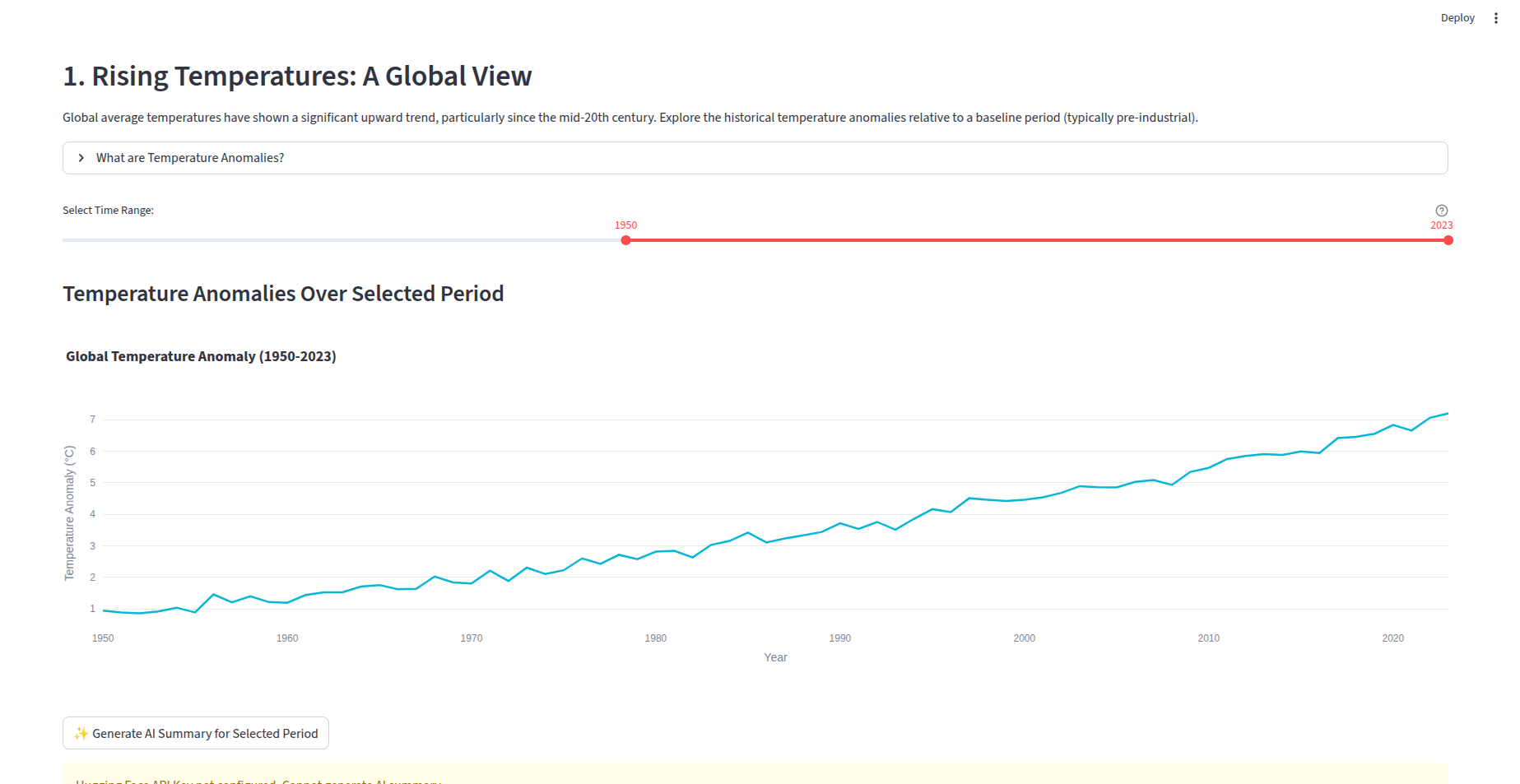
Rising Temperatures: A Global View
-
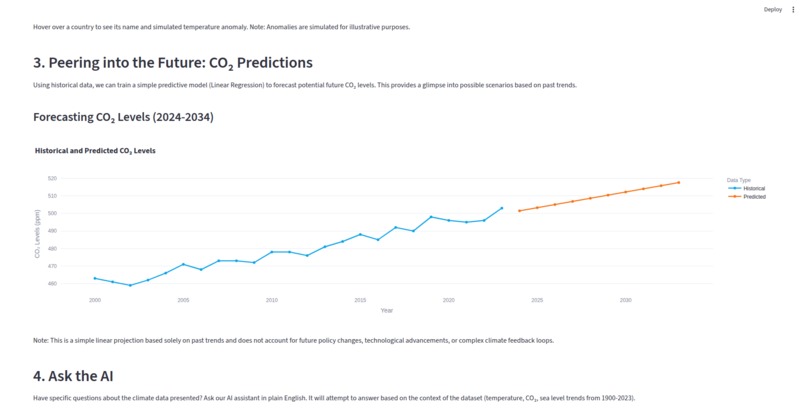
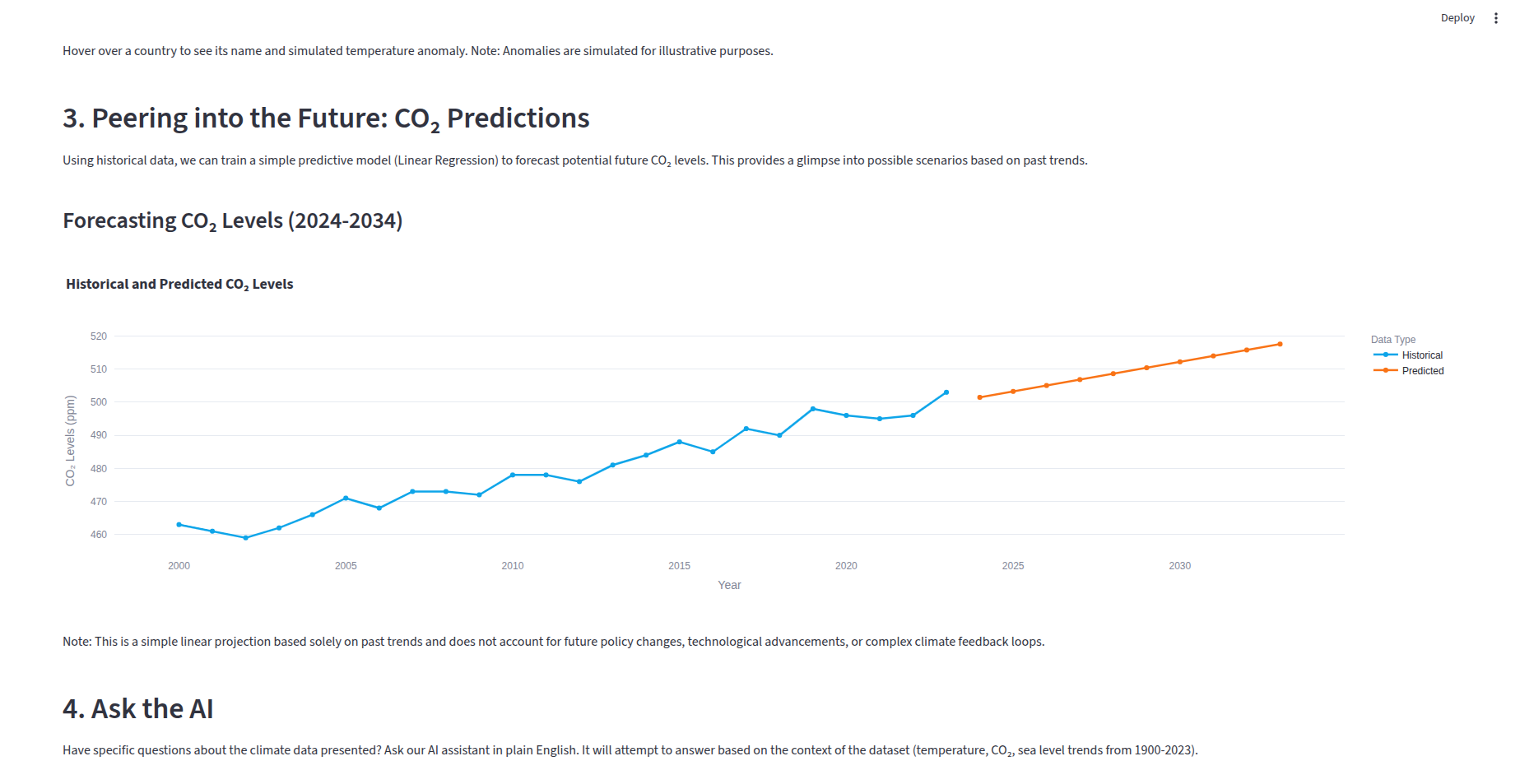
Peering into the Future: CO₂ Predictions
-
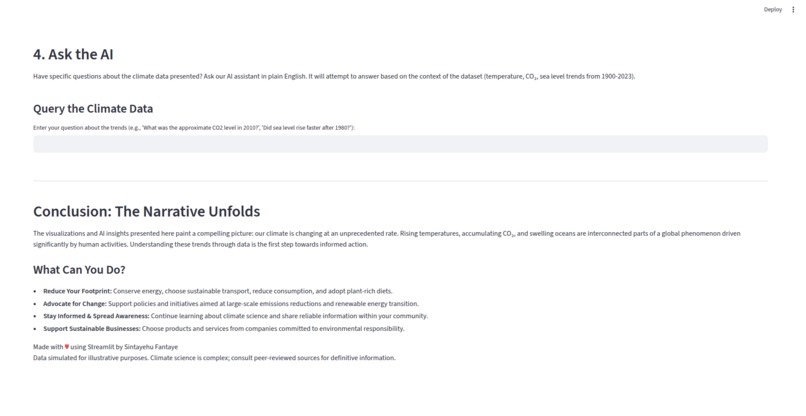
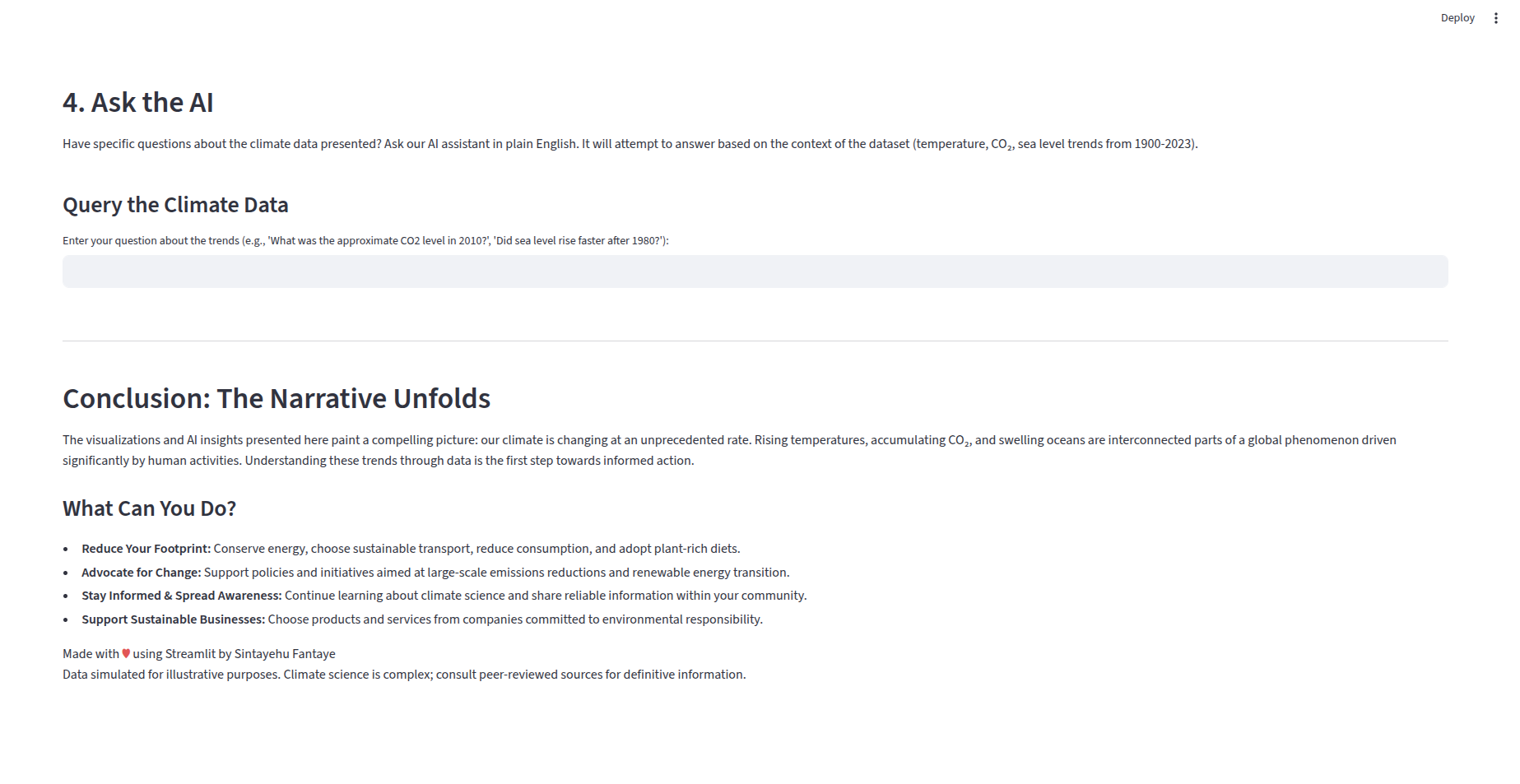
Ask the AI
-
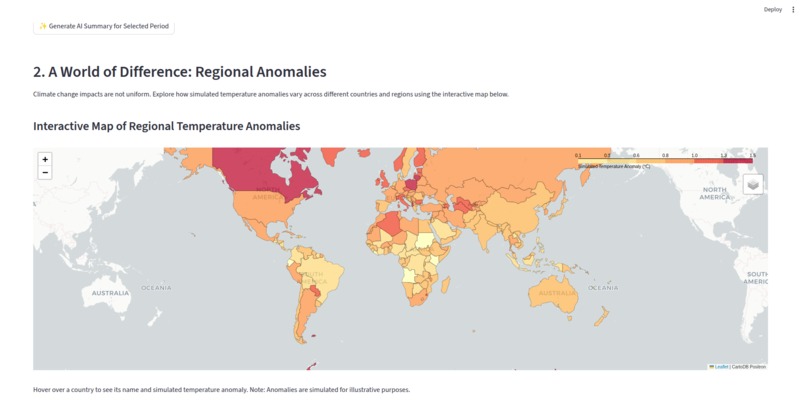
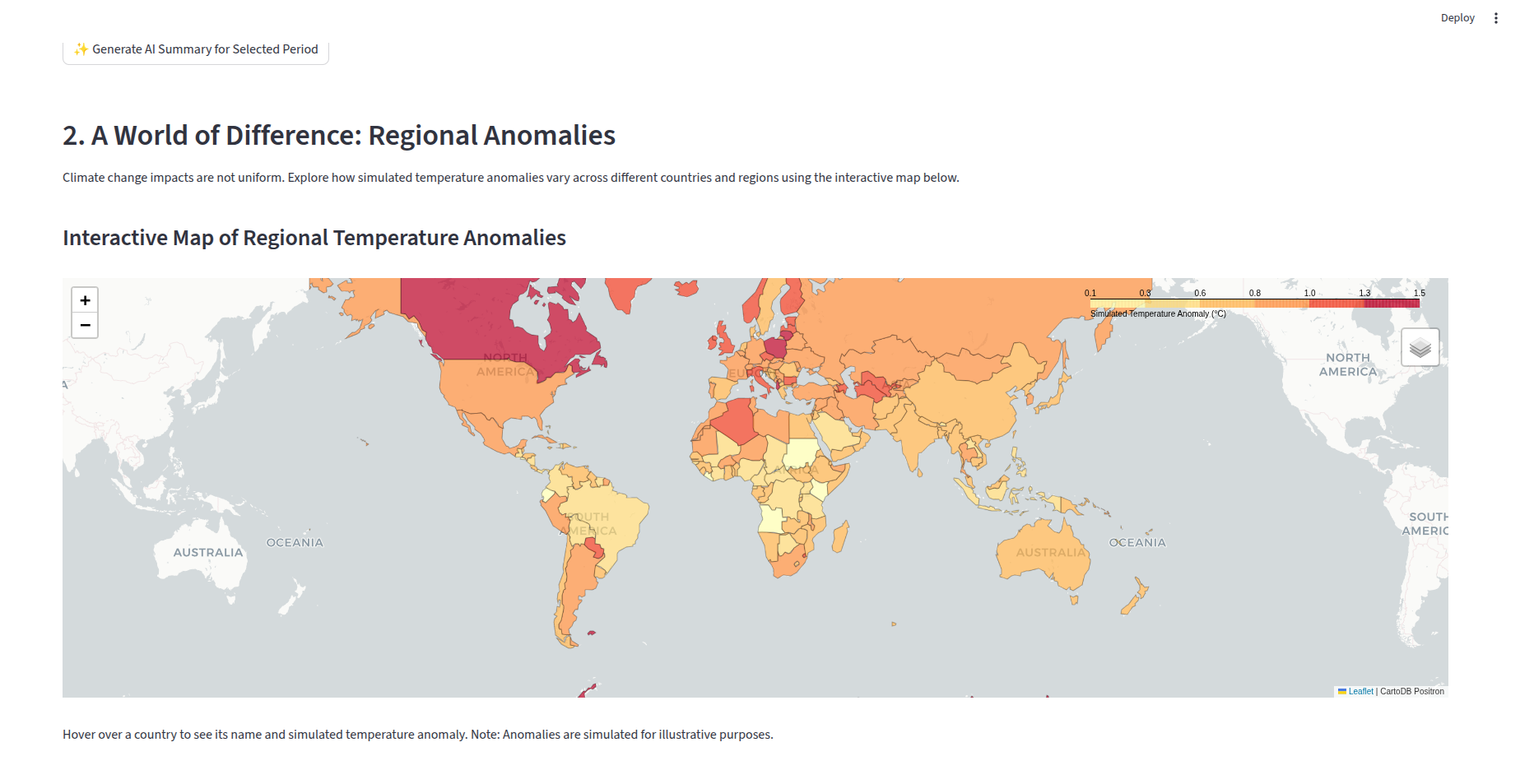
A World of Difference: Regional Anomalies
-
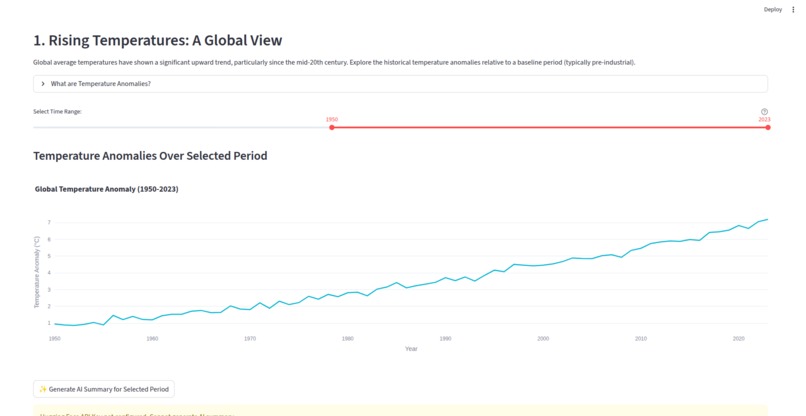
Rising Temperatures: A Global View
-
-
AI-Powered Narrative Generation
-
AI-Powered Narrative Generation
Inspiration
The Climate Change Narrative is inspired by the urgent need to make climate data accessible, engaging, and actionable. As a Data Analyst, climate change statistics are buried in dense reports. We wanted to create an AI-powered storytelling platform where users can not only explore trends but also ask questions and interact directly with the data.
What it does
GreenAI is an interactive climate storytelling app that:
- Visualizes global and regional temperature anomalies.
- Provides a country-level map showing simulated regional differences.
- Uses AI-driven predictions to forecast CO₂ levels into the future.
- Allows users to query climate data in plain English, turning raw data into human-friendly insights.
- Encourages actionable awareness by offering practical steps individuals can take to combat climate change.
How we built it
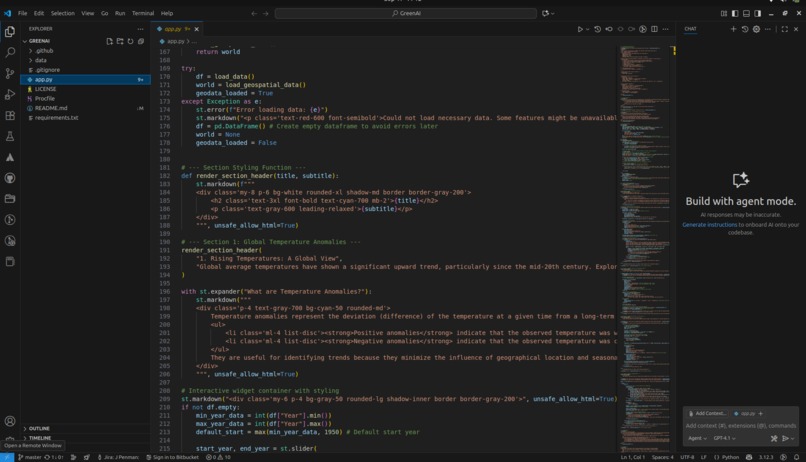
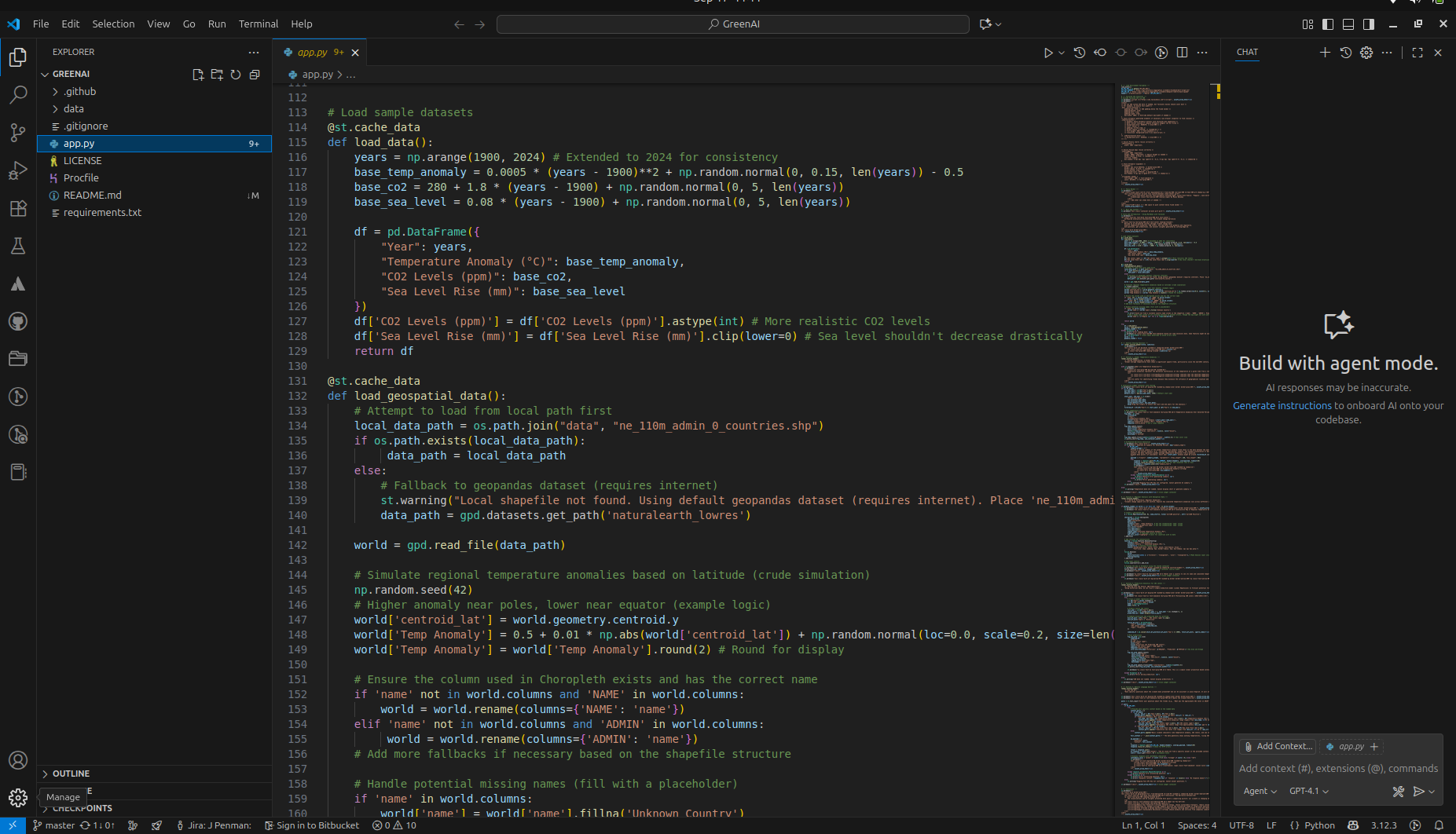
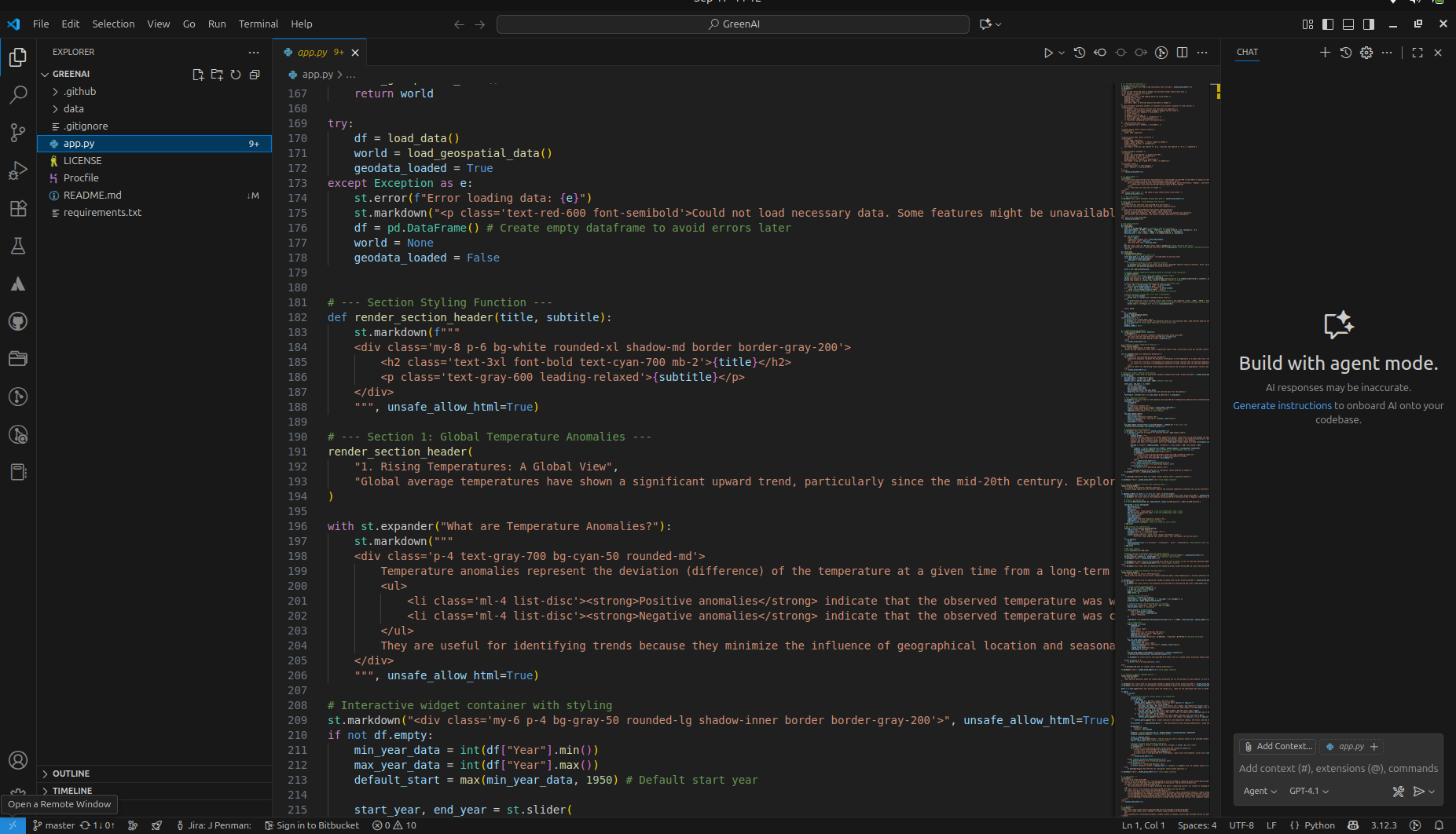
- Streamlit for the interactive web interface.
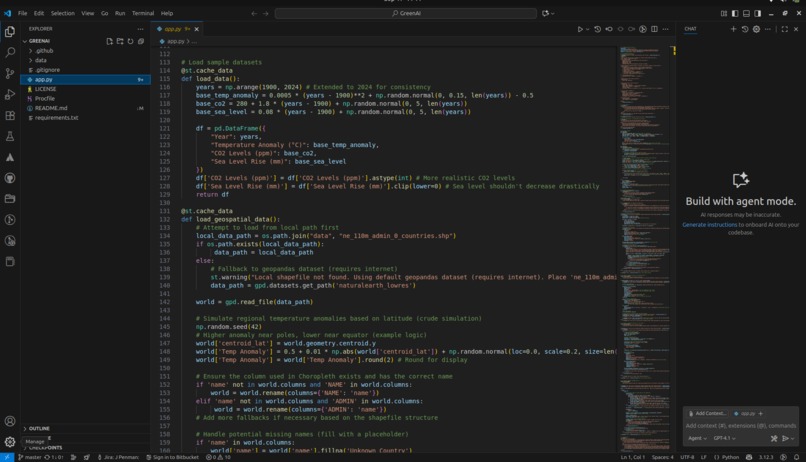
- Python (pandas, numpy, matplotlib, scikit-learn) for data analysis, visualization, and modeling.
- Simulated datasets for anomalies, CO₂, and sea-level rise (for illustrative purposes).
- Natural Language Processing (NLP) to allow question-answering based on the dataset context.
Challenges we ran into
- Finding reliable datasets that were both comprehensive and easy to simulate.
- Designing an interface that is both scientifically accurate and accessible to non-experts.
- Balancing between complex climate models and a simplified version for demonstration purposes.
Accomplishments that we're proud of
Built an end-to-end interactive storytelling platform in a short time. Successfully integrated data visualization, AI predictions, and Q&A features. Created a tool that can be used in classrooms, workshops, and awareness campaigns.
What we learned
How to simplify complex datasets while keeping the story compelling. That people connect better with narratives rather than just raw data. The power of combining AI + visualization to make science more approachable
What's next for GreenAI
Integrating real-world climate datasets (NASA, NOAA, IPCC). Expanding the AI to answer more nuanced questions and support policy discussions. Adding sea-level rise and extreme weather event simulations. Deploying a public-facing version so educators, activists, and the general public can use it.
Built With
- natural-language-processing
- python
- streamlit


Log in or sign up for Devpost to join the conversation.