-
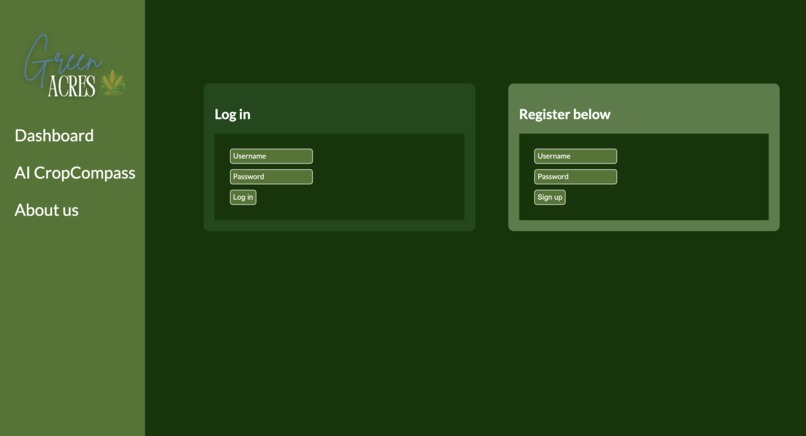
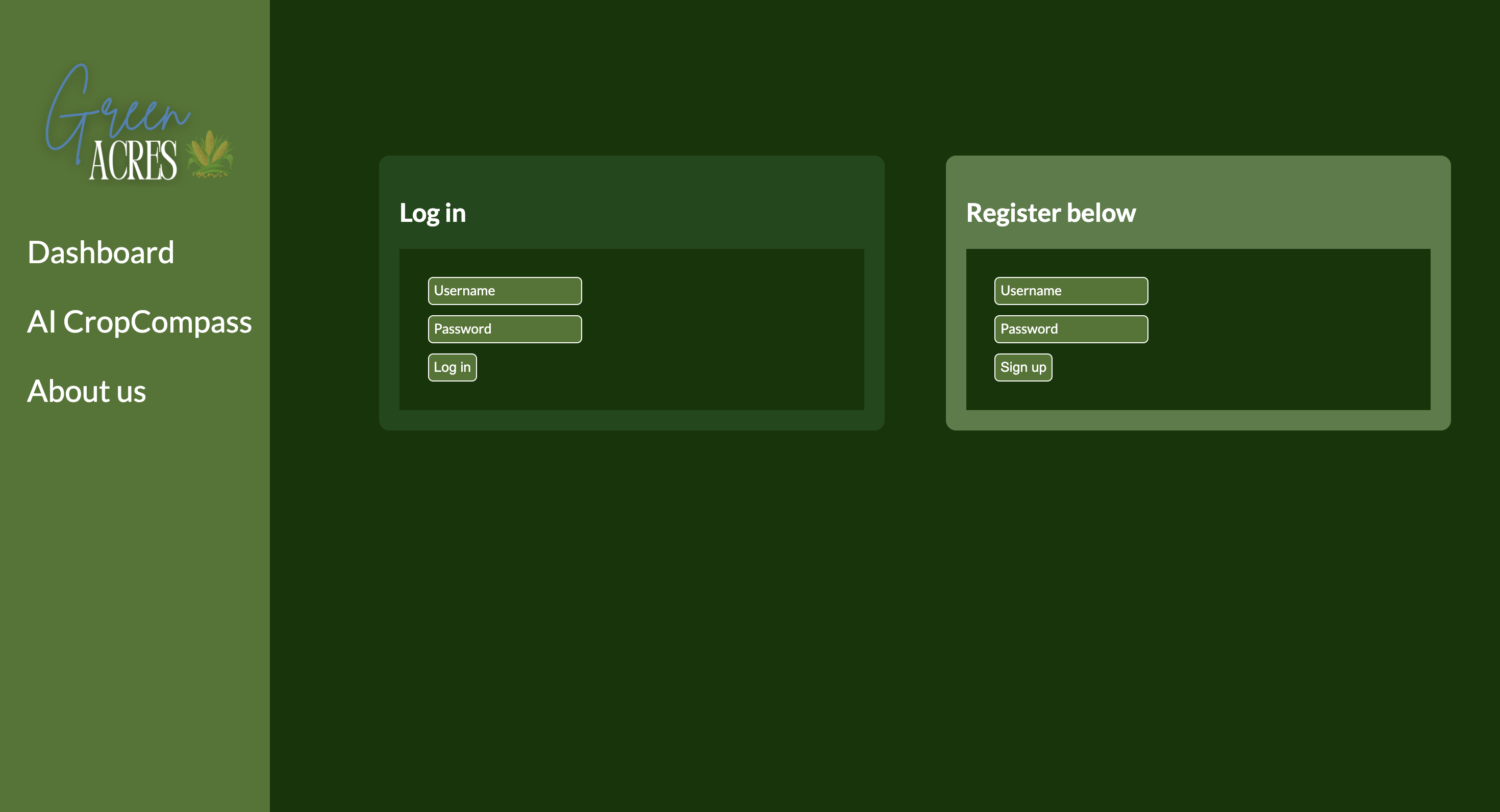
Management Console login/signup page
-
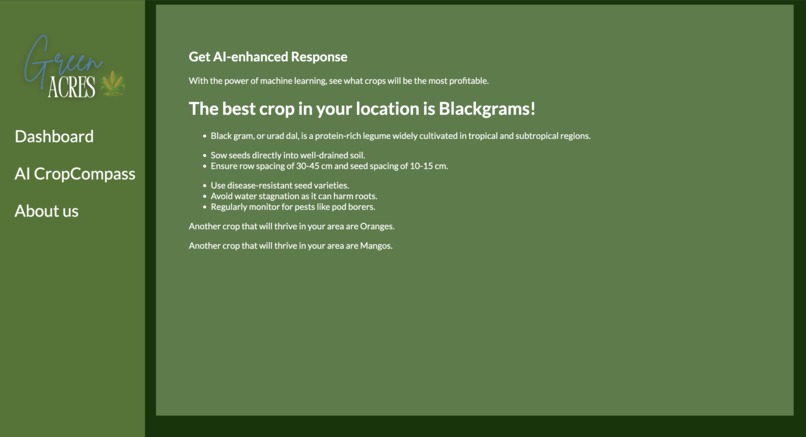
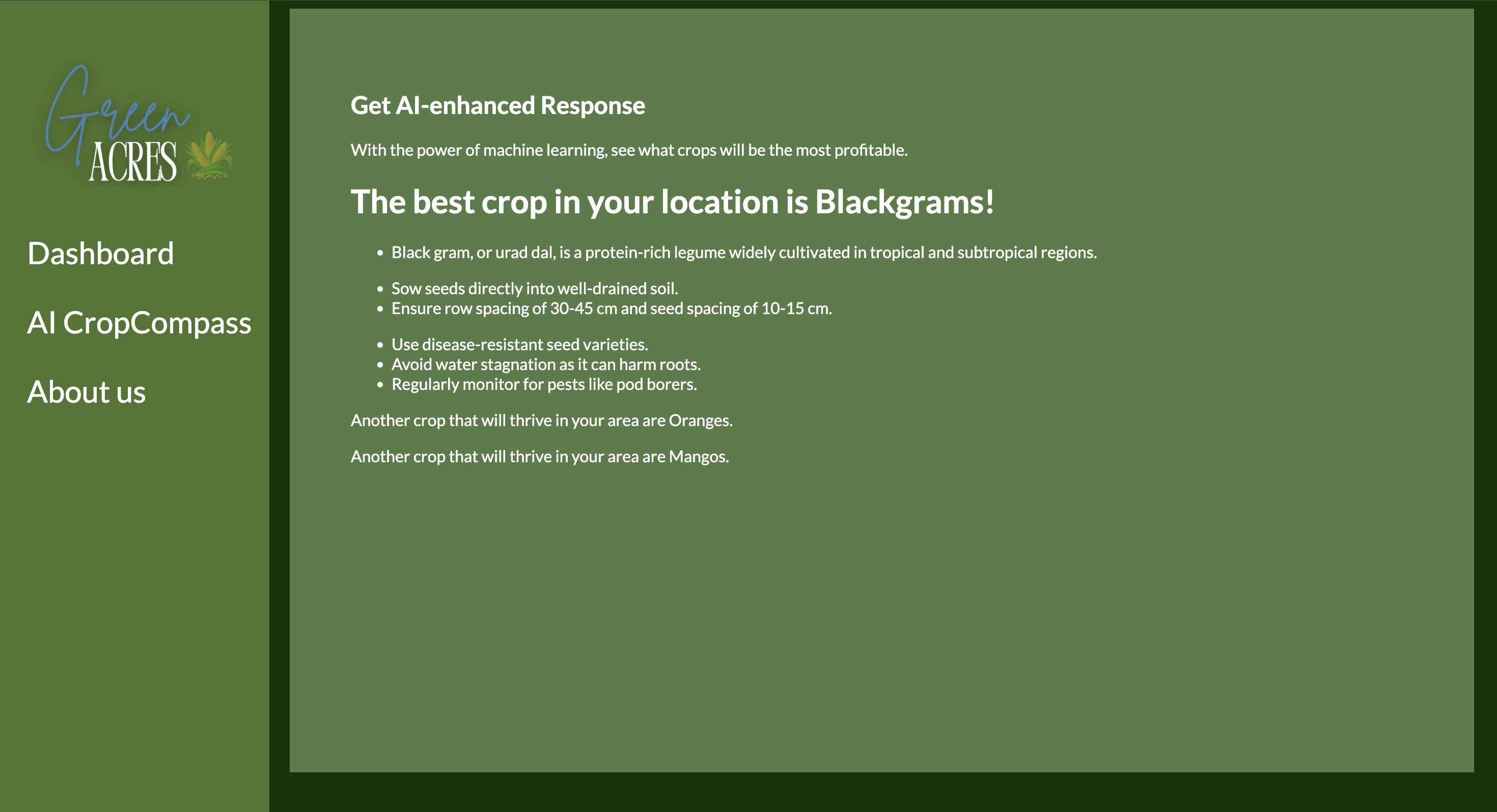
AI Response page
-
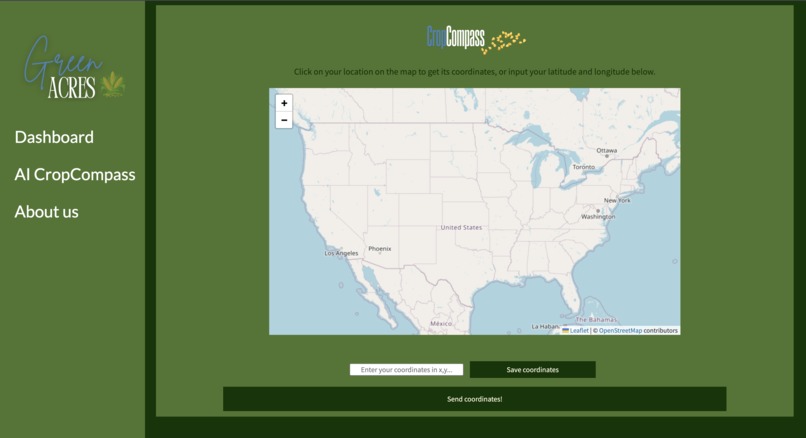
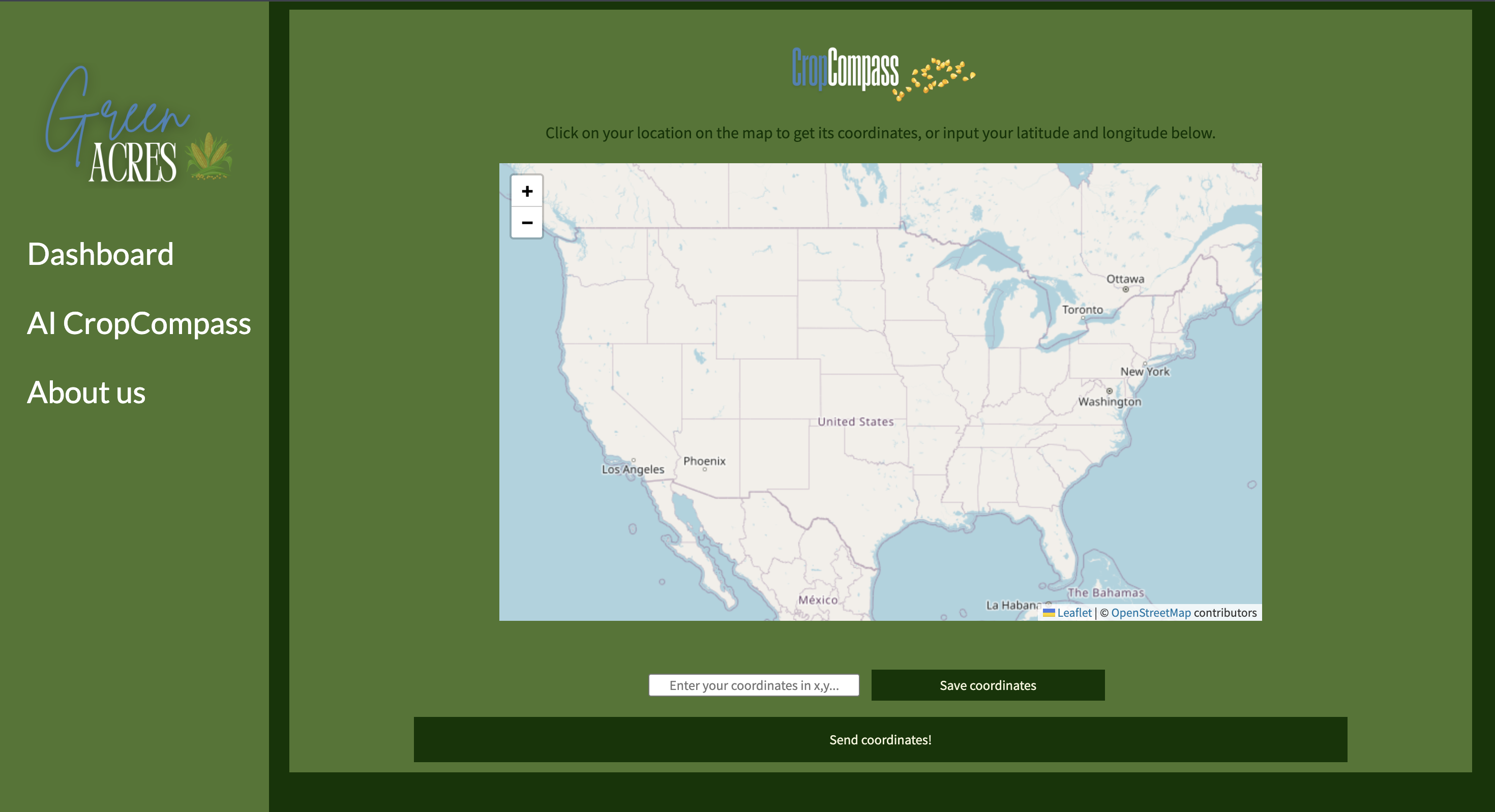
AI Map page
-
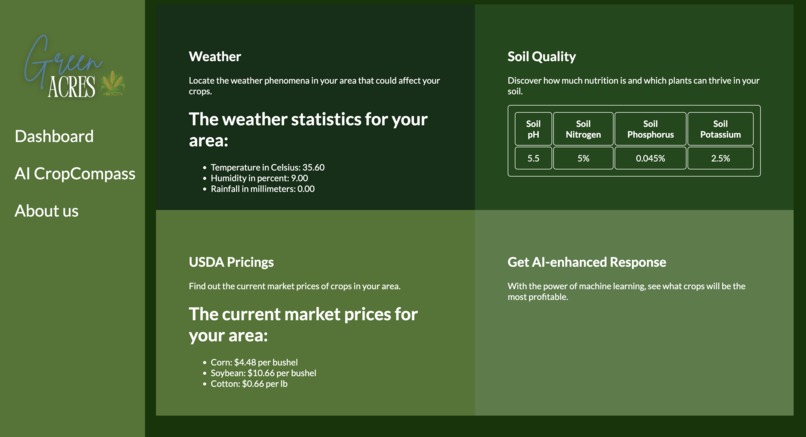
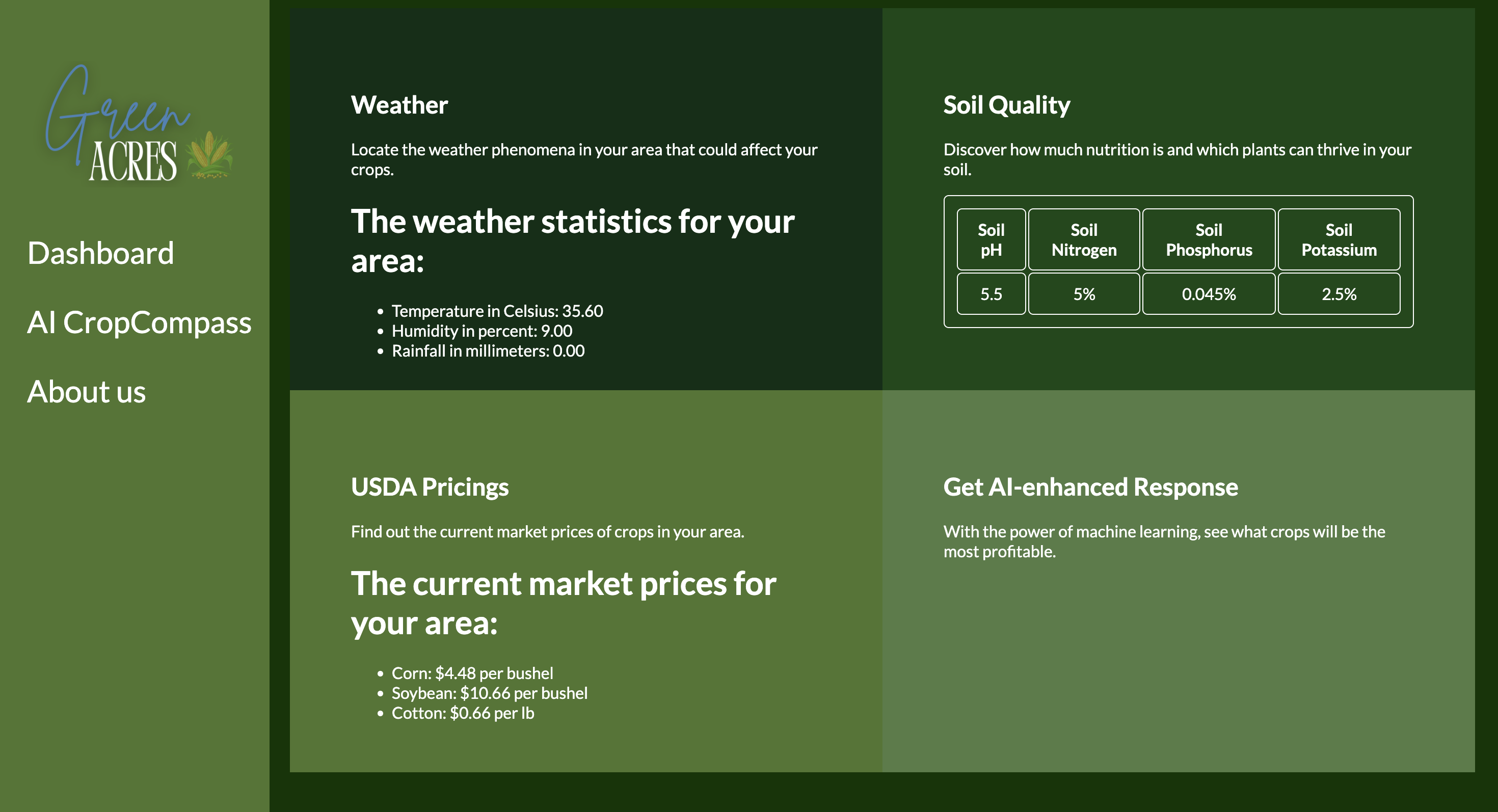
API + AI response page
-
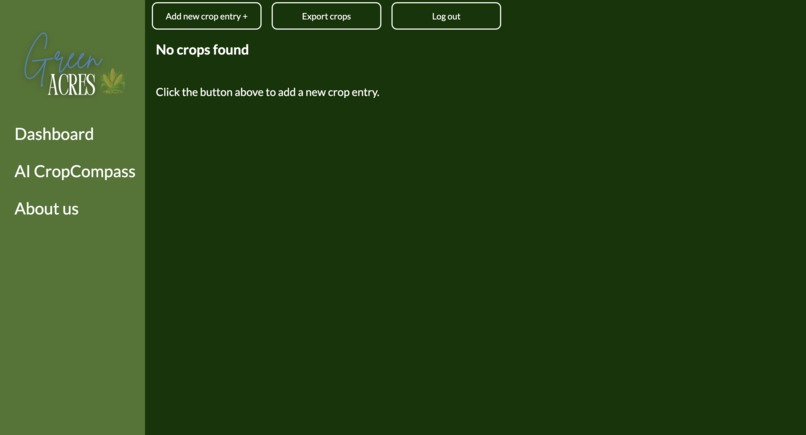
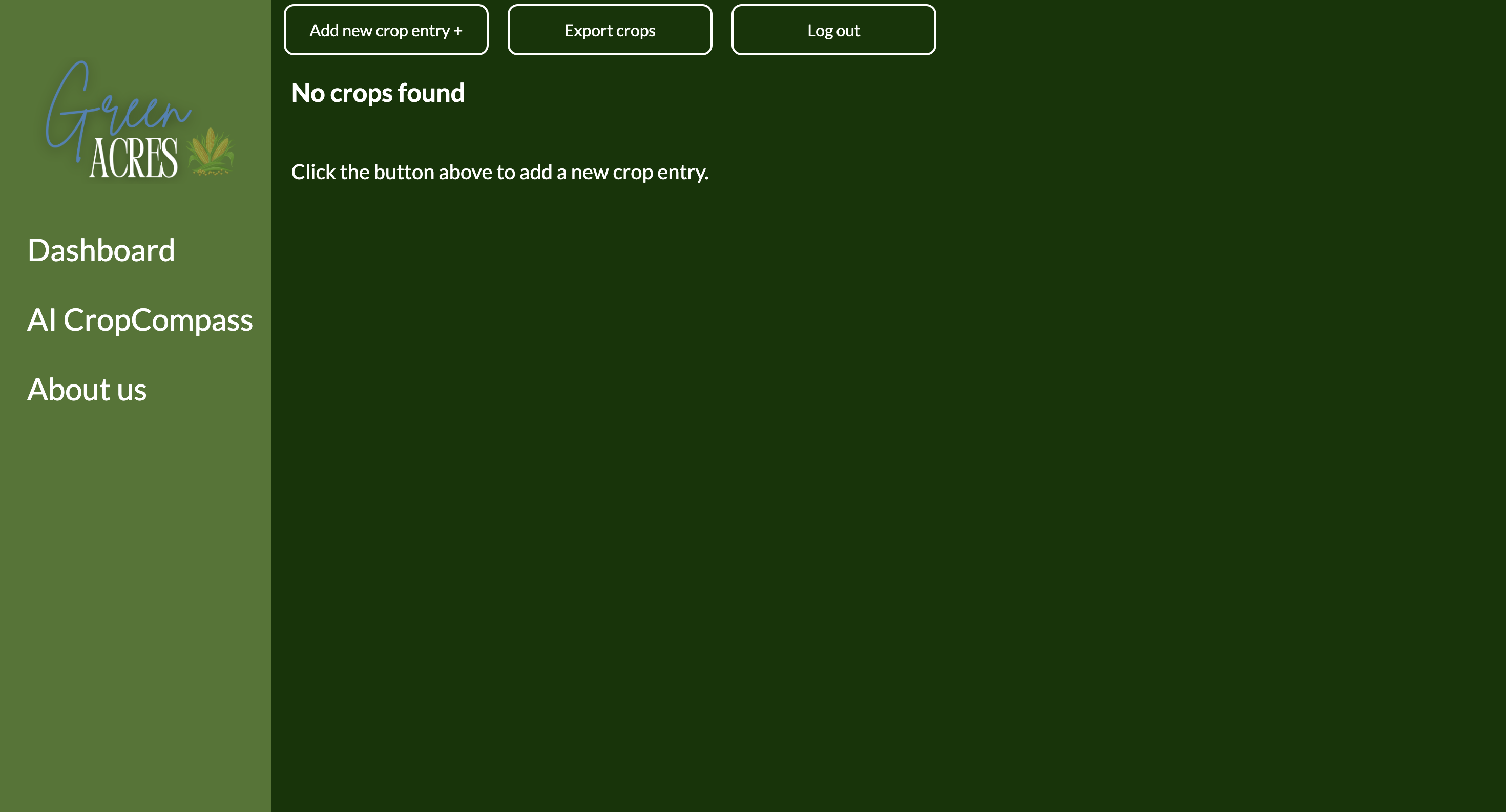
Management Console page
-
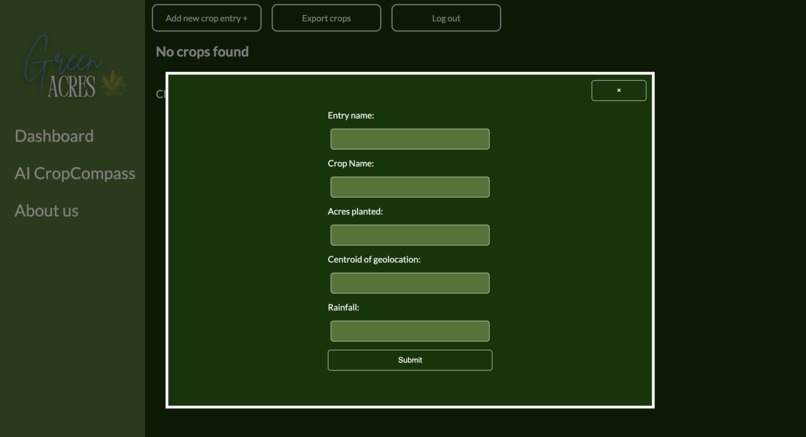
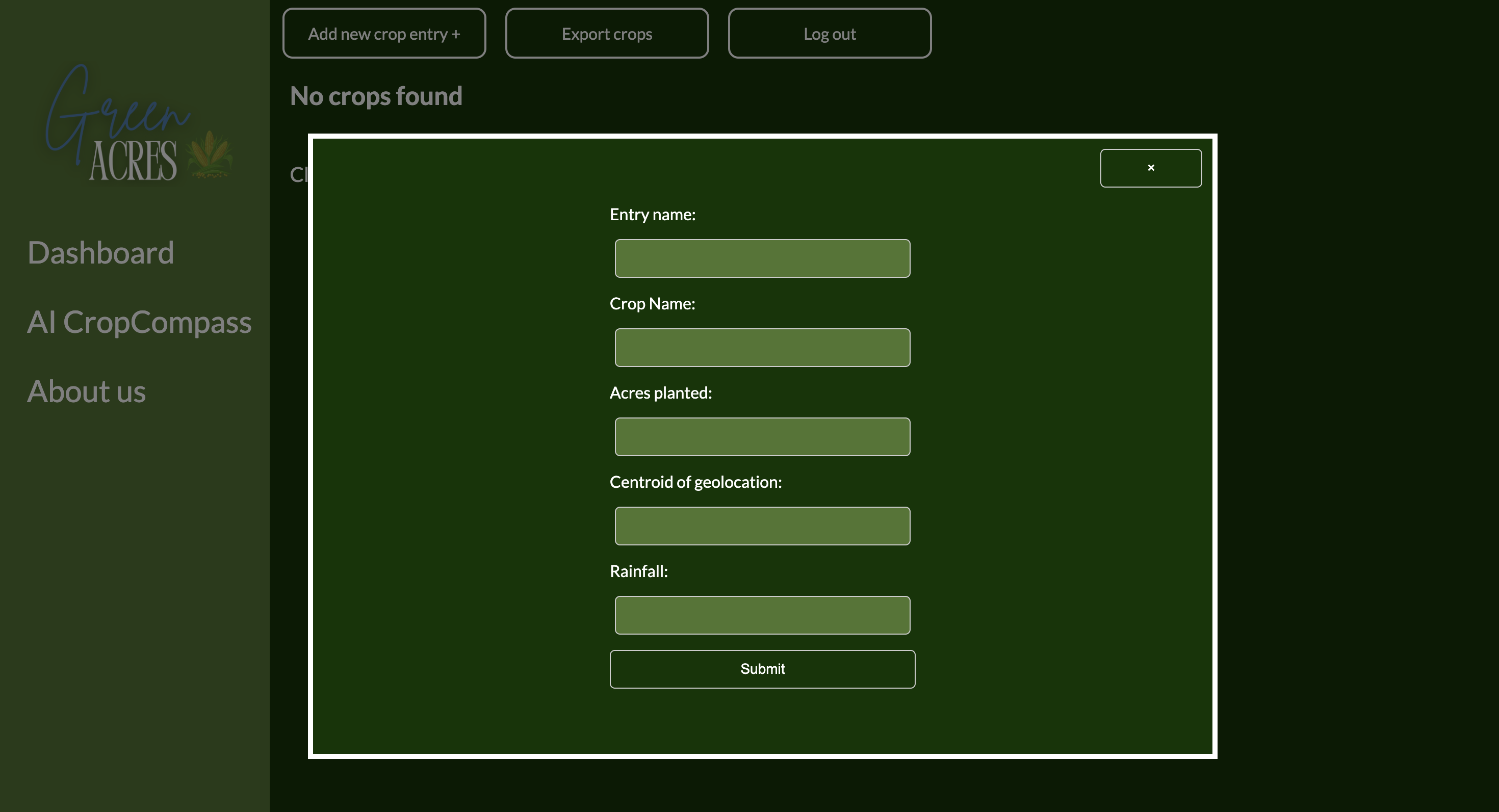
Add Crop widget
-
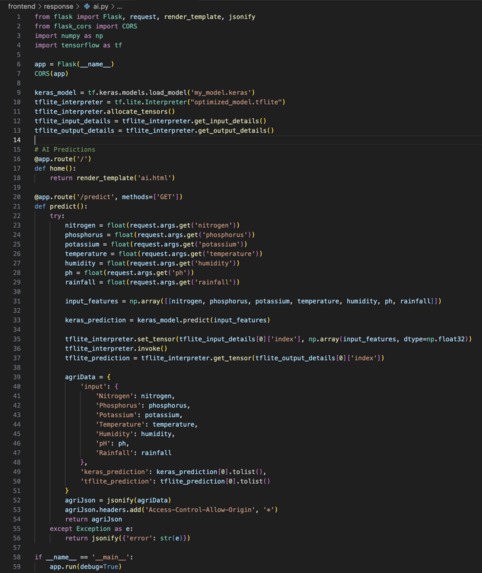
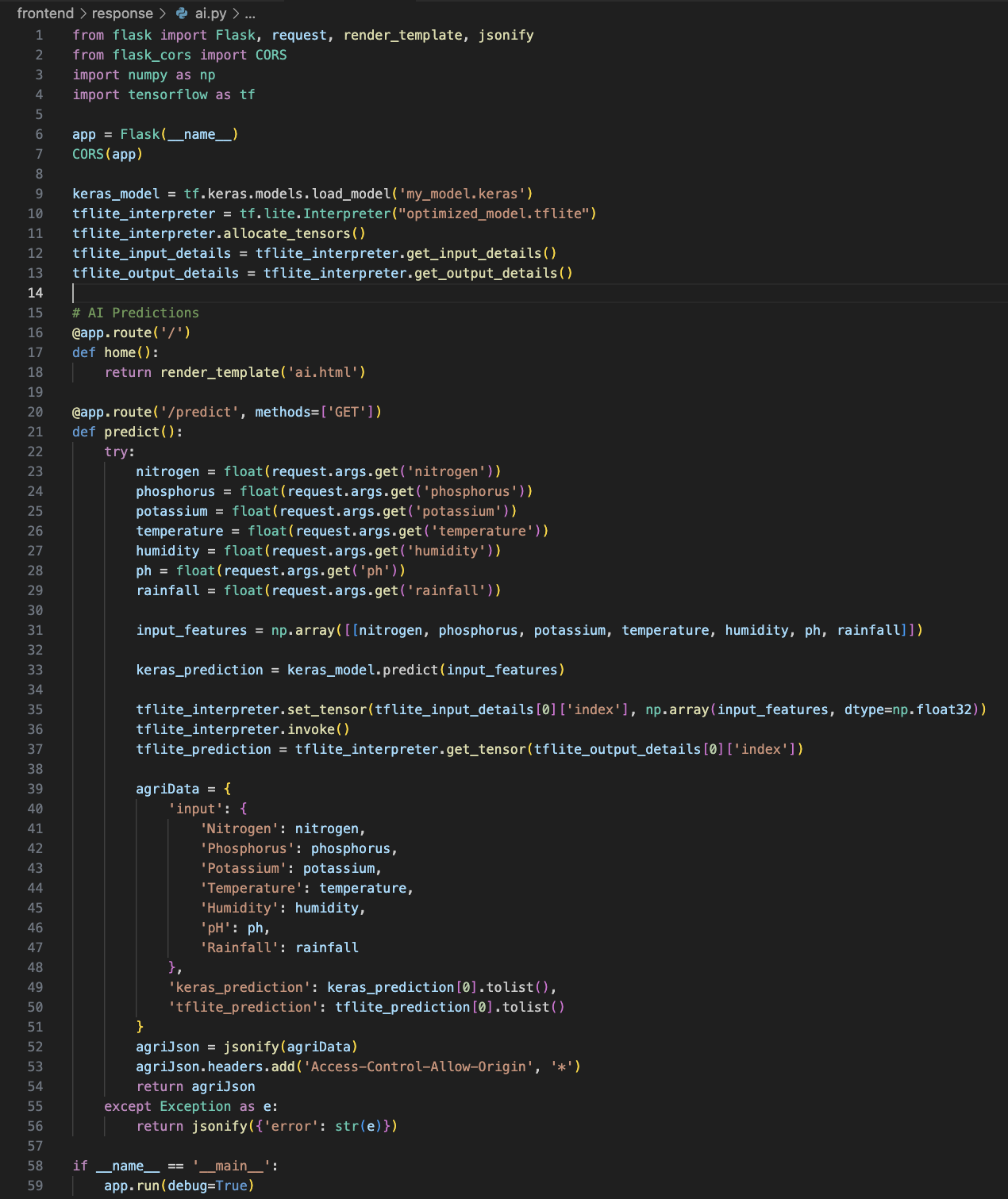
Internal AI API Code
Inspiration
We were brainstorming for good ideas to solve a social problem, and we saw that in previous submissions, there were less environmental solutions, which is a large domain. We decided to do something in that area and besides, we live in an area where rice cultivation is a major part of our town's history. Additionally, the name of the app is inspired by one of my favorite series from an older era, Green Acres. Because of all these factors, we decided to create an agricultural application.
What it does
At its core, it provides 2 main services: a user-friendly crop management software and the AI CropCompass. The management software allows for farmers to store their crops and additionally, get recommendations on how to nurture their crops. But the pièce de résistance is the AI CropCompass! Using the RandomForestClassifier training method, we trained an AI model to predict the best crop given one's location. Choose your location on the given map, or input your coordinates, and our software calls multiple APIs to get specific data about the location, such as the soil quality, the weather in the area, and more. We then plug the data into our TFLite AI model and get the best crop from a selection of nearly 800 strains of crops.
How we built it
For the management software, we used the cloud software Firestore as the database for real-time and millisecond latency CRUD operations. Because it is a NoSQL database, it's also very efficient in memory allocation. For the model, we used the RFC training method for the AI model, and we additionally created an internal API for the further abstraction of the AI model and to make sure that no other service accidentally interacts with it. Finally, we used a Leaflet.js map, an open-source library for maps, as an alternative to Google Maps.
Challenges we ran into
One major challenge we ran into was finding the proper data for the AI model. Because finding good and clean data is one of the bigger parts of making an AI model, this took a bulk of the time in coding our application. However, we found a great Kaggle dataset that fit our model's needs.
Accomplishments that we're proud of
Some accomplishments we were proud of during the process was definitely the accuracy of our AI model. After thorough training, we were able to achieve a 95% accuracy!
What we learned
Our team learned many web development techniques, such as how to interact with an online API system and creating our own APIs for more abstraction. Additionally, we learned the basics of creating multifeature logistic models. We also learned that splitting up tasks, such as assigning one member to create the AI while the other member works on the frontend and API handling, made the process of creating our application much faster and more efficient.
What's next for GreenAcres
In the next steps, we want to also implement a method of allowing for direct sensor input to the application that allows for more accurate data collection and more. As of now, we are relying on APIs to do this, but with more direct and precise measurements, we can give more power to the farmers that use GreenAcres.
Built With
- css
- googlecolabs
- googlefirebase
- html5
- javascript
- python
- tflite

Log in or sign up for Devpost to join the conversation.