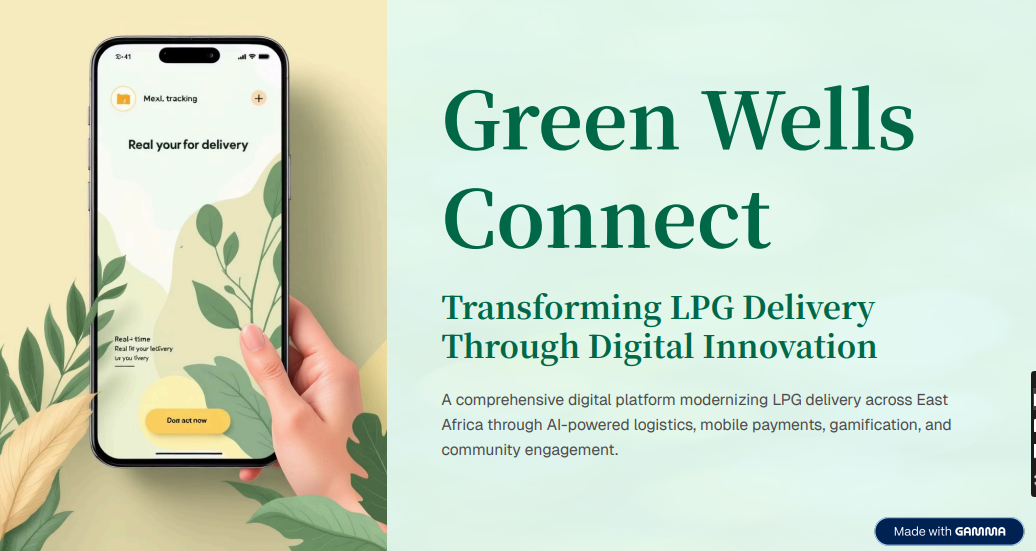
Green Wells Connect
Inspiration
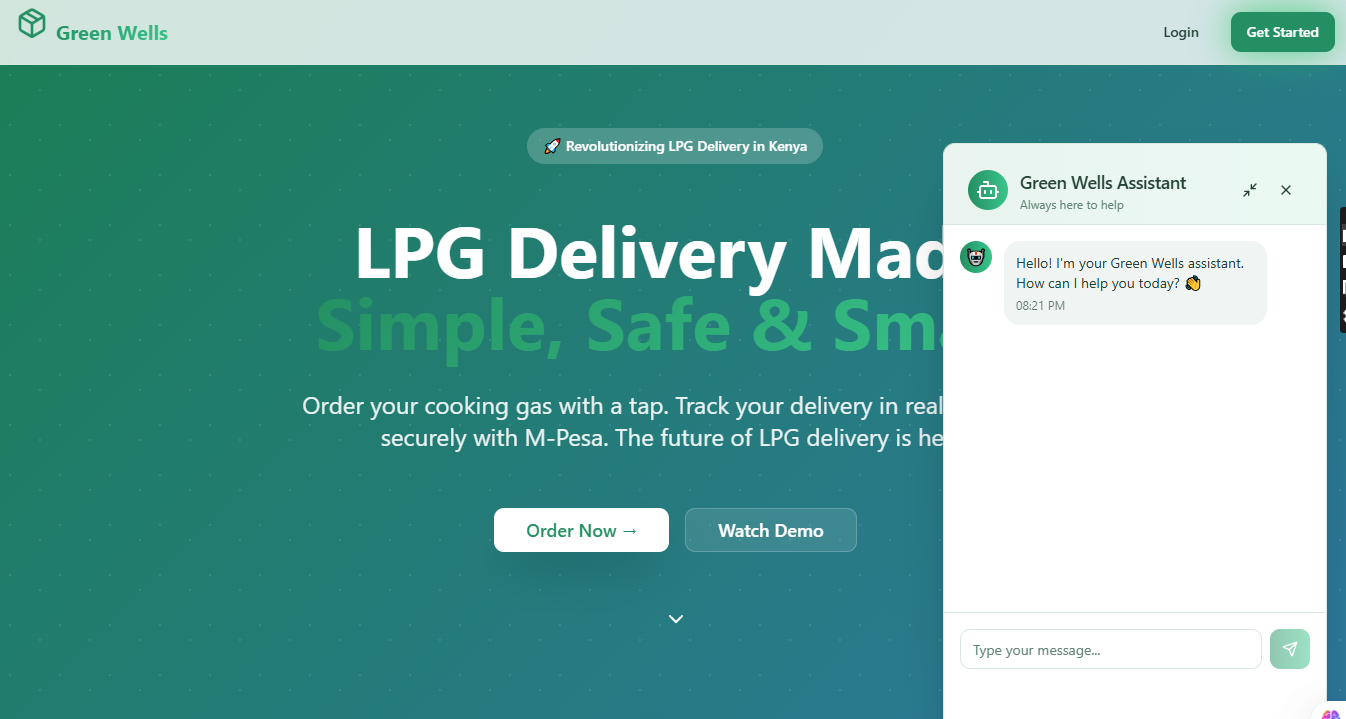
Green Wells Connect was born from seeing Kenyan households struggle with inefficient LPG (cooking gas) delivery: unpredictable wait times, cash-only payments, lack of visibility, safety gaps, and inefficient logistics. Inspired by ride-hailing and delivery platforms, we aimed to make ordering gas as easy and reliable as ordering food.
Vision highlights:
- Empower youth through gamified engagement
- Improve safety and trust with education and tracking
- Optimize routes for sustainability and cost savings
- Create jobs and increase digital inclusion
What it does (Core)
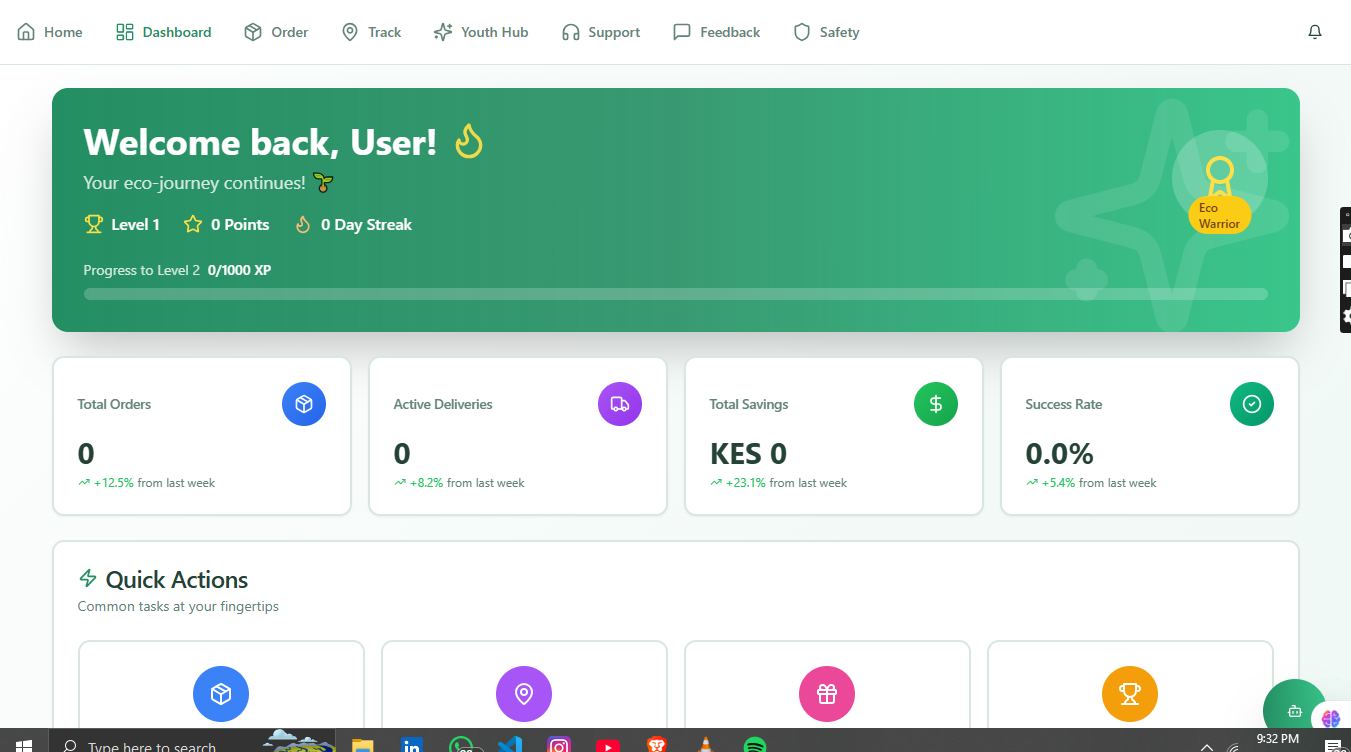
Green Wells Connect is a mobile-first platform that digitizes LPG ordering and delivery with real-time tracking, integrated payments, and logistics optimization.
Core features:
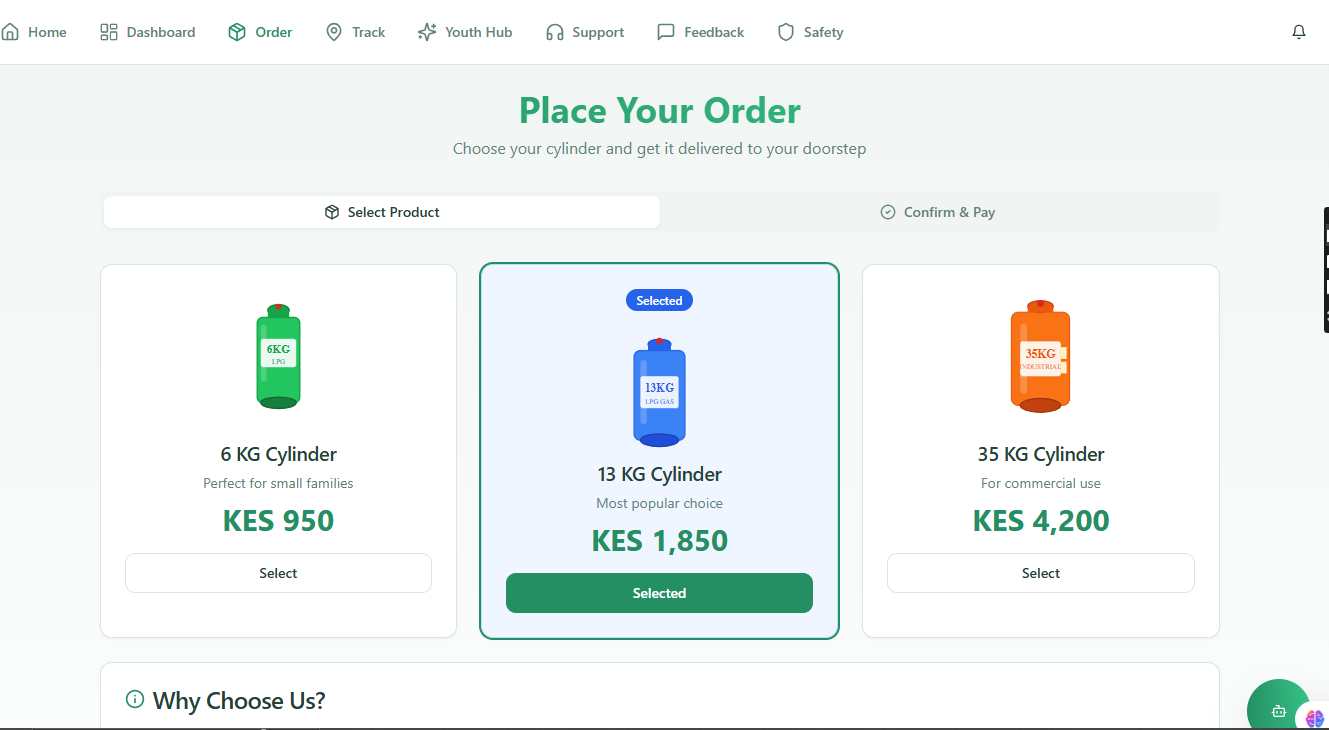
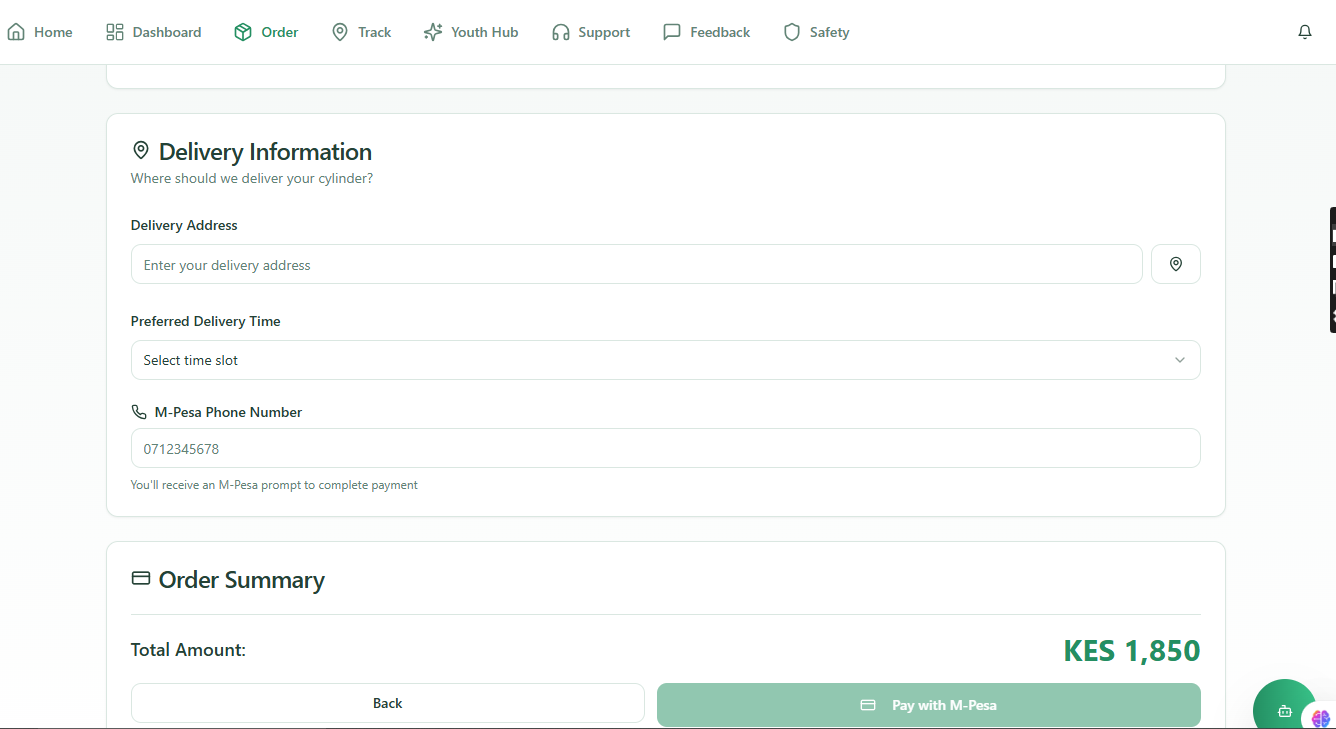
- 60-second ordering (select size, address, pay)
- Auto-geolocation and dynamic transparent pricing
- M-Pesa STK Push, card, and cash-on-delivery support
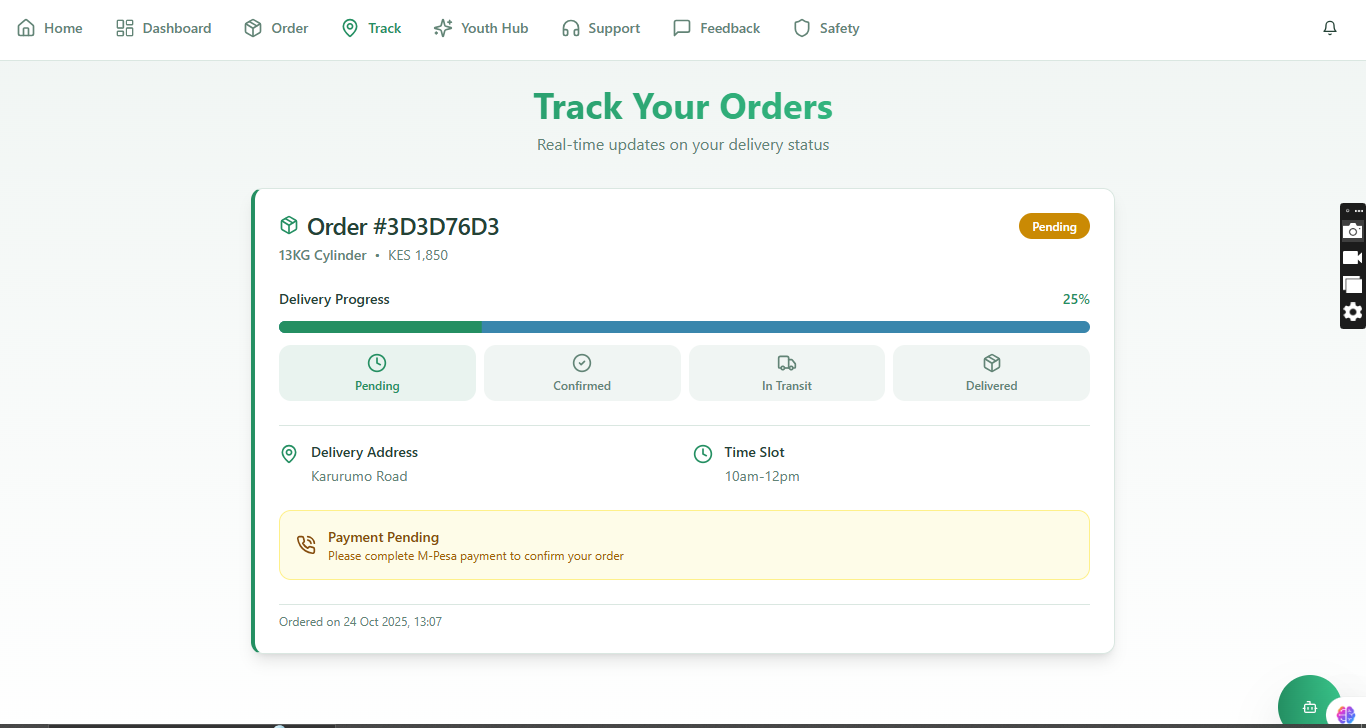
- Real-time driver GPS tracking, live ETA, WebSocket updates
- AI logistics: Nearest Neighbor + 2-Opt route optimization, traffic-aware, multi-stop planning
- Delivery status pipeline and history
- Driver, warehouse, and admin dashboards
Advanced features:
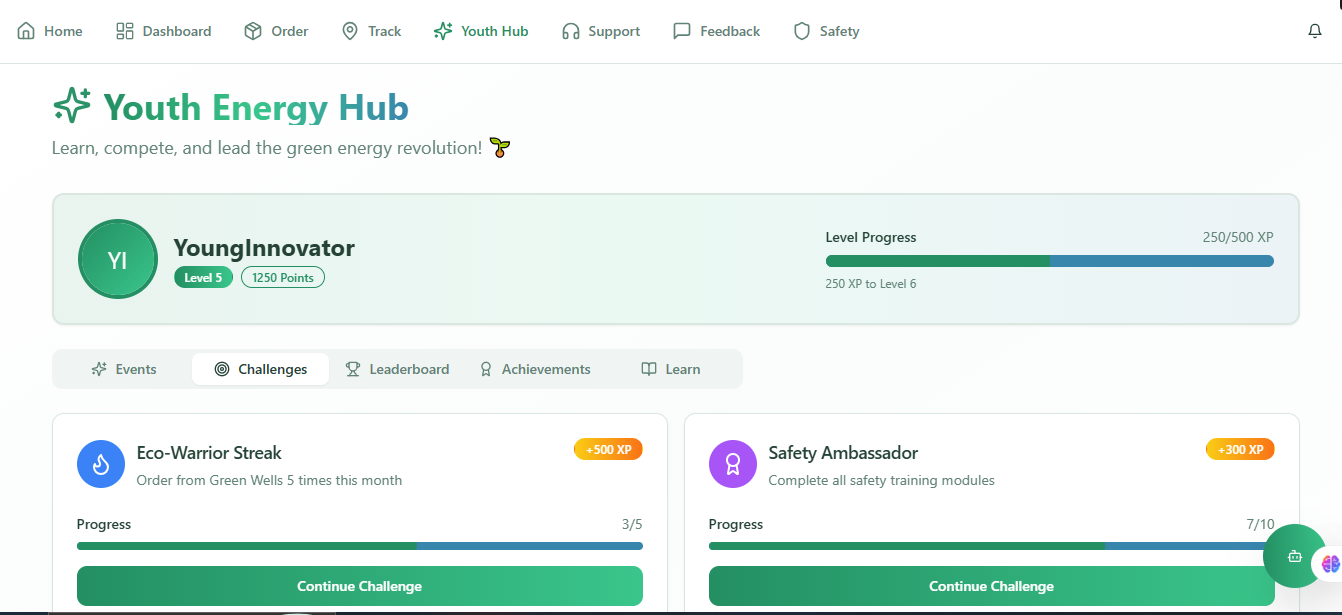
- Youth Energy Hub: points, levels, badges, leaderboards, rewards marketplace
- Safety Hub: guides, cylinder tracking, emergency protocols, certification
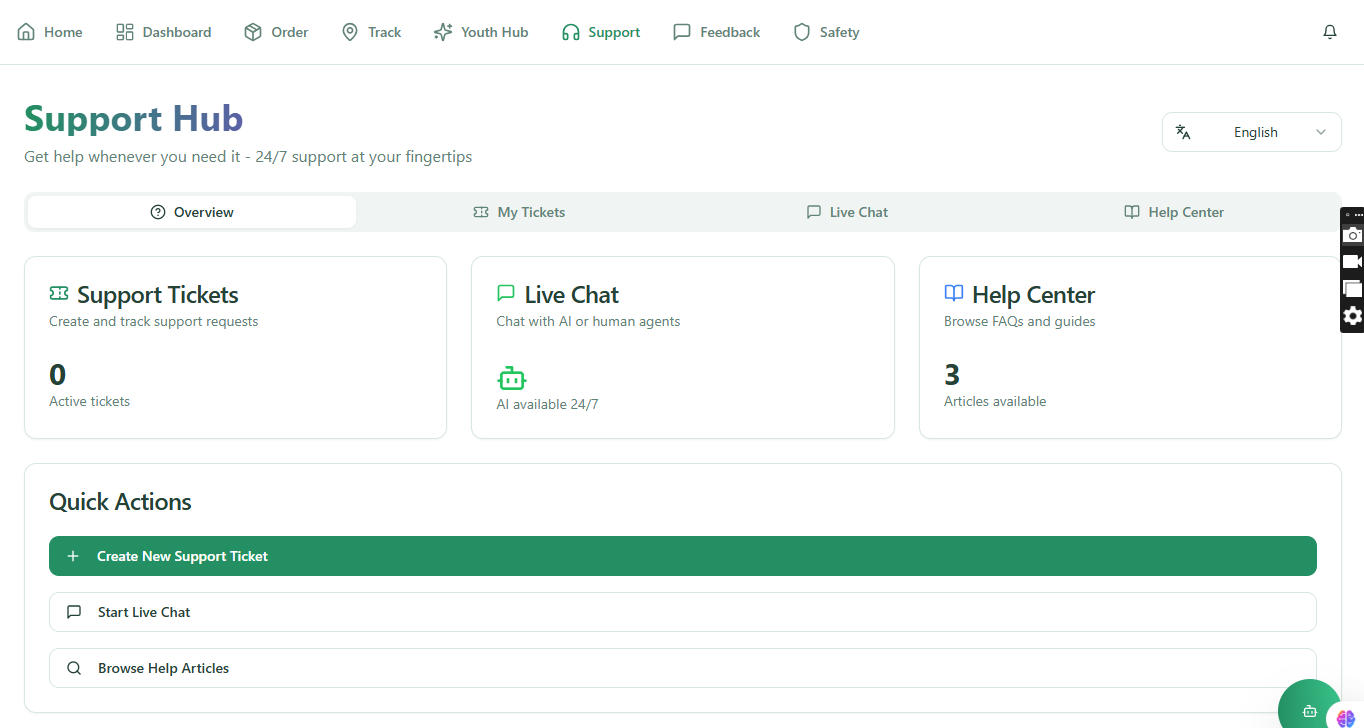
- AI-powered customer support and bilingual chat (English/Swahili)
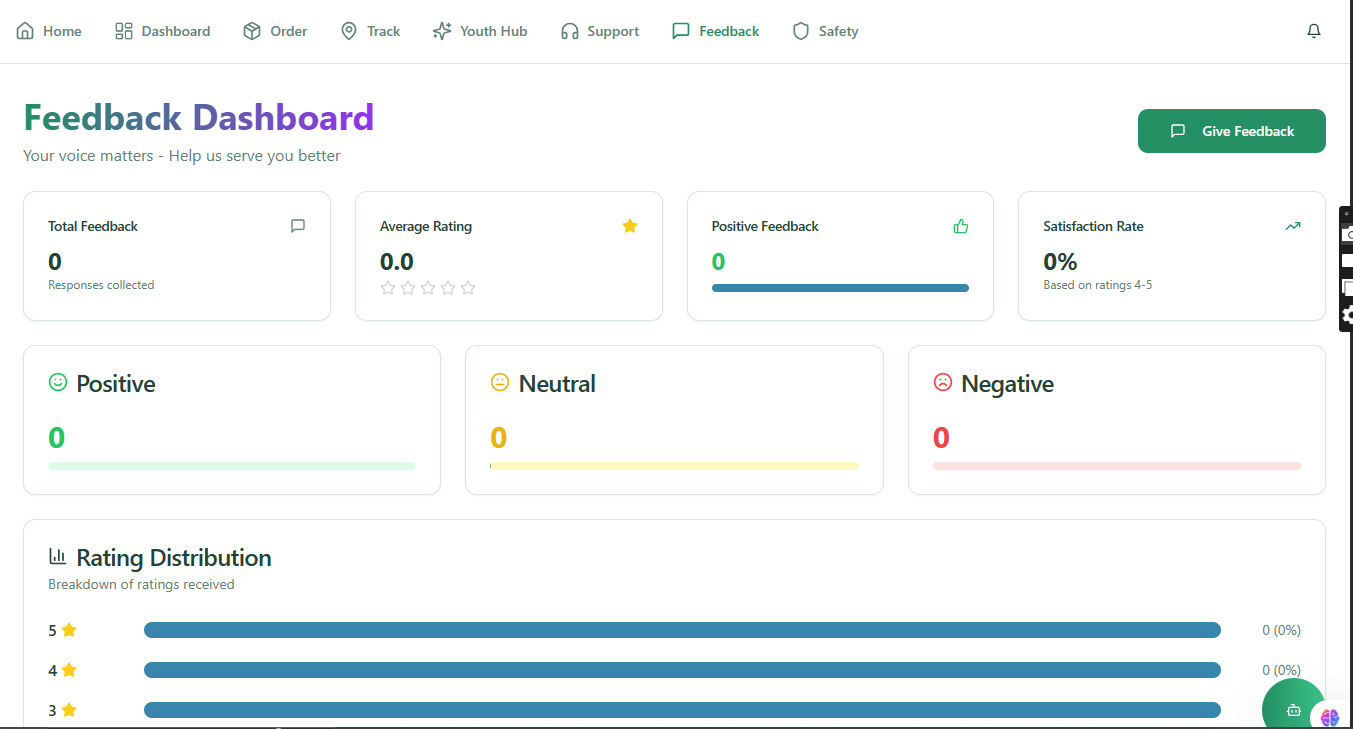
- Feedback, sentiment analysis, and analytics dashboards
Impact: save customers 2–3 hours per order, reduce supplier costs by ~30%, boost retention 40–60%, create jobs, and lower emissions.
How we built it (Technology & Architecture)
Frontend
- React 18 + TypeScript, Tailwind CSS, shadcn/ui components, TanStack Query, React Map GL
- Mobile-first PWA with offline support and code-splitting
Backend (Serverless)
- Supabase (Postgres with RLS, Edge Functions using Deno, real-time engine, storage)
- WebSocket-based live updates, optimized DB indexes, triggers, and migrations
Integrations
- M-Pesa Daraja: OAuth 2.0, STK Push, callback verification, idempotency and retry logic
- Mapbox: maps, geolocation, route visualization
Data flow (simplified)
- Orders: User → Frontend → DB → Edge Function → M-Pesa → Callback → DB → Real-time → Frontend
- Tracking: Driver GPS → DB → Real-time → Frontend
Security & Performance
- Row-Level Security, TLS, JWT sessions, input validation, rate limiting
- Frontend lazy loading, image optimization, backend query tuning, caching, debounced location updates
Major Challenges & Solutions
- M-Pesa integration: implemented token refresh, robust callbacks, polling fallback, idempotency.
- Real-time tracking: debounced location updates (>50m), reconnection logic, map render optimizations, battery-efficient sampling.
- Route optimization: heuristic approach (Nearest Neighbor + 2-Opt), time budget for computation, caching.
- Schema evolution: migrations, documented ER diagrams, RLS, views for complex joins.
- Multilingual support: type-safe i18n, translation validation, Intl for formatting.
Operational challenges:
- Two-sided marketplace: pilot dense launch, supplier partnerships, driver guarantees
- Mobile data costs: PWA + code splitting + data-saving mode
- Scaling support: AI chatbot + searchable FAQ + ticketing
Achievements (Selected)
- Production-ready full-stack platform with ordering, payments, tracking, and gamification
- Seamless M-Pesa STK Push integration with high reliability
- Real-time tracking with sub-second updates
- AI route optimization reducing distances by ~30%
- Security-first: RLS on all sensitive tables and strong validation
- Multilingual support and mobile-first UX
- Comprehensive documentation and architecture resources
Key metrics (targets & early goals)
- Pilot: 500 early adopters, 1,000+ pilot orders
- Year 1 target: 5,000 active users, 10,000 orders/month
- Year 3 target: 200,000 active users, $15.8M annual revenue (ambitious growth)
What we learned
- Real-time features require thoughtful tradeoffs (latency vs. battery/data)
- Type safety (TypeScript) drastically reduces runtime issues
- Payment systems demand paranoid reliability design (idempotency, retries)
- Database design and migrations are foundational
- Simplicity and mobile-first design win in emerging markets
- Gamification must provide real value and be opt-in
- Documentation and observability are essential to scale
Roadmap (Next steps)
Immediate (1–3 months)
- Pilot launch in Nairobi (5–10 drivers, partner suppliers, acquire 500 users)
- Collect feedback, A/B test, iterate on core flows
- Marketing: social media, referral incentives, local community events
Short-term (4–6 months)
- Expand within Nairobi, launch subscription plans, build analytics dashboard
Medium-term (7–12 months)
- Multi-city rollout across Kenya, launch B2B portal, build advanced AI features (predictive reordering, demand forecasting, smart driver assignment)
Long-term (Year 2+)
- Regional expansion (Uganda, Tanzania, Rwanda)
- IoT smart-cylinder pilots, voice ordering (WhatsApp, assistants), BNPL and deposit financing
- Marketplace for complementary energy products and sustainability initiatives
Metrics Dashboard (Summary)
Current (built)
- 20+ features, production code, security-first approach
Year 1 targets
- 5,000 active users, 10,000 orders/month, $352K revenue, 4.5+ star satisfaction
Long-term vision
- 1M+ customers by 2028, thousands of jobs created, significant CO2 reductions
Green Wells Connect aims to modernize LPG delivery: make it reliable, safe, and convenient while creating economic opportunity and reducing environmental impact.
Team
Meru University of Science and Technology Students
- Marklewis Mutugi [email protected] 0741303497
- Johnstone Jesse [email protected] 0702732396
Built With
- mpesa
- react
- shandcn
- supabase
- tailwind
- vite


Log in or sign up for Devpost to join the conversation.