-
-
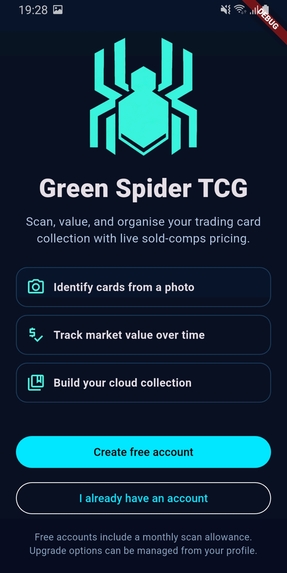
Login Screen
-
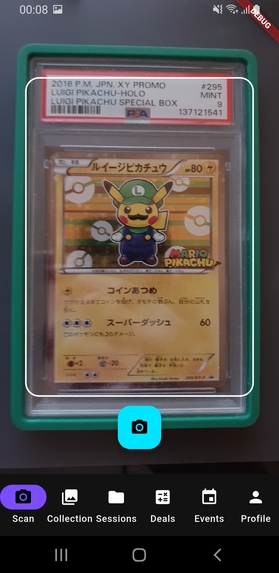
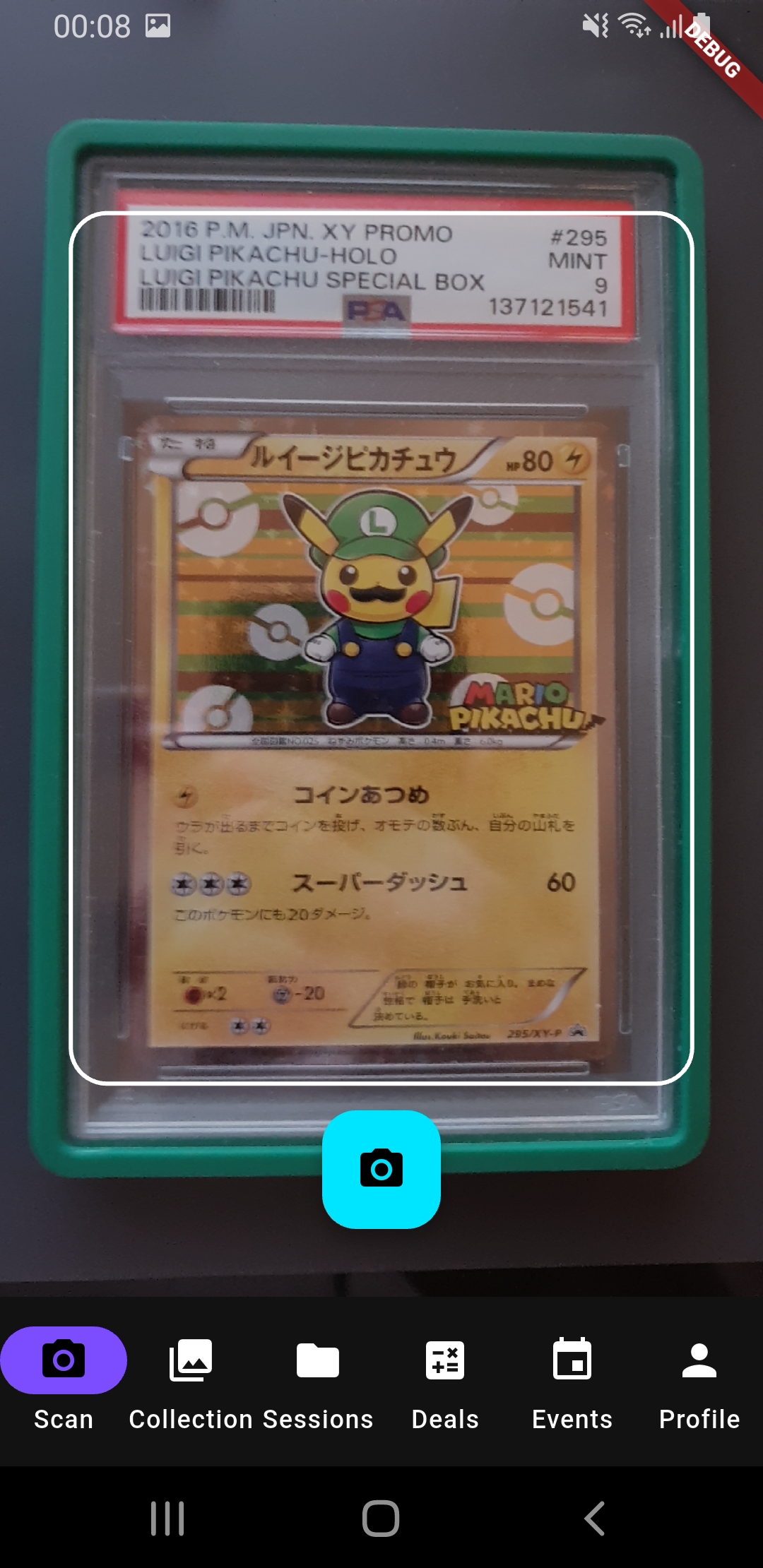
Card Scanning
-
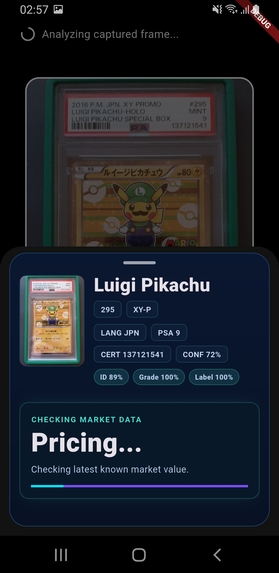
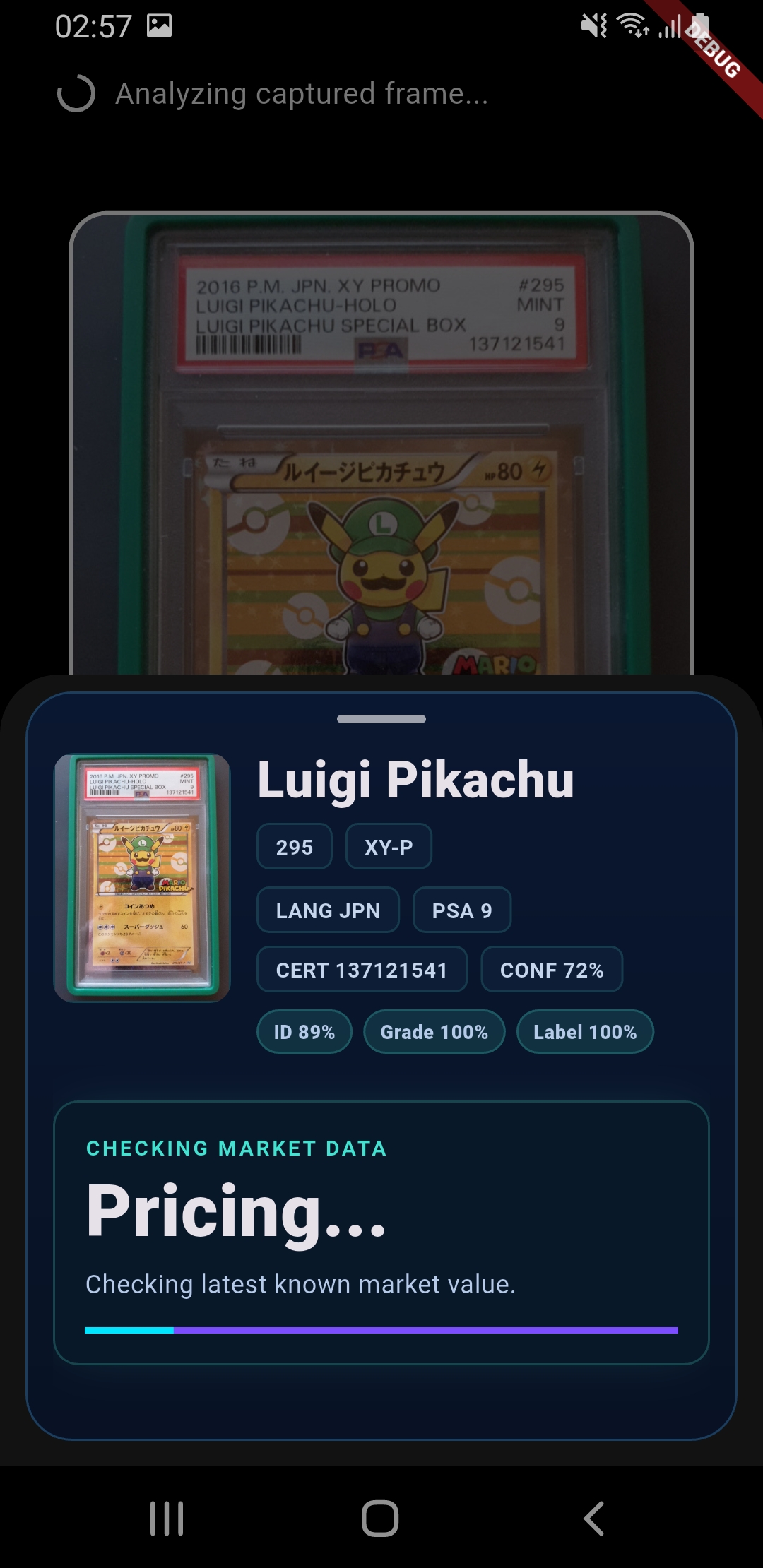
Card Pricing
-
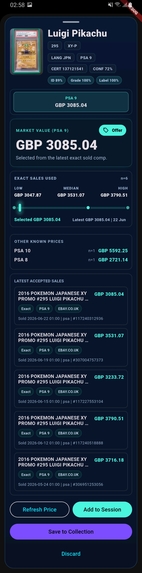
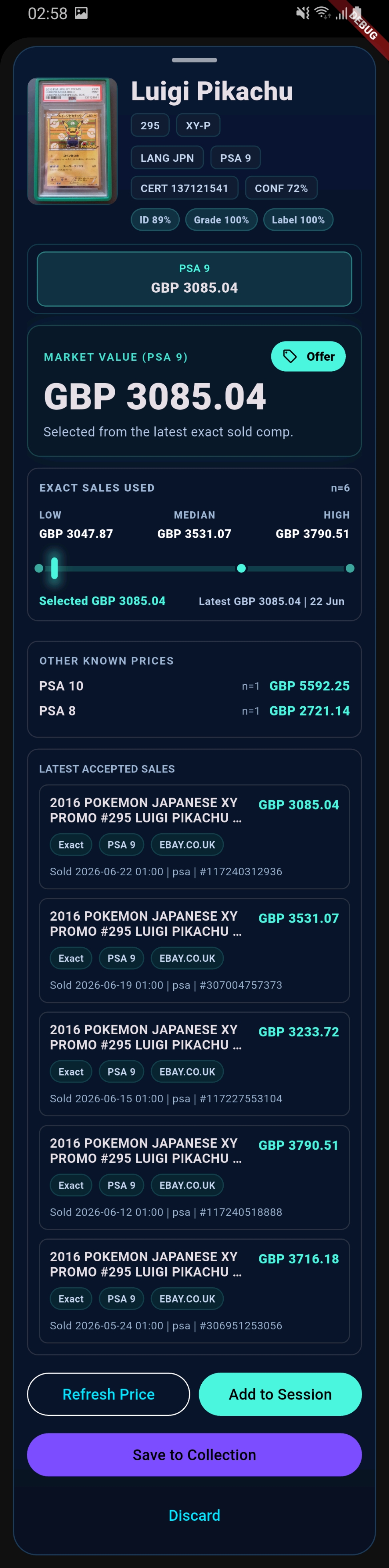
Price Results
-
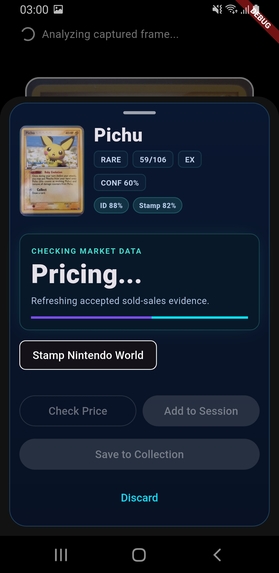
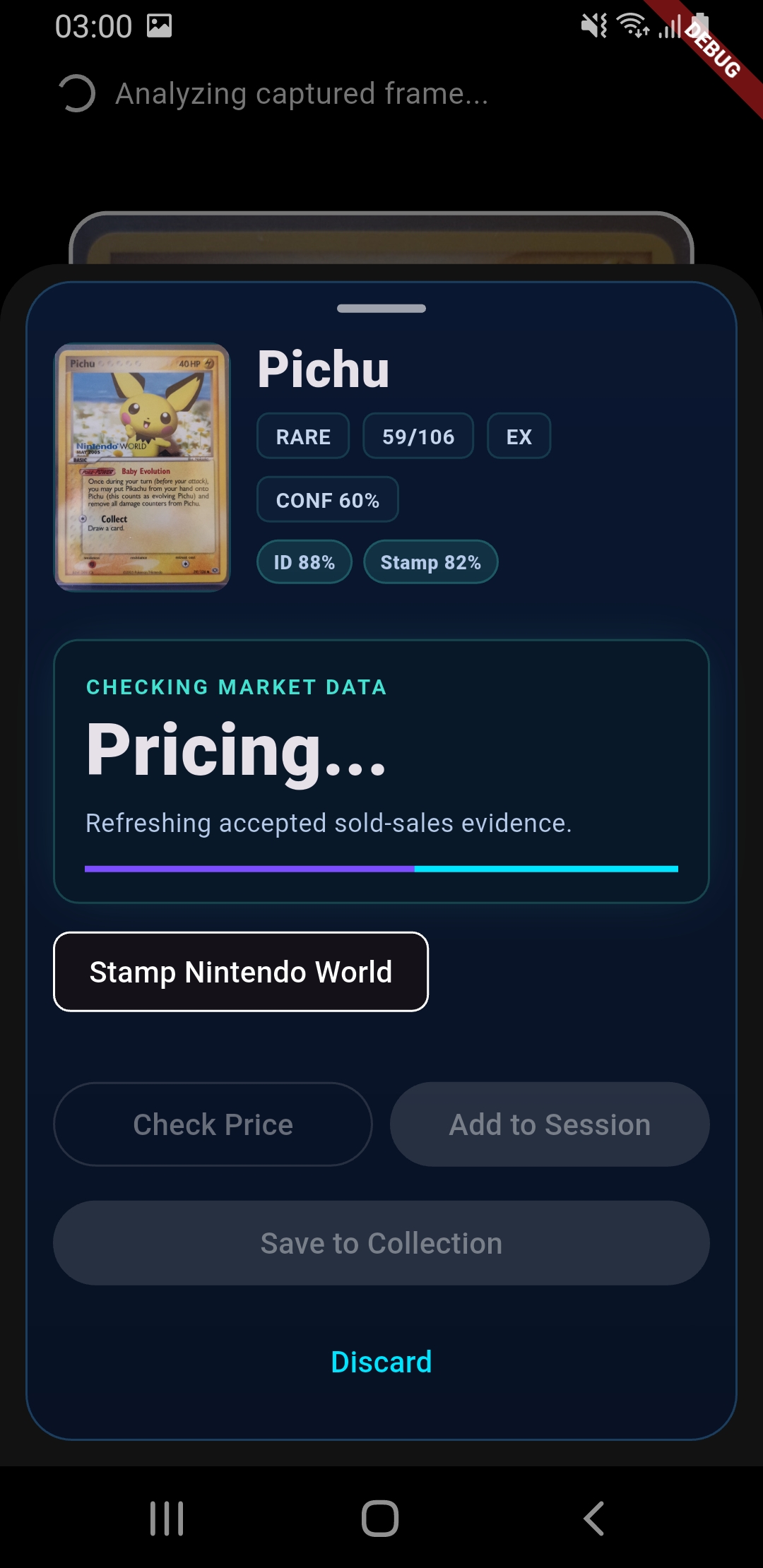
Rare card pricing
-
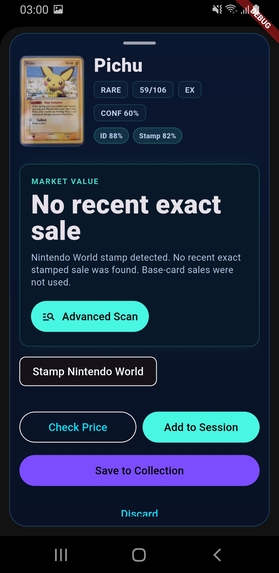
Advanced Search
-
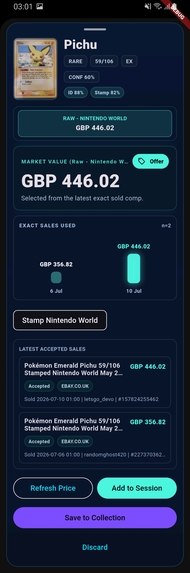
Advanced Search price results
-
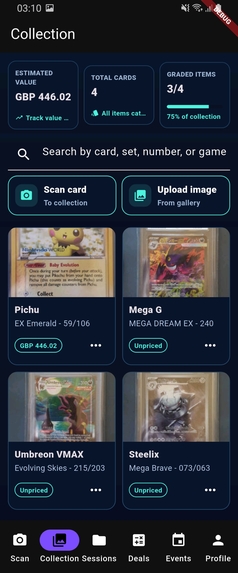
Collectios
-
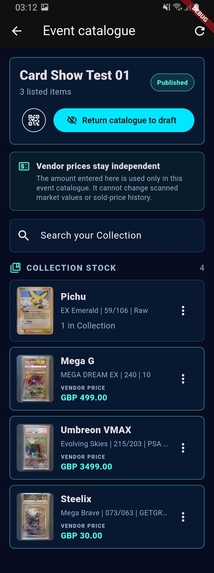
Event Catalogue
-
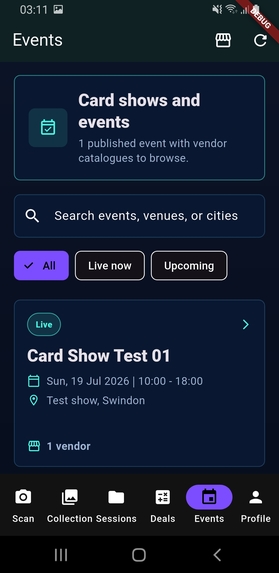
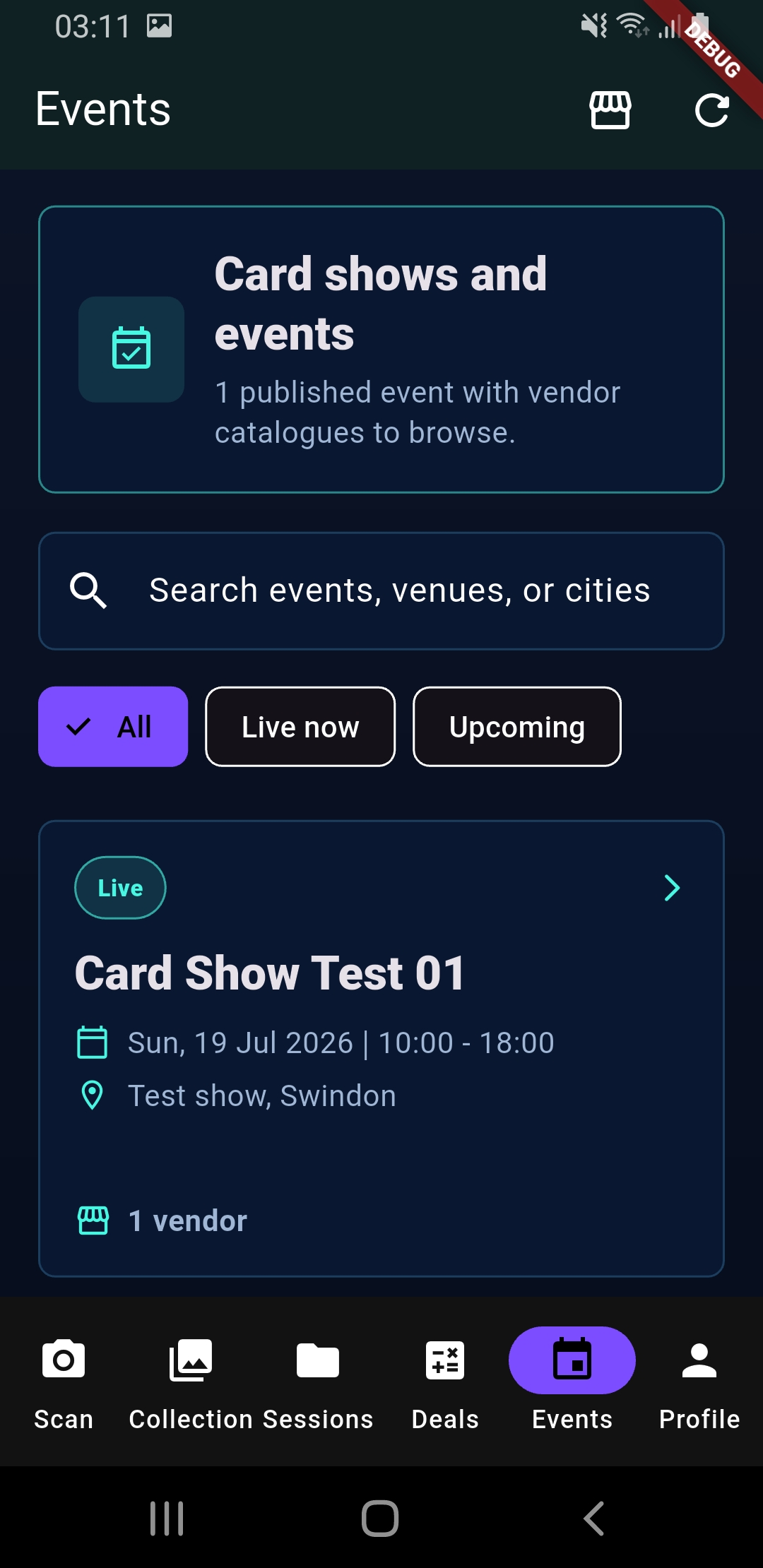
Events
-
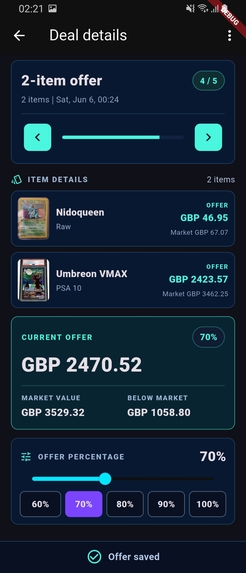
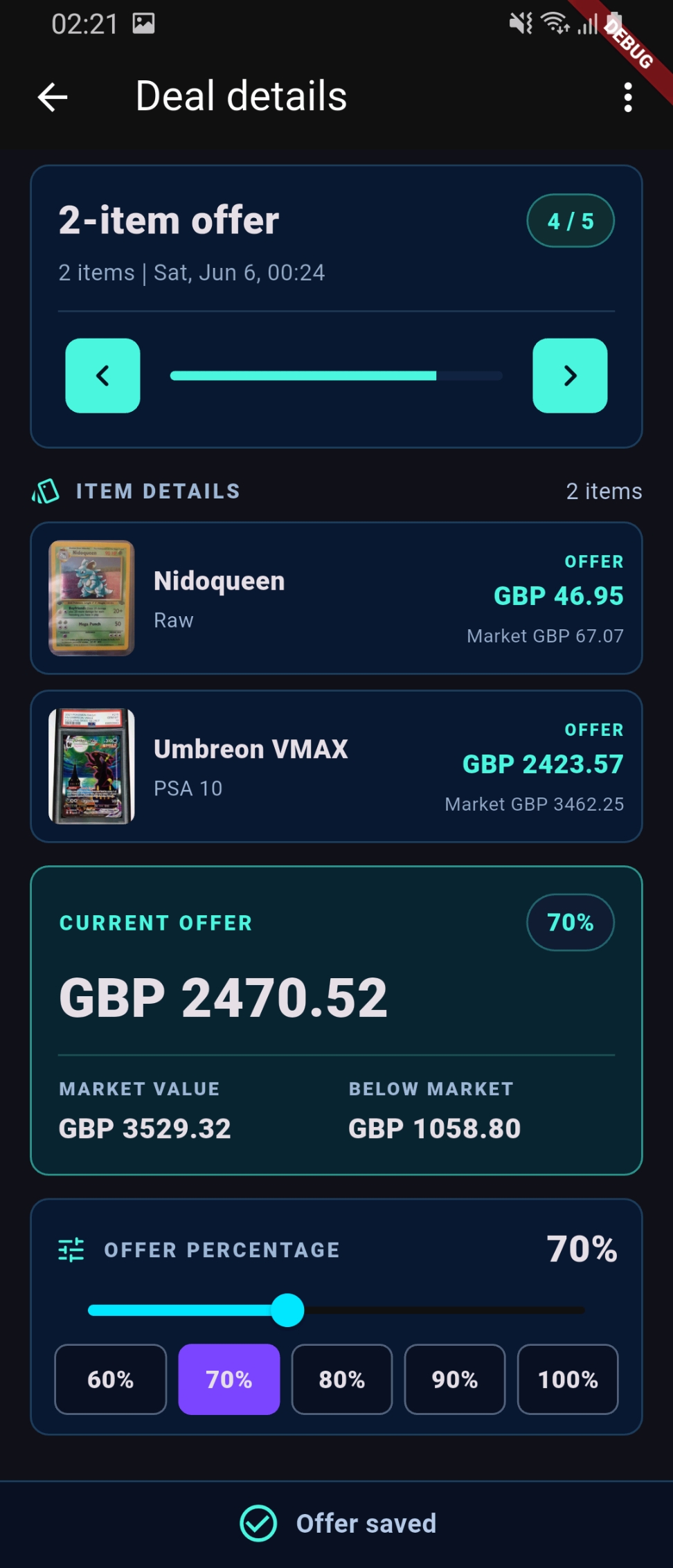
Multi-deal offer
Inspiration
I started Green Spider TCG because I was tired of paying too much for cards without having reliable information in front of me.
The scanning apps I tried could normally identify the card, but the pricing was often too broad to be useful. Results could mix raw and graded cards, different grades, languages, variations or grading companies. Some apps also seemed to provide more advertising than practical help.
My requirement was specific. If I scan an ACE 10, I want to know what that exact card in an ACE 10 has sold for. I do not want a general range created from PSA, CGC, raw copies and every other version of the same card.
I also felt that the UK market was poorly represented. Most tools concentrate on the largest grading companies, but collectors here also use ACE, MGC, PG Grading and Get Graded. Other countries have their own regional graders as well.
I wanted Green Spider to recognise these cards properly, not treat them as exceptions. The aim was to identify the item in front of the collector and find pricing evidence that was genuinely relevant to it.
What it does
Green Spider is an AI-assisted trading card identification, market-pricing and collection-management application.
A collector can photograph a raw card, graded card or graded booster pack. Green Spider identifies information including the card name, game, set, number, language, finish, variation, grading company, grade and certificate number.
It looks for details that may change the value of a card, such as reverse holo, alternate art, first edition, promotional stamps and specialist finishes. It also supports regional grading companies that are often missing from similar tools.
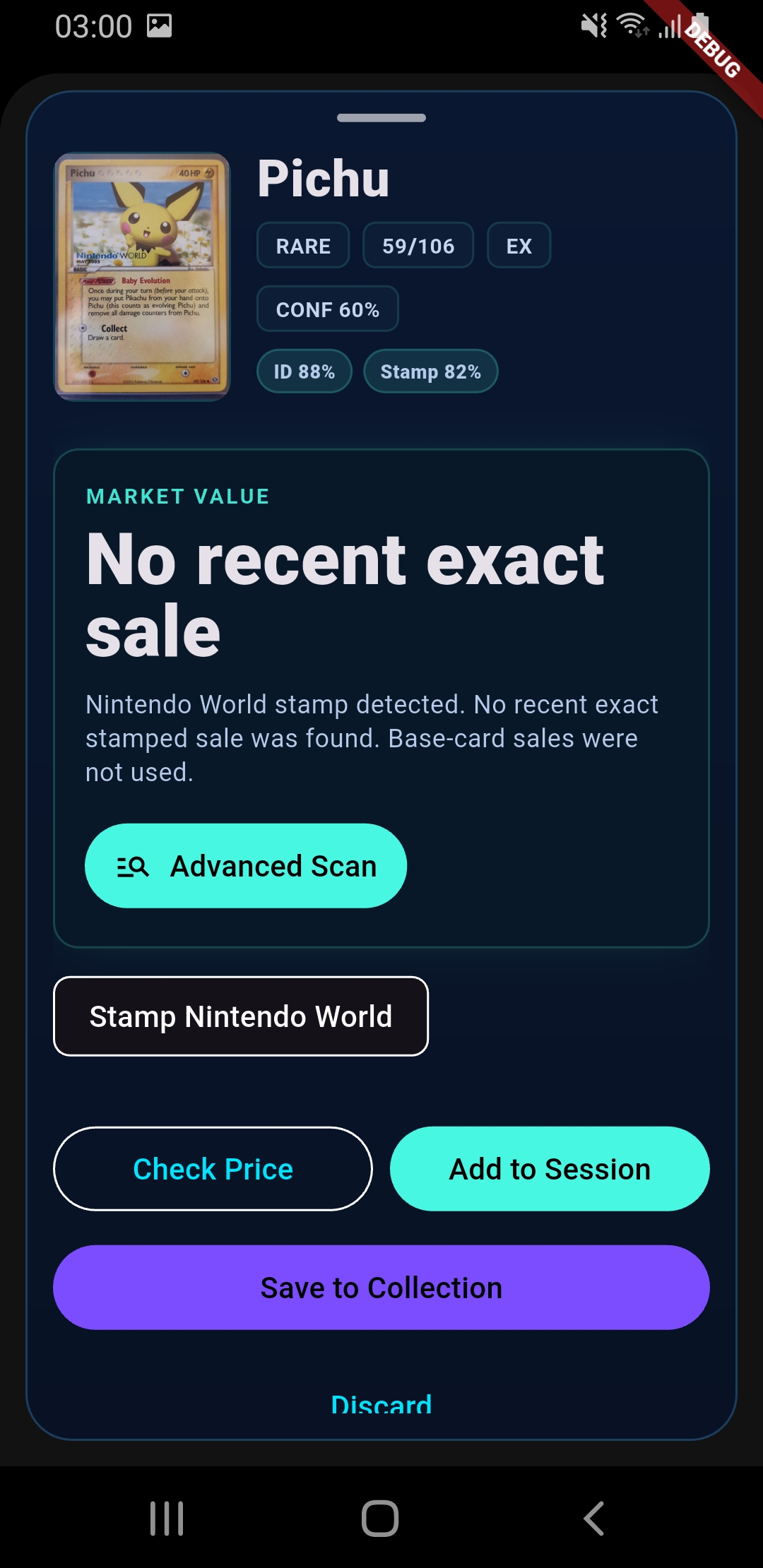
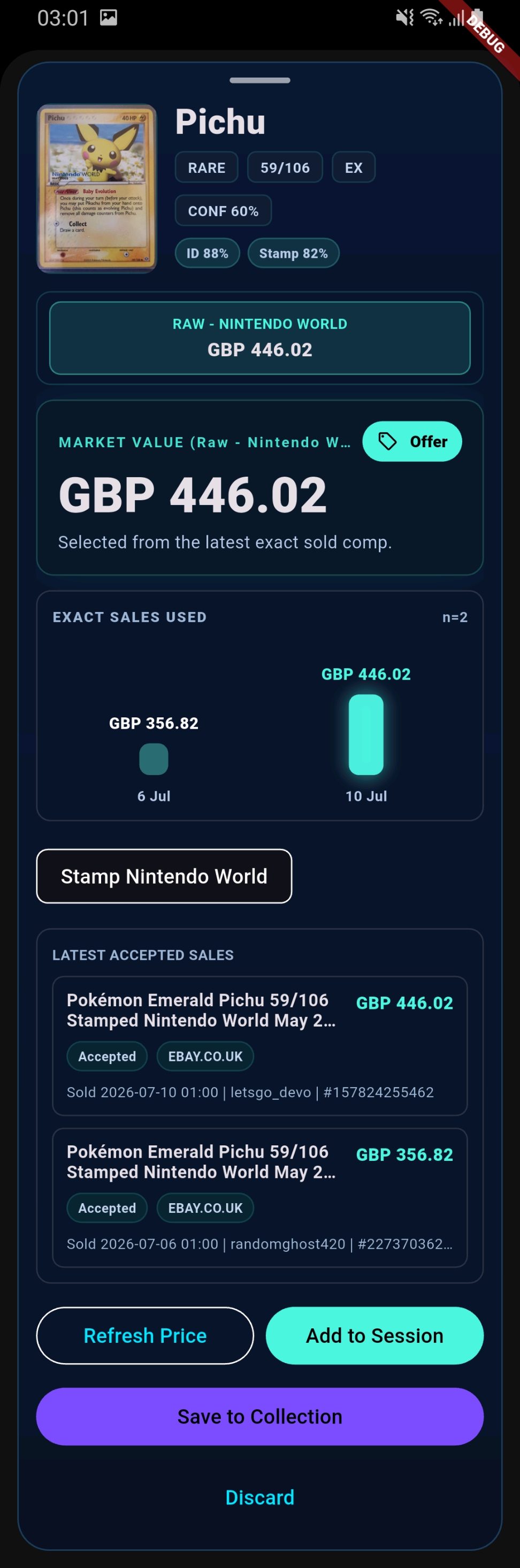
After identifying the item, Green Spider searches sold-market data and checks each listing before using it for pricing. A result may look relevant while actually being the wrong variation, language, grade or grading company. It may also be a raw copy, bundle or sealed product.
Green Spider separates exact matches from comparable evidence and excludes listings that do not belong. When the available price is based on a comparison, the app explains that. When there is not enough reliable information, it says so rather than displaying a confident but misleading value.
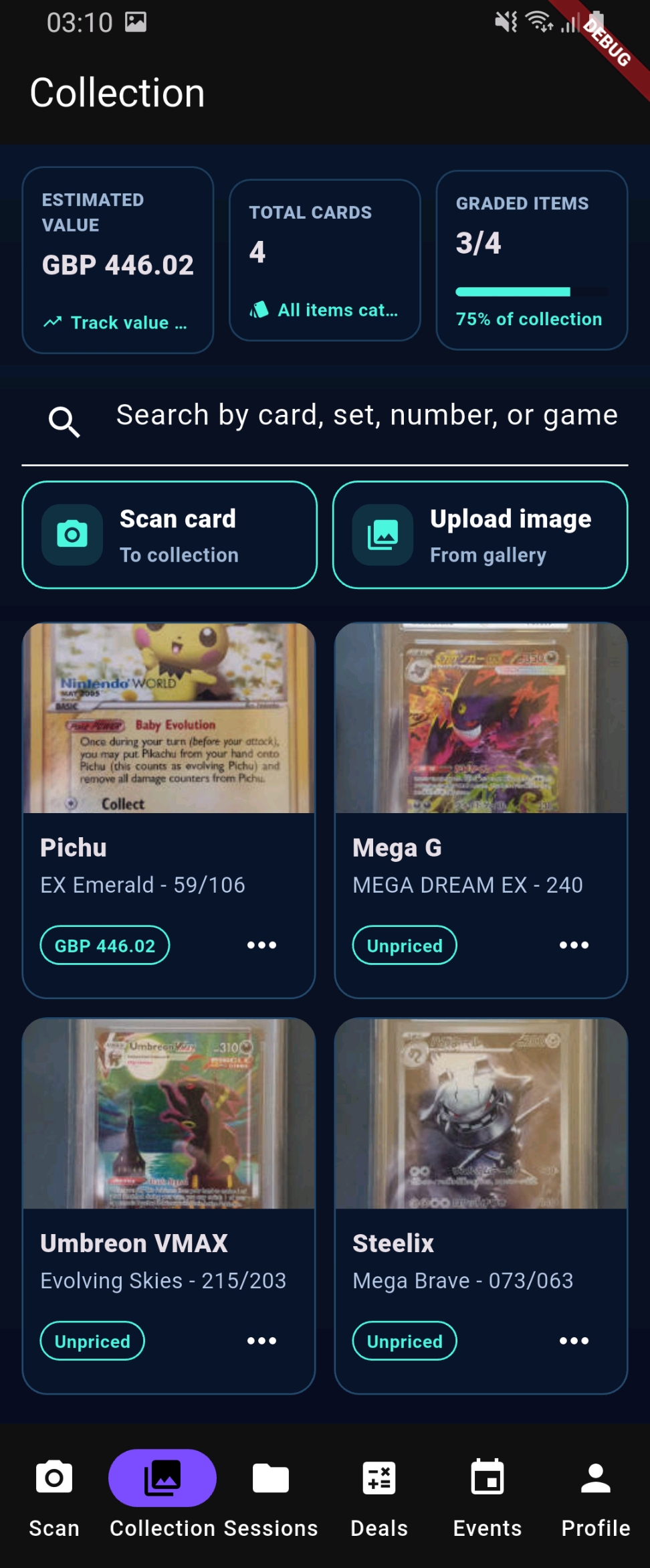
Collectors can review accepted sales, save cards to their Collection, track stored prices, create scanning sessions and prepare individual or bulk vendor offers.
Green Spider also includes an event and vendor platform.
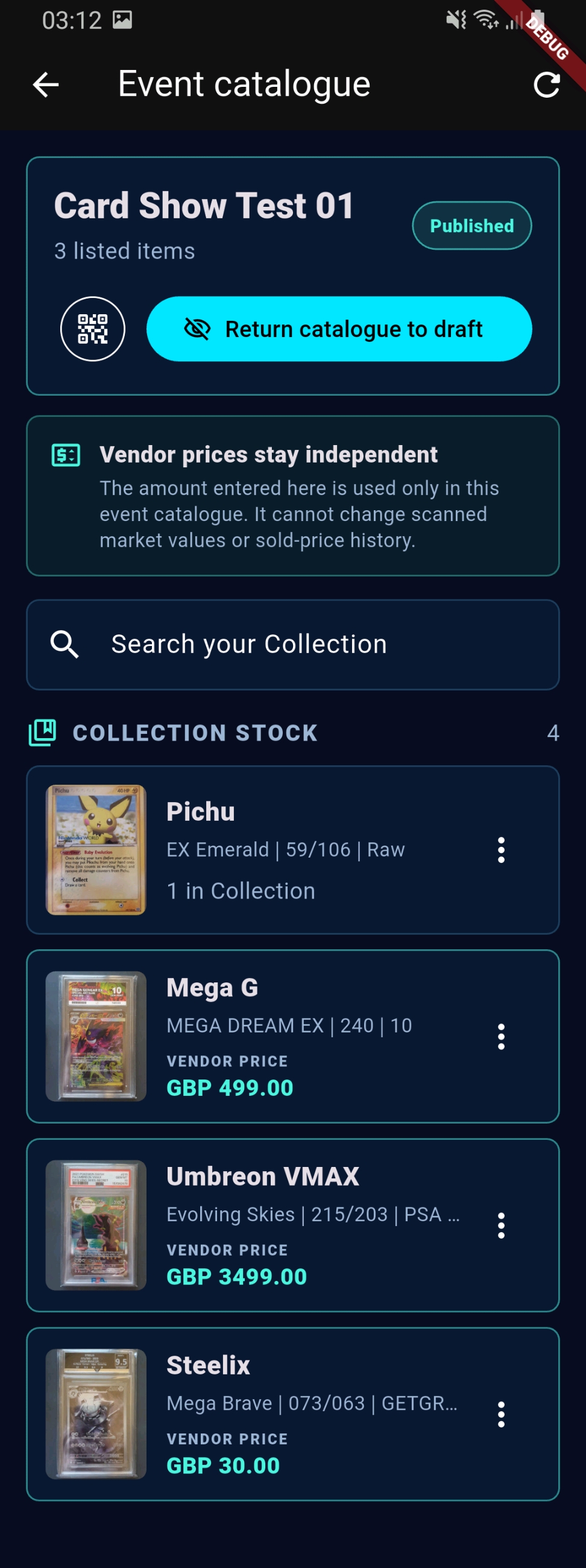
Administrators can create events, open them for vendor enrolment and review applications. Approved vendors can select items directly from their existing Collection, set event-specific prices and quantities, and publish a catalogue.
Collectors can browse an event, select a vendor and search the stock they are bringing. Visitors without the app can access the same information through a QR code or temporary public link.
Vendor asking prices remain separate from Green Spider’s market valuations. The vendor decides what they want to charge, while the collector can use independent sold-market information to form their own view.
How we built it
I started working on it earlier with a previous generation of AI models. I knew what I wanted the product to become, but I often struggled to make the system understand the wider vision. Too much time was spent repeating context, correcting simple mistakes and debugging features that should have been straightforward.
Eventually, I put the project aside.
I returned when GPT-5.6 became available and noticed the difference quickly. The sessions were longer and more consistent. It understood more of the application at once and could examine an idea with me instead of simply following my first instruction, even when that instruction was not the best approach.
I did not need a tool that agreed with everything I suggested. I needed something that could help me test my thinking.
GPT-5.6 helped me review the product, question weaker decisions and decide how the different parts should work together. Codex then worked directly across the codebase to implement, debug and improve those decisions.
Before Build Week, Green Spider had the foundation of a scanning and collection application, but it was not yet the complete product I had pictured.
During Build Week, I used GPT-5.6 and Codex to improve the usability and navigation of the mobile app, turn basic screens into interactive workflows, improve card and slab recognition, strengthen sold-listing matching, restructure how card and pricing data is stored and reused, and expand the Collection, session and vendor-offer features.
I also built the complete event and vendor workflow. This included vendor applications, administrator approval, event enrolment, stock selection from Collection, event-specific prices and quantities, catalogue publishing, QR access and temporary public event pages.
The mobile application is built with Flutter and Dart. Firebase provides authentication, Firestore, Storage and backend functions. The administration console is built with React and TypeScript.
Vertex AI is used inside the finished application as a runtime tool for analysing card images. Apify retrieves eBay sold listings. Green Spider’s backend then resolves the item identity, checks existing information, classifies the sales and determines what can responsibly be shown to the collector.
Codex was used throughout the development process, not only to produce isolated pieces of code. It helped inspect existing work, plan features, implement changes, investigate failures and improve the mobile app, backend and administration console as parts of the same product.
Challenges we ran into
At first, I thought identifying the card would be the hardest part. In practice, recognising the general card was only the beginning.
Two cards may use the same artwork while differing in language, finish, edition, stamp or promotional status. A graded card adds another layer through the grading company, grade, certificate number and slab label. Lighting, reflections, sleeves and damaged labels can also affect what the system sees.
The harder problem was keeping the identity correct throughout the pricing process.
A search may return many listings that look suitable but belong to a different variation, grade, language or grading company. If these results are simply averaged together, the final value may look convincing while having little connection to the item that was scanned.
Green Spider therefore handles card identity, grading evidence and pricing evidence as connected but separate parts of the process. A listing must pass specific checks before it can influence the displayed value.
The event platform introduced a different set of challenges. Vendor approval, event enrolment, catalogue status, stock quantities and public access had to work without interfering with the existing Collection or pricing system.
The backend also needed to prevent vendors from allocating more copies across overlapping events than they actually owned. Public pages had to be easy to open through a QR code while protecting internal account information and removing access to stock after the event ended.
Accomplishments that we're proud of
Green Spider has been tested with hundreds of cards across different languages, variations, grading companies and collectible types.
In my testing, it has often returned a more specific result than tools that stop at a general card match or broad value range.
I am particularly proud that Green Spider does not ignore smaller grading companies. It preserves the real identity of the graded item and clearly explains when the available evidence is a comparison rather than an exact match.
I am also proud that the app is willing to say when there is not enough reliable pricing information. A less impressive but honest result is more useful than a precise-looking number produced from the wrong sales.
The event and vendor platform is one of the largest additions completed during Build Week. It introduced new user roles, approval workflows, inventory controls, catalogue publishing, QR access, public pages and administration tools.
A vendor can now take a card from their Collection and add it to an event catalogue without entering the same information again. An organiser can manage participation, and a visitor can browse available stock through the app or a public link.
A card can move from scanning, to pricing, to the Collection, and then into an event catalogue as part of one connected system.
What we learned
One of the main things I learned is that the value of an AI development partner is not measured only by how quickly it produces code.
The real value comes when it understands enough of the product to question an approach, explain the consequences and suggest a better option.
Earlier in the project, I often received solutions that were technically valid but did not solve the real problem. With GPT-5.6, the development became more like an ongoing discussion. I still made the final decisions, but I could examine those decisions properly before they became part of the codebase.
I also learned that accuracy is not only about recognising what appears in an image. The card, variation, language, grading company and grade together define the item. Losing one of those details can change the result completely.
Pricing needs the same level of clarity. A collector should be able to understand whether the displayed value came from an exact sale, another grade, another grading company or a broader comparison.
What's next for Green Spider TCG
The next step is to release Green Spider to a wider group of collectors and learn from real use outside my own testing.
I want to improve support across more trading card games, languages, regional grading companies and collectible types.
The longer-term goal is to build a specialist AI recognition system designed and trained specifically for trading cards across complete TCG catalogues. The current application proves the workflow and shows why precise identification matters. The next stage is to make that identification more accurate, more affordable and less dependent on general-purpose models.
I also want to continue developing the event platform so that Green Spider can be useful before, during and after real card shows.
Green Spider started because I wanted better information before buying a card. Today, the same card can move from identification and pricing into a personal Collection, a vendor offer and a live event catalogue without the information being entered again.
Built With
- apify
- cloud-firestore
- dart
- firebase
- firebase-authentication
- firebase-functions
- firebase-storage
- flutter
- gemini
- google-cloud
- google-vertex-ai
- gpt-5.6
- node.js
- openai-codex
- react
- riverpod
- typescript

Log in or sign up for Devpost to join the conversation.