Inspiration
Earlier this year, I was due to speak at a conference after a few months away from public speaking. Everything that could go wrong, did: unclear organiser details, messy day-of logistics, and holes in my own preparation.
The risks were small on their own: the wrong slide version, no offline demo fallback, missing adapters, unclear venue AV, forgotten follow-up materials. Together, they are exactly how a good talk gets derailed.
I built Green Room so that never happens again.
What it does
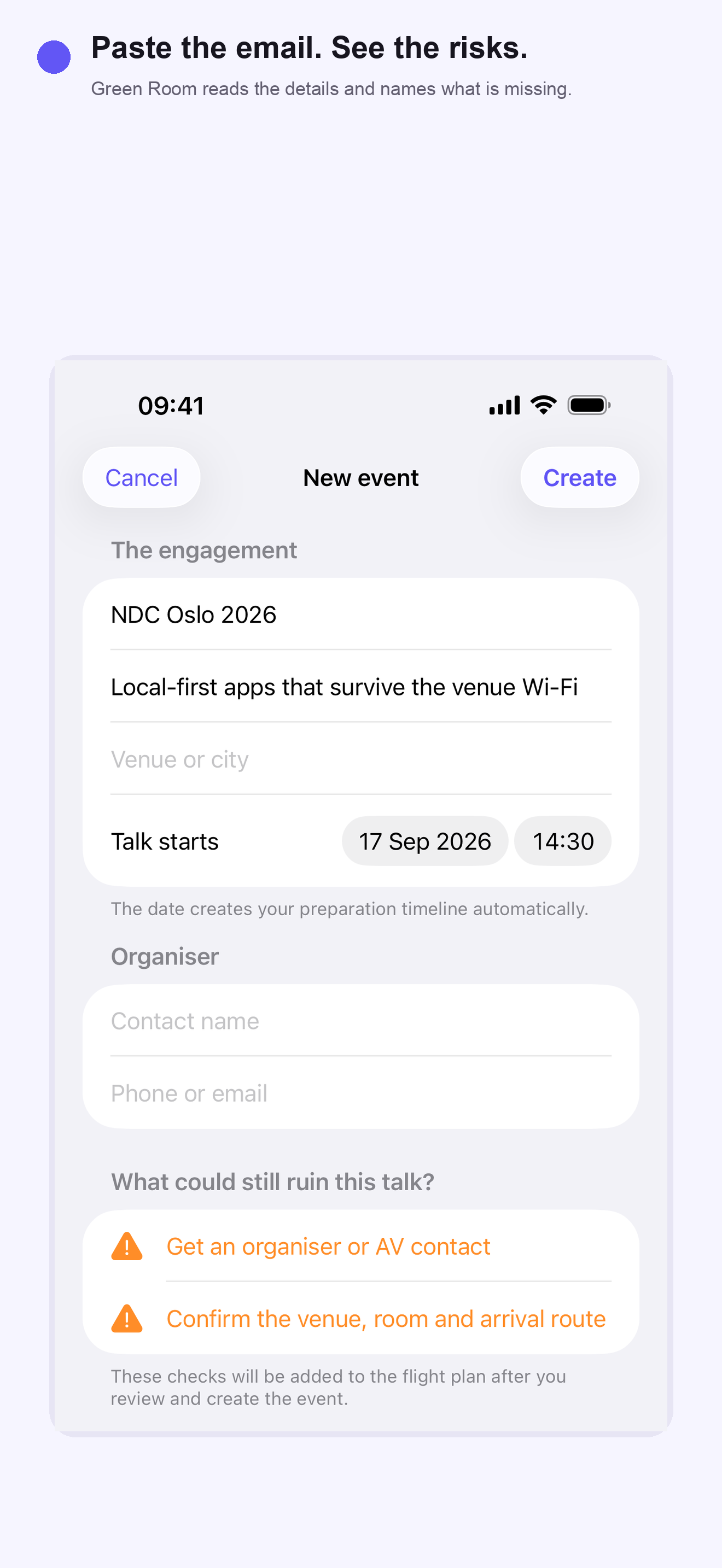
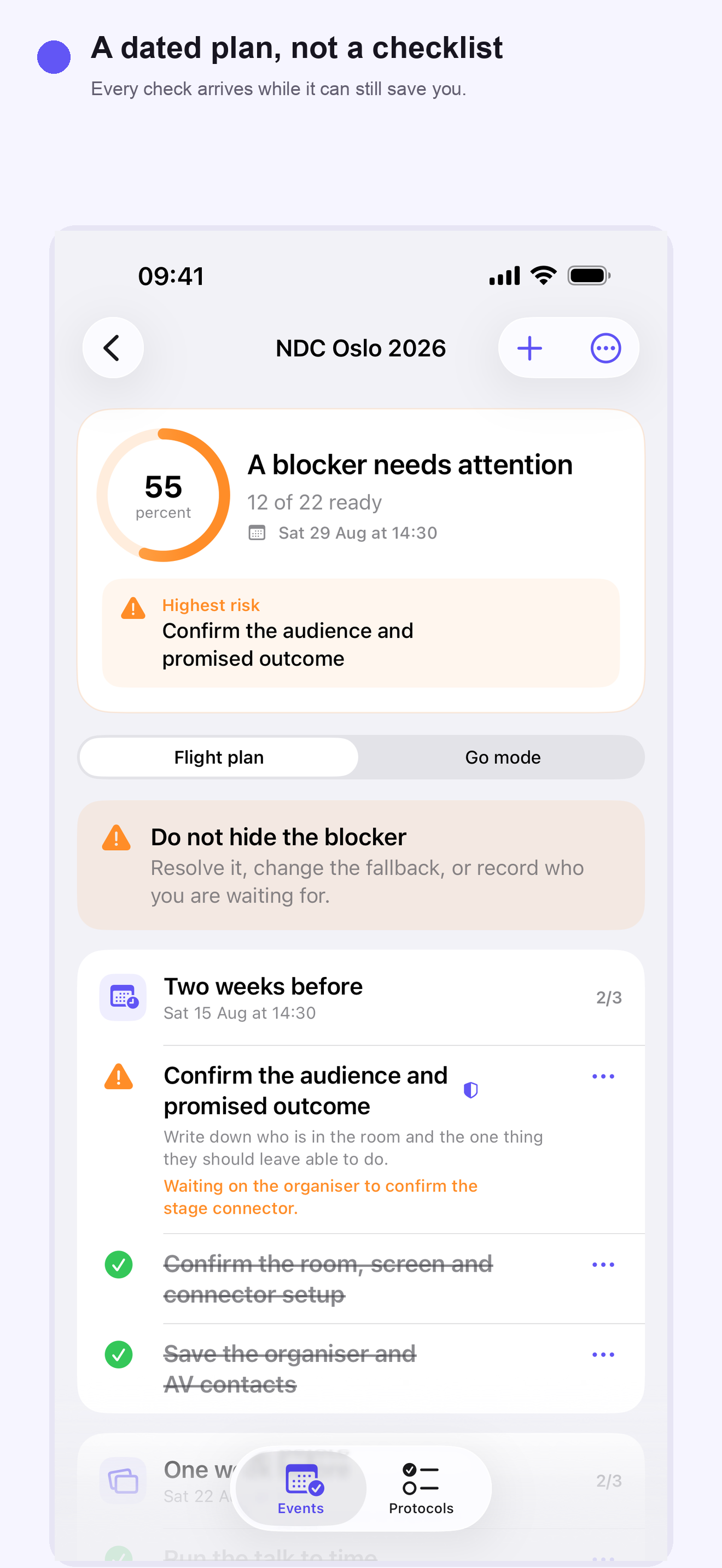
Green Room is a local-first iPhone flight plan for conference speakers. Paste an event confirmation, review the details, and get a plan that surfaces what could still ruin the talk: missing AV requirements, unconfirmed venue information, absent demo backups, or critical kit not yet packed.
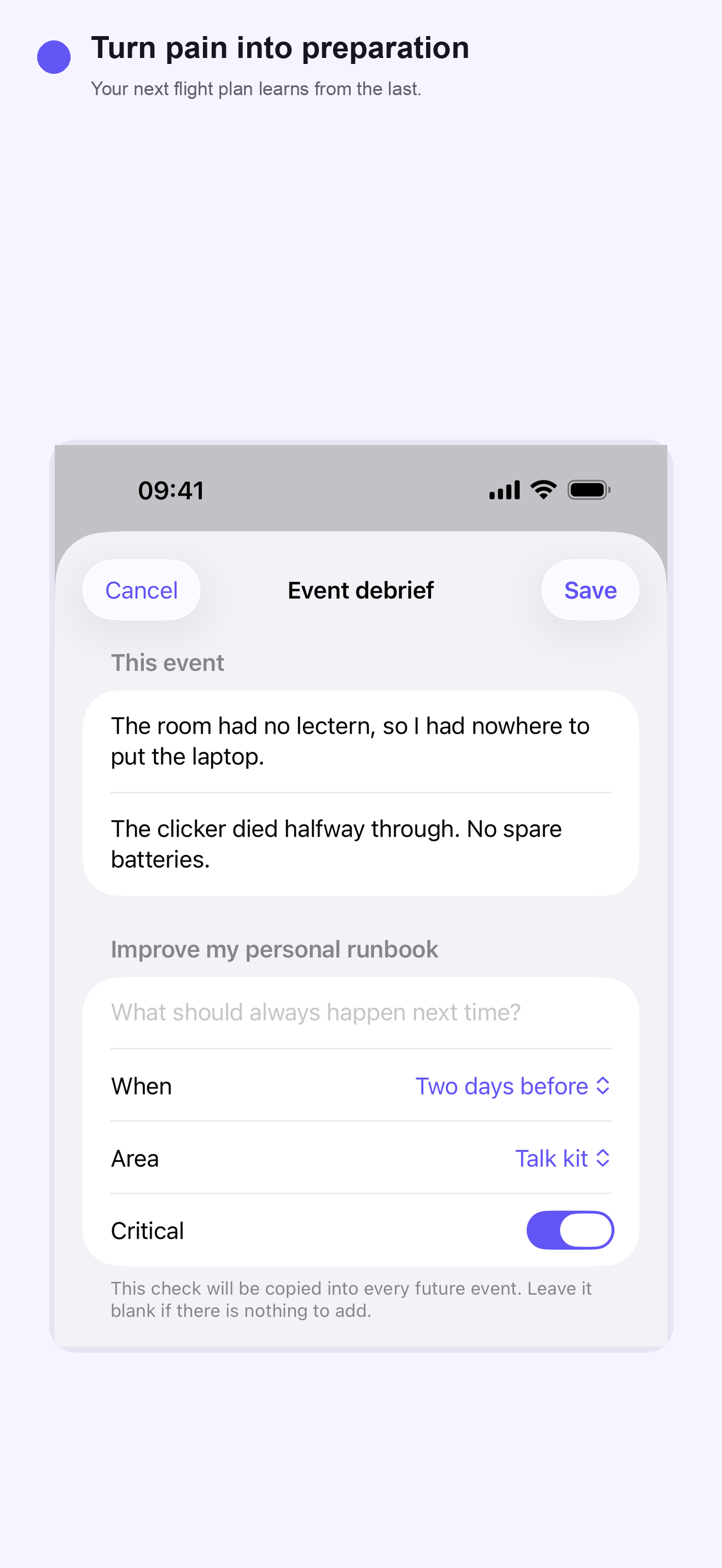
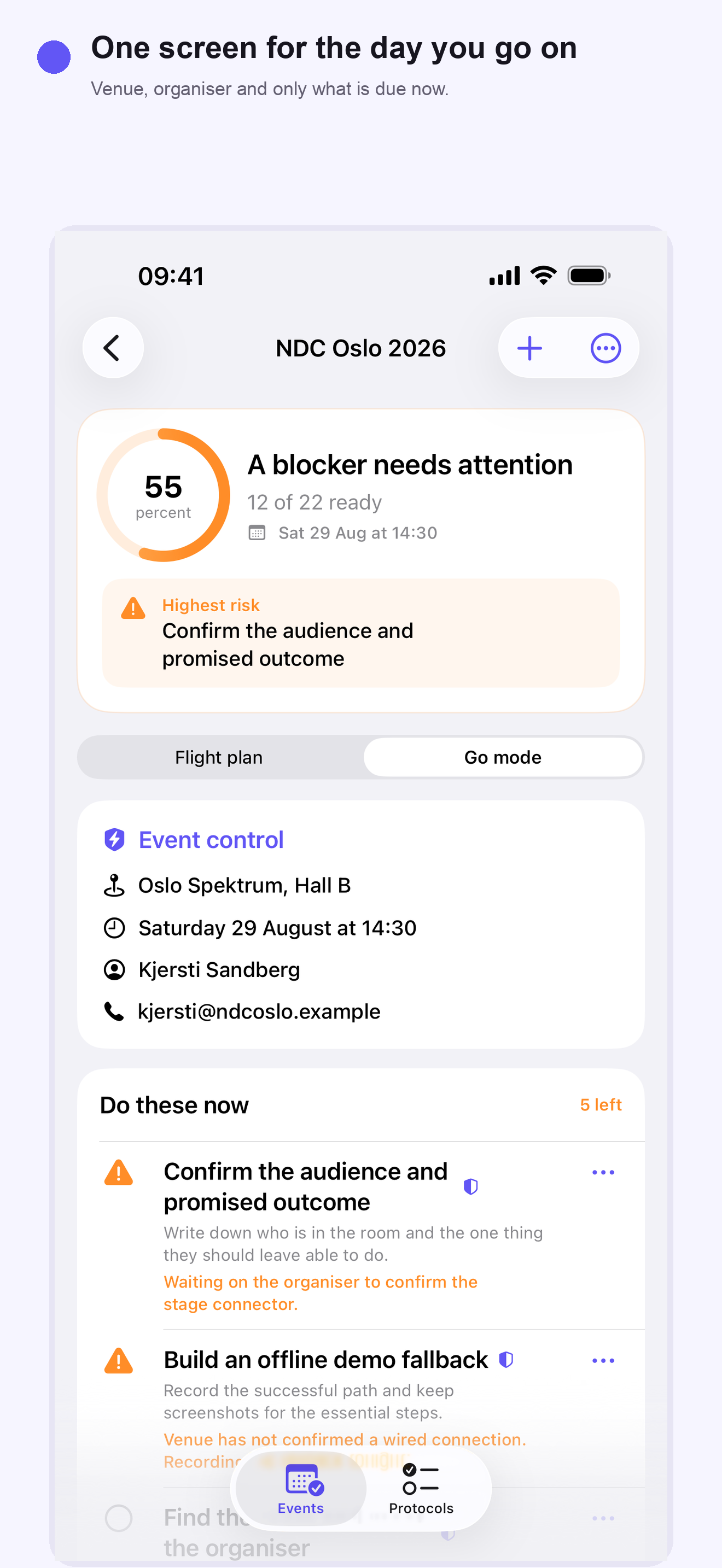
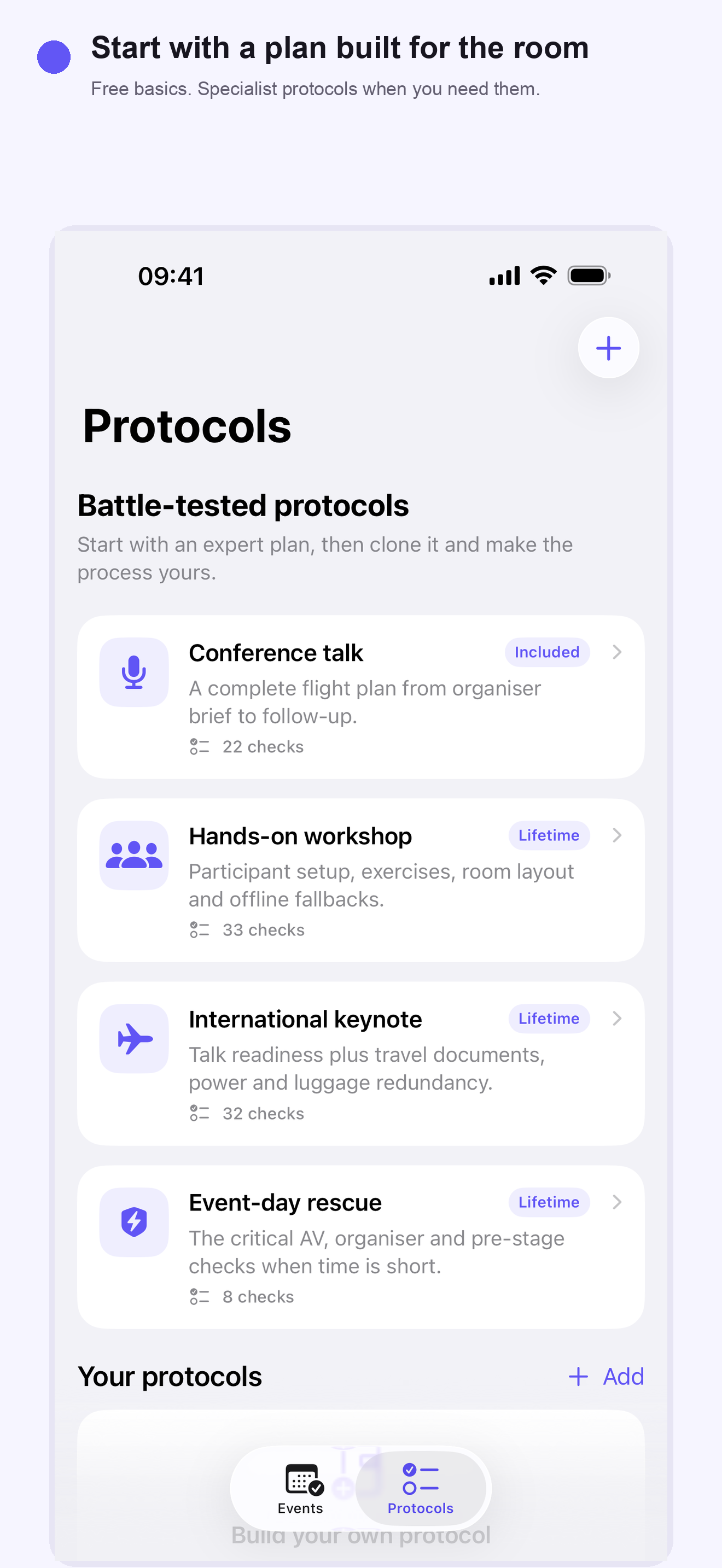
It gives speakers a reverse timeline, clear Ready / Blocked / Not Started states, local reminders, a focused event-day Go Mode, specialist protocols, and a personal runbook that improves after each event.
How we built it
Green Room is a native iPhone app built with SwiftUI and SwiftData. Event plans, checklist items and runbook lessons are stored on-device, while UserNotifications handles local preparation reminders .
The product is deliberately narrow. There are no accounts, cloud sync, analytics dashboards, generic travel planning or AI-generated checklist nonsense. The core experience is deterministic: event details and an opinionated speaker preflight system produce a clear set of actions and risks.
Challenges we ran into
The hard part was not writing a checklist. It was avoiding a worse version of every other productivity app.
It was tempting to add calendars, email integrations, AI coaching, travel booking, collaboration and an overcomplicated onboarding funnel. None of those solve the speaker’s actual problem: knowing what is still likely to fail before they are on stage.
We also had to make the import flow useful without pretending it is magic. Green Room extracts useful event facts, then makes missing information visible rather than inventing answers.
Accomplishments that we're proud of
- Shipped Green Room publicly on the App Store.
- Built a genuinely useful first-run flow: event confirmation → risk brief → flight plan.
- Made the app calm and specific rather than another generic packing list.
- Kept the business model honest: one useful event free, then lifetime once for repeat use. No trial maze or subscription trap.
- Built an event-day Go Mode for when the speaker needs action, not another dashboard.
- Preserved privacy by keeping event, preparation and runbook data on the device.
What we learned
The best product insight came from a bad real-world experience: users do not need more features when they are under pressure. They need fewer decisions and a clear next action.
I also learned that the most compelling product demo is not a feature tour. It is showing a real risk early enough for someone to fix it.
And I learned that being deliberately boring is a feature. For an occasional-use utility, a lifetime purchase and local data are more trustworthy than subscriptions, accounts, etc
What's next for Green Room: Talk Day Prep
The focus is not broad consumer acquisition. It is getting Green Room in front of speakers with actual upcoming events through organiser welcome packs, speaker communities and my own talks.
The measure of success is simple: did the app catch a real risk, prompt earlier action, and become the thing a speaker opens before their next event?

Log in or sign up for Devpost to join the conversation.