-
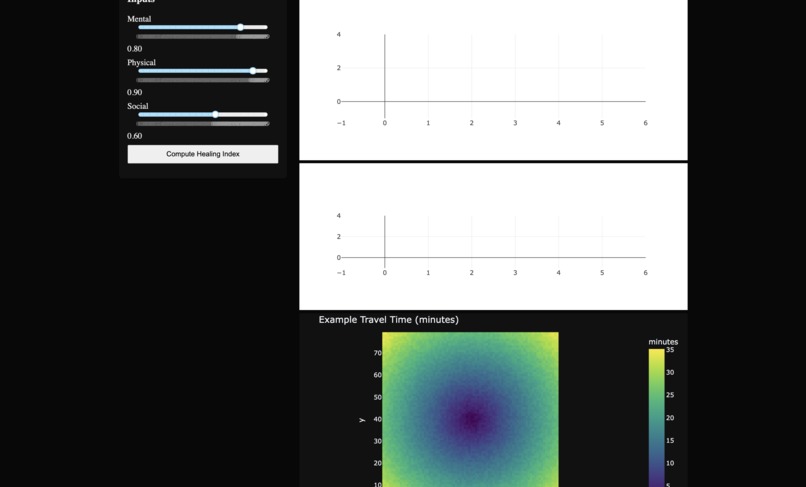
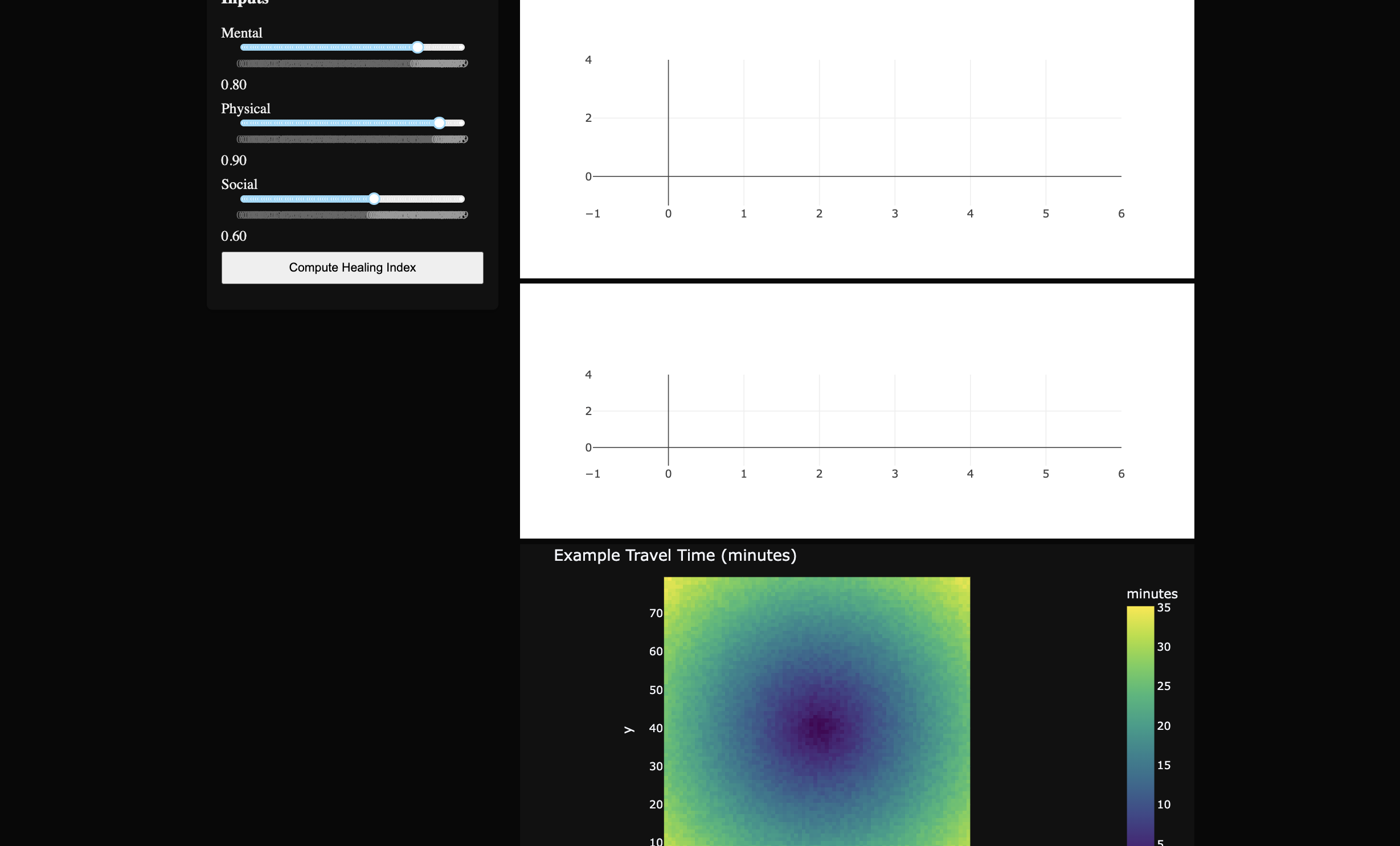
Dashboard view of what we have built
-
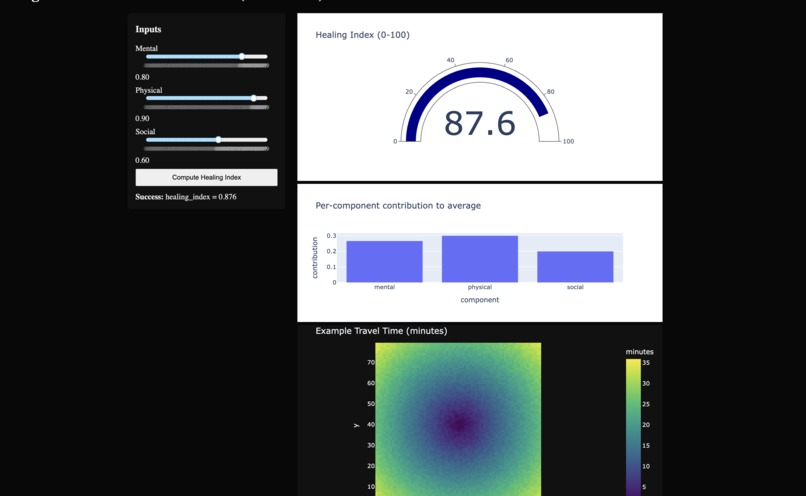
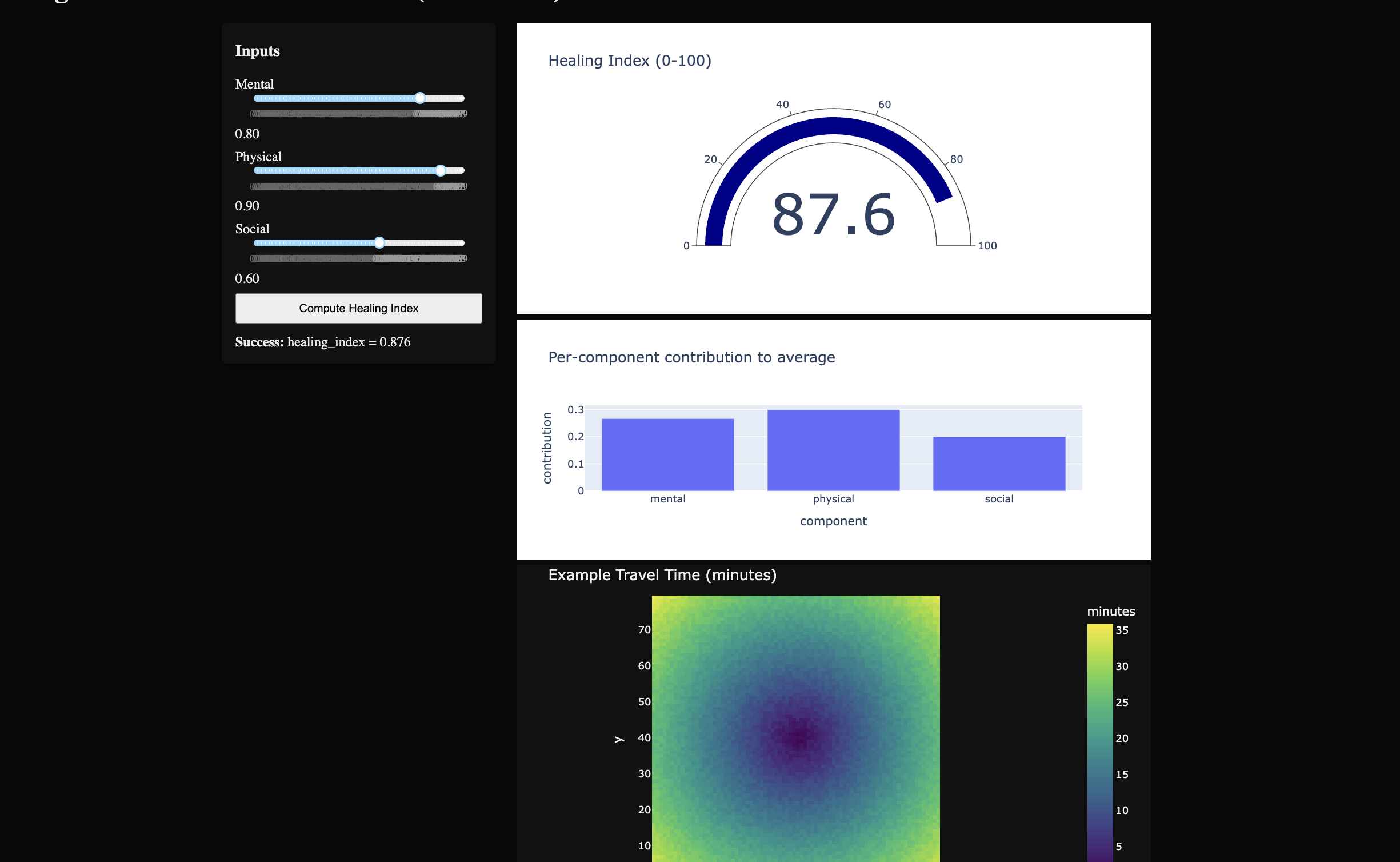
Sample results
About the project — HealingGlobe
Inspiration
HealingGlobe started as a small experiment to combine a simple, explainable index with a tiny API so people can prototype wellness analytics quickly. I wanted a minimal, well-tested example that shows how domain components (mental, physical, social) can be combined into a single score while keeping the math transparent.
What I learned
- How to design a very small Flask application with a clear separation between API code and pure functions.
- The value of small unit tests that document expected behavior and edge cases.
- A reminder that even tiny transforms (here we use a square-root smoothing) change distributional properties; always document them.
How I built it
- I wrote a single pure function compute_healing_index(scores, weights) that:
- validates inputs (non-empty, values in [0,1])
- computes a weighted average
- applies a smoothing transform: final = (\sqrt{\text{avg}})
In math form: given components (s_i\in[0,1]) with weights (w_i\ge 0),
$$ \text{avg} = \frac{\sum_i w_i s_i}{\sum_i w_i}, \qquad \text{index} = \sqrt{\max(0,\min(1,\text{avg}))}. $$
- I wrapped the function behind a tiny Flask blueprint with endpoints:
GET /— basic metadataPOST /health-index— accepts{ "scores": {...}, "weights": {...} }and returns{ "healing_index": x }.
- I added pytest tests for the main behaviors (happy path, weights, invalid inputs).
Challenges faced
- Choosing a compact but meaningful transform: I used the square-root because it modestly penalizes low averages and is monotonic and simple to explain.
- Deciding defaults for weights (fallback to equal weights when none provided or weights sum to zero).
- Keeping the API small while still validating inputs clearly.


Log in or sign up for Devpost to join the conversation.