Inspiration
Transforming syndicated loans from static, long-form legal documents into dynamic, interoperable data. We were inspired by the vision of a "Self-Managing Loan"—where compliance, trading, and ESG tracking are controlled by the underlying data rather than manual spreadsheets and hundreds of pages of PDFs.
What it does
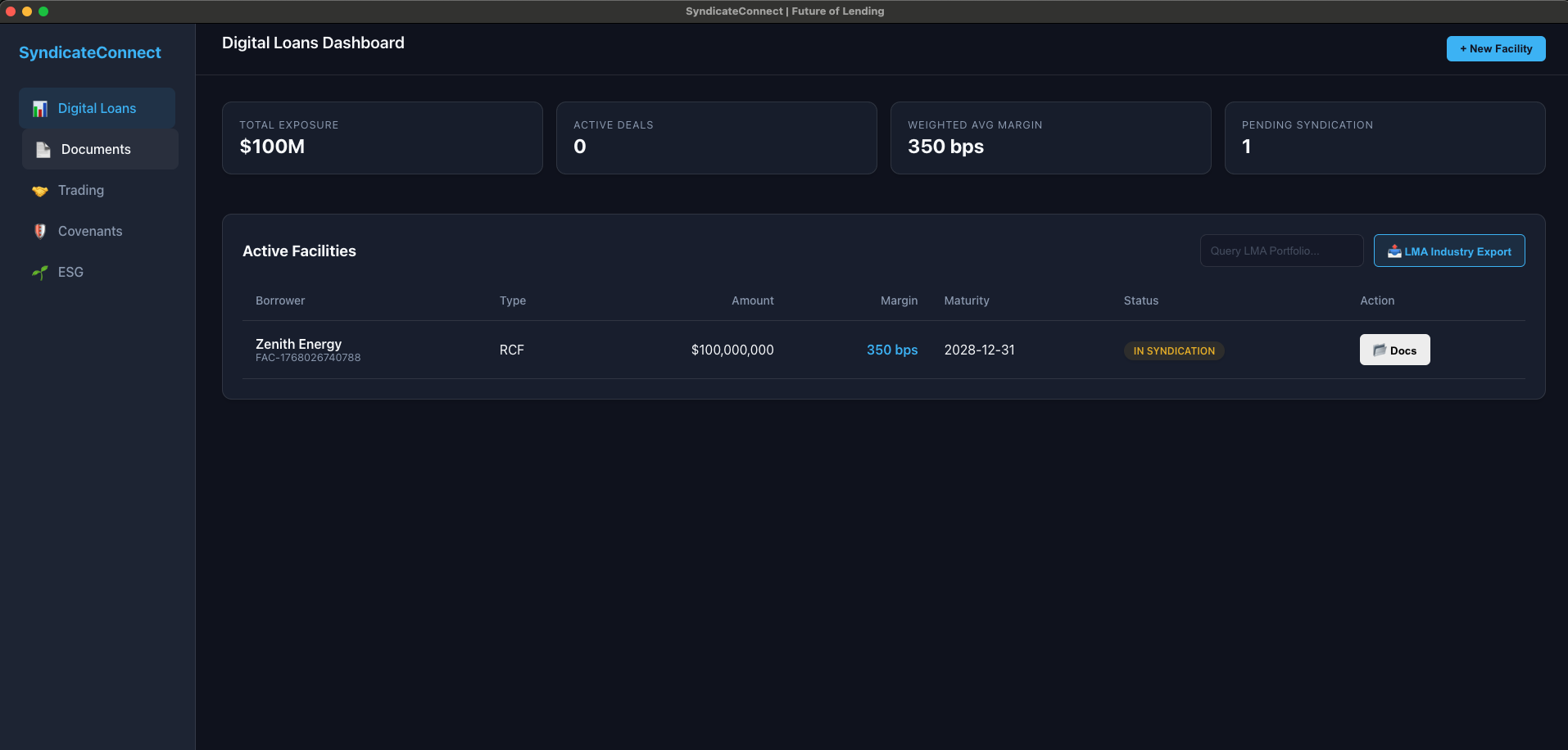
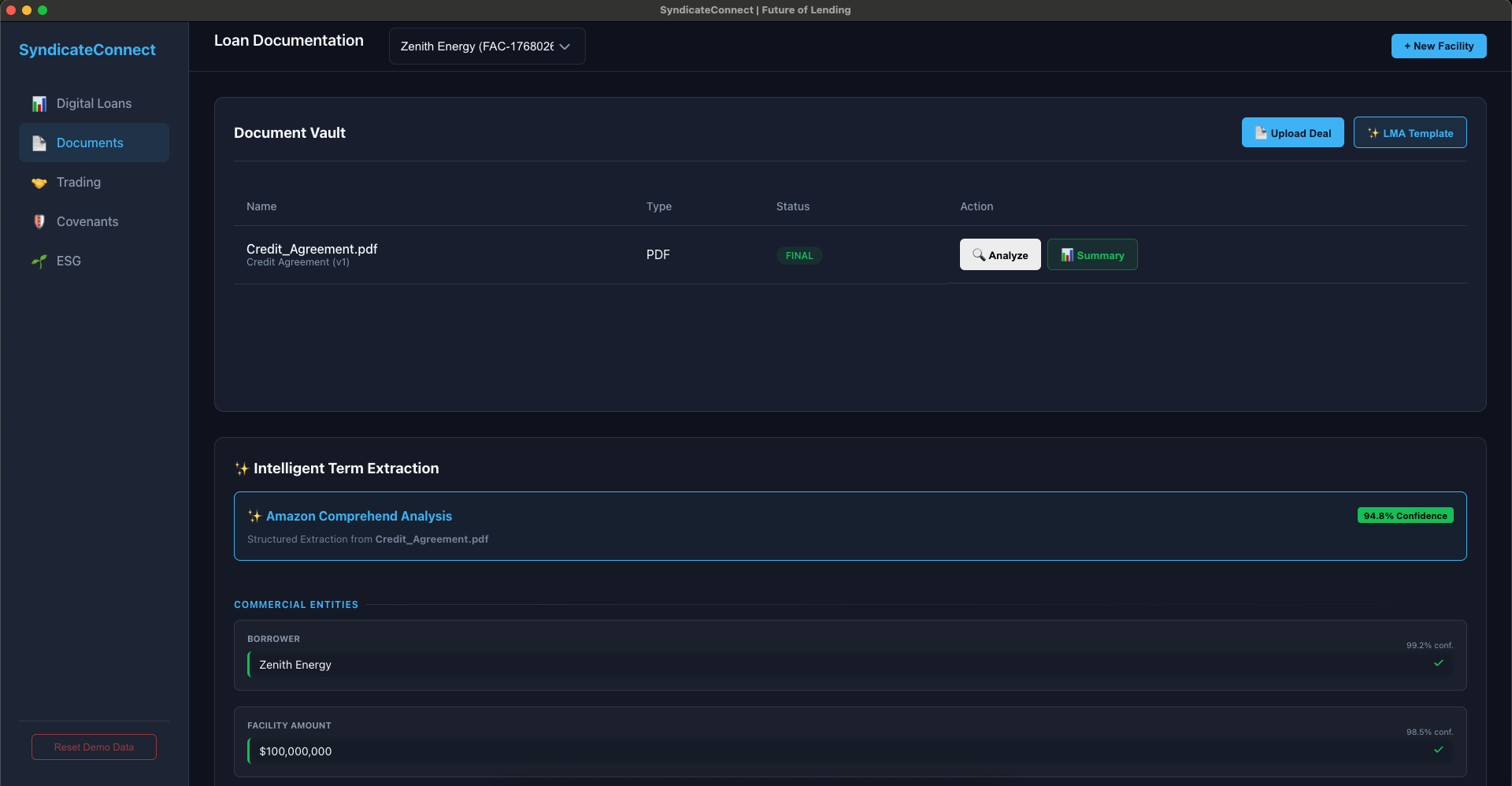
SyndicateConnect is a comprehensive, end-to-end desktop platform for handling the lifecycle of syndicated loans. A sleek "Syndicate Builder" allows lead banks (Arrangers) to define facilities and allocate shares to multiple lenders, creating a real-time Live Cap Table. We have an Intelligent Document Vault and use (simulated) NLP (Textract/Comprehend) to extract commercial terms and legal clauses from Credit Agreements, KYC docs, and ESG reports etc. Different document types trigger custom data-aware analysis. We also support LMA-Standard Secondary Trading which is a transparent trading module where sellers can only trade what they own (position validation). We support Document-Driven Due Diligence whereby trades require specific "Final" documents (Credit Agreements, KYC, Compliance etc.) to be present. Settlement is blocked if automated KYC, Tax, or Sanctions checks etc. fail based on uploaded evidence. As for ESG & Covenants Monitoring we have Real-time tracking of sustainability KPIs and financial covenants, ensuring loans stay compliant and "green."
How we built it
Built as a high-performance Electron application for a secure, native desktop experience.
Frontend is built on a modern "Glassmorphism" UI using Vanilla CSS for premium aesthetics, and Vite for a lightning-fast development cycle.
State Management is implemented using a global IPC-based data flow between the Renderer and Main process, ensuring UI persistence via electron-store.
Validation Engine is taken care of using a custom logic layer that enforces LMA trading rules, preventing overselling and ensuring document-verified settlement.
Challenges we ran into
State Synchronization: Keeping the global facility dropdown in sync with the dashboard and specialized modules (Documents, Trading) required a robust initialization pattern. Complex Cap Table Logic: Managing the math behind secondary trading—debiting sellers, crediting buyers, and dynamically updating the lender registry—while maintaining data integrity. NLP Simulation: Designing type-aware analysis logic that feels intelligent and reflects the actual contents of different bank documents (KYC vs. Tax vs. Credit Agreements).
Accomplishments that we're proud of
End-to-End Workflow: A user can start from nothing, create a facility, upload the required KYC/Credit docs, place a secondary trade, and see the Cap Table update automatically. The "Trading Safeguard": Successfully blocking trades when documents are missing or sellers lack sufficient position—bringing actual operational control to the UI. Professional Aesthetics: A high-end, finance-themed dark mode that feels like a professional LMA platform.
What we learned
As for LMA Market Standards we deepened our understanding of secondary market procedural steps and the critical role of KYC/Tax due diligence in trade settlement. Data Atomization in the form of turning a 300-page Credit Agreement into five or six key "Digital Truths" (Margin, Maturity, Covenants) that drive application logic.
What's next for Green Loan Management Framework (SyndicateConnect)
Standardized LMA JSON Export: Implementing a "Save as LMA Standard" feature to allow interoperability with other bank systems. OCR Integration: Moving from simulation to real-time Amazon Textract/Comprehend integration for actual PDF parsing. Blockchain Settlement: Bridging the trade settlement logic into a private DLT (Distributed Ledger Technology) for instantaneous, atomic loan transfers.


Log in or sign up for Devpost to join the conversation.