




Inspiration
I was inspired by the growing environmental impact of cloud-native microservices and the lack of tools focused on sustainability at a fine-grained level. While monitoring tools emphasize reliability and security, I saw an urgent need to empower developers and operators with AI-driven insights and automated optimizations that reduce energy waste and carbon emissions in cloud operations.
What it does
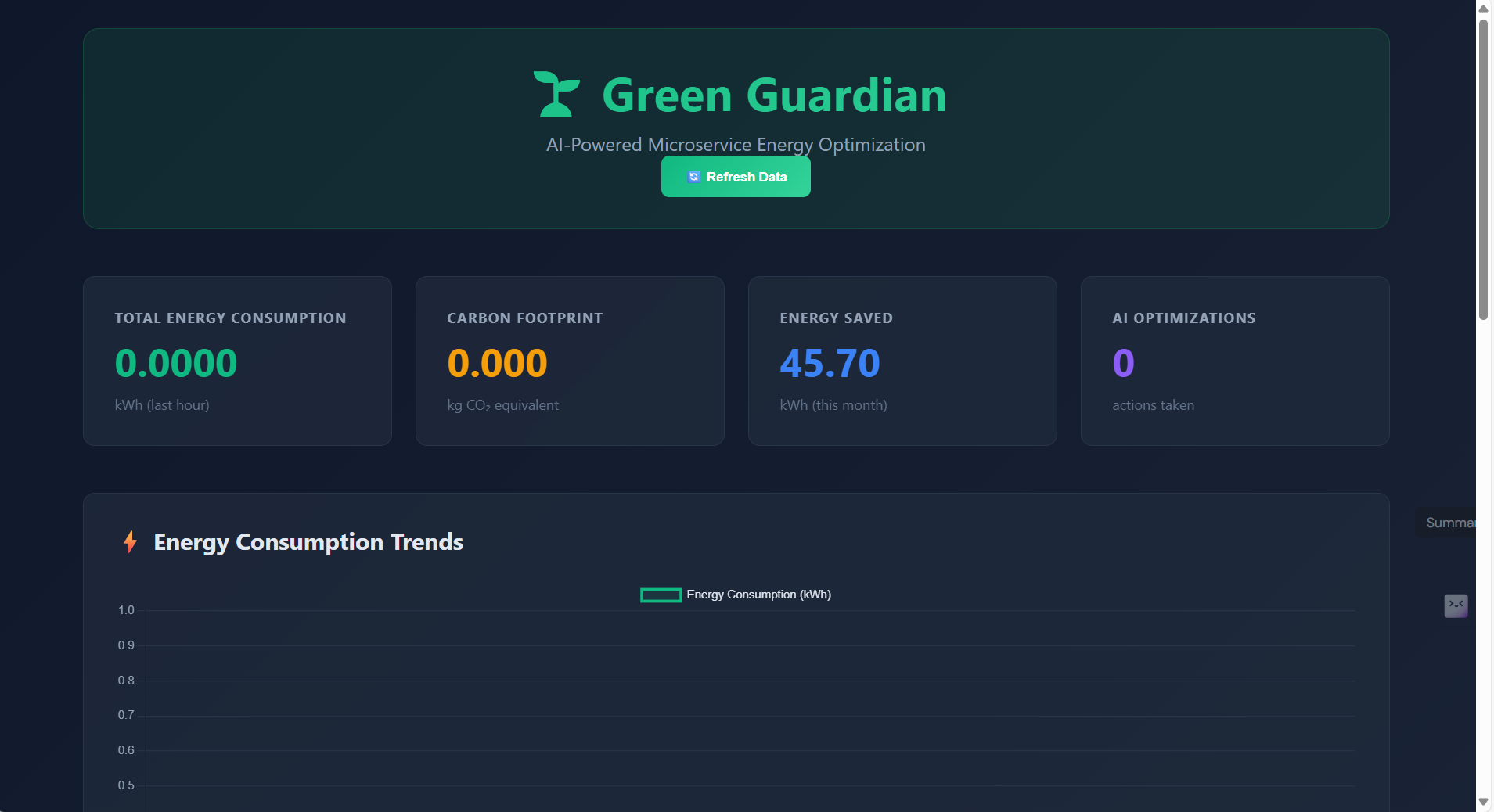
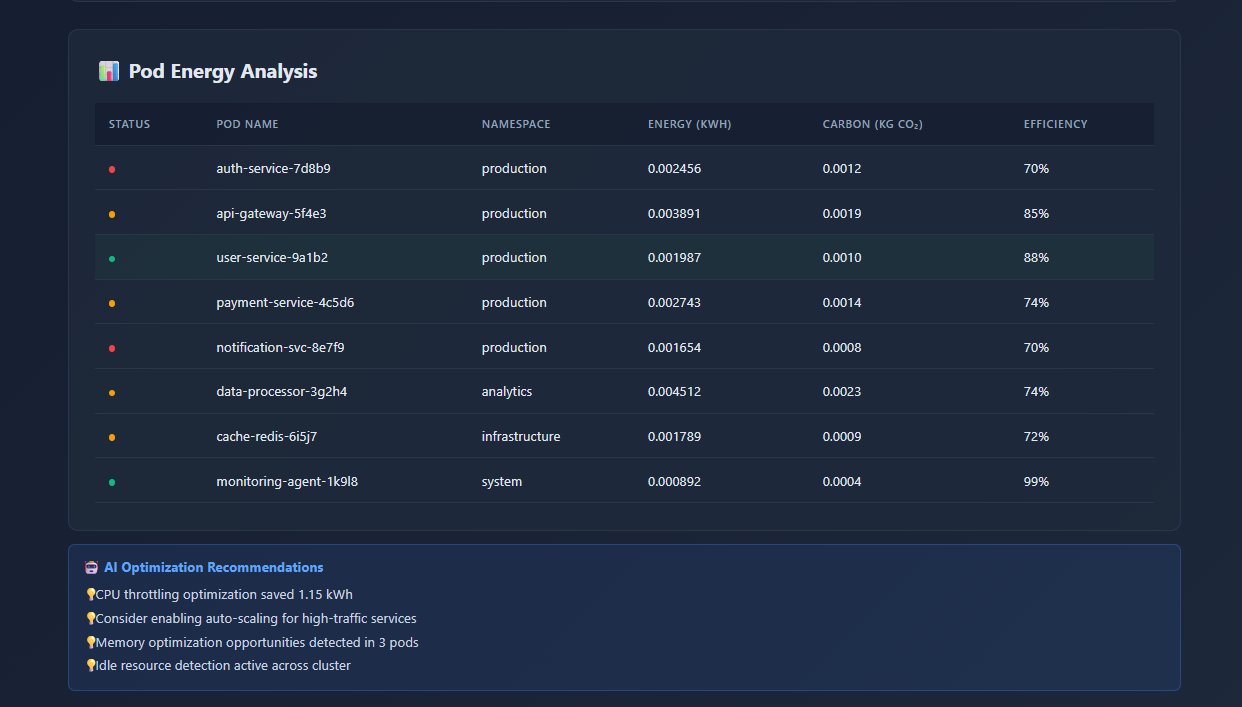
Green Guardian continuously monitors CPU, memory, and energy-related metrics for each microservice running on Kubernetes platforms like GKE and Anthos. Using Gemini AI, I designed it to detect abnormal resource spikes, predict bottlenecks, and recommend or even automatically trigger scaling and code adaptations to optimize energy use. It provides real-time and historical carbon impact dashboards accessible through a web UI or API, and supports cluster-wide collaborative optimization by communicating with other agents.
How I built it
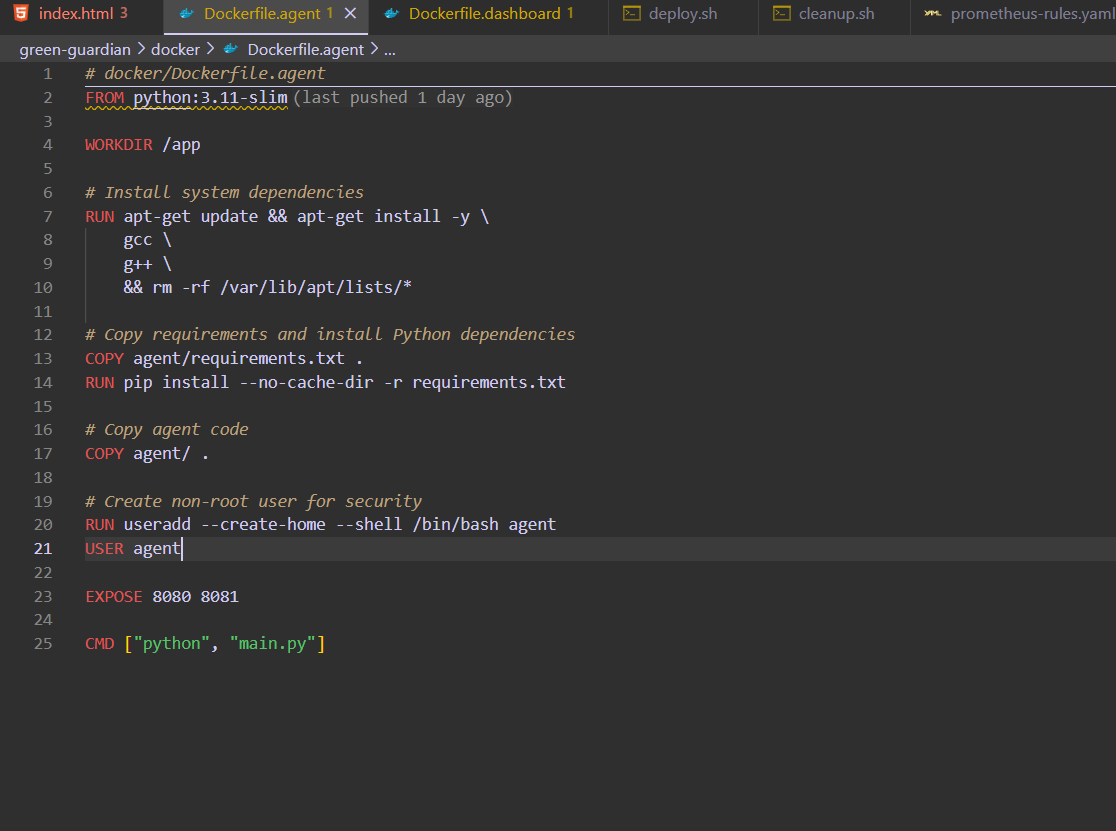
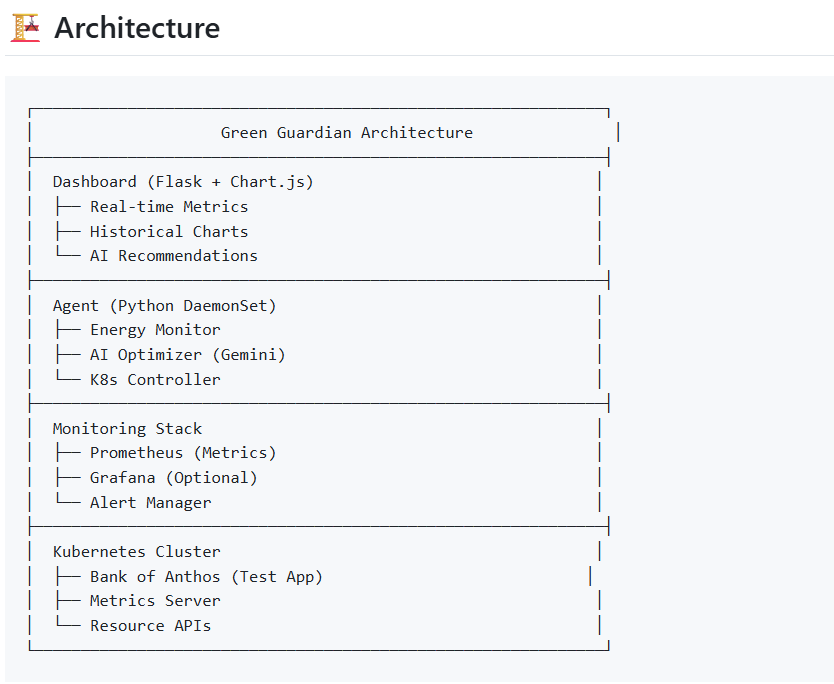
I containerized the agent as a sidecar running alongside microservices, gathering runtime metrics using Kubernetes metrics-server and cAdvisor APIs. I integrated Gemini to perform advanced AI analytics on these metrics, identifying anomalies and forecasting potential resource issues. The dashboard was developed with React for intuitive visualization, and I connected the system with GKE APIs and Anthos MCP to enable live observability and control. The architecture also incorporates the A2A protocol for extensibility and agent collaboration.
Challenges I ran into
One major challenge was accurately estimating energy consumption and connecting it to real carbon impact from indirect resource metrics. Integrating multiple data sources into a seamless AI analysis pipeline required thoughtful design. Translating complex sustainability data into clear, actionable insights for users required careful UX consideration. Coordinating multi-agent collaboration through Kubernetes and Anthos APIs introduced protocol and integration complexities I had to overcome.
Accomplishments that I'm proud of
I successfully built an AI-powered microservice energy auditor and optimizer that is unique in current GKE hackathon ecosystems. It detects and predicts resource anomalies in real time and recommends or triggers optimizations that meaningfully reduce energy waste. The real-time carbon impact dashboard turns technical data into actionable sustainability insights developers can rely on. I also implemented extensible cluster-wide agent collaboration for advanced green orchestration, demonstrating a scalable future for sustainable microservice architectures.
What I learned
Through this project, I learned how detailed resource metrics can be leveraged to assess environmental impact in cloud-native systems. I realized that balancing AI model accuracy with runtime efficiency is critical for continuous, real-time sustainability monitoring. I also learned the importance of designing user-centric dashboards to promote adoption of green monitoring tools. Finally, deep integration with Kubernetes and Anthos APIs is essential to enable practical cluster-level energy optimizations.
What's next for Green Guardian
In the future, I plan to enhance the system with AI-based automated code optimization hints for even greater energy savings. I also aim to extend support for federated clusters and multi-cloud environments to facilitate cross-platform green orchestration. Adding awareness of renewable energy sources and carbon offset calculations will enrich sustainability reporting. I intend to open source the project and create comprehensive deployment guides to encourage community collaboration and drive adoption.

Log in or sign up for Devpost to join the conversation.