-
-

logo
-
-
-

Inspiration (The Problem)
The climate crisis is global, but the response is often individual. However, most people face a significant "sustainability gap." They want to help, but they are overwhelmed by contradictory information, lack tools to quantify their personal impact, and feel isolated in their efforts. We realized that for sustainability to be sustainable, it needs to be integrated, measurable, and social. Green Guardian Hub was born from the need to centralize environmental action into one intuitive, data-driven platform that turns "doing good" into a lifestyle.
What it does (The Solution)
Green Guardian Hub is a comprehensive web portal that provides users with a 360-degree view of their environmental footprint and the tools to reduce it.
📊 The Carbon Ecosystem
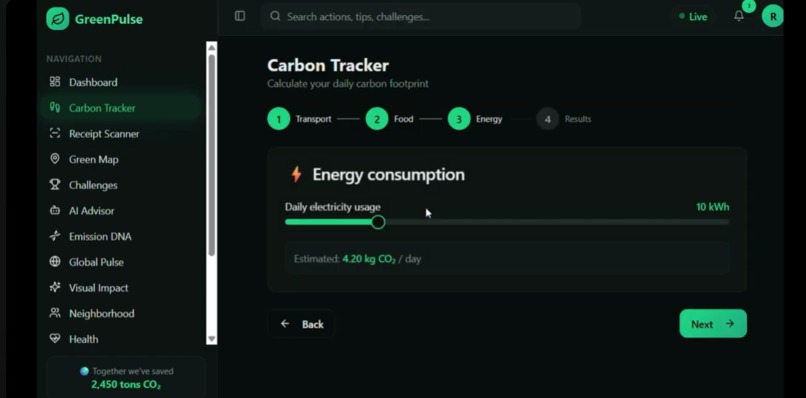
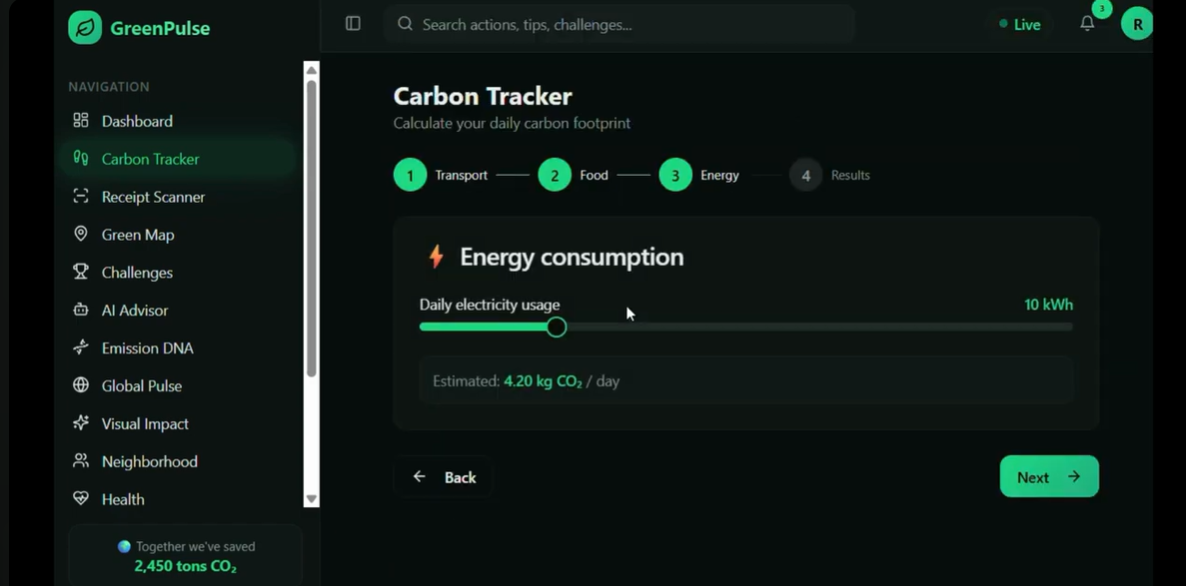
- Carbon Tracker & Budget: Sets monthly limits and tracks daily emissions based on activities (travel, diet, energy).
- Carbon Simulator: Allows users to "preview" the impact of lifestyle changes before making them.
- Emissions Map: Visualizes carbon intensive areas and personalized hotspots.
🌍 Environmental Intelligence
- Air Quality Real-time: Localized AQI data integration to help users make healthy outdoor choices.
- Biodiversity Spotter: Encorage exploration of local flora and fauna, fostering a connection with nature.
- Grid Advisor: Provides insights on when the local energy grid is cleanest, advising users when to run heavy appliances.
🛠️ Sustainable Living Tools
- EV & Infrastructure: Map of EV chargers and repair cafes to extend product lifecycles.
- Circular Economy: A marketplace for second-hand items and a food-sharing module to combat waste.
- Eco Carpool: Social coordination for lower-emissions travel.
🧠 Behavioral Science & Education
- Eco Habit Coach: Personalized AI-driven tips for habit formation.
- Microlearning Feed: Bite-sized environmental education content.
- Gamification: Challenges and Leaderboards that turn sustainability into a rewarding community competition.
How we built it
We architected Green Guardian Hub as a high-performance, scalable web application using a modern full-stack approach:
- Frontend: Built with React 18 and TypeScript, ensuring a robust, type-safe codebase. We used Vite for lightning-fast builds and hot-module replacement.
- Styling & UI: Utilized Tailwind CSS for a custom, responsive design system. We leveraged shadcn/ui (based on Radix UI) for accessible, premium components and Framer Motion for smooth, engaging animations that bring the dashboard to life.
- Backend & Data: Integrated Supabase for real-time data persistence, authentication, and PostgreSQL database management. This allowed us to handle user profiles, activity logs, and community interactions seamlessly.
- Data Visualization: Implemented Recharts to transform complex carbon and energy data into beautiful, actionable area and bar charts.
- State Management: Used a combination of custom React Hooks and TanStack Query (React Query) for efficient data fetching, caching, and synchronization across the 30+ pages.
Challenges we ran into
- Feature Density vs. UX: With over 30 distinct modules, a major challenge was preventing "dashboard fatigue." We solved this by implementing an onboarding wizard and a modular dashboard with collapsible widgets.
- Real-time Data Integration: Connecting to external environmental APIs while maintaining a smooth UI required careful handling of asynchronous states and error boundaries.
- PostgreSQL Schema Design: Creating a flexible yet structured database schema in Supabase that could handle everything from carbon logs to community events required multiple iterations to ensure performance.
Accomplishments that we're proud of
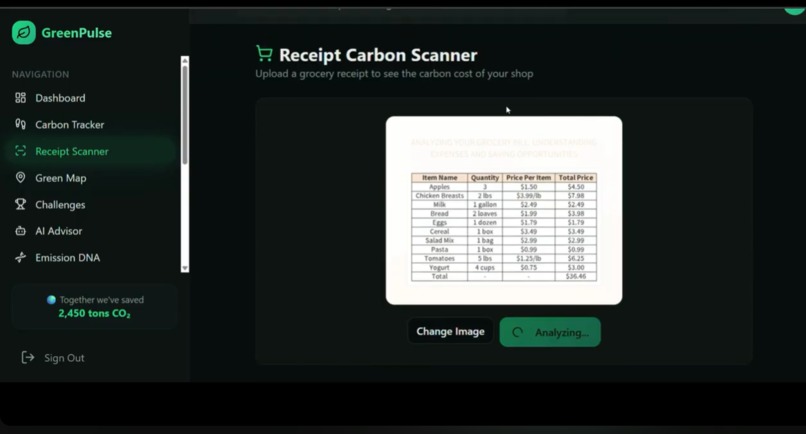
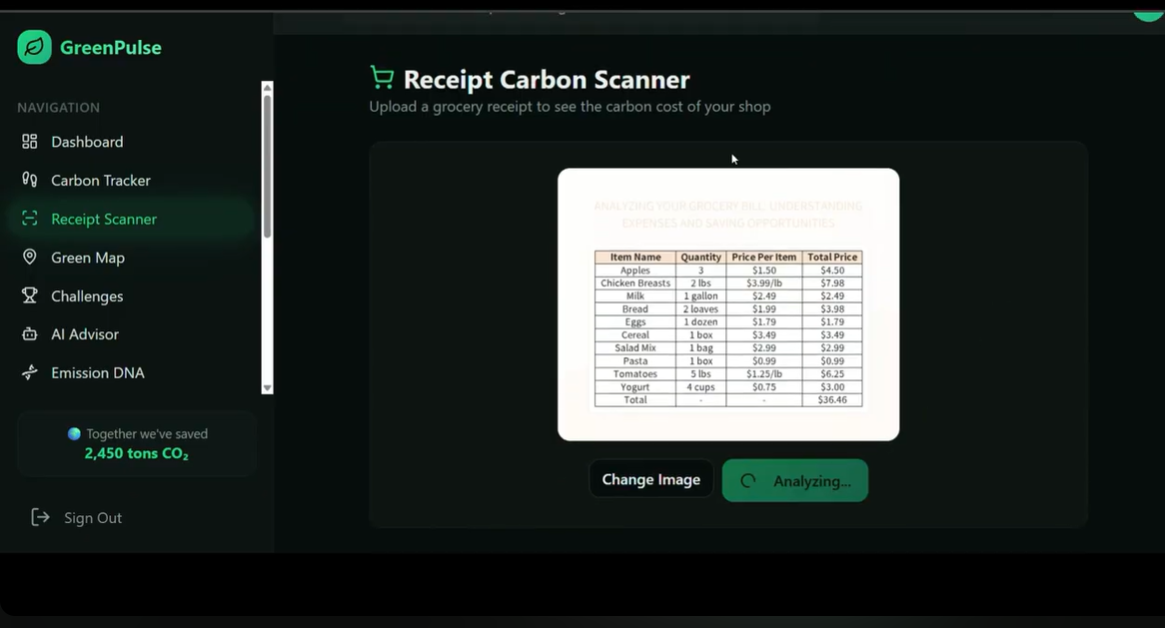
- End-to-End Cohesiveness: Successfully integrating a massive breadth of features—from receipt scanning to biodiversity tracking—into a single, unified user experience.
- Premium Aesthetics: Crafting a "glassmorphic" and vibrant UI that makes sustainability feel modern and exciting rather than a chore.
- Functional Community Features: Building a working marketplace and event system that facilitates real-world peer-to-peer environmental action.
What we learned
- The Power of Visualisation: Seeing a 12% drop in a weekly carbon chart is far more motivating than reading a list of tips.
- Community Drives Retention: Users are much more likely to complete a "Zero-Waste" challenge when they see their friends doing the same on the leaderboard.
- Scalability in React: Building a large-scale application like this taught us deep lessons about component composition and efficient prop-drilling prevention.
What's next for Green Guardian Hub
- AI-Powered "Guardian" Advisor: Integrating a Large Language Model to provide personalized, conversational advice based on a user's specific habits.
- IoT Integration: Directly connecting with smart home meters (energy/water) for automated, high-precision tracking.
- Localization & Advocacy: Partnering with local municipalities to show users relevant environmental policies and nearby conservation volunteer opportunities.
Impact
Green Guardian Hub bridges the gap between intention and action. By providing users with:
- Awareness: Real-time data on their footprint.
- Agency: Concrete tools to make better choices.
- Community: A platform to scale their impact. We estimate that an active user can reduce their personal carbon footprint by up to 20% annually simply through informed habit shifts. On a community level, the platform fosters a culture of reuse and resource sharing, directly contributing to a more circular and resilient local economy.


Log in or sign up for Devpost to join the conversation.