-
-
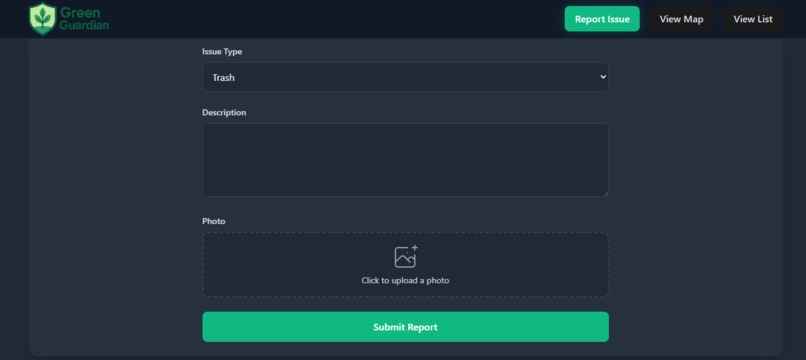
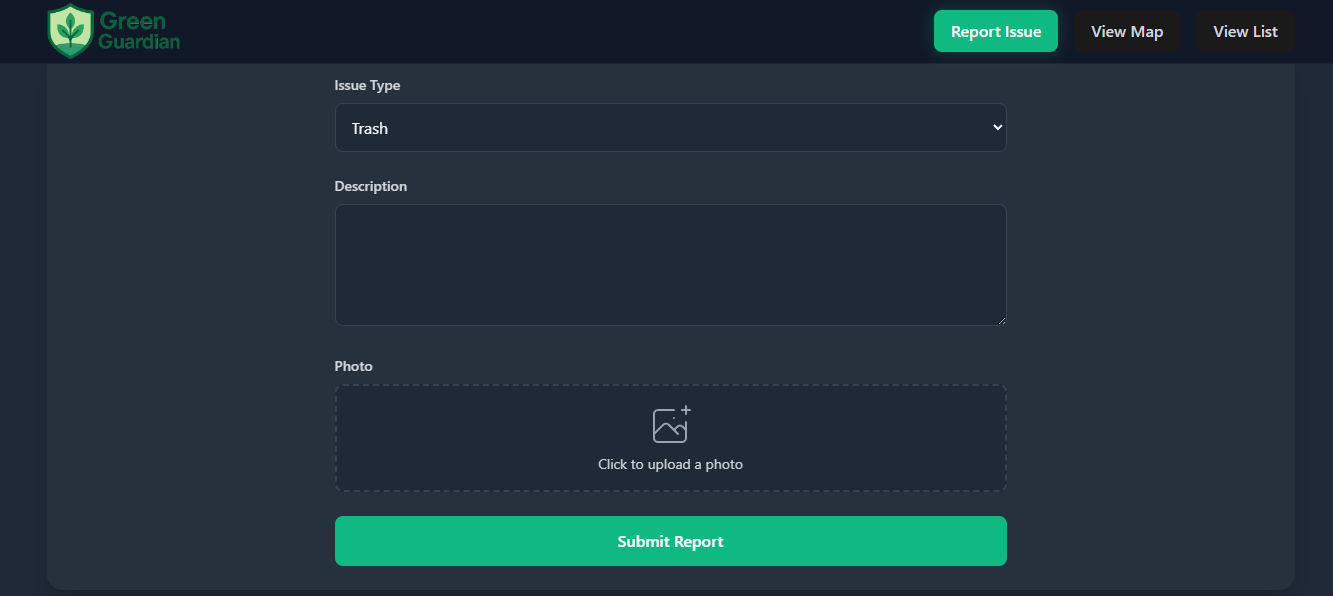
Report Issue Page Desktop
-
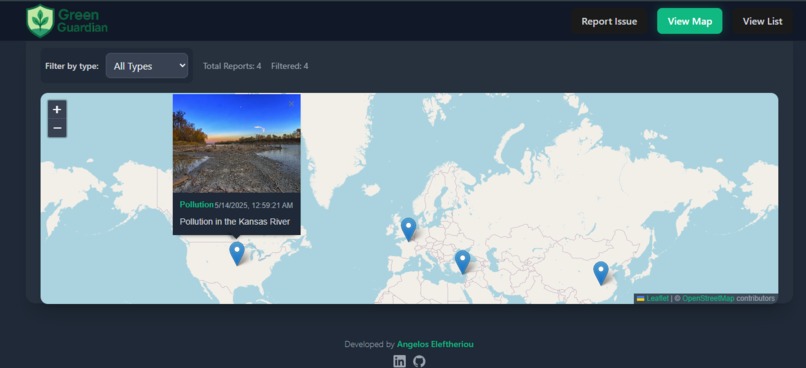
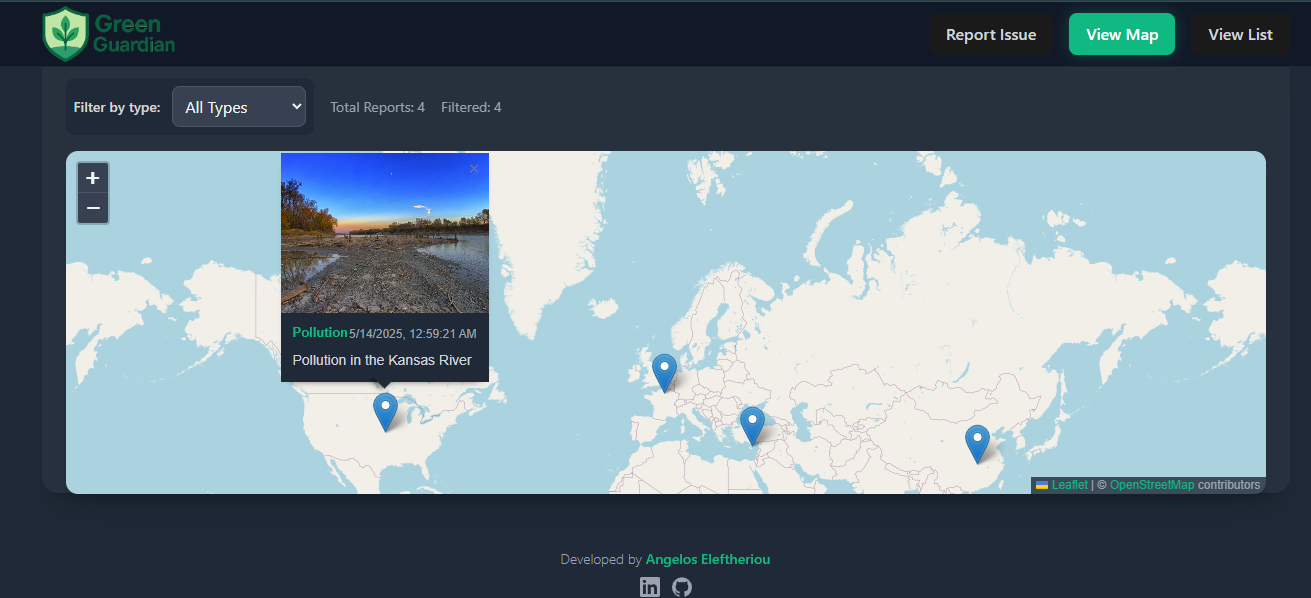
View Map Page Desktop
-
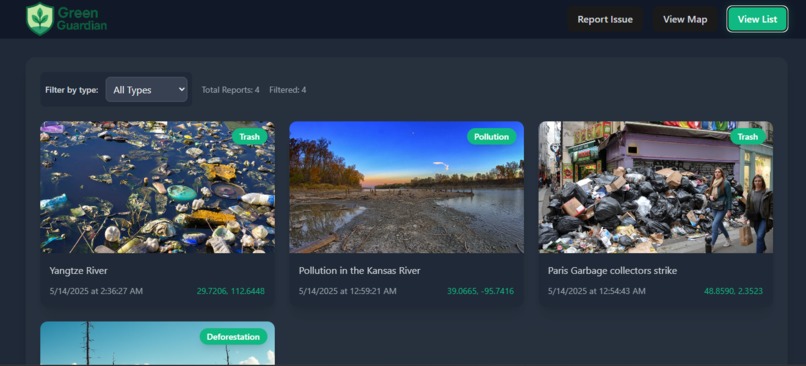
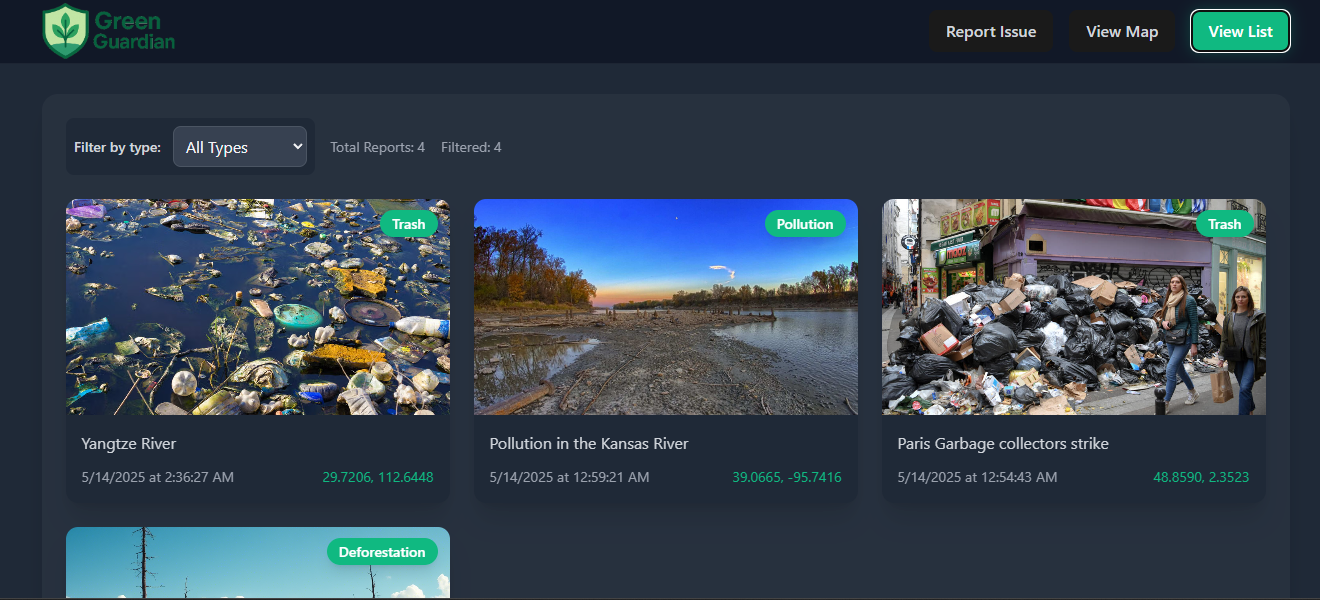
View List Page Desktop
-
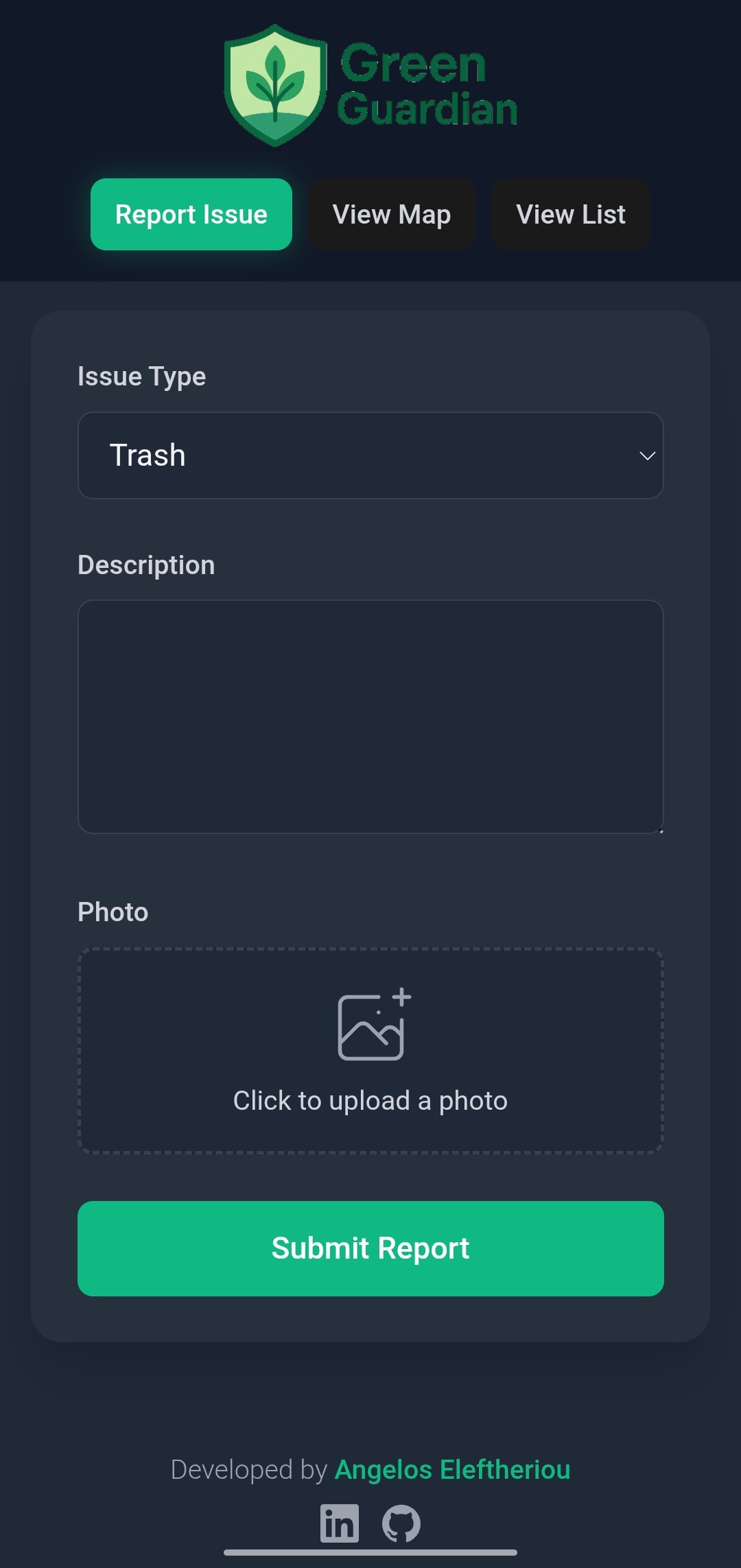
Report Issue Page Phone
-
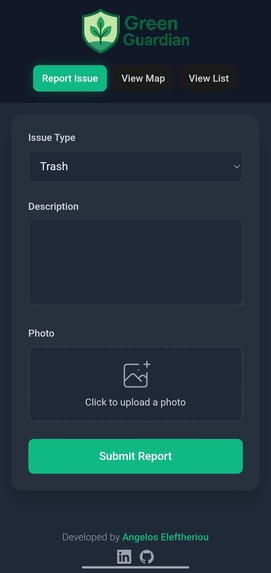
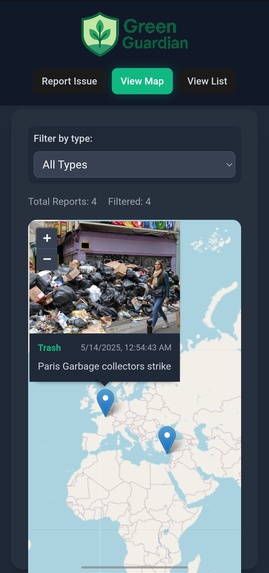
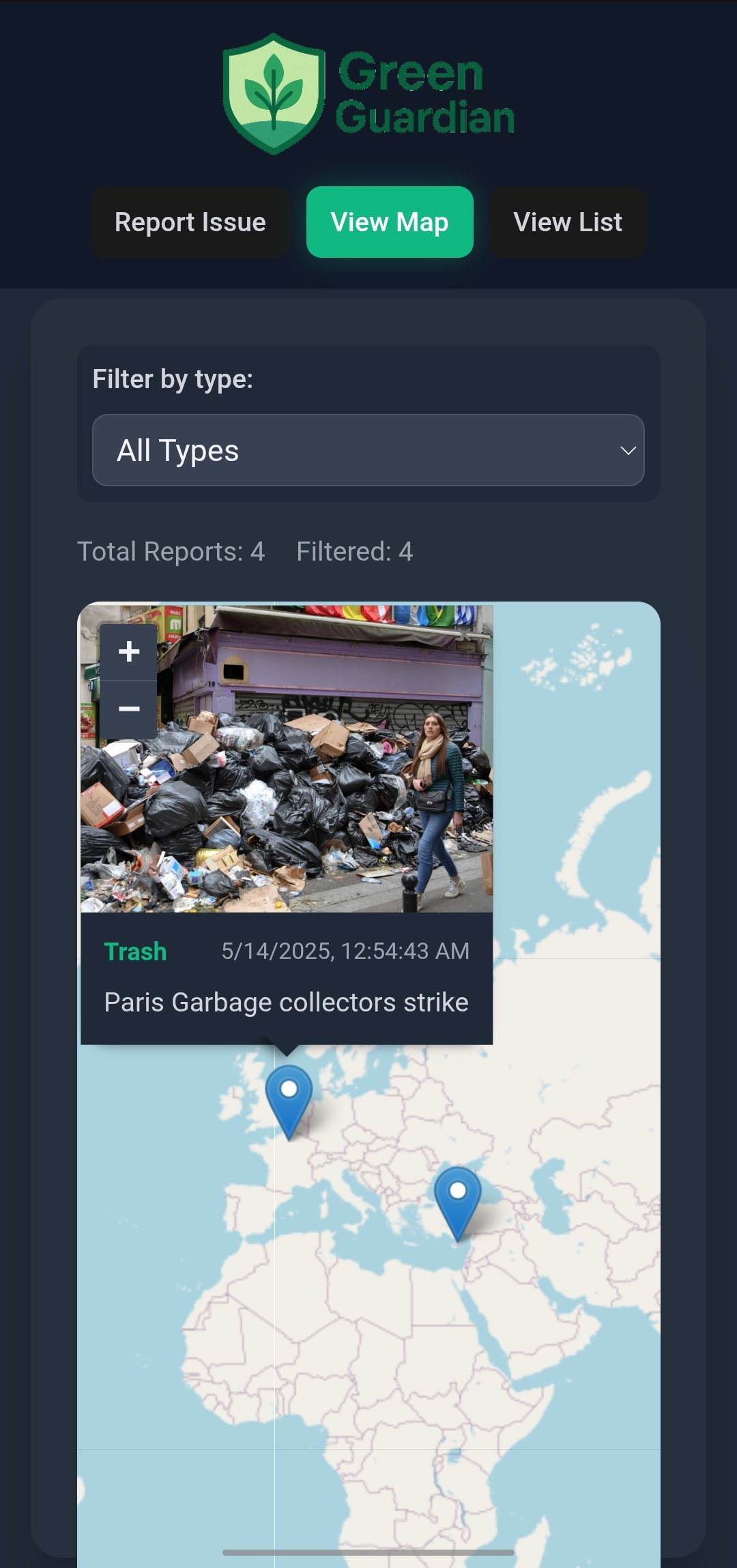
View Map Page Phone
-
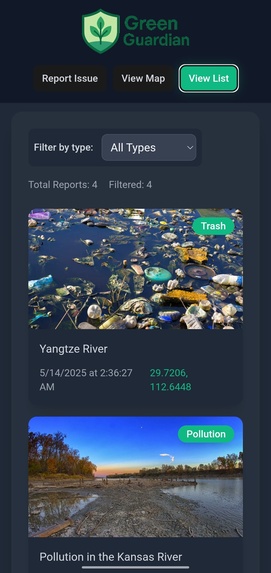
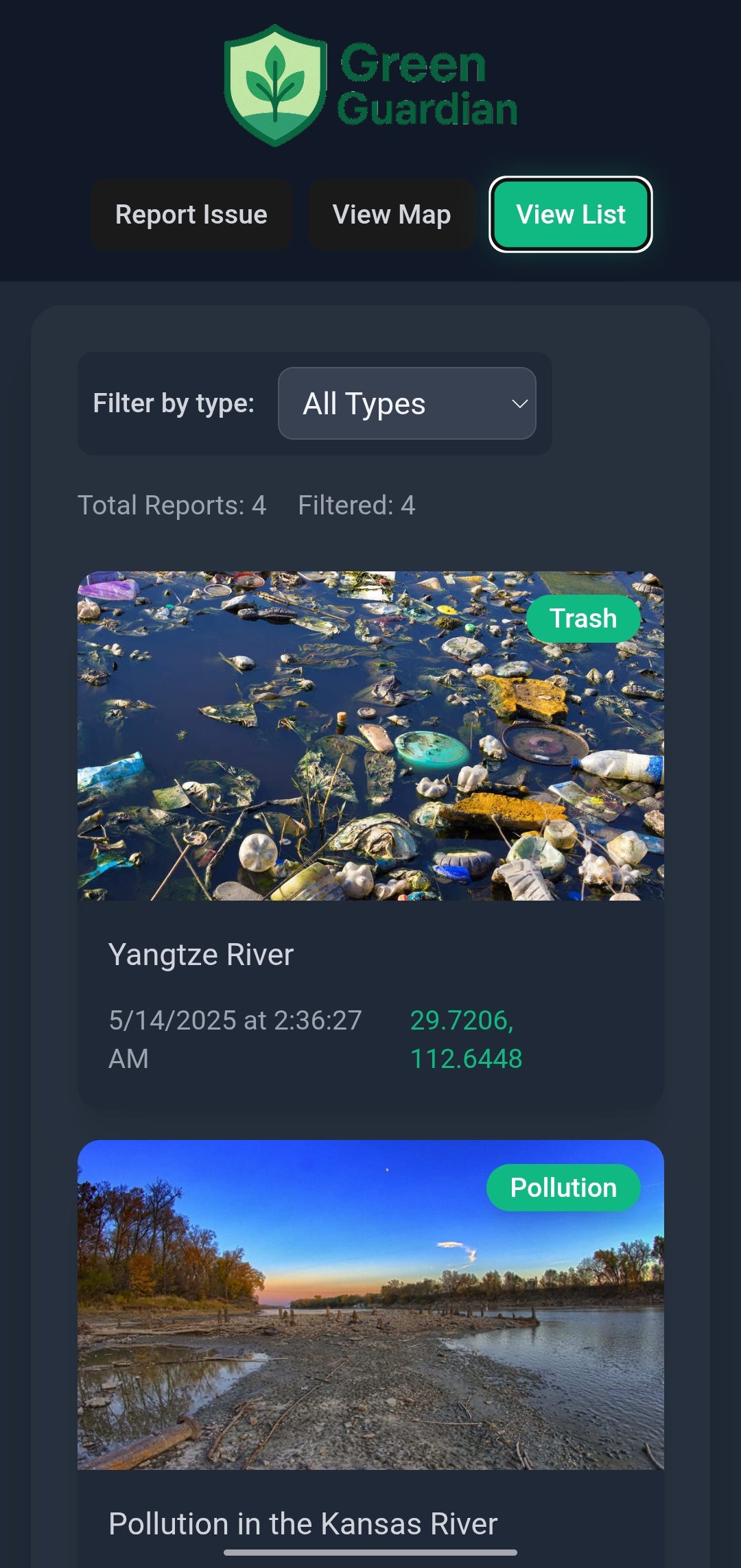
View List Page Phone
Inspiration
Living in a coastal city, I've witnessed firsthand how environmental issues often go unreported and unaddressed. The inspiration for Green Guardian came from a simple observation: while people care about environmental problems, they frequently lack an easy way to report and track them. I envisioned a platform to bridge this gap, making environmental reporting as simple as taking a photo on your phone.
What it does
Green Guardian is a modern web application that empowers citizens to become environmental guardians. The platform offers:
🎯 Issue Reporting
- Real-time environmental incident reporting with geolocation
- Photo upload capabilities for visual documentation
- Detailed description and severity classification
🗺️ Interactive Visualization
- Dynamic map interface showing reported issues
- Filtering capabilities by issue type and severity
- Real-time updates of new reports
How I built it
The technology stack was chosen to provide a fast, reliable, and scalable solution:
🛠️ Front-end
- React + TypeScript: For robust, type-safe component development
- Tailwind CSS: For rapid UI development with a beautiful dark theme
- Vite: For lightning-fast development and optimized builds
📡 Back-end & Infrastructure
- Firebase: Real-time database and image storage
- OpenStreetMap: Interactive mapping integration
- Vercel: For seamless deployment and scaling
Challenges we ran into
Real-time Updates: Implementing efficient real-time updates while maintaining performance was challenging. We solved this using Firebase's real-time listeners with proper cleanup.
Mobile Optimization: Ensuring a smooth mobile experience, especially for image uploads and map interactions, required careful optimization and testing.
Dark Theme Design: Creating a dark theme that was both aesthetically pleasing and accessible required multiple iterations and user feedback.
Accomplishments that we're proud of
- Intuitive UX: Achieved a clean, intuitive interface that makes environmental reporting accessible to everyone.
- Performance: Maintained fast load times despite handling real-time updates and image processing.
- Mobile First: Successfully implemented a fully responsive design that works seamlessly on all devices.
- Accessibility: Ensured the application is accessible with proper ARIA labels and keyboard navigation.
What I learned
- Advanced Firebase integration techniques for real-time applications
- Optimizing performance with React's latest features
- Geolocation and mapping best practices
- The importance of proper error handling in user-generated content
- Mobile-first design principles
What's next for Green Guardian
🚀 Upcoming Features:
Community Engagement
- User profiles and reputation system
- Community cleanup event organization
- Social sharing integration
Enhanced Reporting
- AI-powered issue classification
- Automated severity assessment
- Historical trend analysis
Official Integration
- Partnerships with local environmental agencies
- API access for researchers and organizations
- Integration with existing environmental monitoring systems
Mobile Apps
- Native iOS and Android applications
- Offline functionality
- Push notifications for nearby issues
Try it out
Visit Green Guardian to start making a difference in your community.


Log in or sign up for Devpost to join the conversation.