Inspiration
Modern software development is optimized for speed and cost—but rarely for sustainability. Every CI pipeline, redundant test, and idle cloud resource contributes to unnecessary energy consumption.
We were inspired by a simple question:
What if DevOps systems could optimize themselves not just for performance—but for carbon efficiency?
With increasing global focus on climate impact and responsible computing, we saw an opportunity to embed sustainability directly into developer workflows—not as a dashboard, but as an autonomous system that takes action.
What it does
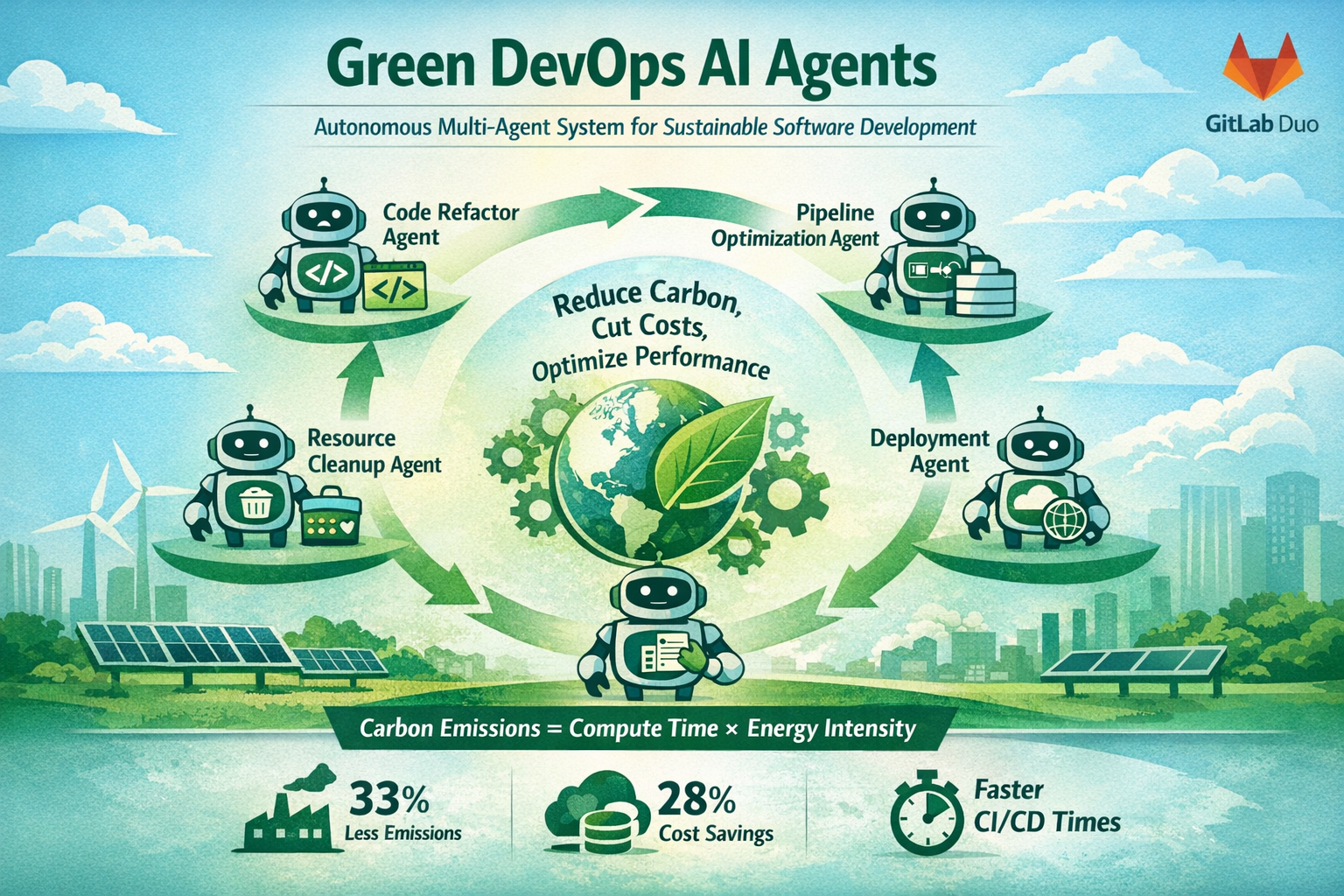
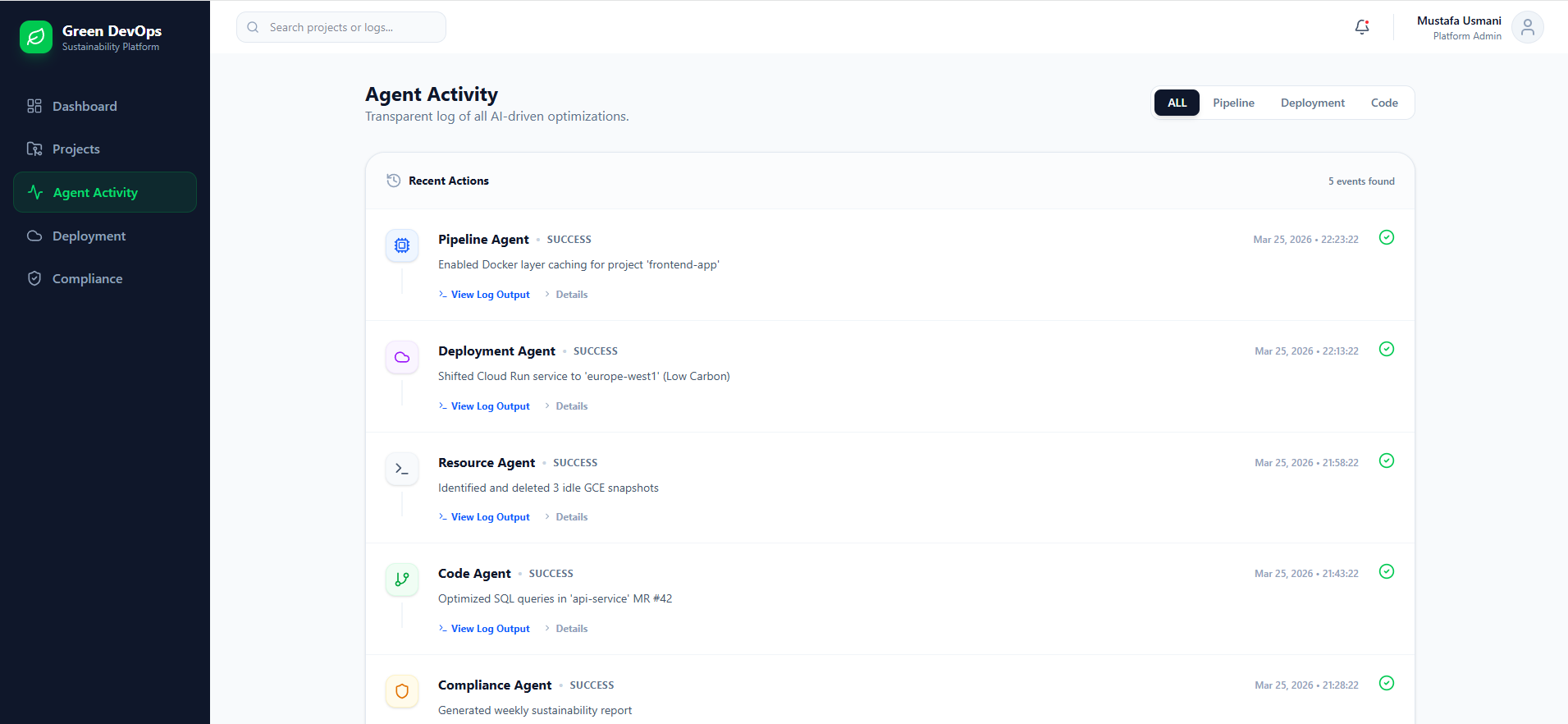
Green DevOps Agent is a multi-agent system that integrates with GitLab to automatically optimize the software development lifecycle.
It:
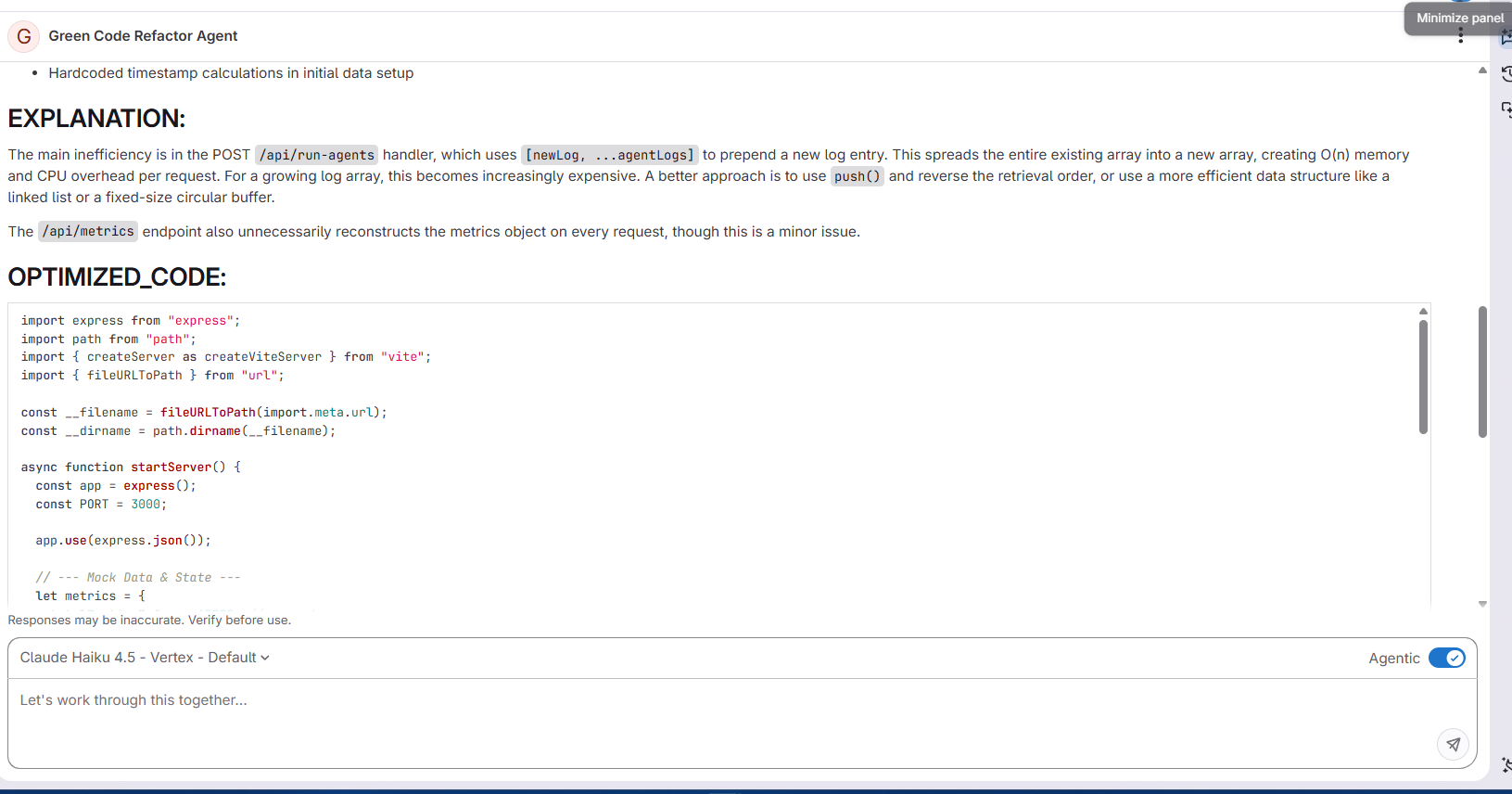
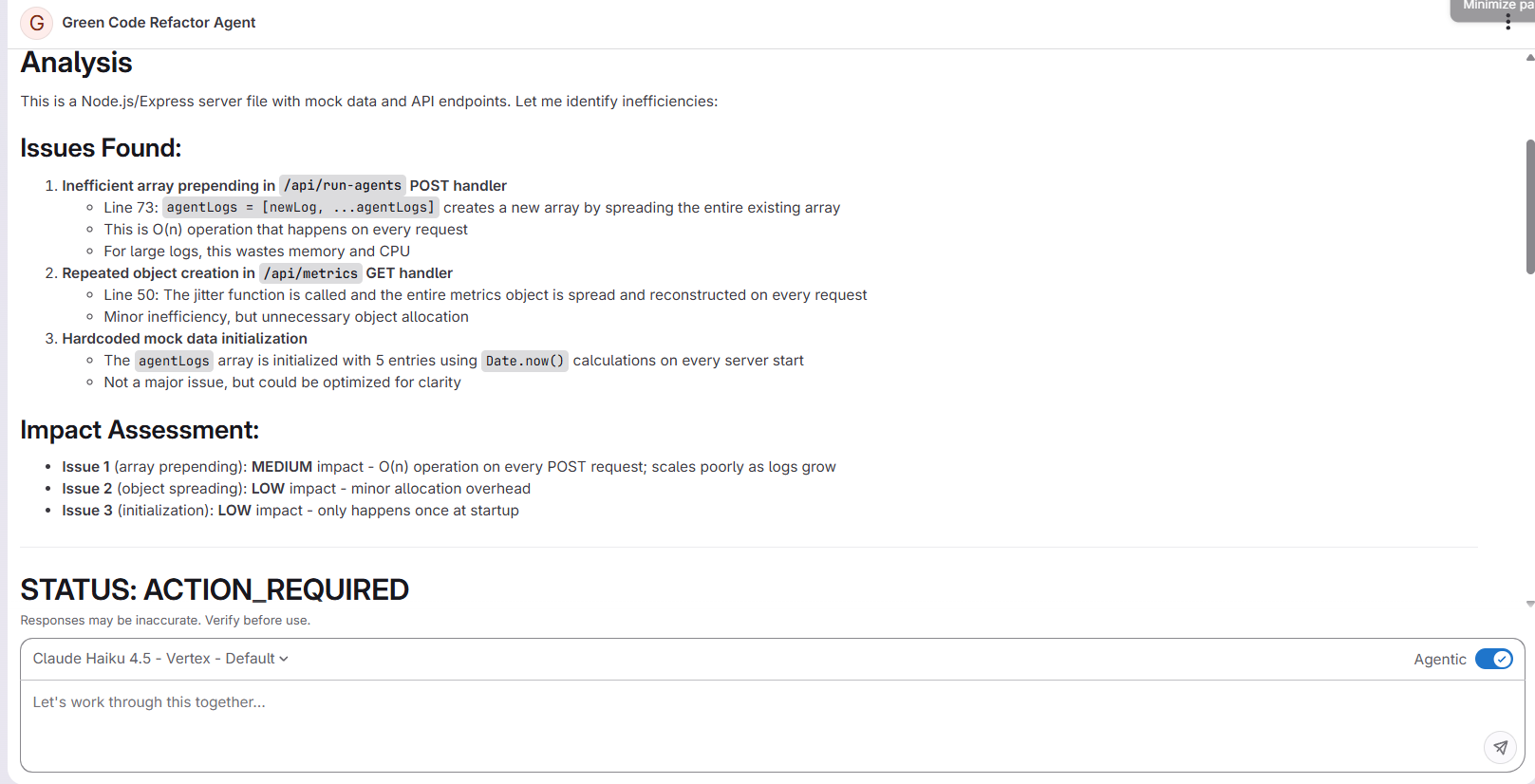
- Refactors inefficient code during merge requests
- Optimizes CI/CD pipelines to reduce compute waste
- Makes carbon-aware deployment decisions
- Cleans up unused infrastructure resources
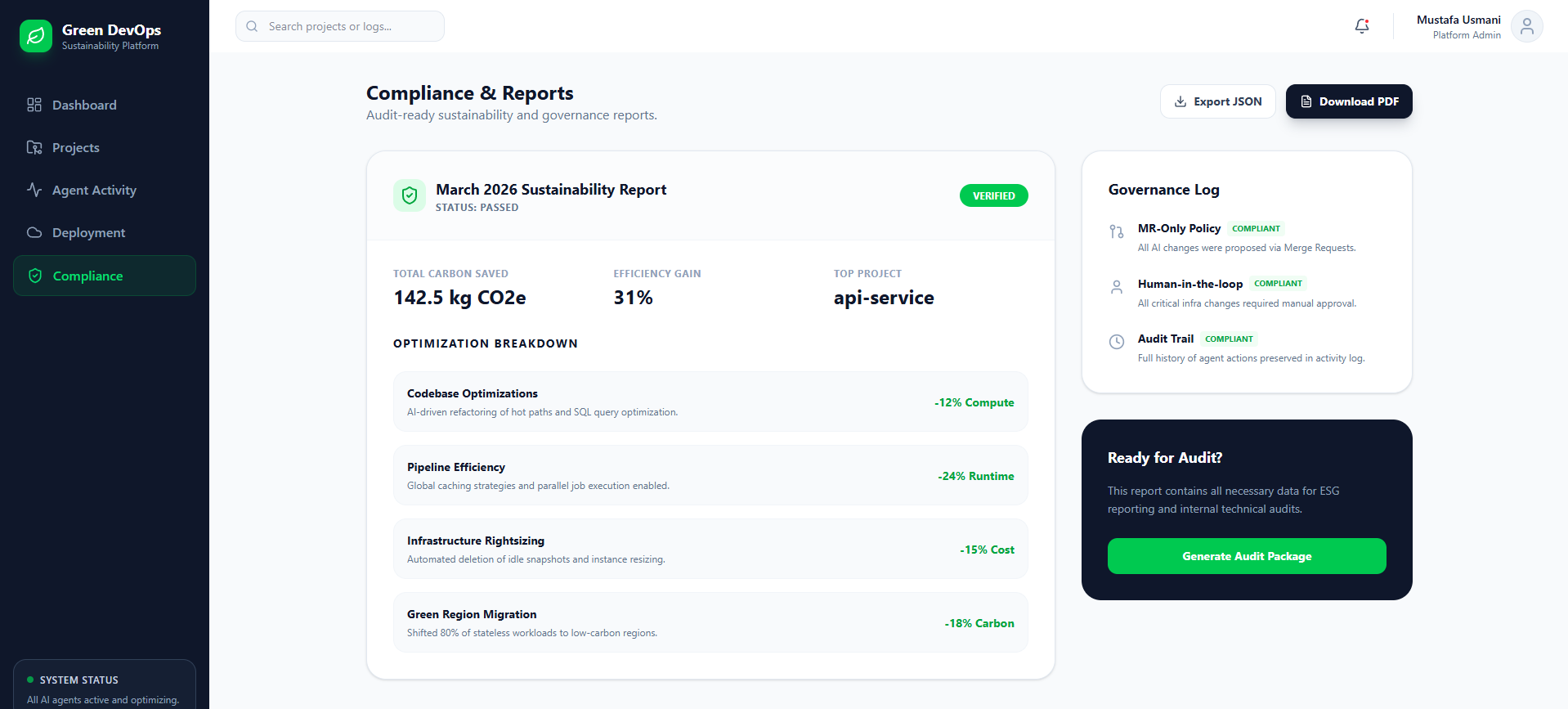
- Generates compliance-ready sustainability reports
Instead of just providing insights, the system actively modifies code, pipelines, and workflows.
We model carbon impact as:
$$ \text{Carbon Emissions} \approx \text{Compute Time} \times \text{Energy Intensity} $$
By minimizing compute time and improving efficiency, we directly reduce emissions.
How we built it
We built Green DevOps Agent using the GitLab Duo Agent Platform with a modular, event-driven architecture.
- Multi-Agent Design: Each agent specializes in a stage of the SDLC (code, pipeline, deployment, infrastructure, compliance)
- Agent Flow: Agents are chained together using a GitLab Flow to pass context and decisions
- Tooling: Leveraged built-in GitLab tools such as repository APIs, CI linter, pipeline diagnostics, and merge request operations
- Automation Strategy: All changes are made via merge requests to ensure safety and traceability
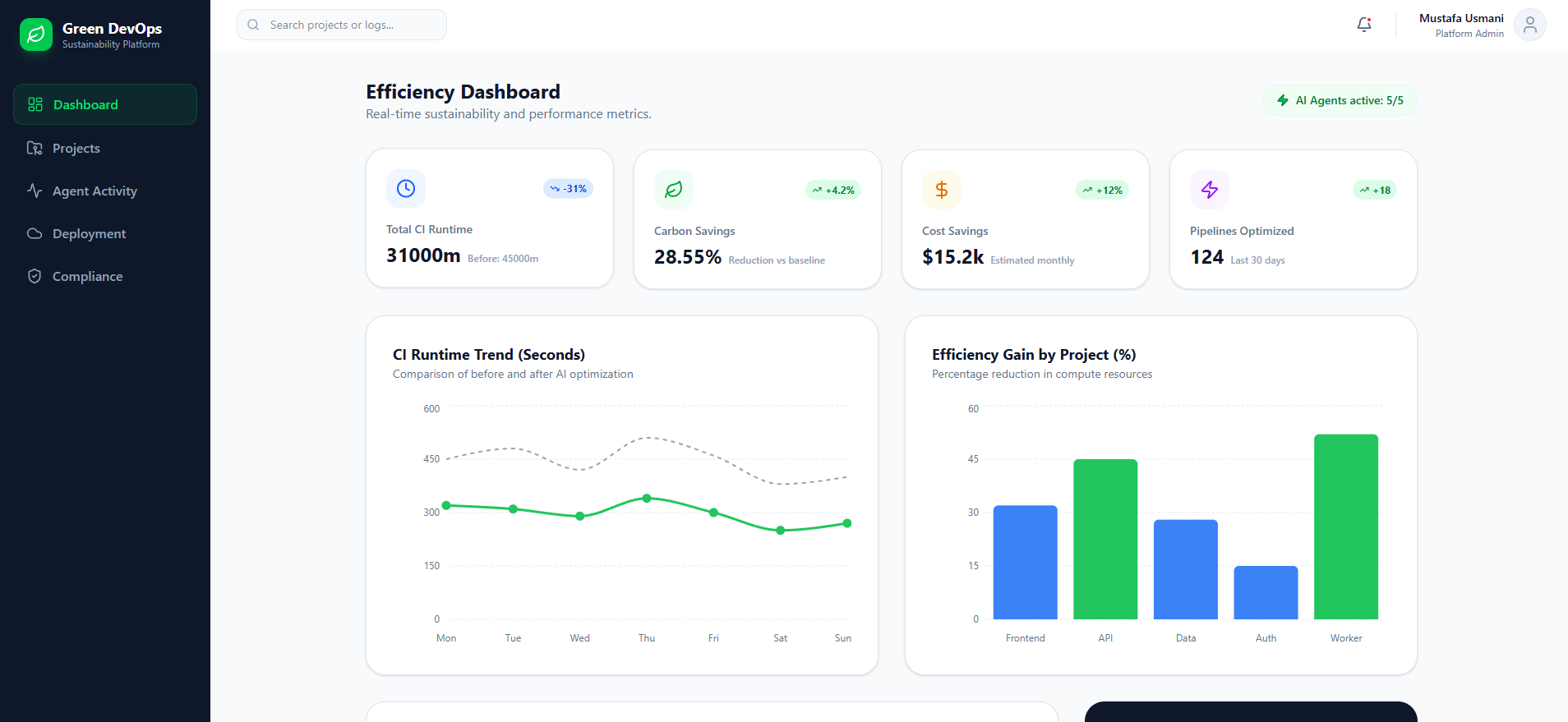
- Frontend Dashboard: A React-based dashboard visualizes CI runtime and estimated carbon savings
- Metrics Model:
$$ \text{Savings (\%)} = \frac{T_{\text{before}} - T_{\text{after}}}{T_{\text{before}}} \times 100 $$
Challenges we ran into
1. Safe Automation vs Autonomy
Allowing agents to take action without breaking systems required careful constraints:
- Conservative optimization thresholds
- Merge request-based updates instead of direct commits
2. Lack of Direct Carbon Metrics
There is no standard API for real-time carbon emissions in CI/CD systems.
We addressed this by using compute time as a proxy for energy usage.
3. Tooling Constraints
Mapping agent capabilities to available GitLab tools required creative orchestration and careful flow design.
4. Multi-Agent Coordination
Ensuring agents pass meaningful context (not noise) between steps was critical for maintaining effectiveness.
Accomplishments that we're proud of
- Built a fully autonomous DevOps optimization system, not just a chatbot
- Successfully chained multiple agents into a cohesive, production-style workflow
- Demonstrated measurable impact through:
- Reduced CI runtime
- Lower infrastructure usage
- Estimated carbon savings
- Reduced CI runtime
- Created a live dashboard to visualize improvements in real time
What we learned
- Multi-agent systems are significantly more powerful than single LLM workflows for real-world automation
- Sustainability optimization aligns naturally with cost and performance optimization
- Developers are more likely to adopt solutions that act automatically rather than require manual input
- Observability (metrics + dashboards) is essential to build trust in AI systems
What's next for Green DevOps Agent
- Integrate real-time carbon intensity APIs (region-based optimization)
- Introduce reinforcement learning for smarter agent decision-making
- Expand dashboard with cost + carbon + performance analytics
- Integrate with cloud providers for deeper infrastructure insights
- Add governance layer for enterprise compliance and policy enforcement
Ultimately, we aim to make sustainable software development autonomous, measurable, and default.
The future of DevOps is not just faster—it’s greener.
Built With
- ai
- gitlab
- llms
- python
- typescript
- yaml

Log in or sign up for Devpost to join the conversation.