-
-
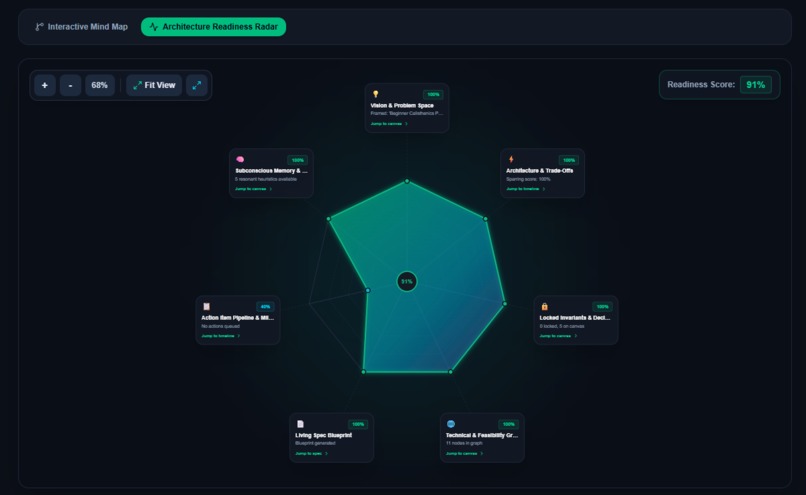
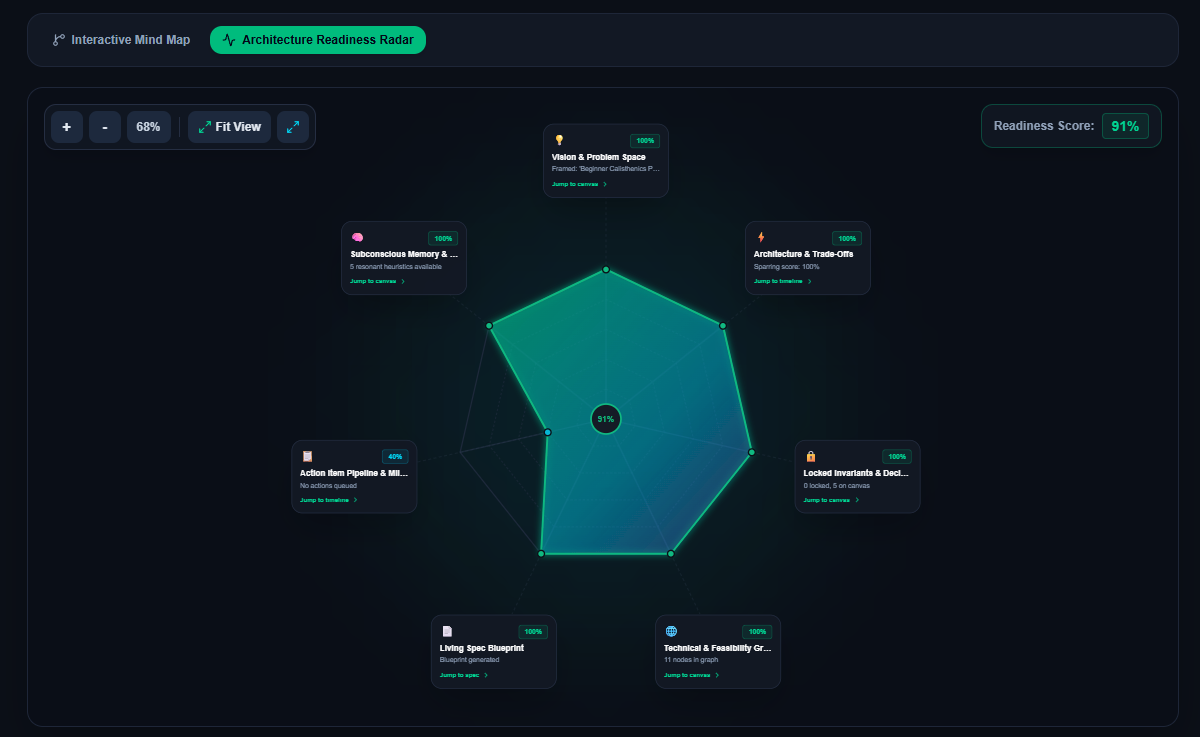
Architecture readiness Radar 1
-
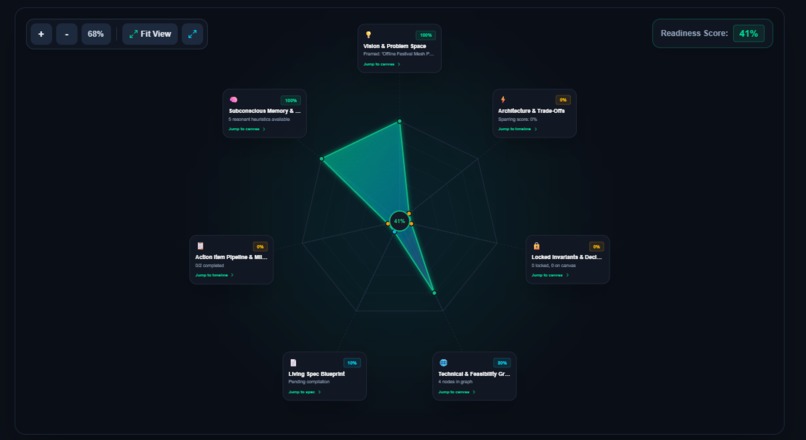
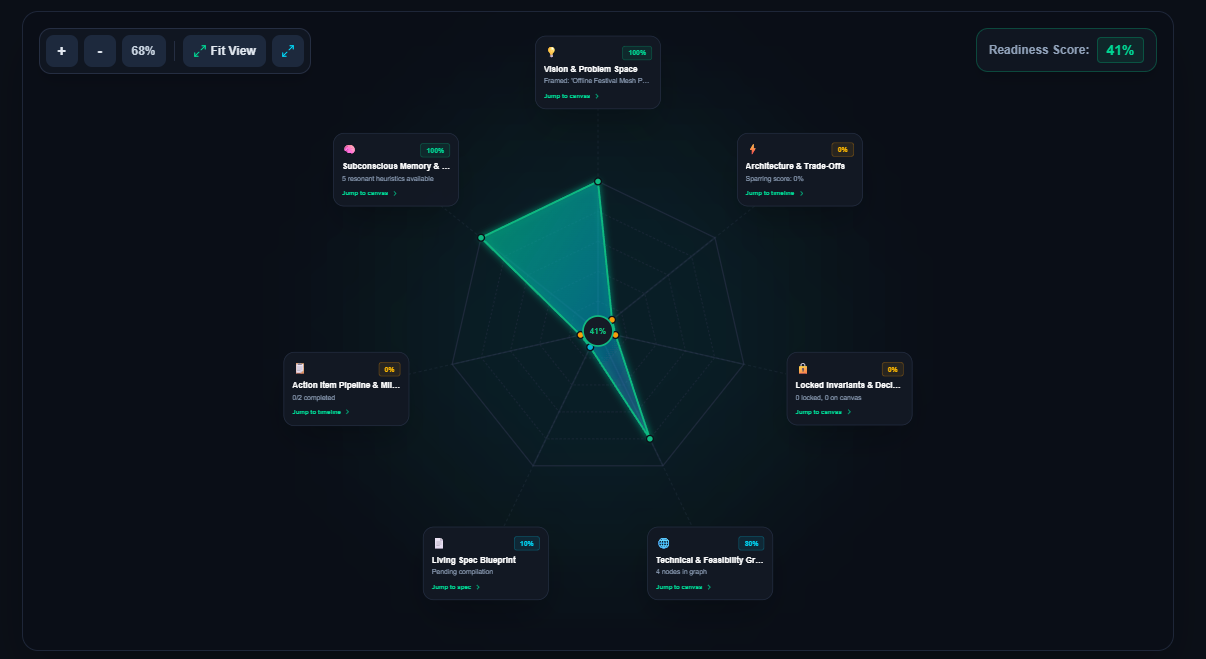
Architecture readiness Radar 2
-
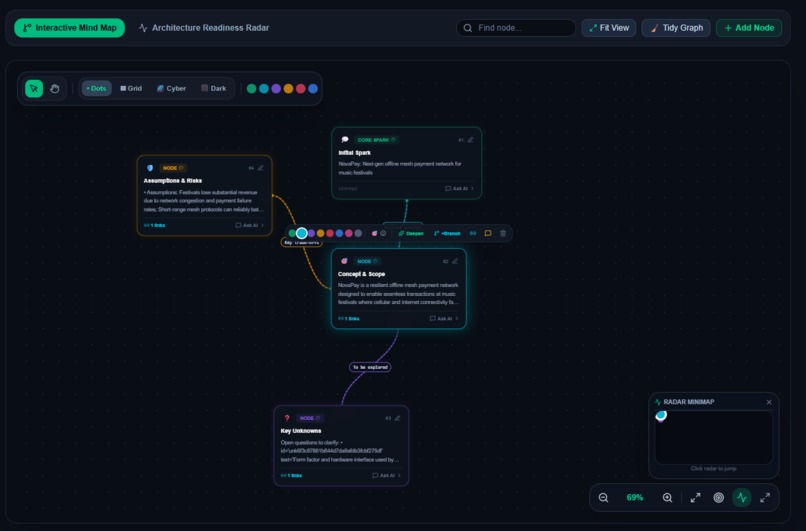
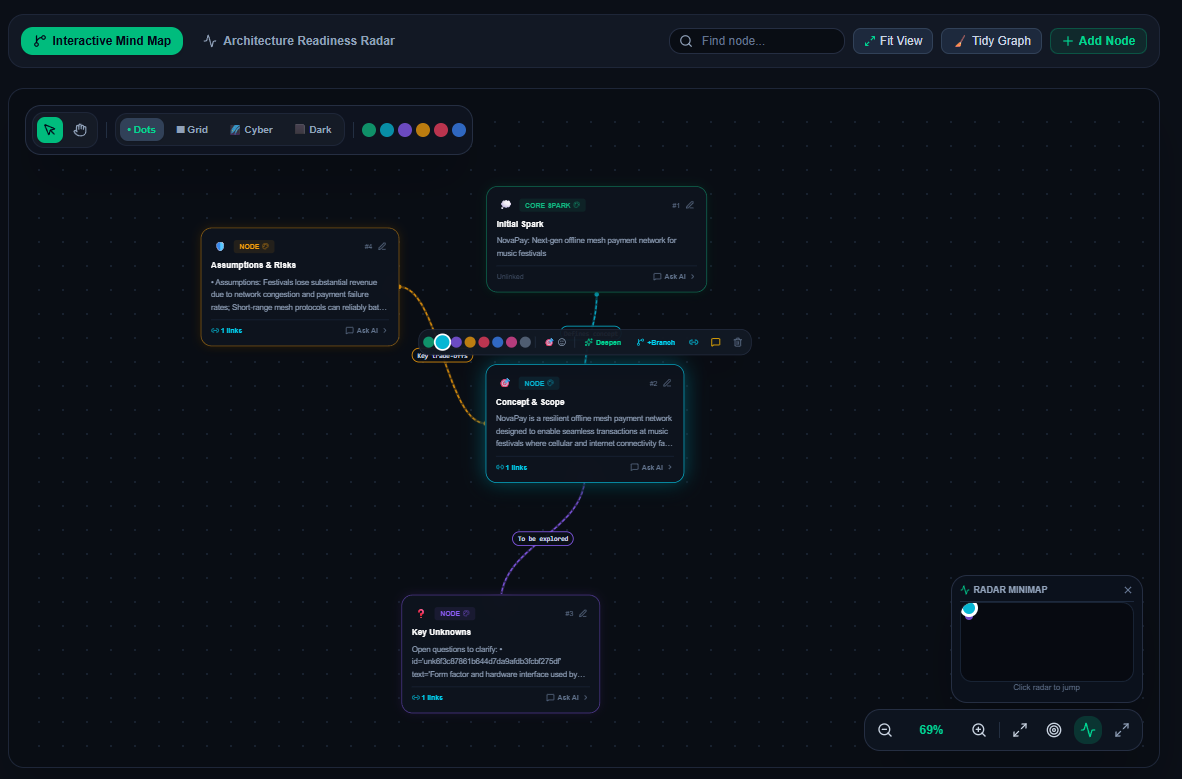
Interactive Mind Map
-
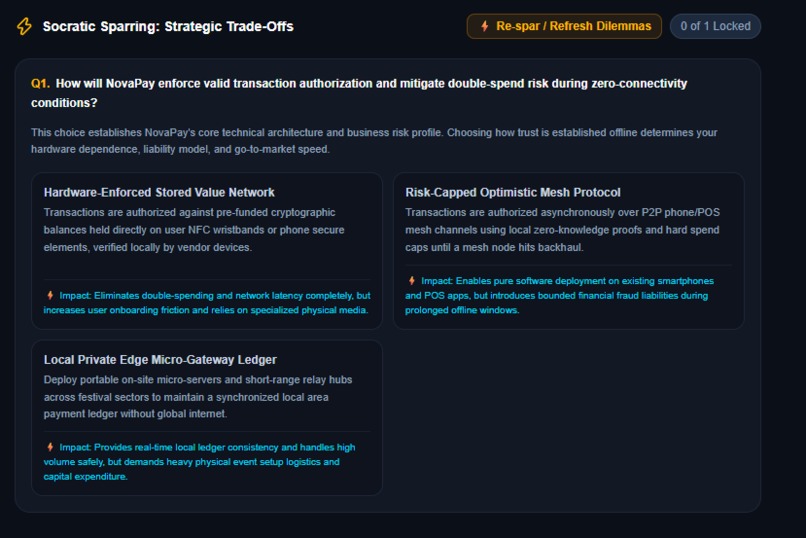
Sparing
-
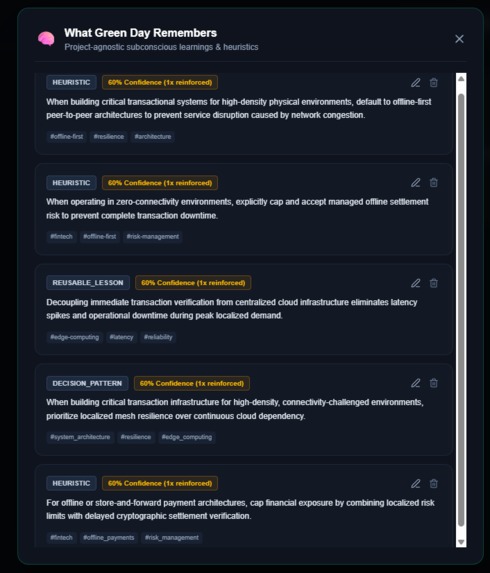
Subconscious learnings
Inspiration
What it does
Inspiration
Most ideas do not fail because they are bad. They disappear in the awkward gap between:
“I should do something with this.”
and:
“What exactly do I do next?”
I have had plenty of ideas that started with energy, ended up in a note or forgotten document, and quietly went nowhere. Existing tools are good at storing ideas, and AI chatbots are good at generating quick answers, but neither necessarily helps someone stay with an idea long enough to turn it into something real.
That is why I built Green Day.
Green Day is designed to feel less like a chatbot and more like a trusted guide. It does not take over the journey or pretend it already knows the destination. It helps you understand where you are going, what you have overlooked, which decisions matter and what should happen next.
What it does
A user can begin with something as simple as:
“I want to start my own comic convention.”
Green Day preserves that original thought, then helps the user explore it without immediately inventing a business model, technical solution or finished plan.
It asks focused questions, challenges assumptions and gradually builds a living picture of the idea. It keeps track of confirmed facts, open questions, working assumptions, decisions, risks and next actions.
The experience is organised around several connected tools:
- Mind Map builds the structure of the idea as it develops.
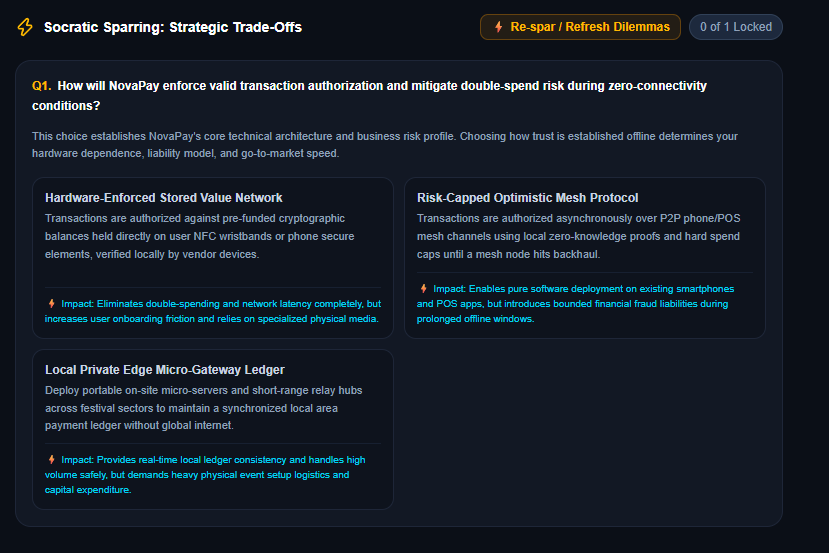
- Socratic Sparring challenges assumptions and helps the user compare options or make decisions.
- Radar shows what is clear, what still needs work and what may block progress.
- Persistent memory allows Green Day to continue from earlier conversations instead of starting again every time.
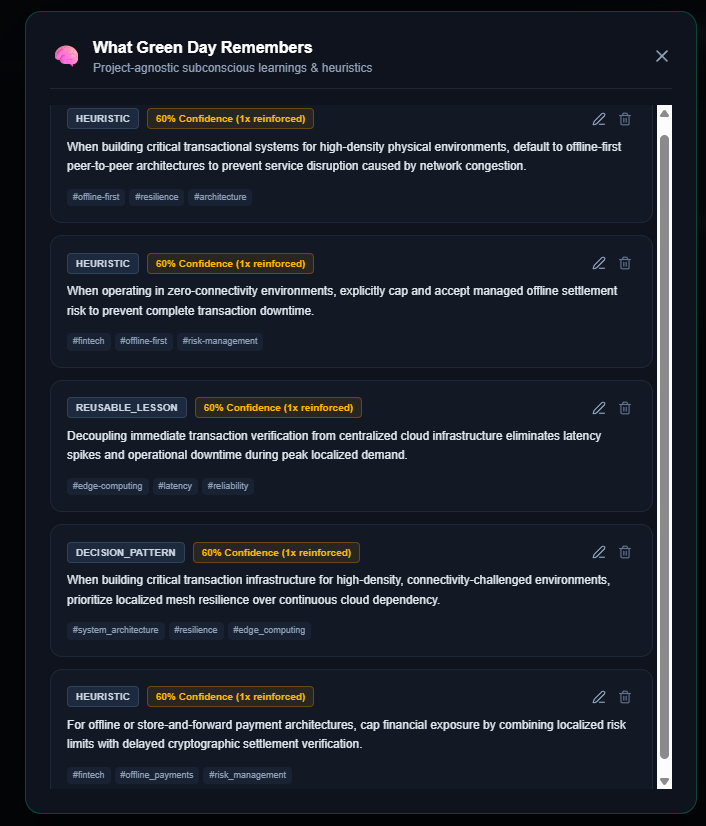
- Subconscious learning lets the user keep useful general lessons from an abandoned idea without retaining the deleted project itself.
- Action guidance keeps each conversation moving towards a practical next step.
Green Day is not a coding agent. Its role is to help the user reach the point where an idea is properly understood and ready to act on.
For an app idea, that could mean producing a clear Markdown build brief for a development tool. For an event, it could mean preparing a venue brief, budget questions and an initial delivery plan. The destination changes, but Green Day helps the user find a sensible route.
How I built it
Green Day has a Python and FastAPI backend, with Gemini supporting the collaborative AI experience.
Project information is stored as structured entities in Firestore rather than relying only on chat history. Decisions, conversations, messages, dependencies, actions and project events are kept separately so that the system can understand how one part of an idea affects another.
A central Action Registry controls all meaningful changes. This protects against duplicate actions, conflicting updates and accidental data loss. A dependency graph allows Green Day to show the impact of changing or undoing a decision before anything is removed.
The web client is built with Next.js, React, TypeScript and Tailwind CSS. The mobile application is built with Flutter and Dart.
Long conversations are compacted into summaries for the AI context, while the full original message history remains available to the user. Confirmed decisions and project facts remain authoritative and are never replaced by an AI-generated summary.
Challenges
The first version of the AI was far too eager to look clever.
When given:
“I want to start a comic convention.”
it immediately decided the user was building event-management software and started discussing offline badge verification.
That exposed the central challenge. A collaborative partner should not invent the destination before understanding the idea.
I redesigned the system around a living project state that separates:
- what the user actually said
- what Green Day reasonably inferred
- what remains unknown
- what is only a suggestion
- what the user has formally decided
Another challenge was memory and deletion. I wanted Green Day to learn over time without becoming intrusive. The result is a three-level lifecycle:
- Archive the full idea
- Forget the project but retain user-approved general lessons
- Delete everything completely
I also had to solve less glamorous but important problems such as safe undo, concurrency, duplicate requests, long-running conversations and ensuring that one changed decision correctly flags everything that depends on it.
What I learned
The most important lesson was that useful AI is not just about producing better answers.
It needs to know when to ask a question, when to challenge the user, when enough is known and when it is time to stop talking and suggest a real next step.
I also learned that persistent memory should not simply mean storing more chat. It needs structure, provenance and user control. The user should always be able to see what Green Day remembers, correct it or ask it to forget.
Finally, I learned that the less visible parts of an agentic product matter just as much as the interface. Idempotency, dependency tracking, revision history and safe deletion may not make an exciting screenshot, but they are what make the experience trustworthy.
What is next
The next step is to test Green Day with people bringing very different kinds of ideas, from starting a business to planning an event, writing a book or shaping a new app.
I also want to expand the interactive Sparring experience so users can compare, combine and rank options more naturally, while continuing to improve the quality of the final handoff material.
The goal remains simple:
An idea should not become another forgotten note. Green Day should help you understand it, challenge it and work out what happens next.

Log in or sign up for Devpost to join the conversation.