-

Landing Page
-
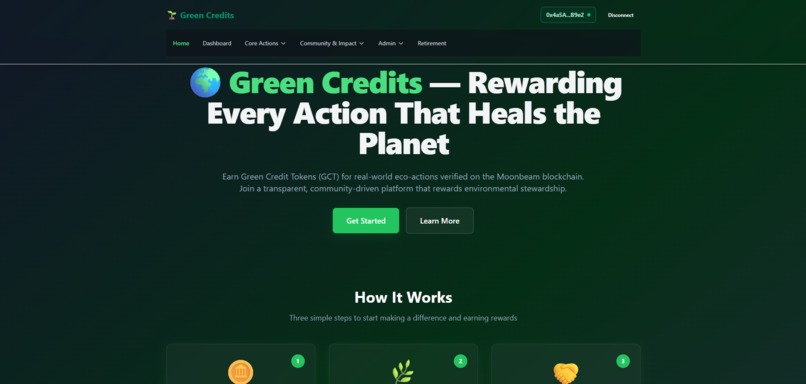
Landing Page v2
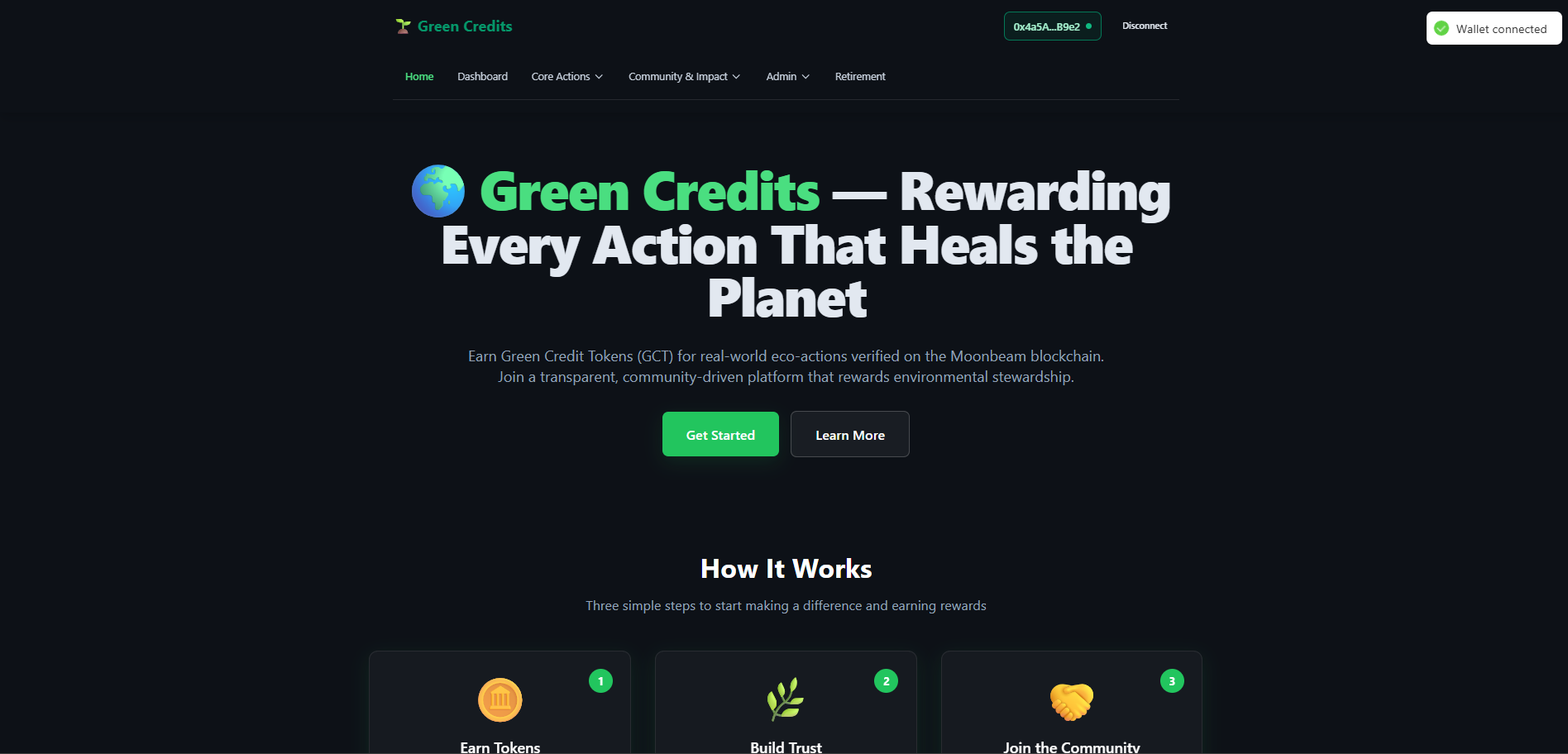
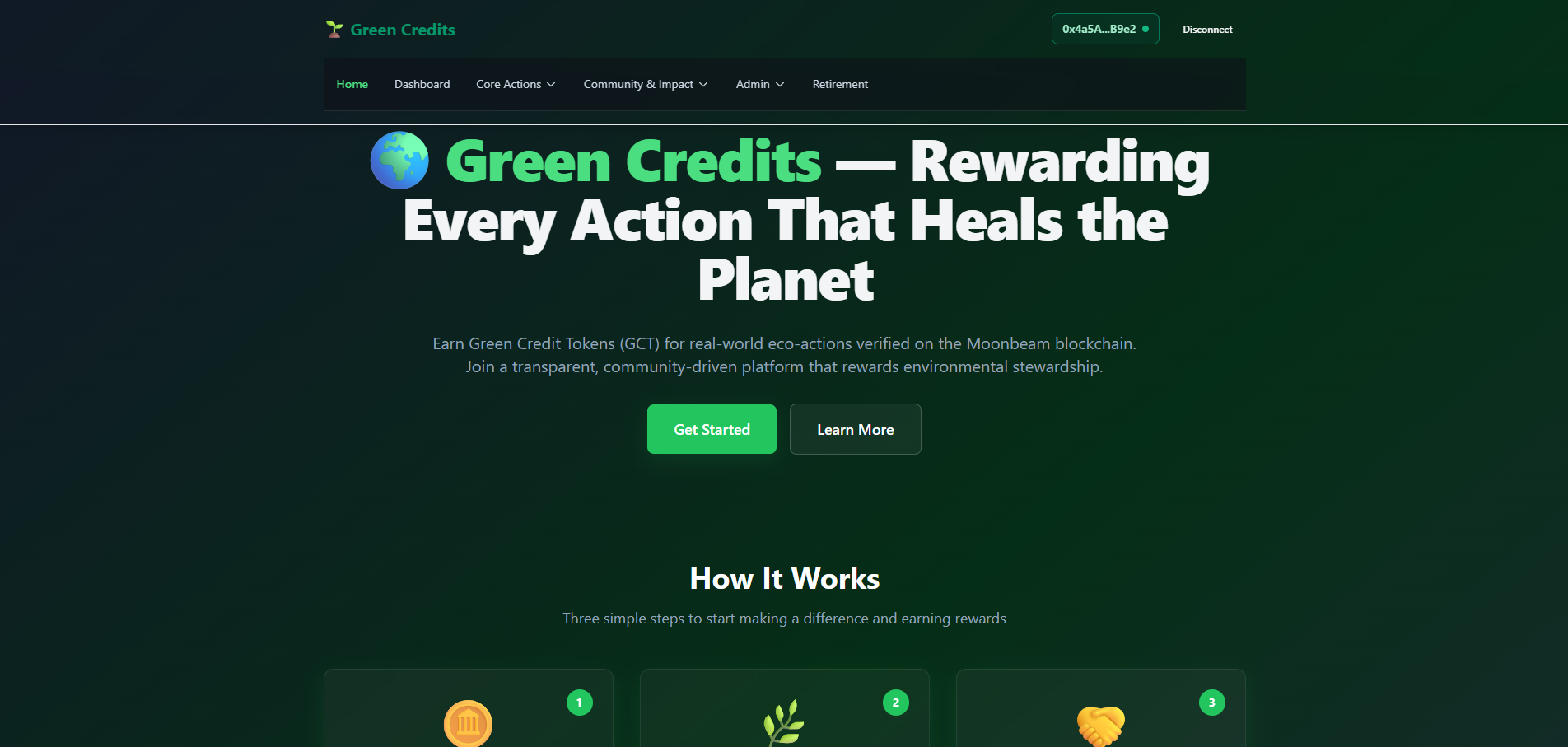
🌿 Green Credit
Inspiration
The global carbon credit market is broken—opaque, expensive, and prone to fraud. Traditional carbon offset systems rely on centralized verification processes that are slow, costly, and inaccessible to individuals.
Meanwhile, millions of people perform climate-positive actions every day—planting trees, recycling, conserving energy—yet none of these actions are recognized or rewarded.
Green Credits was created to fix this gap by bringing transparency, fairness, and tokenized incentives to climate-positive behavior through decentralized verification and programmable rewards.
What it does
Green Credits is a decentralized climate-action system that rewards real-world environmental actions.
Users can:
- Submit environmental actions (tree planting, recycling, cleanups, etc.)
- Upload proof (images, videos, documents)
- Have submissions verified on-chain
- Stake USDC and earn GCT tokens as rewards
- Track personal environmental impact
The platform provides:
- Decentralized verification using smart contracts
- Stablecoin-based staking and rewards
- On-chain transparency for all contributions
- A public leaderboard
- A registry of verified climate actions
🏗️ How I built it
Smart Contracts (Moonbeam Alpha)
EcoActionVerifier.solfor submissions, verification, and rewards- USDC mock contract for staking
- GCT token contract for protocol rewards
- Hardhat (CommonJS) for tests & compilation
- Deployment scripts for Moonbeam Alpha automation
Backend (Render)
- Node.js + Express API
- IPFS upload pipelines
- Webhooks for event indexing
- REST endpoints for frontend consumption
Frontend (Vite + React + Tailwind)
- Clean, responsive UI (Dashboard, Actions, Leaderboard, Rewards)
- Wallet connection (EVM & Polkadot compatible)
- Real-time transaction notifications & state updates
CI/CD (GitHub Actions + Docker)
- Linting & tests
- Contract deployment
- Backend deploy → Render
- Frontend deploy → GitHub Pages
- Containerized services
- Auto-deploy on push to
main
Challenges I ran into
- Handling decimal mismatches between USDC (6 decimals) and GCT (18 decimals)
- BigInt issues in Chai tests (Hardhat + Ethers v6)
- Hardhat incompatibility with ESM → forced migration to CJS
- Multi-service monorepo deployment with GitHub CI + Render
- Reactive UI state syncing with blockchain transactions
- Reliable IPFS uploads under slow network conditions
- DNS propagation delays for global deployment
Accomplishments I'm proud of
- A complete decentralized climate action system
- Stablecoin staking integrated with on-chain verification
- Clean monorepo architecture
- Dockerized backend + frontend + blockchain
- Automated CI/CD pipelines
- Production-ready deployment flows
- Smooth and responsive UI/UX
- Scalable system that can support millions of submissions
What I learned
- How to design on-chain carbon-credit verification mechanisms
- Moonbeam EVM specifics and best practices
- Distinguishing between off-chain vs on-chain validation
- Optimizing IPFS pipelines for real-world uploads
- Best practices for decentralized identity & proofs
- Improving Web3 UX with React + event syncing
- Designing CI/CD for complex monorepos
- Stablecoin-based tokenomics & reward mechanisms
What’s next for Green Credits
Production Deployment (Moonbeam Mainnet)
- Move from Moonbeam Alpha → Mainnet
- Integrate official Moonbeam USDC contract
DAO Governance
- Snapshot.org + Gnosis Safe
- Community-driven approval of new climate actions
Oracles & Verification
- Chainlink identity verification
- Geolocation oracles
- Community verifiers (Web of Trust model)
Expanding Rewards
- Carbon offset NFTs
- Sustainable brand partnerships
- GCT marketplace
Mobile App
- QR-based validation
- Offline-first submissions
Enterprise Integrations
- Partnerships with schools, governments, NGOs
- Corporate sustainability dashboards
Built With
- express.js
- github-jobs
- hardhat
- ipfs
- javascript
- moonbase
- moonbeam
- openzeppelin
- react
- snapshot
- solidity
- tailwind


Log in or sign up for Devpost to join the conversation.