-
-
login
-
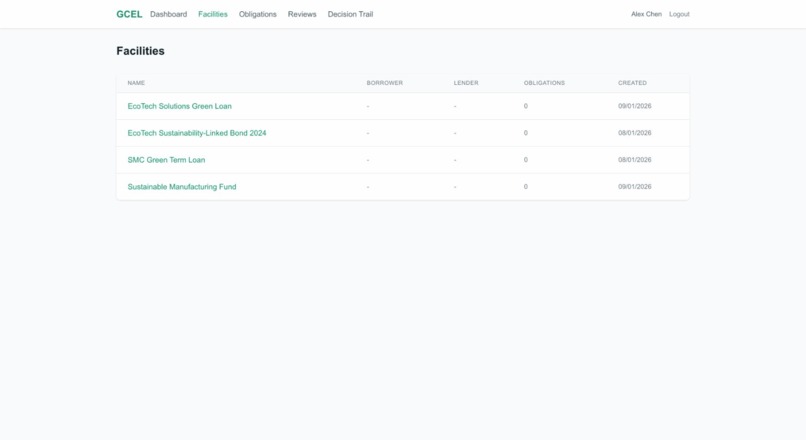
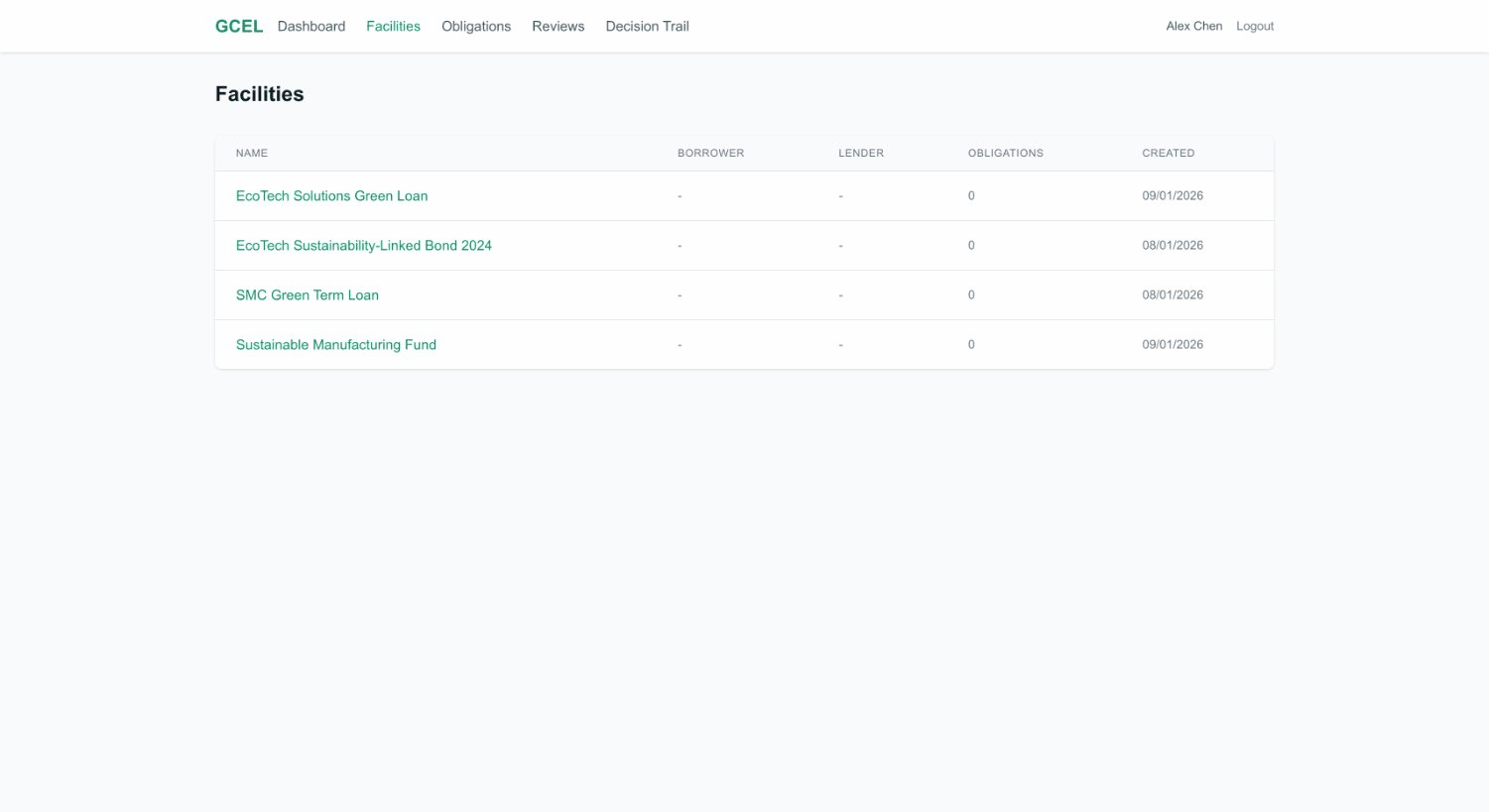
facilities list
-
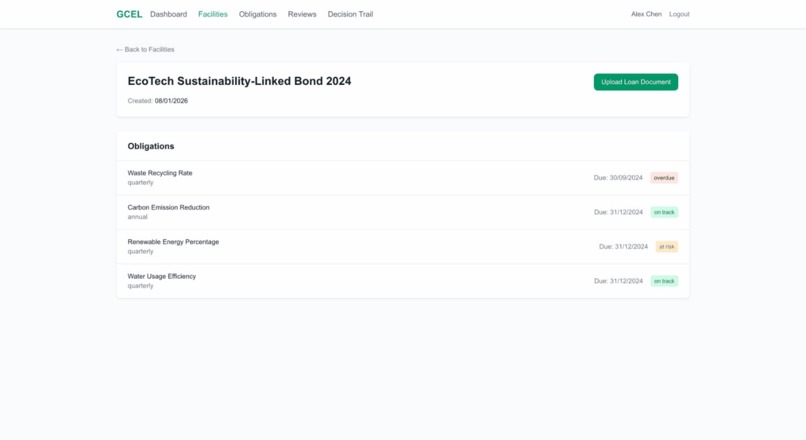
obligations
-
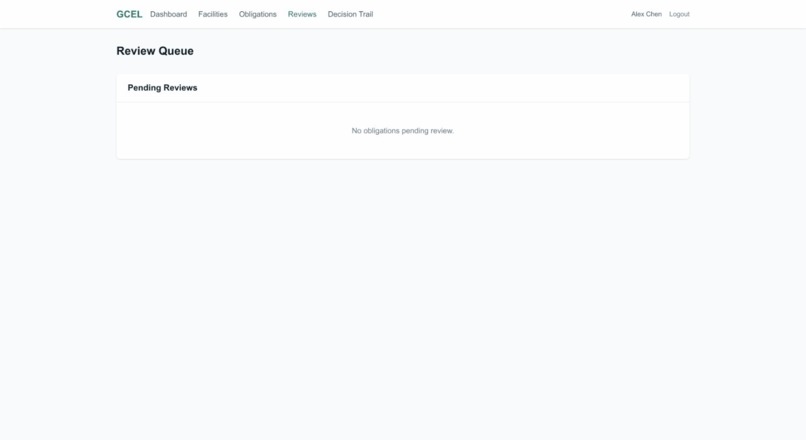
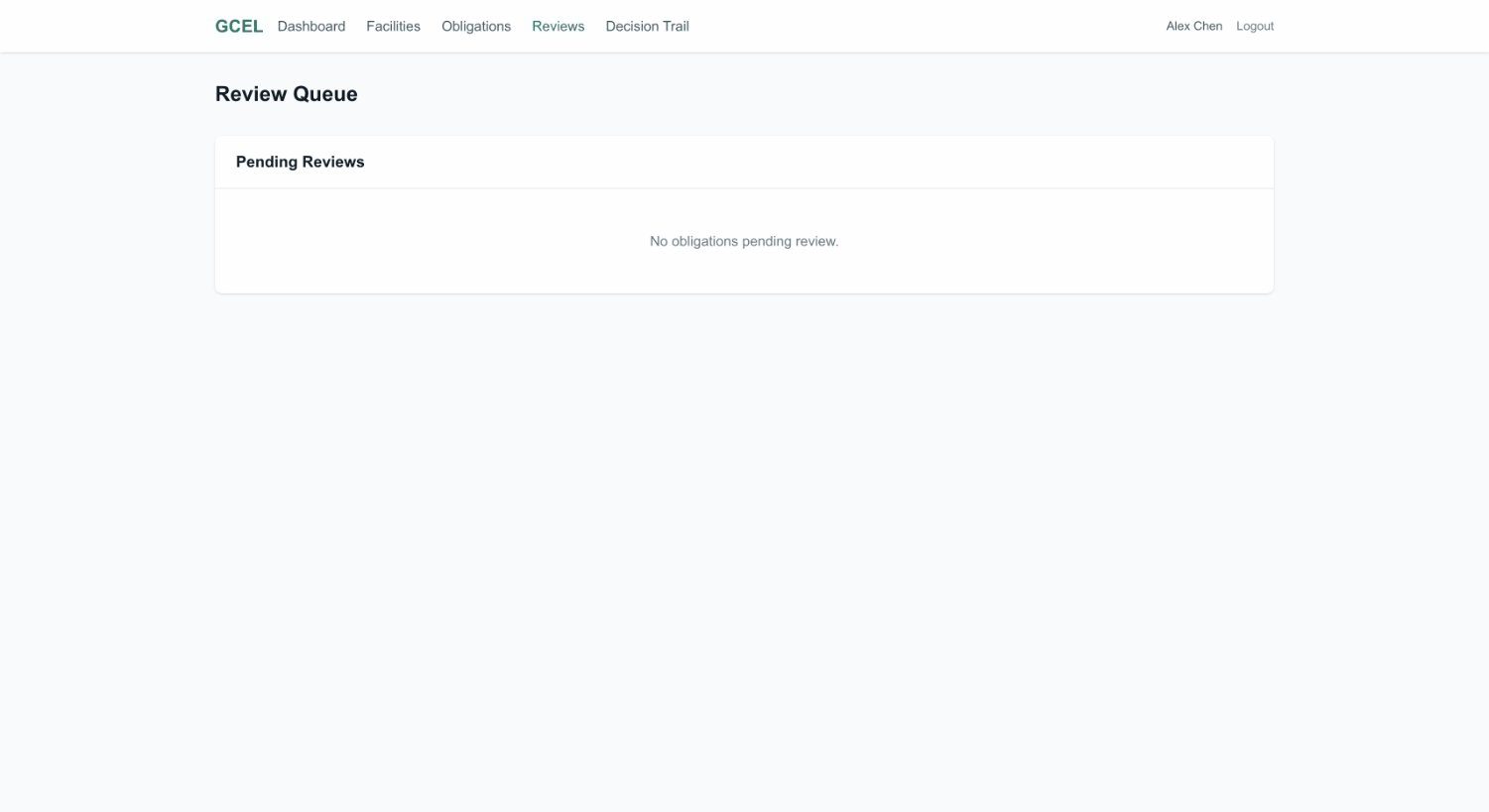
review queue
-
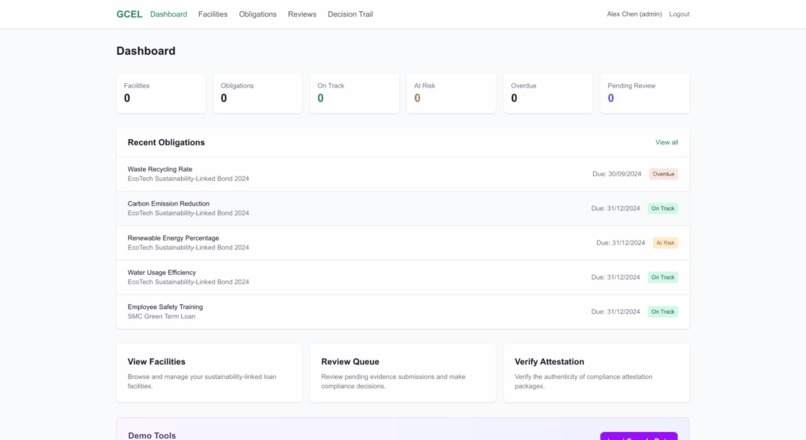
dashboard
-
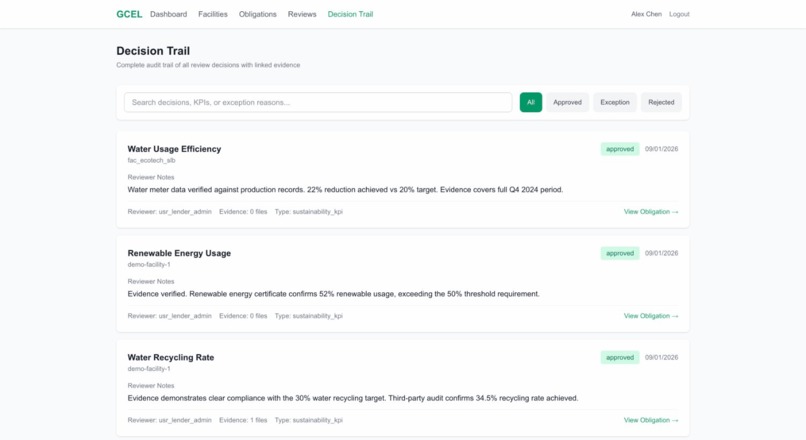
decision trail
-
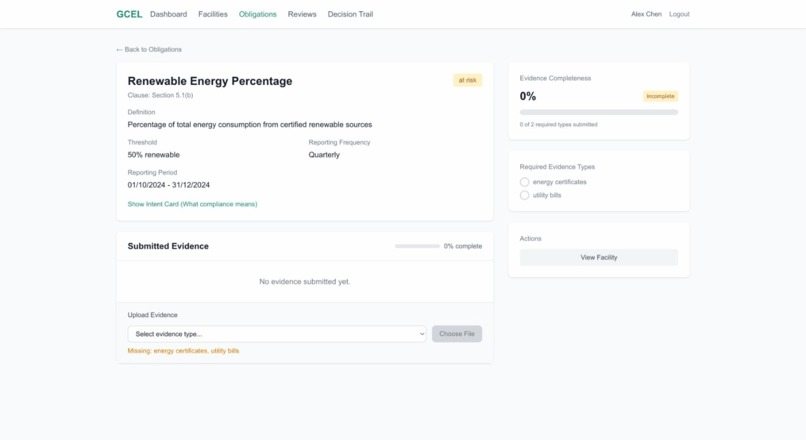
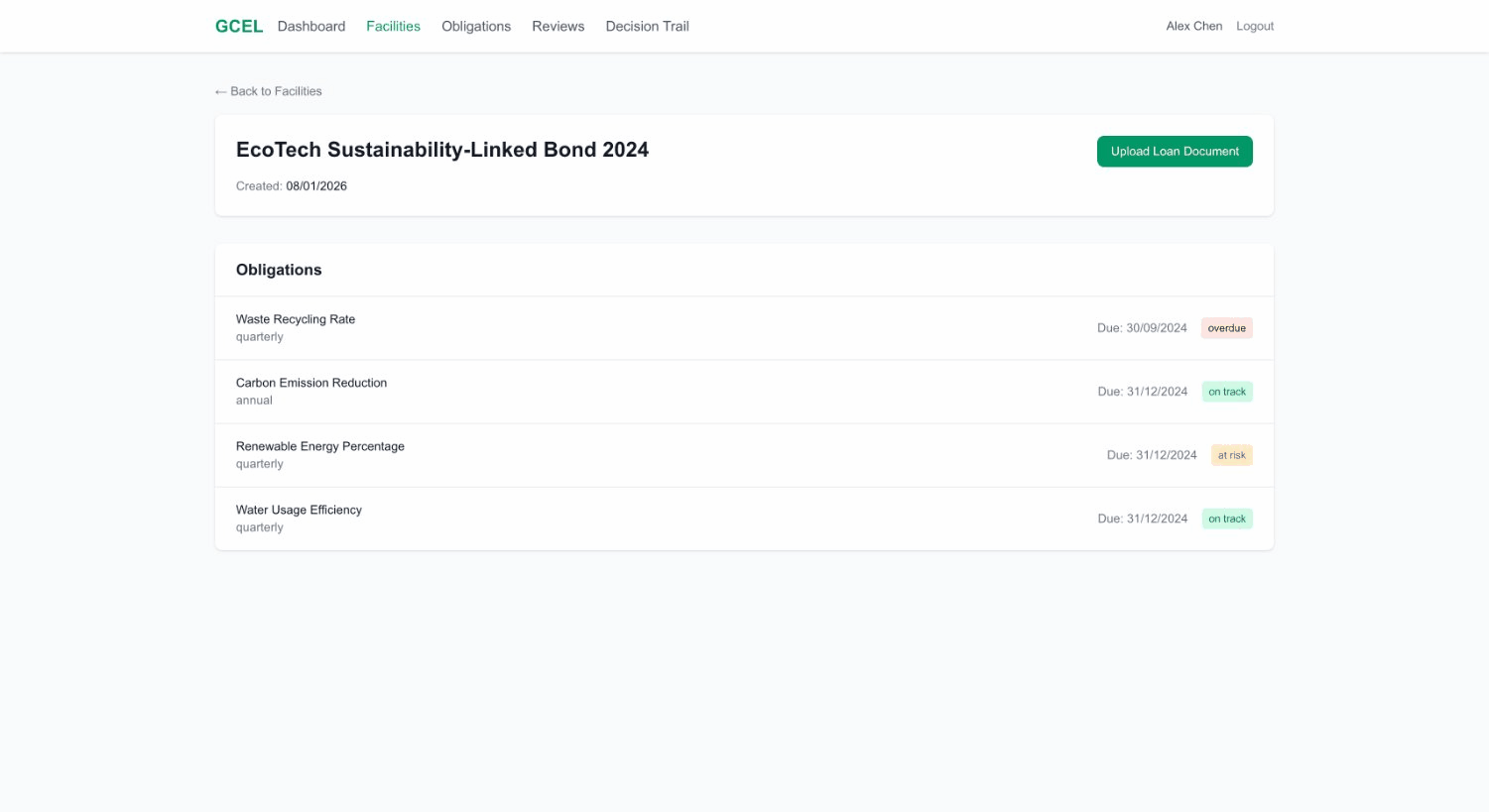
view facility
-
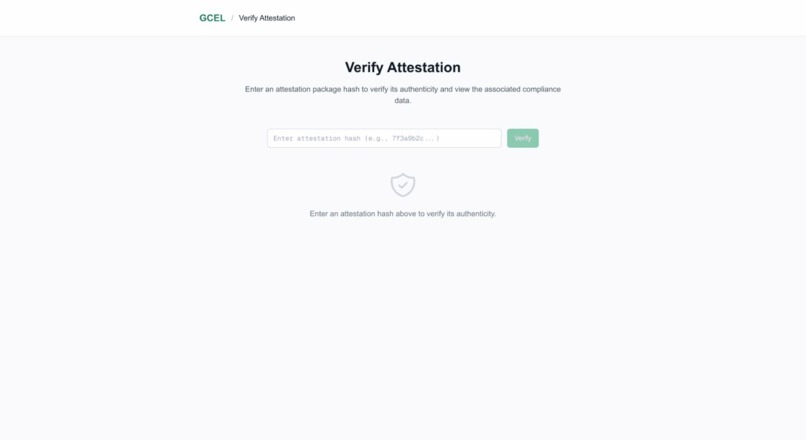
verify attestation (public)
Inspiration
Sustainability-linked and green loans are scaling, but the operational reality is still fragmented: ESG covenants live inside long-form documents, evidence is exchanged via email/spreadsheets, and audits/disputes become expensive because provenance and interpretation are inconsistent. We built GCEL to make the loan contract the source of truth and to turn covenant monitoring into a clear, repeatable workflow.
What it does
GCEL (Green Covenant Evidence Ledger) converts ESG / sustainability covenants into a structured, trackable process:
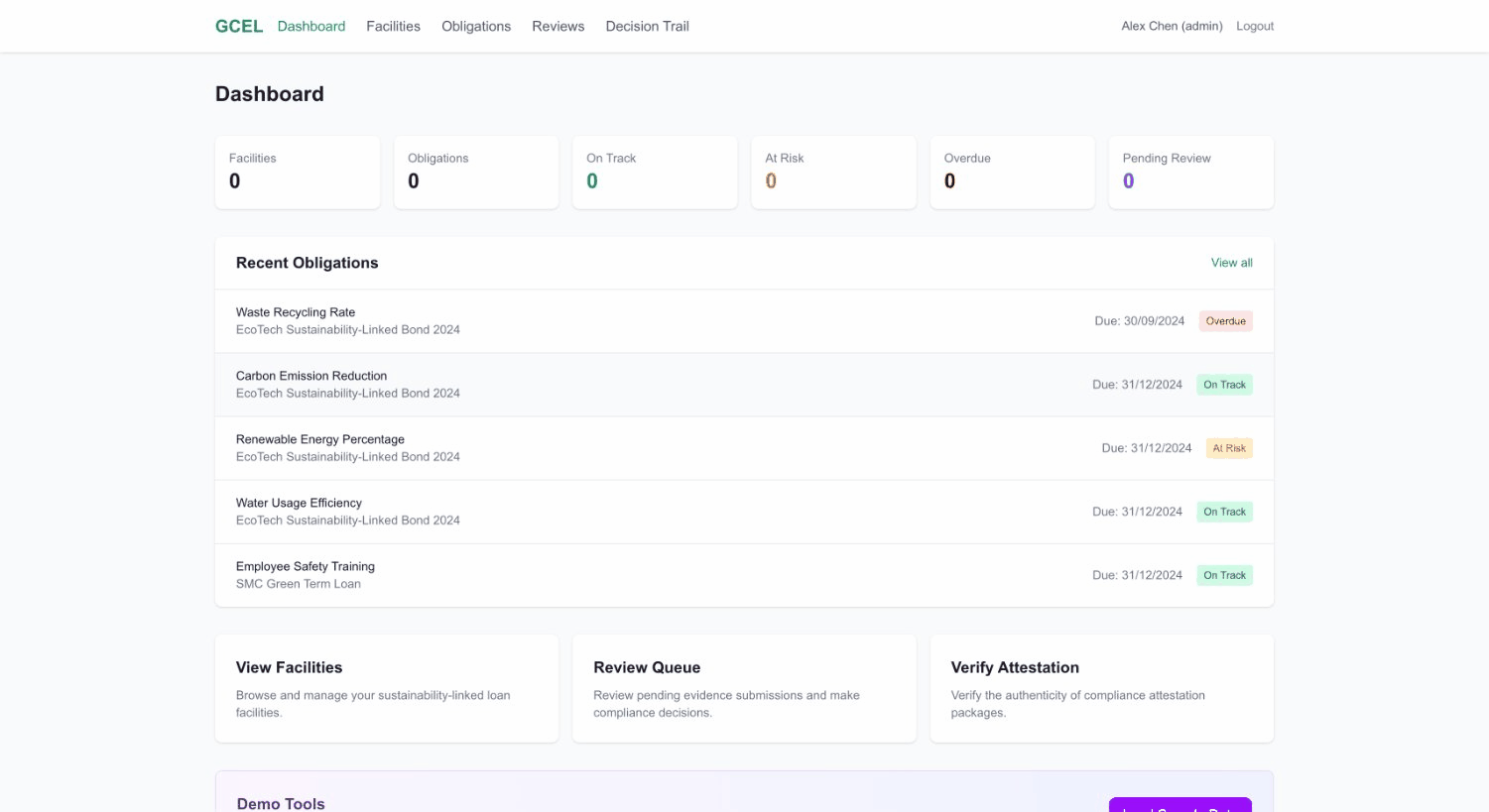
- Upload loan document → extract obligations: Parses key covenant/KPI requirements (frequency, thresholds, evidence required).
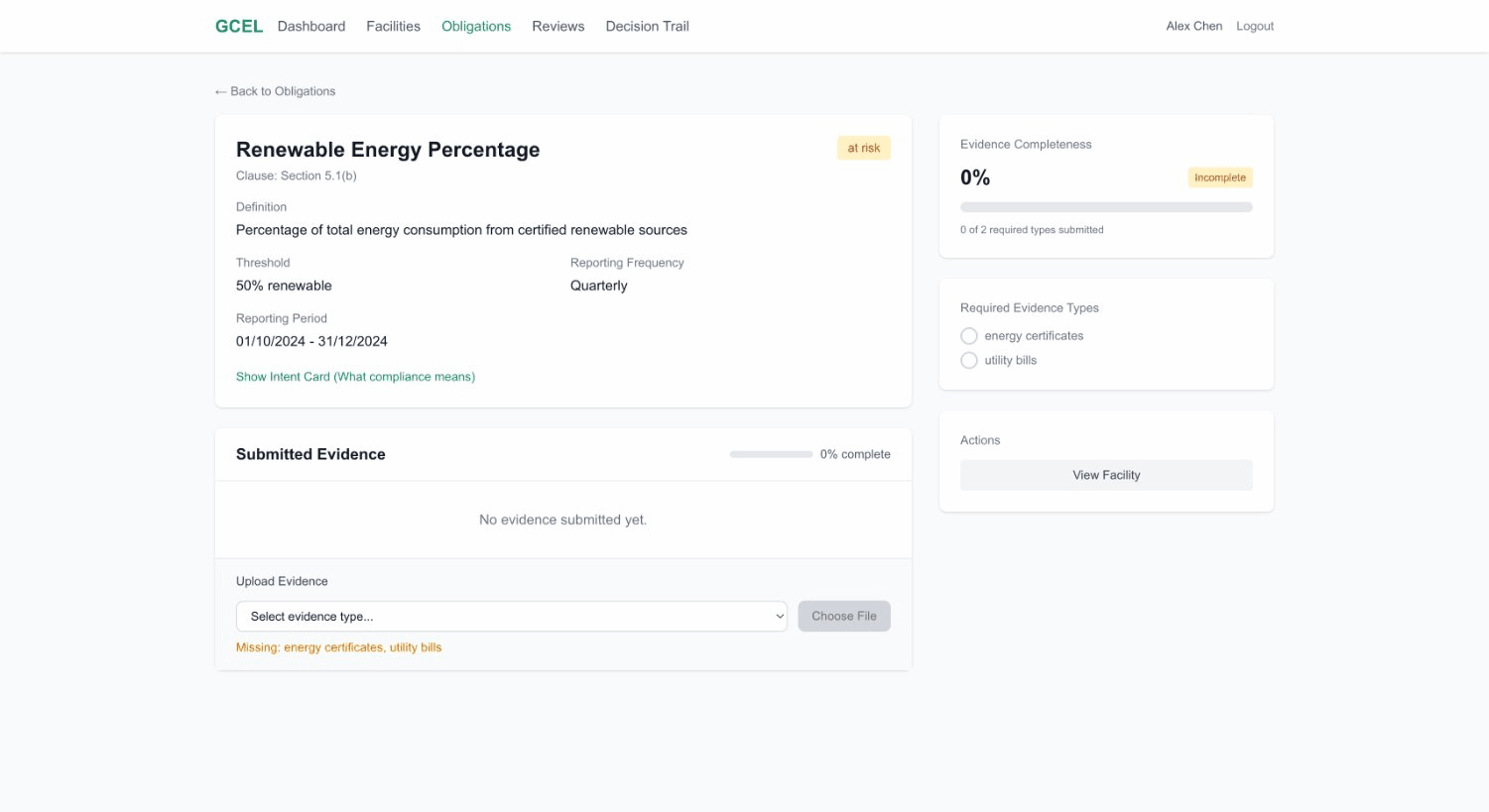
- Intent Cards (“what compliance means”): Each covenant/KPI becomes an explicit checklist and policy card that guides submission and review.
- Evidence Locker: Borrowers upload evidence artifacts (PDFs, images, exports) and map them to obligations and reporting periods.
- Completeness + readiness checks: Highlights missing or mismatched evidence before submission.
- Review workflow: Reviewer can approve, request clarification, or raise exceptions; includes AI-assisted review notes for faster internal memos.
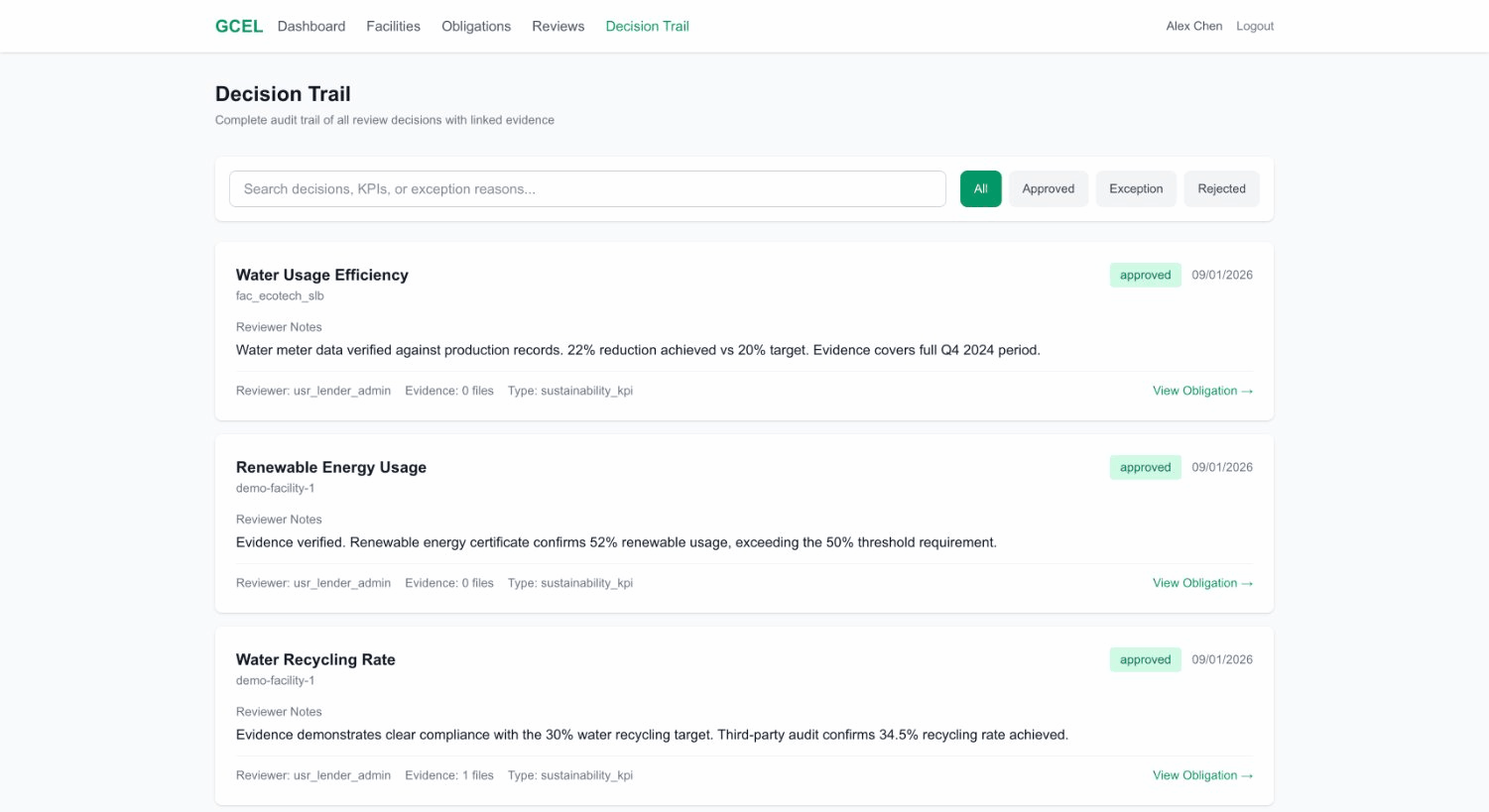
- DecisionTrail (Context Graph): Every cycle creates a DecisionTrace linking the covenant, evidence, reviewer actions, and outcome—so teams can reuse precedent and reduce repeat disputes.
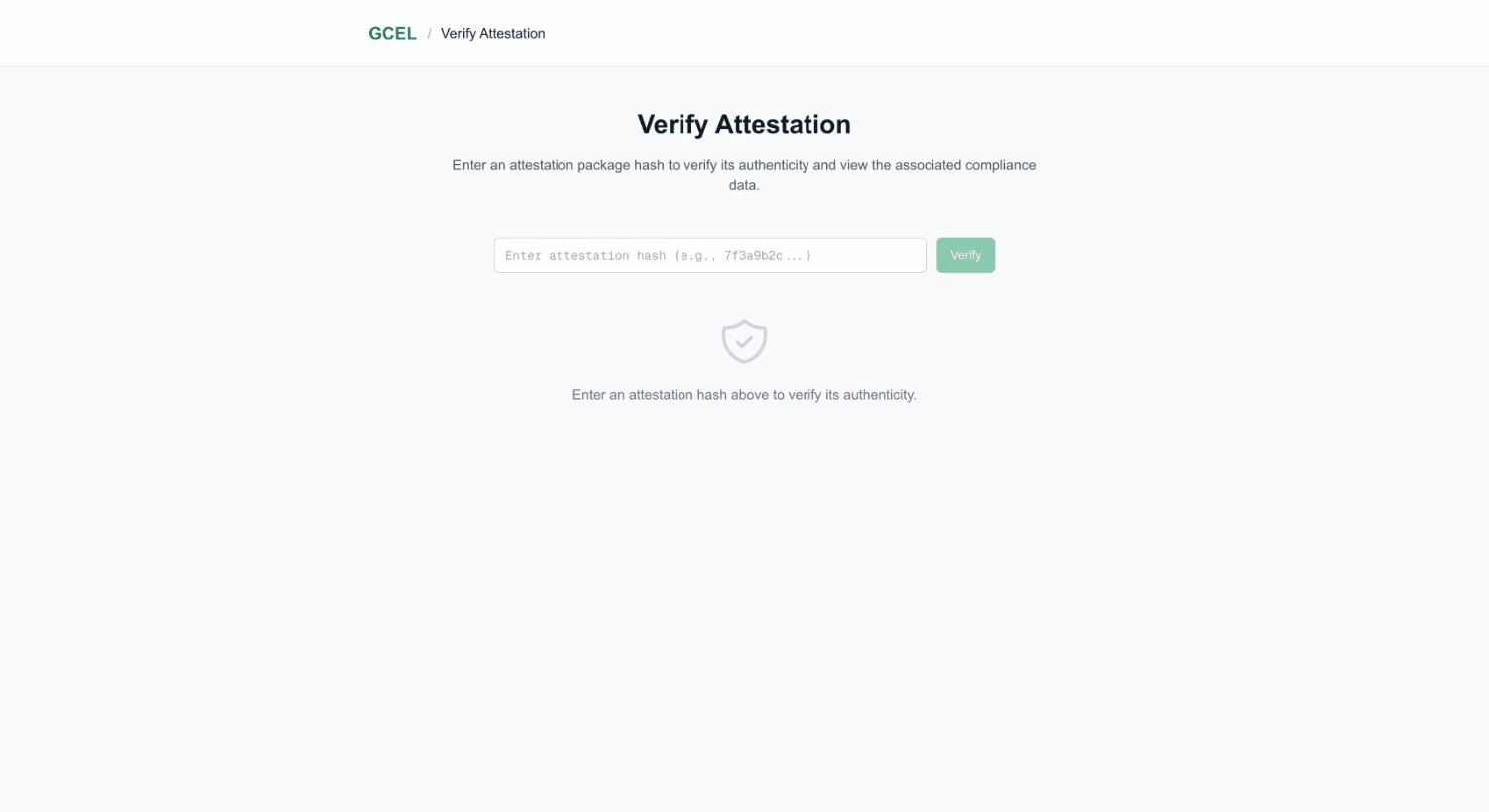
- Attestation + verification: Generates a shareable attestation package (hash/sign/verify) so permitted parties can verify integrity without re-auditing everything from scratch.
How we built it
We implemented GCEL as a desktop web workflow app with a secure backend:
- Document ingestion pipeline: PDF upload → clause/KPI extraction (LLM-assisted) → human-in-the-loop confirmation for reliability.
- Context Graph model: Facility → Covenant → KPI → Evidence → ReviewAction → DecisionTrace, enabling traceable compliance history and precedent search.
- Intent Layer: Hierarchical Intent Cards that act as stable “governing context” for workflows and agent behavior.
- Attestation service: Deterministic hashing/signing and a verification page; optional ledger anchoring can be added later (tamper-evidence only).
Challenges we ran into
- Clause variability: Loan drafting styles differ widely; we balanced extraction automation with confirmation UX.
- Evidence heterogeneity: Real-world evidence comes in many formats; we focused on checklist-driven completeness first, then extraction enhancements.
- Judge-friendly UX: We prioritized a workflow that is obvious to lenders, borrowers, and reviewers within a 3-minute demo.
Accomplishments that we’re proud of
- An end-to-end, working flow: document → obligations → evidence → review → decision trace → attestation verification.
- A clear “differentiator moment”: DecisionTrace + verification makes compliance tangible and shareable.
What we learned
In sustainable lending, the real bottleneck is not retrieval—it’s decision context: what was required, what was submitted, who approved, why, and what outcome followed. Capturing those decision traces creates compounding operational value.
What’s next
Productization for Straits AI (Malaysia/SEA-ready):
- Expand covenant/KPI templates and clause pattern coverage.
- Add integrations (utility data, ERP exports, IoT metering where applicable).
- Introduce selective disclosure packages for secondary market diligence.
- Enterprise controls: SSO, tenant isolation, data residency options, and audit retention policies.
- Optional chain anchoring and RWA-linking for tokenized loan participations (where appropriate).
Built With
- cloudflare
- d1
- nextjs
- openrouter
- resend
- typescript


Log in or sign up for Devpost to join the conversation.