-
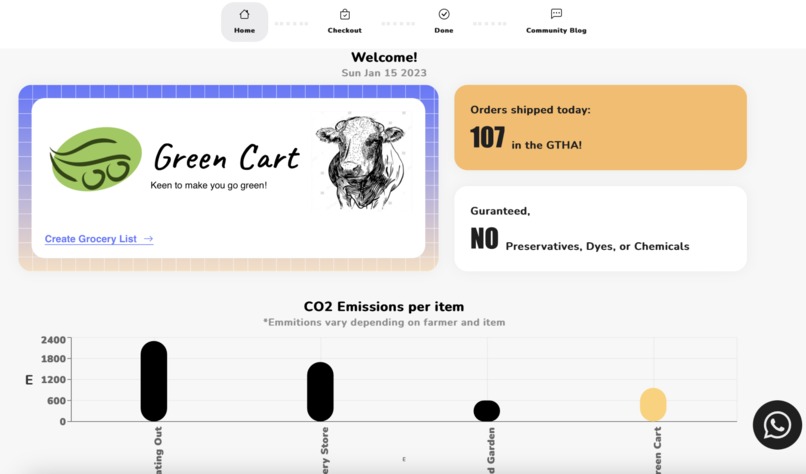
Landing Page
-
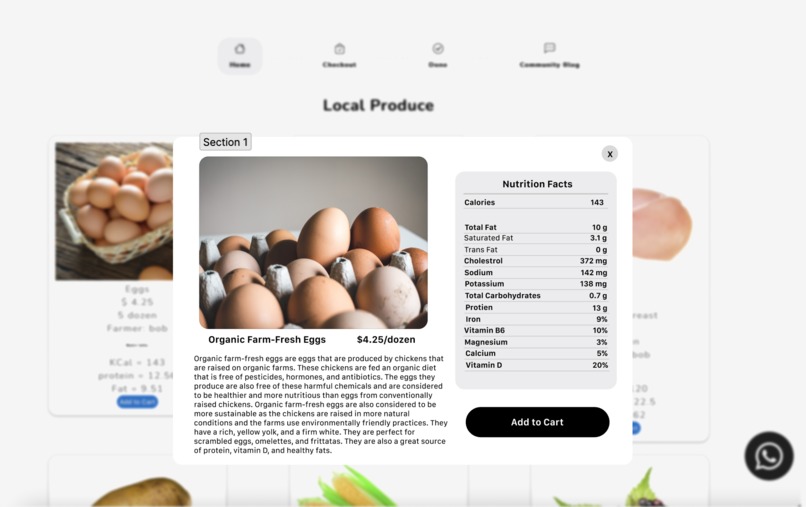
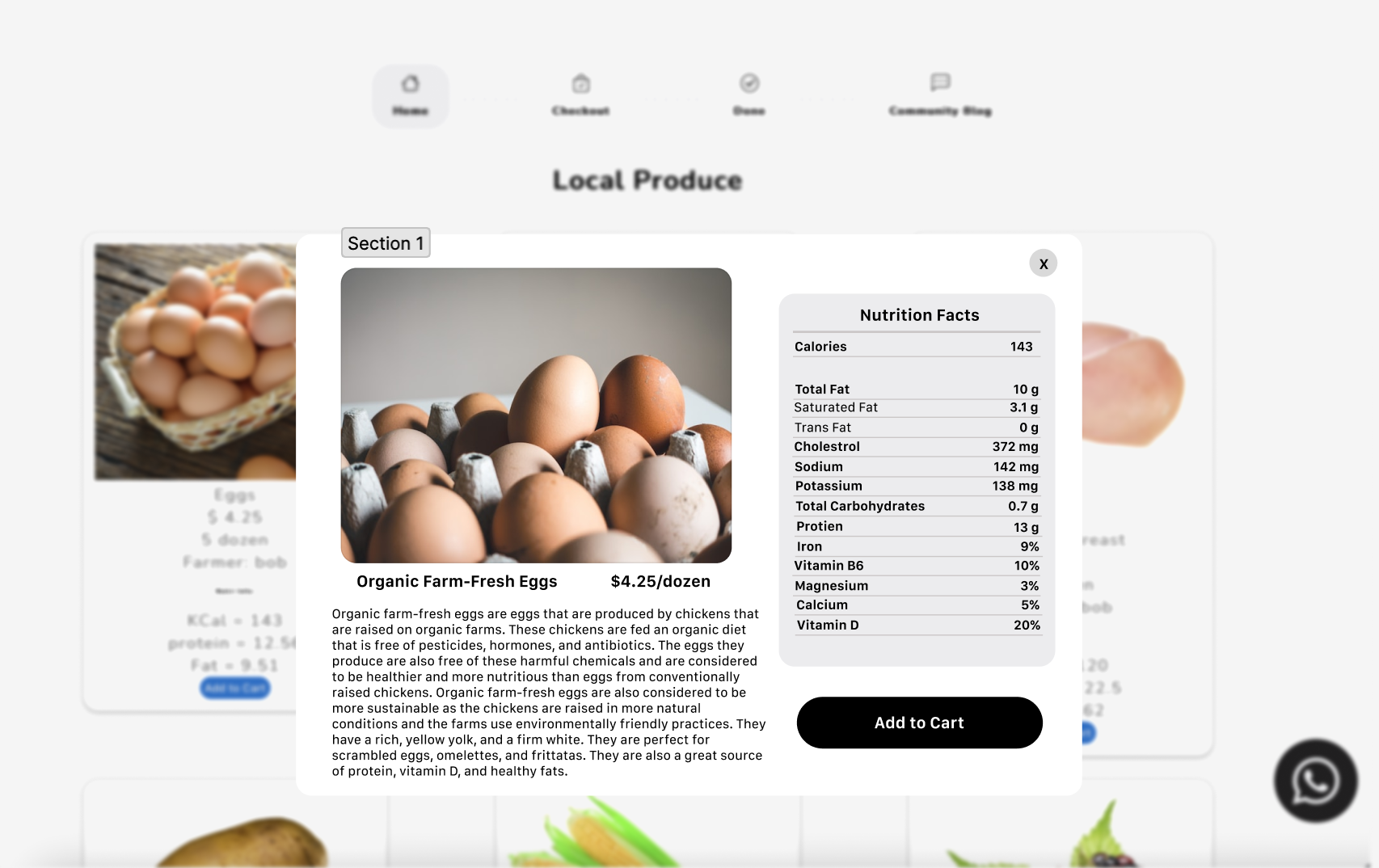
Products
-
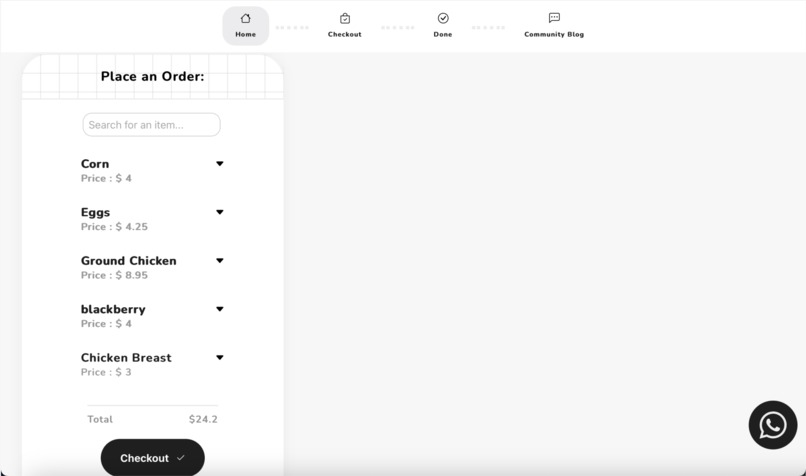
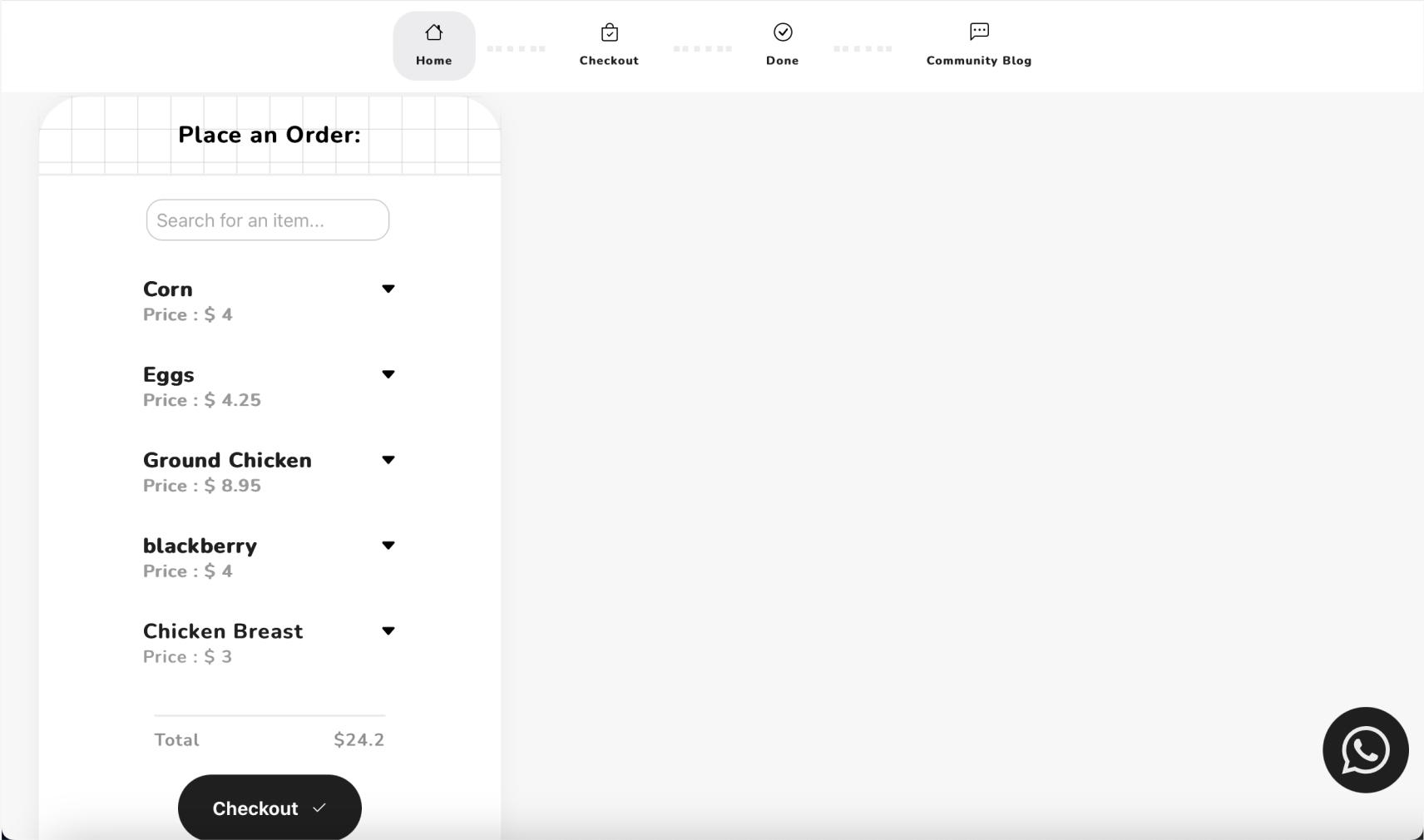
Cart
-
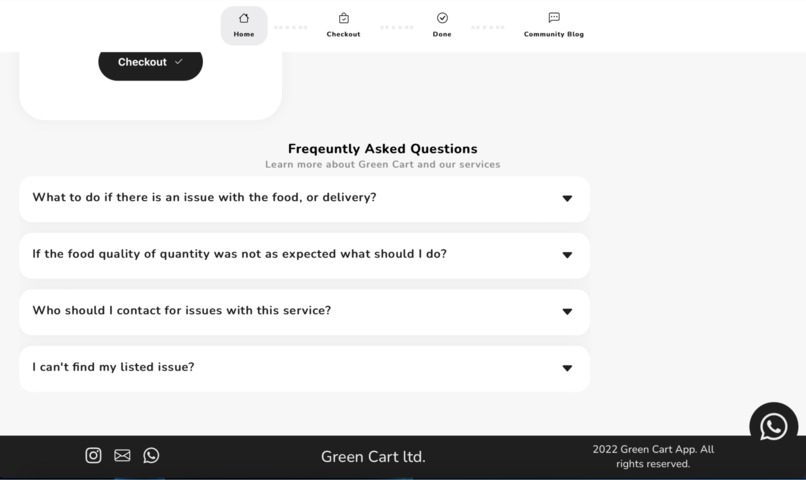
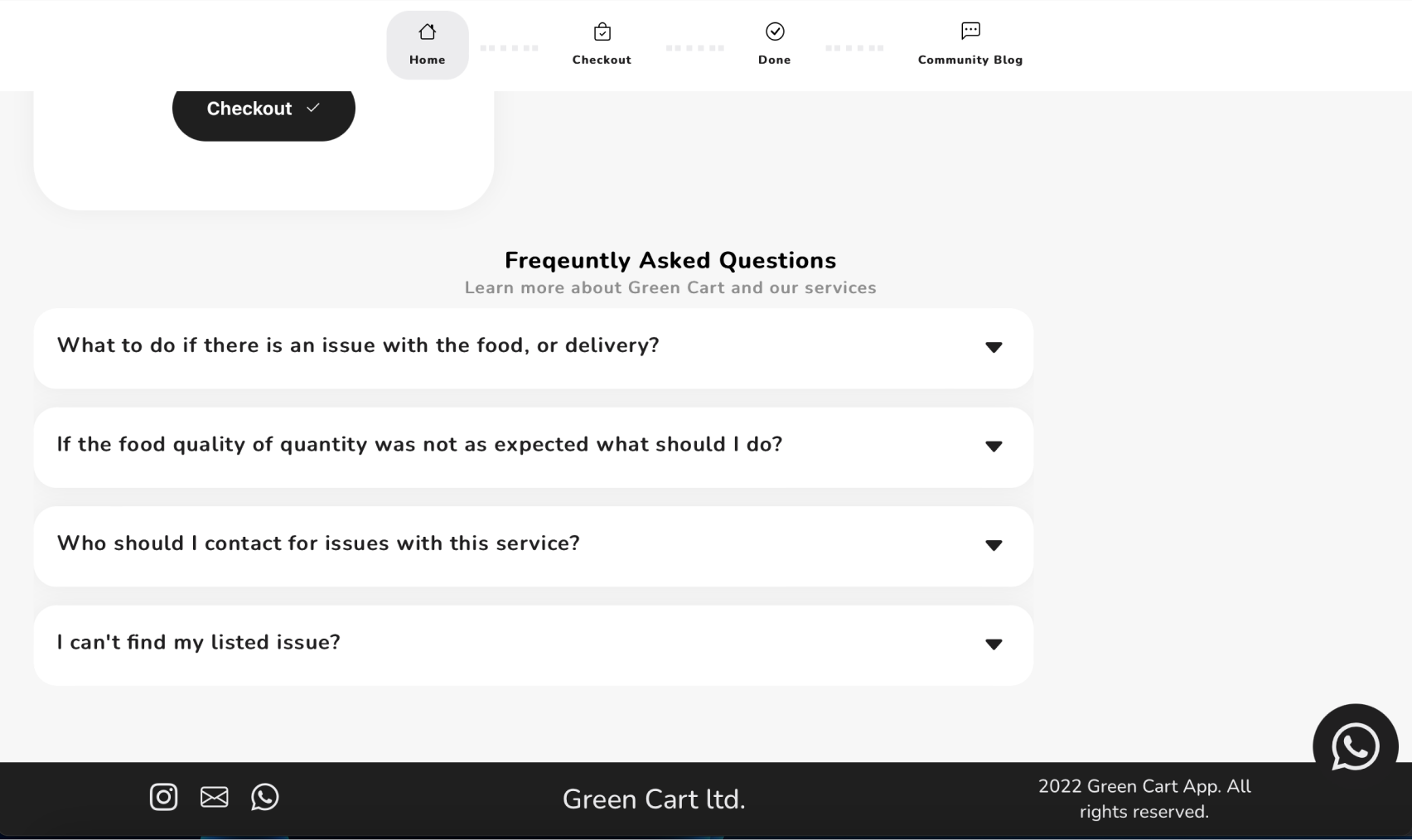
FAQ
-
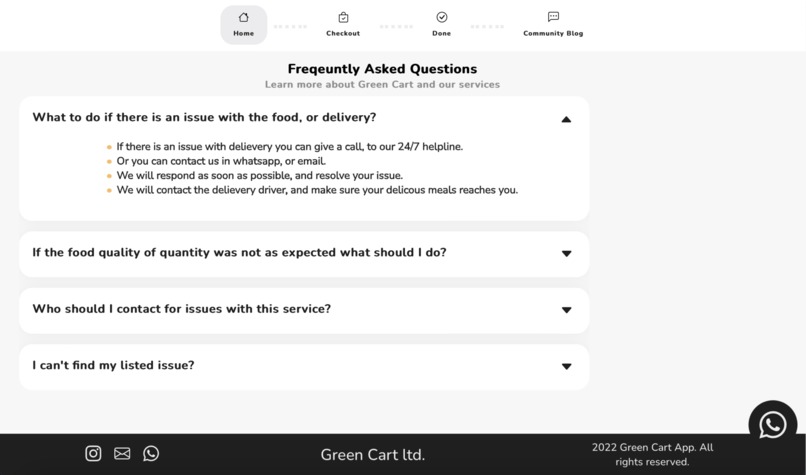
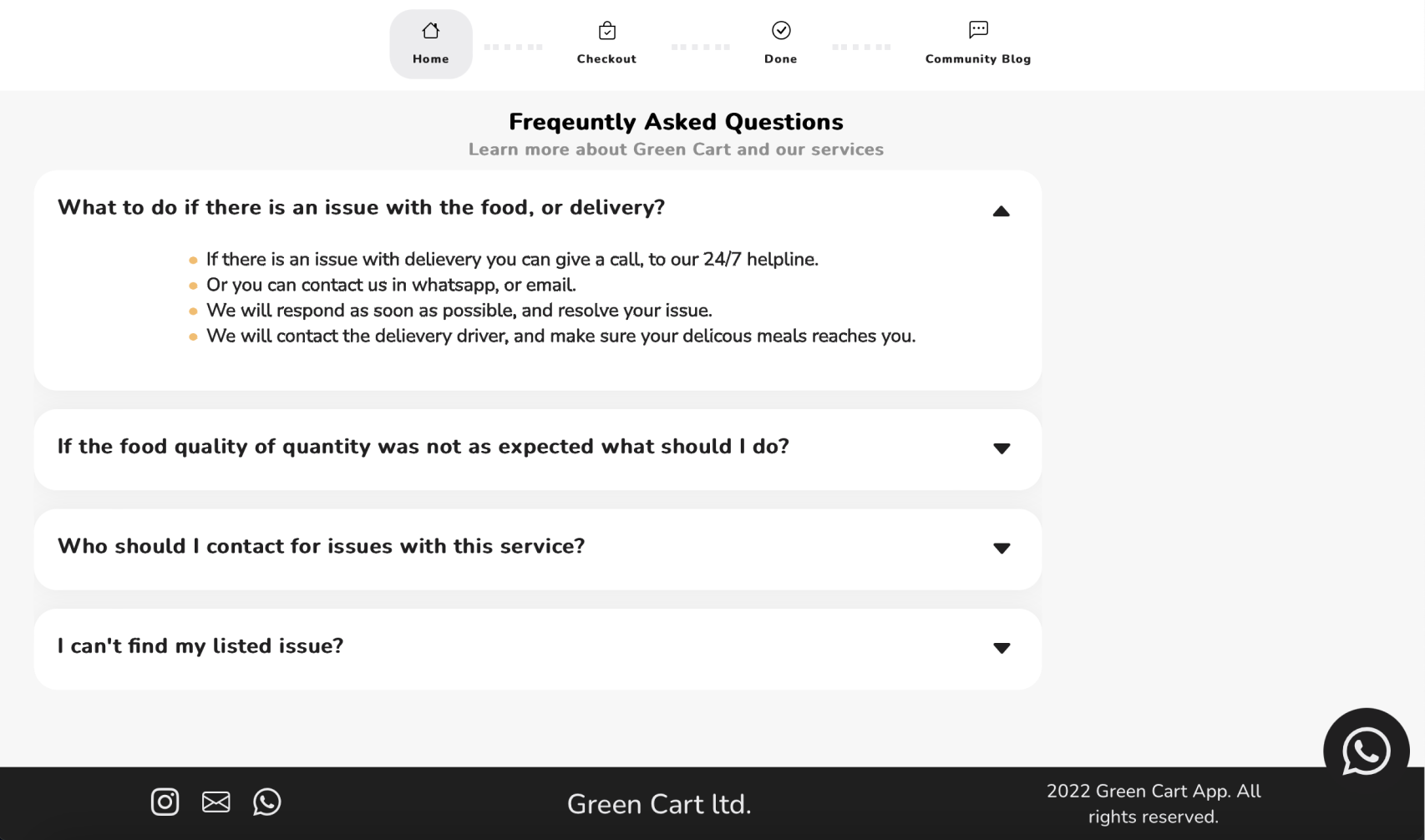
FAQ Expanded
-
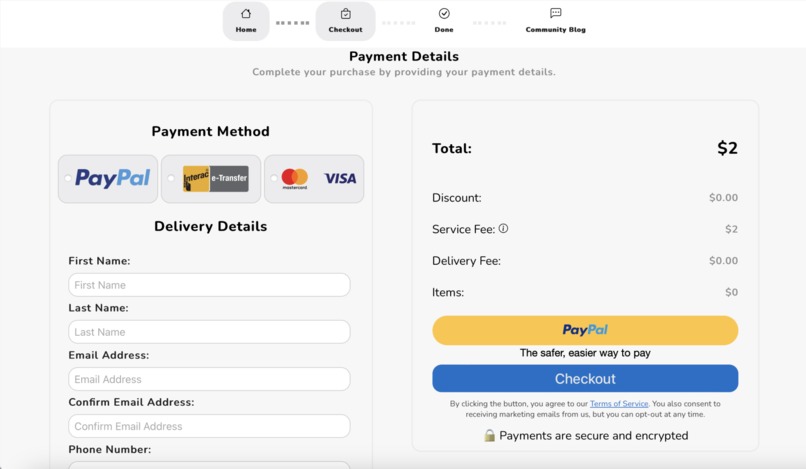
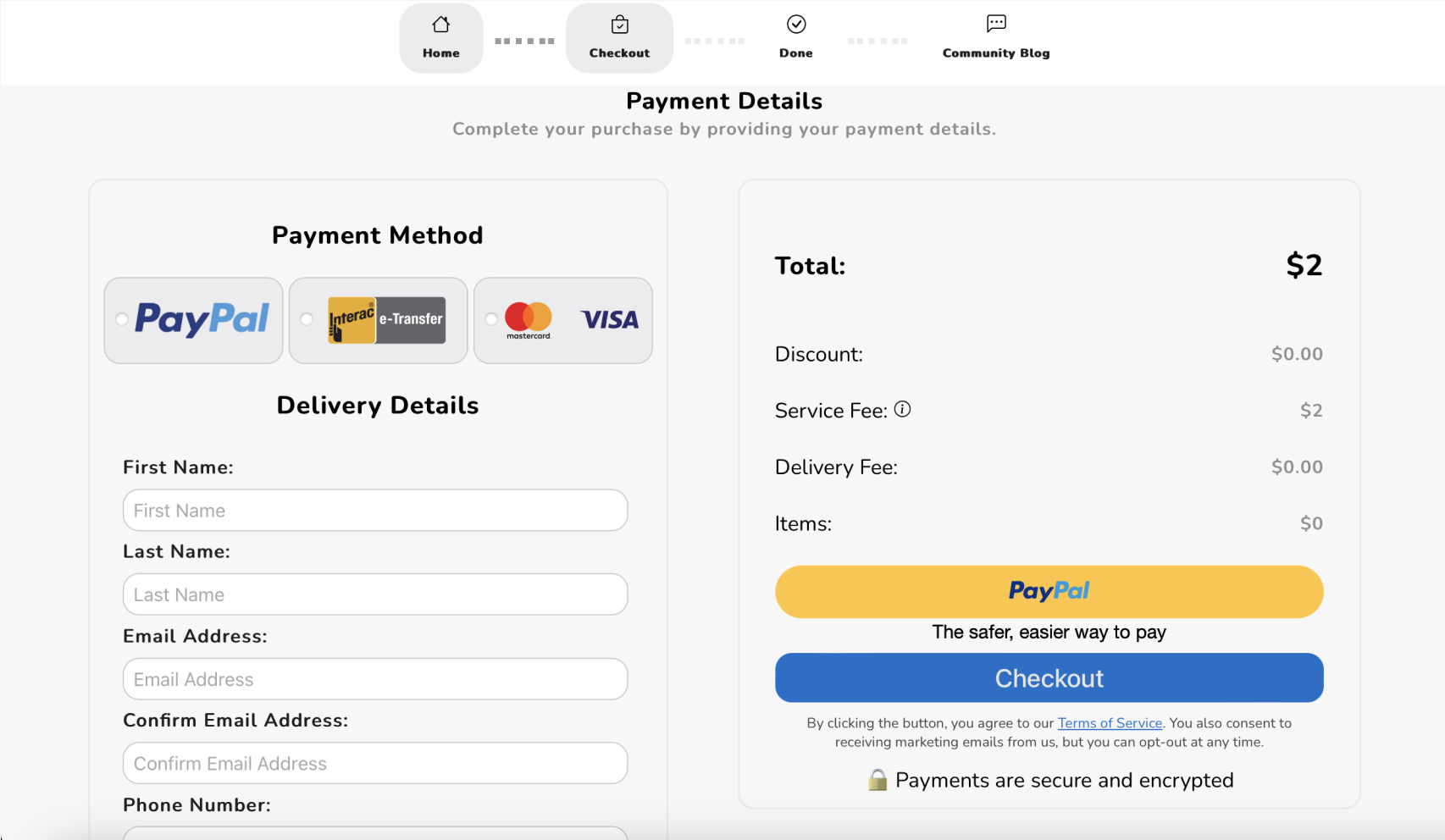
Checkout
-
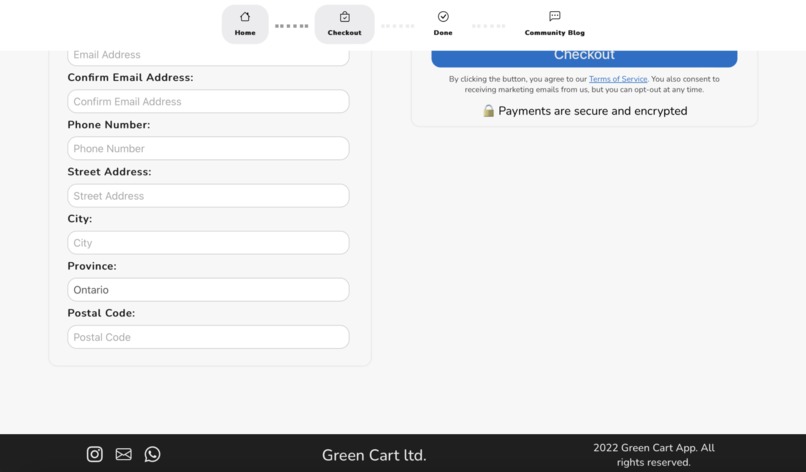
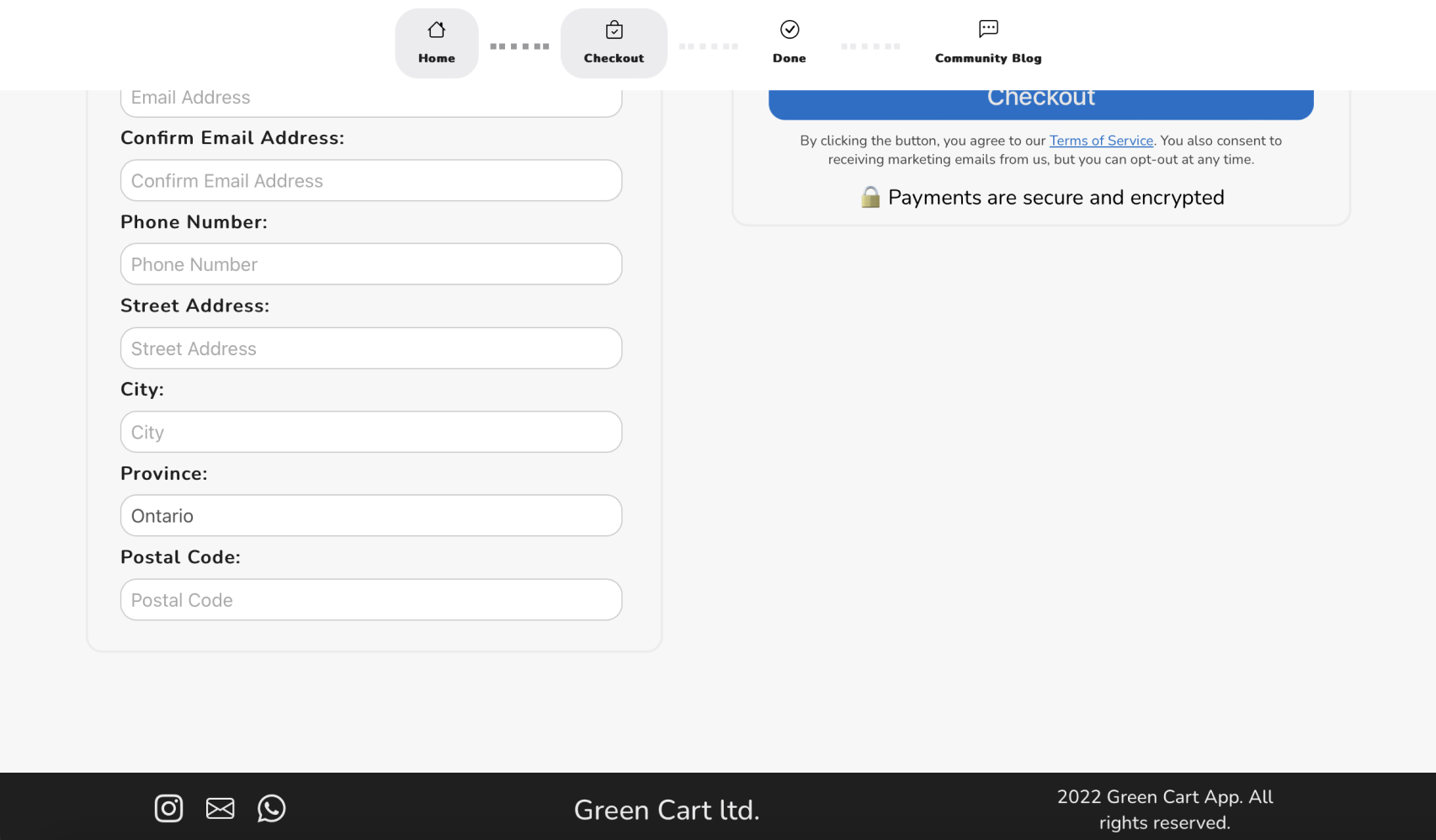
Checkout 2
-
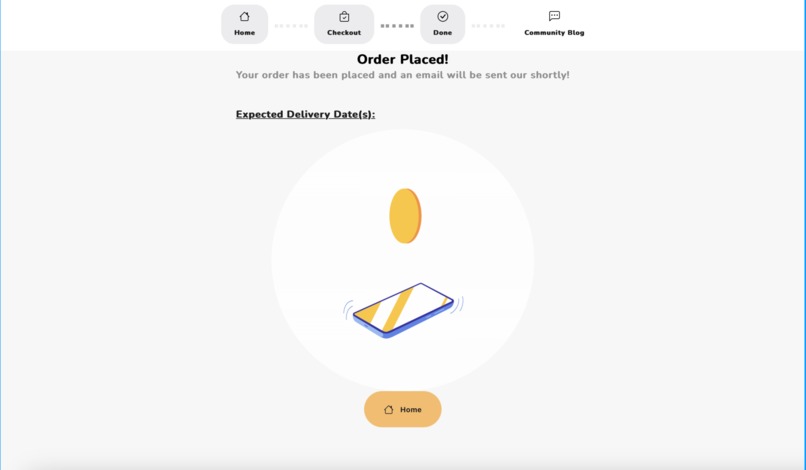
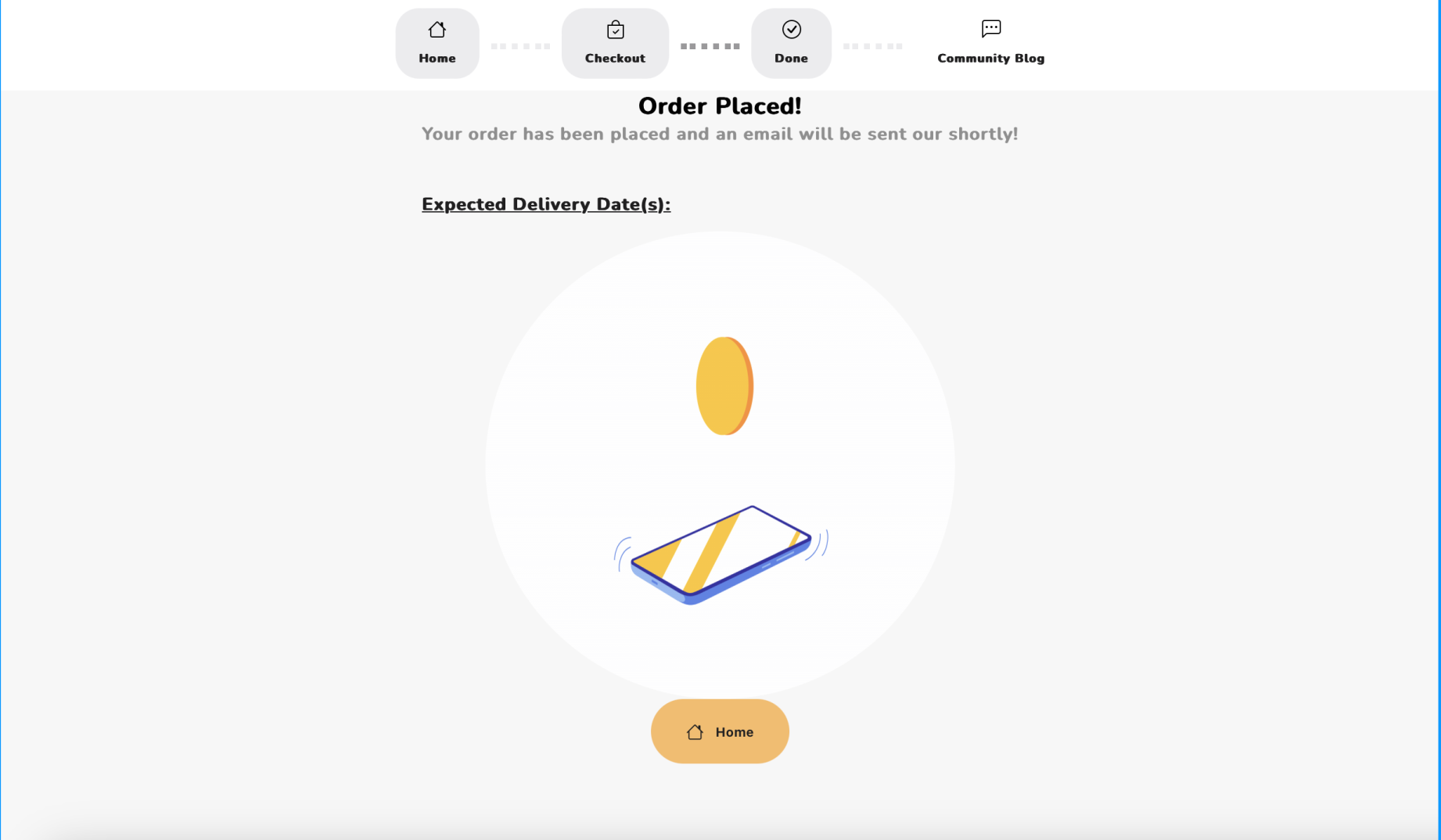
Done
-
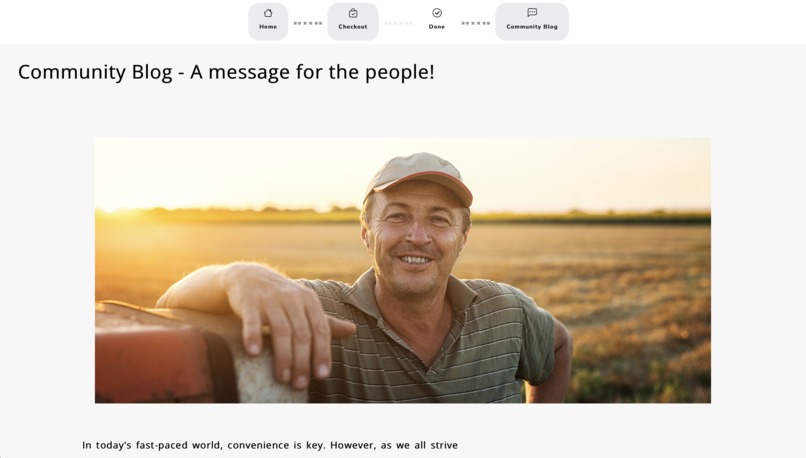
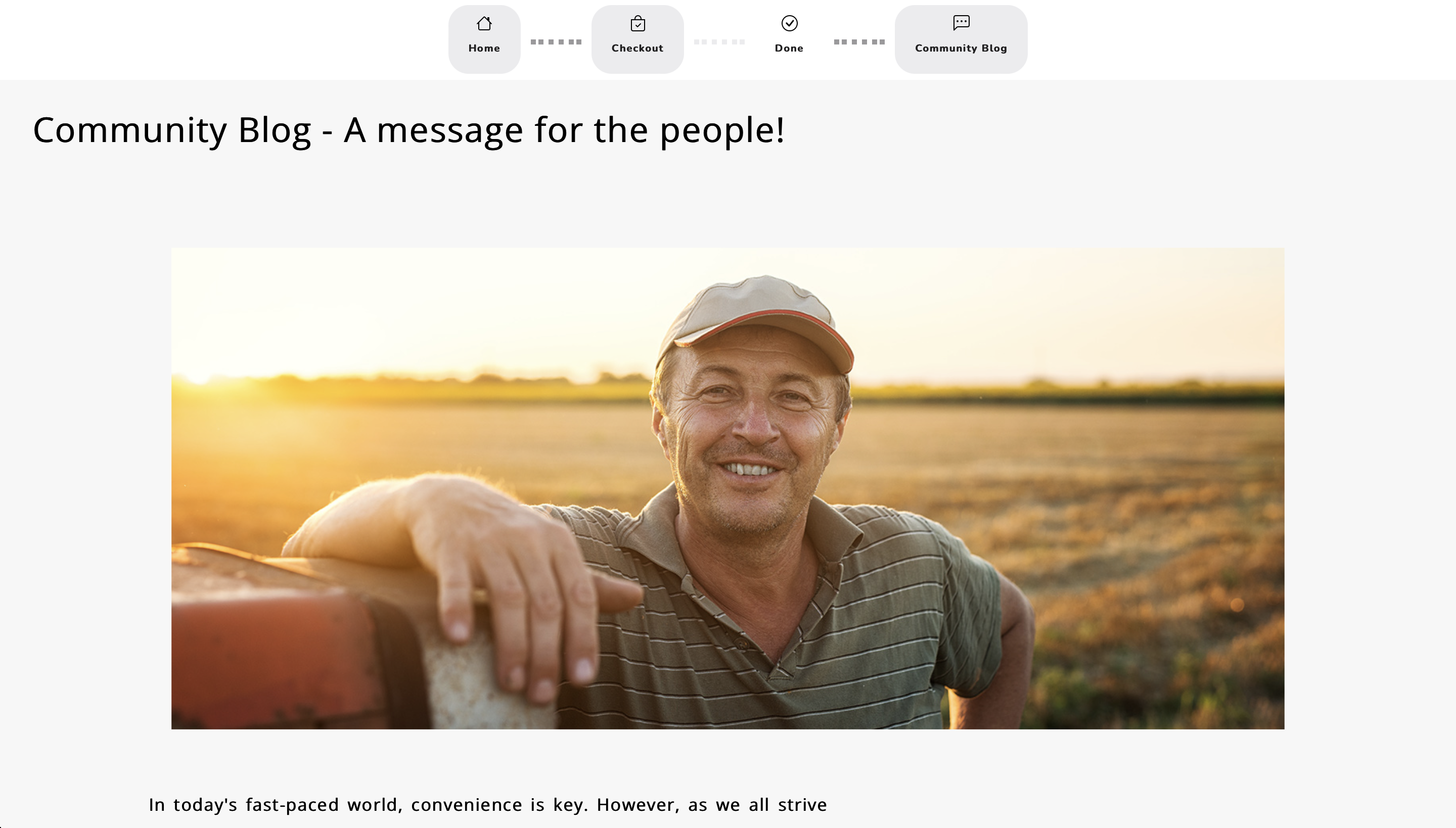
Blog 1
-
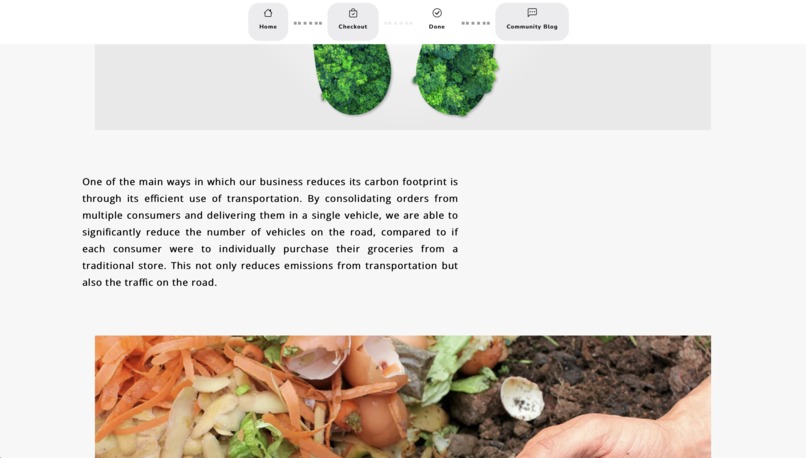
Blog 2
-
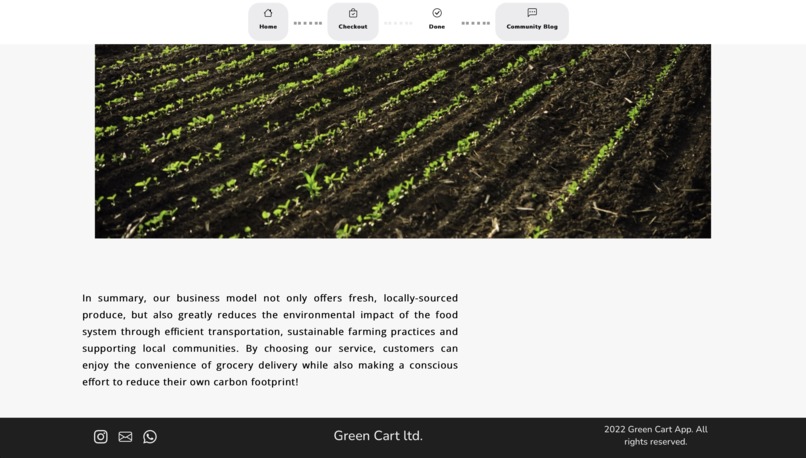
Blog 3
Inspiration
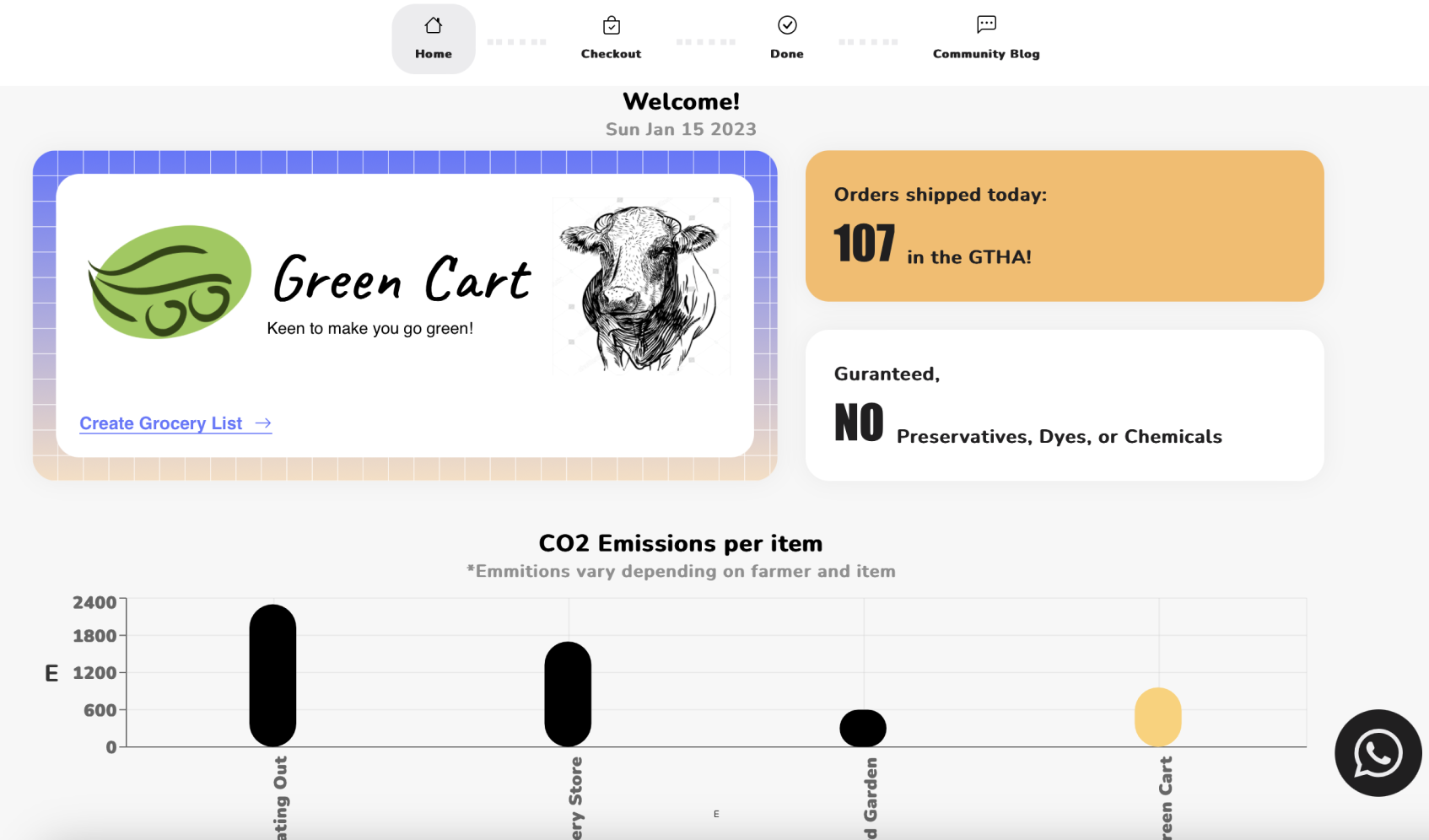
The inspiration for Green Cart is to support local farmers by connecting them directly to consumers for fresh and nutritious produce. The goal is to promote community support for farmers and encourage people to eat fresh and locally sourced food.
What it does
GreenCart is a webapp that connects local farmers to consumers for fresh, nutritious produce, allowing consumers to buy directly from farmers in their community. The app provides a platform for consumers to browse and purchase produce from local farmers, and for farmers to promote and sell their products. Additionally, GreenCart aims to promote community support for farmers and encourage people to eat fresh and locally sourced food.
How we built it
The GreenCart app was built using a combination of technologies including React, TypeScript, HTML, CSS, Redux and various APIs. React is a JavaScript library for building user interfaces, TypeScript is a typed superset of JavaScript that adds optional static types, HTML and CSS are used for creating the layout and styling of the app, Redux is a library that manages the state of the app, and the APIs allow the app to connect to different services and resources. The choice of these technologies allowed the team to create a robust and efficient app that can connect local farmers to consumers for fresh, nutritious produce while supporting the community.
Challenges we ran into
The GreenCart webapp development team encountered a number of challenges during the design and development process. The initial setup of the project, which involved setting up the project structure using React, TypeScript, HTML, CSS, and Redux, and integrating various APIs, was a challenge. Additionally, utilizing Github effectively as a team to ensure proper collaboration and version control was difficult. Another significant challenge was designing the UI/UX of the app to make it visually appealing and user-friendly. The team also had trouble with the search function, making sure it could effectively filter and display results. Another major challenge was debugging and fixing issues with the checkout balance not working properly. Finally, time constraints were a challenge as the team had to balance the development of various features while meeting deadlines.
Accomplishments that we're proud of
As this was the first time for most of the team members to use React, TypeScript, and other technologies, the development process presented some challenges. Despite this, the team was able to accomplish many things that they were proud of. Some examples of these accomplishments could include: Successfully setting up the initial project structure and integrating the necessary technologies. Implementing a user-friendly and visually appealing UI/UX design for the app. Working collaboratively as a team and utilizing Github for version control and collaboration. Successfully launching the web app and getting a positive feedback from users.
What we learned
During this hackathon, the team learned a variety of things, including: How to use React, TypeScript, HTML, CSS, and Redux to build a web application. How to effectively collaborate as a team using Github for version control and issue tracking. How to design and implement a user-friendly and visually appealing UI/UX. How to troubleshoot and debug issues with the app, such as the blog page not working properly. How to work under pressure and adapt to new technologies and challenges. They also learn how to build a web app that can connect local farmers to consumers for fresh, nutritious produce while supporting the community. Overall, the team gained valuable experience in web development, teamwork, and project management during this hackathon.
What's next for Green Cart
Marketing and Promotion: Develop a comprehensive marketing and promotion strategy to attract customers and build brand awareness. This could include social media advertising, email campaigns, and influencer partnerships. Improve User Experience: Continuously gather feedback from users and use it to improve the app's user experience. This could include adding new features, fixing bugs and optimizing the performance. Expand the Product Offerings: Consider expanding the range of products offered on the app to attract a wider customer base. This could include organic and non-organic produce, meat, dairy and more. Partnership with Local Organizations: Form partnerships with local organizations such as supermarkets, restaurants, and community groups to expand the reach of the app and increase the number of farmers and products available.
Git Repo ;
https://github.com/LaeekAhmed/Green-Cart/tree/master/Downloads/web_dev/Khana-master


Log in or sign up for Devpost to join the conversation.