-
-
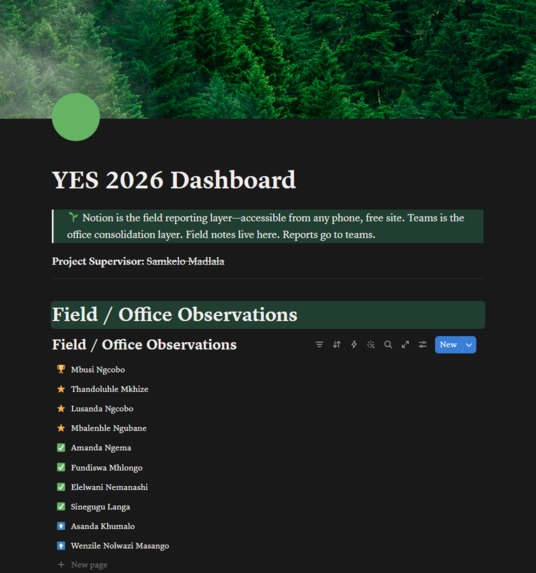
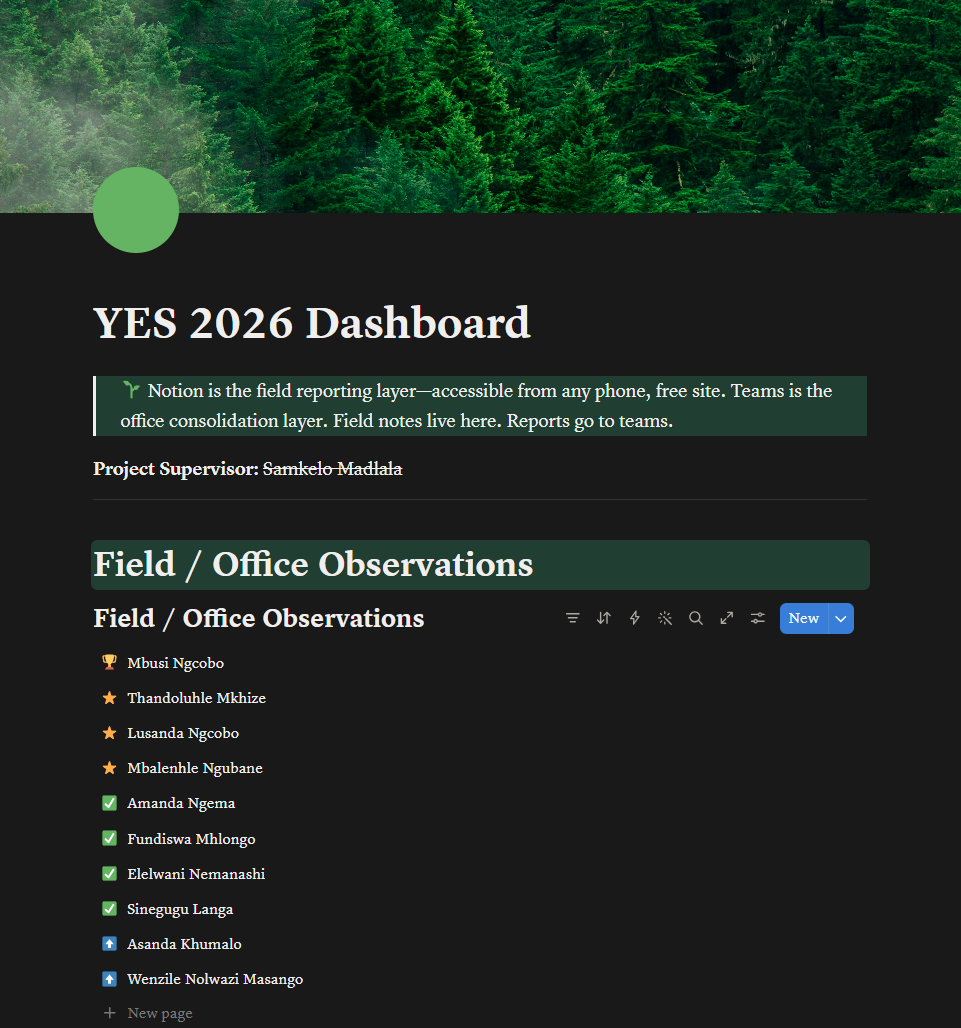
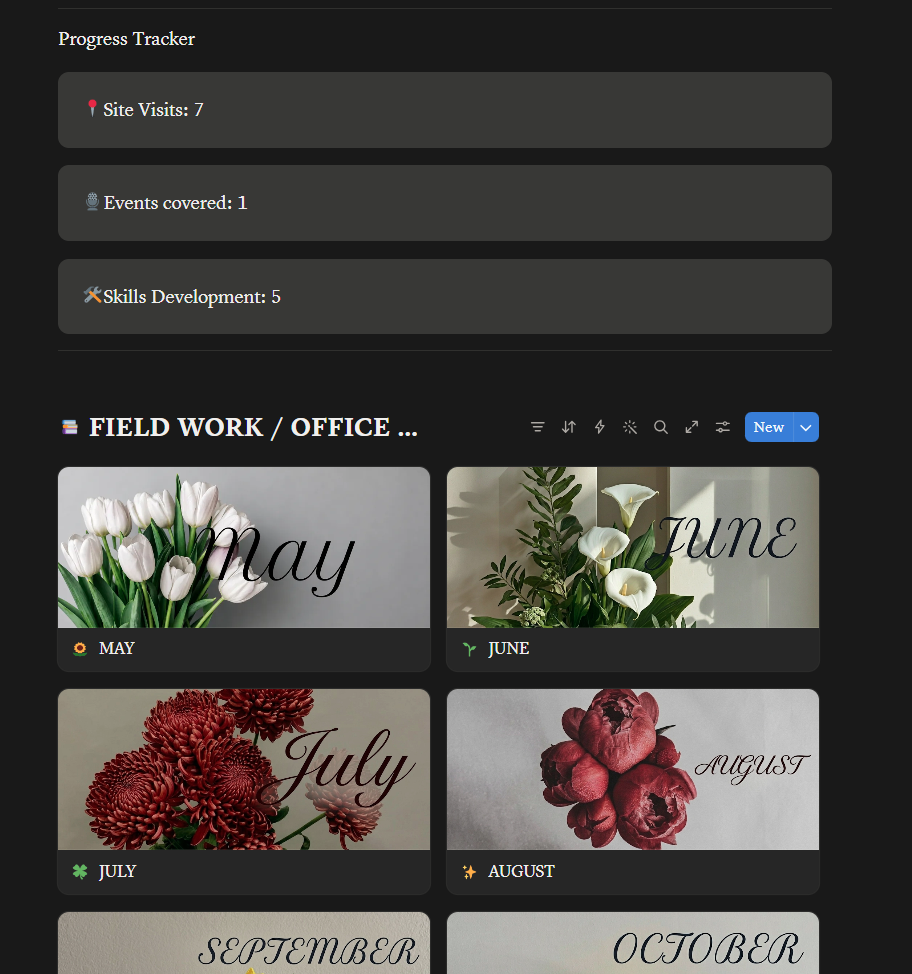
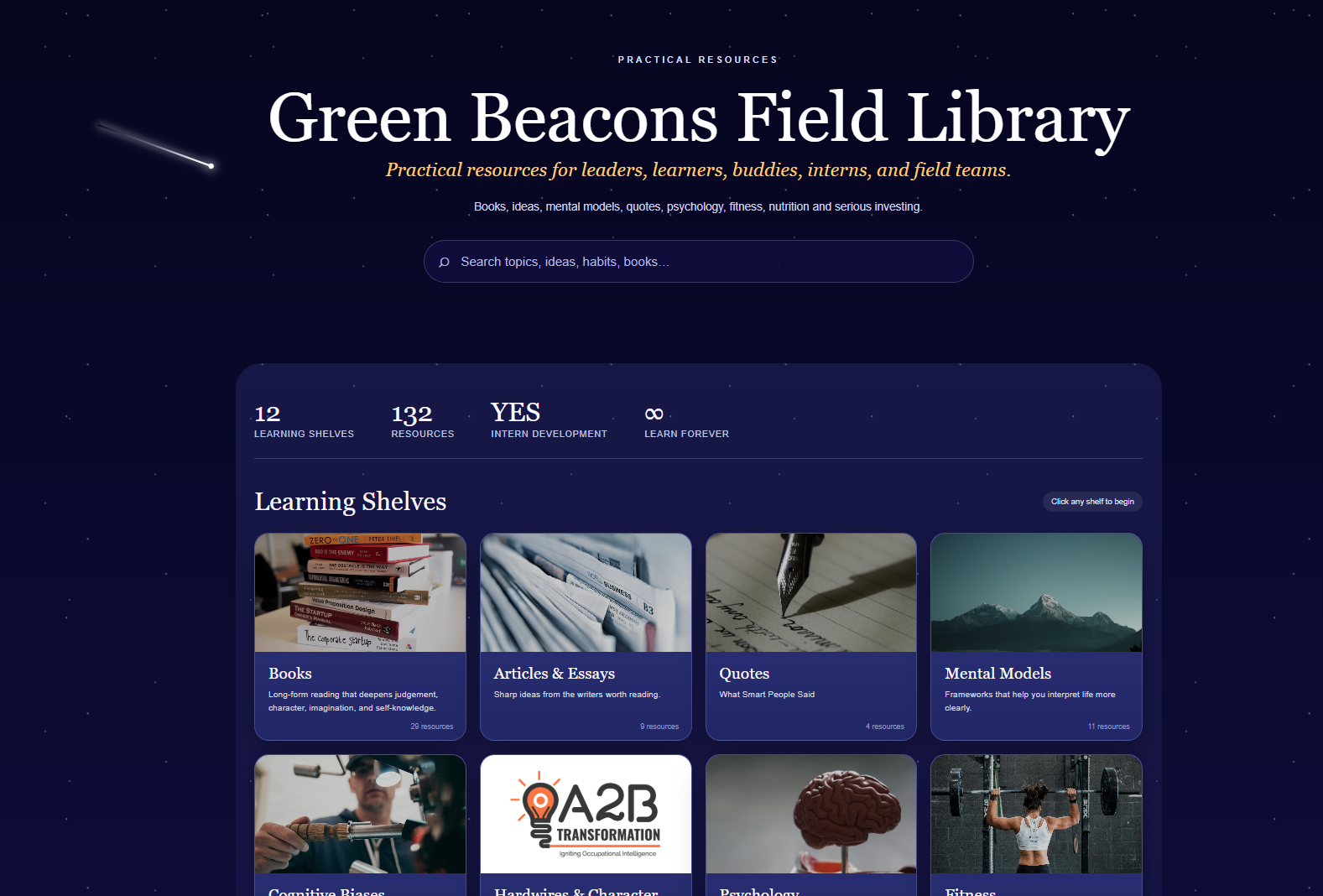
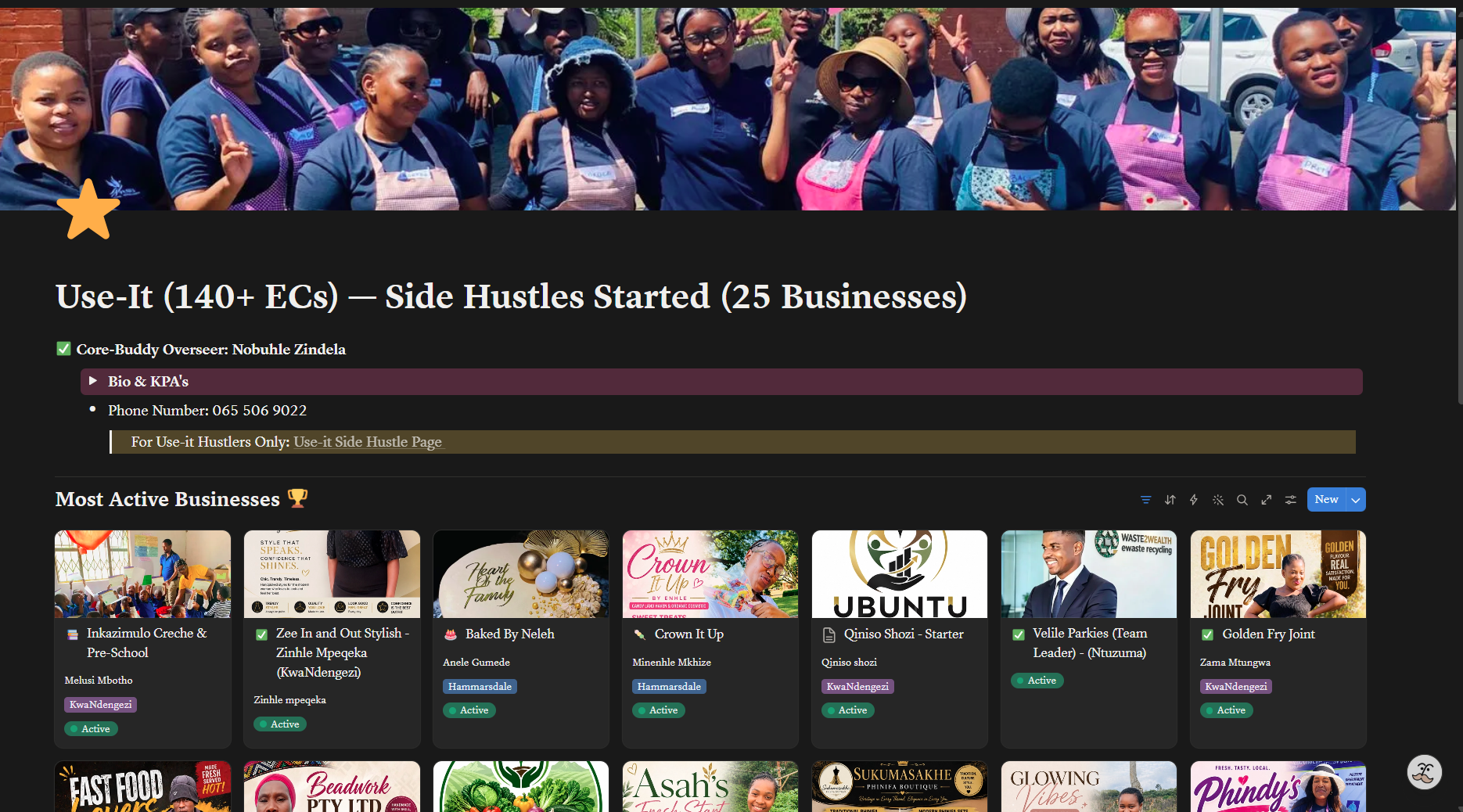
YES interns Dashboard - where they see each others work.
-
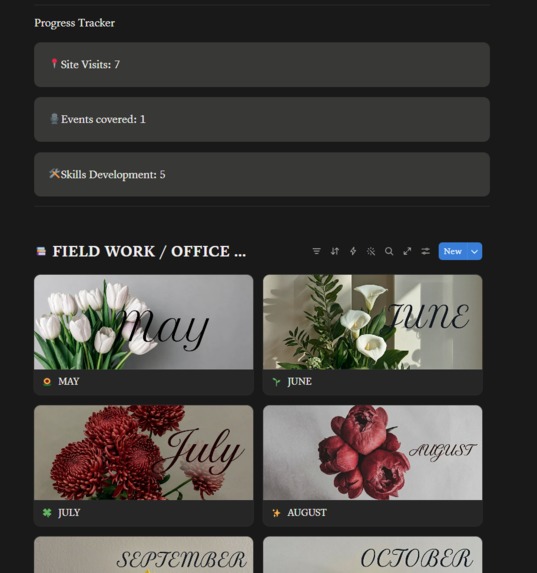
YES Intern Page - away from separate weekly Word Docs
-
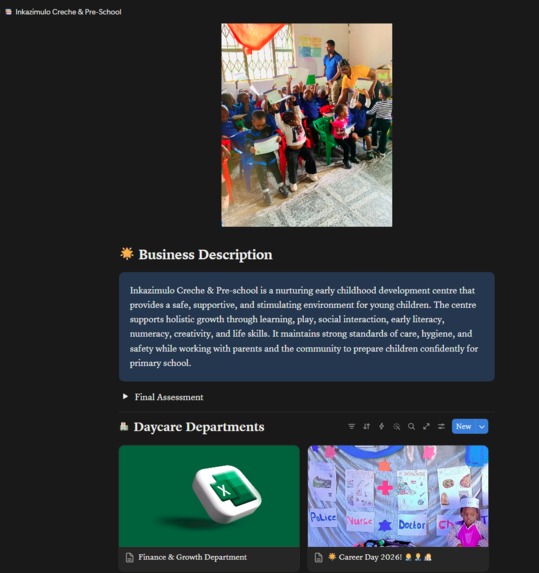
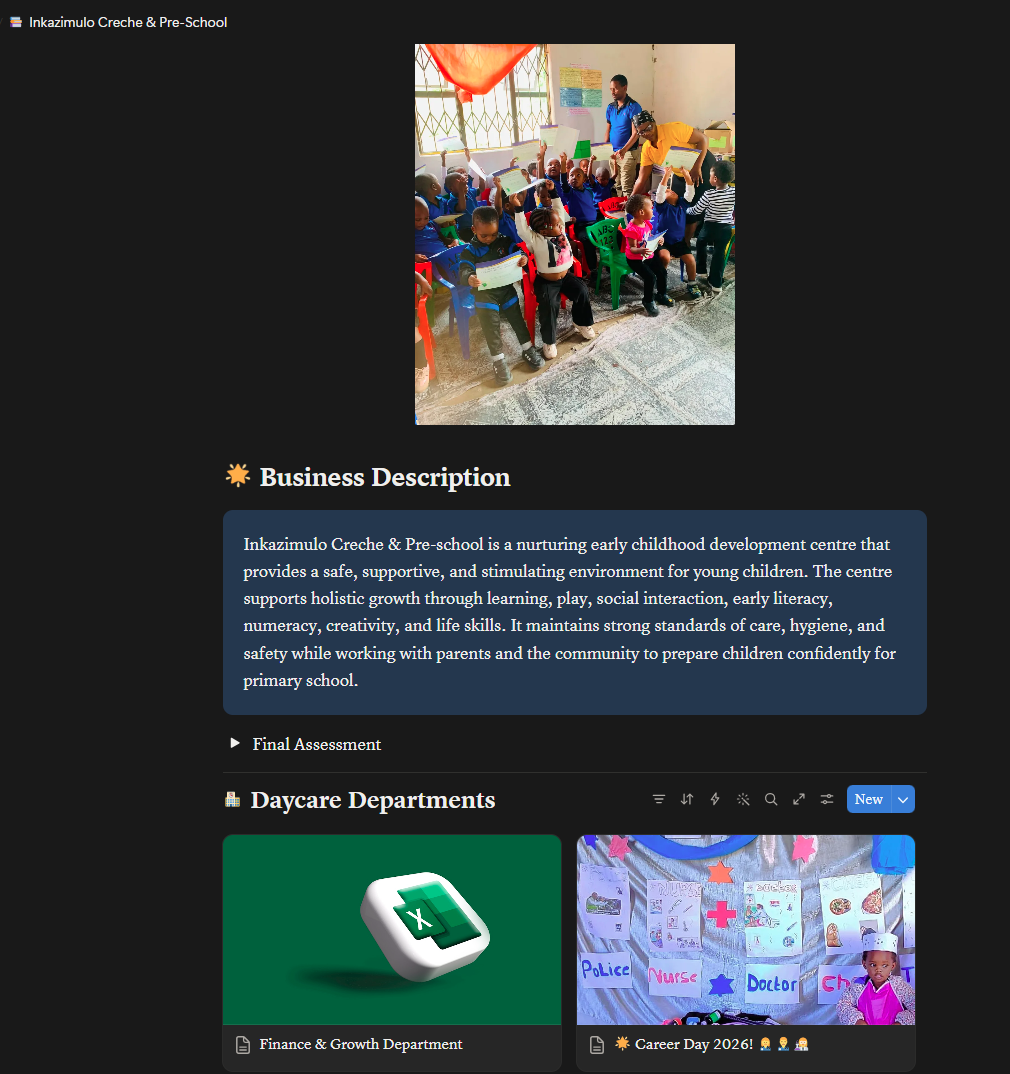
Creche Guy Notion Page
-
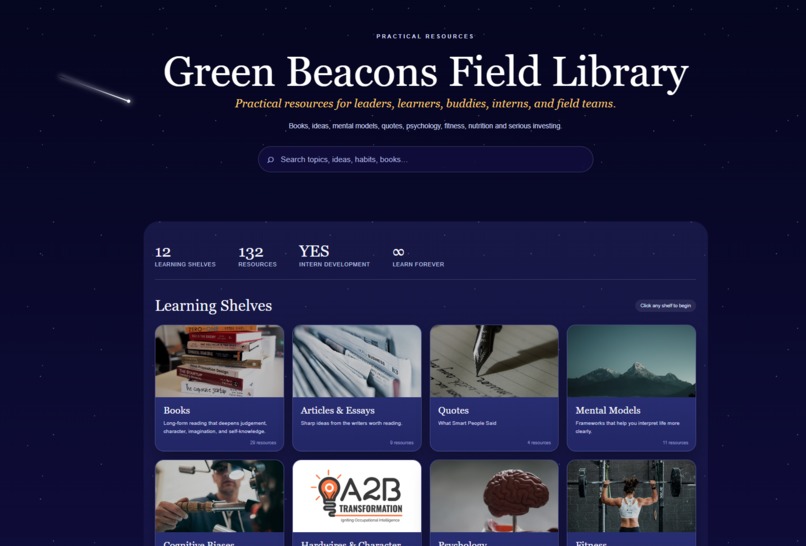
Github Library built for Interns
-
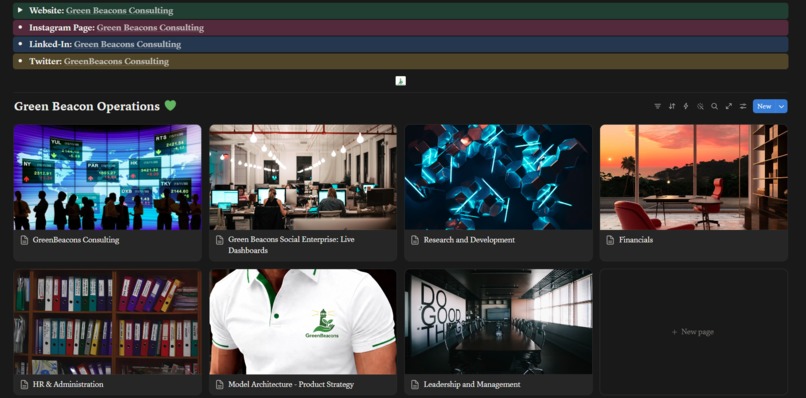
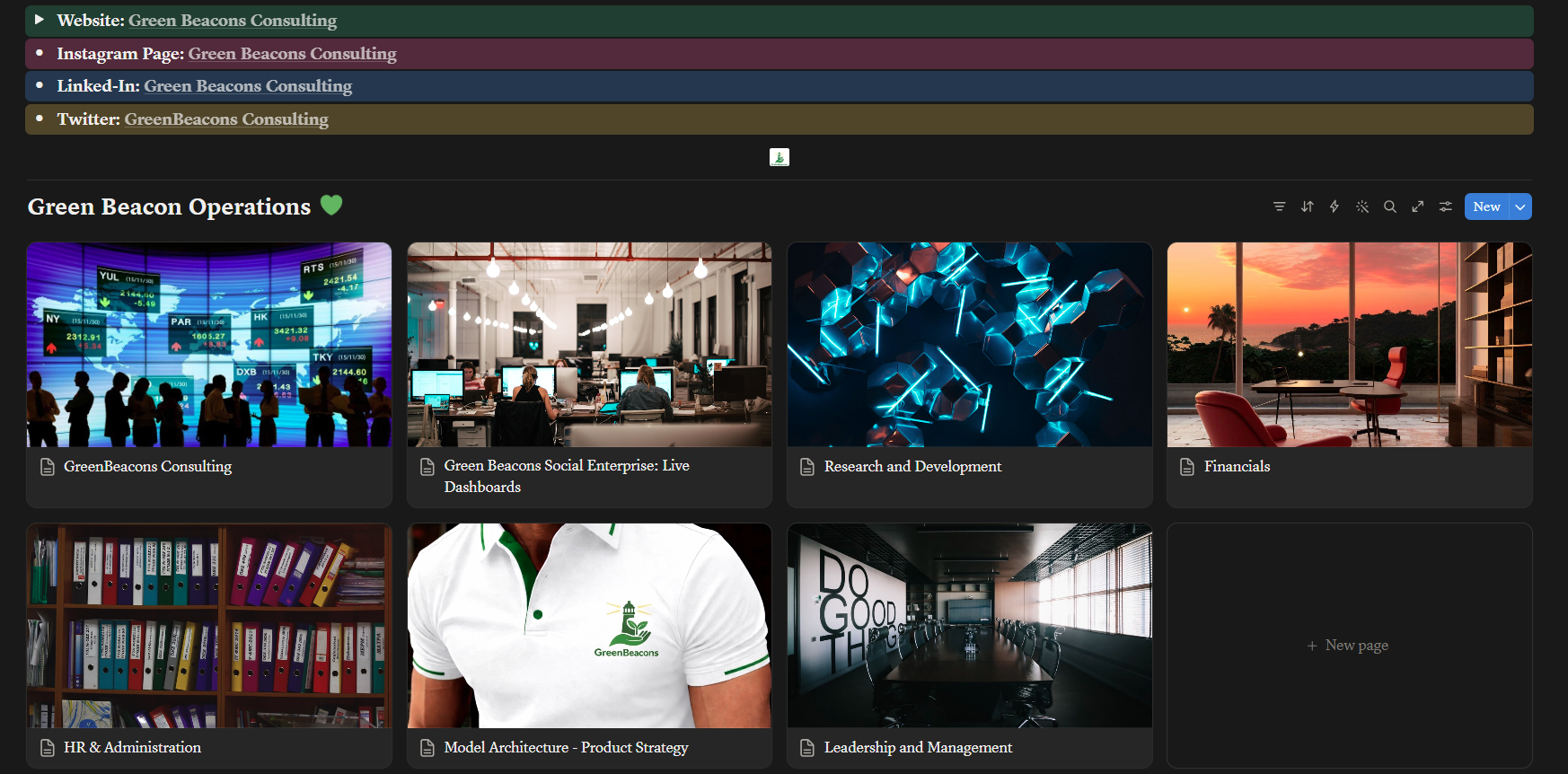
Green Beacons Workspace
-
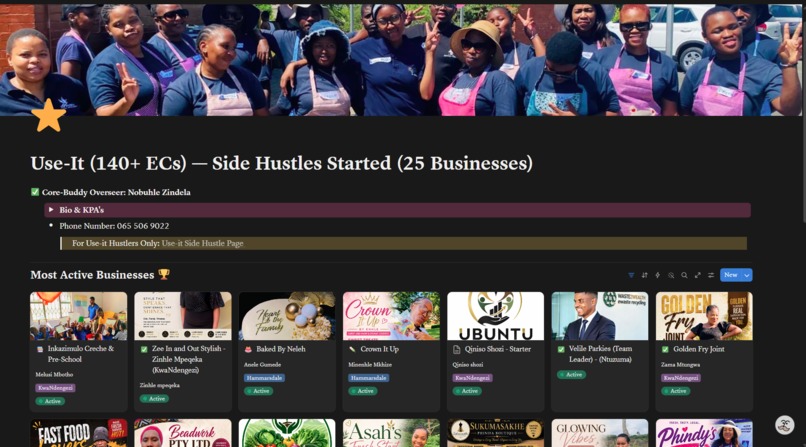
Clear example fo the improvement from Google Drive folders
-
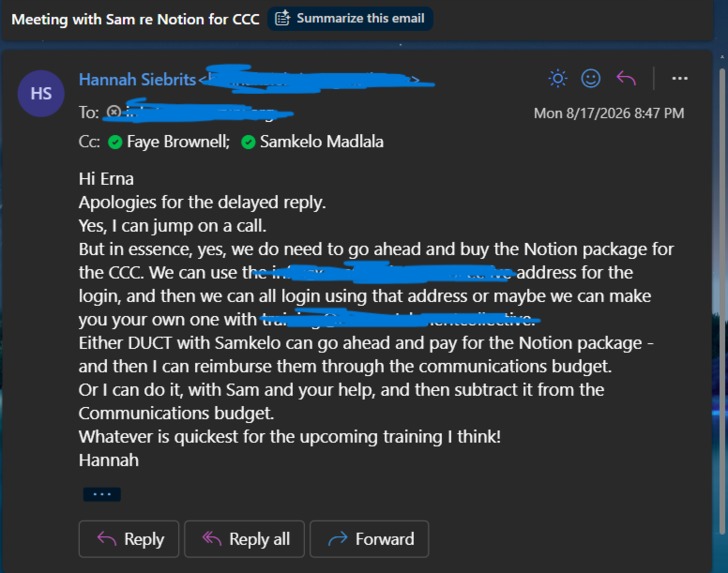
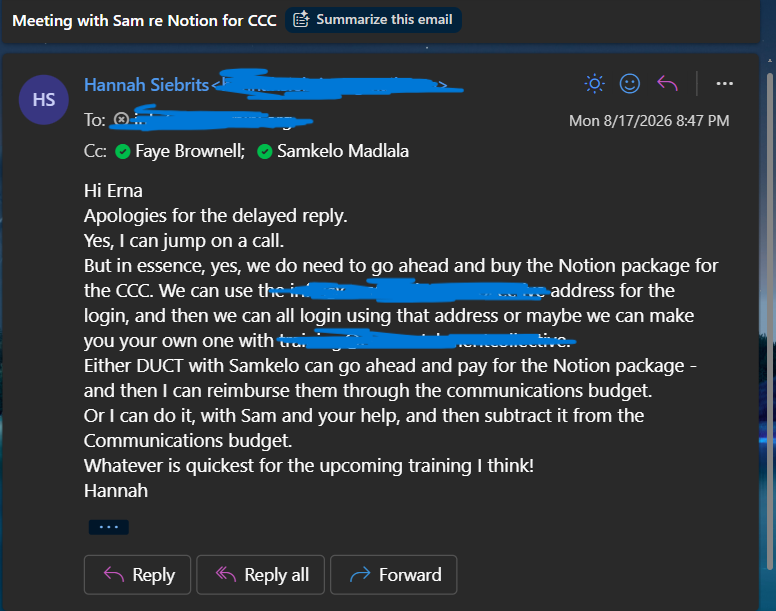
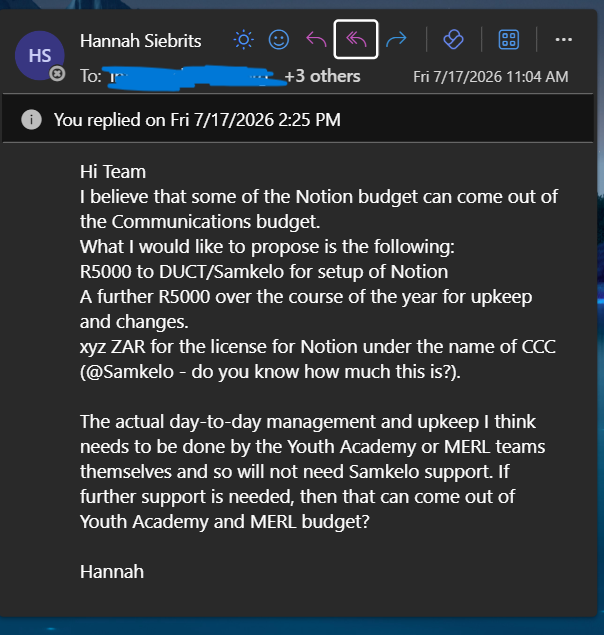
Hannah - the Director of CCC confirming payment arrangement!!
-
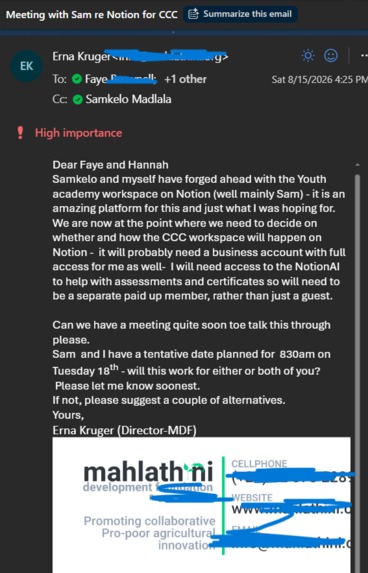
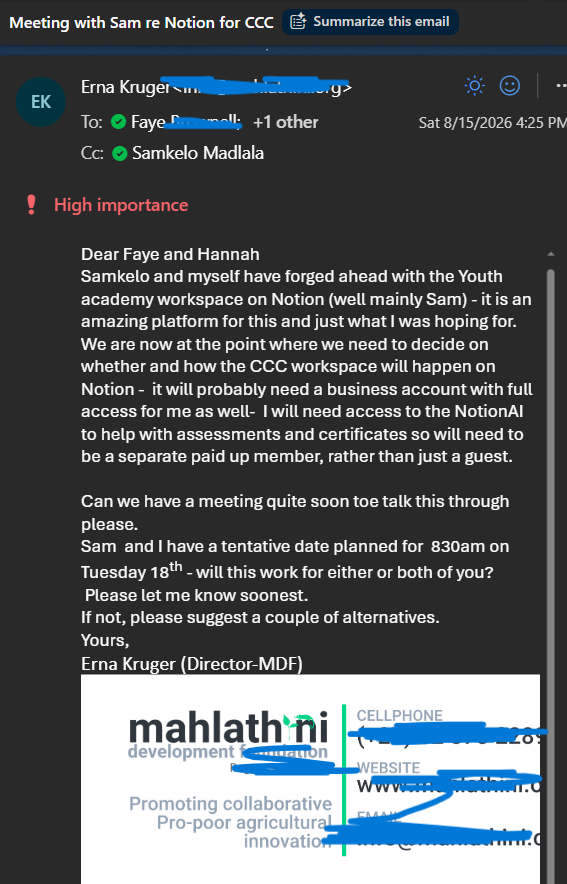
One of the CCC Directors complimenting our work on the Learner Academy Dashboard
-
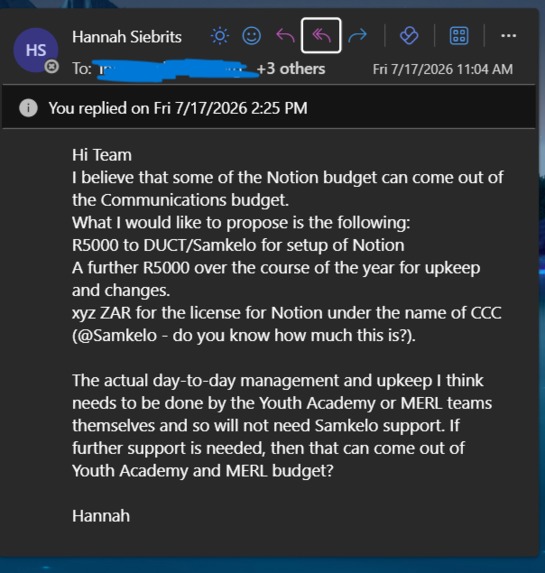
R5000 payment plan and management fees along the way
What Inspired me ⭐
I’ve been using the Notion workspace for over 5 years - primarily focused on individual tracking, managing projects and investments. Only recently did I see a business opportunity!
I'm writing this application mid-transition: last Friday was my final day at DUCT Rivers, where I served, for over two years, as Project Administrator for 60+ people, project manager for 10+ graduate interns, and Pathways Facilitator for the small-business component of South Africa's Social Employment Fund — a R12.5 billion government programme placing tens of thousands into meaningful work. This month, that work earned me a new seat: Enterprise and Skills Development Manager at Love Umngeni. The promotion isn't separate from this application — it's evidence of it.
Over those two years, I began noticing a problem that directly affected me.
We were doing a good job tracking who was at work and their identities. Biometrics, ID cards, reports submitted. But anytime we tried to track beyond work attendance and targets, such as the Learning achieved, the Side Hustles begun in the programme, the talents discovered amongst participants - we struggled. Especially because most reliable work-space systems are programme-facing. Google Drive ‘folders’ could only do so much. Hence, participants mainly just fill in Microsoft Forms when it’s reporting time. But interactive systems, talent visibility, and recognizing high & low performers, this wasn’t happening.
The data existed. The visibility did not.
So I built it. With Notion, Claude, ChatGPT, and six years of personal obsession with tracking systems — the same discipline I'd been applying to my own life since 2020.
Green Beacons was built four months ago, under real operational pressure. The idea was easy to misunderstand at first as "just another folder system." But the real problem was not storage. It was visibility. So I kept testing the system in the work already in front of me. Dashboards for side-hustles launched, online modules completed, and report. Today, Notion and my templates are the backbone of that reporting and record-keeping.
What started as a pilot of three dashboards inside my employed role has grown rapidly.
Worth Noting: I myself am a beneficiary of the social employment fund programme - having begun in 2023 as a field worker for 3 months, promoted to the office as Data Collector - and every 6-9 months, promoted to another role. The system I’ve built is the icing on the top for my managers who promoted and believed in me. Next week I’m spreading my wings to a new role.
In the resources submitted - you’ll see all pitches and presentations I’ve done in the past 3 months across South Africa - primarily within the Employment Programme.
What we learned ⭐
As a founder (26), and having read over 200 books on business, including Abundance by Peter, philosophy, and mindset. I knew that technology was never the hard part.
Notion and AI can generate a report in seconds. What needed re-thinking was the method. The solution for large programmes in Africa turned out to be three things working together: an interactive workspace that people actually enjoy returning to, AI integration that turns raw evidence into feedback, and knowing what to track in the first place — how to design a dashboard that’s simple for participants yet impactful for decision makers, how to prompt AI-automated feedback that feels human and makes people feel seen at scale, and how to train a non-technical business owner in a township to upload financial evidence correctly from a feature phone.
Second lesson: visibility changes behaviour.
- Today my ten YES interns pine at me if Claude doesn’t visit their weekly reports to read and give encouragement and detailed mentorship — and all it takes is 15 minutes from me on a Monday morning to add the context of what happened in-field and in-office. (next step: schedule)
- A crèche owner who once tracked school fees, profits and expenses in a notebook now runs his books on Notion — with Notion AI as his auditor.
- The CCC Directors have moved their cross-catchment work from Google Drive into a Notion workspace because AI is integrated — at report time, meeting minutes, webinars held and partner activity combine into one living record instead of a week of manual assembly.
- And I’m evidence of it myself: the same visibility method tracked my own journey — from field worker in 2023, to Data Collector, to Project Administrator, and now to Enterprise and Skills Development Manager.
Third lesson: solve a real problem, and demand pulls toward you.
I also learned that when you solve a real problem, it ignites different ideas in listeners long before you finish pitching. A member of our company board said: “Your dashboard can serve as mini-websites for thousands of hustlers in townships, and you can charge a percentage of their sales.” A fractional CIO & IT Strategist saw an opportunity “to sell business services for young hustlers that struggle with governance, compliance, and book-keeping.” Another board member said: “You have a diamond solution, which I’ve been trying for 10 years — telling youth to just write, just write something about your day. But I lacked a platform like this where they’d see each other’s work as motivation and get automated AI feedback weekly.”
That operational knowledge — the method, the relationships, the contextual intelligence — is the real product. The dashboards are just the interface.
How We Built It ⭐
I started with what was already in front of me: youth programmes. Participants were working, learning, selling, attending sessions and submitting evidence, but the proof was spread across folders, WhatsApp, forms, reports and memory.
I am not a developer — I am a systems builder. I deliberately chose Notion because it allows a systems builder to aim at scale with an efficient workspace: records, dashboards, AI and collaboration in one place, without writing a single line of code.
The architecture is simple by design. Every person, business or programme gets a living record. Above those records sits a dashboard layer, where managers see who is active, who is stuck and who is growing. Above that sits the intelligence layer — AI that turns raw evidence into weekly feedback, monthly assessments, risk signals and funding-readiness summaries. The point is not to replace human judgment. The point is to give human judgment better visibility.
It is not a concept. It is running.
- For my employer, Green Beacons is the operational backbone — tracking micro-businesses, assignment and certificate completion, and weekly intern reporting & development.
- Beyond my employer, it serves the Cross-Catchment Collective (CCC) — a partnership of NGO Directors scaling biodiversity knowledge and practices across catchments, whose coordination hub now runs open learning, delivery & governance, partner pages and working groups from one shared workspace.
- And it has been pitched where decisions are made: to the IDC, the implementer of the R12.5 billion Social Employment Fund; to CEOs across the NGO sector; to the board of directors at DUCT; and directly to the small business owners whose records it holds.
The clearest fundable version of Green Beacons is Micro-Business Visibility.
Across townships and informal communities, many small businesses are active but not yet funder-ready. Vegetable sellers, farmers, day-cares, plumbers, brush cutters, builders, events/decor businesses and side-hustles often have real customers, income and effort — but their proof is trapped in notebooks, cash transactions, WhatsApp, loose photos and memory.
Green Beacons helps them build that proof. A micro-business record grows into the reports most small businesses never get to write: financial summaries, business progress reports, funding-readiness notes and clear recommendations.
The question that opens this layer is simple:
If someone wanted to support or fund your business, what proof would you want to show them?
That is why Green Beacons is fundable. We are not asking funders to support an abstract tech idea. We are offering a measurable support system: informal businesses become easier to see, easier to support, easier to report on and easier to fund — while business owners become more tech-literate in the process: learning to track money, organise evidence, understand their operations, and present themselves clearly to funders, customers and partners.
Be a platform.
Peter Diamandis’ Bold distils Google’s Eight Innovation Principles, and principle seven is the one Green Beacons is built on: be a platform. Green Beacons is not a dashboard, and it is not an app. It is a platform on which any programme that works with people — youth employment, enterprise development, environmental partnerships, education — can build its own visibility. The context changes, but the engine stays the same:
Records → Evidence → Dashboards → Reflection → AI summaries → Better decisions.
Green Beacons currently runs on Notion, ChatGPT, Claude and Notion AI — and is deliberately tool-agnostic. The stack is chosen for accessibility and speed, not loyalty to any one platform: as AI evolves, the workspace can welcome whichever tools best serve the people using it. What will not change is the method and the infrastructure. Whatever the outcome of this application, the foundation is already built — and it is running today, in real programmes, with real people.
Green Beacons makes people, programmes and businesses visible enough to be recognised, supported, improved and funded.
The Challenges Faced ⭐
Challenge 1 — Building inside an employed role. Green Beacons was built nights and weekends around a demanding full-time job — Project Administrator for 60 people, Pathways Facilitator, and project manager to graduate interns. But the hardest constraint was not time; it was boundaries. Because the pilot ran inside my employer's programme — using its interns and field participants — our first client payment (R10,000 approved by the CCC) had to wait while IP and profit-boundary questions between my employer and Green Beacons were properly resolved. That cost us a month of revenue. It also forced the discipline this application now runs on: clear ownership, documented agreements, and governance before invoicing.
Challenge 2 — Anyone can copy the tools. Notion is public. AI tools are public. A tech-literate organisation could imitate the surface of Green Beacons without paying a cent. I sat with that threat honestly, and concluded that the product was never the tool: it is the operational method, the relationships, and the trust required to turn scattered effort into trusted records in low-bandwidth, high-stakes communities. I also weighed building proprietary software — but I am a systems builder, not a developer, and creating my own platform would have taken longer than the window of need in front of me. So I chose speed-to-impact over defensibility-by-code: the people Green Beacons serves — NGO directors, a crèche owner on a feature phone — will never build this themselves. The moat is the method and the trust, not the stack.
What both challenges taught us: governance first; method over tools.
Accomplishments that we're proud of ⭐
~1,300 lives made visible in four months** — 381 businesses launched on dashboards, ~900 participant certificates recorded, 10 interns mentored weekly by AI
- Our first institutional client** — the CCC, with R10,000 of approved work
- Five businesses funded R5,000 each at Capital Quest** — with “business recorded on the platform” as a formal selection criterion
- All of it with R0 marketing spend** — and a founder promoted into the exact role this system was built to serve
What's next for Green Beacons Social Enterprise ⭐
A lean five-person team supporting 100–200 micro-businesses to funder-readiness over 24 months (see Use of Funds); invoicing the CCC and converting approved work into received revenue; then replicating the model through chambers of business and programmes across South Africa — until every informal business in Africa is visible enough to be funded.
Built With
- ai-agents
- anthropic
- artificial-intelligence
- canva
- chatgbt
- claude
- embed
- github
- google-drive
- google-sheets
- html
- integration
- mcp
- no-code
- notion
- notion-ai
- openai
- small-business
- south-africa


Log in or sign up for Devpost to join the conversation.