-
-
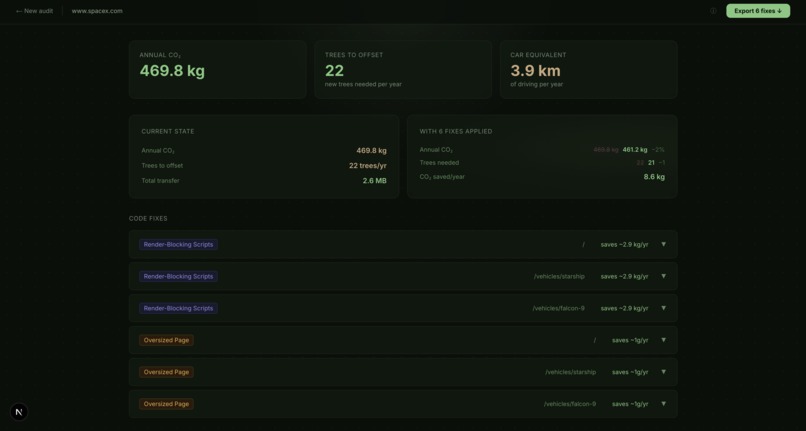
Audit Report for SpaceX
-
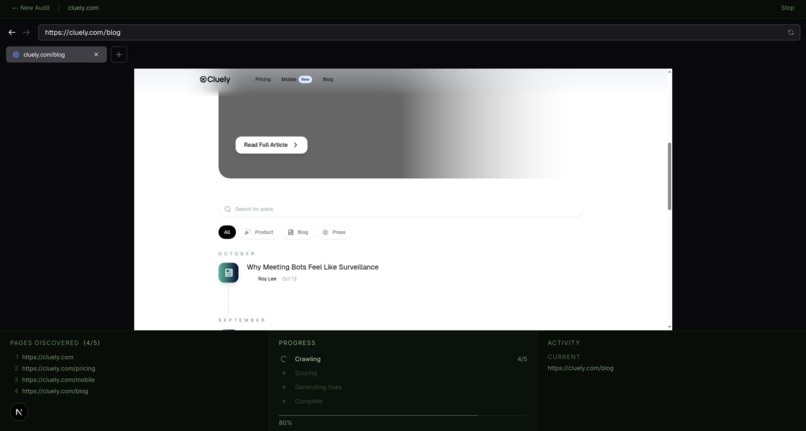
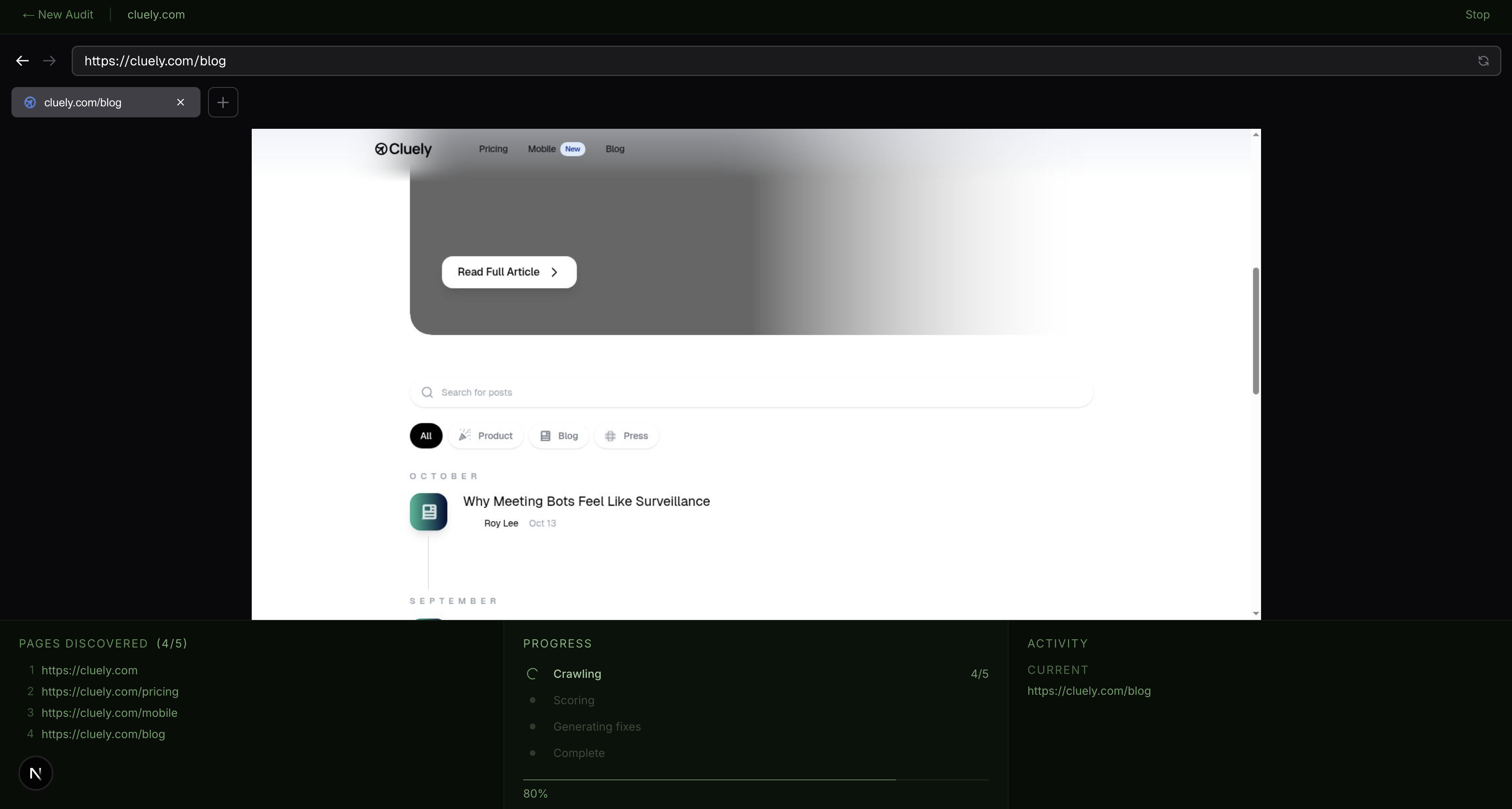
Progress Stream with Browser Use Agent
-
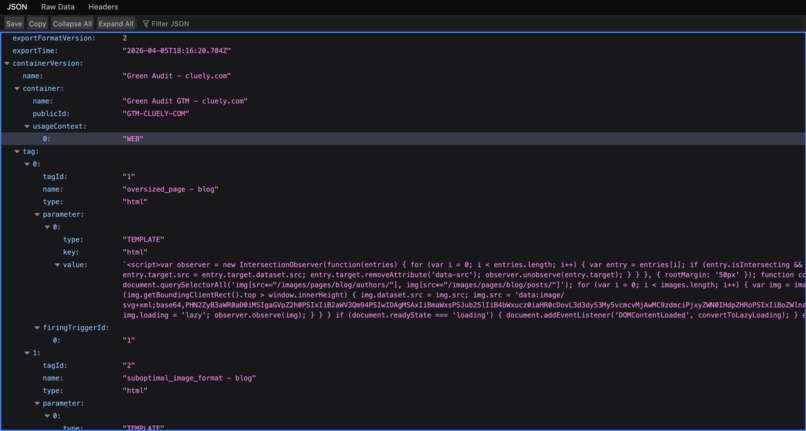
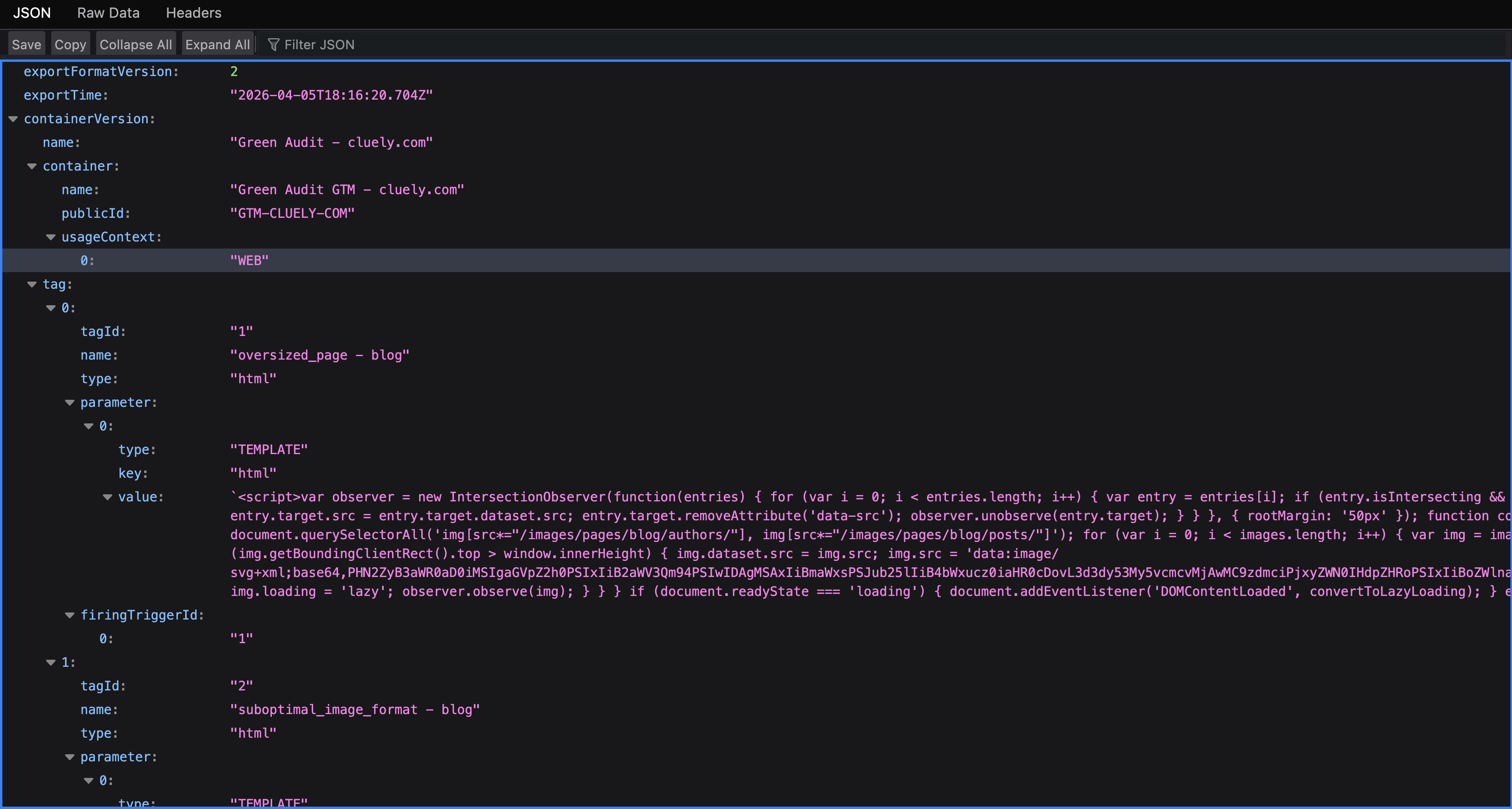
JSON report with optimized exportable code snippets
-

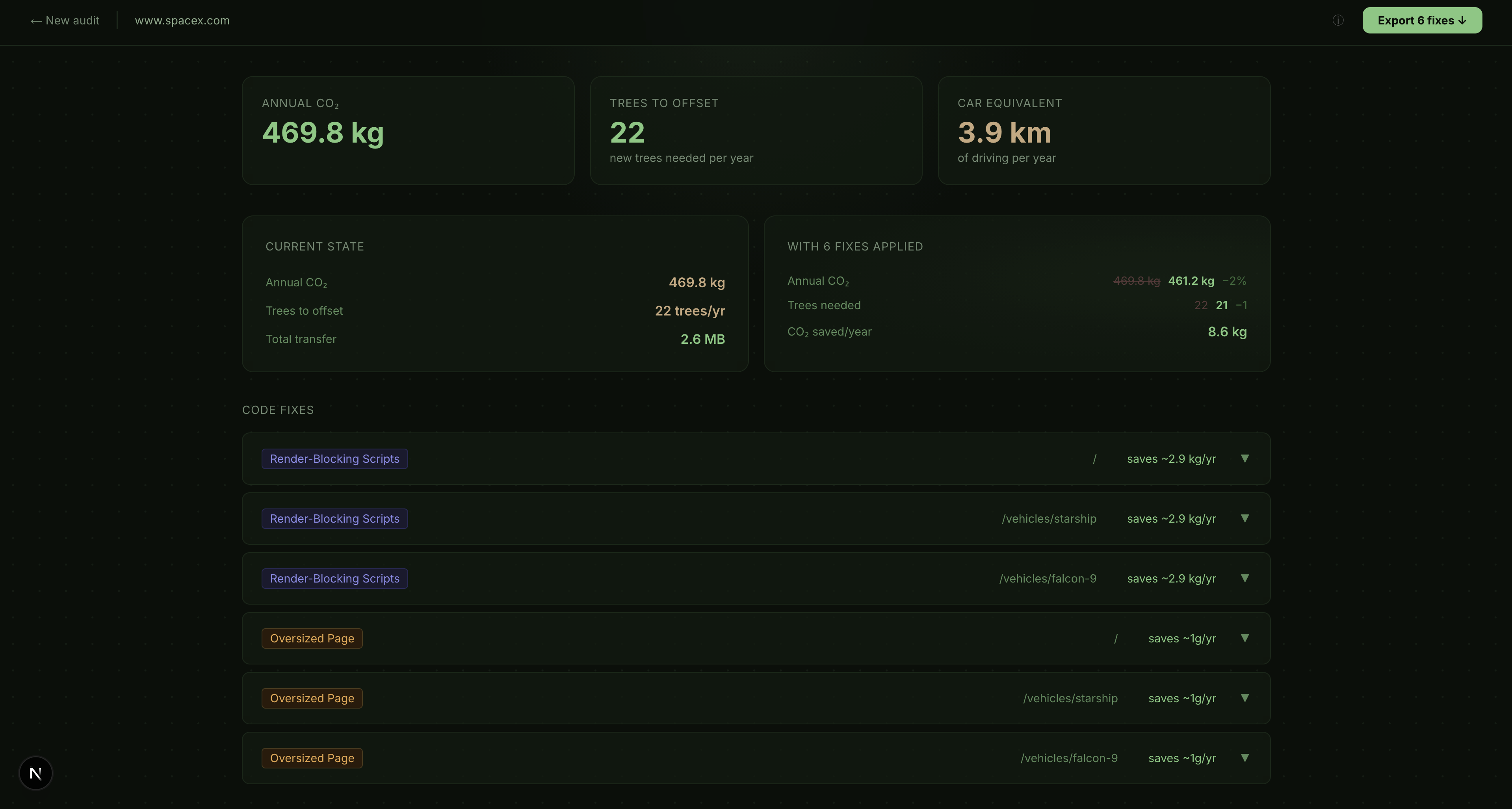
Homepage with URL input

Inspiration
Most "green web" tools tell you your site has a problem and leave you to figure out the rest. We wanted something that actually hands you the fix. Not a score, an action plan.
What it does
Green Audit crawls your website, scores every page against 11 sustainability checks, and generates specific, ready-to-run code fixes ranked by CO2 impact. You can export them directly into Google Tag Manager without touching your codebase.
How we built it
FastAPI backend, Next.js frontend. We use Browser Use to crawl sites like a real user would, PageSpeed Insights for Lighthouse scores, and Claude Sonnet to generate page-specific code fixes. Progress streams back live over SSE, so you're watching the audit happen in real time.
Challenges we ran into
Getting Claude to produce fixes with real URLs and selectors instead of generic placeholders took a lot of prompt iteration. CO2 estimation was also hard. The numbers vary wildly depending on methodology, so we had to make deliberate choices about the model we used and be consistent about it throughout.
Accomplishments that we're proud of
The GTM export. Being able to hand someone a JSON file they can import directly into Tag Manager and deploy fixes without a developer felt really cool.
What we learned
Prompt engineering is more nuanced than it sounds. Getting Claude to produce fixes that are actually specific to the page — real selectors, real URLs, no placeholders — required a lot of iteration. The difference between a useful fix and a useless one often came down to a single line in the system prompt.
What's next for Green Audit
Persistent storage so audits don't disappear on server restart, scheduled re-audits to track progress over time, and a scoring trend dashboard. We'd also like to expand the fix library beyond the current 11 flag types.
Built With
- browseruse
- claudeapi
- fastapi
- javascript
- next.js
- node.js
- python
- react

Log in or sign up for Devpost to join the conversation.