-
-
-
cover top
-
how a call travels
-
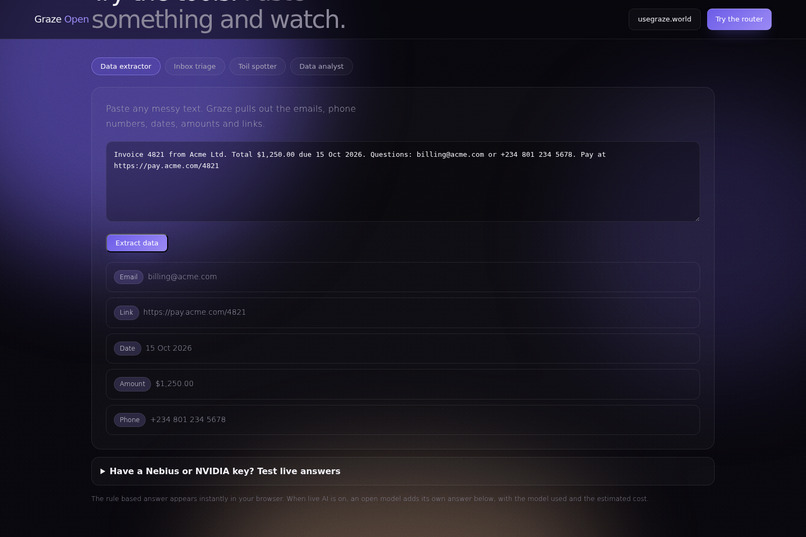
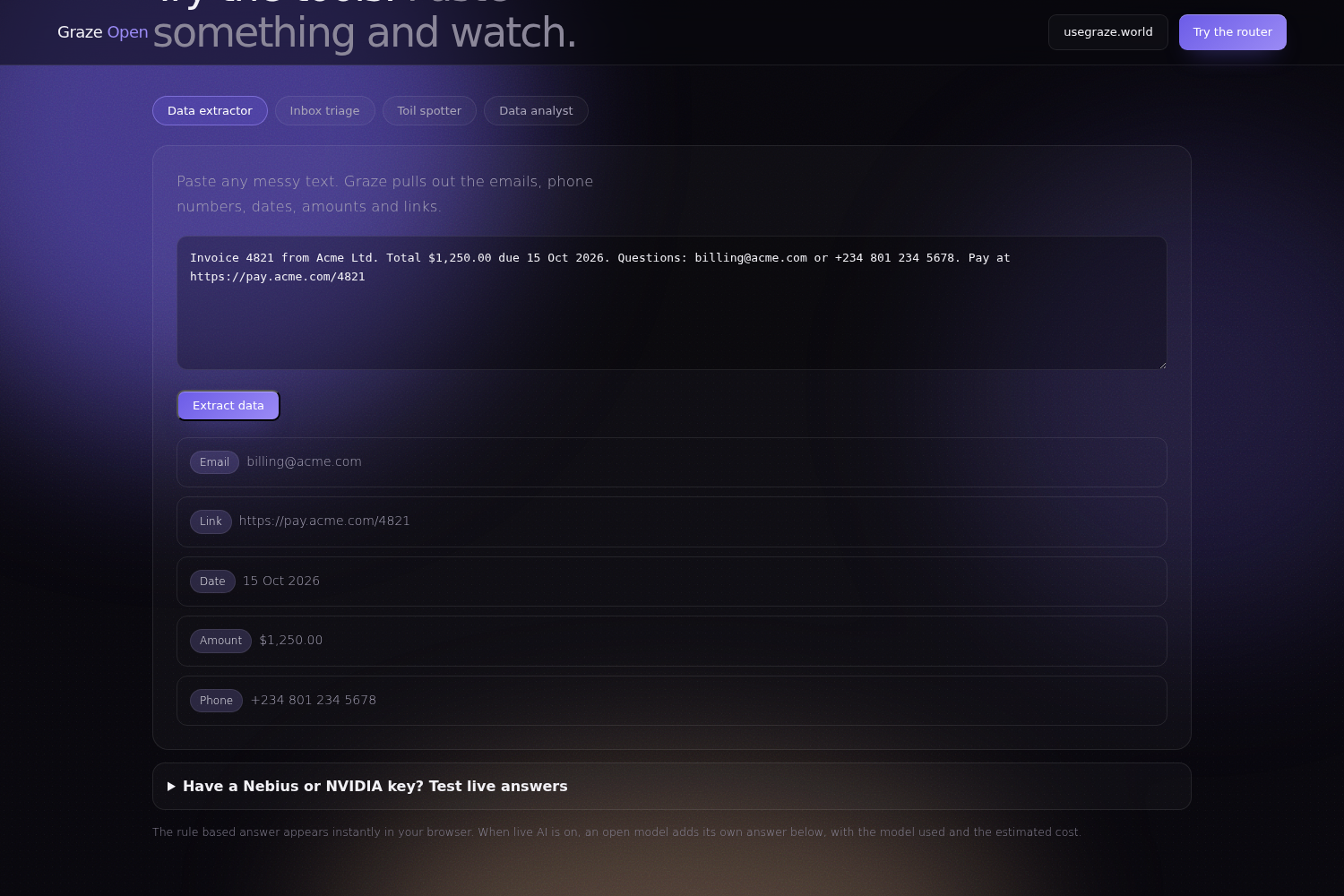
data extractor
-
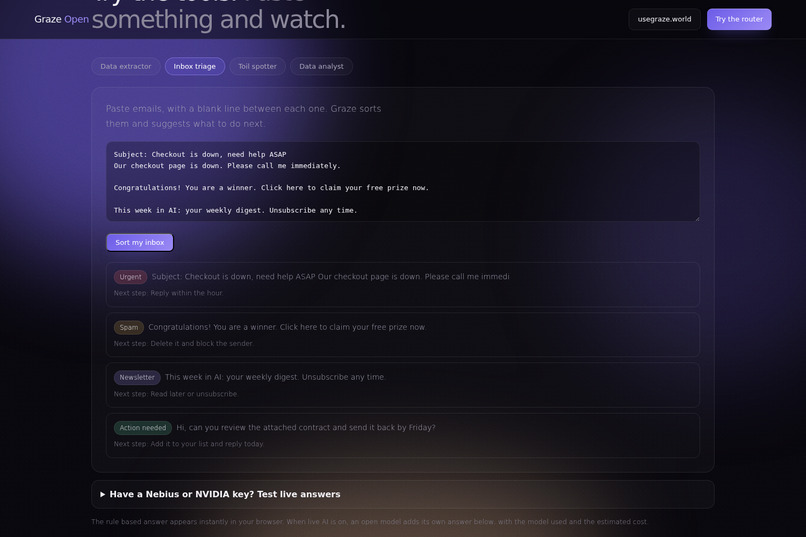
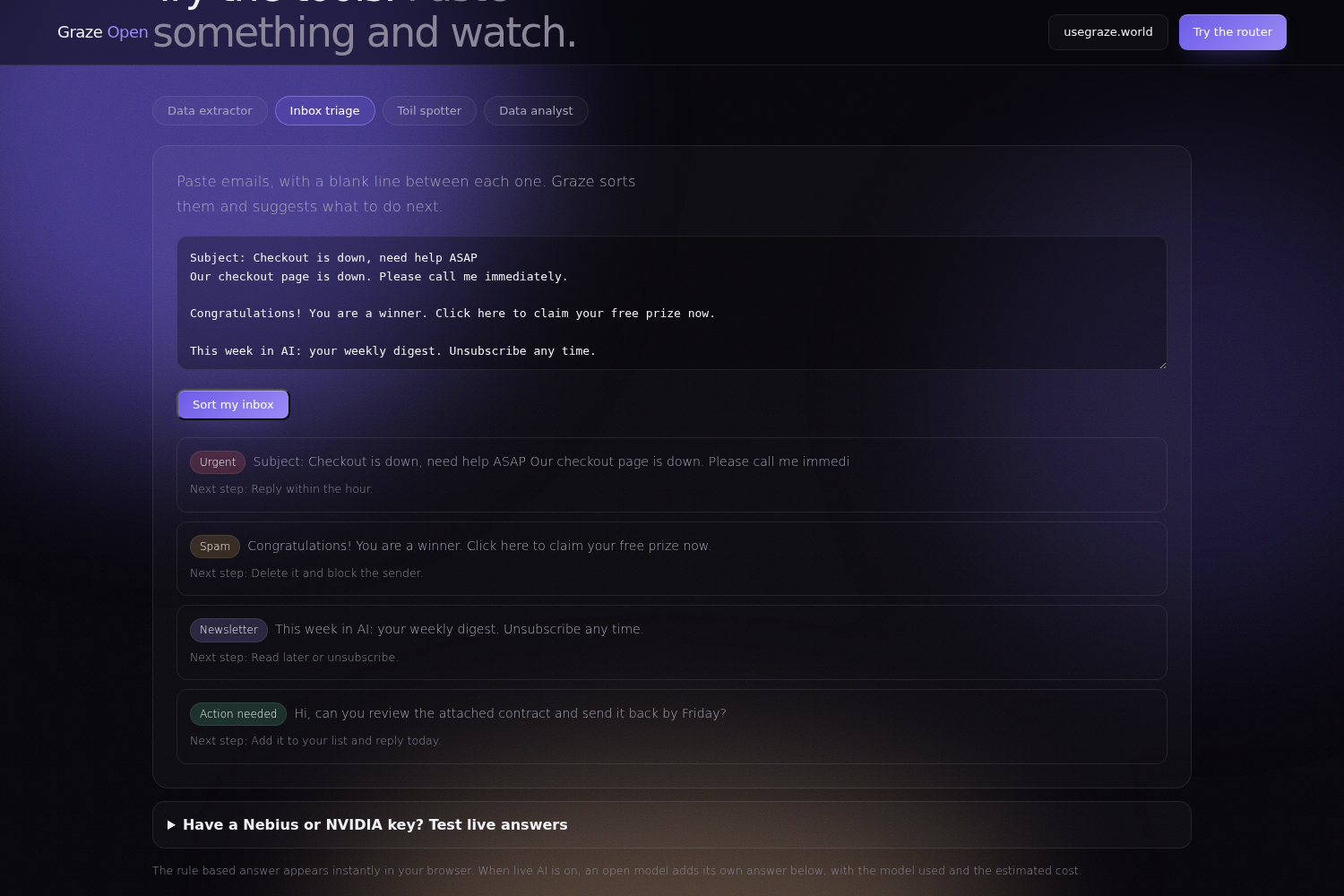
inbox triage
-
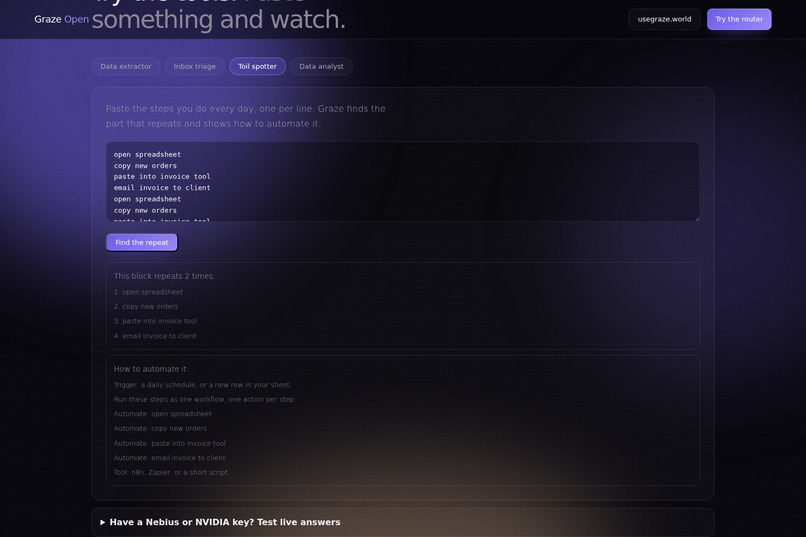
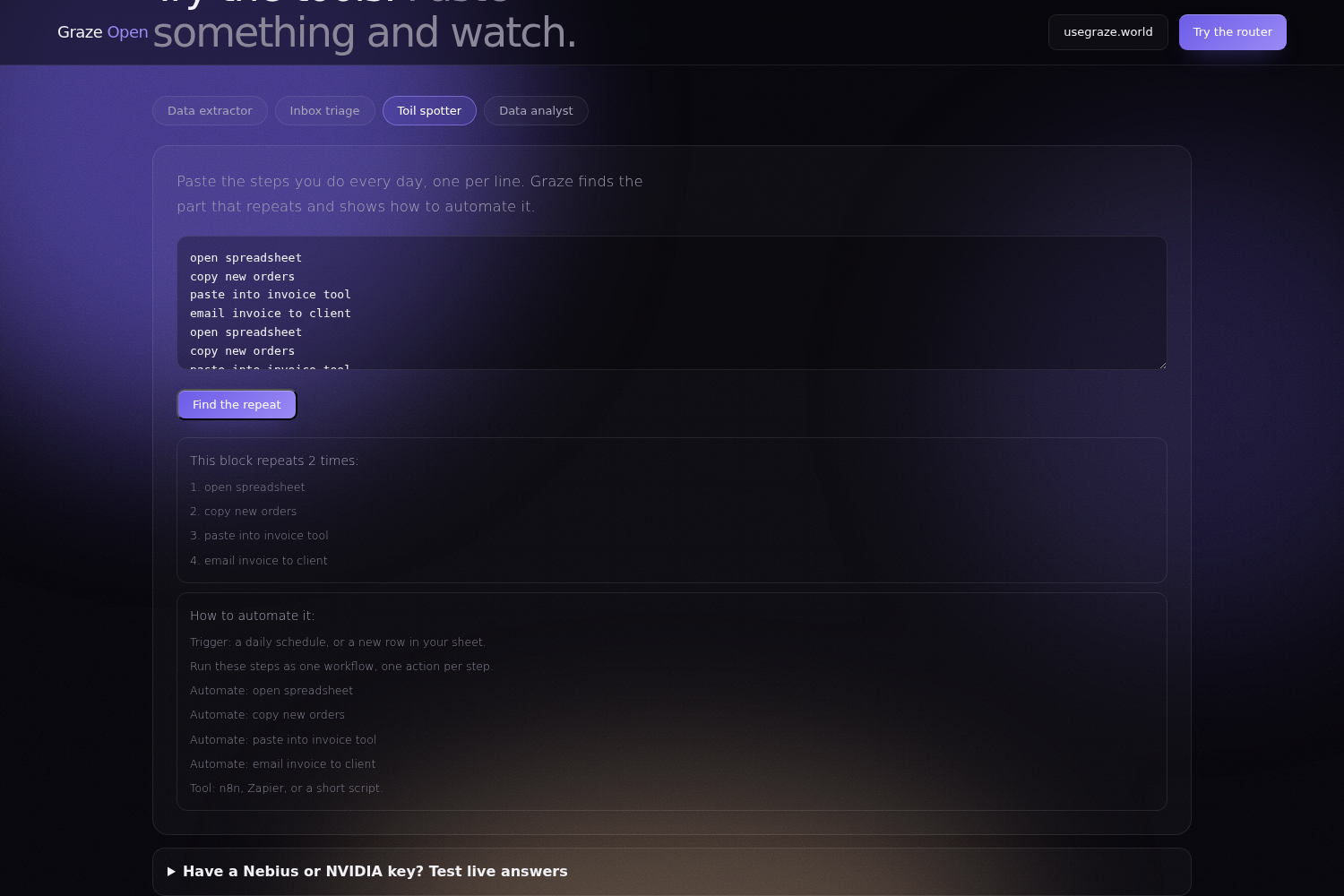
toil spotter
-
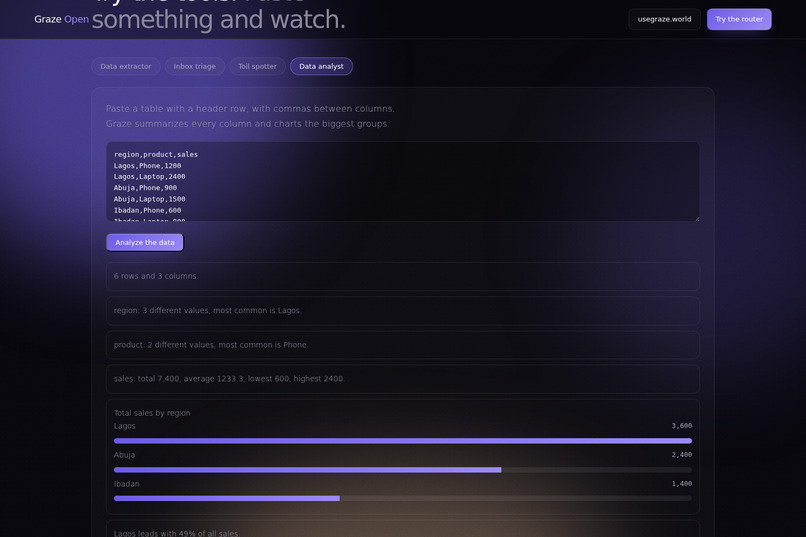
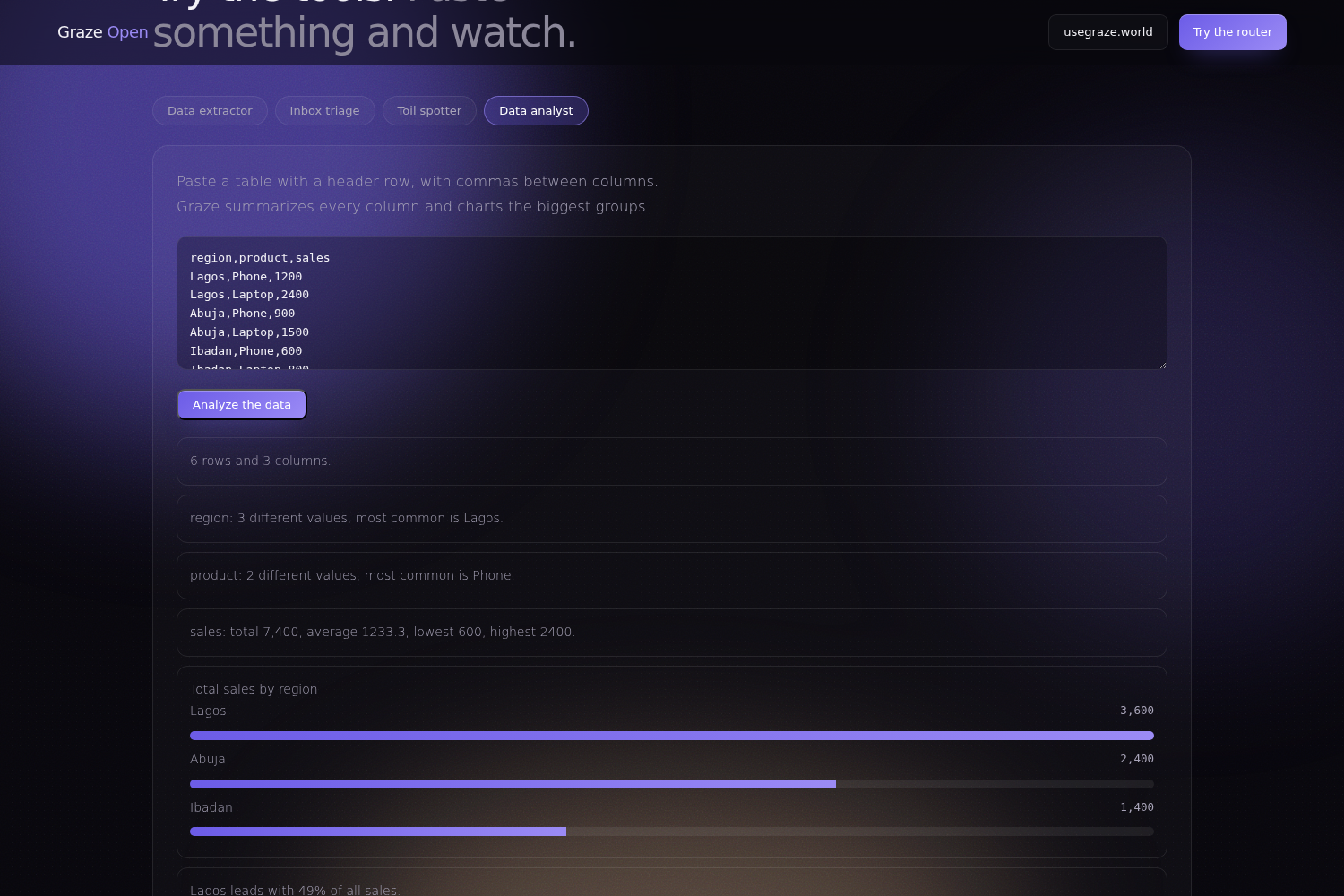
data analyst
-
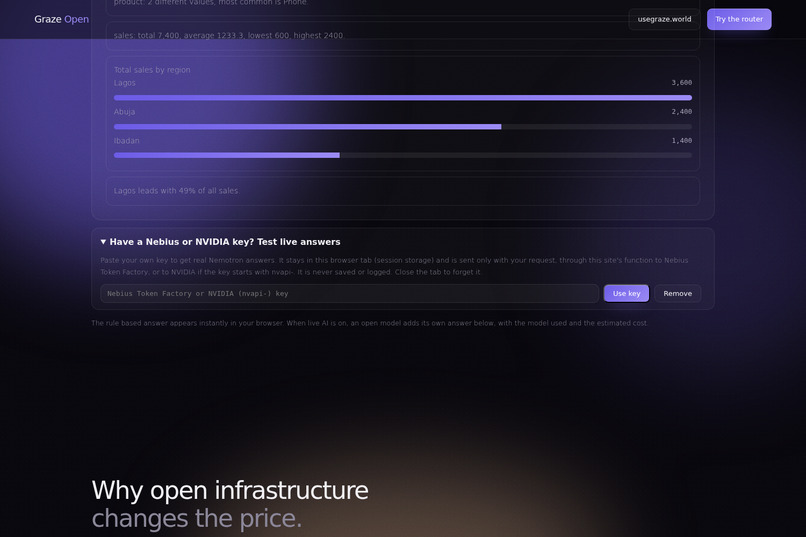
test with your own key
-
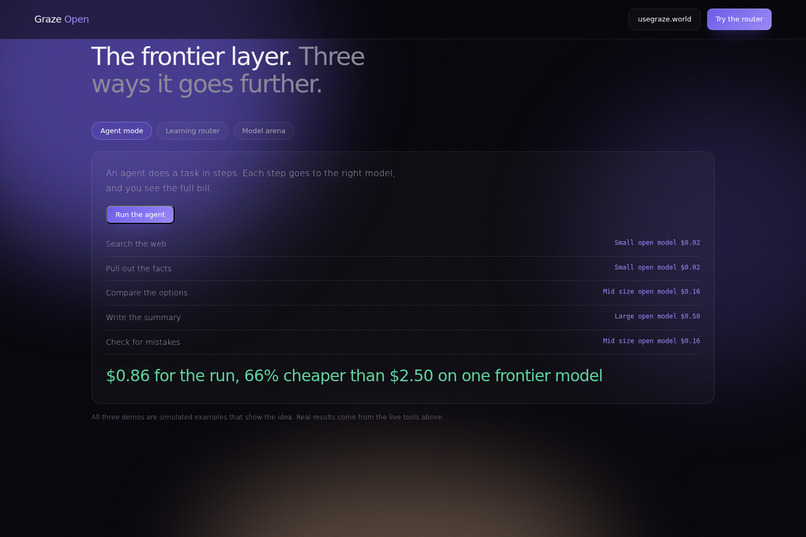
frontier layer simulated
Inspiration
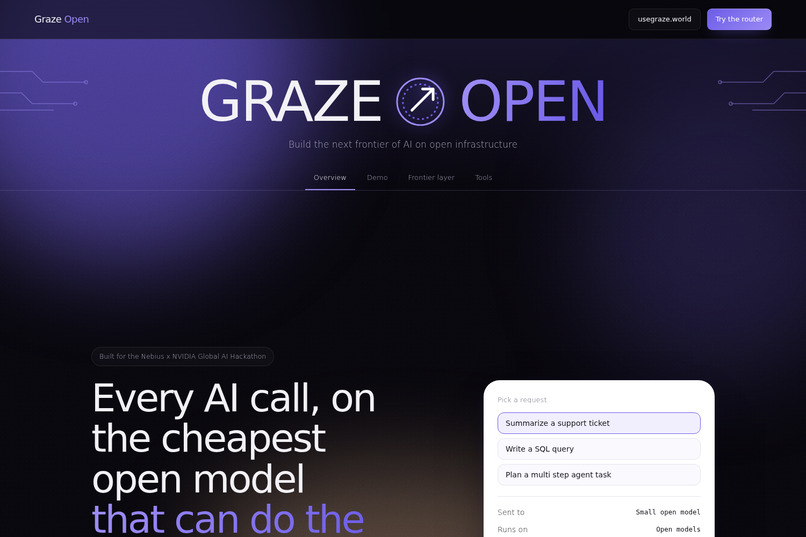
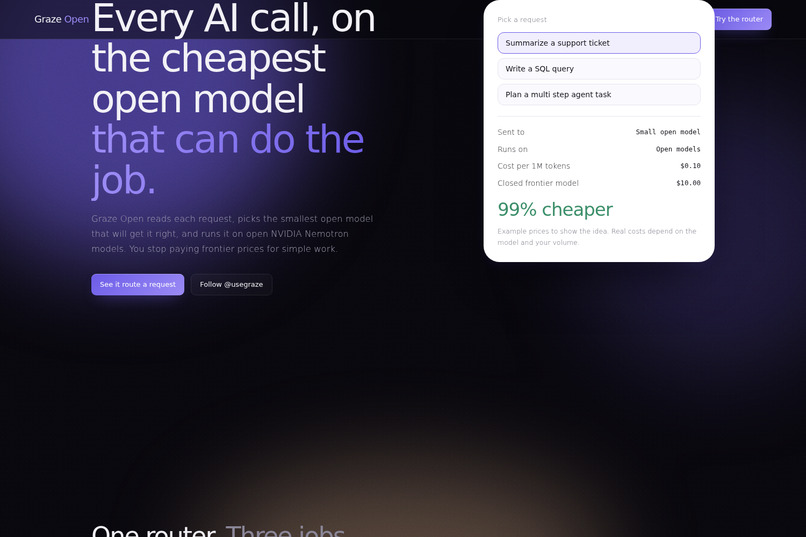
Most AI calls are easy: pulling a phone number out of text, sorting an inbox, spotting a repeated task. But apps often send every request to one big, expensive model, so people pay top prices for simple work. I wanted to see how much of that cost a small router could remove by sending each request to the cheapest NVIDIA Nemotron model that can handle it.
What it does
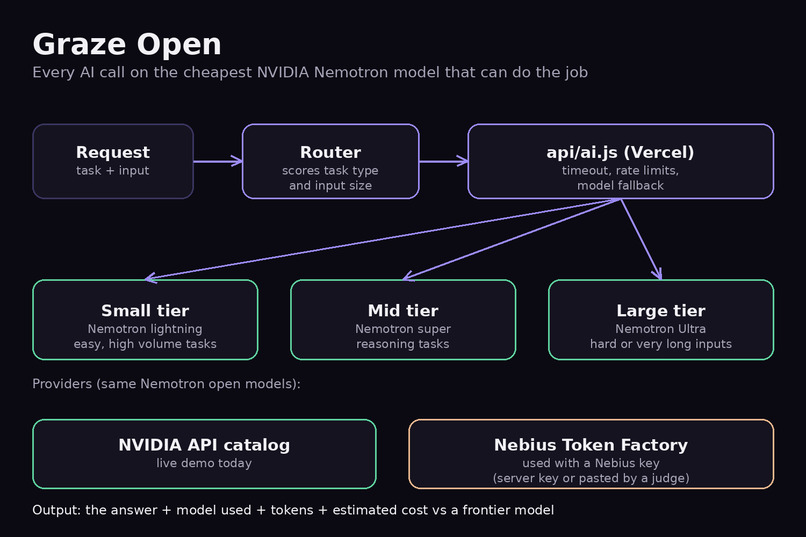
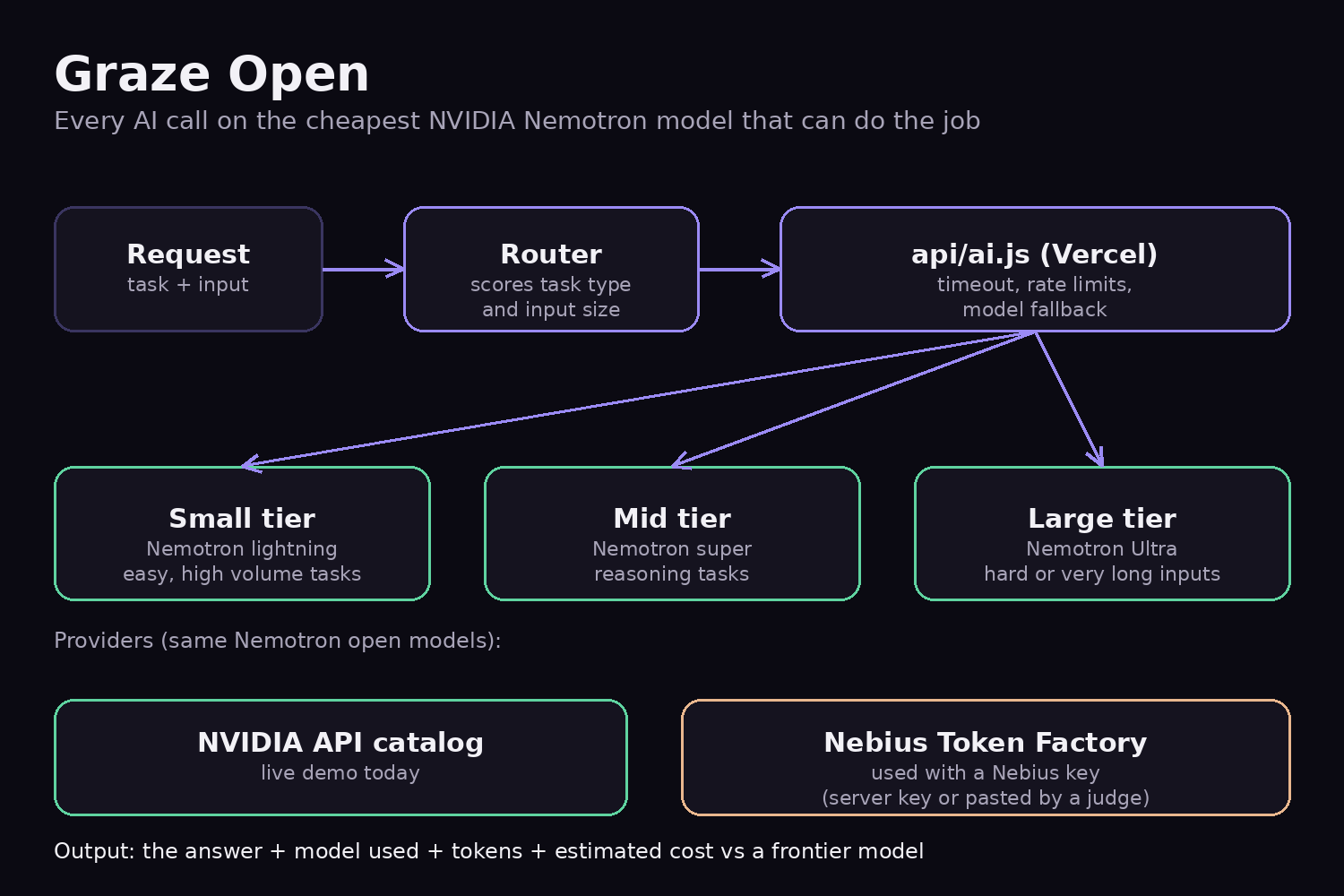
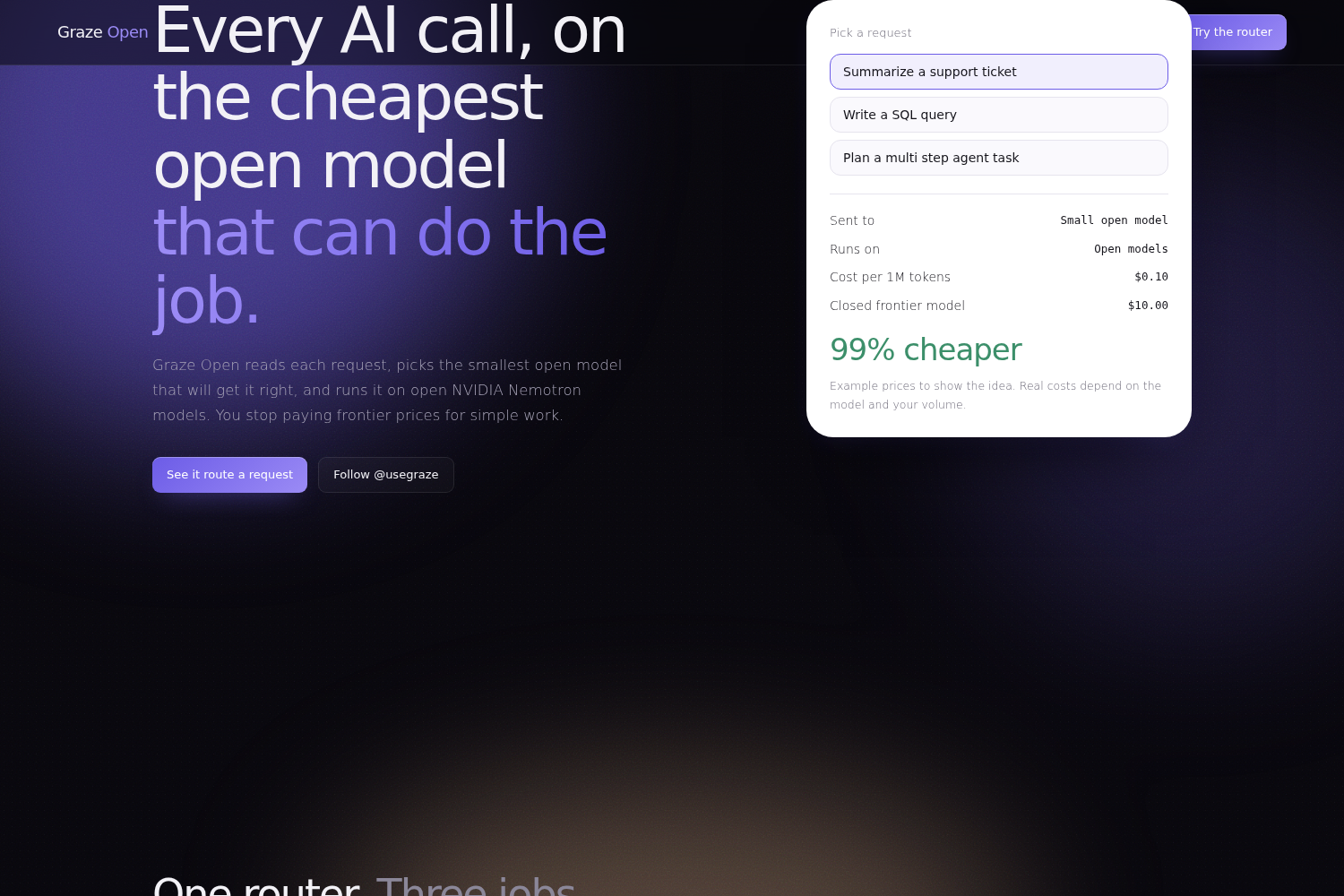
Graze Open reads each request, scores how hard it will be, and routes it to a small, mid-size or large Nemotron model. Every answer comes back with the model used, the tokens, and an estimated cost next to a frontier model.
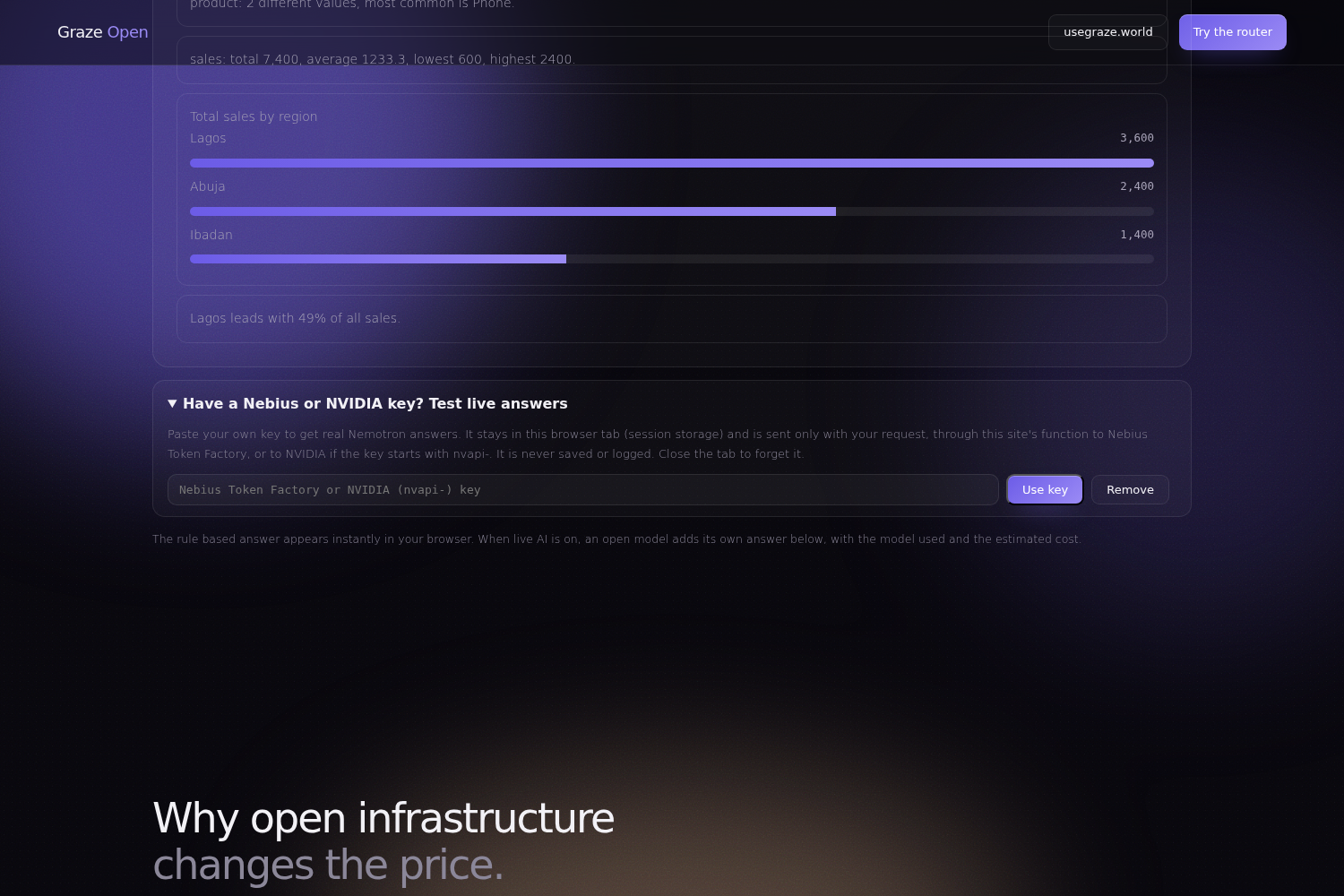
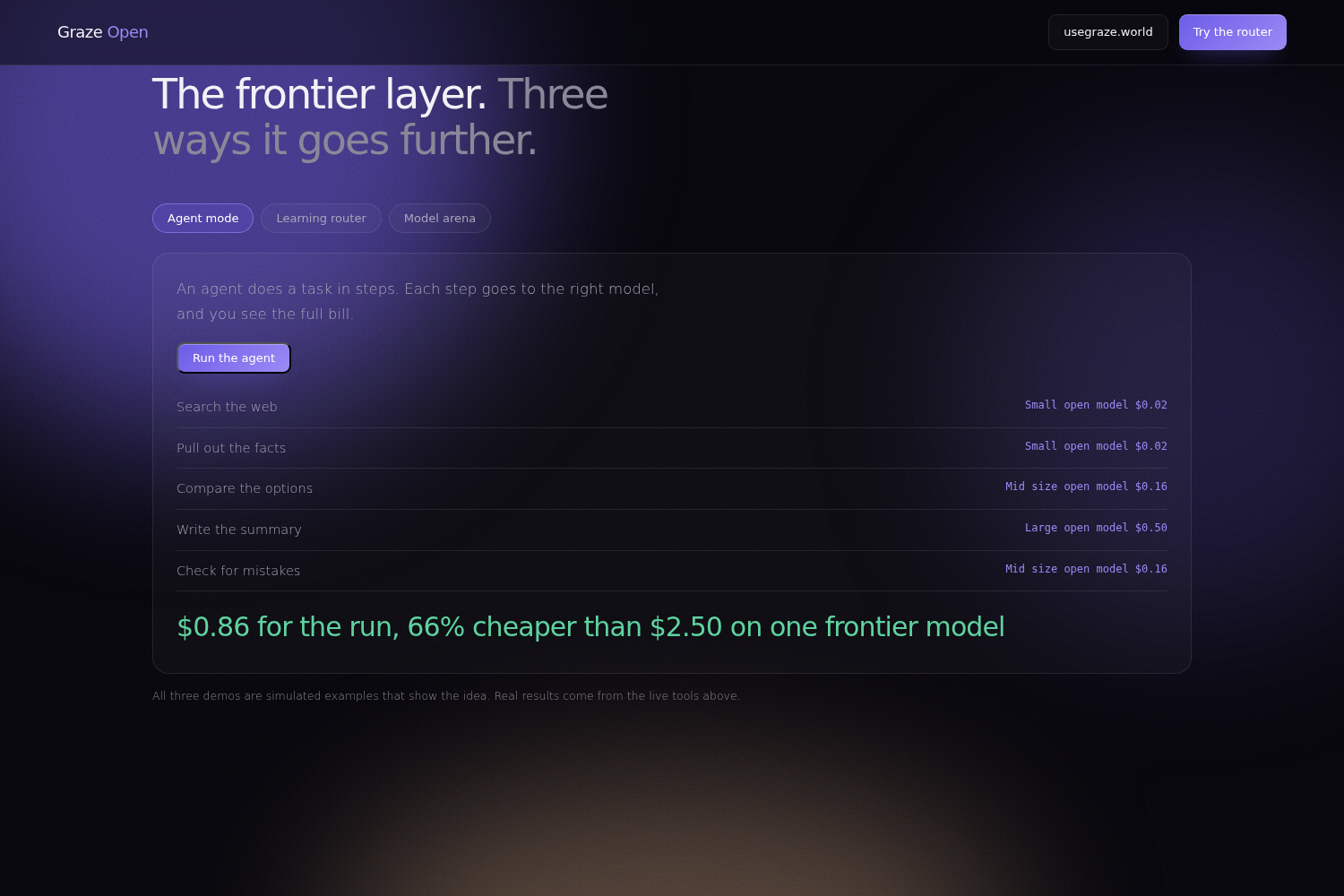
Four working tools show it in action: a data extractor, an inbox triage, a toil spotter (finds repeated steps and suggests how to automate them) and a data analyst. Each gives an instant rule-based result in the browser, then a real Nemotron answer below it. The "frontier layer" section (agent mode, learning router, model arena) is clearly labelled as simulated examples of where the idea goes next.
How I built it
- A single-page site in plain HTML and JavaScript, hosted on Vercel.
- A serverless function (
api/ai.js) that scores each request by task type and input size (length and number of lines), then picks the tier. - Live calls to NVIDIA Nemotron models, with a timeout, rate limits, and automatic fallback to other models if one is rejected or retired.
- A paste-your-own-key box so judges can test live answers with their own Nebius Token Factory key (or an NVIDIA key). The key stays in the browser tab and is never stored or logged.
- I built it with AI-assisted development, and I tested every tool by hand on desktop and mobile.
Challenges
The biggest one: I could not create a Nebius Token Factory key. Billing registration isn't available for my country, and Nebius support confirmed they could not make an exception. So the hosted demo runs live on NVIDIA's API catalog, which serves the same NVIDIA Nemotron open models. The Token Factory path is implemented in the code, and it runs whenever a Nebius key is available, which judges can test from the demo page.
Other challenges: a slow connection that made installs take most of an hour, a Nemotron model name that NVIDIA retired mid-build (the fix was to make the function try other models in turn), and a language model that made an arithmetic slip in the data analyst's summary. I kept the exact rule-based numbers next to the AI summary for that reason.
What I learned
How to deploy a serverless function end to end, how to handle model names that change, and why you should show real numbers next to a model's answer. I also learned to be upfront about what runs where.
What's next
Check each answer's quality and remember which model was good enough for each kind of task, so more calls move to smaller models over time. With a Token Factory key, the hosted demo would run on Nebius as well.
[If true, keep this line: Graze Open builds on the idea behind my existing project, Graze. Everything on this page, the tools, routing and cost cards, was built during the submission period.]


Log in or sign up for Devpost to join the conversation.