-
-
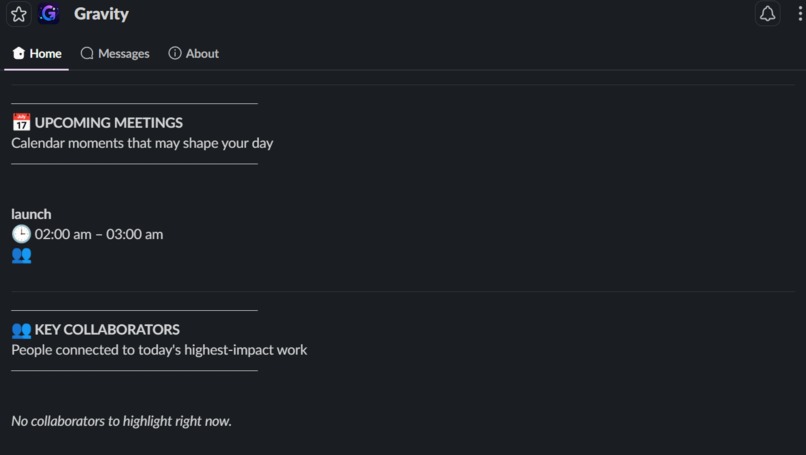
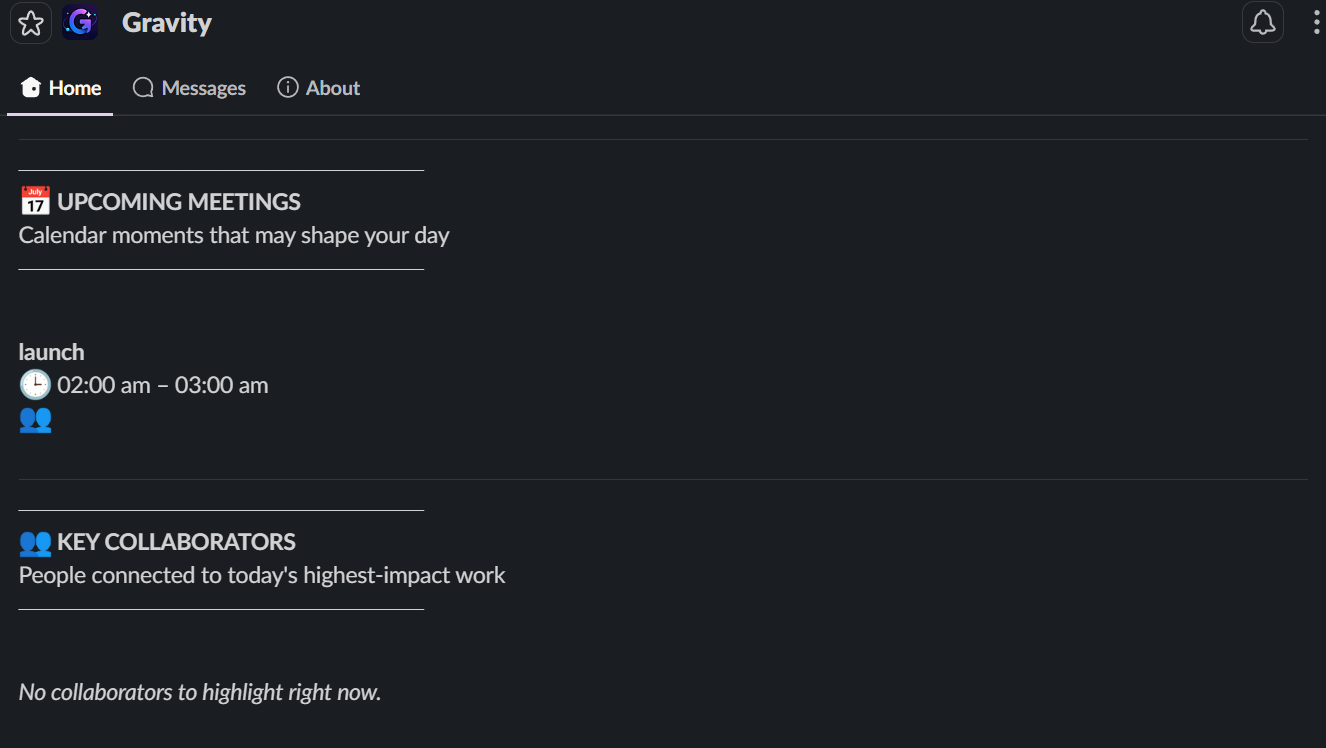
Upcoming Meetings panel
-
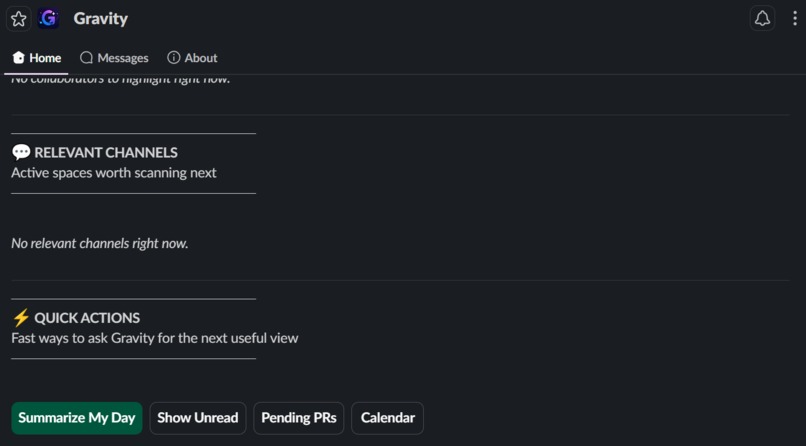
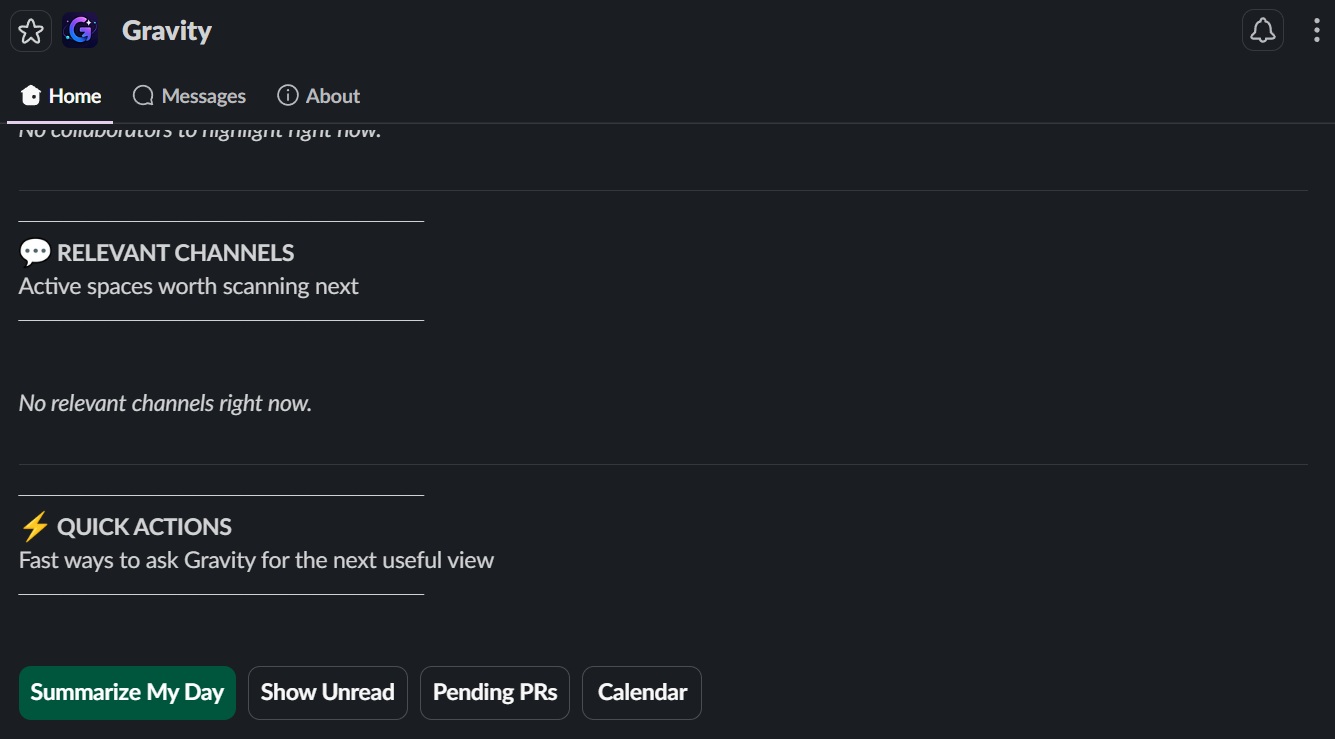
Relevant Channels panel
-
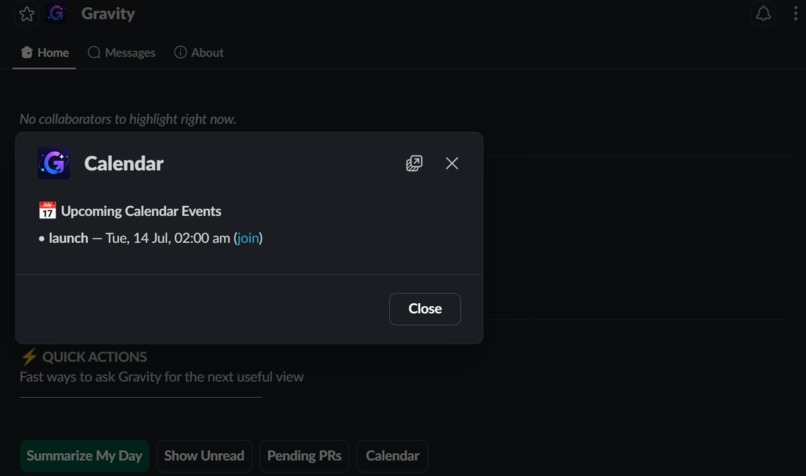
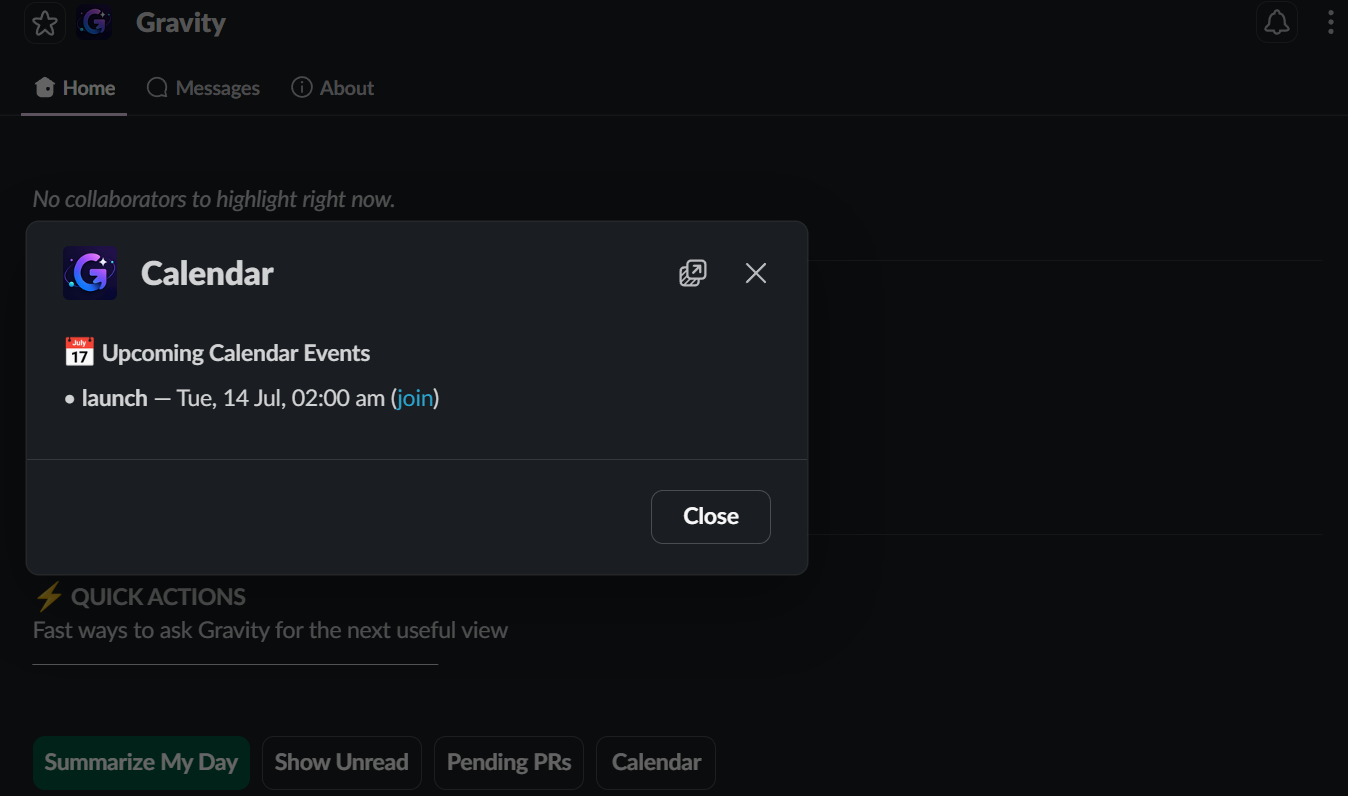
Calendar button popup
-
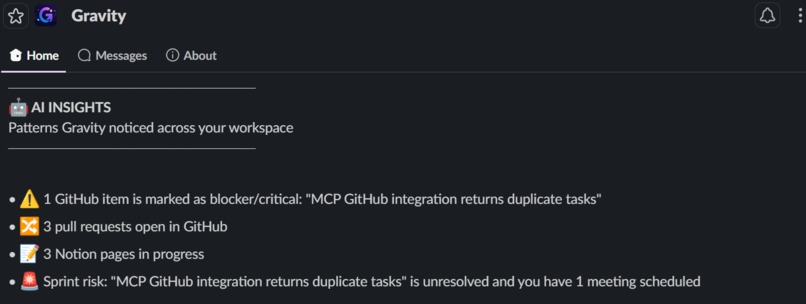
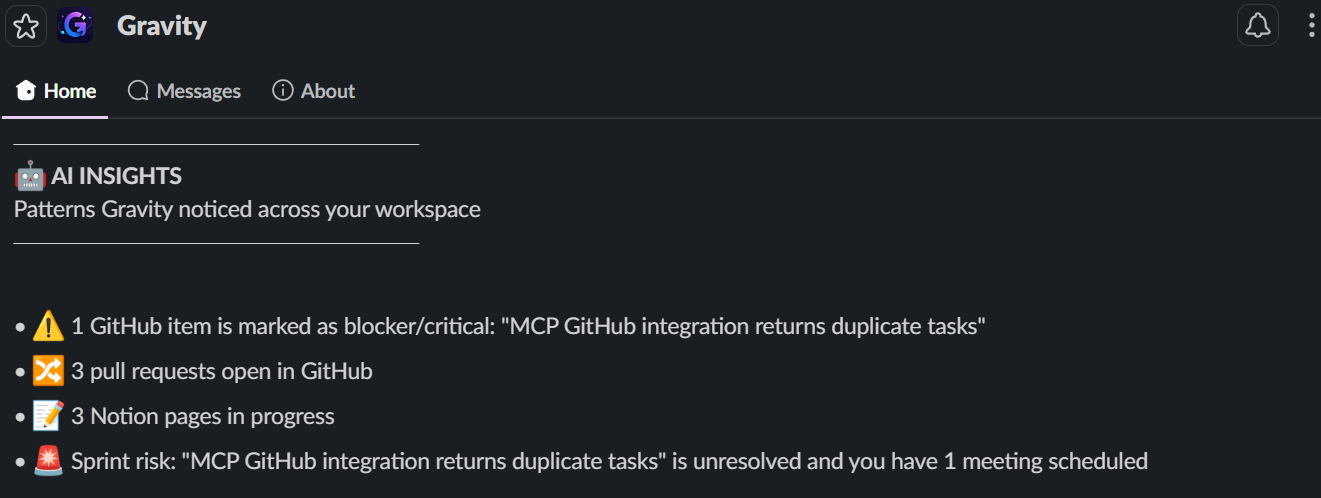
AI Insights panel
-
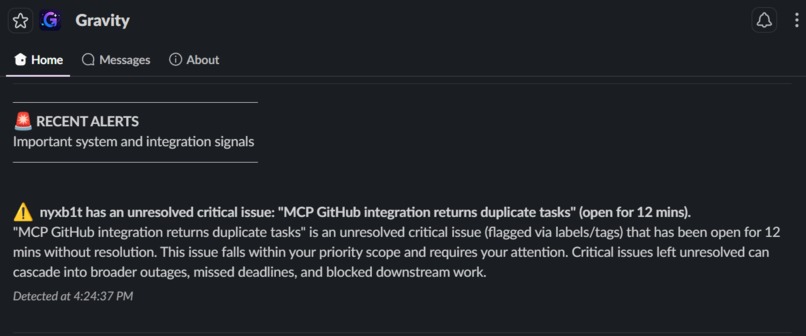
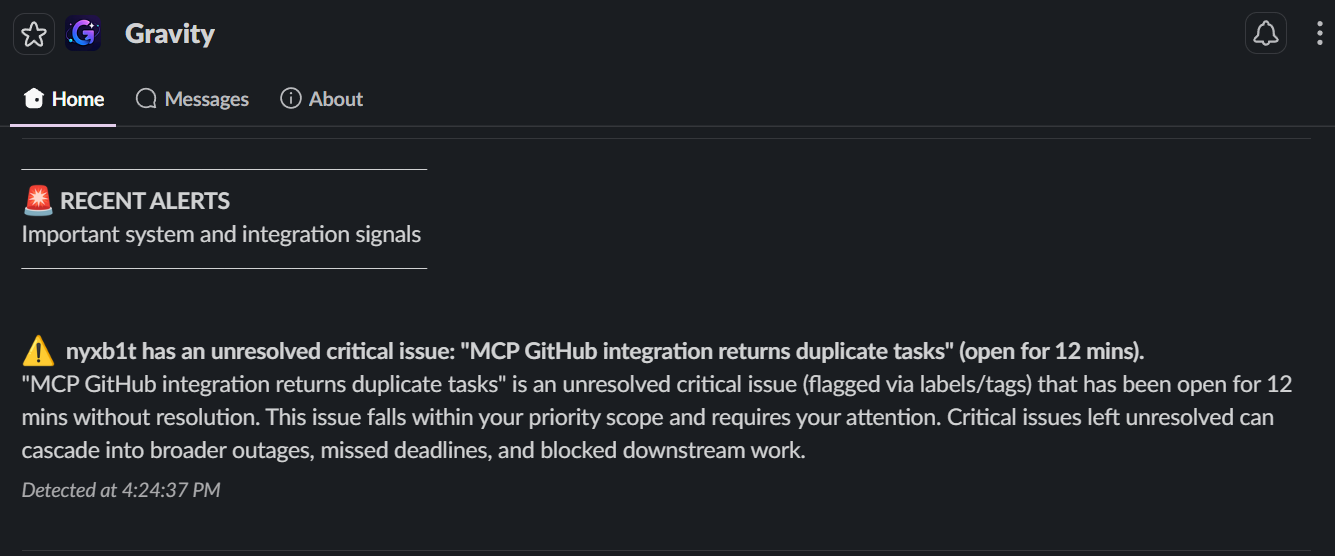
Recent Alerts panel
-
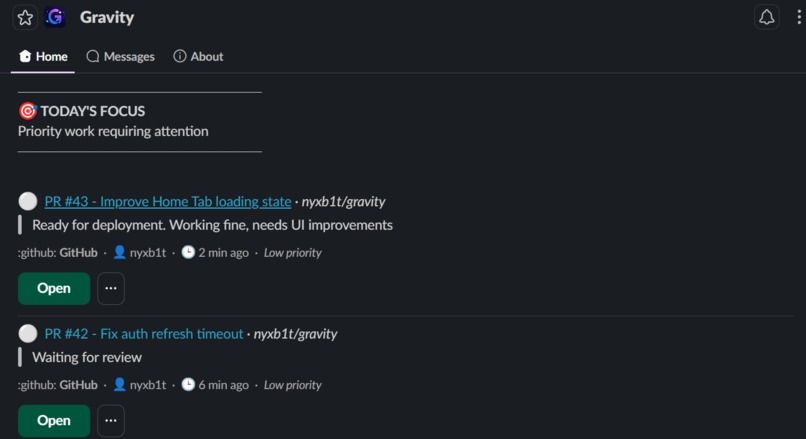
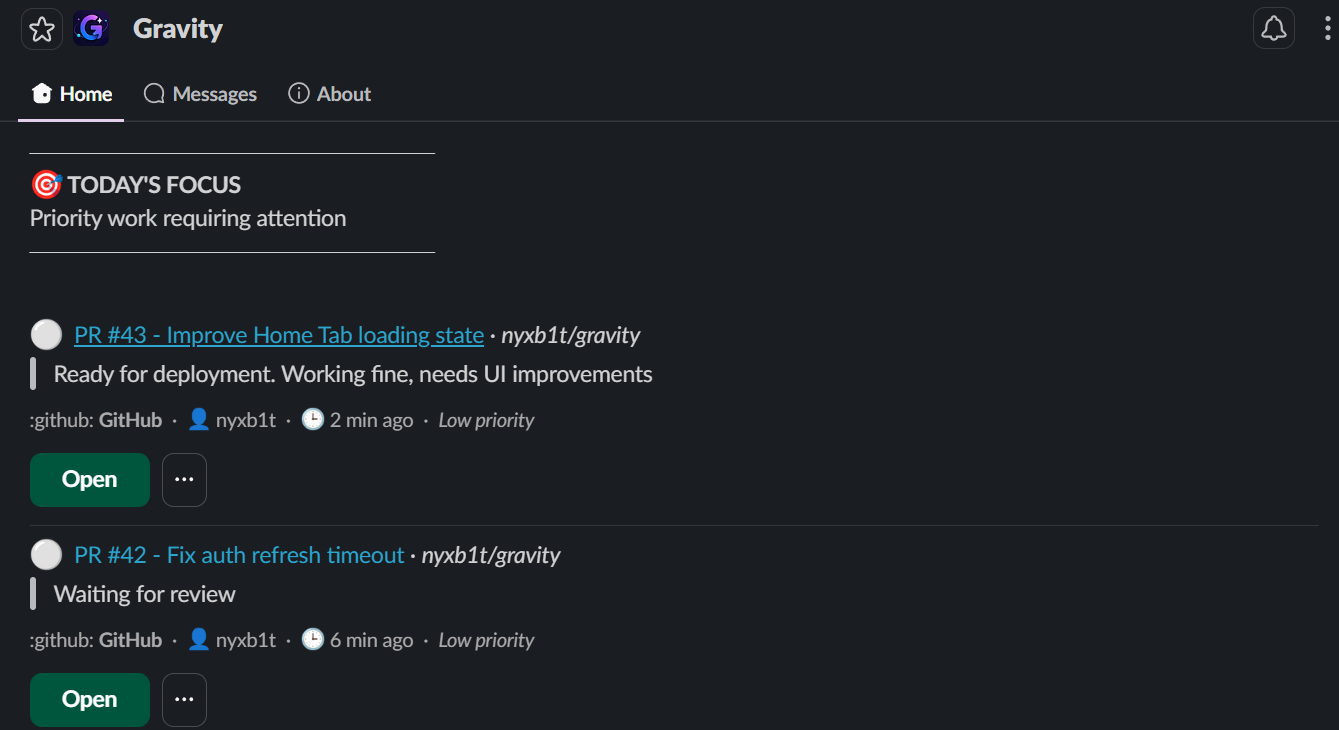
Today's Focus panel
-
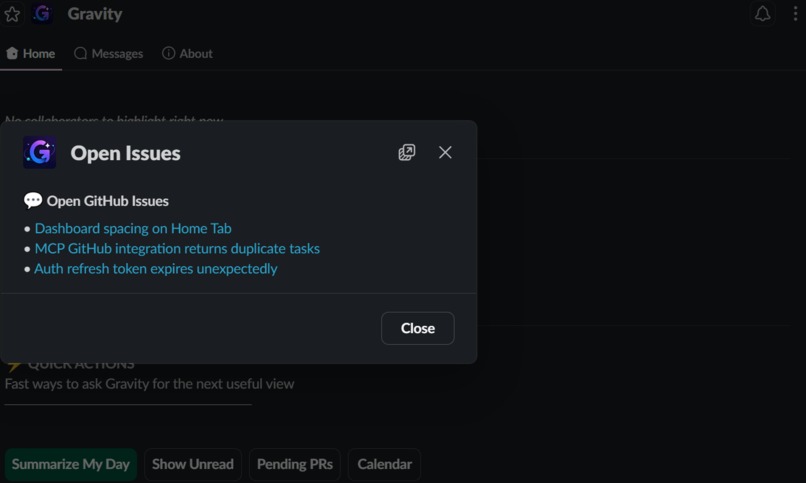
Show Unread button popup
-
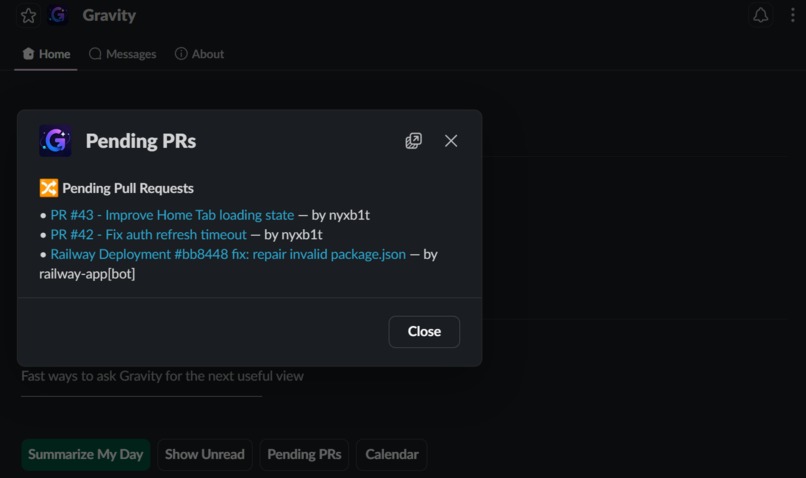
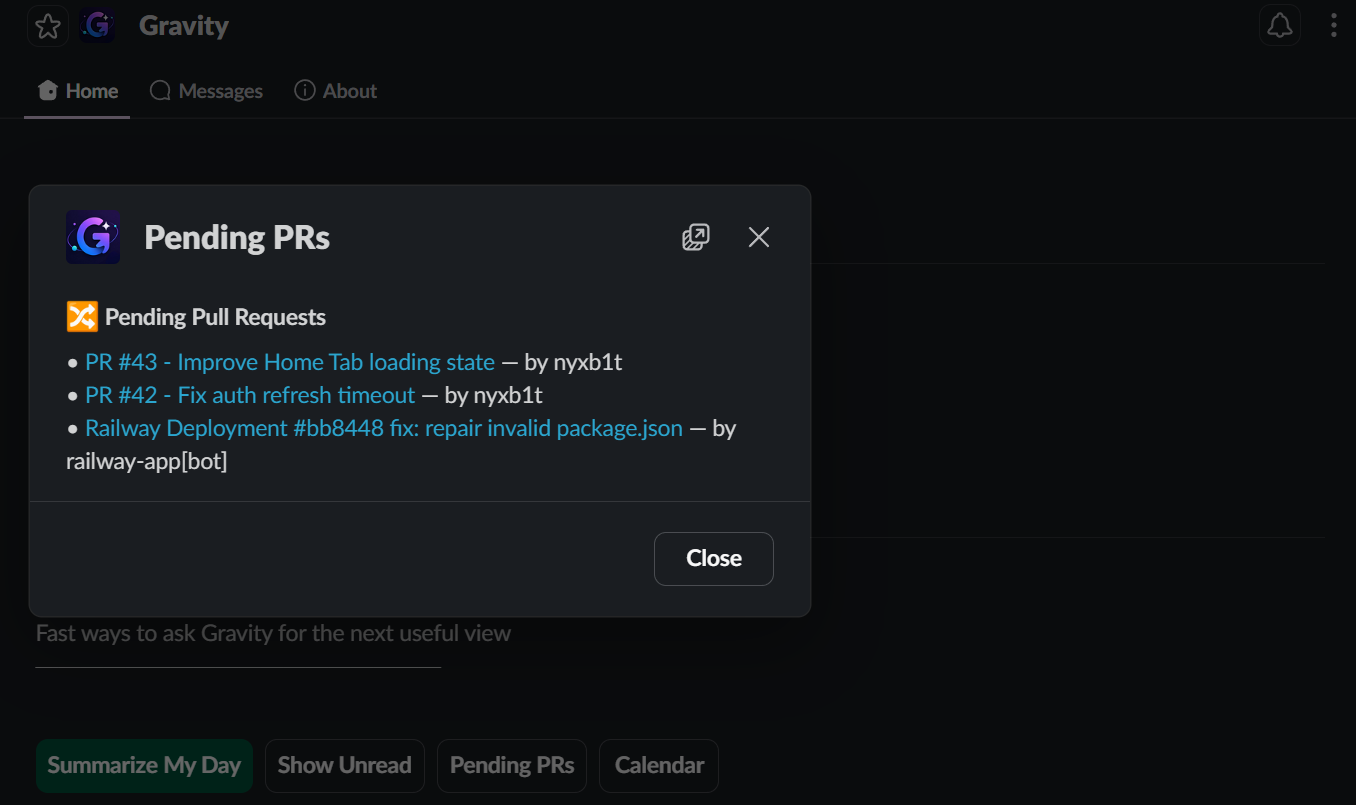
Pending PR button popup
-
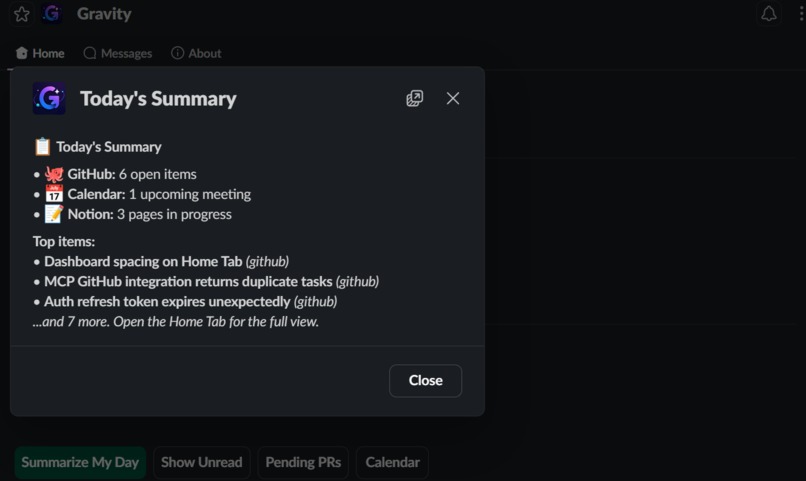
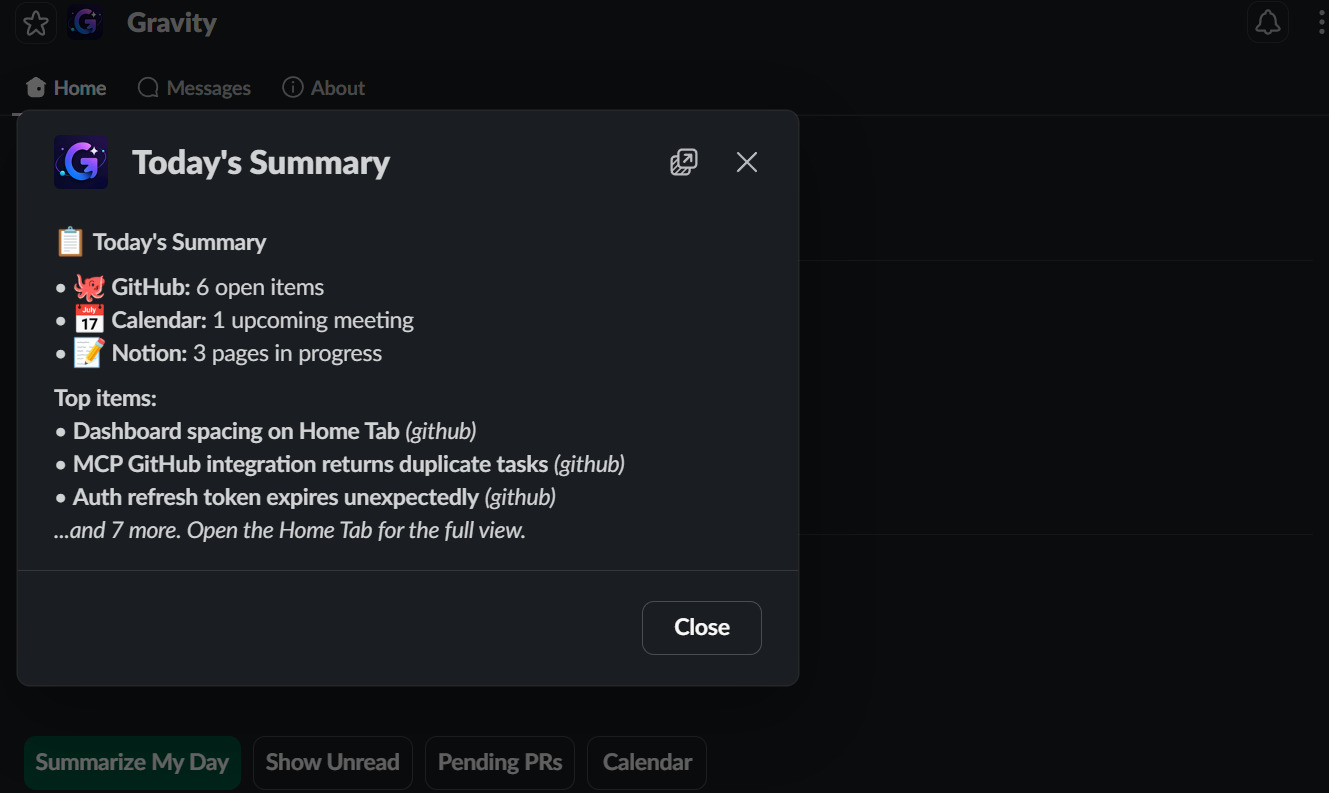
Summary button popup
-
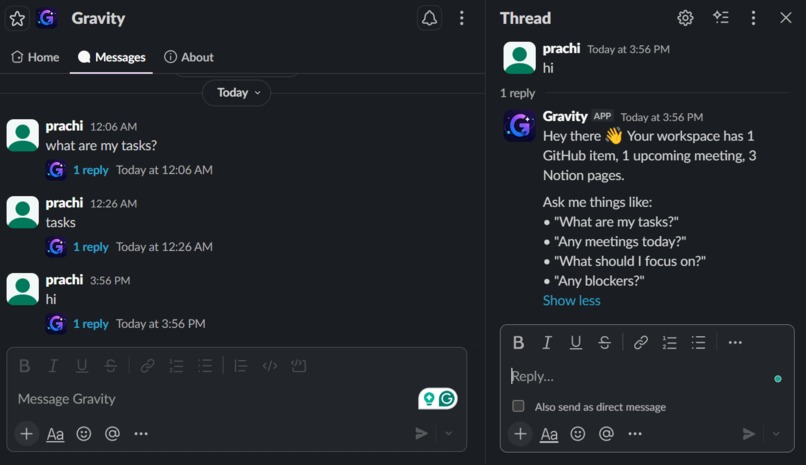
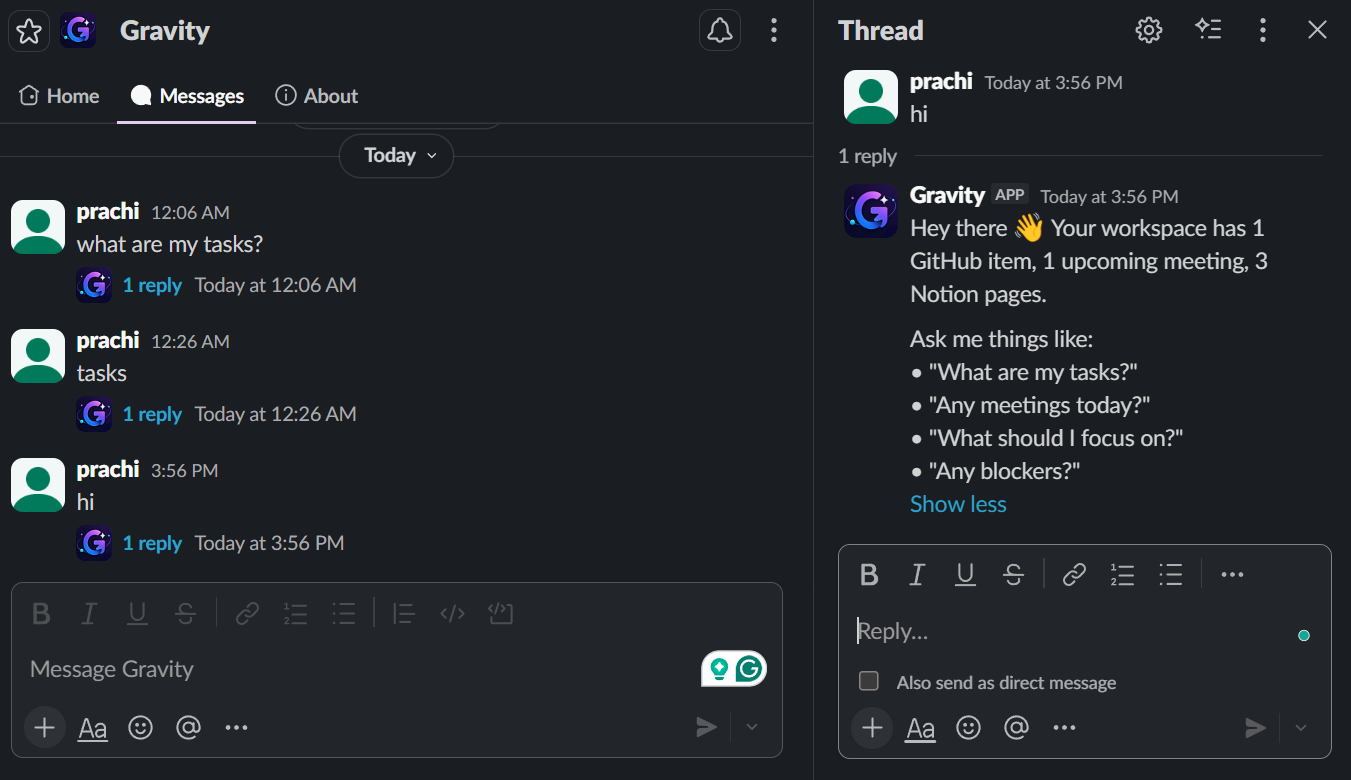
Thread interaction
-
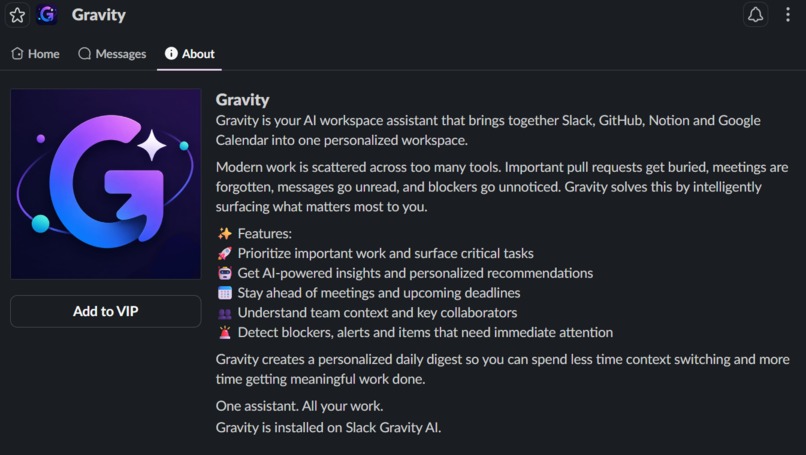
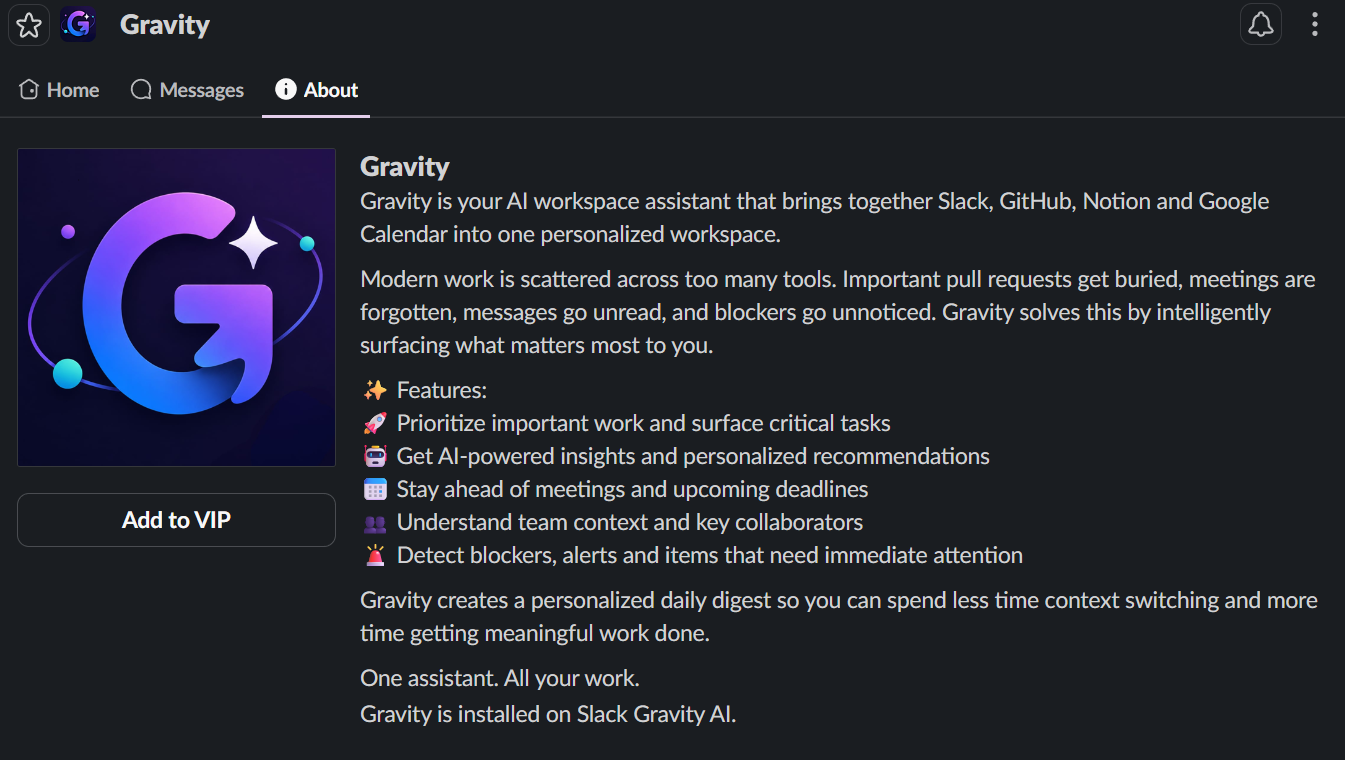
About tab
Inspiration
Modern teams live inside dozens of tools—Slack for communication, GitHub for engineering work, Notion for documentation, and Google Calendar for planning. While these tools are individually powerful, they create a new problem: context fragmentation.
During our own hackathon experience, we constantly found ourselves asking questions like:
- "What should I work on next?"
- "Is anything blocking us?"
- "Do we have any deadlines coming up?"
- "Did someone review that pull request yet?"
The information existed, but it was scattered across multiple platforms. We realized that teams spend a significant amount of time searching for information instead of acting on it.
This inspired us to build Gravity — an AI teammate that understands your entire workspace and proactively brings the right information to you at the right time.
What it does
Gravity is a proactive workplace intelligence agent integrated directly into Slack.
It connects with:
- GitHub
- Notion
- Google Calendar
- Slack
and creates a unified understanding of a team's workspace.
Instead of manually checking every platform, users can simply ask:
What should I focus on today?
Any blockers?
What meetings do I have?
What changed recently?
Gravity analyzes workspace context and surfaces:
- Priority tasks
- Pending pull requests
- Upcoming meetings
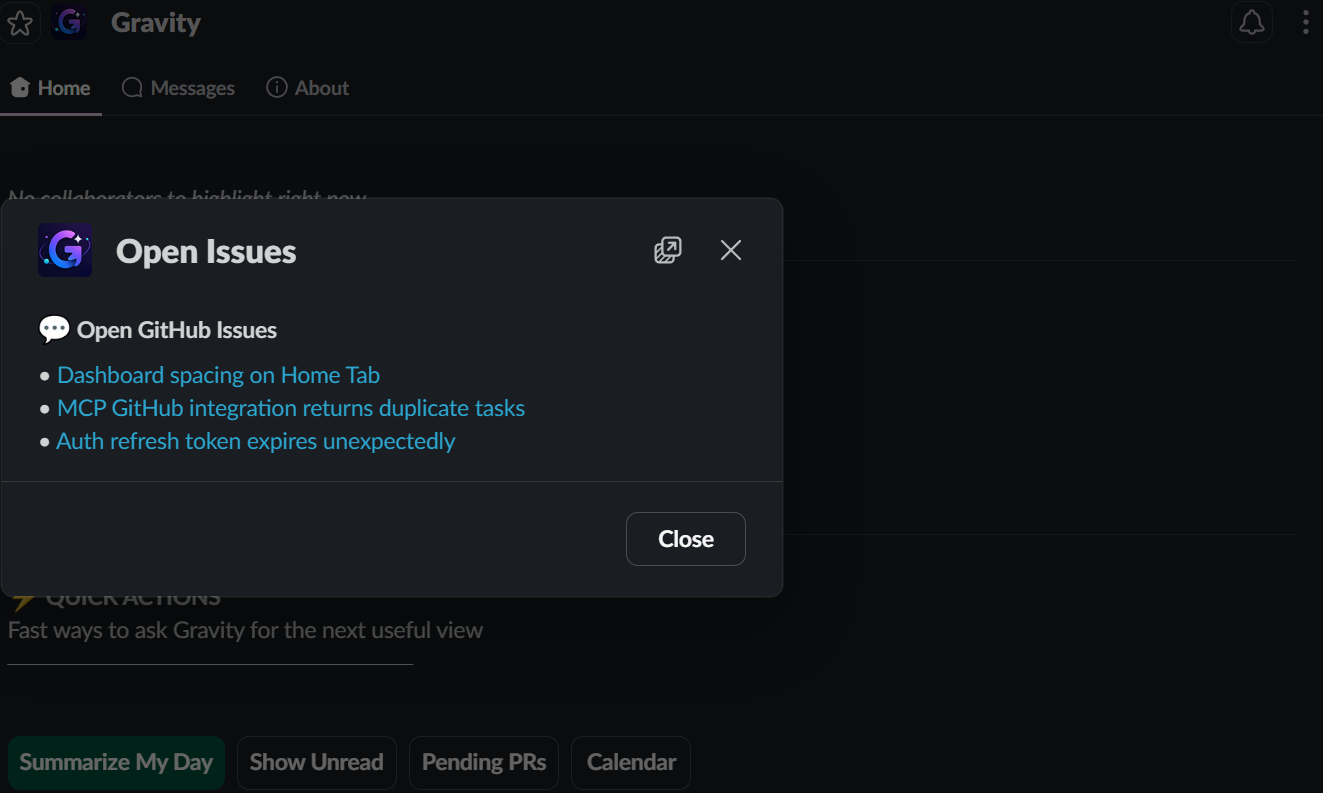
- Potential blockers
- Important project updates
It acts less like a chatbot and more like an intelligent teammate.
How we built it
We built Gravity using:
Frontend
- Next.js
- React
- TypeScript
- Tailwind CSS
Backend
- Next.js API Routes
- Slack Bolt SDK
- Railway Deployment
Integrations
- GitHub API
- Google Calendar API
- Notion API
AI Layer
- Google Gemini API
Our architecture consists of:
Integration Layer
- Fetches workspace data from different services.
Workspace Context Layer
- Normalizes all incoming data into a unified format.
Intelligence Layer
- Prioritizes tasks and identifies important information.
Slack Experience Layer
- Provides proactive dashboards and conversational interactions.
We also implemented graceful fallbacks so the application continues functioning even if AI quotas are exceeded.
Challenges we ran into
1. Multi-platform Context Aggregation
Every platform has completely different APIs and data structures. Creating a single normalized workspace representation was one of our biggest engineering challenges.
2. Slack Architecture
Slack's Socket Mode, Events API, and App Home architecture introduced several lifecycle and deployment challenges. We had to redesign parts of our initialization flow to prevent build-time failures and duplicate event registrations.
3. Real-Time Integrations
Handling authentication and API permissions across GitHub, Google Calendar, and Notion required careful environment management and debugging.
4. AI Reliability
Free-tier AI quotas can be unpredictable. To ensure reliability, we implemented deterministic fallback mechanisms so that Gravity remains useful even without AI reasoning.
5. Designing Proactive Intelligence
We didn't want another chatbot that simply answers questions. The challenge was making Gravity feel like an actual teammate that proactively surfaces important information before users even ask.
Accomplishments that we're proud of
✅ Built a unified intelligence layer across multiple productivity tools.
✅ Created a conversational AI assistant inside Slack.
✅ Implemented proactive prioritization instead of simple search.
✅ Successfully integrated GitHub, Notion, and Google Calendar data.
✅ Designed graceful fallbacks for AI failures.
✅ Built a polished Slack experience with Home and Messages tabs.
What we learned
Throughout this project we learned:
- Slack application architecture and event handling
- Multi-platform API integration
- Context aggregation and normalization
- Building resilient AI systems
- Designing proactive user experiences instead of reactive interfaces
- Managing real-world deployment and authentication challenges
Most importantly, we learned that productivity tools should not simply provide information—they should provide understanding.
What's next for Gravity
Our vision for Gravity extends far beyond this hackathon.
Future plans include:
- Jira Integration
- Linear Integration
- Email Intelligence
- Meeting Summaries
- Long-term workspace memory
- Predictive risk detection
- Autonomous task management
- Personalized teammate recommendations
We believe the future of workplace productivity lies in AI teammates that understand context and proactively help teams stay aligned.
Gravity is our first step toward that future.
Built With
- git
- github
- github-rest-api
- google-calendar-api
- llm
- next.js
- node.js
- notion-api
- prompt-engineering
- railway
- react
- slack-api
- slack-block-kit
- slack-mcp
- slack-rts-api
- tailwind-css
- typescript

Log in or sign up for Devpost to join the conversation.