-
Title Screen
-
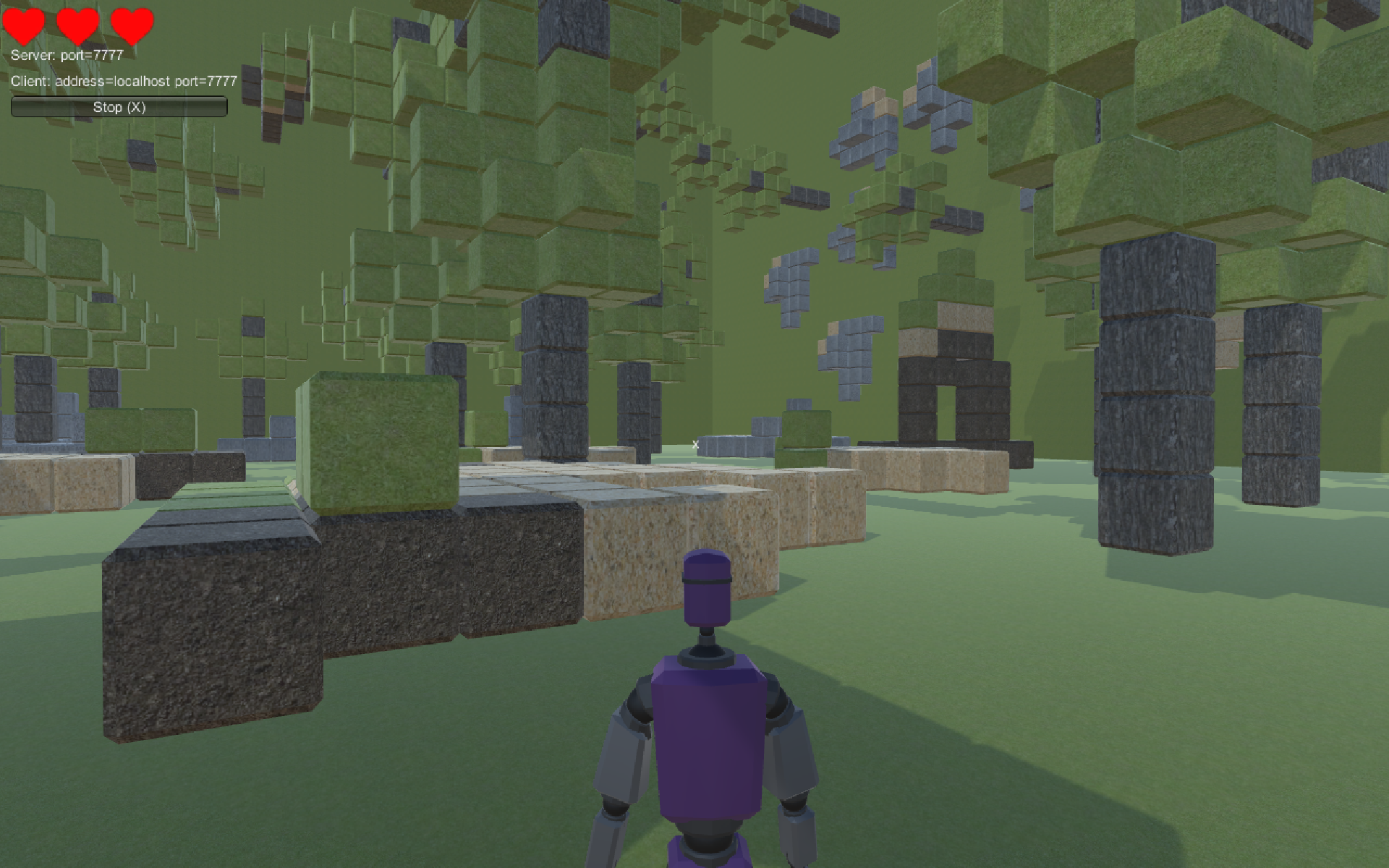
ScreenShot 1
-
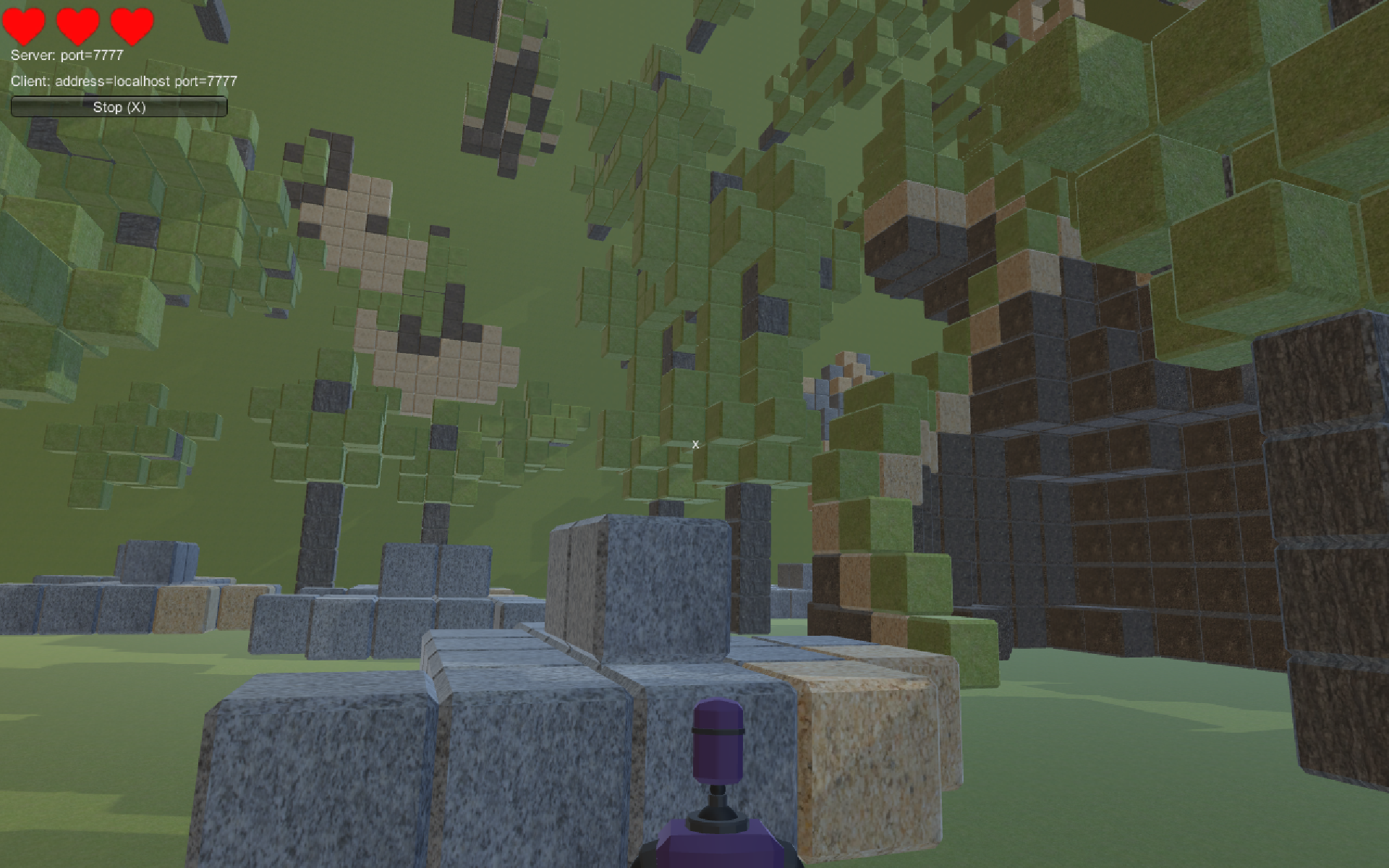
ScreenShot 3
-
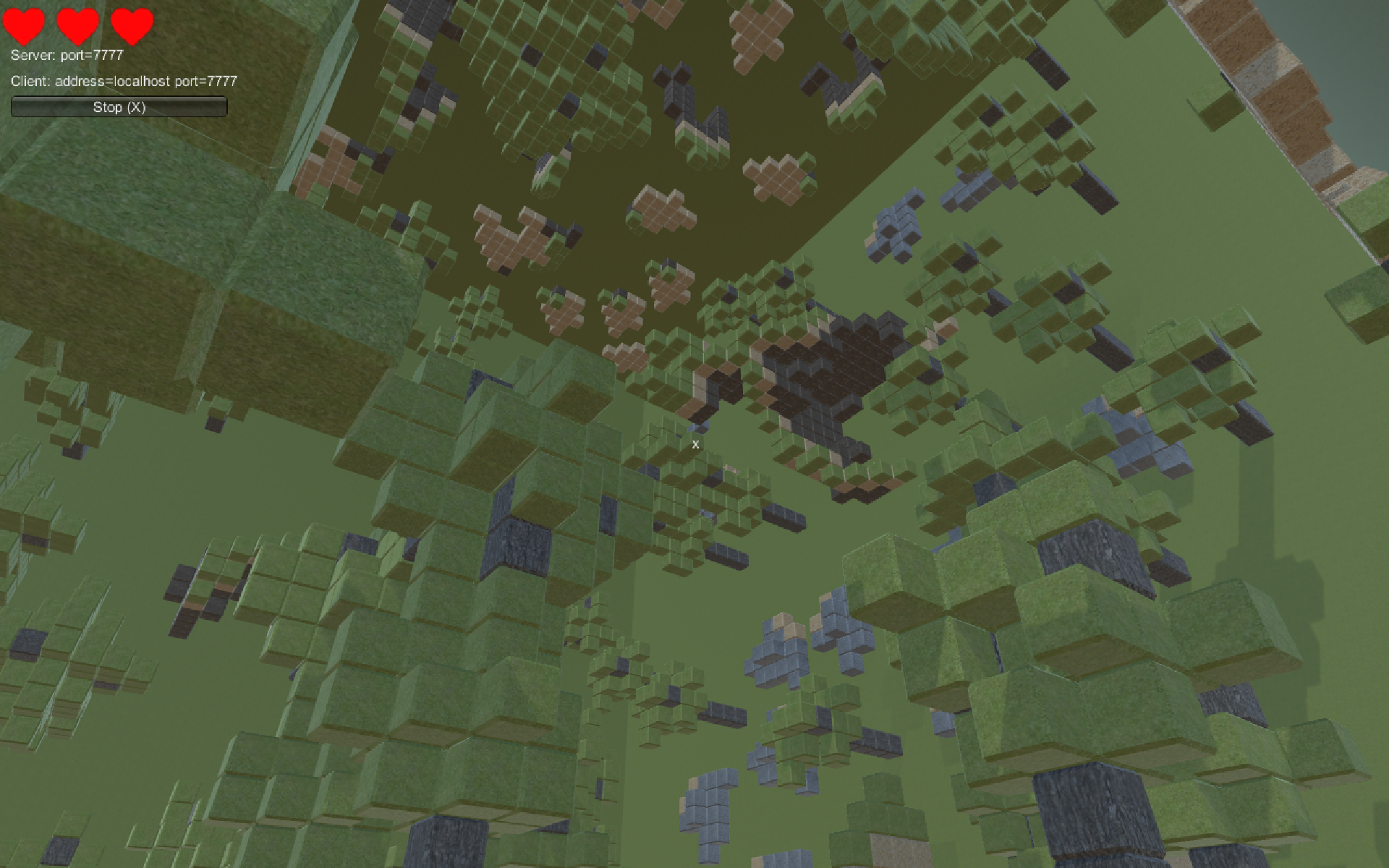
ScreenShot 2
Inspiration
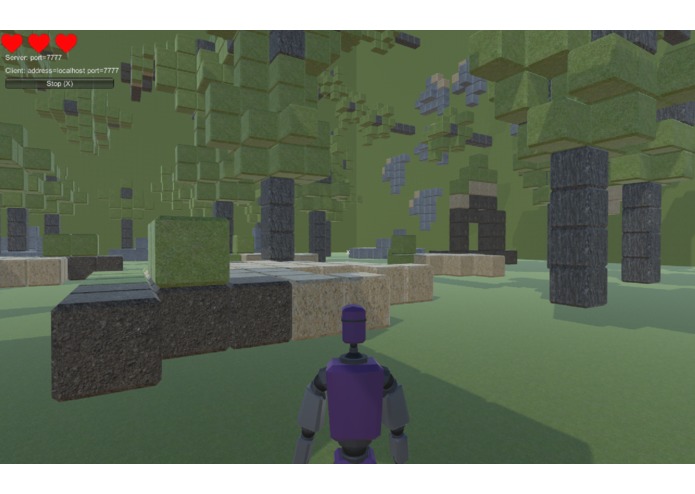
We wanted to build a shooter that many friends could play together. We didn't want to settle for something that was just functional, so we added the craziest game mechanic we could think of to maximize the number of problems we would run into: a map that has no up or down, only forward. The aesthetic of the game is based on Minecraft (a game I admit I have never played).
What it does
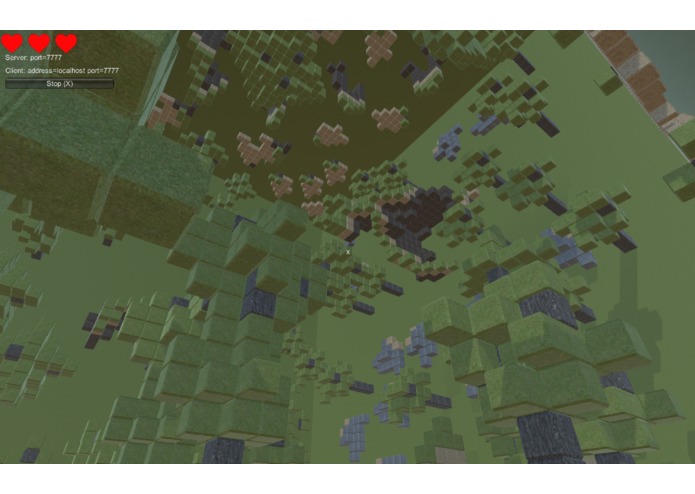
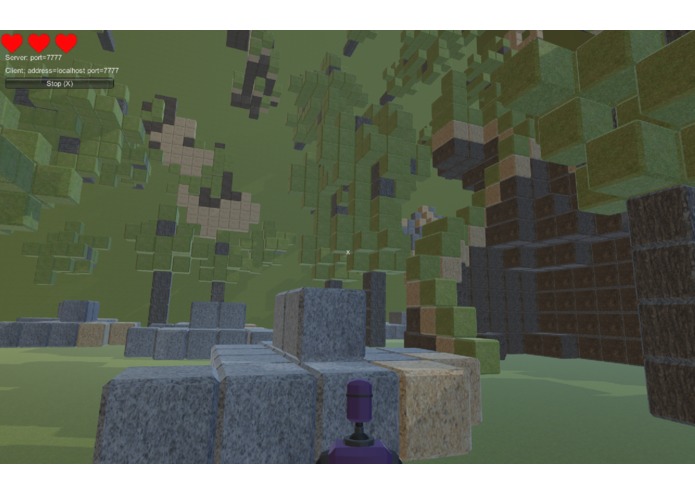
The game can host up to 5 players on a local network. Using the keyboard and the mouse on your computer, you can walk around an environment shaped like a giant cube covered in forest, and shoot bolts of energy at your friends. When you reach the threshold of the next plane of the cube, a simple command re-orients your character such that your gravity vector is perpendicular to the next plane, and you can move onwards. The last player standing wins.
How we built it
First we spent a few (many) hours learning the skills necessary. My teammate familiarized themself with a plethora of Unity functions in order to code the game mechanics we wanted. I'm a pretty decent 3D modeler, but I've never used Maya before and I've never animated a bipedal character. I spent a long while adjusting myself to Maya, and learning how the Mecanim animation system of Unity functions. Once we had the basics, we started working on respective elements: my teammate the gravity transitions and the networking, and myself the character model and animations. Later we combined our work and built up the 3D environment and kept adding features and debugging until the game was playable.
Challenges we ran into
The gravity transitions where especially challenging. Among a panoply of other bugs that individually took hours to work through or around, the gravity transitions where not fully functional until more than a day into the project. We took a break from work and brainstormed, and we came up with a simpler code structure to make the transition work. We were delighted when we walked all up and around the inside of our cube-map for the first time without our character flailing and falling wildly.
Accomplishments that we're proud of
Besides the motion capture for the animations and the textures for the model, we built a fully functional, multiplayer shooter with a complex, one-of-a-kind gameplay mechanic. It took 36 hours, and we are proud of going from start to finish without giving up.
What we learned
Besides the myriad of new skills we picked up, we learned how valuable a hackathon can be. It is an educational experience nothing like a classroom. Nobody chooses what we are going to learn; we choose what we want to learn by chasing what we want to accomplish. By chasing something ambitious, we inevitably run into problems that force us to develop new methodologies and techniques. We realized that a hackathon is special because it's a constant cycle of progress, obstacles, learning, and progress. Progress stacks asymptotically towards a goal until time is up and it's time to show our stuff.
What's next for Gravity First
The next feature we are dying to add is randomized terrain. We built the environment using prefabricated components that I built in Maya, which we arranged in what we thought was an interesting and challenging arrangement for gameplay. Next, we want every game to have a different, unpredictable six-sided map by randomly laying out the pre-fabs according to certain parameters..

Log in or sign up for Devpost to join the conversation.