-
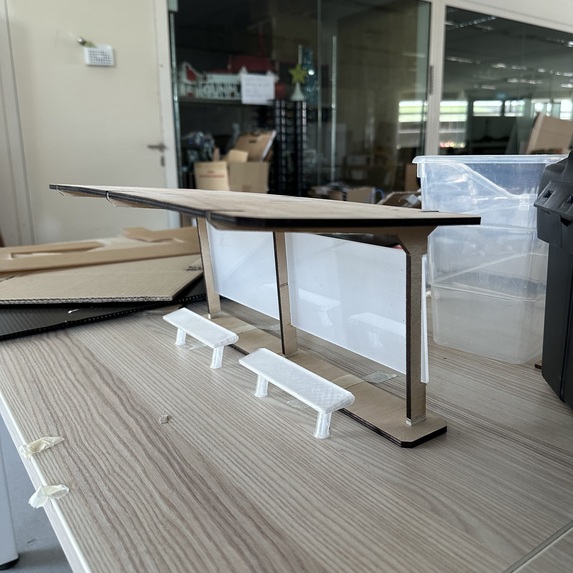
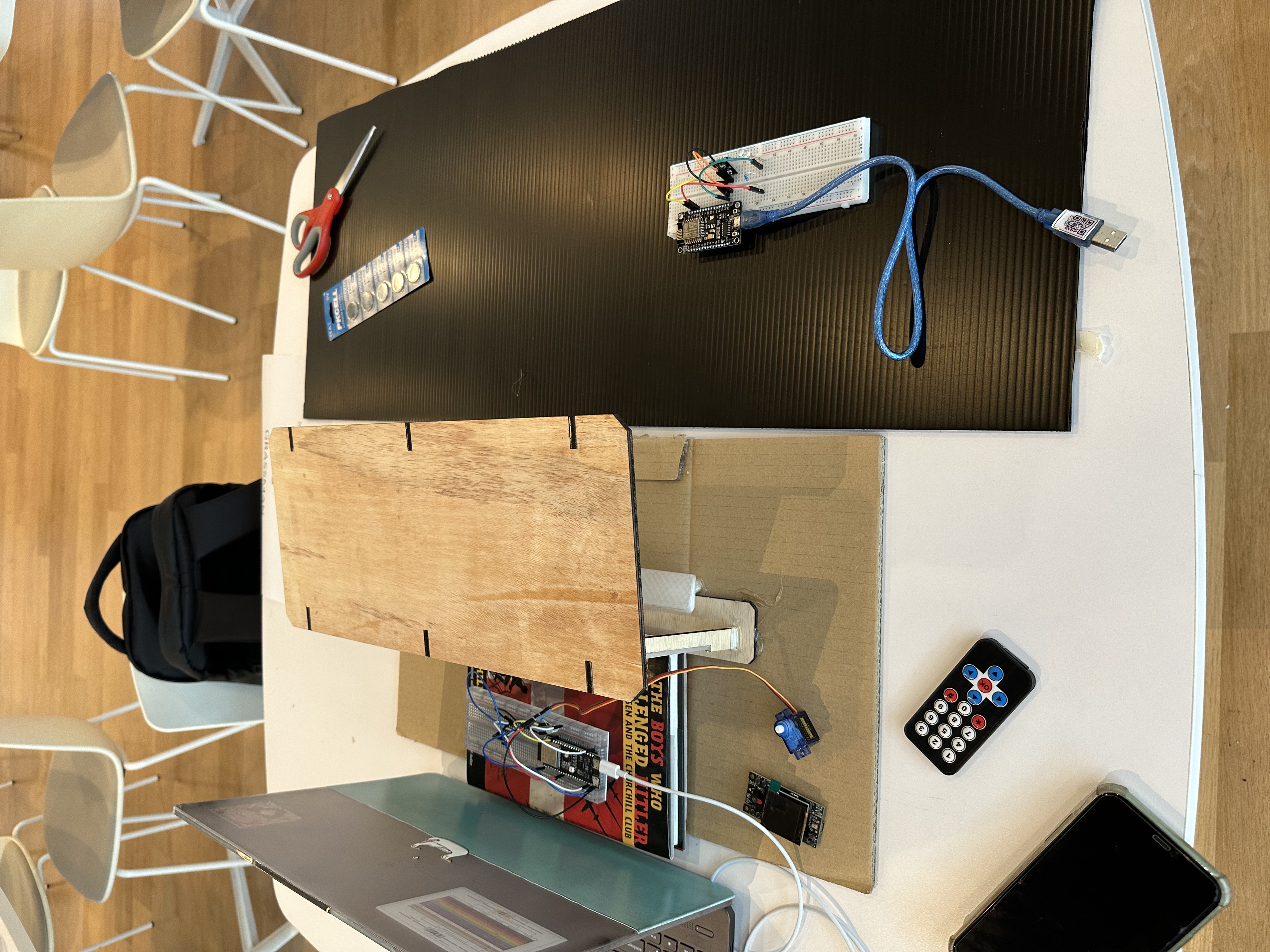
Bus stop model
-
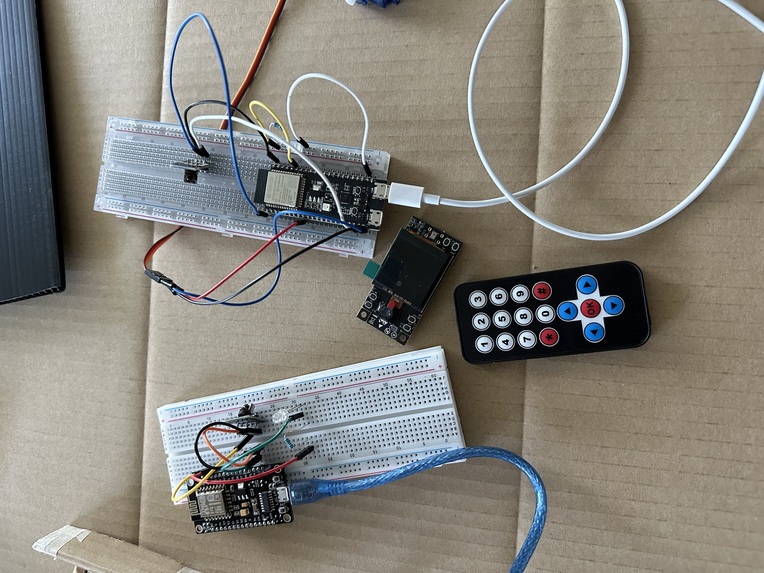
MVP
-
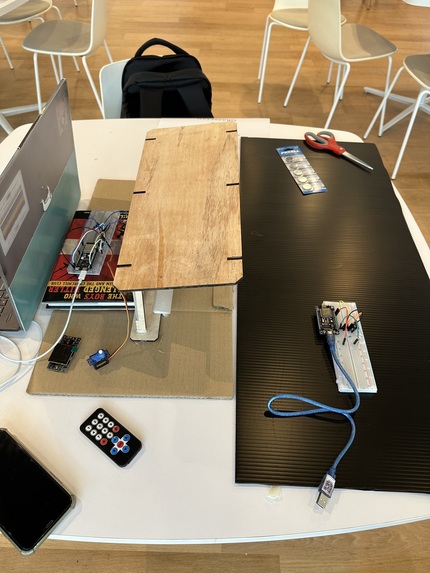
Exhibition setup
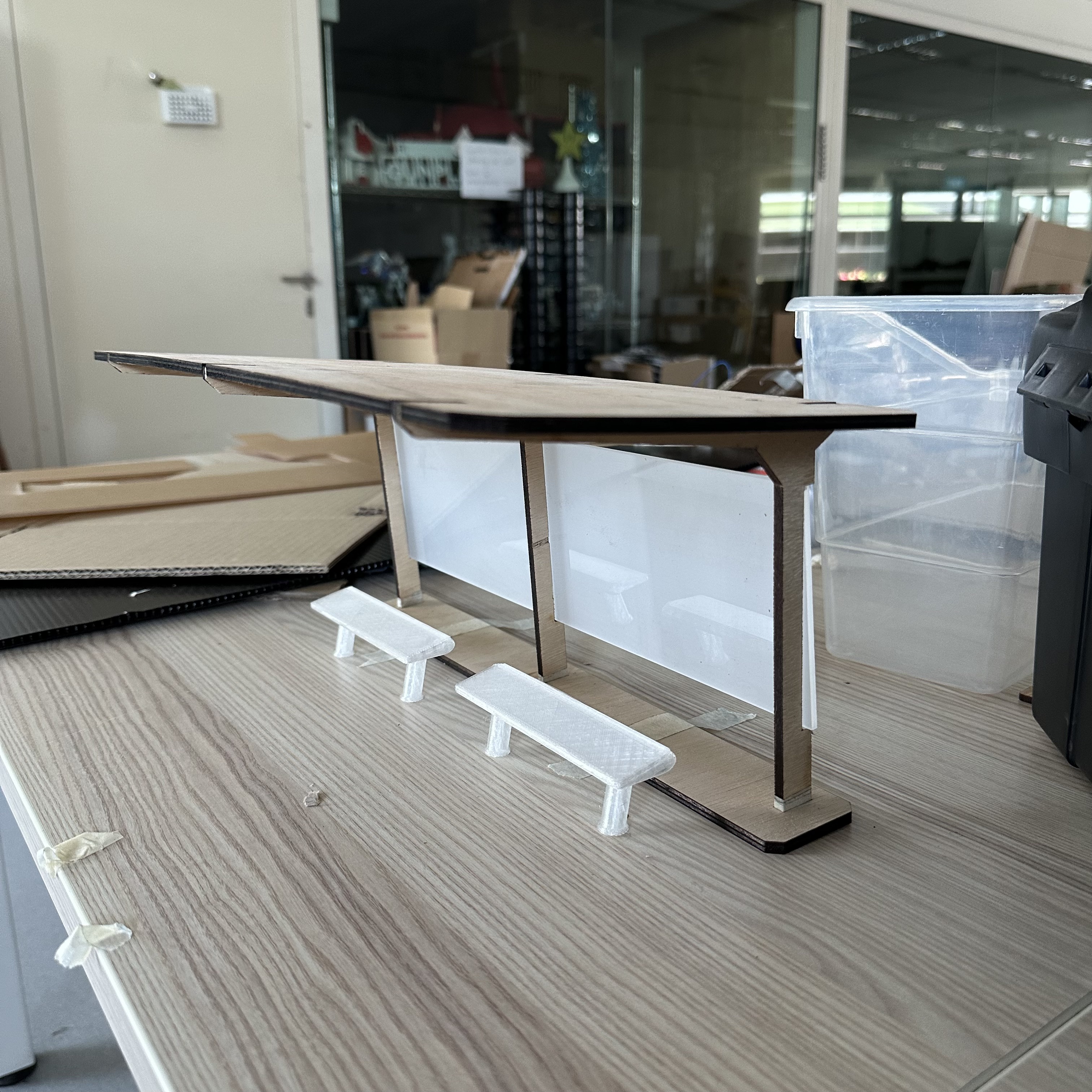
BUS-SEE
Problem statement
How can the latest tech be harnessed to uplift those disadvantaged in society, be it in physical, economic, or social condition?
Problem that you are trying to solve and its significance
In our daily lives, we often take simple things we do for granted but the same cannot be said about those disadvantaged in society. For example, taking the bus is some the able-bodied take for granted but for the visually impaired, it can be challenging. We are tackling the difficulties that visually impaired people faced when they are taking the bus. More specifically, we are aiming to make the process of taking a bus at a regular bus stop more independent for the visually impaired (VI) and thus causing an improvement to their quality of life.
Inspiration for solution
We wanted to create a solution that the visually impaired can use independently and at the same time remain relatively low cost. This is because the infrastructure must be applicable island wide. We also spoke with social workers who work with visually impaired people to better understand their needs and their experiences with taking the bus. This is to ensure that we are solving a real problem visually impaired people face.
How the solution is special / novel / unique
The solution solves the problem that is commonly faced, and we feel is not really addressed. There have been solutions that exist such as the NaviLens app that provides information in audio form upon scanning the QR code placed in the surroundings to VI people, but it doesn’t help them to take the bus. It is currently deployed at bus interchanges to guide them to the appropriate berths.
Our solution aims to be discreet, easy to implement and effective. It is a tiny remote that is extremely portable for the VI to use. They can interact with the module on the bus stop discreetly, without drawing unwanted attention to themselves. It has been proven in studies that VI people face stigma when they are using such mobility aids so to encourage them to use our device, it has to be small.
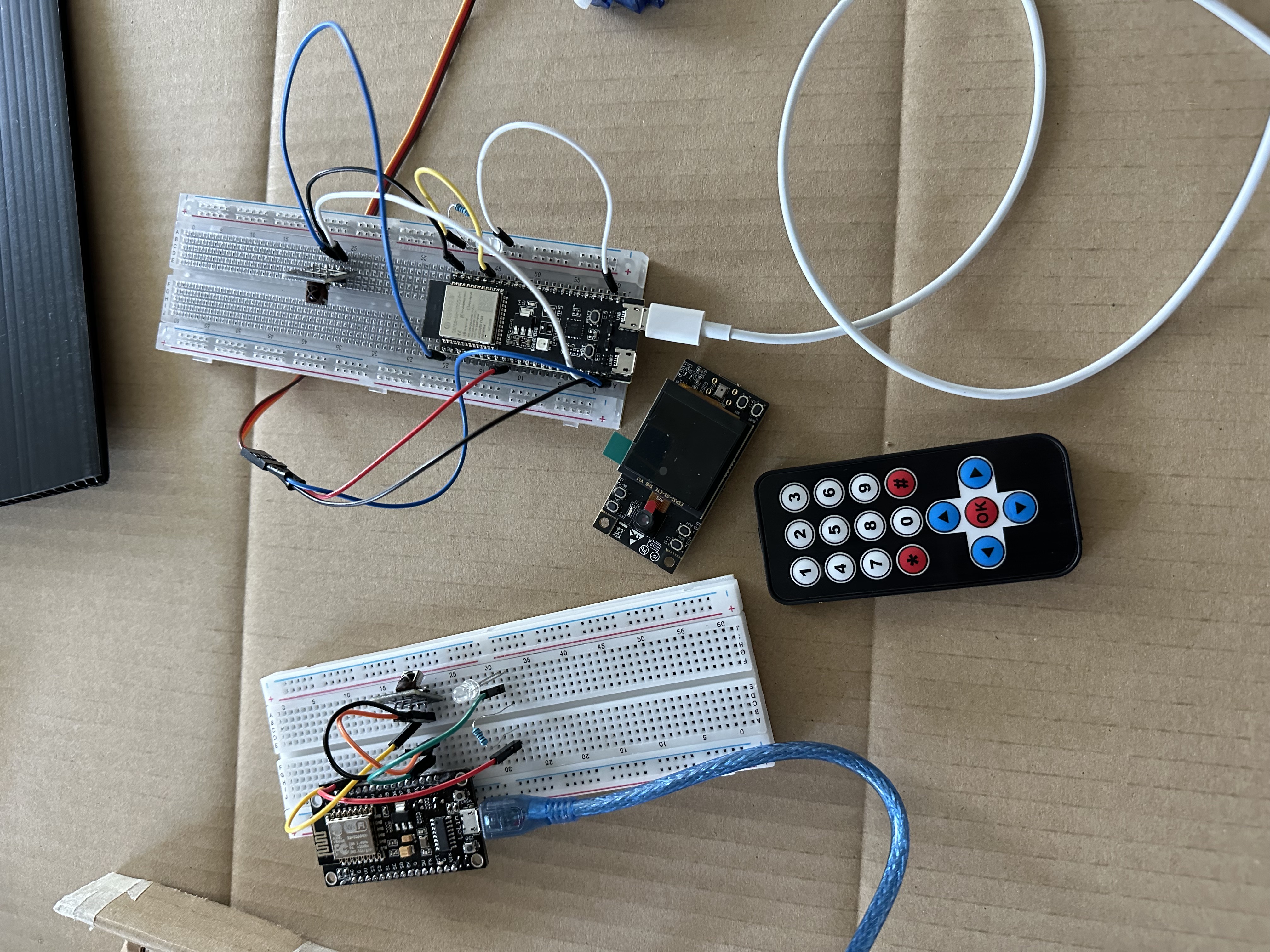
The module to be installed at each bus stop has electronic components packed together. It can be mounted on the roofs of the bus stops easily. This module is the one that interacts with the remote and the bus.
How the product is meant to be used
The VI person has an IR remote that can communicate with the module installed at the bus stop. The person presses the buttons on the remote to let the bus stop know what bus he wants to take. The module mounted on the roof of the bus stop contains an IR receiver and camera enabled by CV. The camera sees what bus number is approaching and sends a signal to the bus to let the bus driver know that a visually impaired person wants to board the bus so the driver can be more accommodating or even help them board the bus. After a set time, the module on the bus stop stops broadcasting the signal since the visually impaired would have boarded the bus.
The technologies or techniques used
Hardware
- Elegoo remote, IR receiver
- ESP 32-S3-EYE
- ESP32 S3 Dev Mod
- LED
- Micro servo 9G ### Software
- C++
Key challenges
One potential issue we foresee is convincing VI people to use the device. This is because we must convince them to carry the remote around whenever they wish to commute. The VI might not wish to carry around an additional device even if it is beneficial to their commute. We can promote the usage of these remotes through the various charities we are working with. They can conduct info sessions that teach them the usefulness of our devices and broadcast the information.
However, if there is still low usage rate, one possible future improvement or alternative is to make an app that can communicate with the module installed at the bus stops. This way they can still reap the benefits of the solution without carrying around the remote, albeit it being small and portable.
The product as a business and / or at scale
We aim to launch this product as a B2G business, meaning we will approach the relevant government authorities such as LTA who manages bus and bus stops with our solution. After getting the green light, we will proceed to launch at silver zones first. There isn’t an area that has higher concentration of VI people but through our research, we have found that there is a correlation between age and deterioration of eyesight, leading some levels of visual impairment. After gaining some traction deploying our solution in silver zones, we can gradually expand island wide by 2030, all whilst continuously improving the solution and listening to feedback by our target user.
Built With
- c++
- esp32

Log in or sign up for Devpost to join the conversation.