-
-
Grapken: Use case
-
Nodes
-
Inspiration
Grapken was born out of real frustration. Traditional tools like scattered notes, Notion, or Jira are built for large teams and corporate workflows. But many game developers are small teams or solo creators like me.
Game design is complex: story, mechanics, characters, music, art, economy. Keeping everything scattered or just in my head, creates chaos. Ideas don’t converge. References get lost.
I wanted a tool that didn’t feel heavy or boring. I wanted something I would actually enjoy using.
What it does
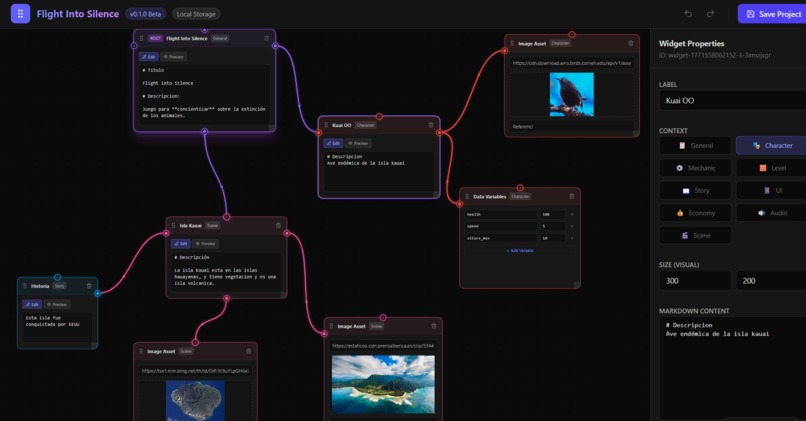
Grapken is a visual tool to design the architecture of a video game.
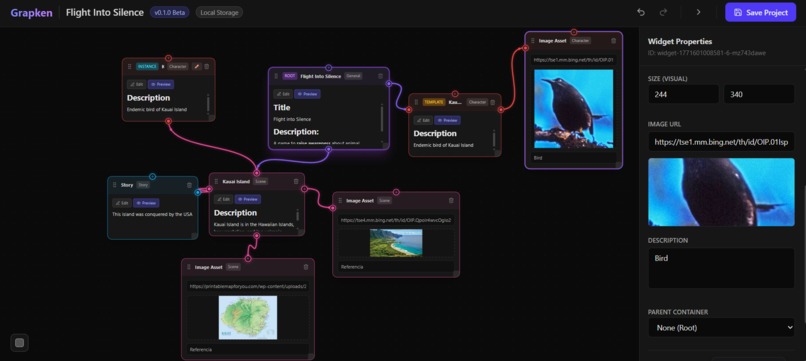
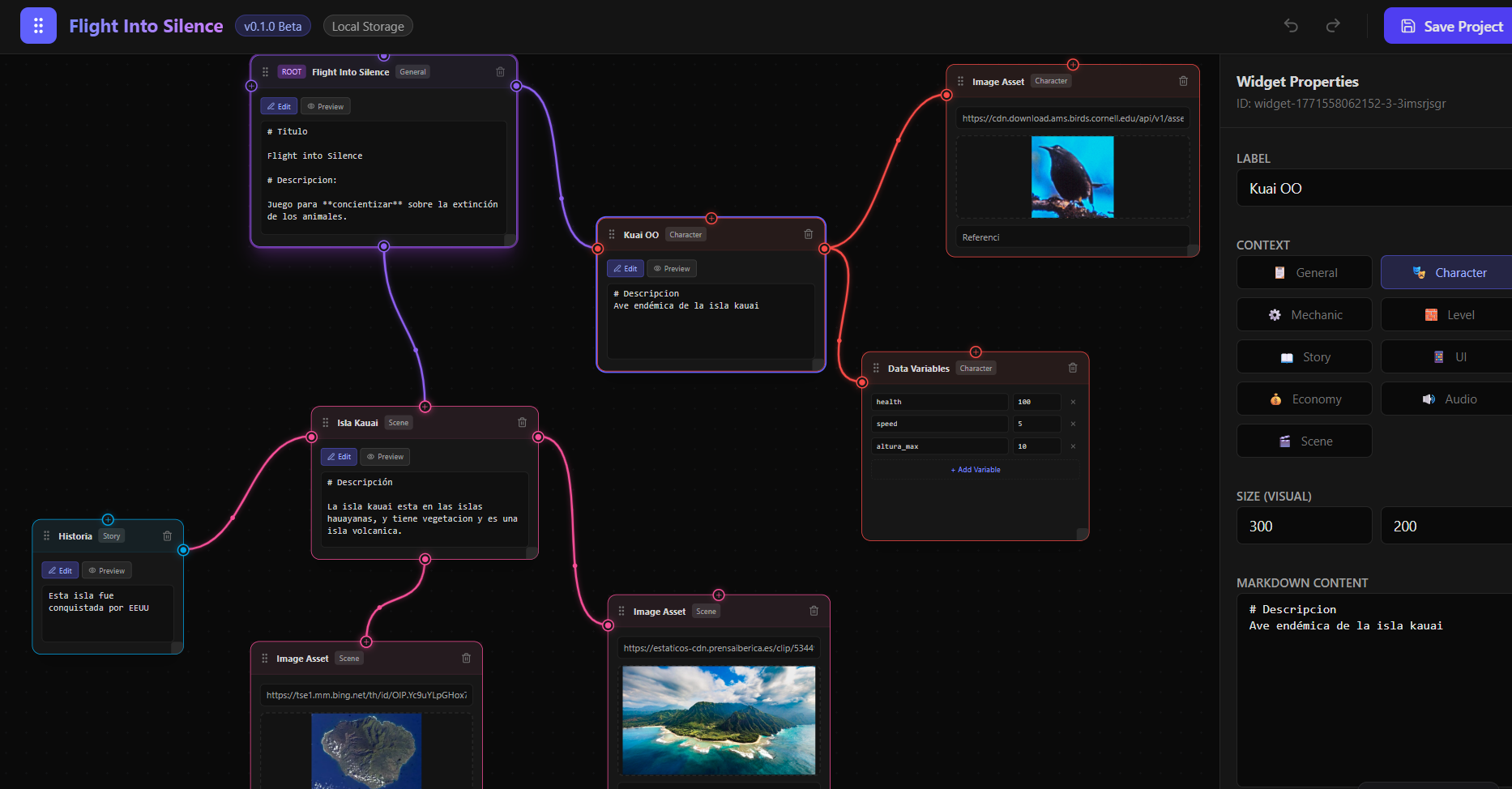
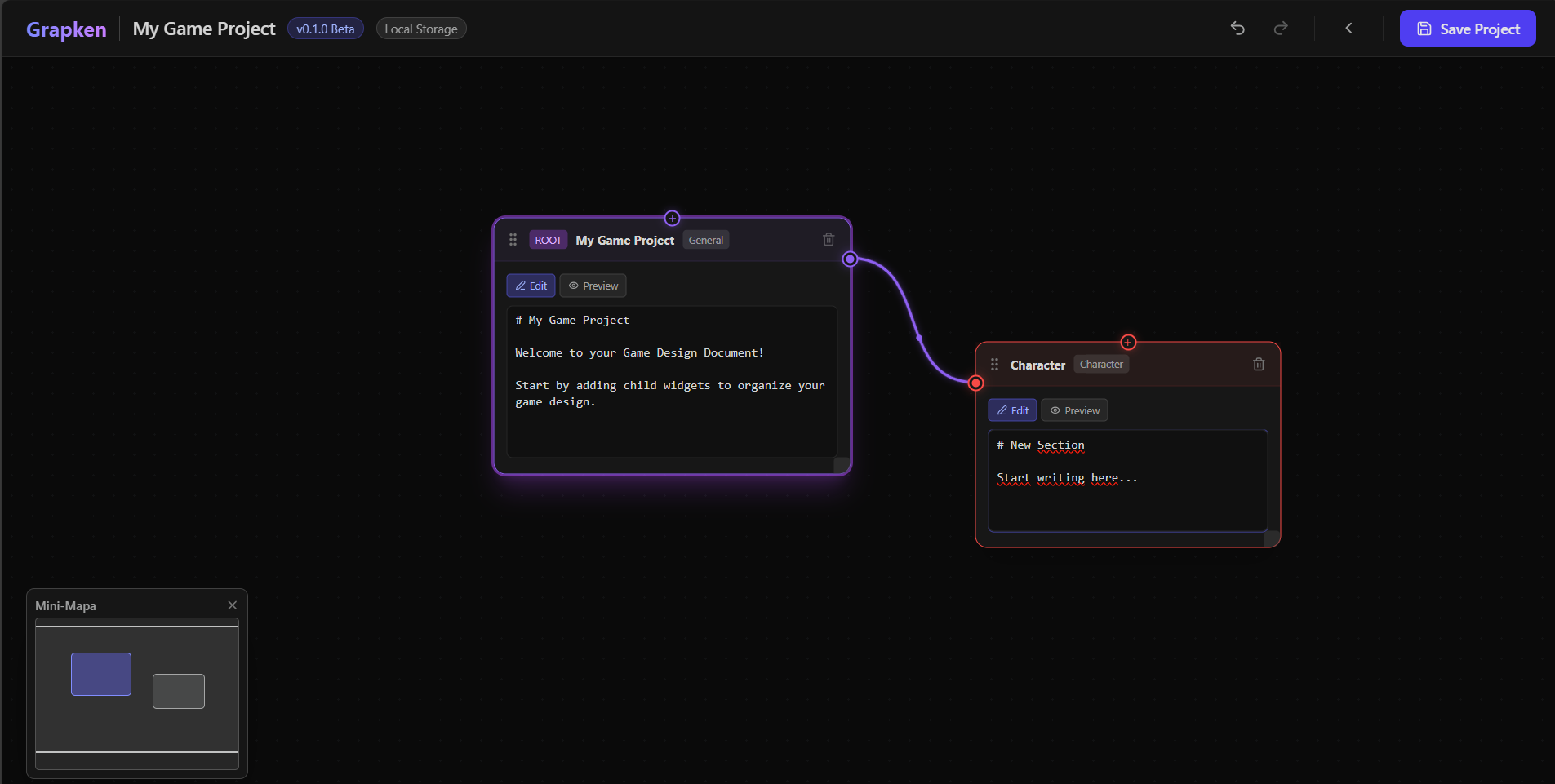
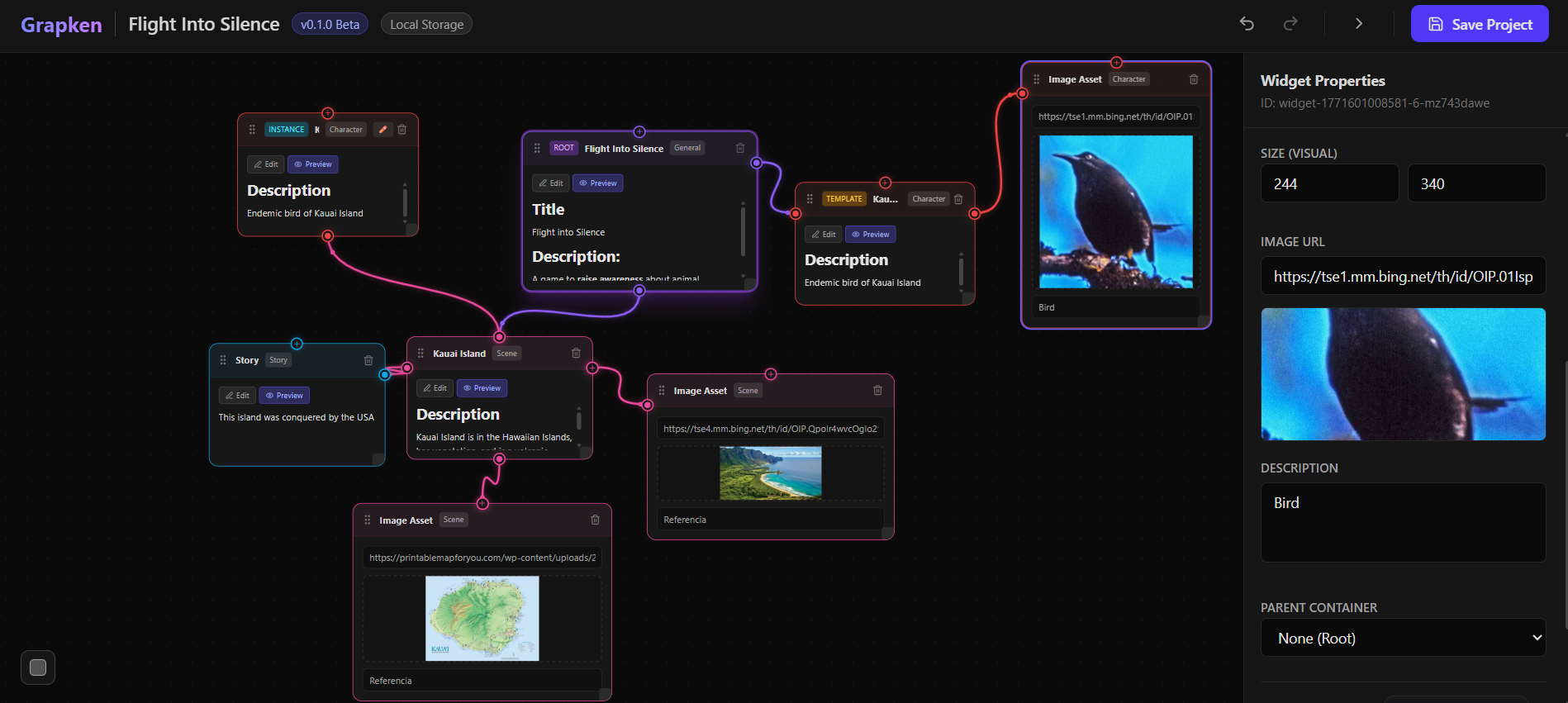
It allows me to organize characters, scenes, mechanics, story, assets, and variables inside a connected canvas.
Instead of a linear document, the game becomes a living system where everything relates. It turns scattered ideas into a clear, navigable structure from day one.
How we built it
I built Grapken(Initial Version) as a web application focused on simplicity and speed, using Next.js as the core framework.
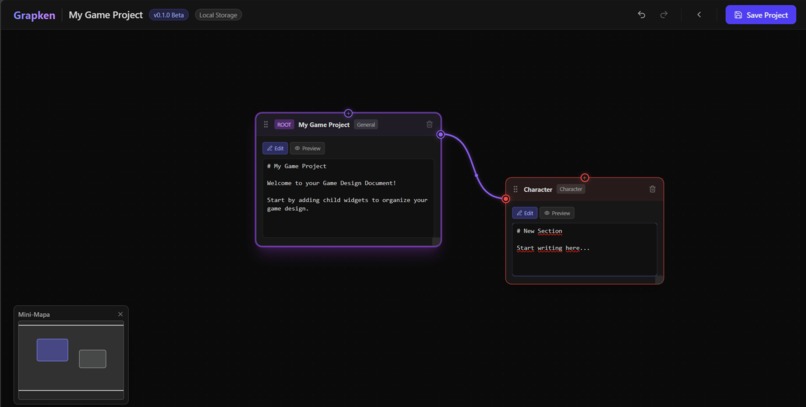
I designed a node-based system where each entity (Character, Scene, Story, Mechanic, Asset) can connect to others, allowing the game to be structured as an interconnected system rather than a linear document.
I integrated Markdown editing for flexibility, local storage for instant access, and a minimal interface to reduce creative friction.
For development and deployment, I used Kilo Code to accelerate specific programming tasks and handle deployment. I also used Visual Studio Code to analyze and refine parts of the codebase throughout the process
Challenges we ran into
The biggest challenge was balancing structure and freedom.
Too much structure kills creativity. Too much freedom creates chaos.
It was also difficult to design something flexible enough for different types of games, but simple enough for solo indie developers to use without a steep learning curve.
Another major challenge was product clarity. For this MVP, I constantly questioned which pieces truly mattered, what widgets to include, what was essential, and what was adding friction. I kept asking myself: What’s missing? What’s unnecessary? Does this improve flow or break it?
Designing Grapken wasn’t just about building features, it was about removing the ones that didn’t belong.
Accomplishments that we're proud of
I'm proud that I built a tool I genuinely want to use myself.
Grapken doesn’t feel like project management, it feels like designing.
I transformed the idea of a Game Design Document into something visual, dynamic, and architectural instead of static and linear.
What makes me especially happy is that I can finally use it. Even though it's still an early version, it’s already usable and that matters. It went from an idea in my head to something real that supports my creative process.
I’m also proud that this project pushes me to deepen my understanding of game design itself, one of the fields I’m most passionate about. Building Grapken isn’t just about creating a tool; it’s part of my journey to become a better game designer.
What we learned
I learned that the real problem isn’t documenting a game. it’s connecting its parts.
Game design is systemic, not linear.
Creative tools should reduce friction, not add process.
Throughout this journey, I also deepened my understanding of game design itself. Building Grapken forced me to think more critically about mechanics, structure, and how different elements interact inside a game system.
I also felt the excitement of wanting to share this project; the idea that other creators might use this software and find clarity in their own ideas is motivating.
What's next for Grapken
The mission is to evolve Grapken into a fully developed product that can be used by a large number of game designers around the world. Positioning Grapken as the architecture standard for indie developers, a tool they naturally reach for when starting a new game.
Next steps:
Cloud storage to allow projects to be saved, accessed, and synchronized across devices
Real-time collaboration
Export to traditional GDD formats
Version control
Game engine integrations
AI-powered design suggestions and system coherence support
Grapken started as a personal need. The next stage is turning it into a scalable product that empowers many creators, not just me.

Log in or sign up for Devpost to join the conversation.