-
-
GraphQL Proxy For Github Gists
-
Problem Statement
-
Solution
-
Why It's Useful
-
System Architecture Overview
-

Thank you:)

Inspiration
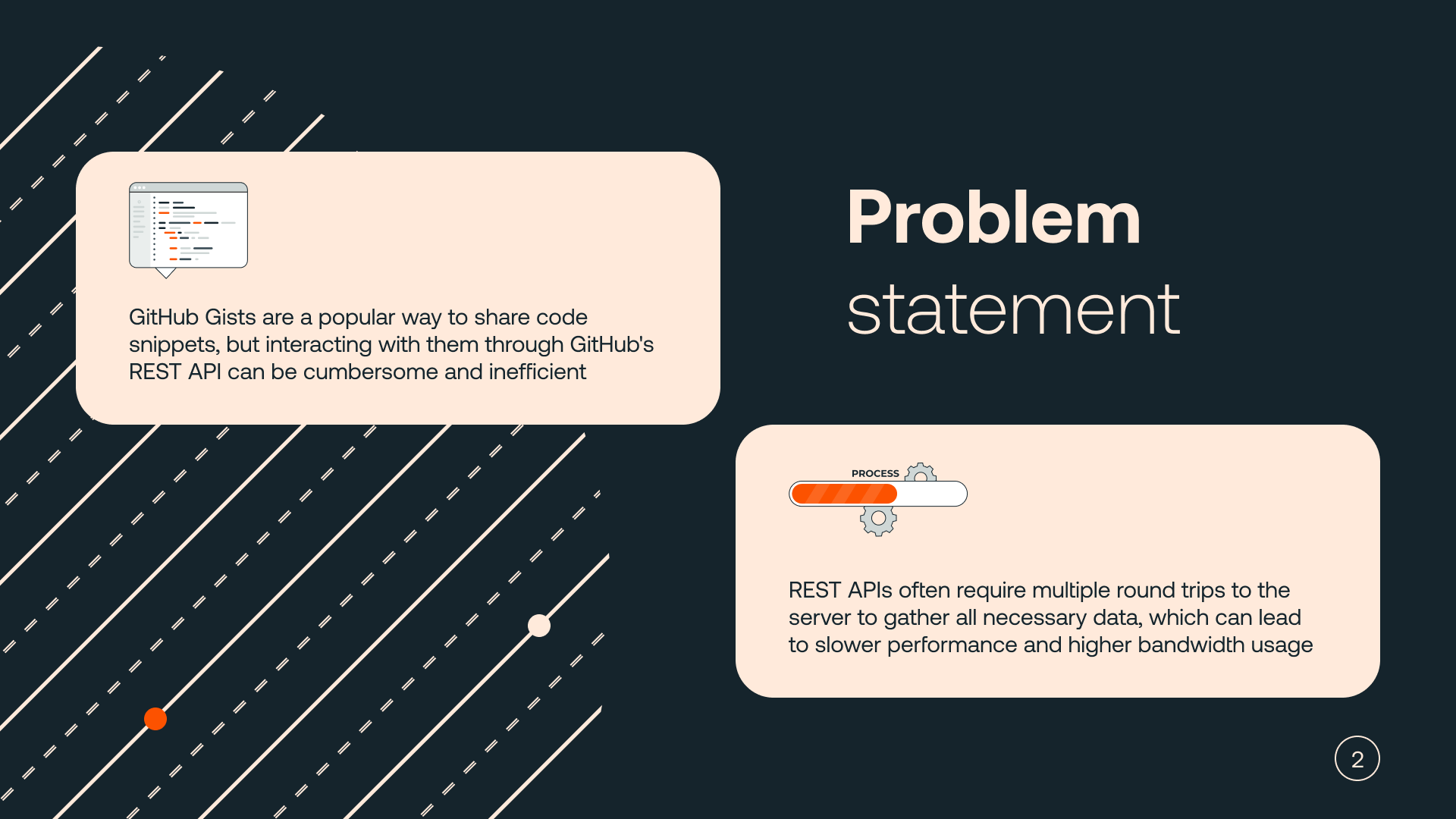
As a developer, I often use GitHub Gists to share code snippets. However, I found that interacting with Gists via GitHub's REST API can be inefficient and cumbersome. This inspired me to create a more efficient interface for interacting with GitHub Gists.
What it does
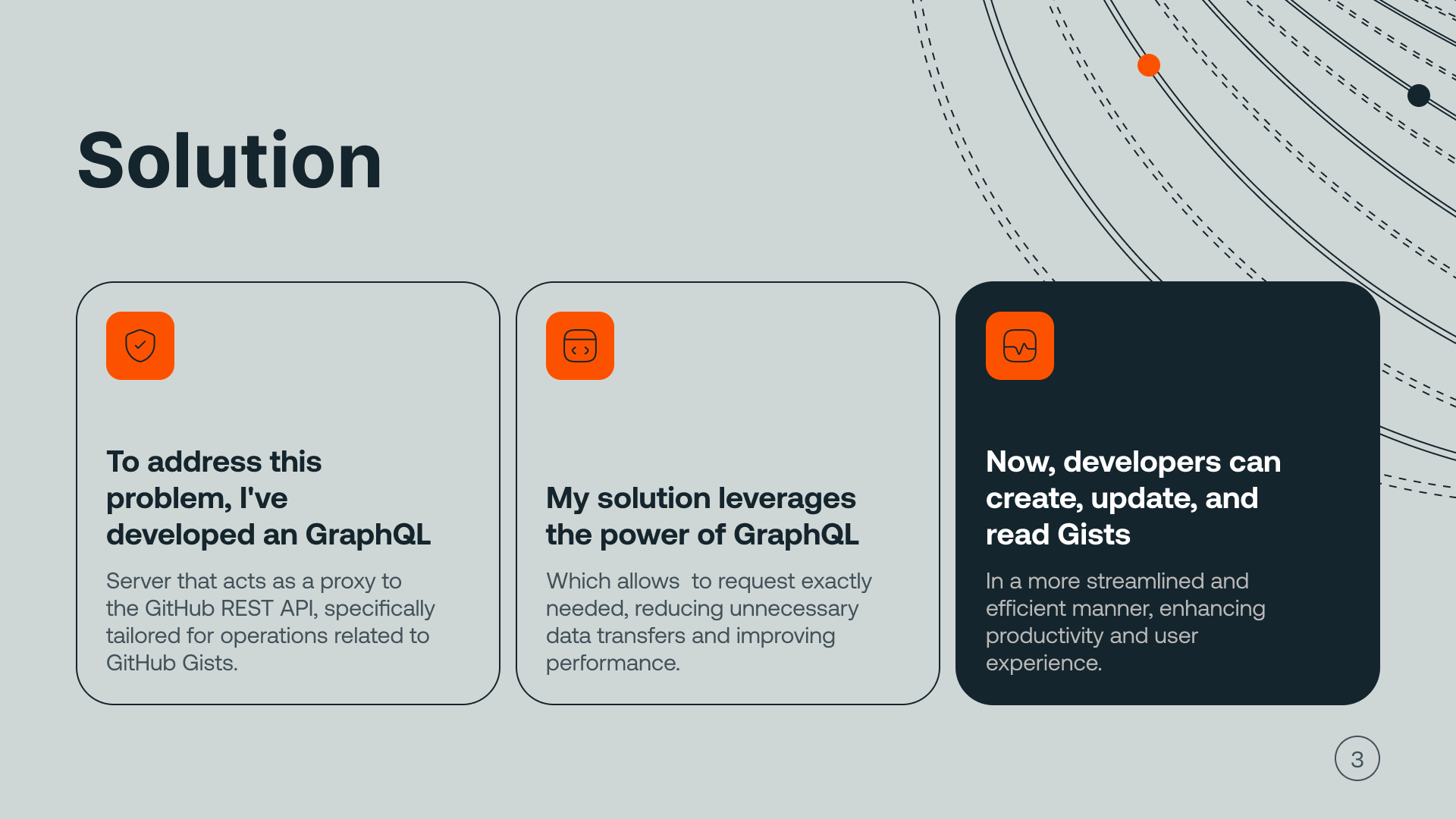
"GraphQL Proxy for Github Gists" is an GraphQL Server that acts as a proxy to the GitHub REST API, specifically tailored for operations related to GitHub Gists. It allows developers to create, update, and read Gists in a more streamlined and efficient manner.
Github link: link
Why it's useful
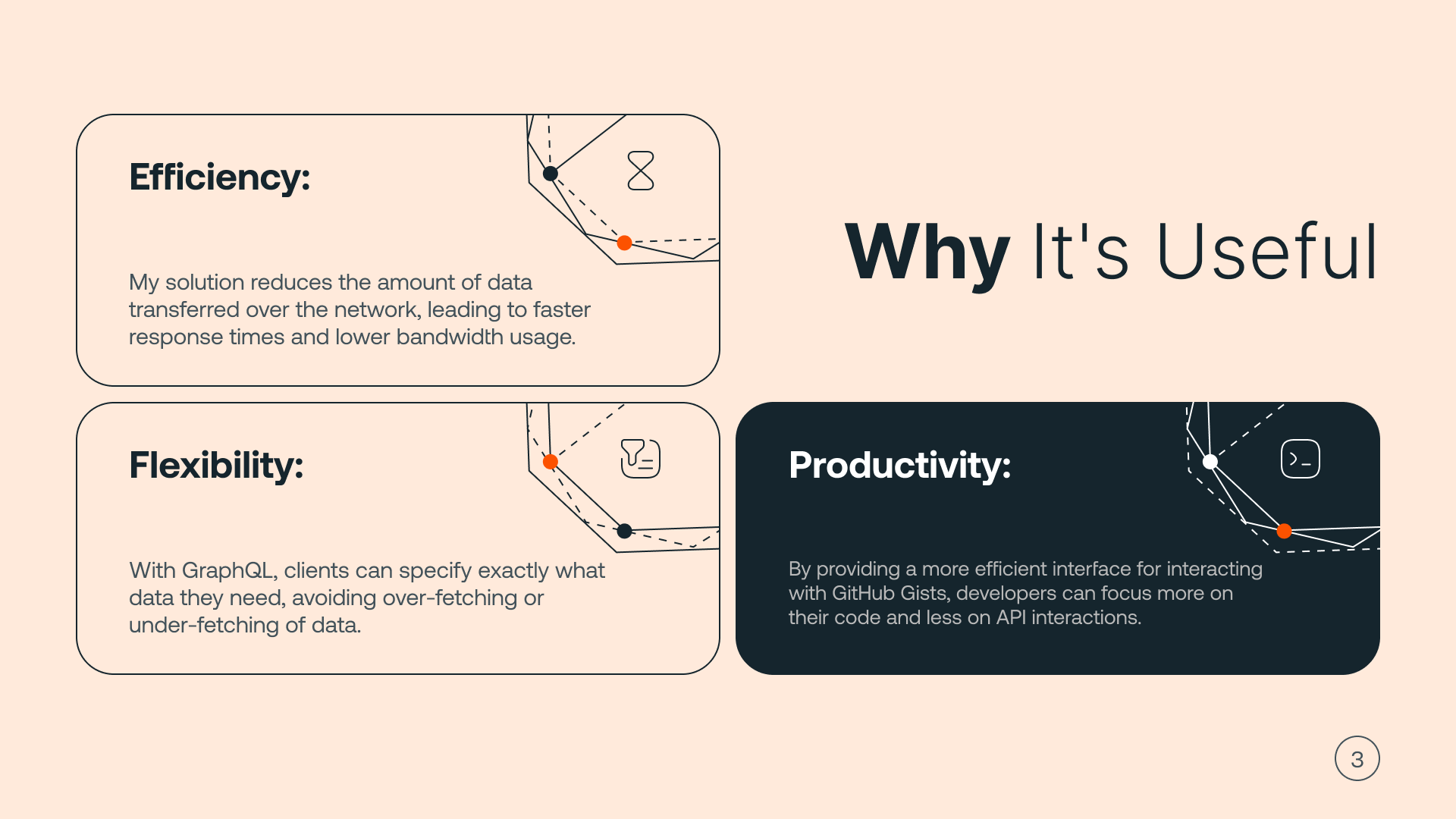
This project is particularly useful for developers who frequently work with GitHub Gists and want a more efficient way to interact with them. By providing a GraphQL interface to the GitHub Gist API, it allows developers to get exactly the data they need in a single request, rather than having to make multiple requests to the REST API. This can lead to performance improvements and a better developer experience.
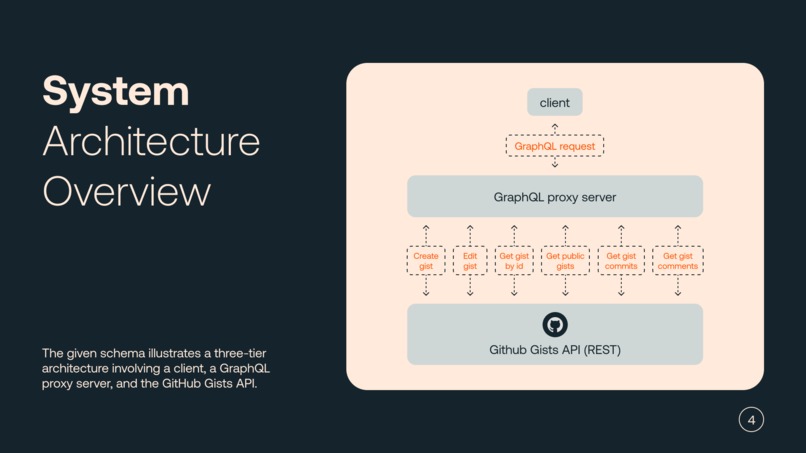
System Architecture Overview
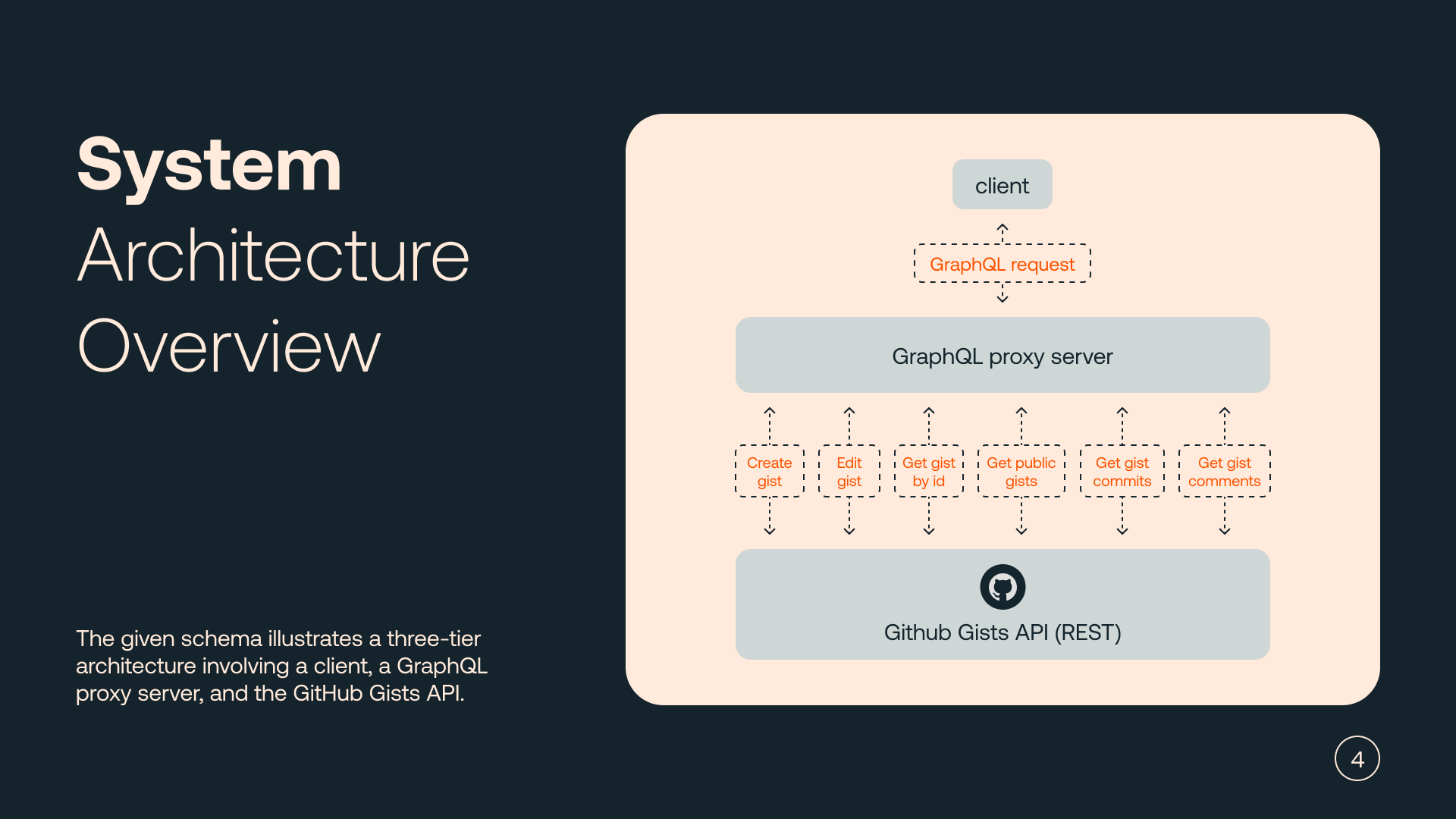
The given schema illustrates a three-tier architecture involving a client, a GraphQL proxy server, and the GitHub Gists API. This setup enables the client to communicate with the GitHub Gists API using GraphQL, even though the GitHub Gists API natively uses REST. The GraphQL proxy server acts as an intermediary layer, converting GraphQL queries and mutations from the client into REST API calls to the GitHub Gists API, and vice versa.

Challenges I ran into
One of the main challenges I faced was understanding and working with the GitHub REST API. It required careful study of the API documentation and some trial and error to get the integration working correctly.
Accomplishments that I'am proud of
I'm proud of creating a solution that improves the efficiency of interacting with GitHub Gists. It was also rewarding to see the benefits of using GraphQL over REST in a real-world application.
What I learned
Through this project, I gained a deeper understanding of GraphQL and how it can be used to improve the efficiency of API interactions. I also learned how to work with GitHub REST API.

Log in or sign up for Devpost to join the conversation.