-
-
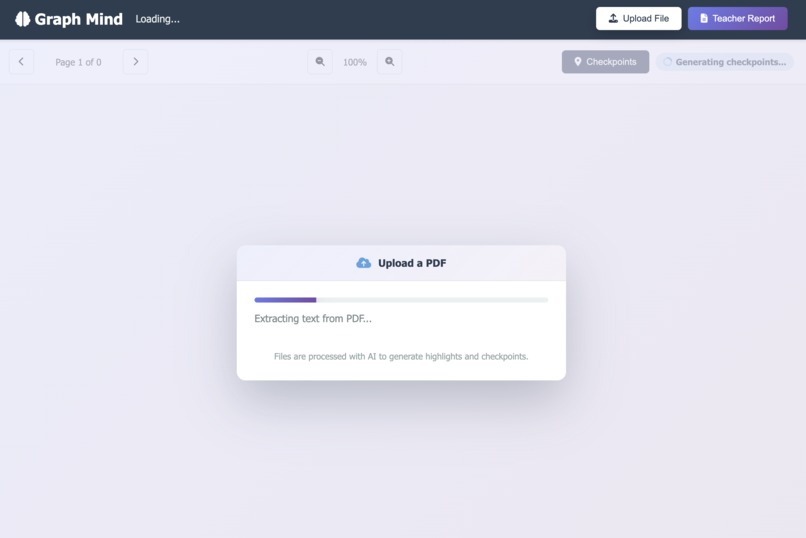
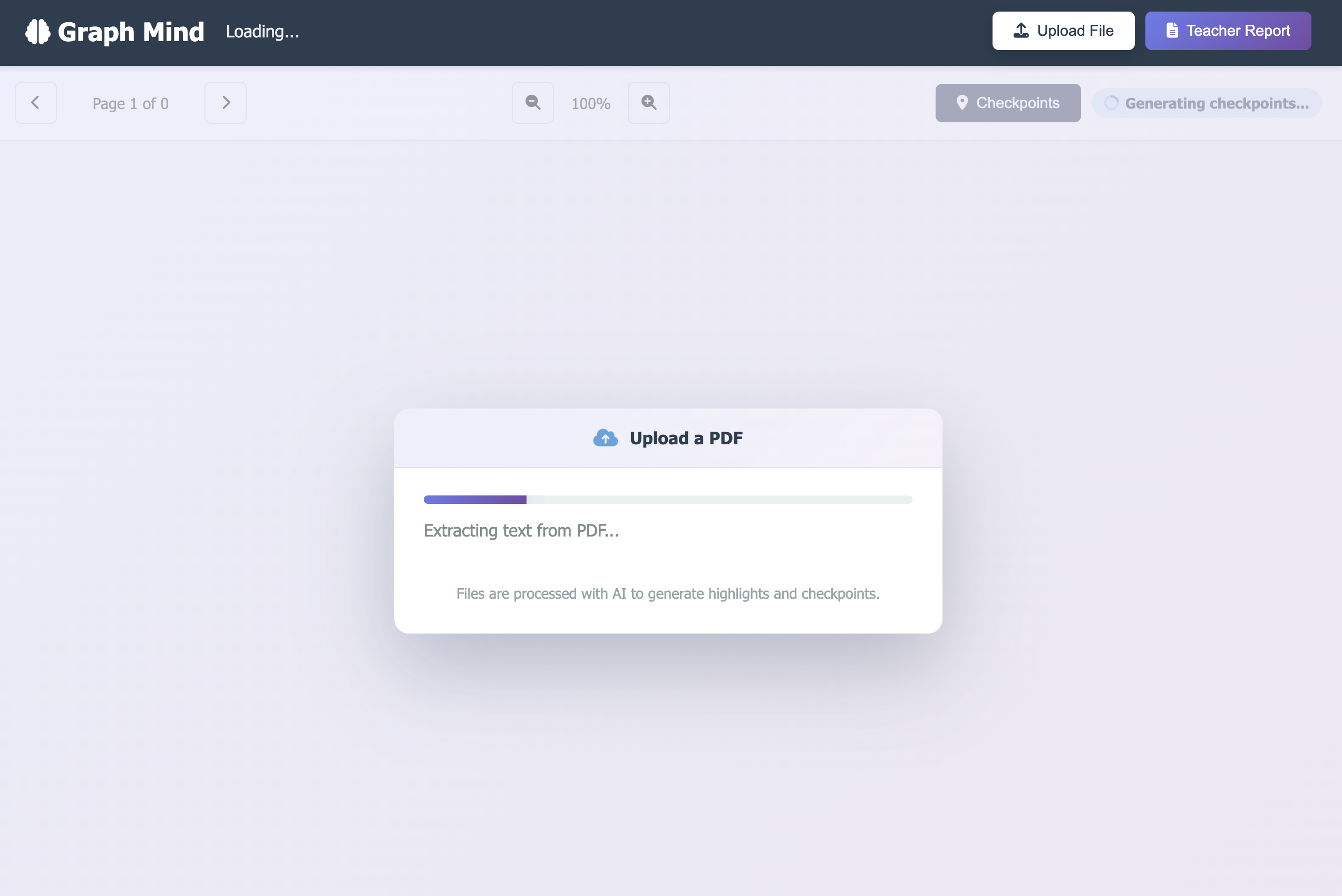
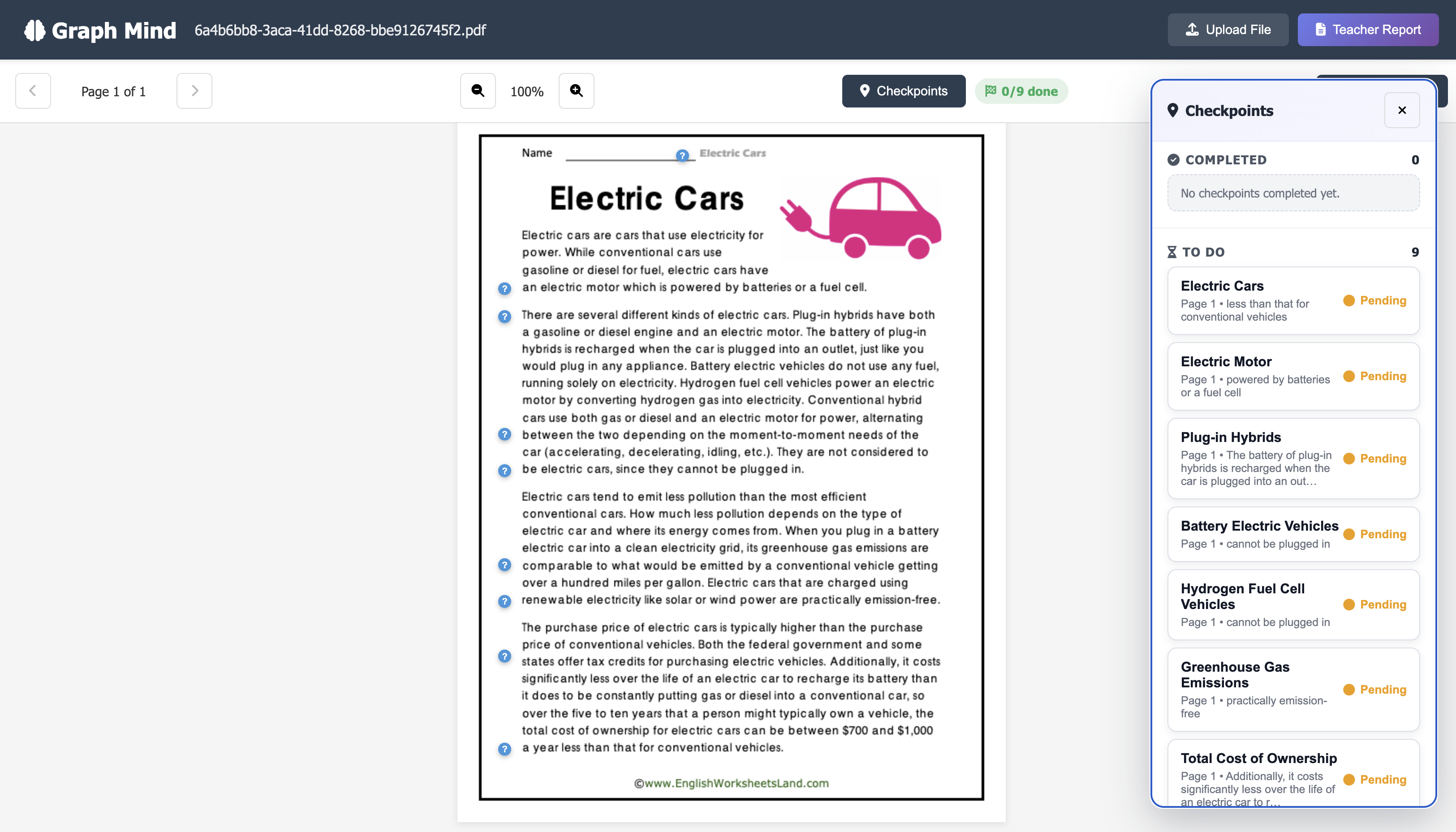
PDF Upload
-
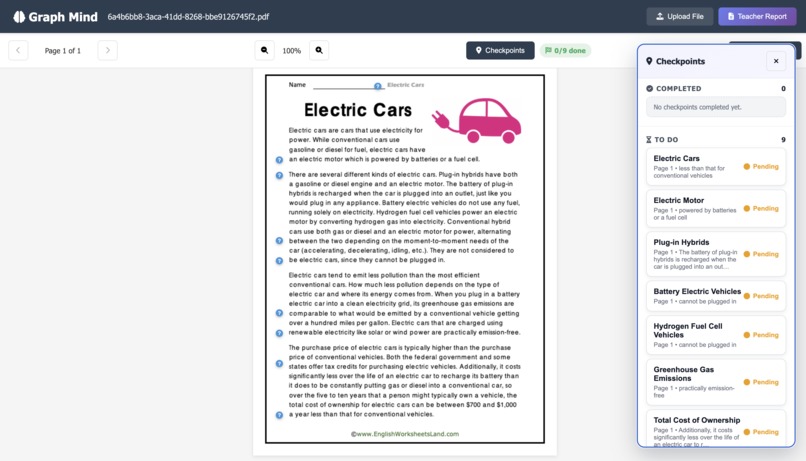
PDF Viwer and Checkpoint Questions
-
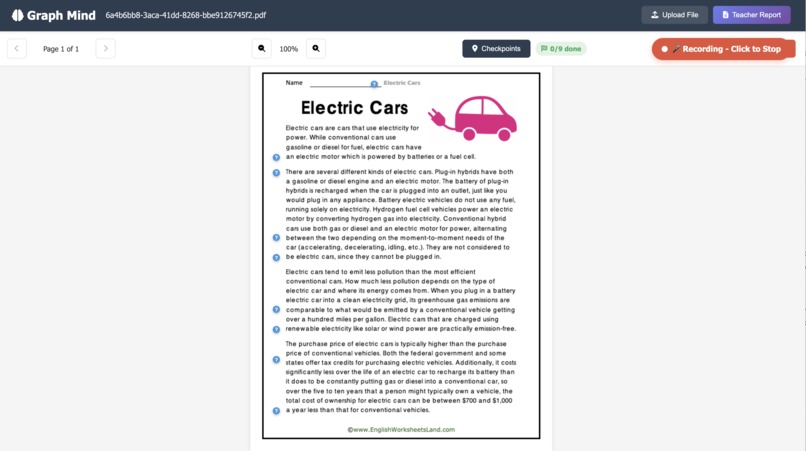
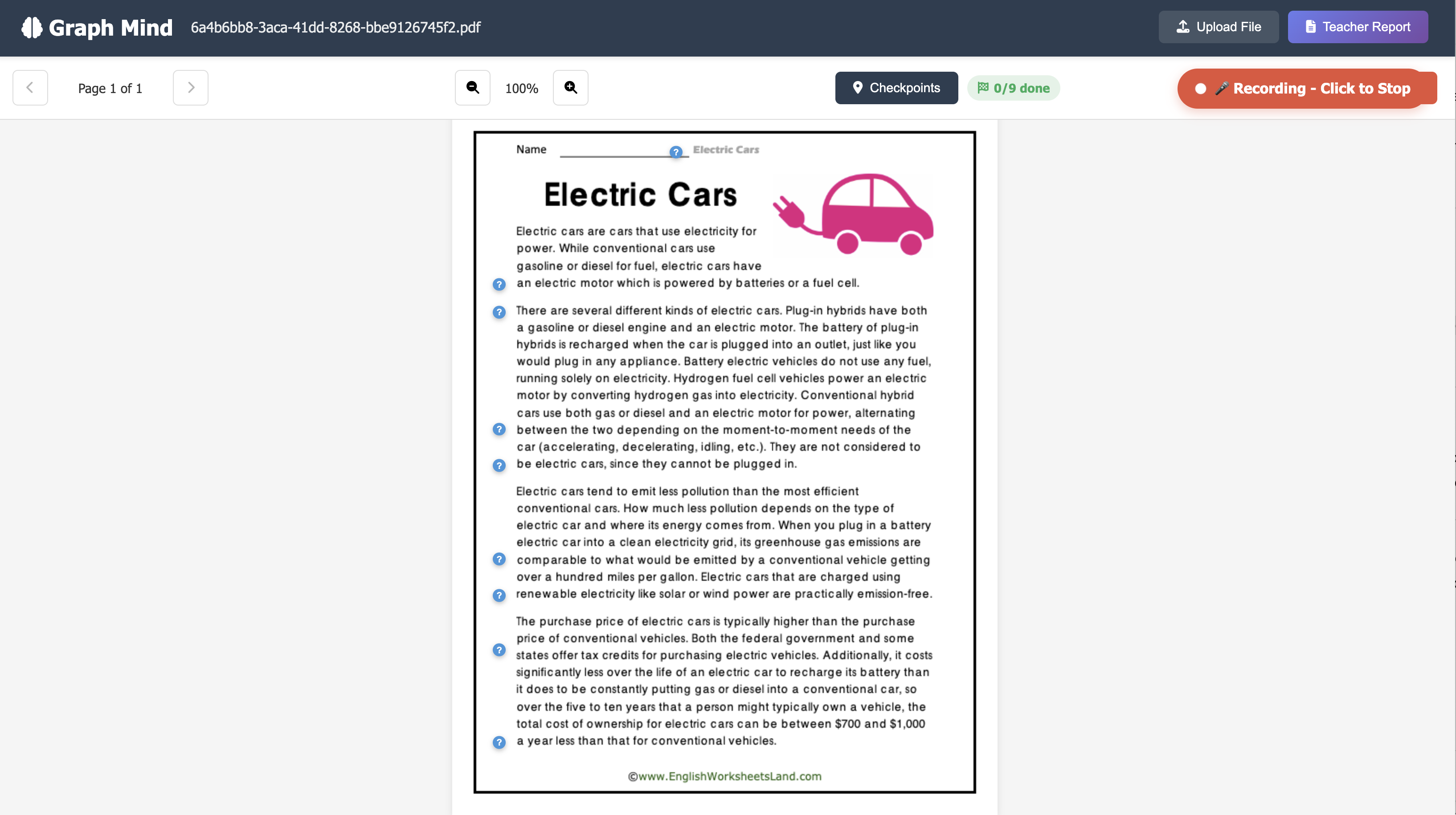
Voice Recording
-
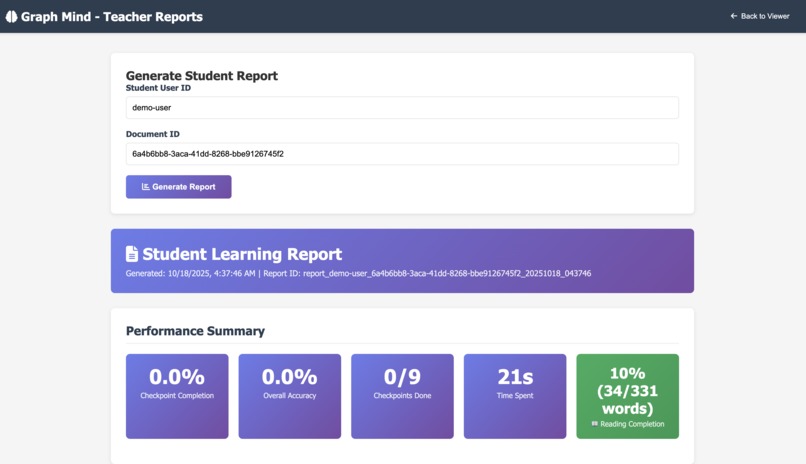
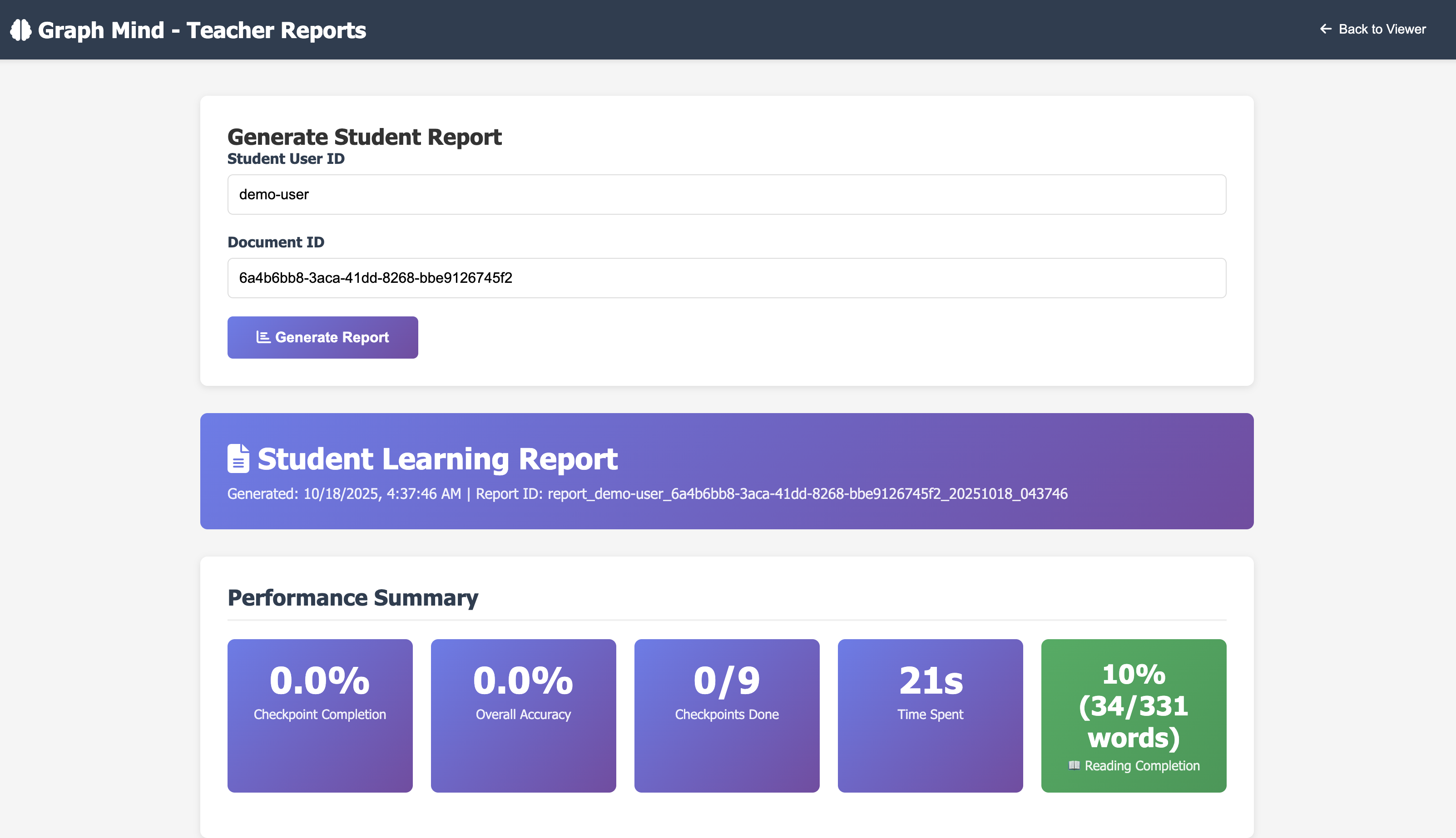
Teacher Report: Basic Dashboard
-
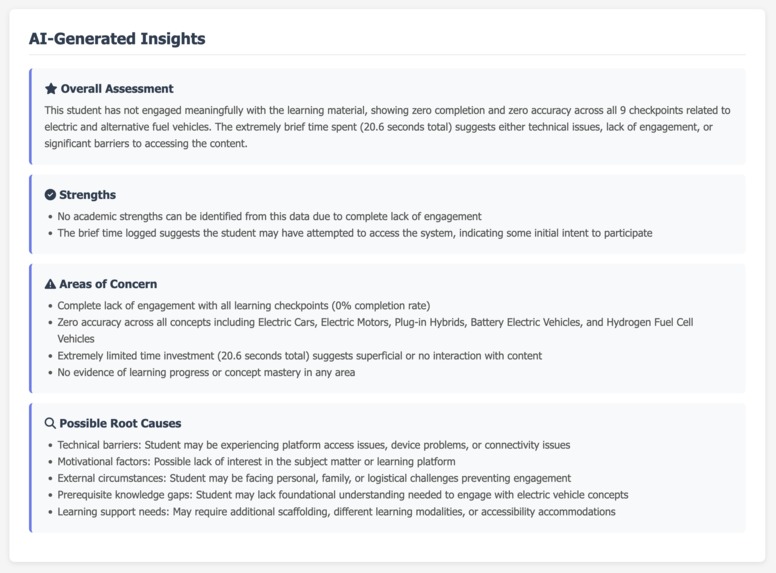
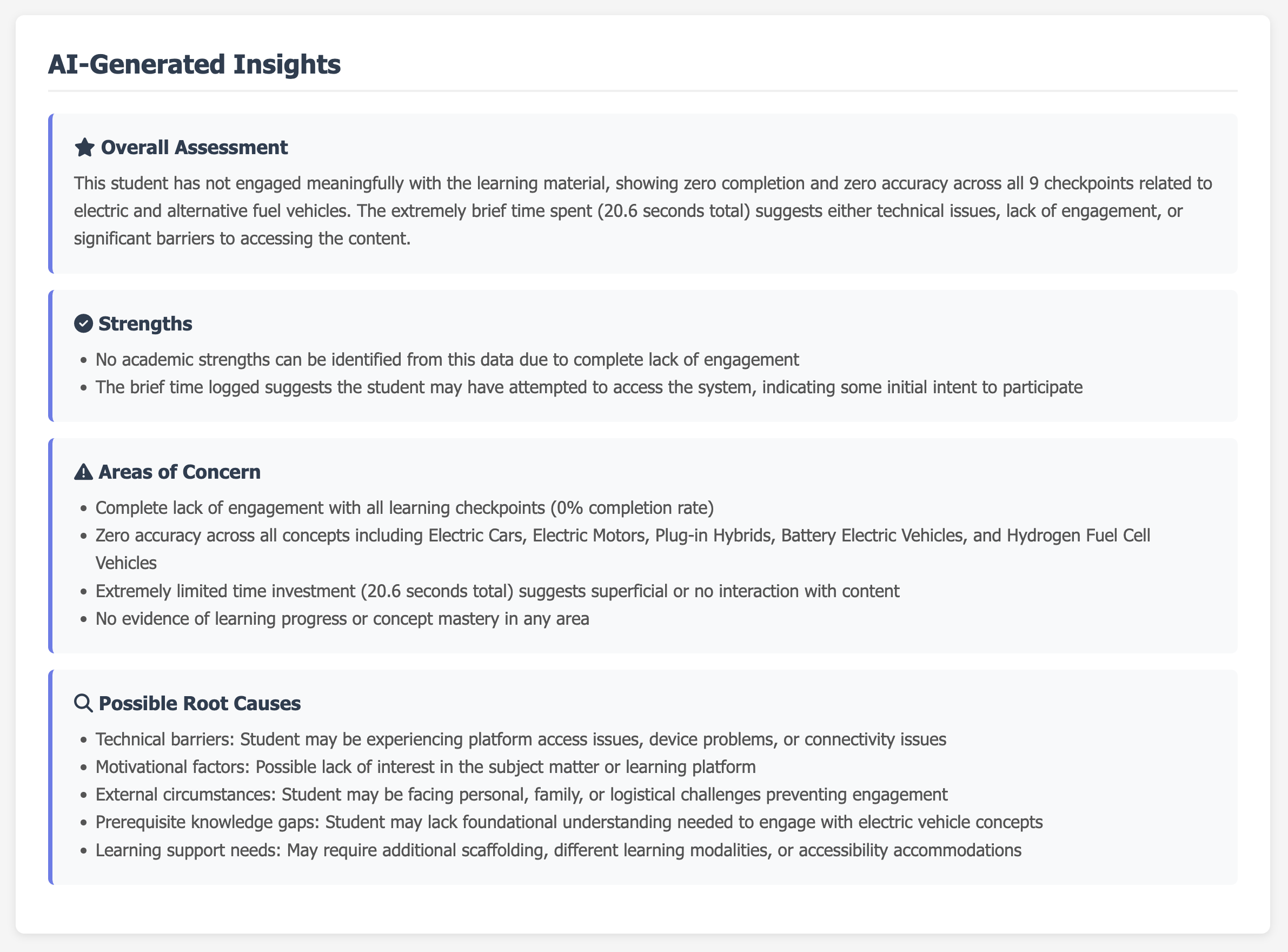
Teacher Report: AI-Generated Insights
-
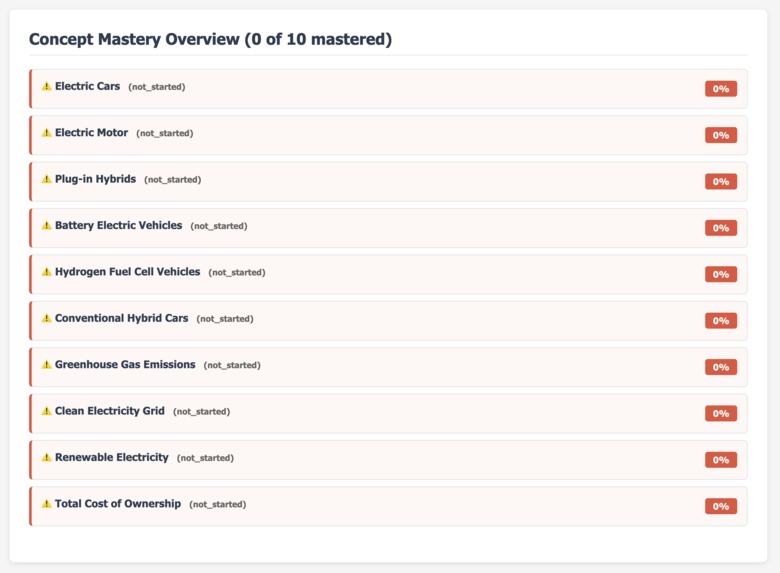
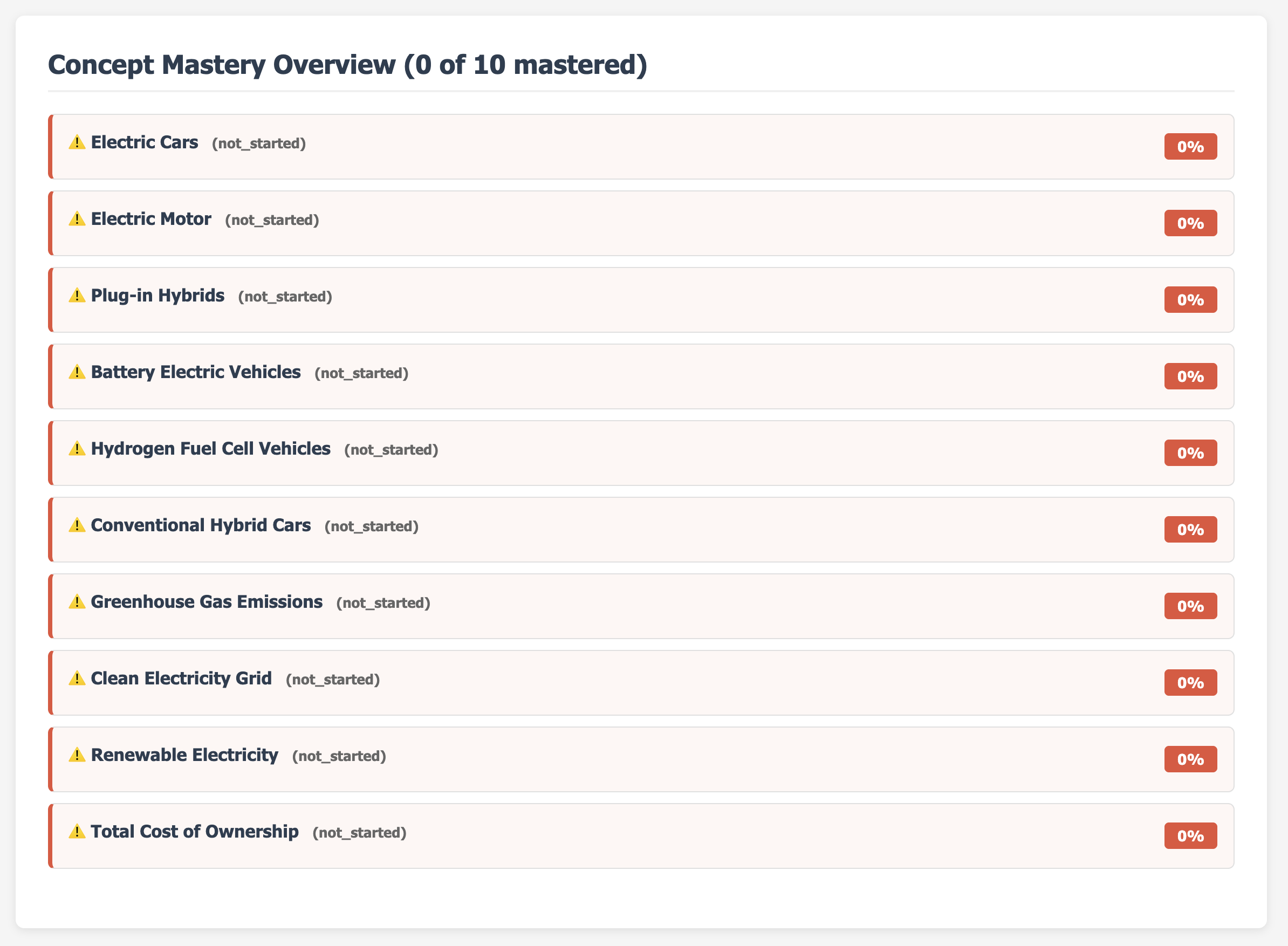
Teacher Reports: Concept Mastery Overview
-
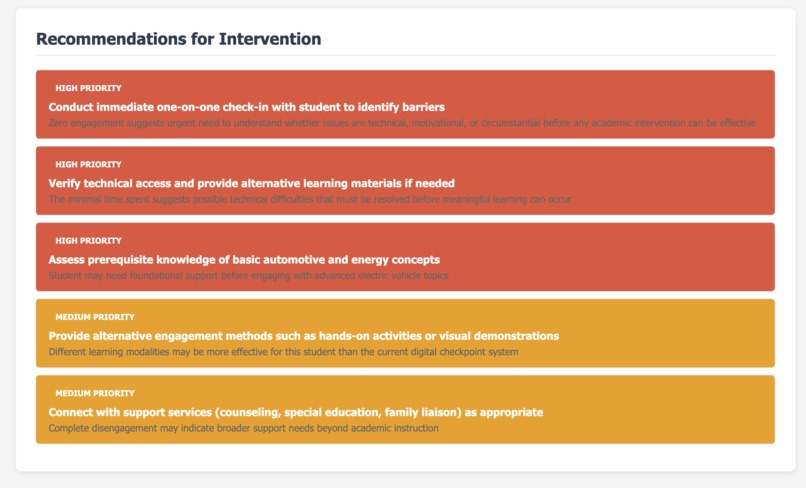
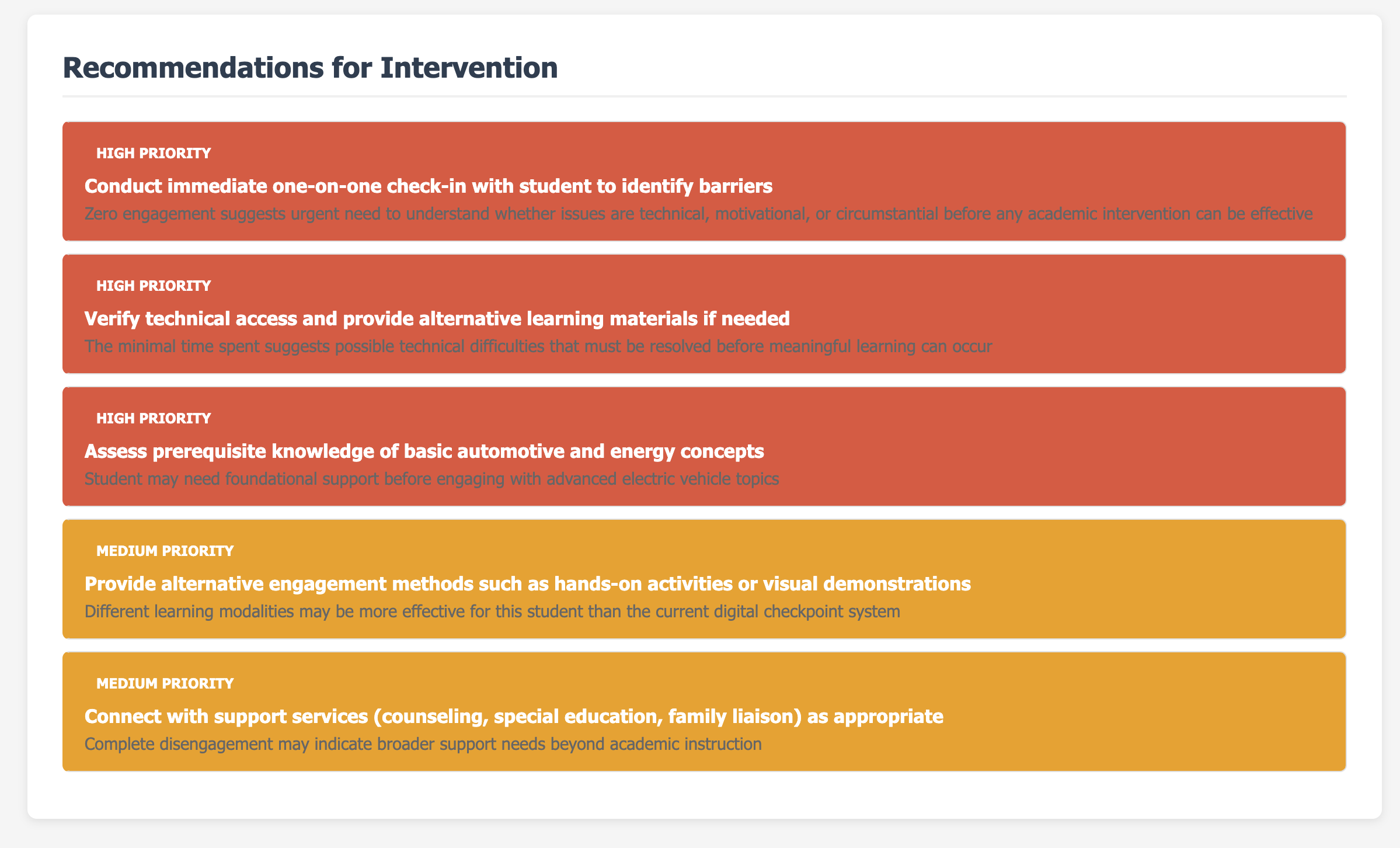
Teacher Reports: Recommendations for Intervention
Inspiration
GraphMind was inspired by conversations with educators who expressed a common frustration: not knowing what their students truly understand.
During user interviews with professors, one professor shared: “It’s difficult to know how much students understand what I say — both in class when I adjust my pacing and before class when I prepare lectures.” She wished she could know what her students know beforehand to make her lectures more engaging.
Another professor echoed a similar concern: “I often assume certain concepts are basic, but when I ask the class, only two out of twenty students know them.”
These insights revealed a fundamental gap: instructors lack visibility into student understanding class, while students lack feedback on their comprehension as they learn.
The U.S. faces declining K–8 reading performance, as shown by recent NAEP results. At the college level, many professors report that students often don’t complete assigned readings, leading instructors to re-teach material in class and reduce reading loads.
GraphMind was built to bridge that gap — transforming reading assignments into interactive, data-driven learning experiences that benefit both teachers and students.
What it does
GraphMind turns every reading document into an active experience and smart tracker— one that understands what you’re reading, checks comprehension in real time, and tracks to how you learn.
For Students:
- Interactive Checkpoints: AI-generated questions appear at the right moments while reading.
- Instant Feedback: Students immediately see what they understand and where they need help.
For Teachers
- Automated Question Generation: GraphMind creates comprehension questions directly from PDFs — saving hours of preparation.
- Concept-Level Analytics: Identify which topics students have mastered and which require review.
- Early Intervention: Predict learning gaps before exams and take action early.
- AI-Generated Reports: Receive natural-language summaries of student strengths, weaknesses, and tailored recommendations.
How we built it
GraphMind integrates multiple AI and web technologies into a single interactive learning system:
- PDF Upload & Text Extraction: Built with PyMuPDF, pdfplumber, and OCR (pytesseract), allowing the system to process any document.
- AI Concept Extraction: Combines Claude Sonnet 4.5 (Anthropic API) and spaCy NLP to identify key ideas and relationships.
- Intelligent Checkpoint Placement: Rule-based logic places comprehension questions at optimal reading points.
- Adaptive Question Generation: Uses large language models to create varied, difficulty-adjusting questions.
- Concept Mastery Tracking: Aggregates performance data over time to measure learning progress.
- AI-Generated Teacher Reports: Uses LLM analytics to turn raw performance data into actionable insights.
- Voice Capture: Powered by OpenAI Whisper, it assesses reading completion. The backend is built with FastAPI (Python), the frontend with PDF.js, D3.js, and vanilla JavaScript, and data stored as JSON.
Challenges we ran into
Building GraphMind surfaced several technical and pedagogical challenges:
- PDF Extraction Complexity: PDFs vary widely in structure, making accurate text segmentation and coordinate mapping difficult.
- Checkpoint Placement: Determining optimal question placement within long documents required fine-tuning algorithms for relevance and timing.
- Latency & Cost: Balancing AI model accuracy with speed and affordability was challenging when processing multiple pages simultaneously.
- User Experience: Designing interactions that felt natural and non-disruptive during reading required multiple iterations.
What we learned
We learned that building effective edtech isn’t about adding more AI — it’s about serving both students and teachers at the same time.
Early prototypes were overly complicated, with too many features that didn’t improve learning outcomes. Through testing, we discovered that the most valuable tools are simple, transparent, and integrated into natural teaching workflows.
What's next for GraphMind
Our next steps focus on personalization, scalability, and classroom integration:
- Adaptive Learning: The system automatically adjusts difficulty of checkpoints, giving students easier or harder questions based on performance.
- Concept Reinforcement: It revisits concepts students struggle with, bringing them back later in subtle ways to strengthen retention.
- Predictive Intervention: Uses performance data to identify and address learning gaps early — before they turn into exam failures.
- Classroom Support: Enables teachers to manage entire classes and view aggregated insights across students.
- Improved UI/UX: Streamlines the reading interface to make AI-enhanced reading seamless and distraction-free.
- Performance Optimization: Reduces processing latency and increases response speed for large documents.
- User Accounts & Personalization: Adds secure logins and persistent learner profiles to track concept mastery over time.
- Expanded Analytics: Offers teachers curriculum-level insights to inform lecture planning and adaptive teaching.
- Data Infrastructure Upgrade: Builds a more robust and scalable data storage system using PostgreSQL.
Built With
- anthropic
- css
- digitalocean
- fastapi
- html
- javascript
- json
- nltk
- numpy
- openai
- pandas
- pdf.js
- pdfplumber
- pymupdf
- pypdf2
- pytesseract
- python
- uvicorn
- webrtc
- whisper


Log in or sign up for Devpost to join the conversation.