Inspiration
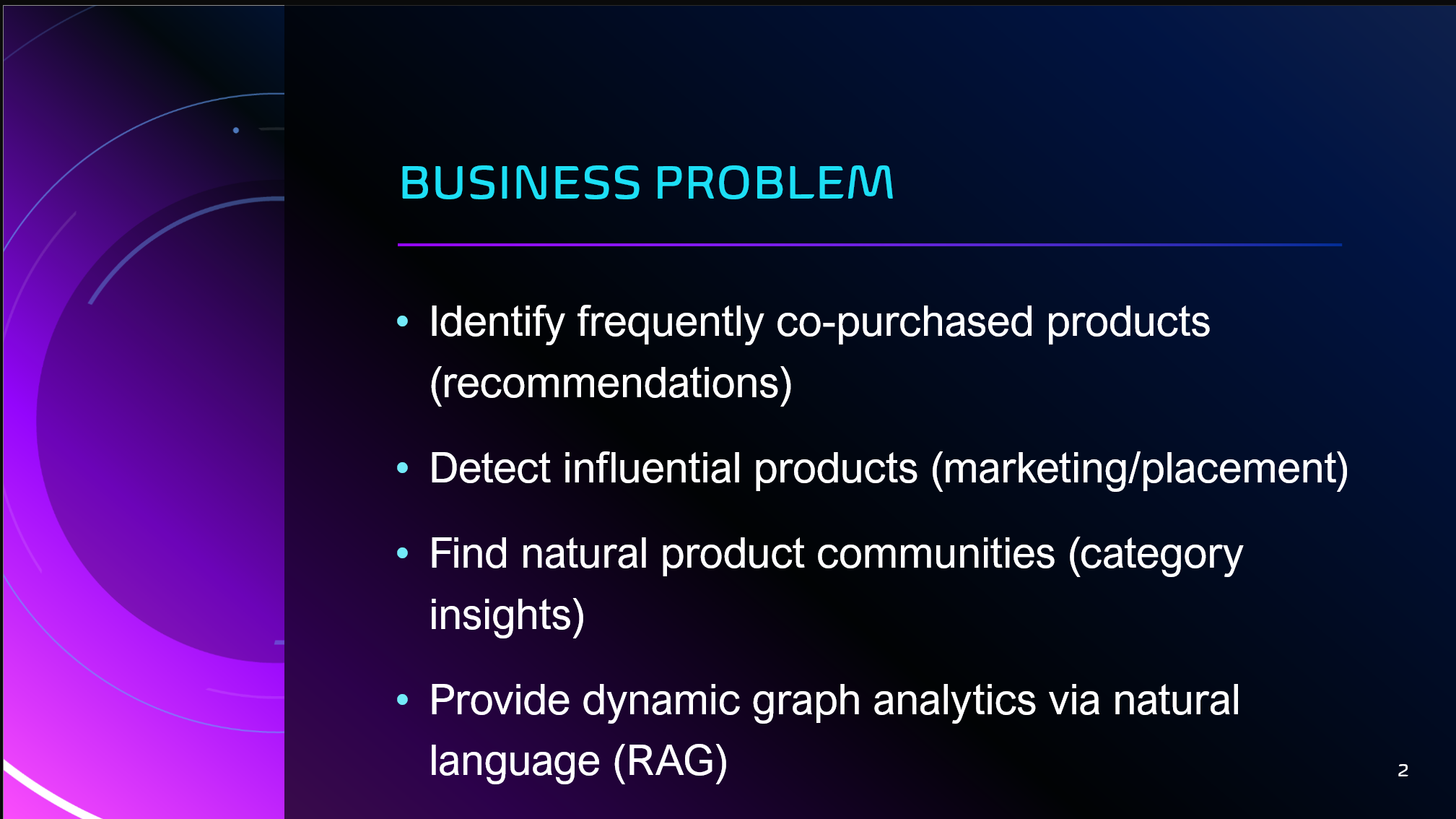
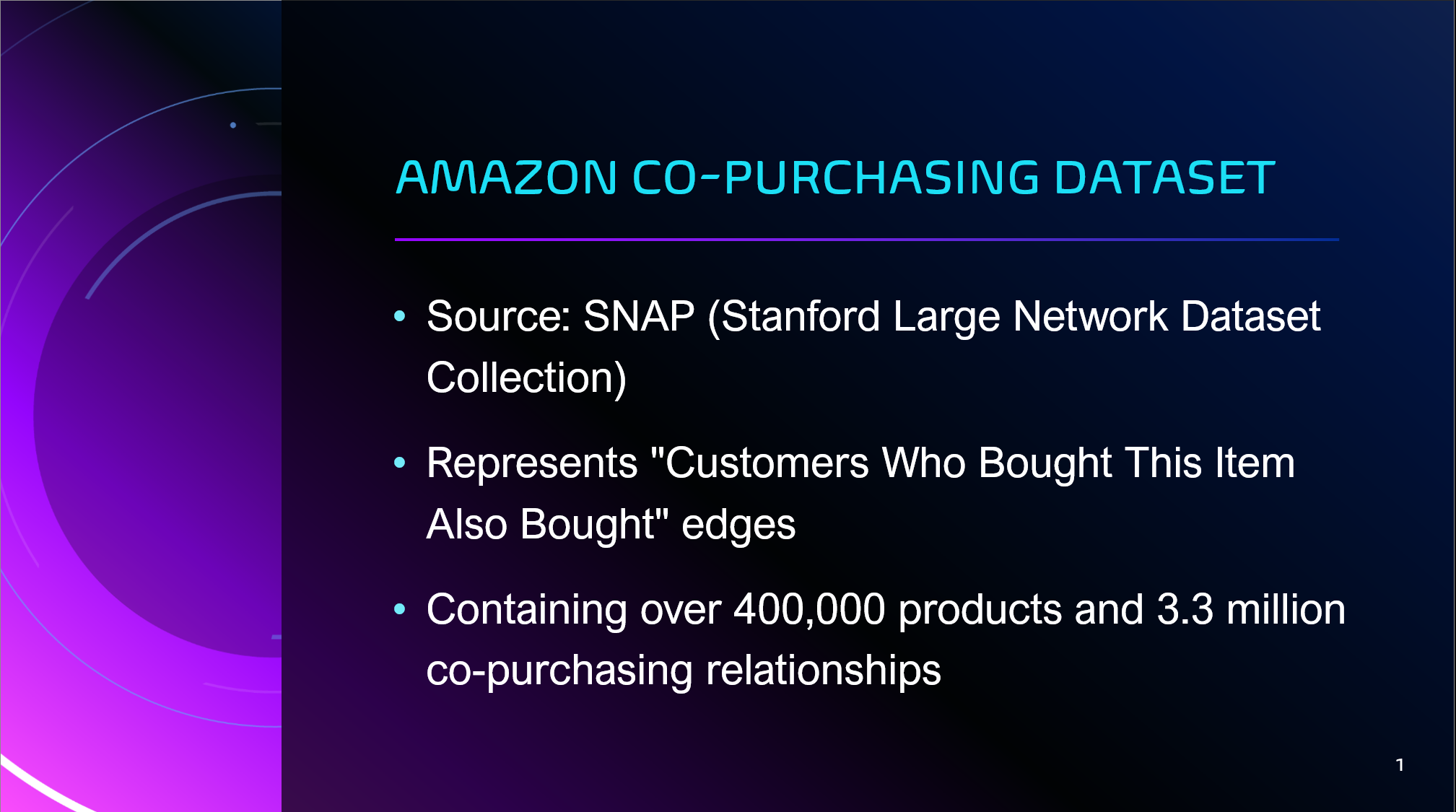
Our inspiration for GraphCatalyst came from the intersection of two powerful technological trends: the explosive growth of e-commerce product networks and the remarkable capabilities of GPU-accelerated graph analytics. We observed that while e-commerce platforms collect vast amounts of co-purchasing data, they often struggle to extract actionable insights efficiently due to the sheer scale and complexity of these product networks. Traditional CPU-based graph analysis becomes prohibitively slow as networks grow to millions of nodes and edges. We envisioned a system that could harness GPU acceleration to unlock deeper, faster insights from e-commerce networks while providing an intuitive natural language interface for business users to interact with these complex graphs.
What it does
GraphCatalyst is a powerful GPU-accelerated graph analytics platform specifically designed for e-commerce product networks. It provides:
- GPU-accelerated graph algorithms with automatic fallback to CPU when GPU is unavailable
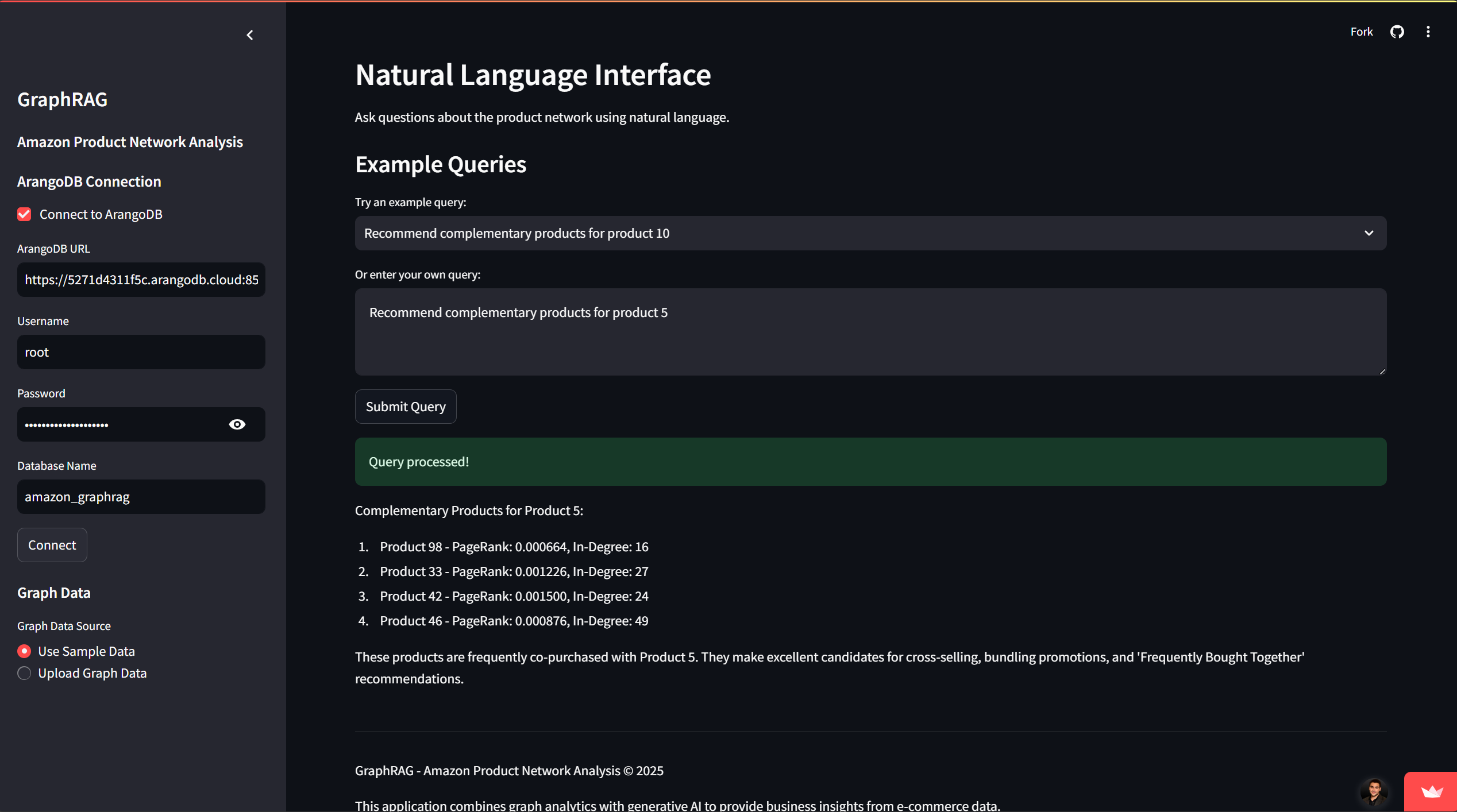
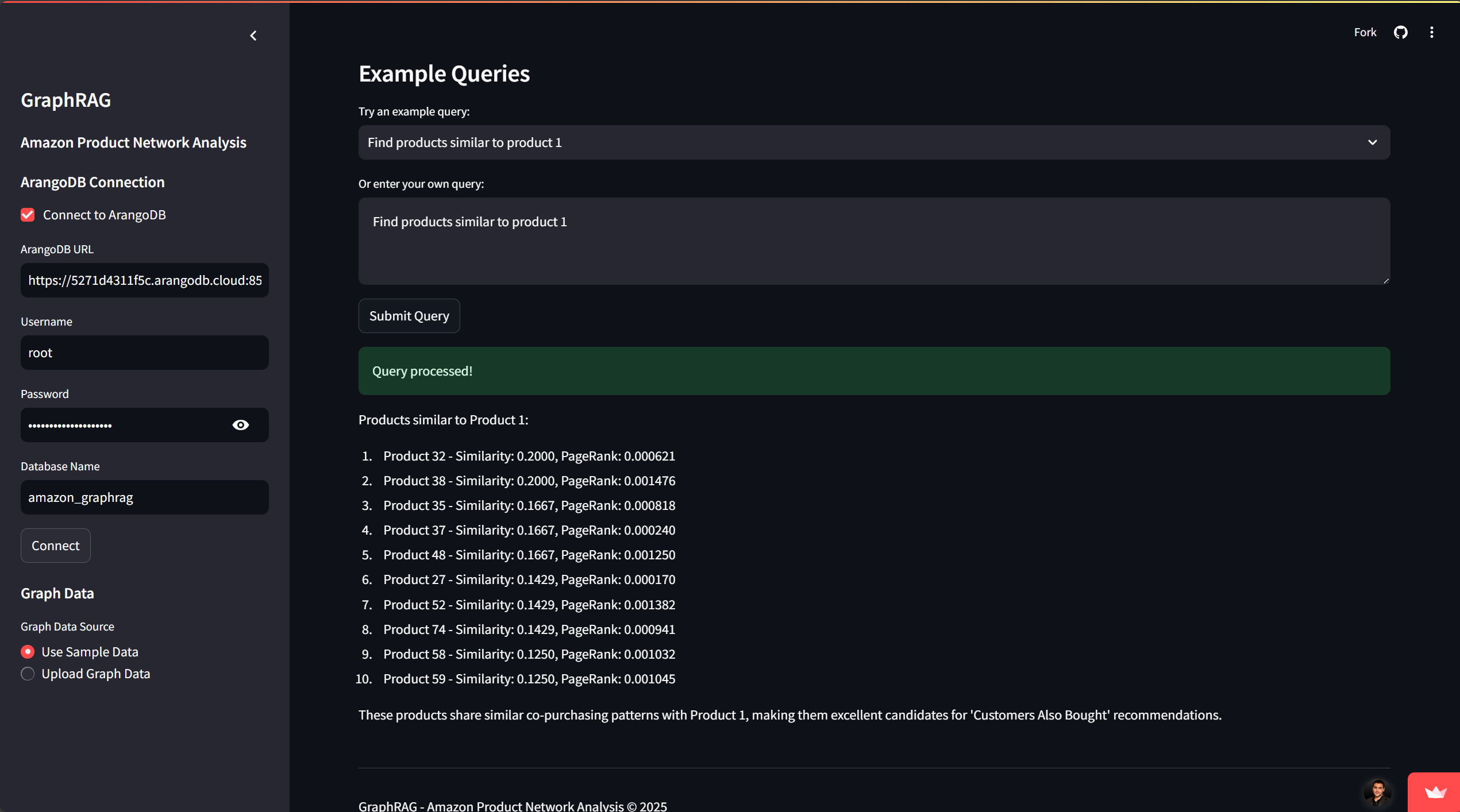
- Intelligent product recommendations using multiple strategies (similar products, complementary products, trending products)
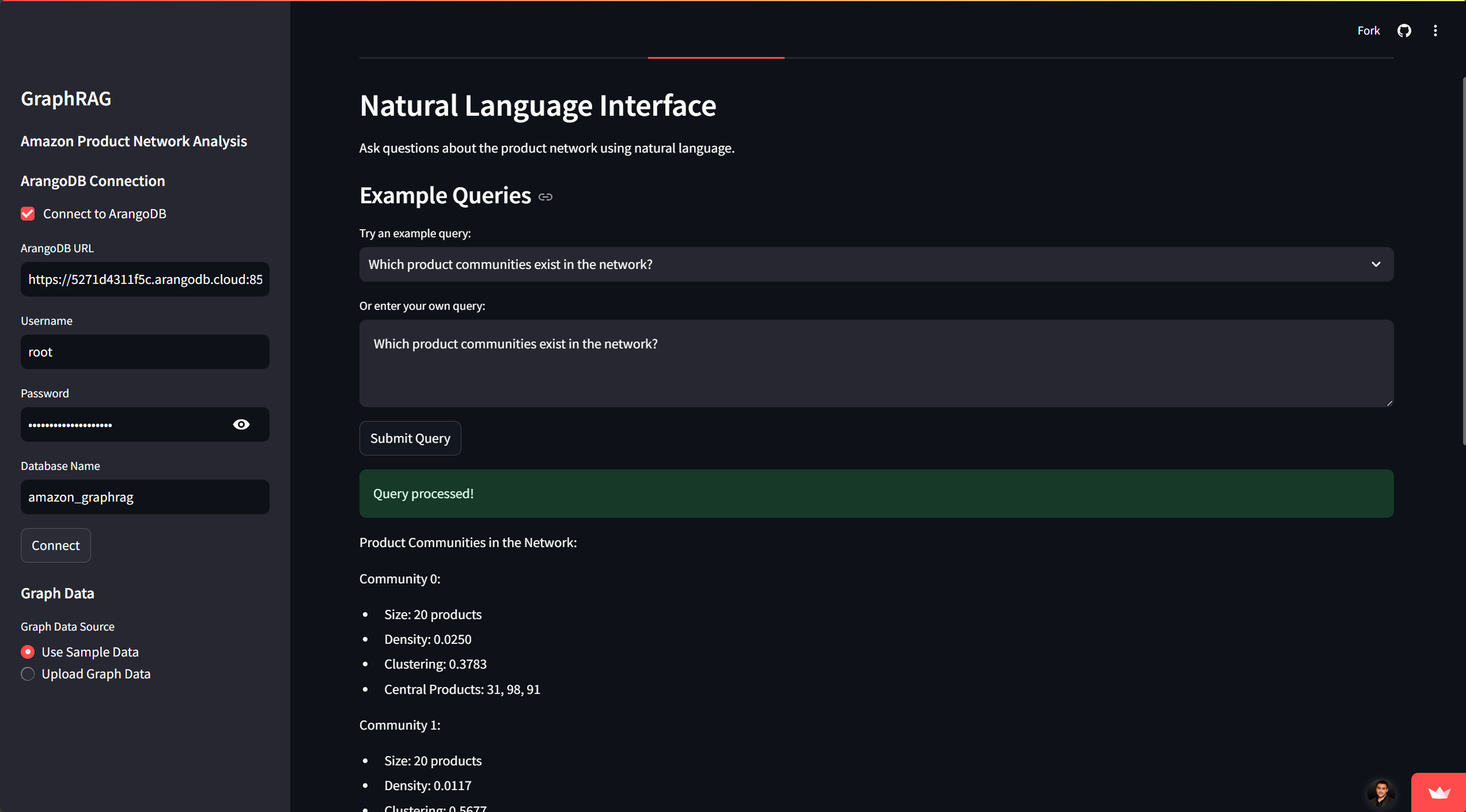
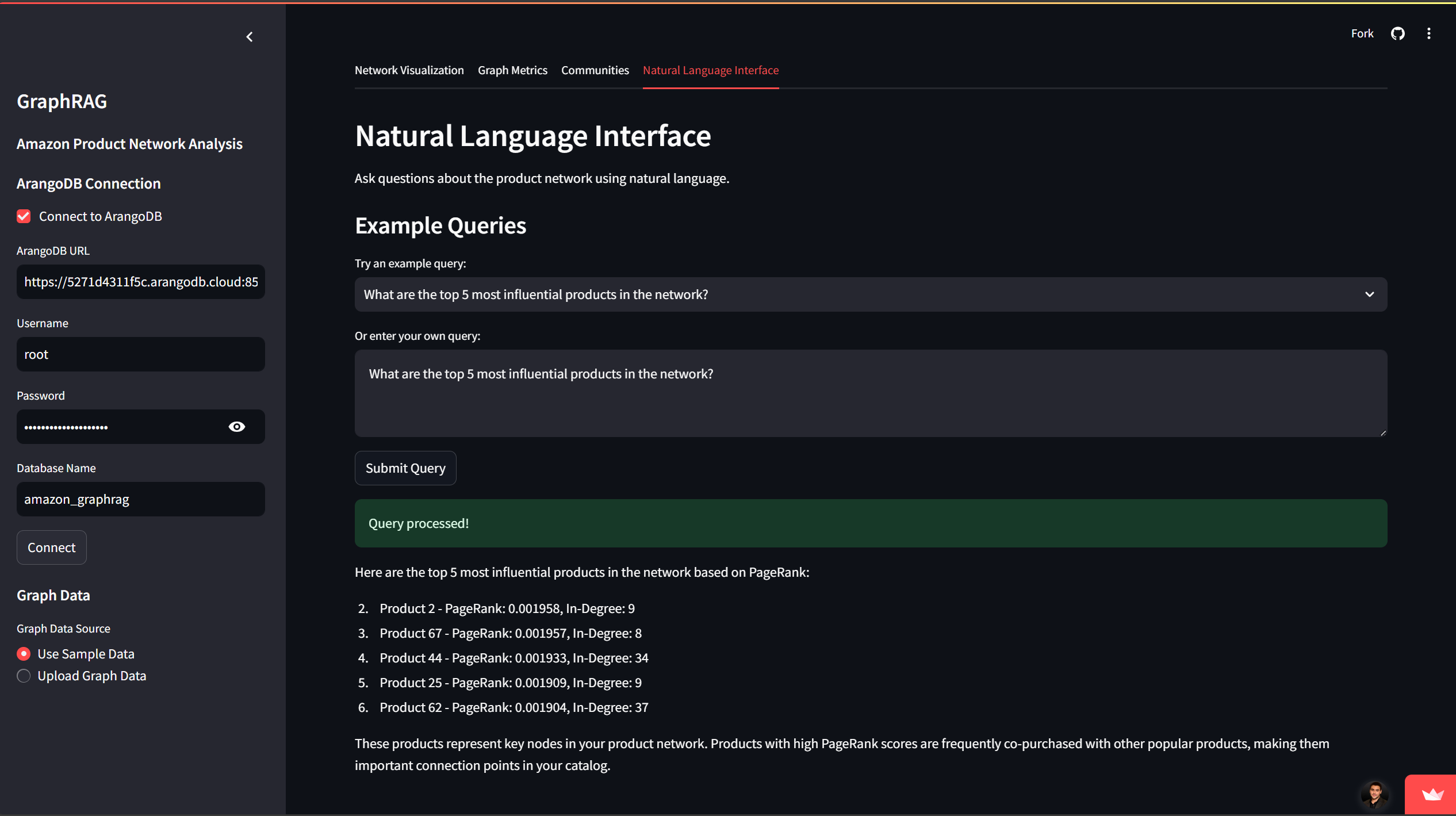
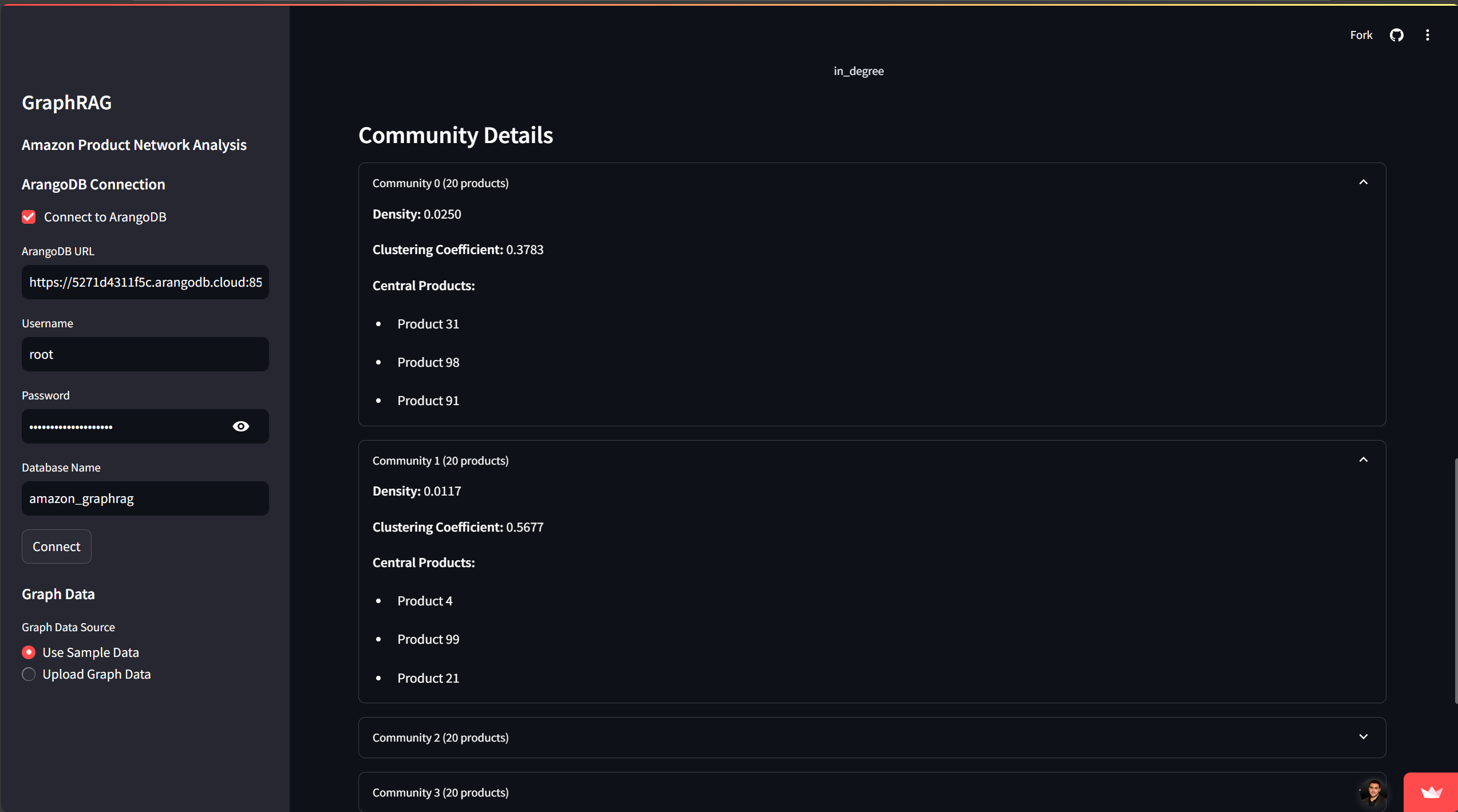
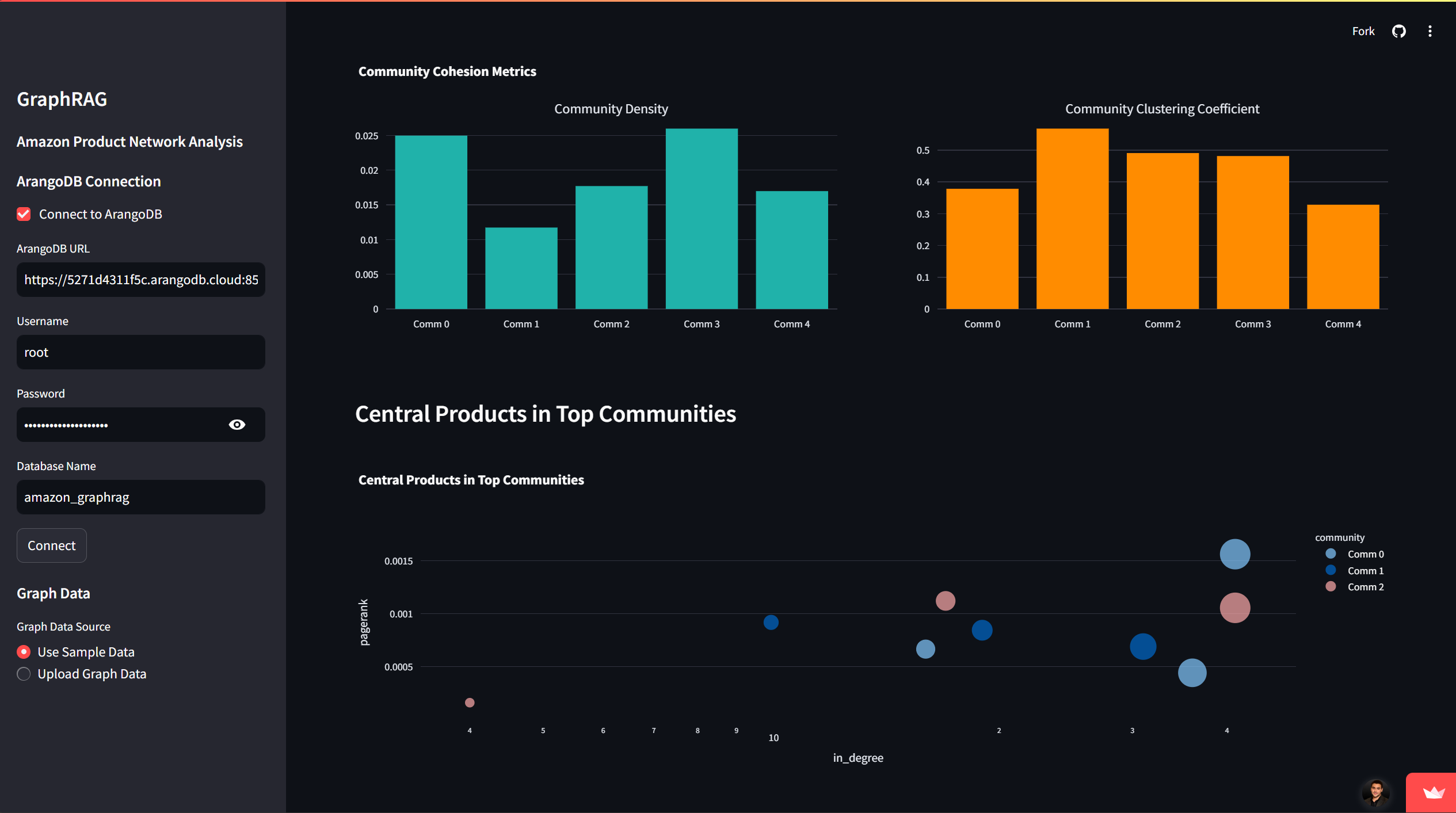
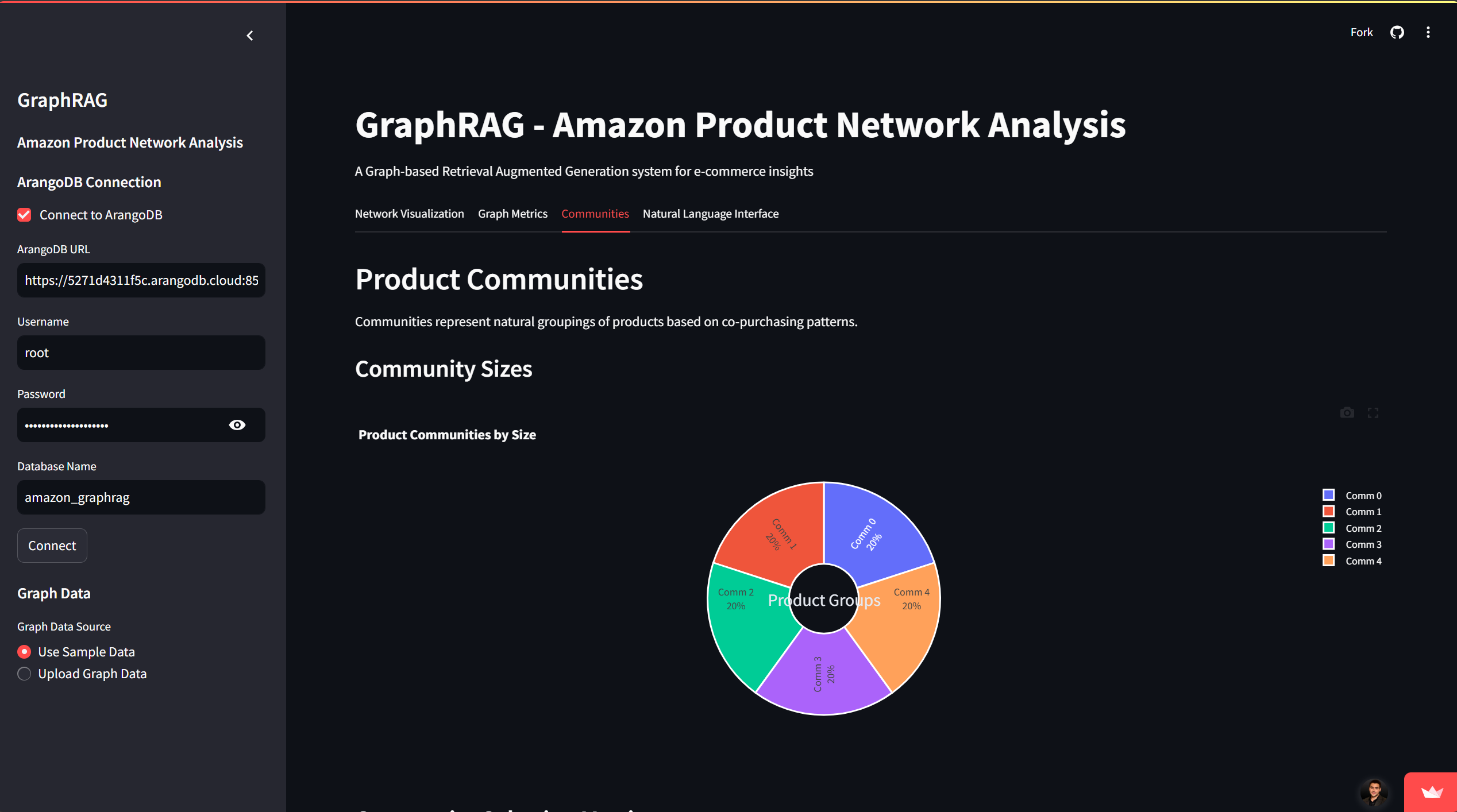
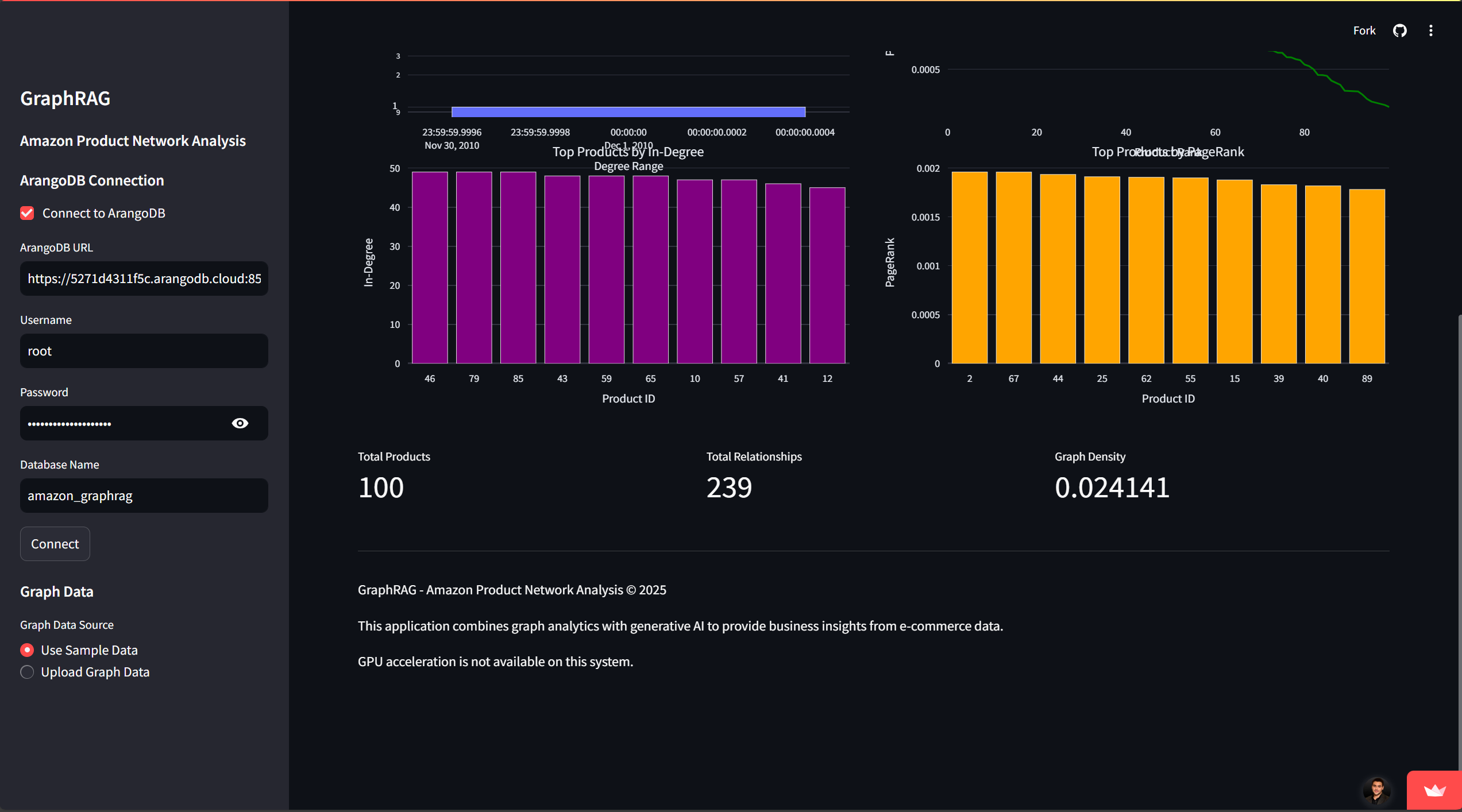
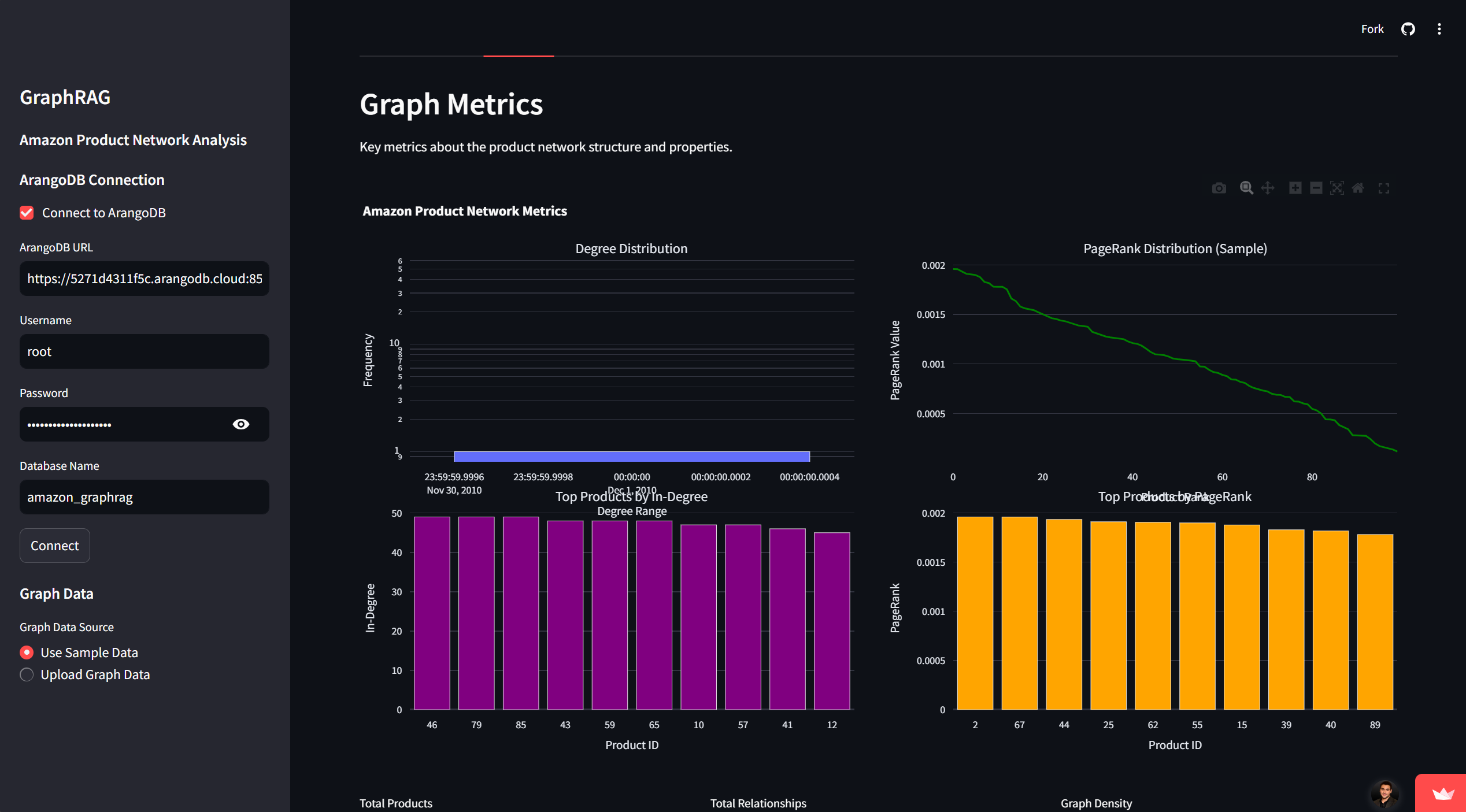
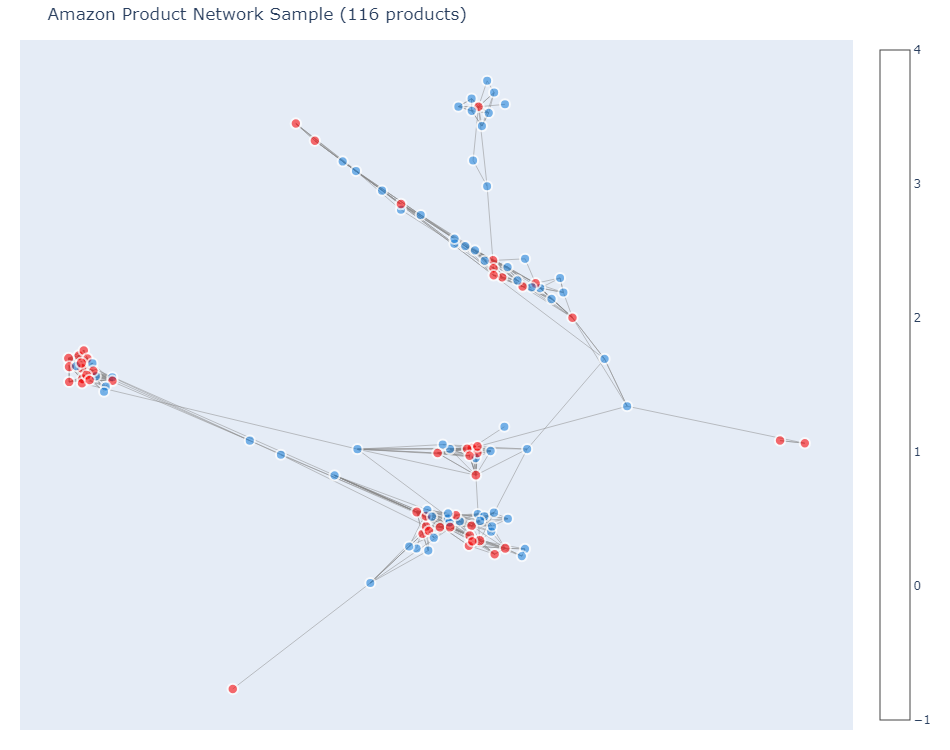
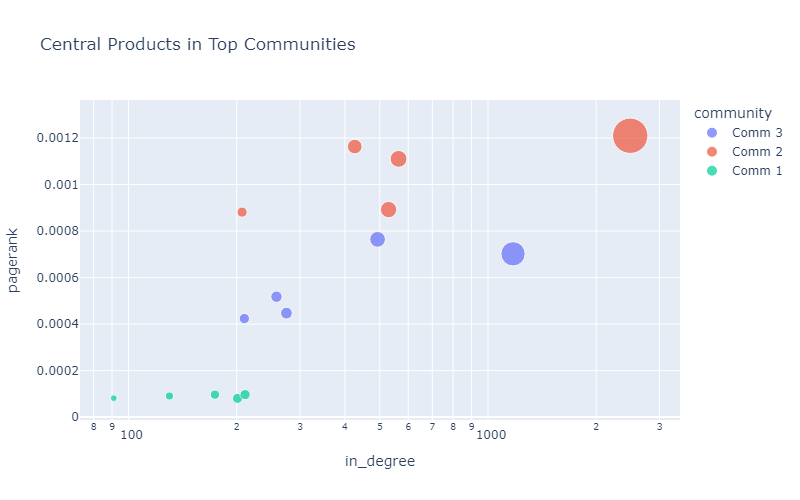
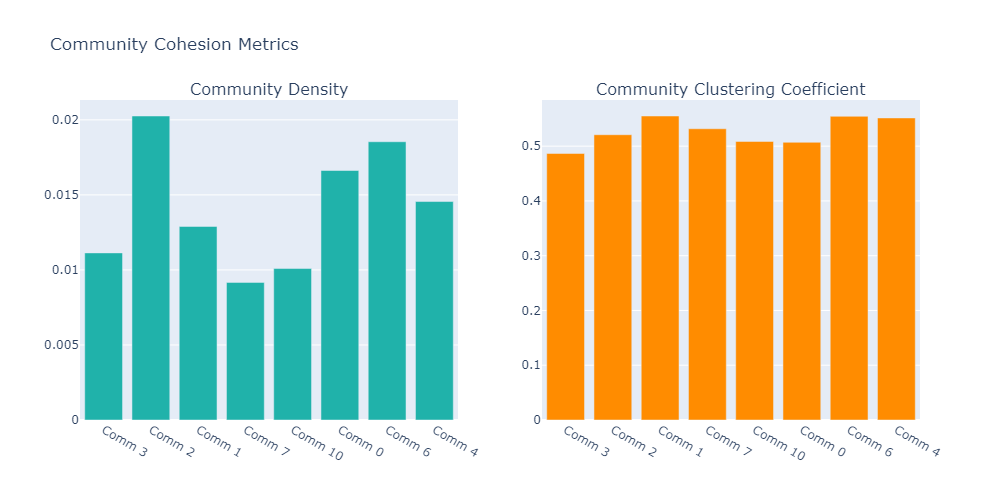
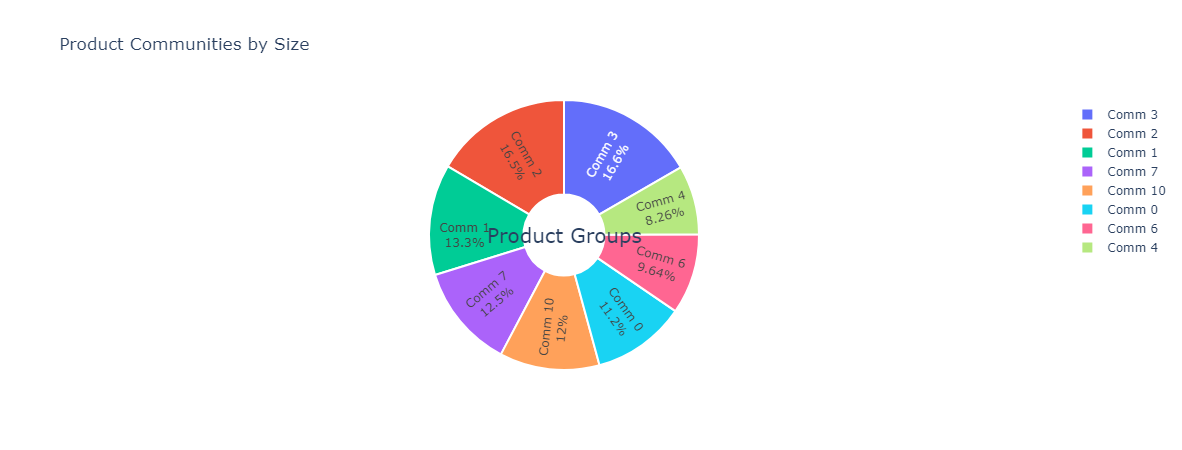
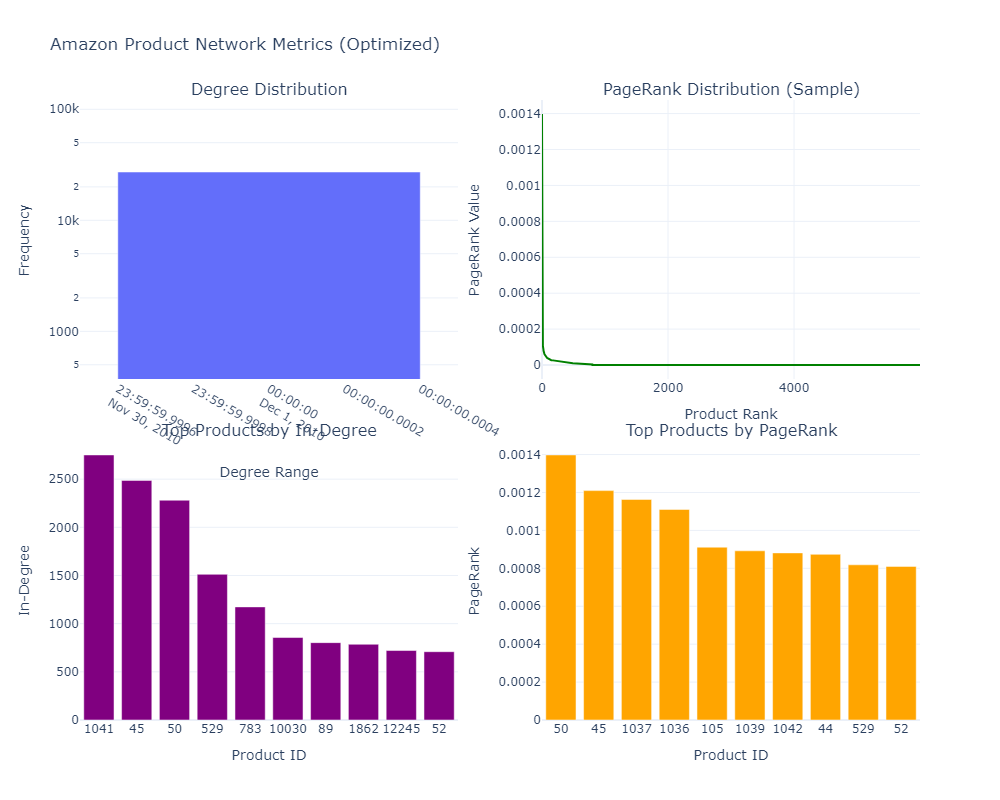
- Community detection to identify natural product groupings and categories Influence analysis using PageRank and centrality metrics to identify key products in the network
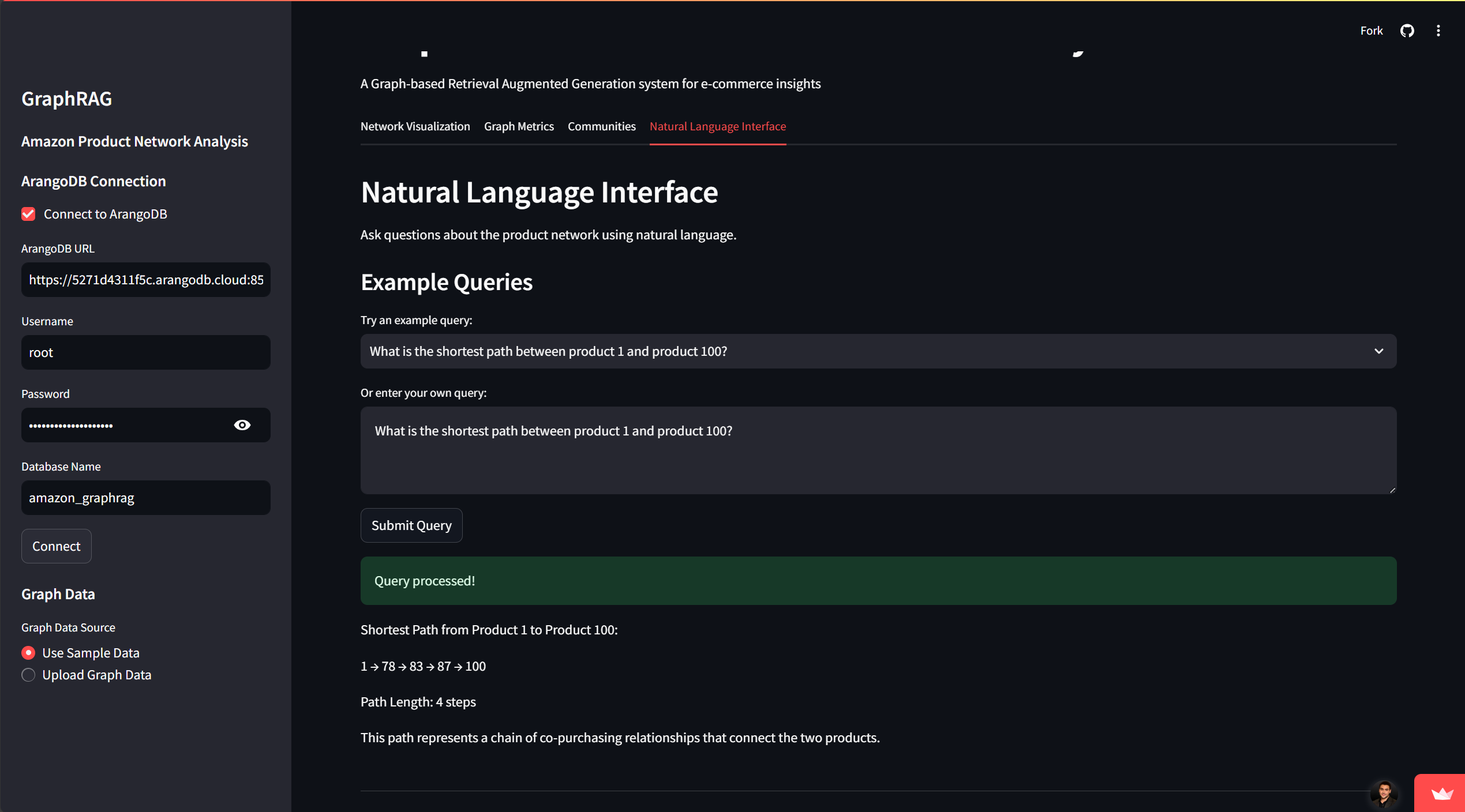
- Path analysis to understand product relationships and customer journeys
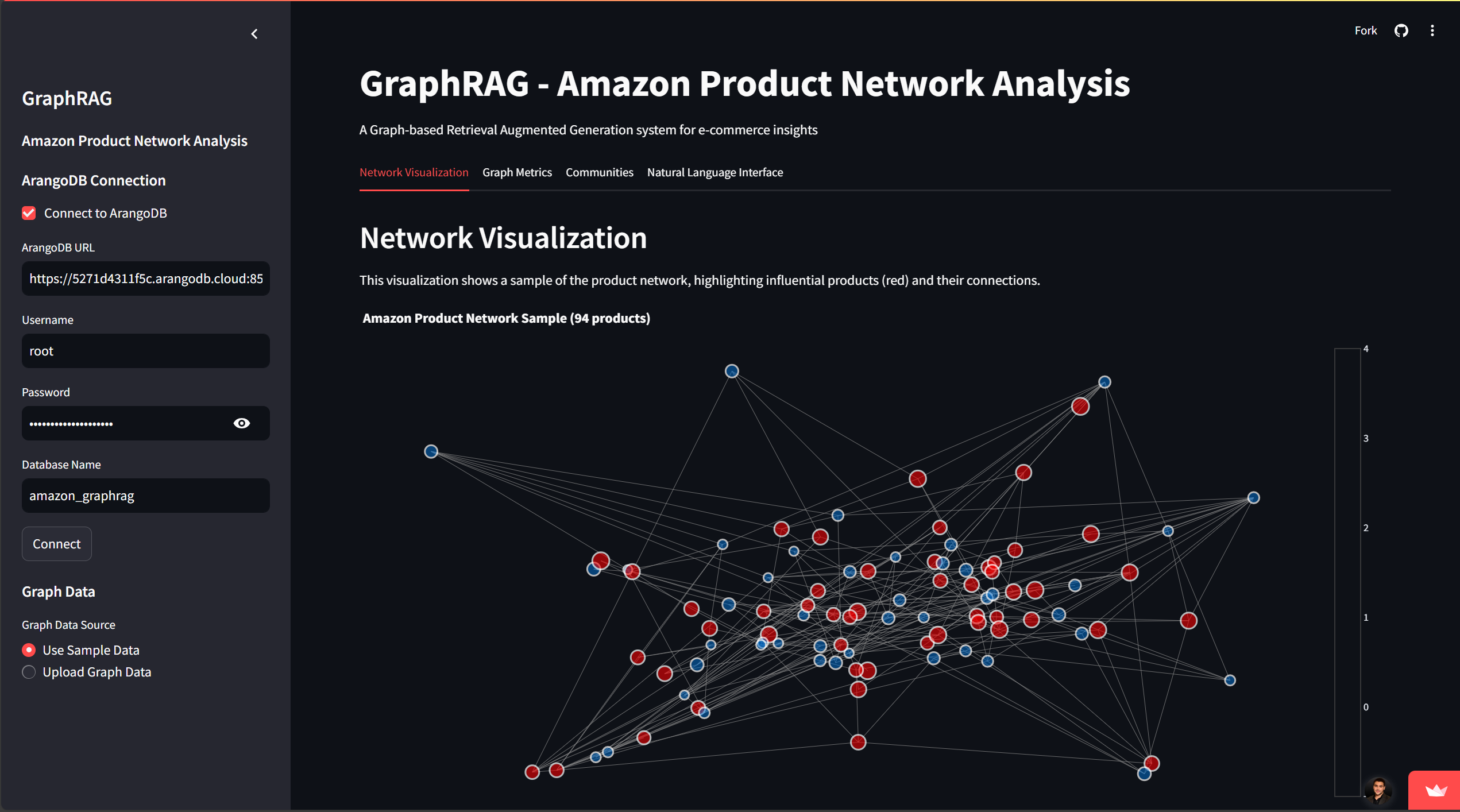
- Interactive visualizations of product networks, communities, and metrics
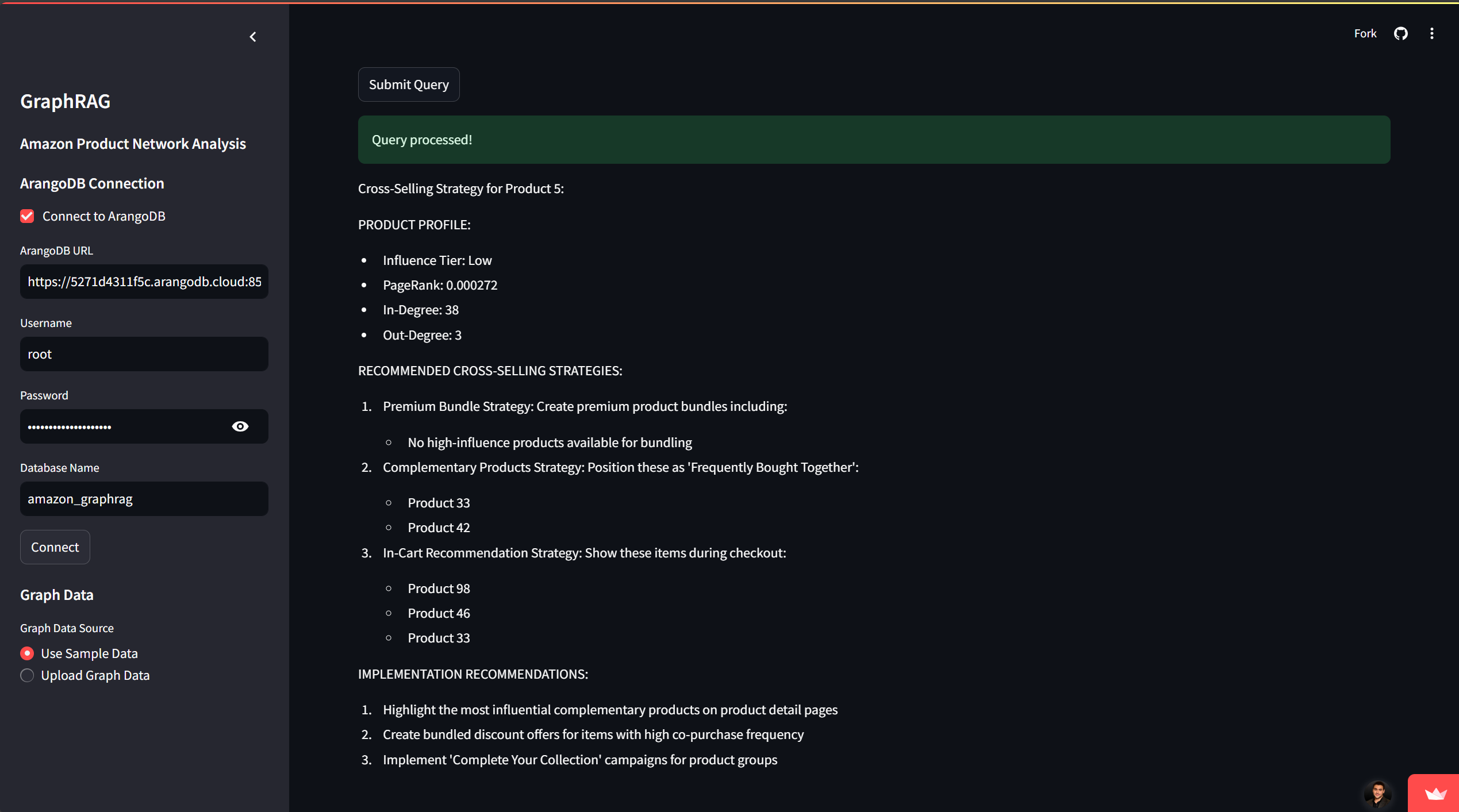
- Natural language querying through an AI agent that leverages both ArangoDB and GPU-accelerated analytics
- Cross-selling strategy insights based on network structure
- Hybrid query execution that combines fast graph database traversals with deep GPU-accelerated analytics
- A Streamlit-based web application that allows users to handle queries in real time
How we built it
We built GraphCatalyst as a hybrid GraphRAG (Graph Retrieval Augmented Generation) system that integrates:
- cuGraph for GPU-accelerated graph algorithms, providing orders of magnitude faster analysis for PageRank, community detection, and shortest path finding
- NetworkX as a CPU fallback mechanism to ensure the system works in all environments
- ArangoDB for efficient graph storage, indexing, and traversal queries
- LangChain for creating an agentic app that intelligently selects the appropriate query strategy
- Plotly and visualization libraries for creating interactive network visualizations
- OpenAI's GPT models to power the natural language interface through LangChain
- Python ecosystem for data processing, graph construction, and analysis
- Streamlit for building an intuitive web-based interface that handles real-time queries and interactive exploration
The architecture follows a dual-path approach:
- Simple relationship queries are handled by ArangoDB's optimized graph traversals
- Complex analytics are accelerated using cuGraph's GPU implementations when available
- The system dynamically selects the most appropriate execution path based on query complexity
Challenges we ran into
During development, we encountered several significant challenges:
- cuGraph API compatibility: The cuGraph API has evolved significantly, requiring us to implement robust error handling and alternative function paths to support different versions
- Memory management for large graphs: GPU memory limitations required careful partitioning and sampling strategies for very large networks
- Community detection at scale: Finding the optimal community detection algorithm for product networks required testing multiple approaches and implementing fallback strategies
- Graph construction efficiency: Converting raw co-purchasing data into optimized graph structures efficiently required careful performance tuning
- Hybrid query execution: Developing a system that could intelligently route queries between ArangoDB and cuGraph required careful design of the agent architecture
- Designing an intuitive query interface: Creating natural language patterns that business users would naturally use to query product networks was challenging
- Real-time query handling: Ensuring Streamlit could handle high-performance queries efficiently while maintaining a smooth user experience
Accomplishments that we're proud of
We're particularly proud of several achievements in GraphCatalyst:
- Seamless GPU/CPU integration: The system automatically leverages GPU acceleration when available while gracefully falling back to CPU processing when needed
- Intelligent query routing: Our agentic architecture intelligently selects between ArangoDB and cuGraph based on query complexity
- Business-friendly insights: Complex graph metrics are translated into actionable business recommendations
- Visualization quality: Our interactive visualizations effectively communicate complex network structures and metrics
- Performance improvements: Achieving order-of-magnitude speedups for large graph analytics through GPU acceleration
- Robust error handling: The system degrades gracefully when encountering limitations or errors
- Real-time analytics: The Streamlit application allows users to interact with and analyze product networks in real time
What we learned
Throughout the development of GraphCatalyst, we gained valuable insights:
- Graph algorithm scalability: We developed a deeper understanding of how different graph algorithms scale with network size and complexity
- GPU acceleration benefits: We quantified the performance benefits of GPU acceleration for various graph analytics tasks
- Community detection approaches: We learned the strengths and limitations of different community detection algorithms for product networks
- Natural language graph querying: We developed patterns for translating natural language queries into efficient graph operations
- Hybrid database-analytics architecture: We refined our approach to combining optimized graph databases with specialized analytics engines
- Real-time system performance: We learned to optimize Streamlit and back-end queries to ensure seamless interactivity
What's next for GraphCatalyst
We have an exciting roadmap for GraphCatalyst's future development:
- Expanded algorithm suite: Adding more GPU-accelerated graph algorithms for deeper network insights
- Advanced recommendation models: Incorporating machine learning models to enhance recommendation quality
- Real-time analytics: Moving from batch processing to real-time analysis of streaming co-purchasing data
- Enhanced visualization capabilities: Adding more interactive visualization types and dashboards
- Temporal analysis: Adding support for analyzing how product relationships evolve over time
- Multi-GPU support: Scaling to multiple GPUs for even larger networks
- Integration with popular e-commerce platforms: Building connectors for seamless integration with major e-commerce systems
- Customized business metrics: Developing domain-specific metrics for different retail categories


Log in or sign up for Devpost to join the conversation.