-
-

General image of development
-
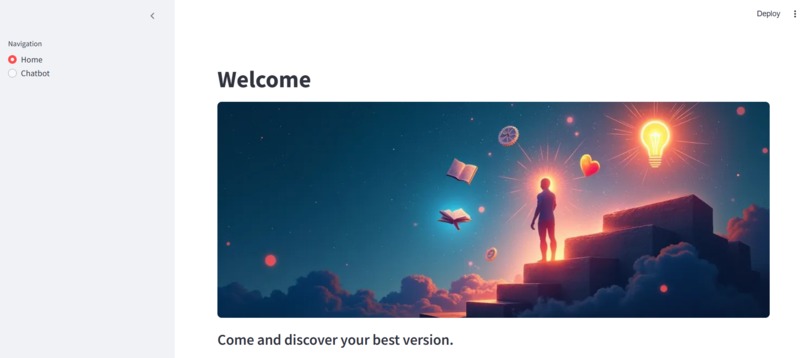
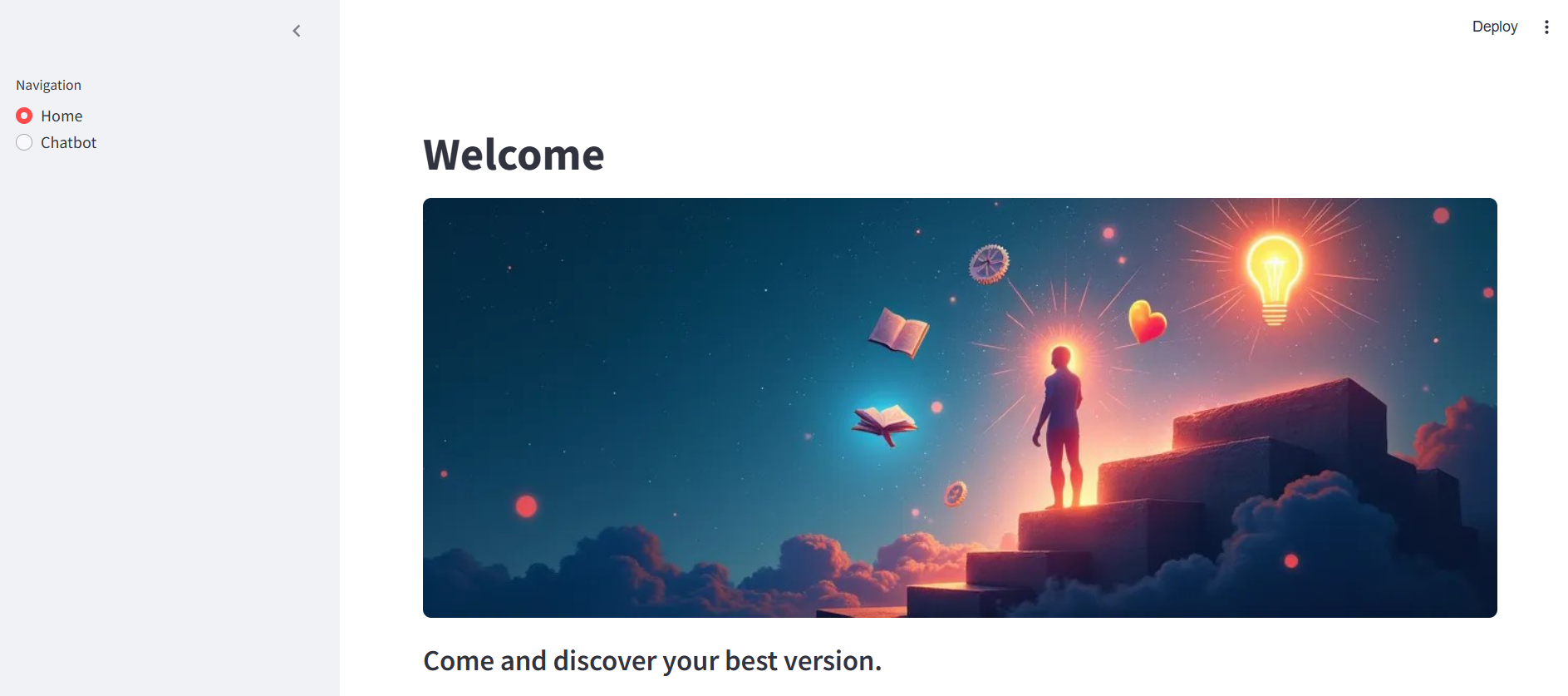
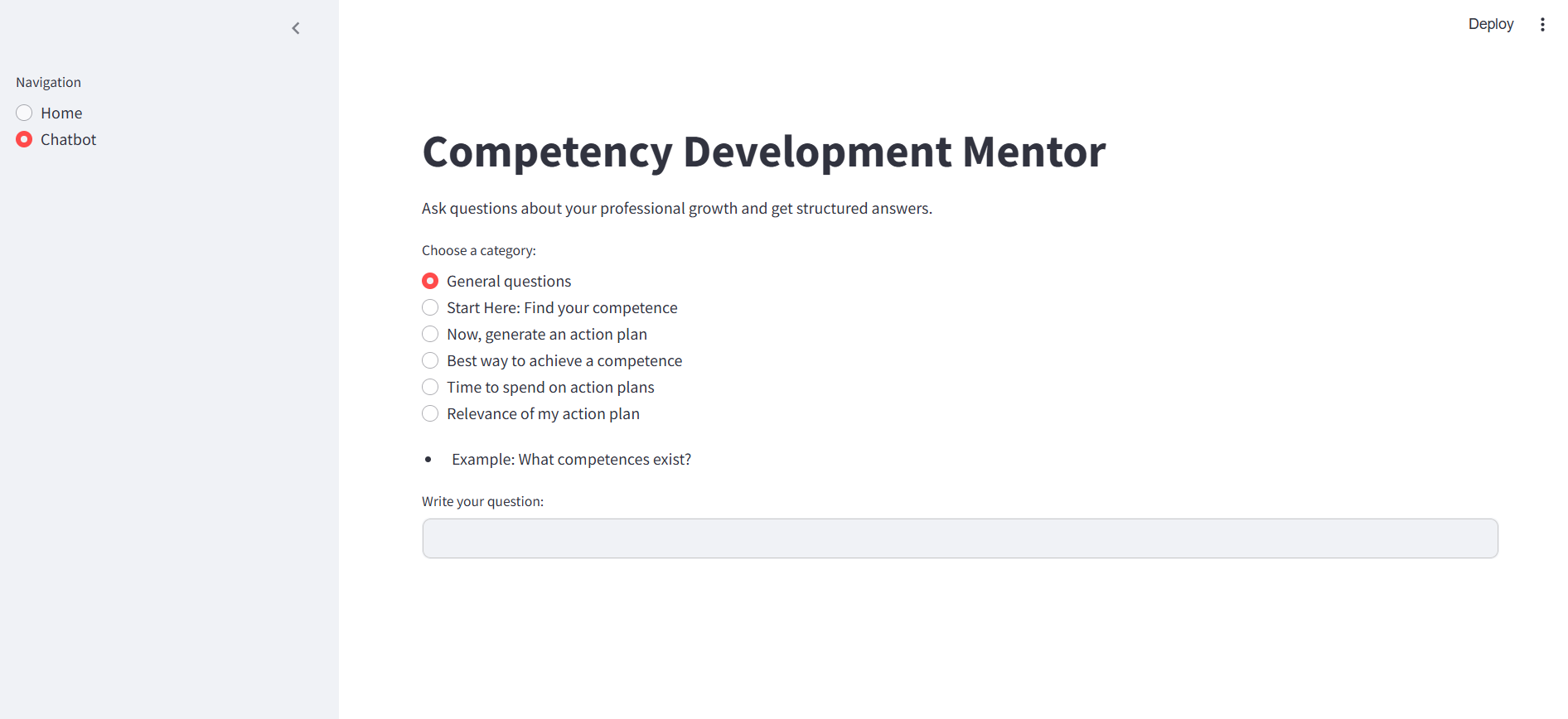
Home page
-
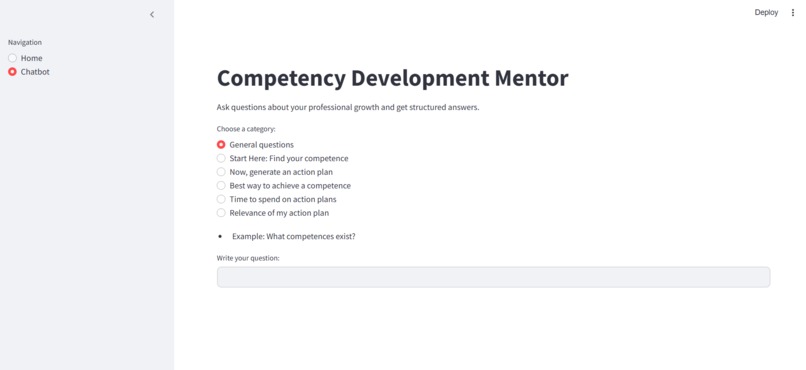
A page for general questions
-
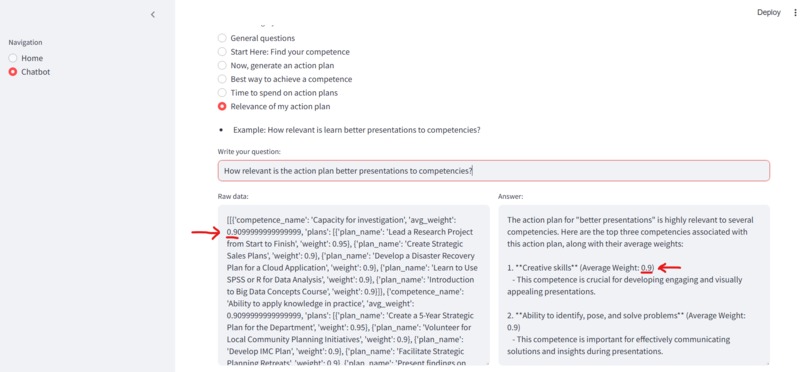
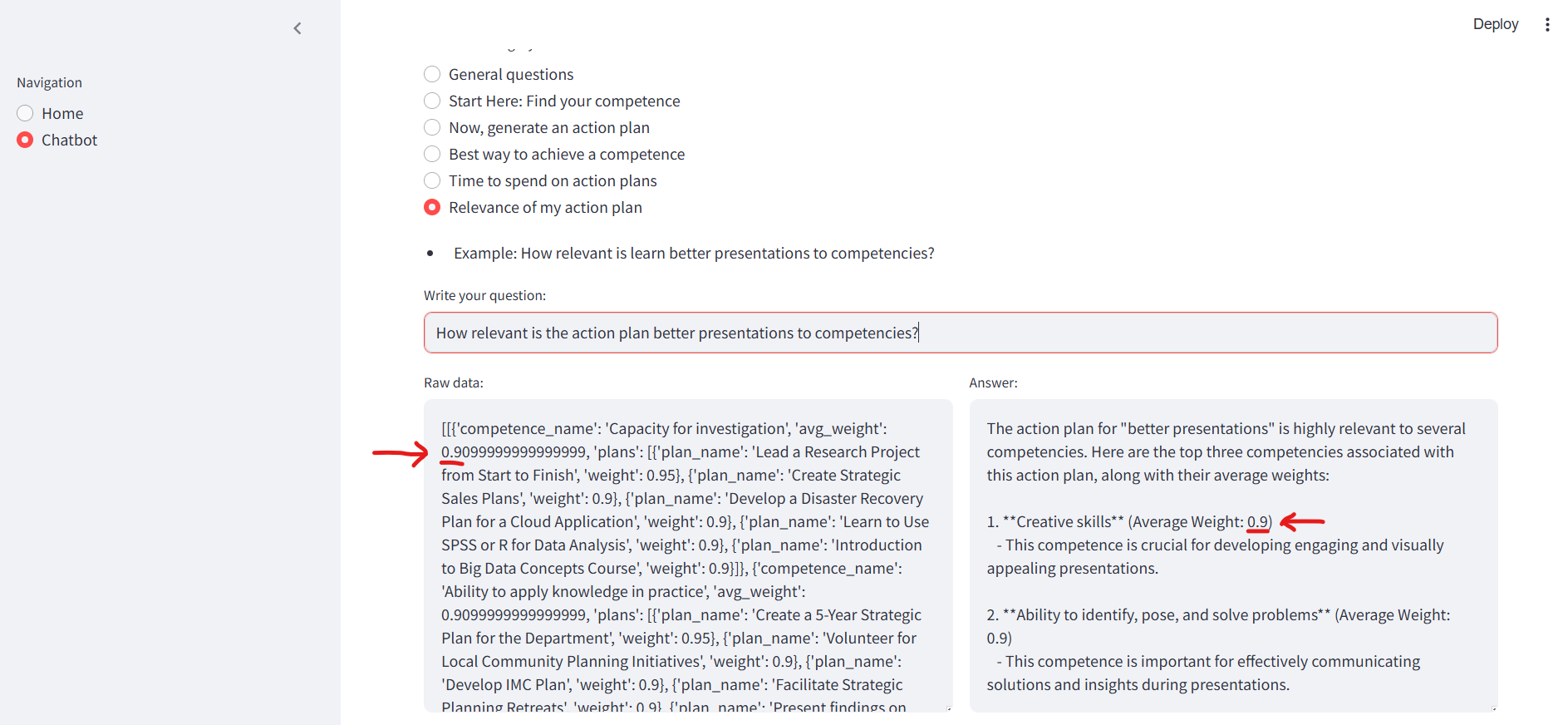
An example of a focused question with it's raw data, and LLM result

Inspiration
During my early years as a professional, I worked at the corporate headquarters of a major company in Peru, where one of my key responsibilities was human development. This experience provided me with invaluable insights and a strong foundation in understanding how knowledge, skills, and attitude contribute to personal growth. These three elements act as the core drivers of competencies, and my passion for this subject led me to bring this concept to this competition.
What it does
Graph Mentor is a tool designed to help individuals identify which competencies they should develop, provide them with an actionable plan, and assist in managing their time effectively. It ensures that the selected actions are truly relevant to their personal and professional growth, guiding them through a structured journey toward self-improvement.
How we built it
Graph Mentor is built on a partial knowledge distillation process, ensuring a solid foundation by leveraging the Tuning Project's framework of 27 competencies. To enhance its effectiveness, I incorporated influencing factors that shape knowledge, skills, and attitudes. For example, the knowledge required for a medical professional differs from that of an engineer.
- Knowledge is influenced by the field of expertise and industry.
- Skills are shaped by the profession and level of responsibility.
- Attitudes are affected by organizational culture and experience level.
Using 24,000+ calls to a fine-tuned LLM with structured output, I generated a comprehensive knowledge base for potential competency drivers and action plans.
The next step involved cleaning and structuring data by removing duplicate nodes and edges before storing it in an ArangoDB graph database. I implemented indexing, views, and function-based tools that queried the database for relevant insights. Throughout this process, I extensively utilized AQL (Arango Query Language) and Arango Search to refine similarity-based results and leverage the power of graph database relationships.
Challenges we ran into
There were multiple challenges, but the biggest was fully understanding the potential of graph databases and capitalizing on their advantages over traditional structured databases. While I had prior experience in AQL generation and LLM management, working with graph-based querying and optimizing search functionalities was a learning curve.
Accomplishments that we're proud of
The biggest achievement was turning a long-standing vision into reality—creating a tool that empowers individuals to take charge of their own personal and professional development. Graph Mentor allows users to shape their own learning journey and actively participate in their growth process. I am proud to have built a proof of concept that validates this idea and lays the groundwork for future expansion.
What we learned
One of the key takeaways was executing a project under time constraints. Hackathons are intense learning environments where you absorb a vast amount of knowledge in a short time. This experience reinforced my ability to adapt, iterate quickly, and make strategic decisions efficiently.
What's next for Graph Mentor
The next phase for Graph Mentor is to evolve into a fully functional web app—a platform where company roles converge to assess talent, generate and track action plans, and provide continuous growth opportunities. It will facilitate career development, making employees more valuable and attractive within their organizations.
Additionally, I plan to refine how LLMs generate personalized tasks by leveraging instruction-based models, which are more precise in task generation. Further exploration will involve anticipating user queries and designing intelligent tools that enhance interaction with the LLM, ensuring a seamless and intuitive experience.


Log in or sign up for Devpost to join the conversation.