
Stream: Society, Human and Computer Interaction
What it does
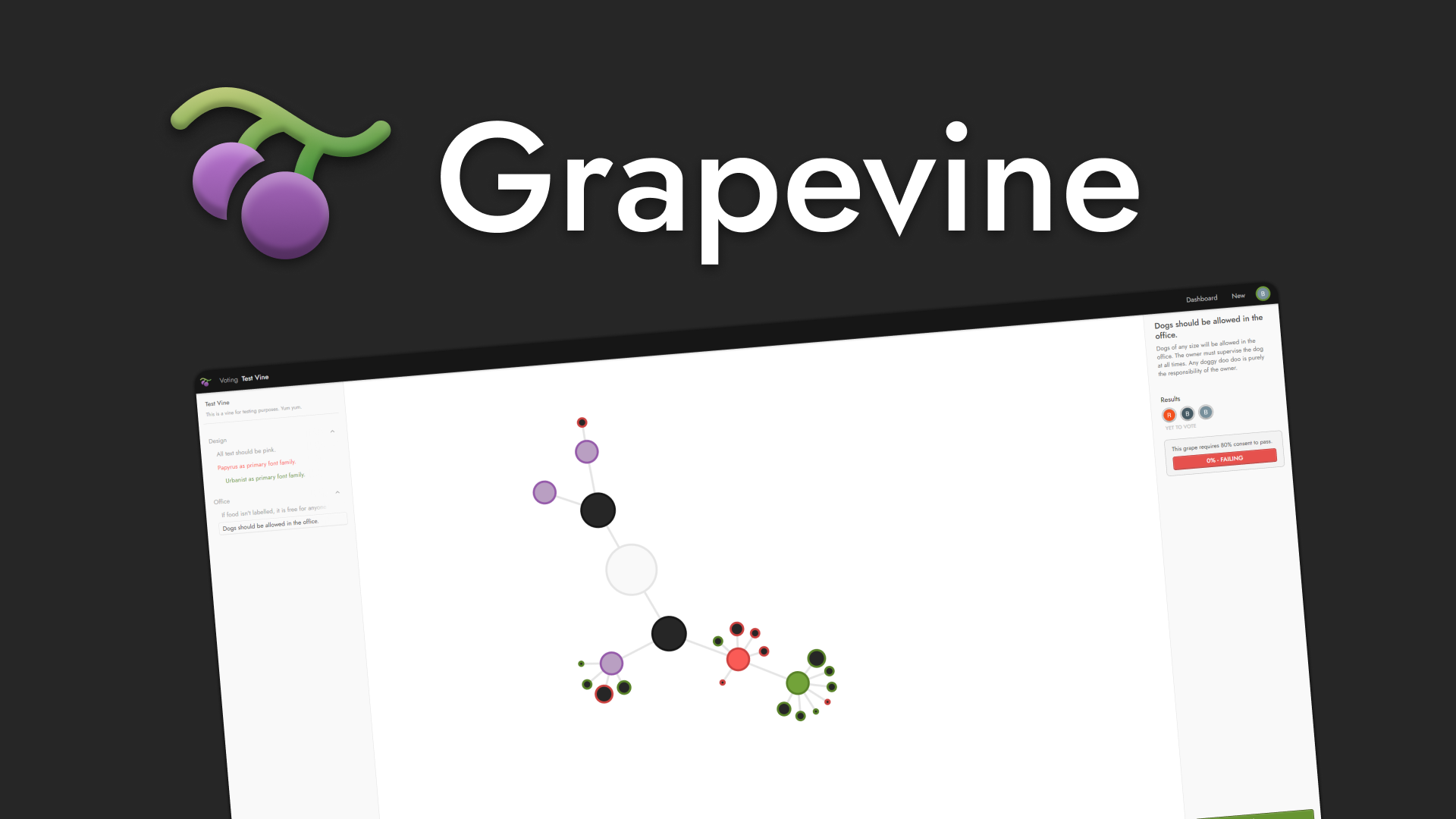
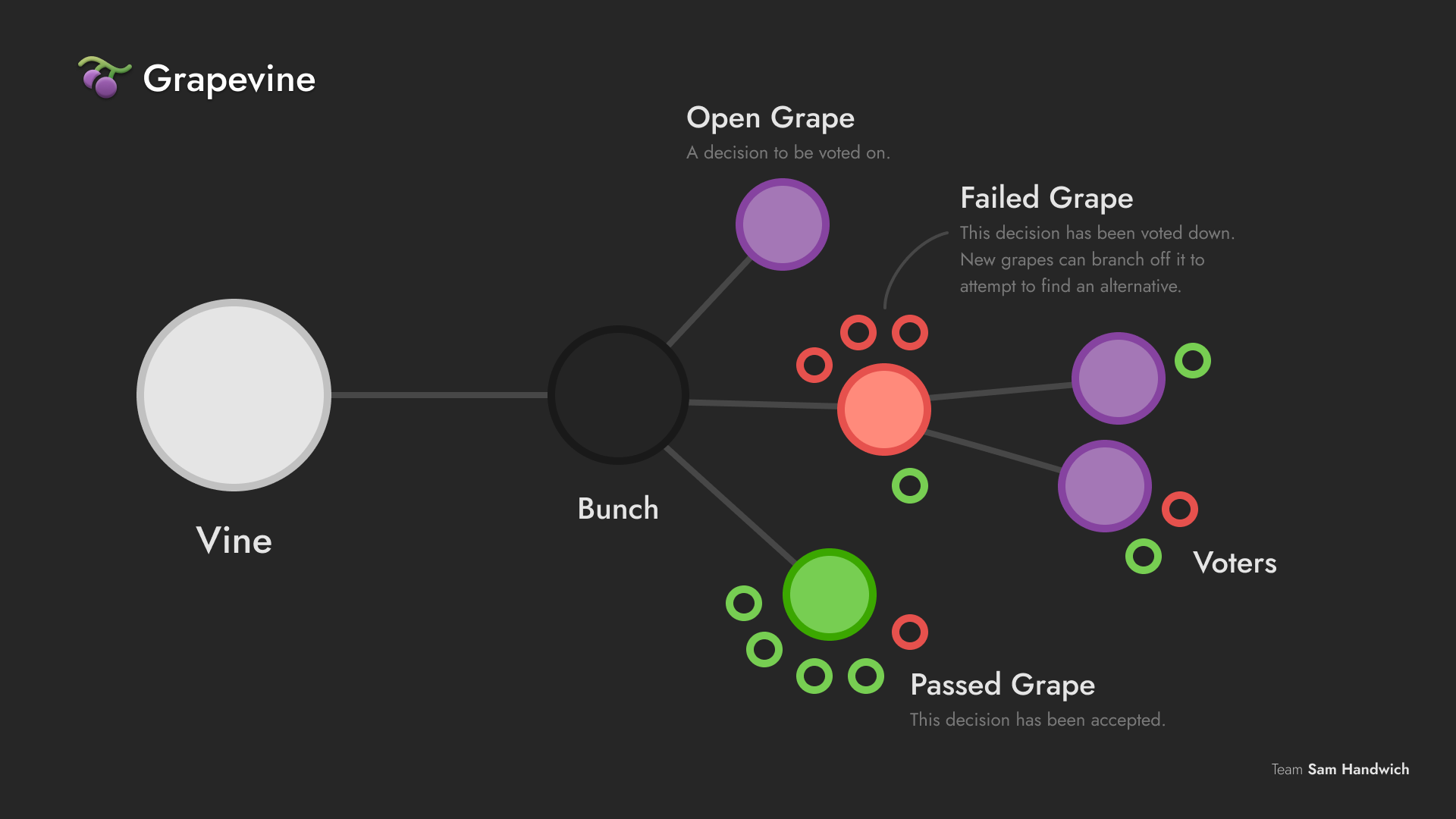
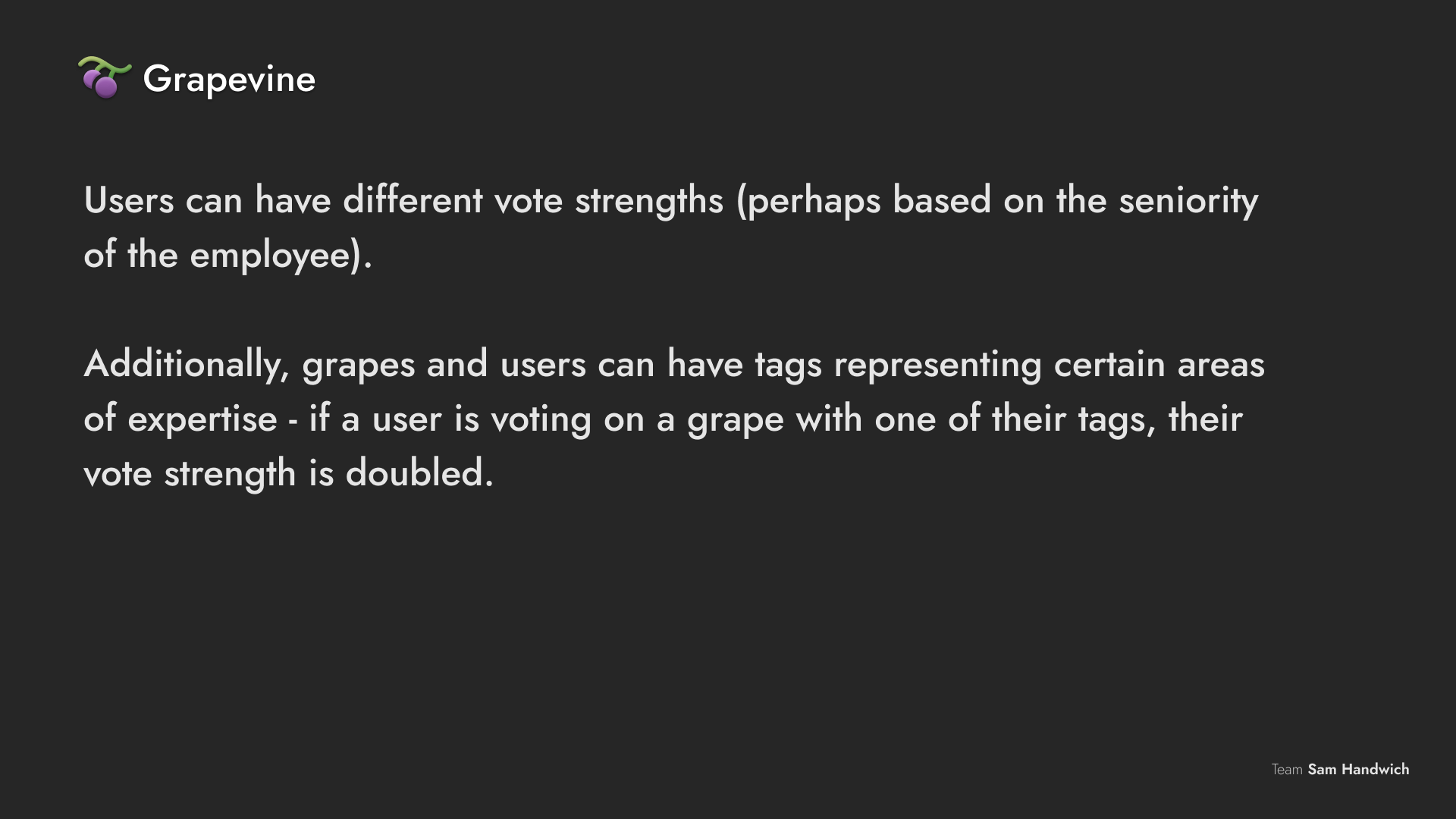
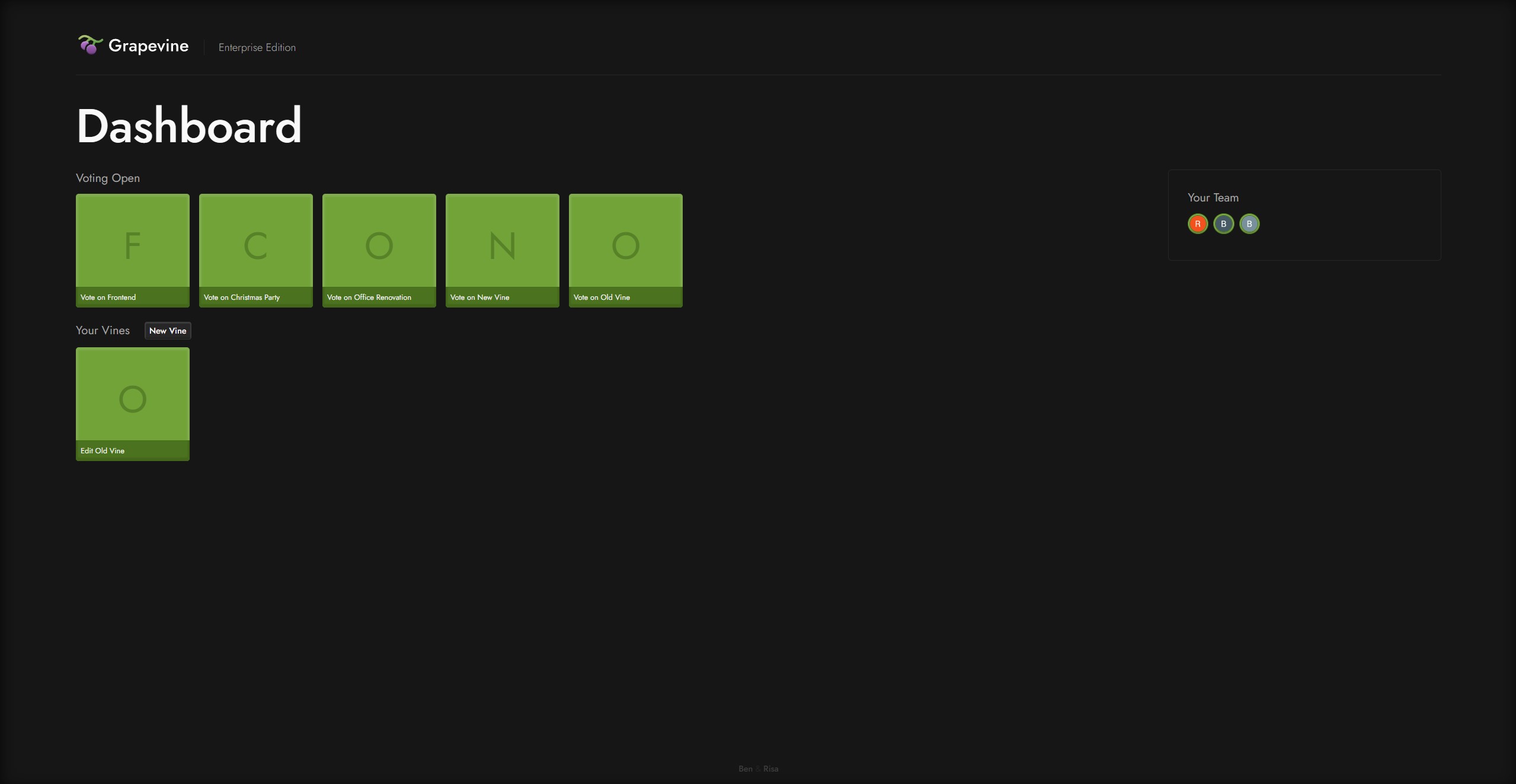
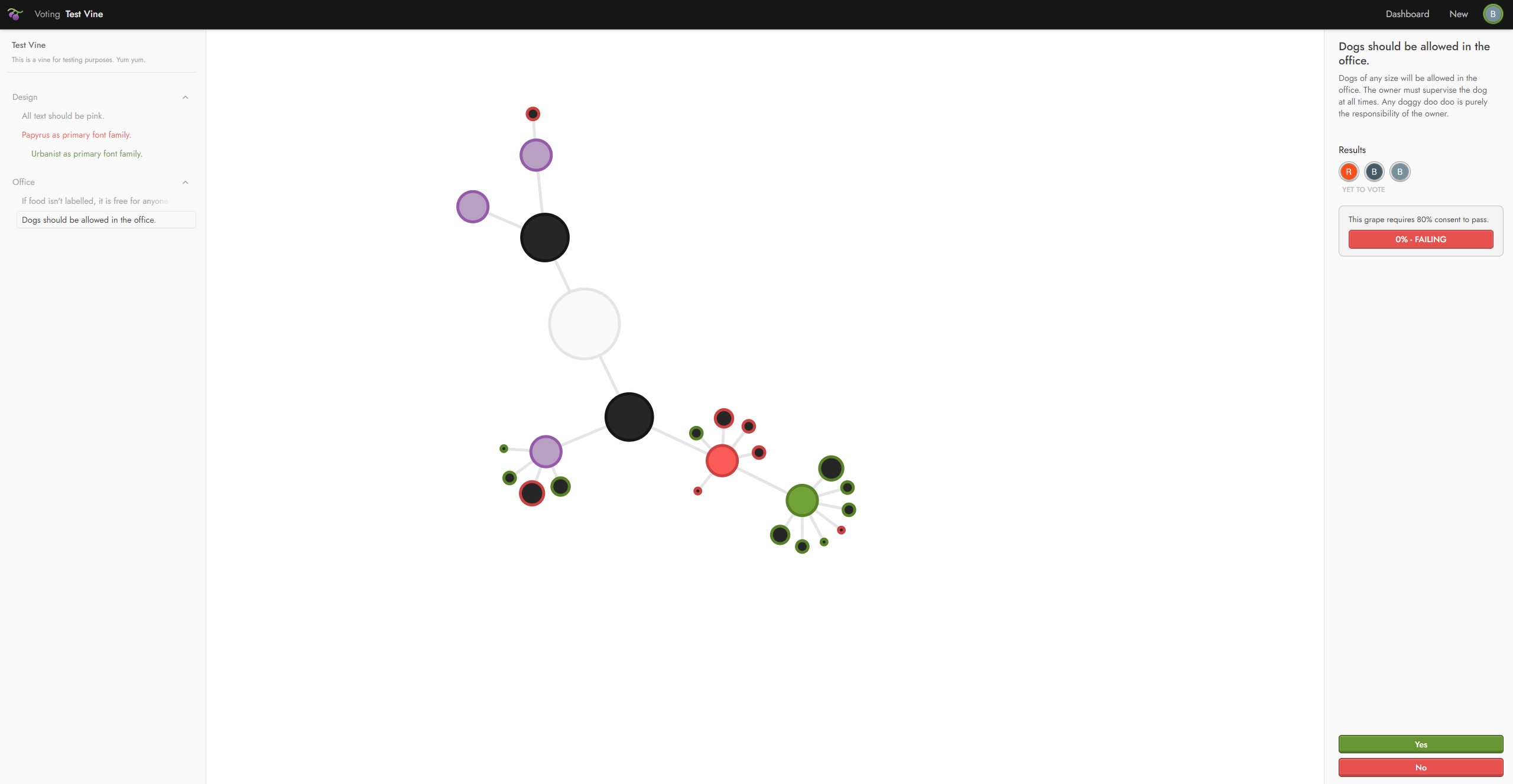
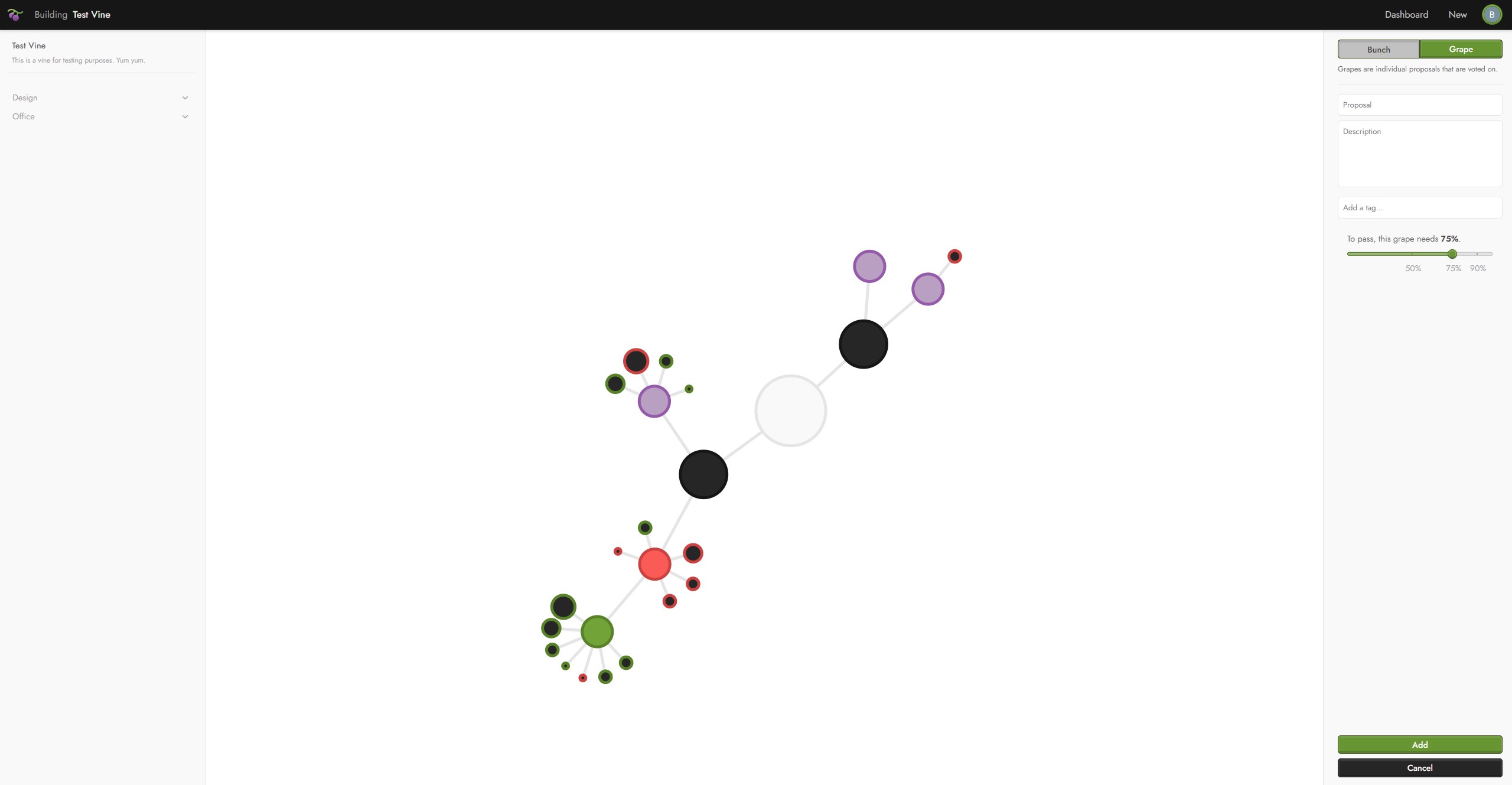
Grapevine is a collaborative decision-making tool that allows a team to break their decisions down into smaller parts to achieve consensus. Users create 'vines' (large level decisions) that each have 'bunches' (groups or folders) of 'grapes' (atomic decisions to be voted on). Team members can have different voting power (perhaps based on seniority) and have tags representing their areas of expertise. Different grapes can have different tags describing the relevant expertise to that decision. When a team member with a certain expertise votes on a grape that has a matching expertise, the value of their vote is doubled. Users can view the relationship between the bunches and grapes in a vine in an interactive graph.
How we built it
We built Grapevine with Next.js, MongoDB, and D3.js.
Challenges we ran into
- an ambitious scope - a fullstack application with a team of two
- accidental infinite queries of the database and hitting connection limits
- recursive nesting of objects in the vine
- authentication
Accomplishments that we're proud of
- the scope and ambition of the project in the short deadline
- no prebuilt UI components except the MUI slider
- authentication
- the backend
- the bubbles
- the buttons
What we learned
D3, Next.js Routing, MongoDB, NextAuth/OAuth, Google Auth
What's next for Grapevine
- user customisation page to edit weights and tags
- rich data and attachments to grapes
- associate users with specific organisations
- prompt users to vote
- automatic actions when a vote passes or fails
- multiple choice grapes


Log in or sign up for Devpost to join the conversation.