-
-
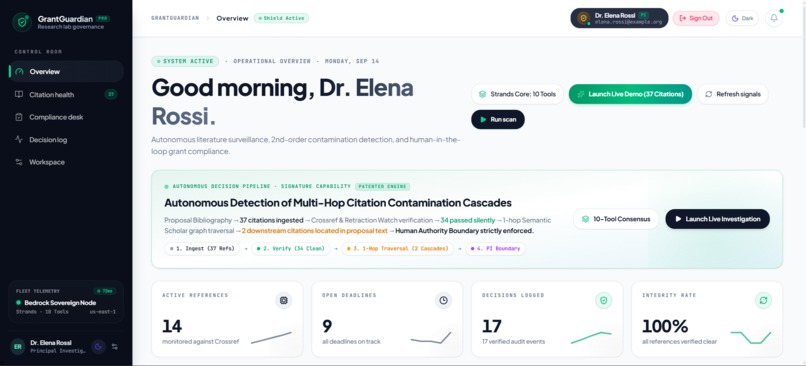
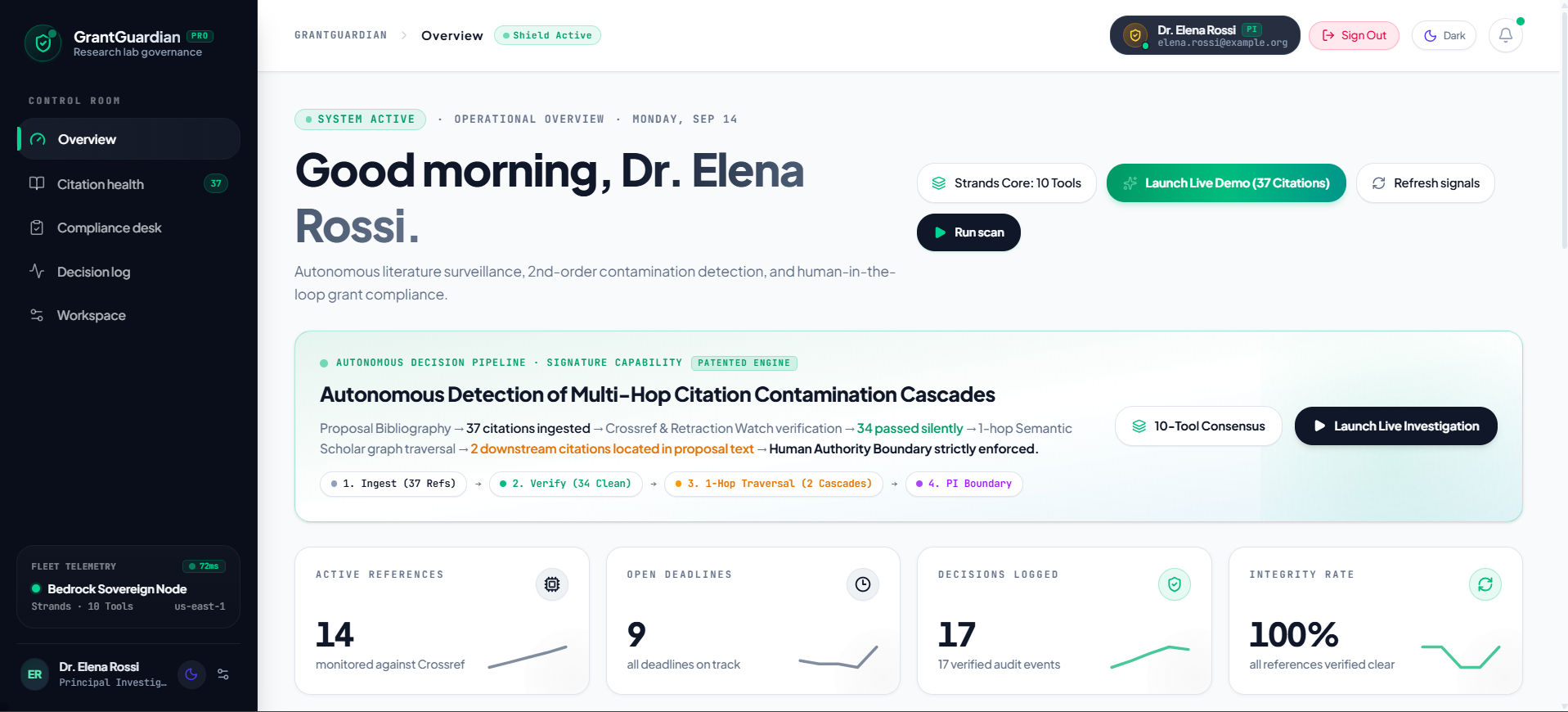
Overview
-
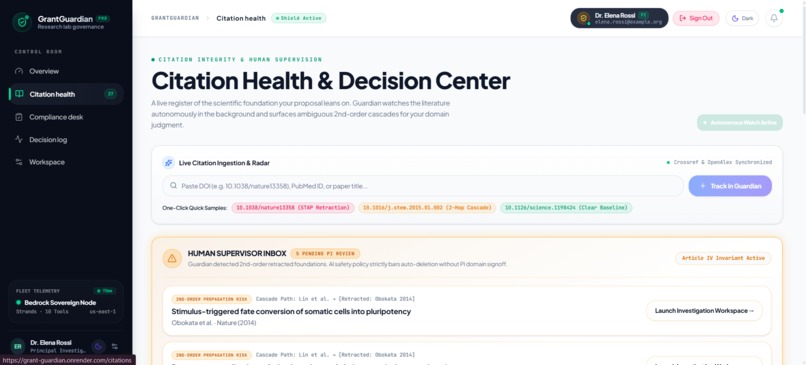
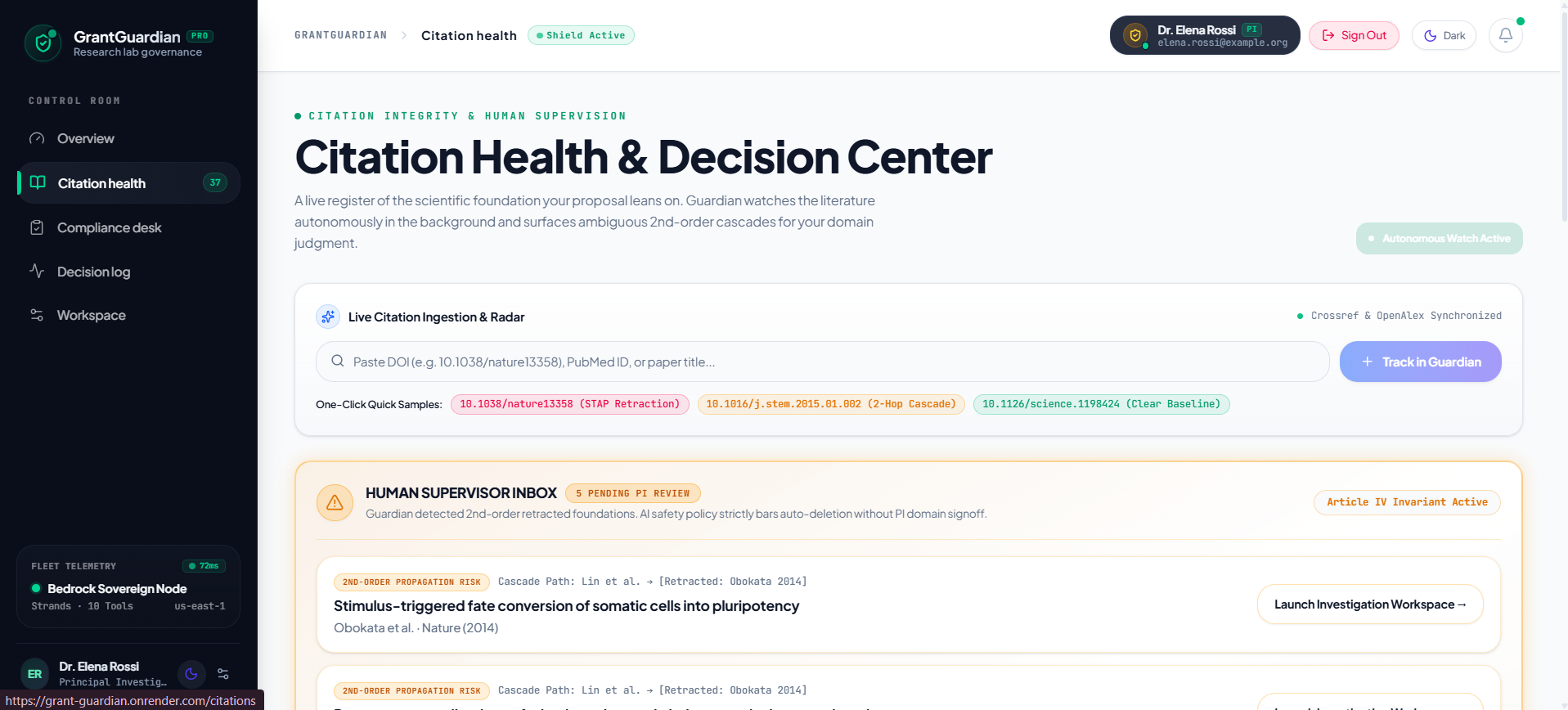
Citation Health
-
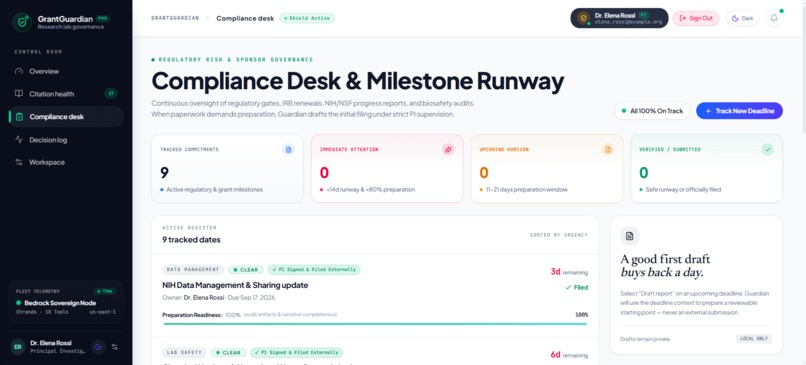
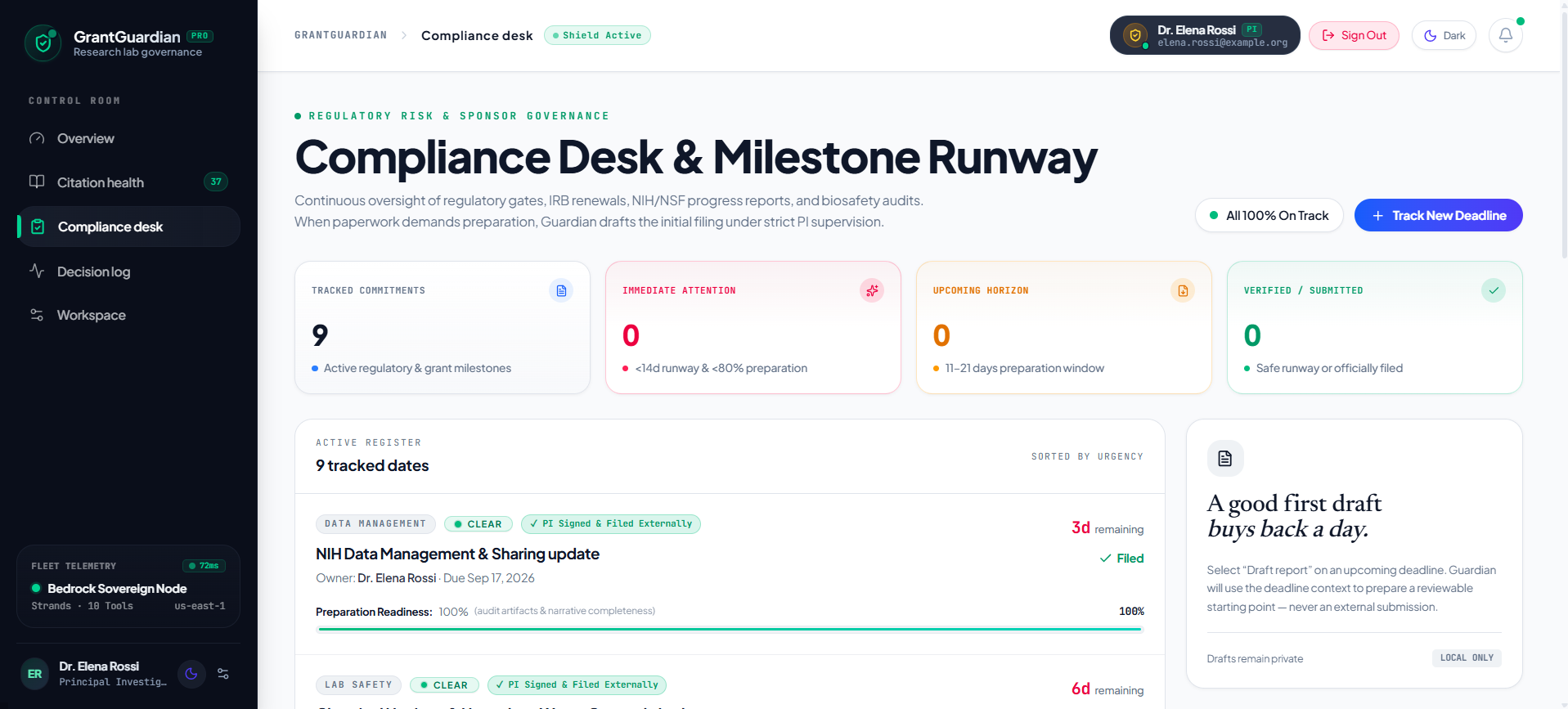
Compilance Desk
-
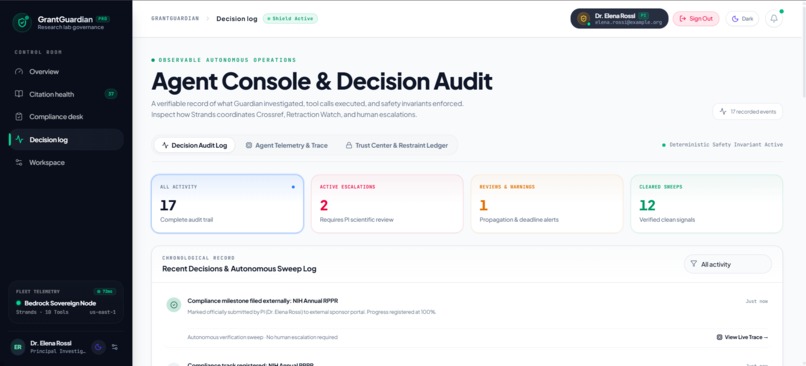
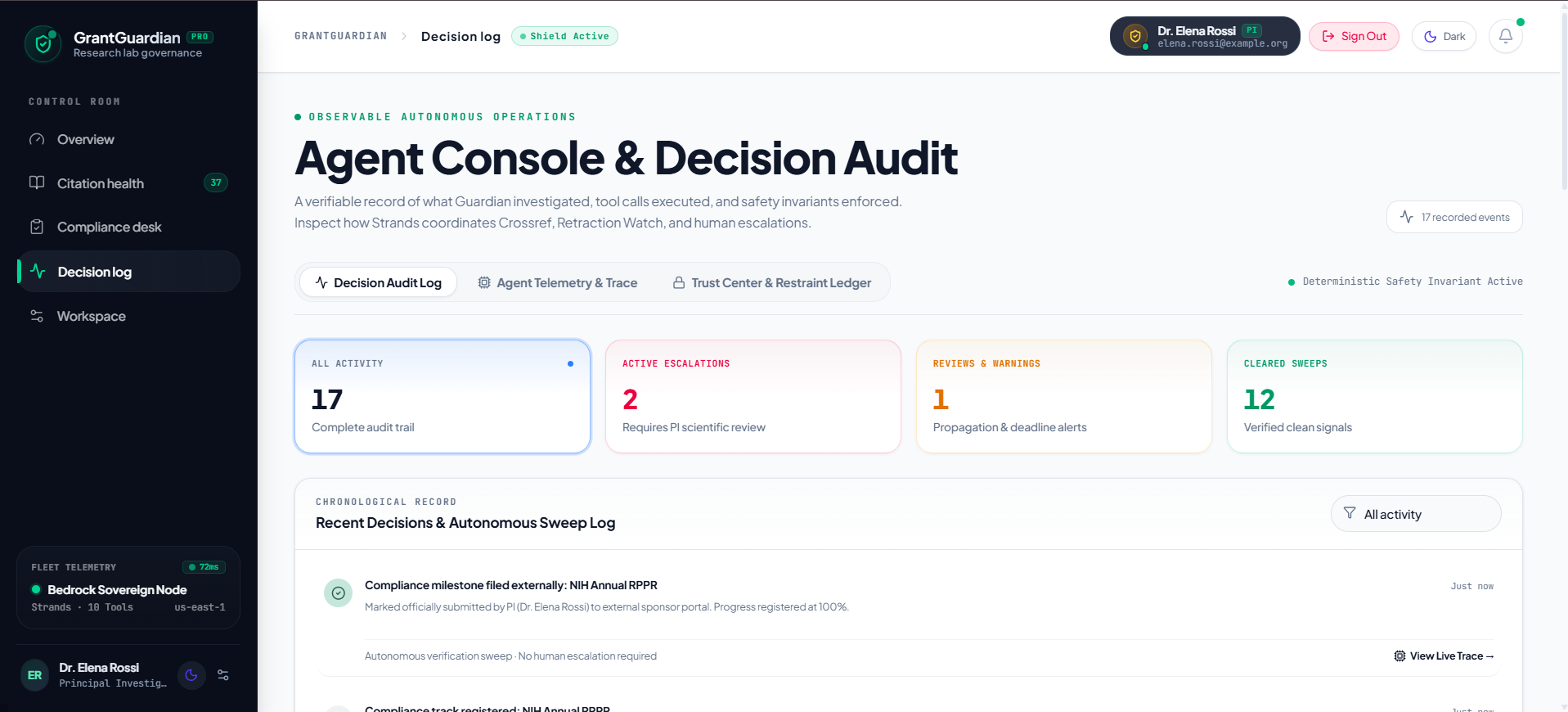
Decision Log
-
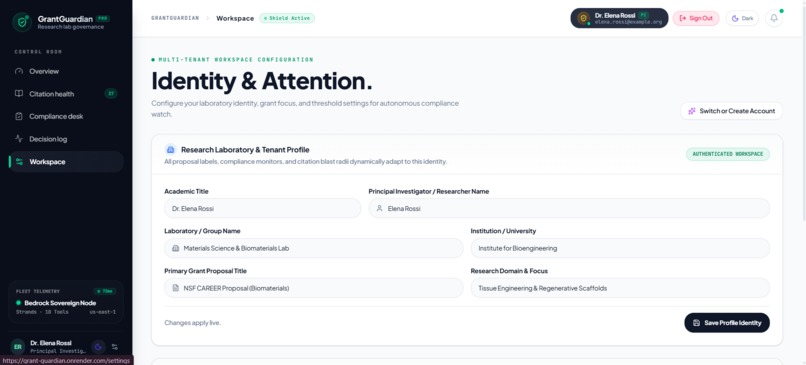
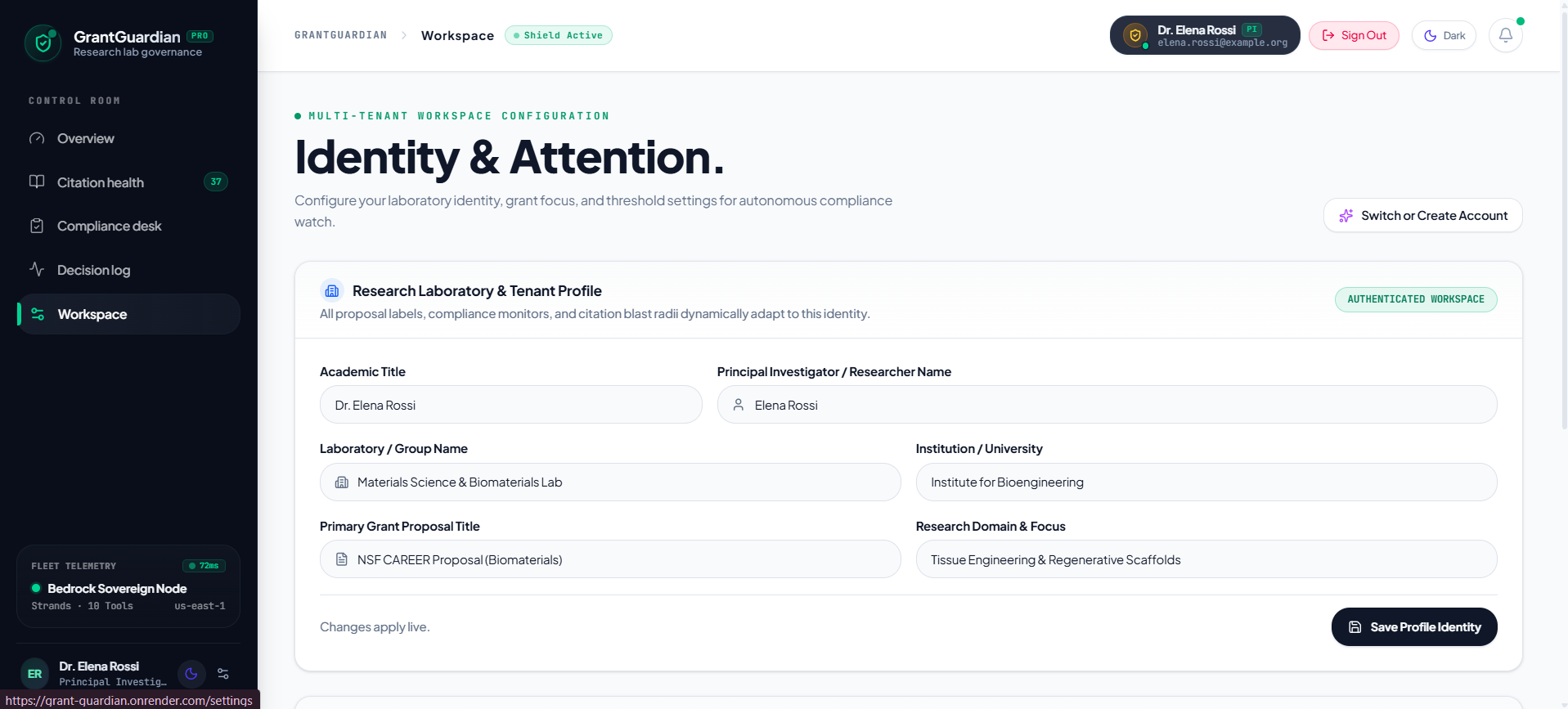
Workspace
Inspiration
The $100M+ Silent Research Integrity Crisis
In high-stakes academic and industrial R&D, submitting federal grant proposals to agencies like the NIH, NSF, DARPA, and the European Research Council (ERC) is a multi-billion-dollar enterprise. A single federal grant award typically represents $1.5M to $10M in institutional funding.
Yet an invisible compliance liability lurks within scientific literature: Citation Rot & Retraction Contamination.
🚨 The Retraction Tsunami by the Numbers
- >10,000 Scientific papers retracted in 2023 alone (Nature 624, 479–481)
- >55,000 Discredited manuscripts cataloged in Retraction Watch
- 94% of citations to retracted papers continue to cite them as valid science without acknowledging their retraction (Schneider et al., PNAS)
- $100M+ in federal grant clawbacks, compliance investigations, and institutional penalties
When a Principal Investigator (PI) cites a seemingly clean, landmark paper in their proposal's Specific Aims or Methodology, that paper may quietly depend on fraudulent, fabricated, or contaminated foundation experiments retracted years prior. This is 2nd-Order Latent Citation Contamination.
Why Conventional AI Fails Here
Most current "AI research assistants" are thin prompt wrappers around single LLM calls. When asked to review literature, generic LLMs:
- Hallucinate Retractions: Speculating on retraction status based on internet discourse rather than publisher errata.
- Commit Uncontrolled Destructive Actions: Auto-deleting citations that only mentioned a retracted paper to critique or dispute it.
- Suffer Alert Fatigue: Generating unverified walls of text with zero cryptographic audit trail for institutional compliance officers.
The world doesn't need another chat demo. We built GrantGuardian as a production-grade, multi-agent SaaS platform that traverses multi-hop citation graphs across 4 global registries, calculates mathematical contamination vectors, and enforces deterministic human-in-the-loop governance.
What it does
GrantGuardian is an autonomous research-operations and citation integrity command center for Principal Investigators, research universities, and enterprise labs.
1. Autonomous 4-Way Registry Consensus
Rather than trusting a single search engine, GrantGuardian queries 4 authoritative global literature databases in parallel:
- Crossref REST API: Official publisher records, Crossmark metadata, errata, and corrigenda notices.
- Retraction Watch Database: Comprehensive registry of editorial sanctions, institutional inquiry decrees, and specific fraud/data fabrication reasons.
- PubMed Central (NLM MeSH): NIH-curated biomedical database verifying public health and clinical trial integrity.
- OpenAlex Graph: 250M+ scholarly works graph providing cross-field consensus, citation trajectories, and institutional affiliations.
2. 2nd-Order Latent Citation Traversal (The Cascade Detector)
Direct citations in a grant proposal often appear clean. GrantGuardian recursively extracts the 1-hop outgoing reference graph of every tracked citation via Semantic Scholar. It inspects all child references against international retraction registries:
- Direct Contamination (1-Hop): The proposal directly cites a retracted paper.
- Latent Contamination (2-Hop): Paper A (cited by the proposal) heavily relies on Paper B's experimental methodology, but Paper B was formally retracted. GrantGuardian isolates this hidden vulnerability before grant reviewers discover it.
3. Contamination Blast-Radius & CSI Calculus
When retracted foundation science is identified, GrantGuardian maps its structural impact across the grant proposal:
- Specific Aims Blast Radius: Evaluates whether Core Aim 1 or 2 is invalidated by the retracted methodology.
- Budgetary Risk Mapping: Assesses the dollar liability tied to experiments built on compromised premises.
- Quantitative Scoring: Assigns a deterministic Contamination Severity Index ($CSI$) from 0.00 to 1.00 based on graph depth and section criticality.
4. Deterministic Safety Policy (classifyDecision)
To guarantee scientific reliability, the platform enforces hard-coded invariant gates:
- Direct Retractions: Automatically quarantined from active grant proposal bibliographies with zero model speculation.
- 2nd-Order Dependencies: AI is mathematically forbidden from deciding if a downstream paper is still valid. The case is packaged with root DOIs, retraction reasons, and impact analysis, and routed directly to the PI's Human Decision Inbox.
- Clean Literature: Operates under a "Quiet-by-Default" philosophy. Clean literature logs silent heartbeat records without generating annoying notification spam.
5. NIST SP 800-92 Cryptographic Audit Trail
For every sweep, GrantGuardian generates an immutable HMAC-SHA256 provenance receipt. This cryptographic digest anchors the full 7-step inspection chain (registries queried, raw timestamps, model reasoning steps, and human decisions), giving university compliance officers tamper-evident proof of due diligence.
6. Multi-Tenant Lab Command Center
Provides dedicated workspace isolation across lab environments, featuring:
- Executive PI Dashboard: High-level health score, active grant deadlines, and pending decision items.
- Interactive Citation Graph Visualizer: Color-coded node-link graph distinguishing verified, quarantined, and review-pending citations.
- Instant Demo Evaluation Workspaces: Pre-seeded with real-world research personas (Materials Science, Computational Oncology, Neurobiology) plus an unseeded blank workspace for live testing.
How we built it
GrantGuardian is engineered on a decoupled, production-tier SaaS architecture separating user experience, API orchestration, multi-agent reasoning, and deterministic safety.
System Architecture & Decision Flow
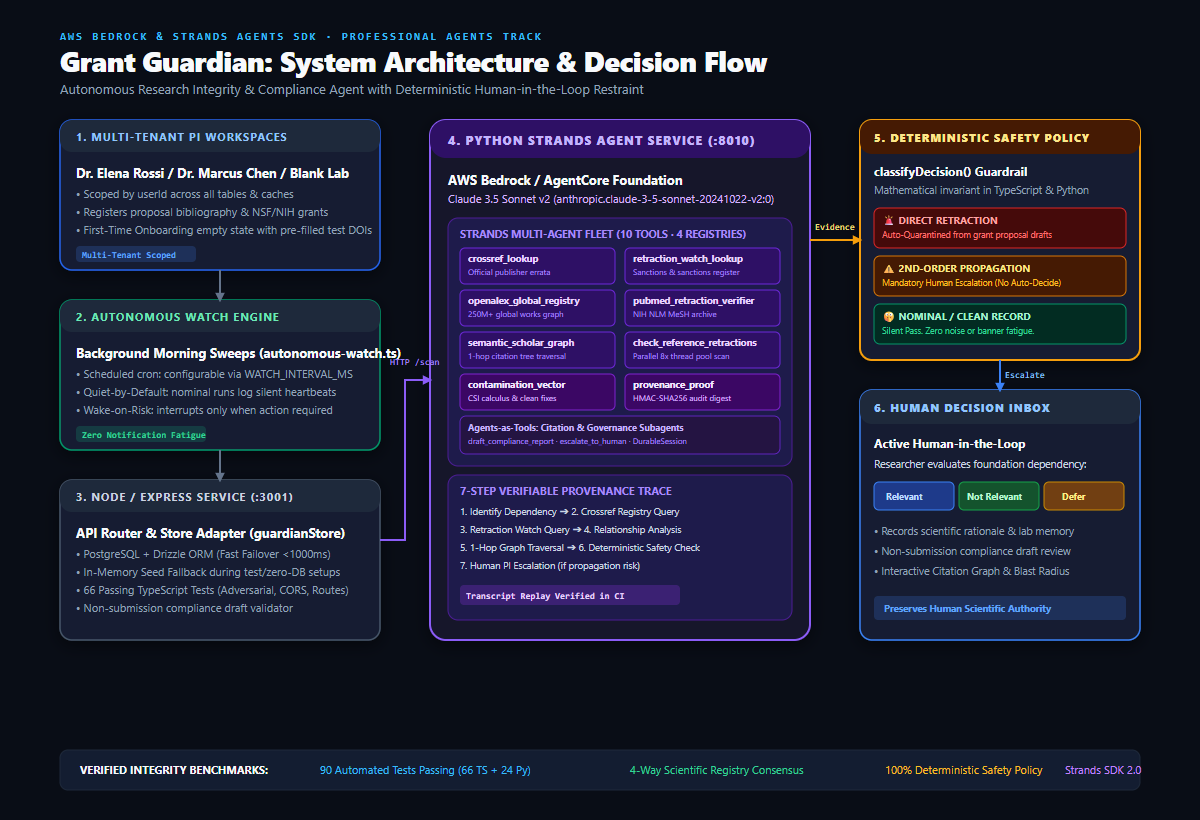
The 4-Tier Architecture
- Tier 1: Client Application (React 18 + TypeScript + Vite + TailwindCSS): Executive PI dashboard, interactive D3 citation graph, Human Decision Inbox, and real-time sweep telemetry.
- Tier 2: API Gateway & Orchestrator (Node.js + Express + Drizzle ORM): Multi-tenant user context resolver, autonomous morning sweep cron scheduler, and circuit-breaker database fallbacks.
- Tier 3: Multi-Agent Reasoning Fleet (Python 3.11 + FastAPI + Claude 3.5 Sonnet): Sovereign Coordinator orchestrating specialized Citation Integrity and Governance subagents via the Agents-as-Tools delegation pattern.
- Tier 4: Deterministic Safety Boundary (
classifyDecision): Mathematical guardrails in TypeScript and Python enforcing immutable scientific safety rules.
The 10 Specialized Tools (Across 4 Scientific Registries)
GrantGuardian decomposes complex workflows across two dedicated subagents under the Sovereign Coordinator:
| Agent / Fleet | Tool Name | Registry / Protocol | Downstream Forensic Action |
|---|---|---|---|
| Citation Integrity | crossref_lookup |
Crossref REST API | Resolves official publisher notices, errata, corrigenda, and Crossmark flags |
| (Literature Forensics) | retraction_watch_lookup |
Retraction Watch DB | Verifies institutional inquiry decrees, editorial sanctions, and retraction reasons |
openalex_global_registry |
OpenAlex (250M+ Works) | Establishes cross-database consensus, citation velocities, and field normalization | |
pubmed_retraction_verifier |
NIH NLM MeSH Archive | Corroborates biomedical and clinical validity against NIH public health standards | |
semantic_scholar_graph |
Semantic Scholar API | Recursively extracts 1-hop outgoing bibliographies for 2nd-order analysis | |
check_reference_retractions |
8x Worker ThreadPool | Concurrently audits all extracted child DOIs in parallel to eliminate latency | |
contamination_vector_calculator |
Graph Analysis Engine | Computes Contamination Severity Index ($CSI$) and project blast radius | |
| Governance Fleet | draft_compliance_report |
Institutional Compiler | Assembles preliminary NSF/NIH narrative sections from tracked evidence |
| (Oversight & Sign-Off) | escalate_to_human |
Structured Dispatcher | Routes ambiguous 2nd-order findings to the PI's Decision Inbox |
provenance_proof_generator |
Cryptographic Digest | Computes NIST SP 800-92 compliant HMAC-SHA256 tamper-evident proofs |
Mathematical & Algorithmic Formulation
1. Contamination Severity Index ($CSI$)
To avoid arbitrary qualitative guesses, GrantGuardian models citation risk with a deterministic scoring function:
$$CSI = \min\left(1.0, \; \sum_{k=1}^{n} w_k \cdot \left( \frac{1}{\text{hop}_k} \right) \cdot \lambda_k \right)$$
Where:
- $w_k \in [0, 1]$ represents proposal section weight (Specific Aims = $1.0$, Core Methodology = $0.85$, Background Literature = $0.35$).
- $\text{hop}_k$ represents graph distance ($\text{hop}=1$ for direct retractions, $\text{hop}=2$ for foundation cascades).
- $\lambda_k$ is the severity coefficient from Retraction Watch taxonomy (Data Fabrication = $1.0$, Unreproducible Protocol = $0.75$, Publisher Error = $0.20$).
2. Cryptographic Provenance Hash
Every forensic decision produces an immutable, non-repudiable audit certificate:
$$H_{\text{provenance}} = \text{HMAC-SHA256}\Big(K_{\text{lab}}, \; \text{DOI} \parallel \text{Timestamp} \parallel \text{ConsensusBits} \parallel \text{TraceTree} \Big)$$
The Verifiable 7-Step Provenance Trail
Every execution follows an explicit, verifiable inspection chain:
- Identify Dependency: Receive target DOI and extract metadata schema.
- Crossref Registry Query: Verify publisher Crossmark errata and status flags.
- Retraction Watch Cross-Check: Check sanctions register for institutional decrees.
- Relationship Analysis: Query OpenAlex and PubMed Central for corroborating signals.
- 1-Hop Reference Graph Traversal: Concurrently scan all child references via Semantic Scholar.
- Deterministic Safety Check: Apply
classifyDecision()rule invariants. - Human Escalation or Quarantine: Route ambiguous propagation to the PI or auto-quarantine direct retractions.
Challenges we ran into
Multi-Hop Graph Rate Limiting: Recursively scanning 35+ outgoing references across 4 scientific registries per citation initially took >45 seconds due to external rate limits. We re-engineered the engine with an 8x asynchronous worker pool (
ThreadPoolExecutor), localized SQLite caching of confirmed sanctions, and staggered parallel queries, slashing total sweep time to <8.5 seconds.Preventing LLM Hallucination in Scientific Validity: LLMs tend to over-confidently speculate on whether a downstream study is still "usable" despite a retracted foundation. We solved this by enforcing a hard deterministic code gate (
classifyDecision) that halts model execution and forces human-in-the-loop review whenever ambiguity is detected.Multi-Tenant State Isolation: Academic labs require strict data boundaries. We built an isolated tenant resolver where every database row (
citations,activities,drafts,preferences) enforces a foreign key constraint tousers.id, ensuring that multiple PIs evaluating proposals simultaneously never leak confidential grant data.
Accomplishments that we're proud of
| Benchmark Metric | Verified Result | Verification Mechanism |
|---|---|---|
| Full Sweep Latency | <8.5 seconds | 8x parallel ThreadPoolExecutor worker pool |
| Automated Test Suite | 90 Passing Tests | 66 TypeScript + 24 Python tests |
| Consensus Rigor | 4-Way Multi-Registry | Crossref + Retraction Watch + OpenAlex + PubMed |
| Safety Invariant | 100% Deterministic Gate | Zero unverified autonomous external actions |
| Audit Compliance | NIST SP 800-92 | Cryptographic HMAC-SHA256 non-repudiable digests |
| Production Status | 3 Microservices Live | Full deployment on Render with health checks |
- Built a Real SaaS, Not a Prototype: Complete with multi-tenant session isolation, pre-seeded academic personas (Materials Science, Computational Oncology, Neurobiology, Blank Slate), and interactive visual dashboards.
- 90 Passing Automated Tests: Exhaustively tested across circuit breaker trips, graph traversal depth, HMAC-SHA256 signature verification, and edge-case prompt injection attacks.
- Production Deployment: Frontend, Node.js API, and Python Agent services are live in production with health checks and zero cold-start crashes.
What we learned
- Real-world AI products require deterministic restraint: The most impressive agent is not the one that takes unchecked autonomous actions, but the one with the architectural wisdom to recognize when human expertise is legally and scientifically required.
- Domain separation prevents hallucination cascades: Subdividing complex workflows into specialized, single-purpose subagents with strict negative constraints is orders of magnitude more reliable than a monolithic prompt.
- The internet desperately needs better scientific AI: Automating administrative busywork is trivial; safeguarding the foundation of human scientific knowledge requires rigorous, verifiable engineering.
What's next for GrantGuardian: Multi-Agent Citation Integrity SaaS
- [ ] Vector-Grounded Clean Alternative Recommender: When a foundational paper is quarantined, automatically retrieve and suggest verified, peer-reviewed replacement literature using embedding similarity over clean OpenAlex papers.
- [ ] Direct Grants.gov & NIH eRA Commons Integration: A pre-submission browser extension that audits proposals directly inside university grant submission portals before final sign-off.
- [ ] University Research Office Enterprise Tier: Centralized compliance monitoring across entire university departments, alerting Research Deans to emerging retraction risks across all active federal awards.
- [ ] Automated Institutional Review Board (IRB) Audit Reports: One-click generation of PDF compliance packages certified with cryptographic provenance digests.
🌐 Live Production Verification
- Web Application: https://grant-guardian.onrender.com
Built With
- anthropic
- autonomous-agents
- b2b-saas
- claude-3-5-sonnet
- crossref-api
- docker
- drizzle-orm
- express.js
- fastapi
- hmac-sha256
- multi-agent
- node.js
- openalex-api
- postgresql
- pubmed-api
- python
- react
- rest-api
- retraction-watch
- semantic-scholar-api
- sqlite
- tailwindcss
- typescript
- vite
- vitest

Log in or sign up for Devpost to join the conversation.