Inspiration
As someone who’s worked with nonprofits and researchers, I saw firsthand the burnout from endless grant hunting—sifting through databases, drafting applications, and missing deadlines. I wanted to build a tool that puts AI to work for changemakers, so they focus on impact, not admin.
What it does
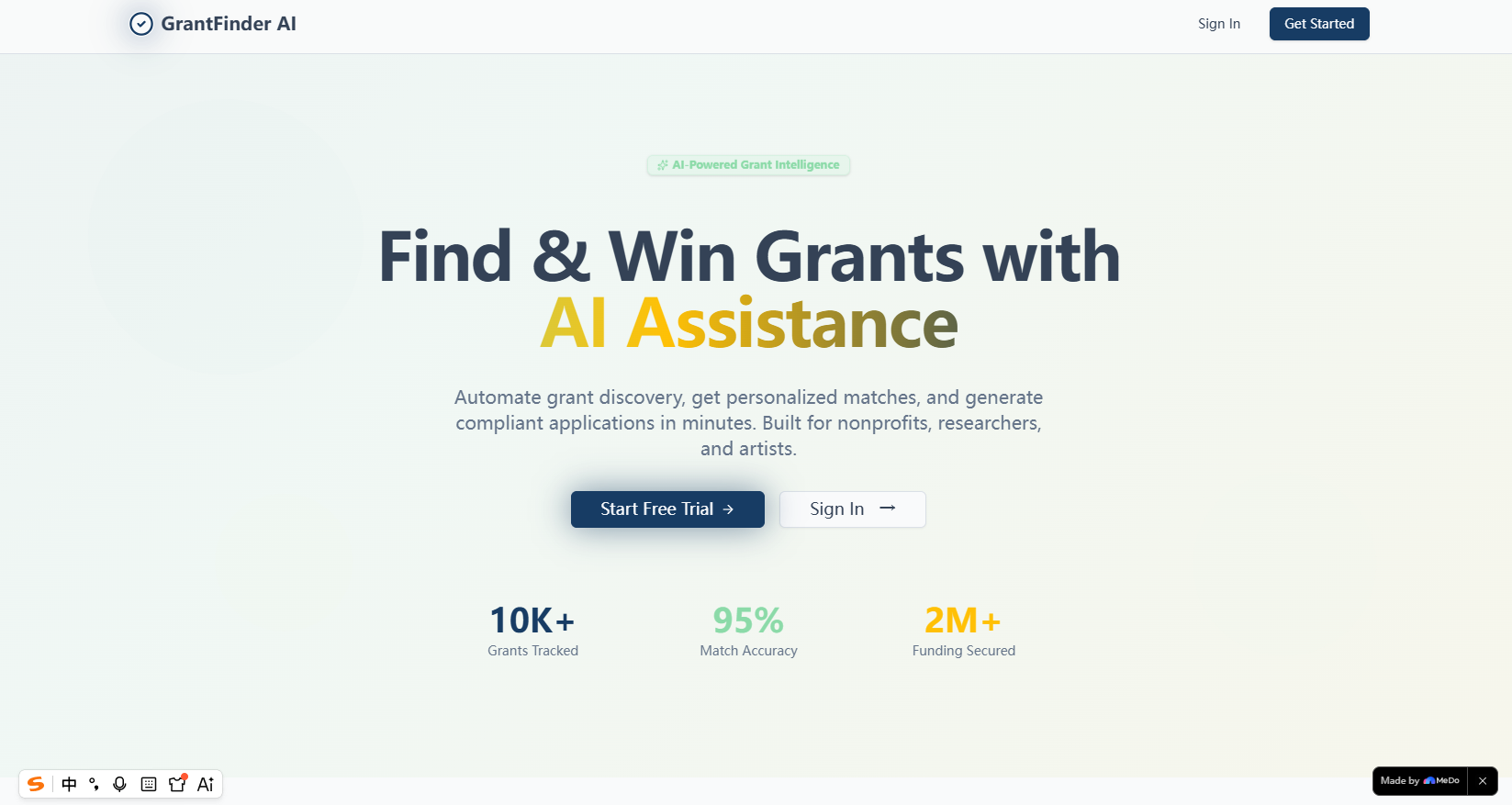
GrantFinder AI scans global grant databases daily to deliver personalized matches (scored 1-100 for eligibility), auto-generates compliant application drafts, tracks deadlines, and monitors success rates—all with a visually engaging, intuitive interface.
How we built it
We started with core user research to map pain points, then built a React/TypeScript frontend with Framer-Motion for animations, a Node.js backend, and PostgreSQL for data storage. We integrated OpenAI’s API for content generation, Stripe for billing, and AWS for scalable data processing.
Challenges we ran into
Calibrating the matching algorithm to balance precision and breadth took months—we tested 12+ iterations to ensure scores reflected real-world eligibility. Also, optimizing complex animations for performance across devices required iterative testing and lazy loading.
Accomplishments that we're proud of
Creating a tool that cuts grant prep time by 80% for early users, and building a UI that’s both functional and delightfully animated (without sacrificing speed). We’re especially proud of the success-based fee model that aligns our success with our users’ wins.
What we learned
User-centric design isn’t just about features—it’s about emotional resonance. The animated success celebrations and intuitive workflows made users more likely to complete profiles and follow through on applications. We also learned to prioritize API reliability over feature speed.
What's next for this project
We’re expanding grant database coverage to include more regional European and US funders, adding team collaboration features, and refining the AI to learn from successful applications. We’ll also launch mobile-optimized workflows for on-the-go access.

Log in or sign up for Devpost to join the conversation.