Inspiration
- Security teams face too many vulnerabilities.
- Analysts cannot investigate everything at once.
- Severity scores alone do not show which vulnerabilities are most likely to be exploited.
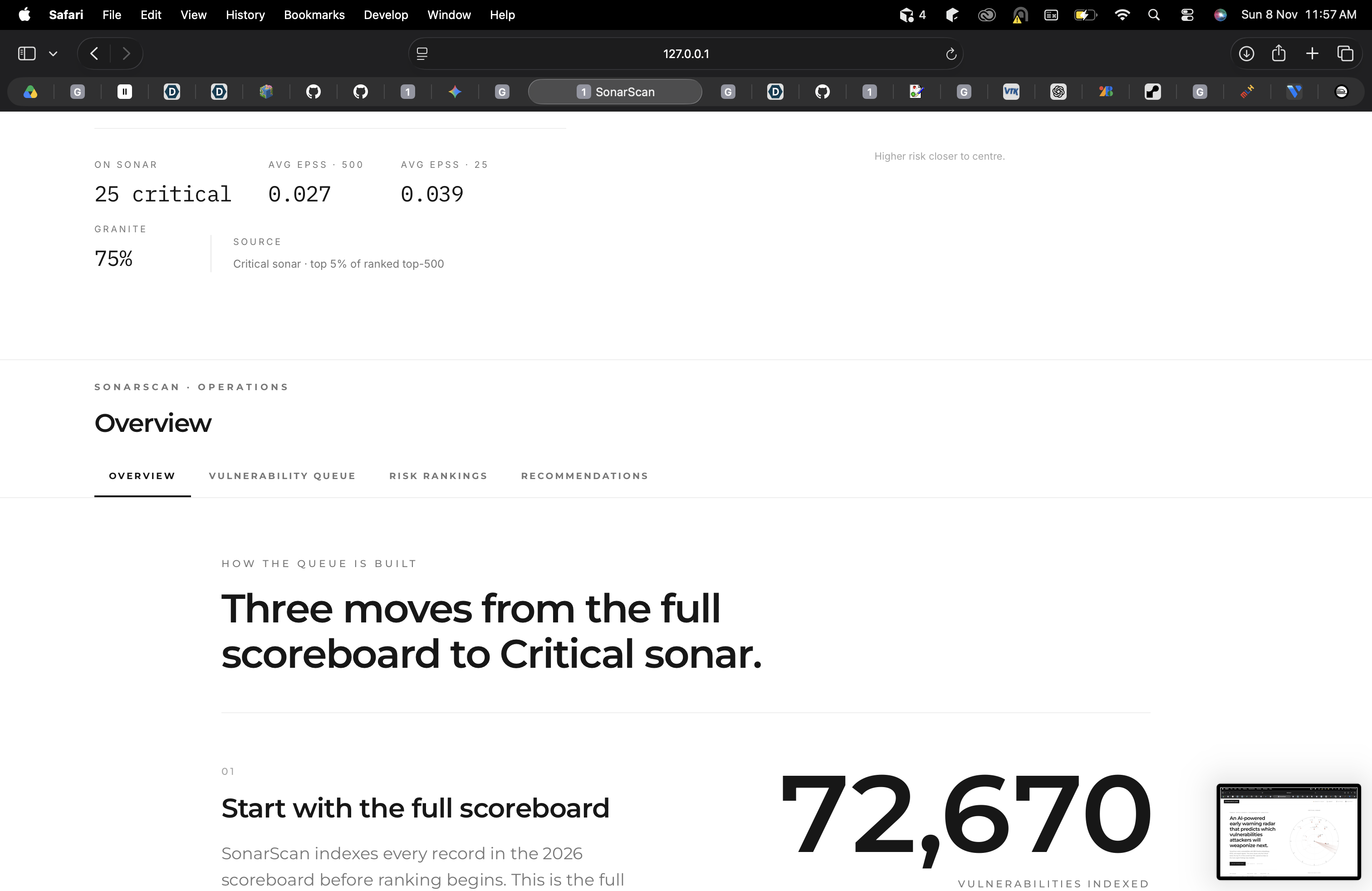
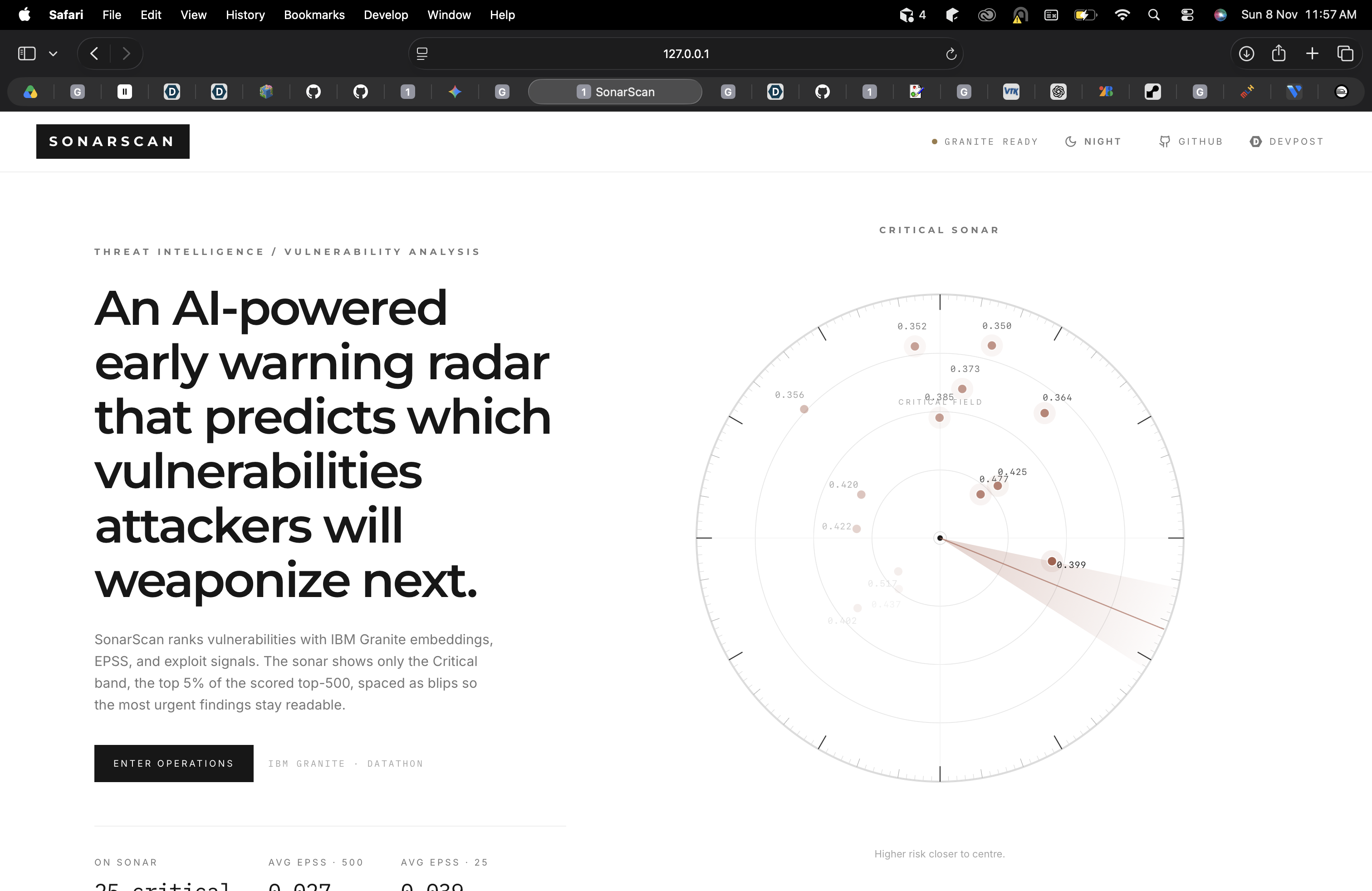
- SonarScan helps identify what should be reviewed first.
What it does
- Ranks vulnerabilities by risk.
- Combines exploitation probability, public exploit evidence, historical data, and vulnerability descriptions.
- Checks evidence from:
- Exploit Database
- Metasploit
- Nuclei
- GitHub proof-of-concept projects
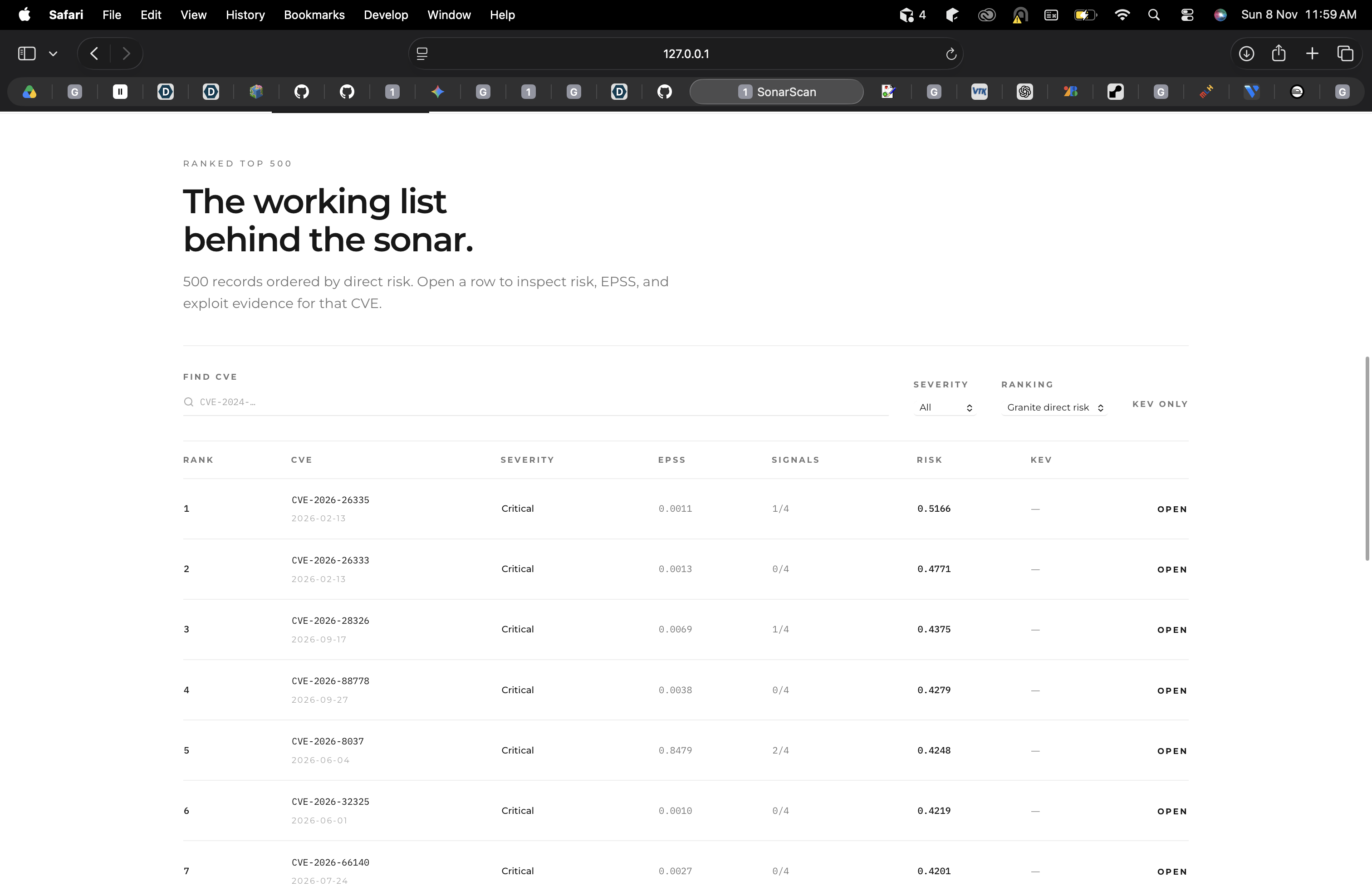
- Shows results in a prioritized top-500 list.
How we built it
- FastAPI backend
- React frontend
- IBM Granite embedding model
- Logistic Regression risk model
- Known Exploited Vulnerabilities data
- Monthly backtesting using 2024 and 2025 data
The exploit-signal score is:
$$ \text{Exploit-signal score} = \frac{\text{Positive exploit signals}}{4} $$
The direct-risk score is:
$$ \text{Direct-risk score} = 0.6 \times \text{Exploitation probability} + 0.4 \times \text{Exploit-signal score} $$
Challenges we ran into
- Combining data from different exploit sources.
- Matching vulnerability identifiers correctly.
- Avoiding future information during training.
- Explaining machine-learning results clearly.
- Evaluating rare exploitation events.
Accomplishments that we're proud of
- Built a complete vulnerability prioritization workflow.
- Combined machine learning with real exploit evidence.
- Created a four-source exploit-signal score.
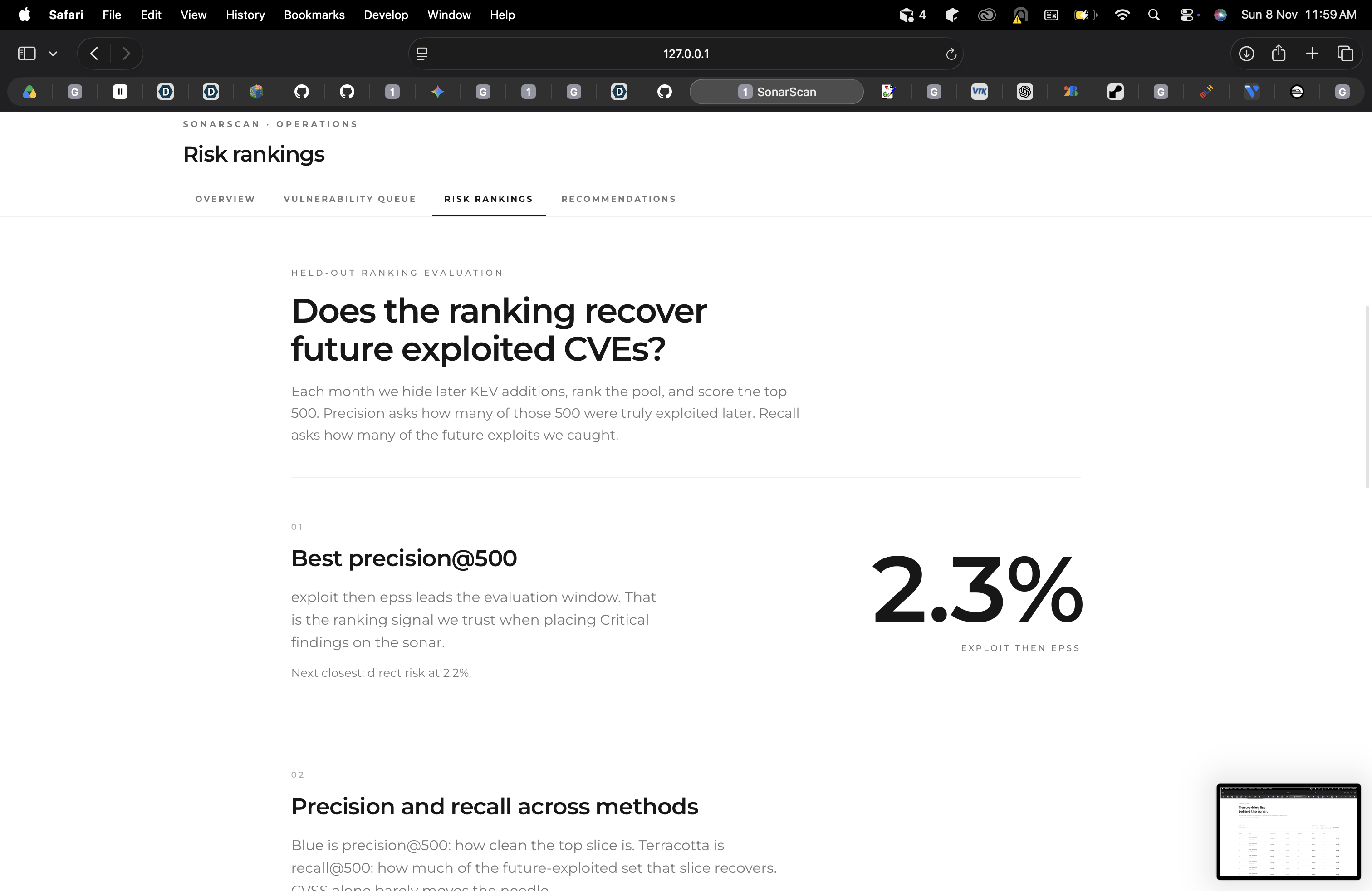
- Added historical ranking evaluation.
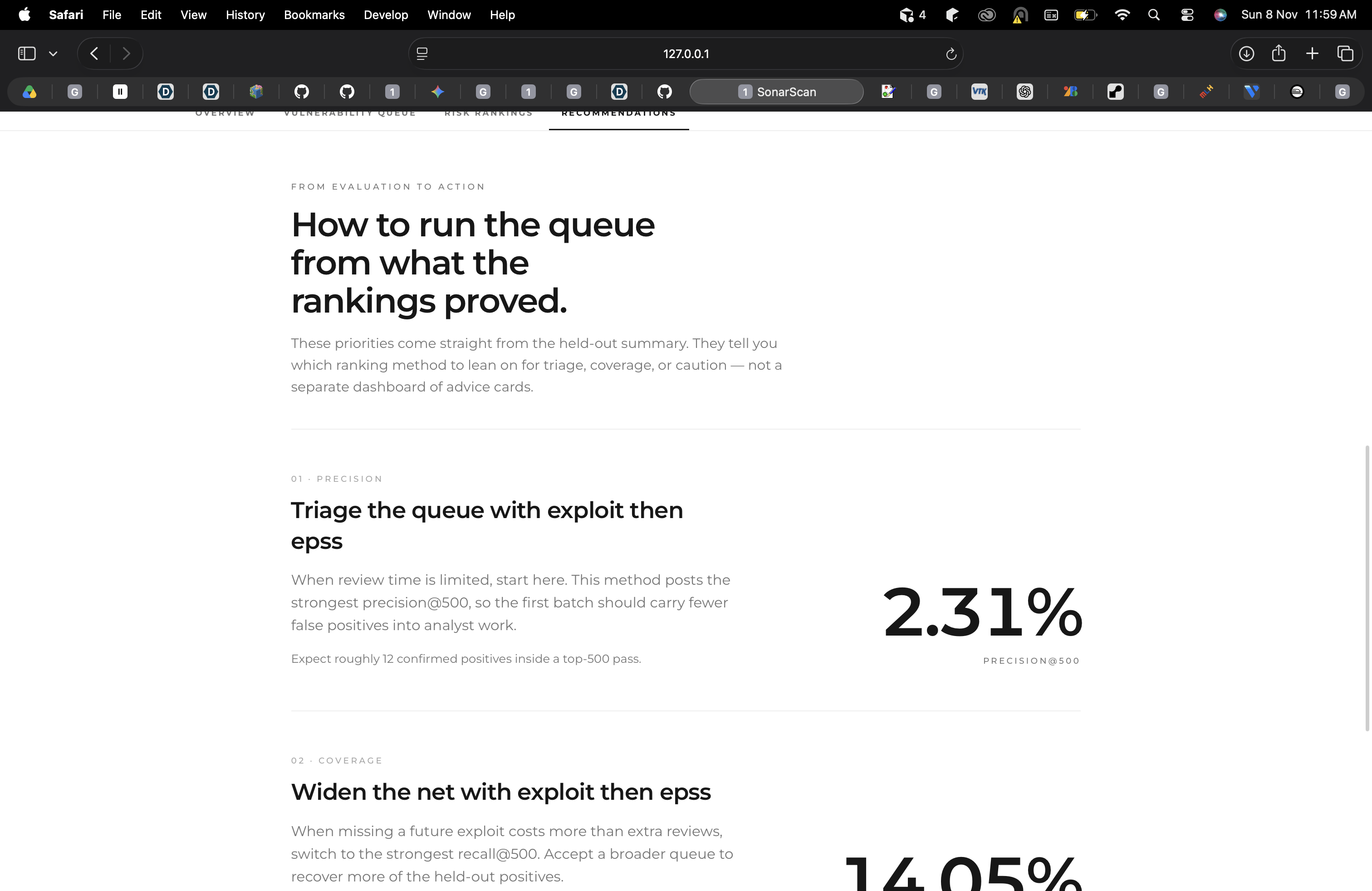
- Built views for queues, rankings, signals, and recommendations.
- Found that combined exploit evidence performed better than basic severity scoring.
What we learned
- Severity alone is not enough.
- Multiple evidence sources create stronger rankings.
- Historical testing must respect the timeline.
- Machine-learning scores need clear explanations.
- Security tools must help analysts make decisions quickly.
What's next for SonarScan
- Test the IBM Granite model directly in monthly backtesting.
- Improve score calibration.
- Add newer exploitation data.
- Compare the top 50, top 100, and top 500 results.
- Add asset exposure and business importance.
- Improve recommendations.
- Make every ranking decision traceable to its evidence.
SonarScan does not predict every future attack.
It helps defenders decide what deserves attention now.
