-
-
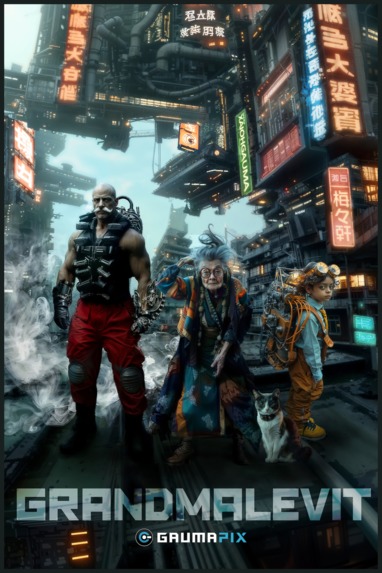
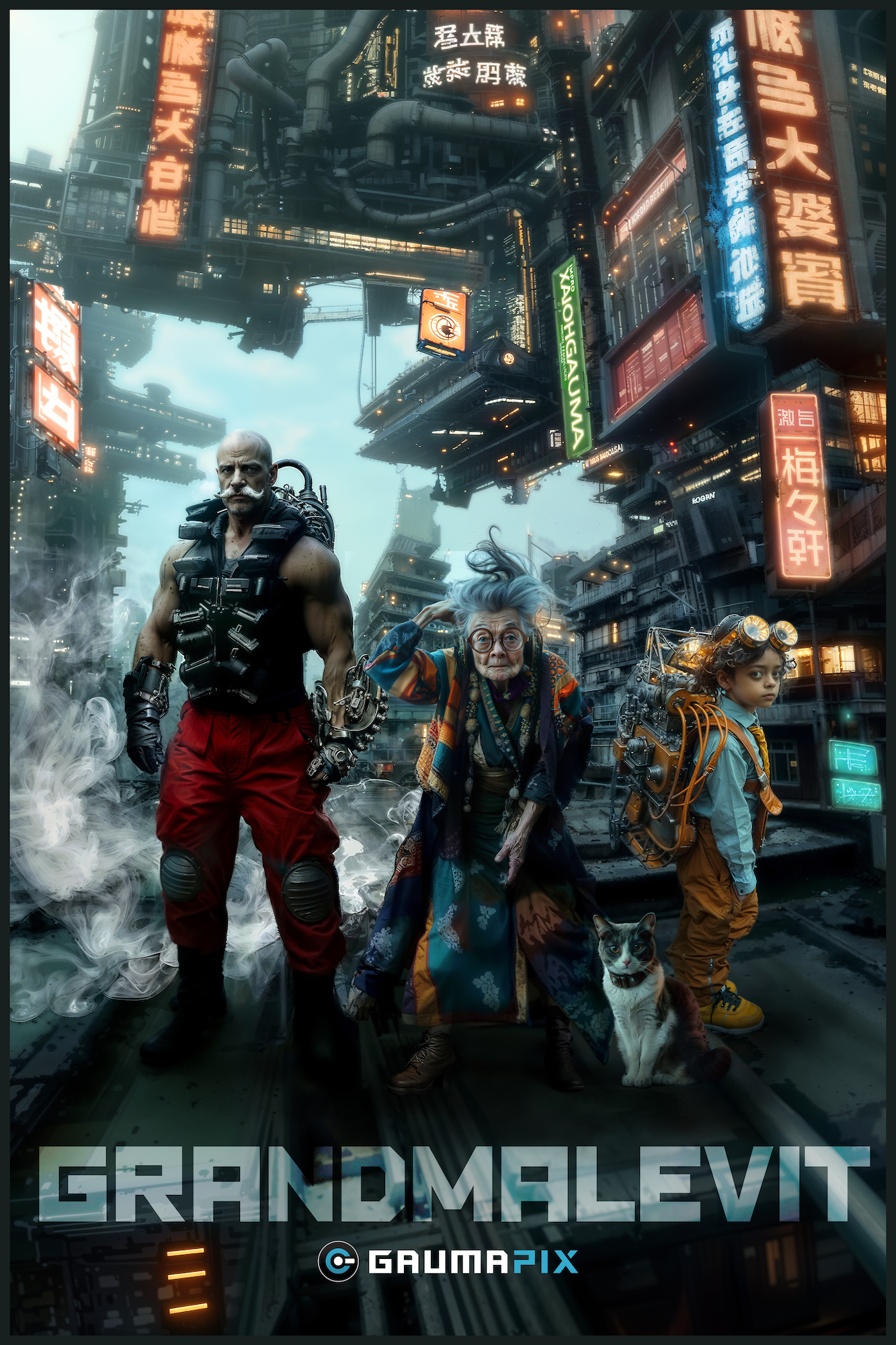
GRANDMALEVIT poster
Inspiration
I have been working as a film director in Japan for over 20 years. This time, I created a science fiction work—my specialty genre—using AI. By utilizing AI tools, I was able to create freely what I had previously been unable to make due to budget and time constraints.
Synopsis
Set in a distant future on a fictional island nation, this story follows the conflict between "Evolved Automatons"—robots capable of self-directed evolution—and the psychics tasked with suppressing their rampages. At the heart of the tale is an elderly woman named Levit, whose inner struggle and unwavering beliefs shape the fate of a city where humans and machines attempt to coexist. As the ideals of ever-evolving machines and those of humanity collide, what future awaits, led by Levit's final choice?
How we built it
The production structure centered around the director working with a human assistant and multiple AI tools. The assistant handled generation, verification, ethical considerations, and safety judgments, creating videos based on the director's images and instructions. The director was responsible for editing and generating images to maintain consistency. Humans made all decisions regarding AI tool selection and usage. We also employed our usual live-action staff when necessary—for example, an action director created pre-visualization for action scenes.
For the technical workflow, we first created images using tools like Midjourney, then converted them into videos using Runway Gen4, and applied upscaling with Topaz to enhance texture quality. We used many different AI tools depending on the purpose. For aspects that AI couldn't modify properly, we manually handled them using Photoshop and After Effects, particularly for text elements like signs, which we mostly corrected by hand as AI alone couldn't achieve the desired results.
Challenges we ran into
At the time we started to work for this film (Oct, 2024), AI could only generate 2 seconds per shot, and those 2 seconds were limited to slow-motion only. This made creating a feature-length film extremely challenging. Text elements, particularly signs and lettering, proved difficult to control with AI alone and required extensive manual correction using Photoshop and After Effects. The actual AI production work took approximately 3 months from the end of 2024 to February 2025, and even after completion, we still needed to find theaters willing to screen the film.
Accomplishments that we're proud of
This film is the first AI movie ever to be released theatrically in Japan. It has also been selected for many film festivals, including the Trieste Science+Fiction Festival in Italy.
What we learned
We learned the importance of strategic AI tool selection and the critical role of human decision-making in the creative process. The production required balancing multiple AI tools—each serving specific purposes—with human judgment for verification, ethics, and safety considerations. We also learned that while AI technology is powerful, human intervention through traditional tools like Photoshop and After Effects remains essential for achieving the desired final quality, especially for details that AI cannot yet handle effectively.
What's next for GRANDMALEVIT
GRANDMALEVIT's story continues, so we want to create a sequel.
Built With
- akool-music-composition:-suno-voice-synthesis:-elevenlabs
- hailuo
- image-generation:-midjourney
- kling
- leonardo.ai-video-generation/editing:-runway
- pika
- topaz
- veo-2

Log in or sign up for Devpost to join the conversation.