-
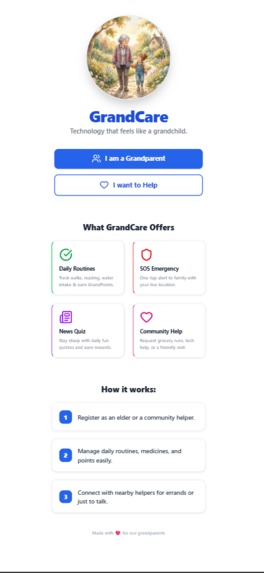
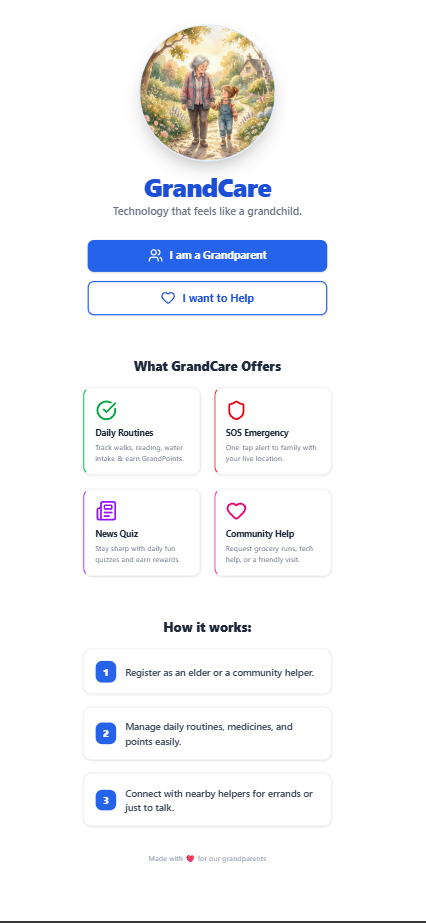
landing page
-
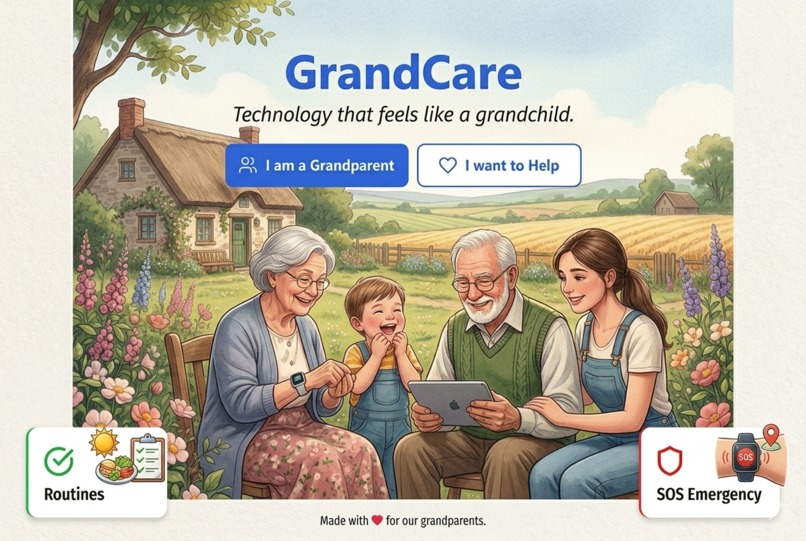
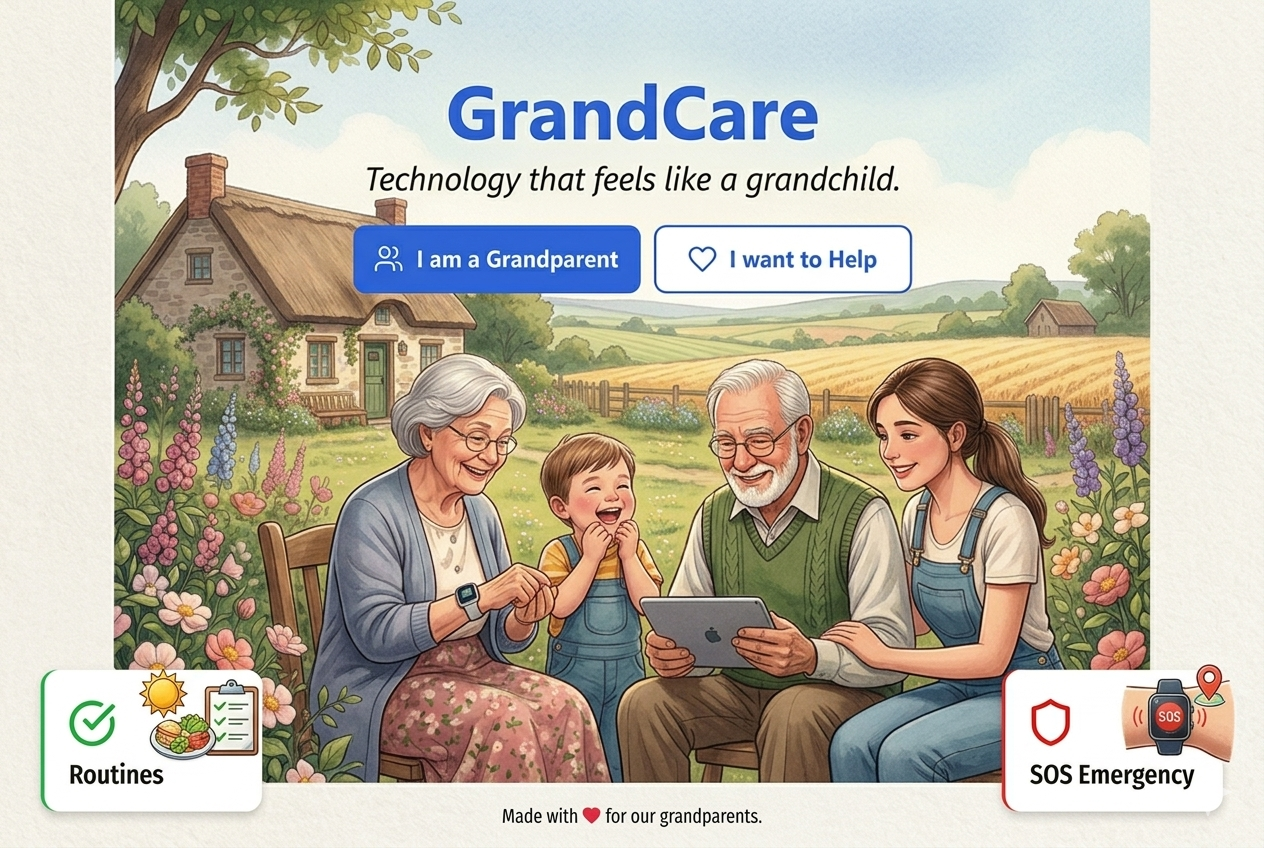
thumbnail
-
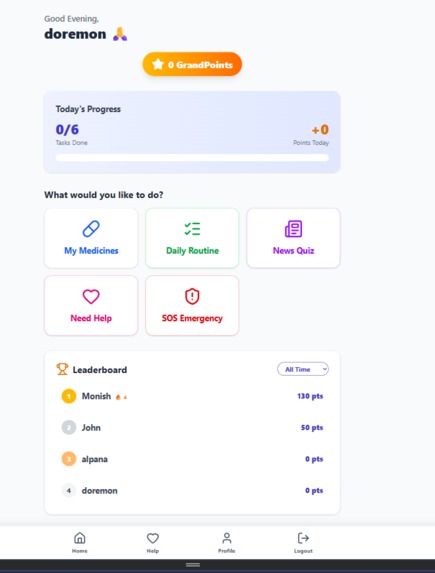
starting page
-
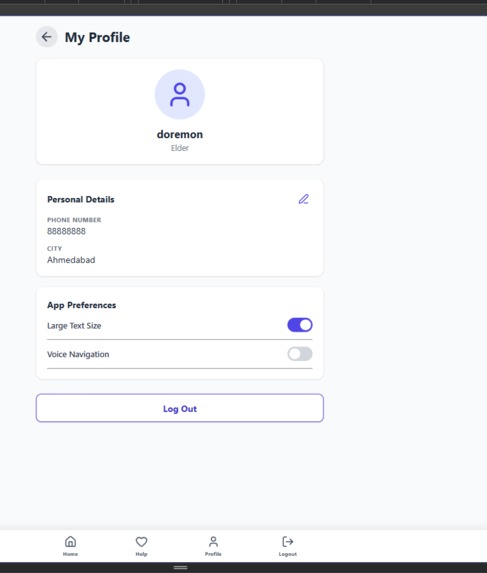
profile
-
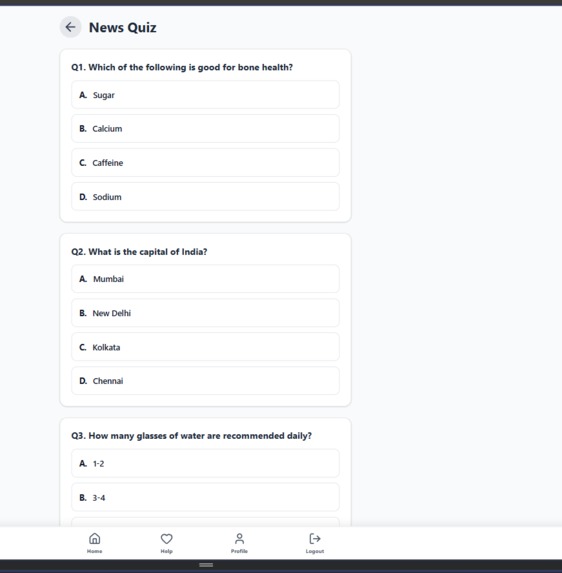
feature 2
-
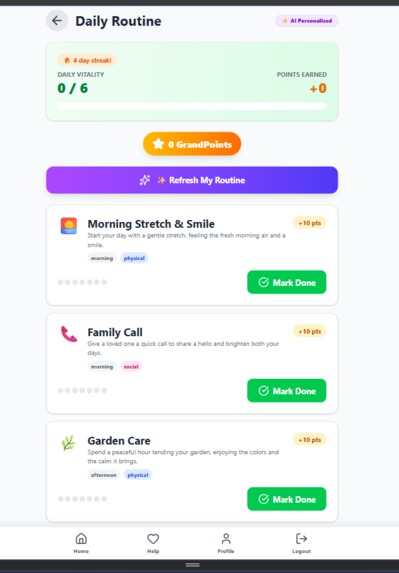
feature no.1 total 4to5 feature
Inspiration
While walking in the garden, I get a good conversation with a cybersecurity officer. He suggests to me having some app on our grandparent's help and for their enjoyment, so I get an idea and start grinding this web app...
Over 150 million elderly Indians** live with limited family. support, complex medicine schedules, and no fast way to get help in an emergency. Most apps are built for the young, the fast, and the tech-literate. Nobody was building for them.
GrandCare Nova was born from one simple question: What if technology could feel like a grandchild?
What It Does
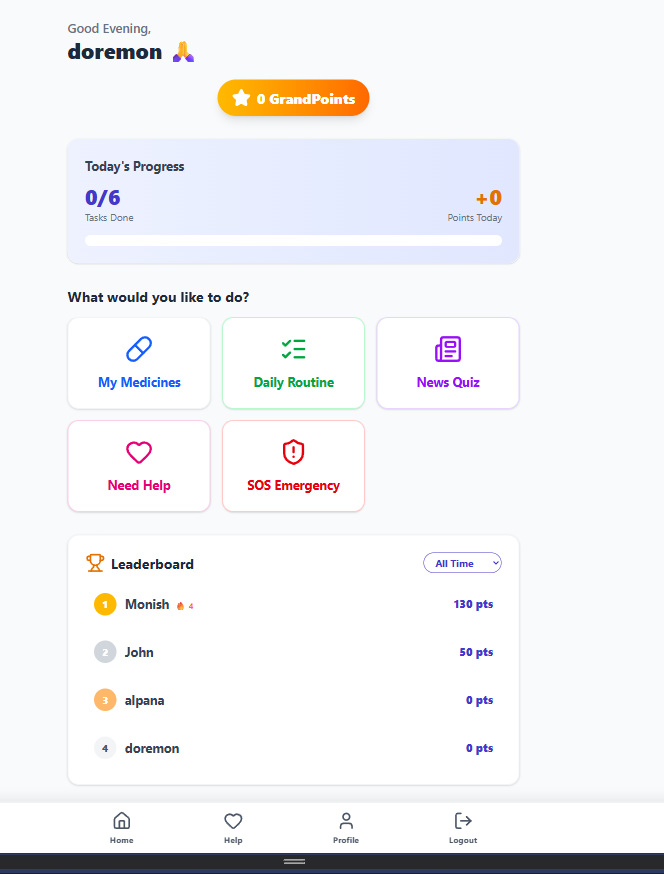
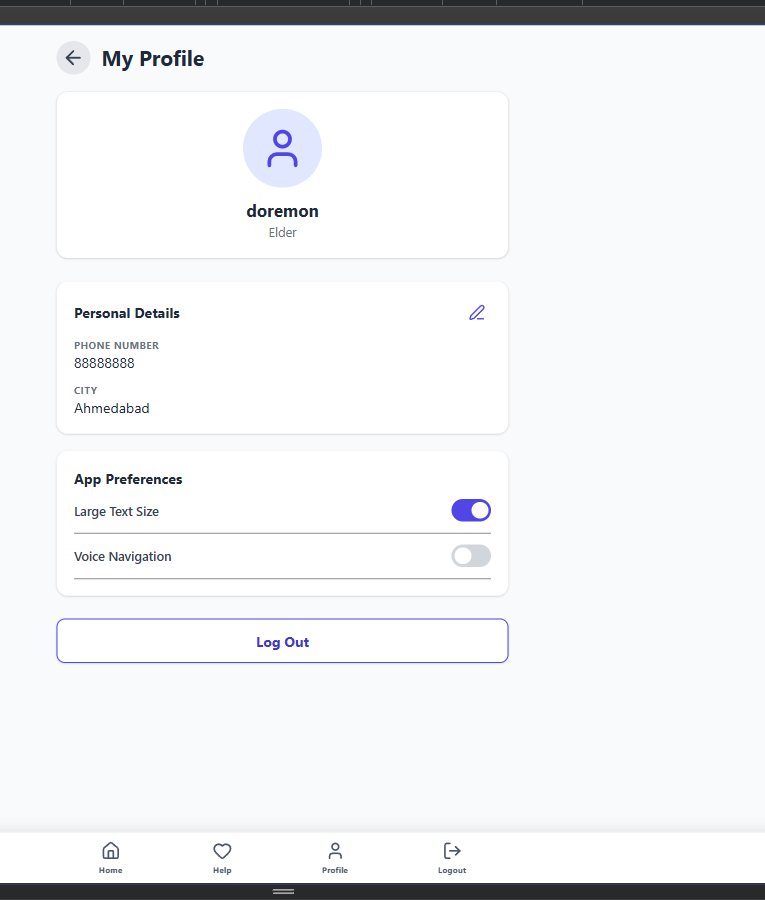
GrandCare Nova is a role-based web application with two users: Grandparents (elders) and community helpers (young volunteers)
Built on one core principle: "Fewer taps, bigger purpose." Every feature is reachable in 2 clicks from the dashboard.
💊 Smart Medicine Companion
- Type a medicine name → app auto-fills purpose, dosage and warnings from the OpenFDA API (no manual data entry)
- 7-day dose streak tracker per medicine
- Refill counter — shows "Running Low" badge when pills are low
- If a dose is missed by 2+ hours → WhatsApp alert sent to family automatically via node-cron background job
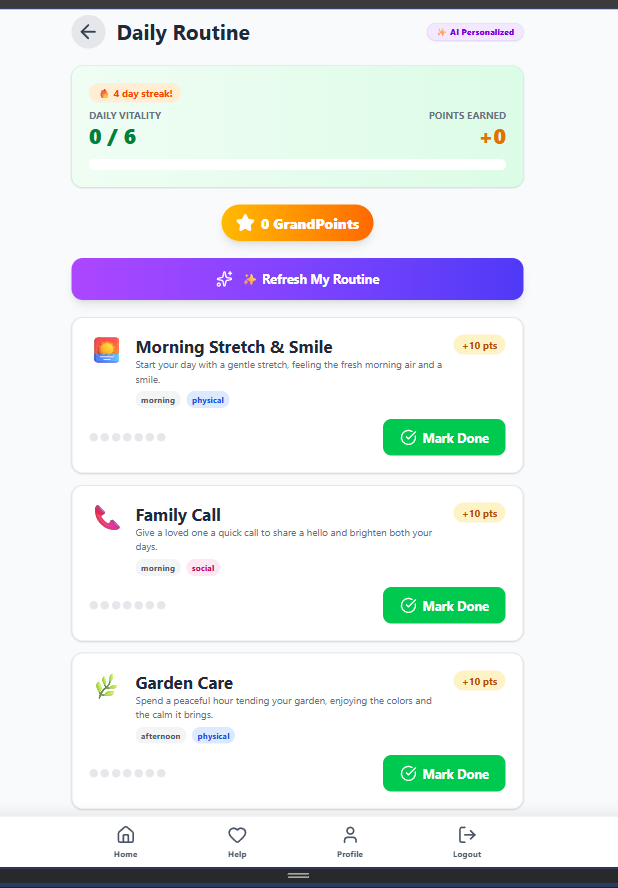
📋 AI-Personalized Daily Routine
- A 7-step health onboarding questionnaire asks about diseases, mobility, habits, sleep, social life and goals
- Grok AI (xAI) reads every answer and generates a fully personalized daily task list — a diabetic gets blood sugar checks, someone with arthritis gets no high-impact exercises
- GrandPoints gamification — earn points for every task
- Weekly adaptive difficulty — Grok adjusts tasks based on 7-day completion rate (easier if struggling, harder if thriving)
- Daily mood check-in — poor mood for 3 days → family gets a gentle WhatsApp nudge to check in
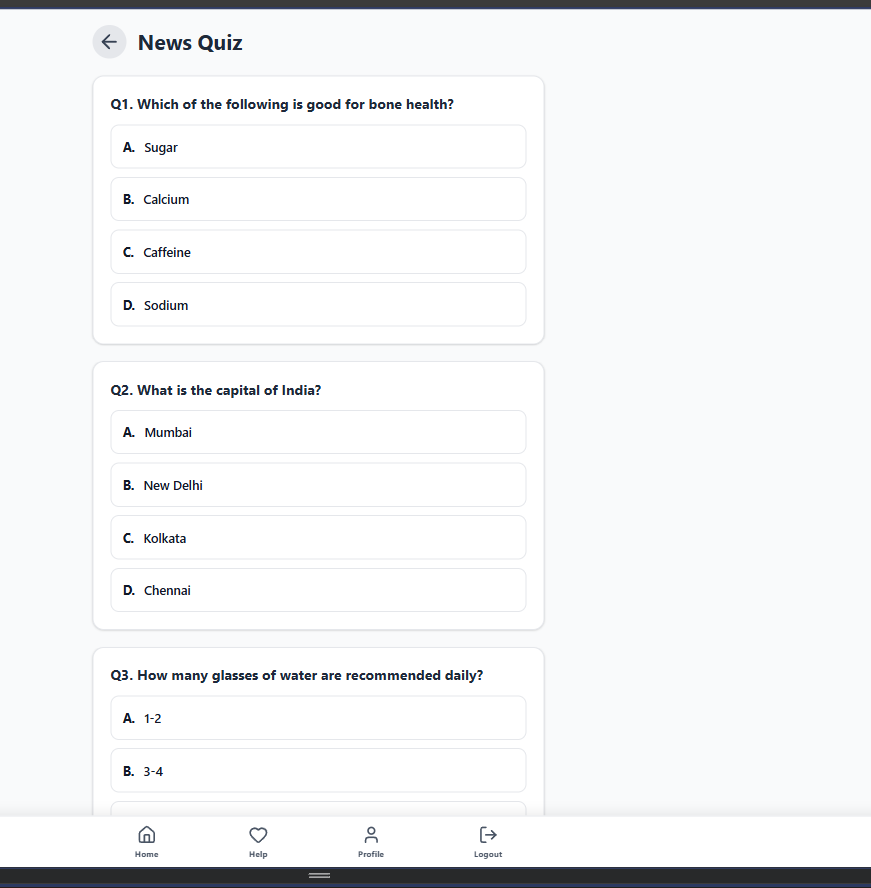
📰 Daily News Quiz
- AI-generated current affairs questions every day
- Elderly users earn GrandPoints for correct answers
- Community leaderboard — friendly competition among peers
- Keeps minds sharp with daily engagement
🤝 Community Help Connect
- Elder taps "Need Help" → selects category → shares GPS location
- MongoDB geospatial $near query finds helpers within 5km
- Helper accepts → both connect in a Socket.io real-time chat
- Categories: Medical, Fall/Injury, Daily Care, Something Else
🆘 One-Tap SOS Emergency
- Single tap captures live GPS → generates Google Maps link
- WhatsApp alert sent instantly to all emergency contacts
- CALL 911 button always visible on screen
- Full SOS history saved with timestamp in MongoDB
How We Built It
| Layer | Technology |
|---|---|
| Frontend | React (Vite) + Tailwind CSS |
| Backend | Node.js + Express 5 |
| Database | MongoDB Atlas + Geospatial Indexing |
| Real-time | Socket.io |
| Auth | JWT + Bcrypt |
| AI | Grok API by xAI (grok-3-mini) |
| Medicine Data | OpenFDA API (free, no key needed) |
| Location | HTML5 Geolocation API |
| Alerts | WhatsApp Deep Links + Browser Notification API |
| Scheduling | node-cron (missed dose + weekly adaptation) |
The architecture follows a clean separation:
- React frontend communicates with Express REST API via JWT
- Socket.io handles real-time chat rooms per help request
- MongoDB stores geospatial coordinates for $near queries
- Grok AI is called server-side — API key never exposed to browser
- node-cron runs hourly checks for missed doses silently
Challenges We Faced
1. Grok API Integration The API key was accidentally saved with spaces between each character in the .env file, causing every AI call to silently fall back to default tasks. Took deep debugging to catch it.
2. Designing for Elderly Users Every UI decision had to pass the test: "Can a 70-year-old use this without help?" Minimum button height 48px, minimum font size 18px, maximum 2 clicks to any core feature.
3. Geolocation + Real-time Together Combining MongoDB geospatial queries with Socket.io rooms required careful session management — ensuring the right helper joins the right chat room after accepting a request.
4. Smartphone Access Gap We discovered that only ~35M of 150M elderly Indians comfortably use smartphones. Our answer: the Family Bridge model — family members set up the app, elders use it simply. Phase 2 will add a WhatsApp bot for feature-phone users.
What We Learned
- The most important design principle for accessibility is "fewer taps, bigger purpose"
- AI personalization is not a feature — it is the difference between an app people use once and one they return to daily
- Debugging AI integrations requires explicit logging at every step of the pipeline — assumptions kill hours
- Real impact comes from solving unsexy problems for underserved users, not building for the already-served
What's Next
- GrandChat — anonymous WebRTC voice/video community rooms where elderly users can talk to anyone without sharing numbers
- WhatsApp Bot for feature-phone users — send "1" for medicine reminder, "2" for help request
- PWA with offline SOS that works without internet
- Pharmacy partnership integration for one-tap refill orders
- Verified helper badge system with NGO partnerships
- Admin panel for NGOs to monitor requests and wellbeing trends


Log in or sign up for Devpost to join the conversation.