-
-
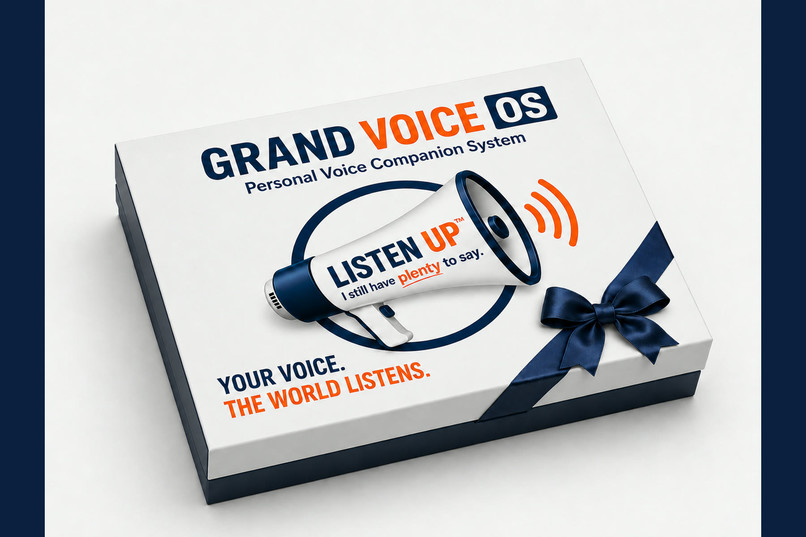
Grand Voice OS - Kit
-
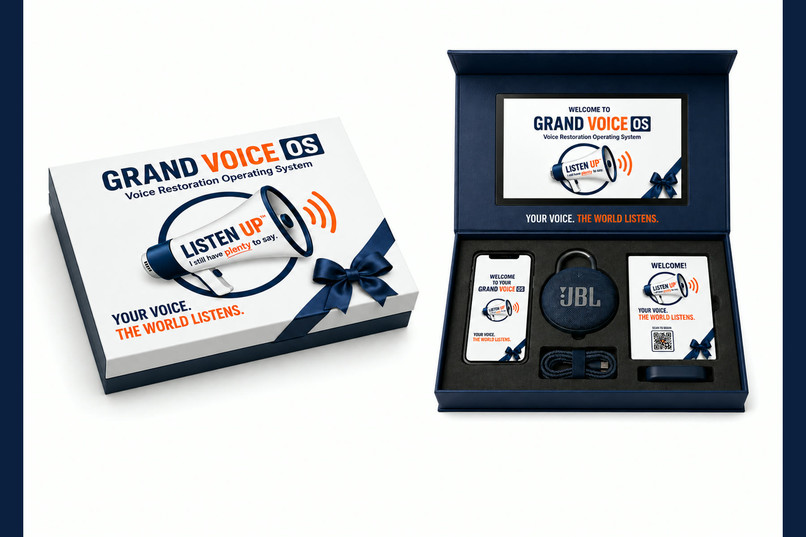
Grand Voice OS - Kit
-
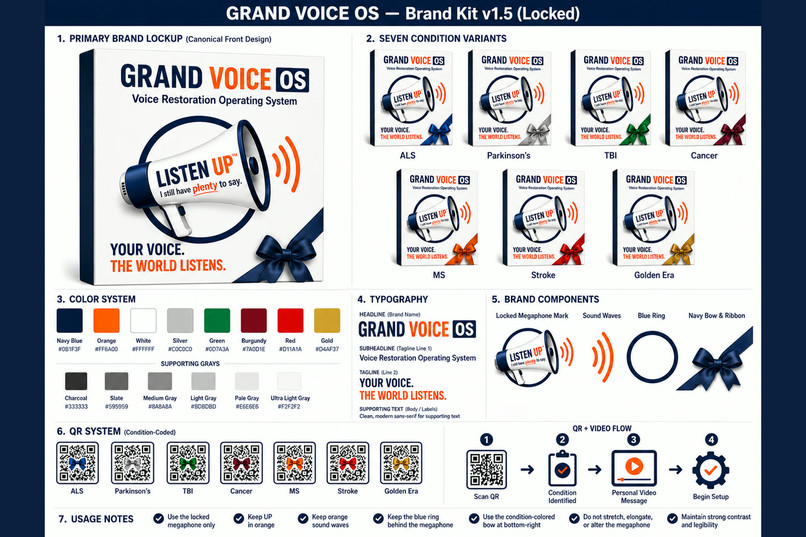
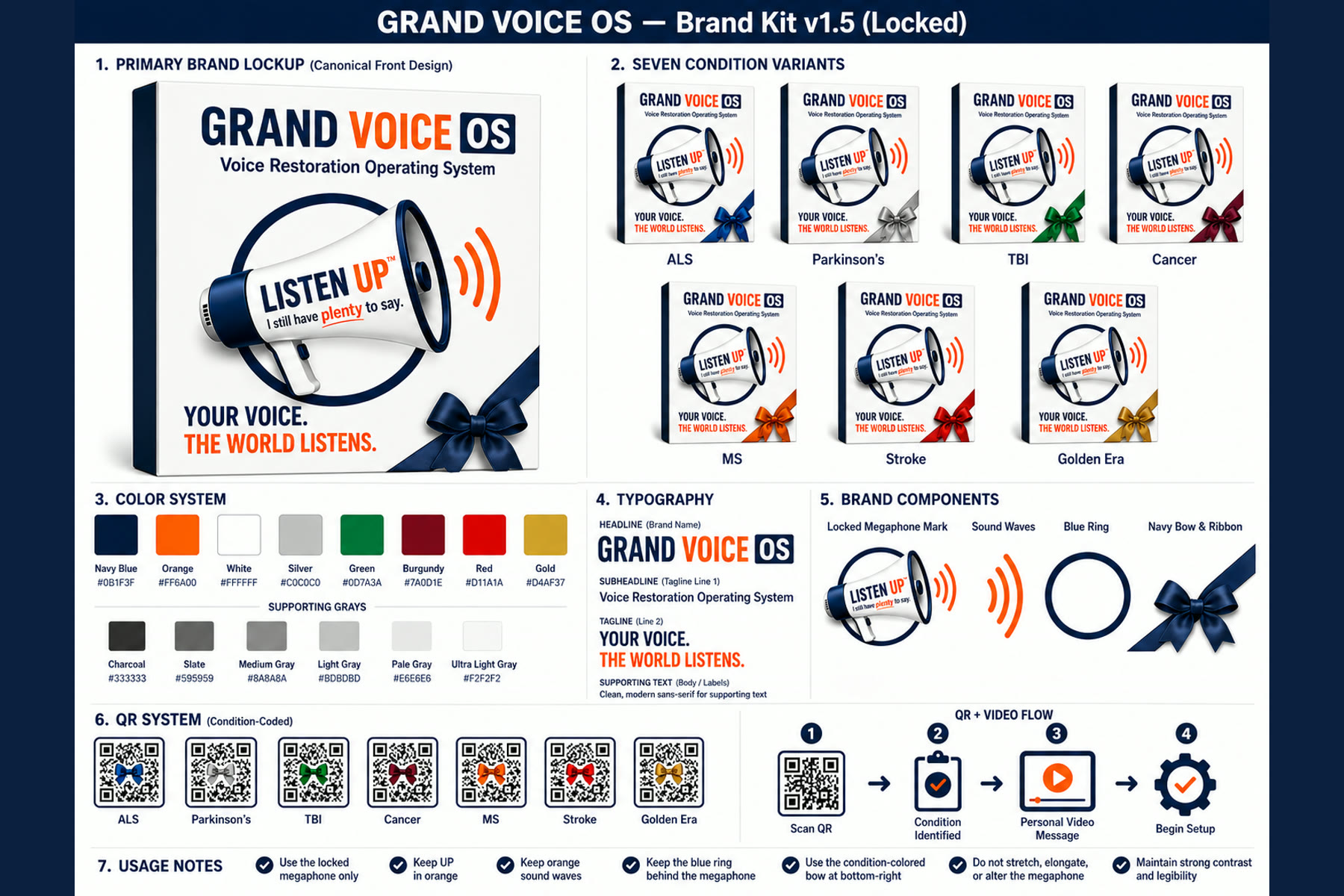
Brand Kit and Colors
-
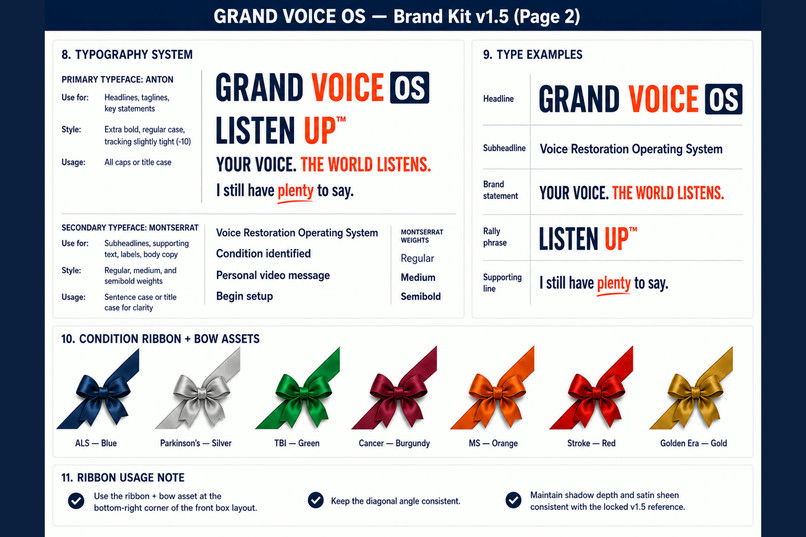
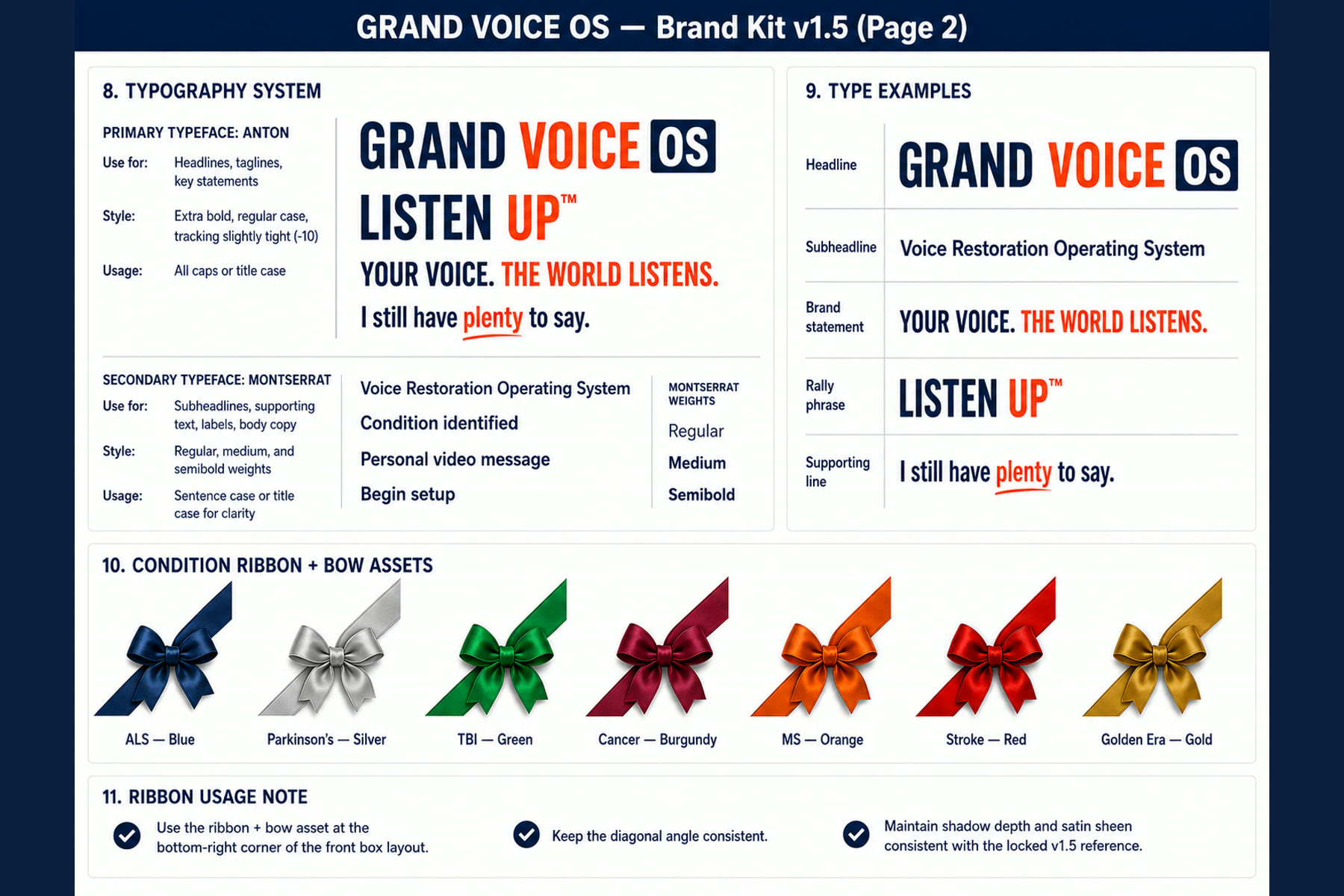
Brand Kit and Colors
-
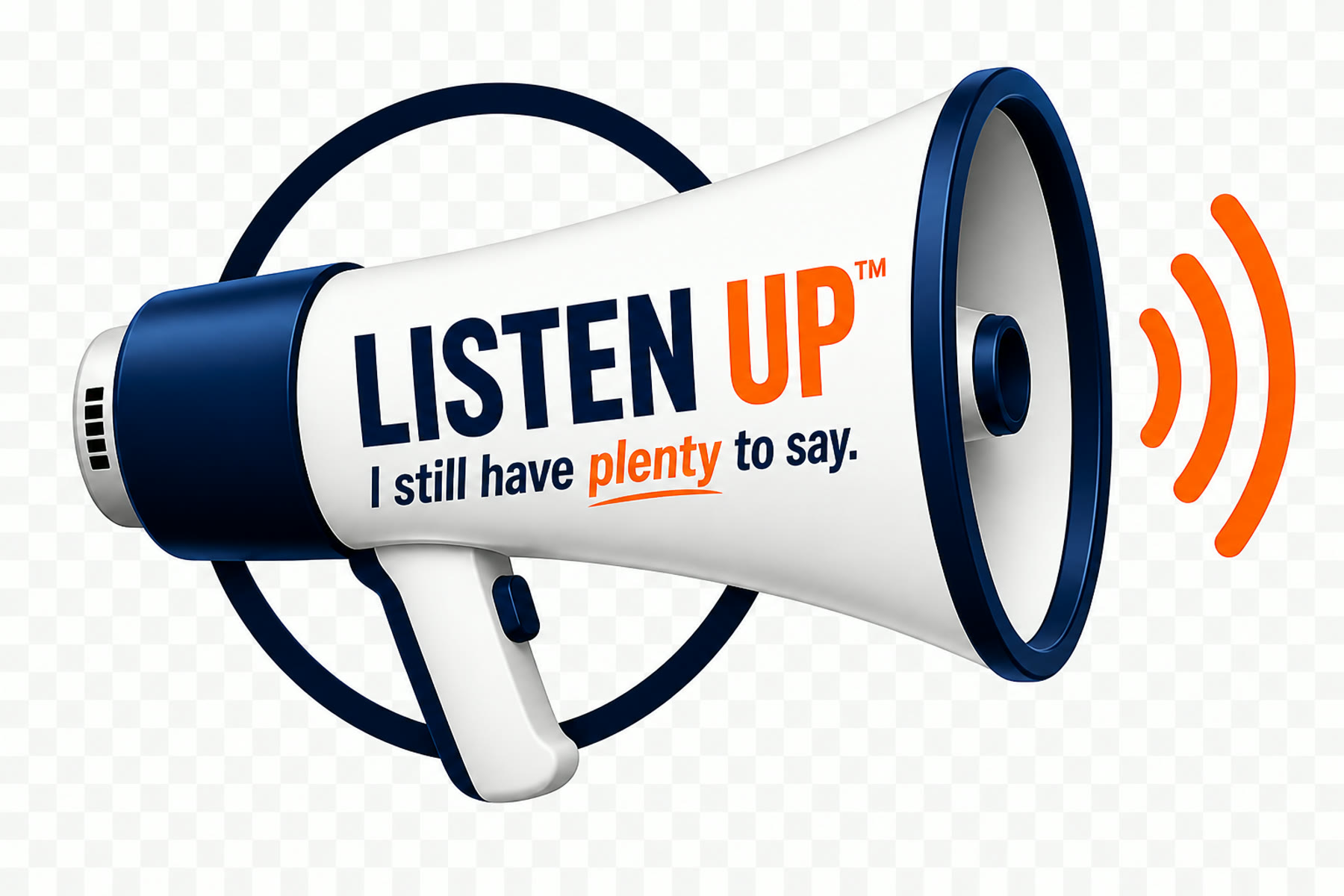
LOGO
-
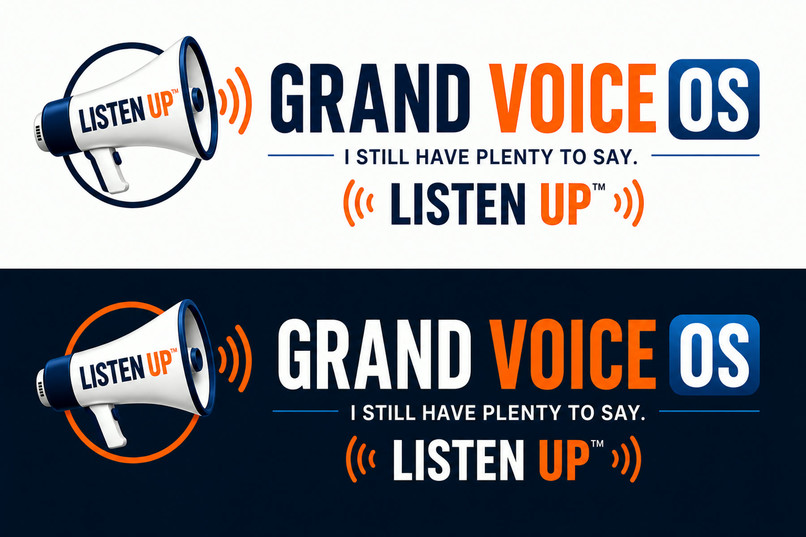
Brand Kit and Colors Alt Layout
-
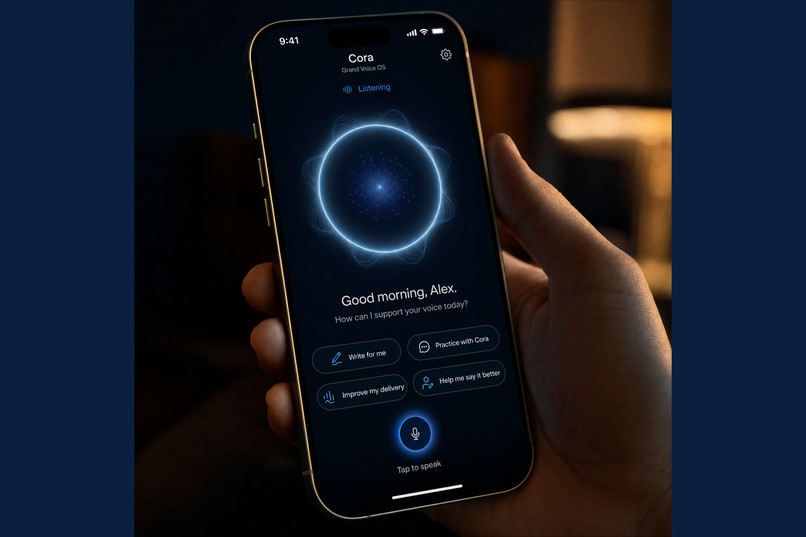
Offline By Design - Online By Desire
-
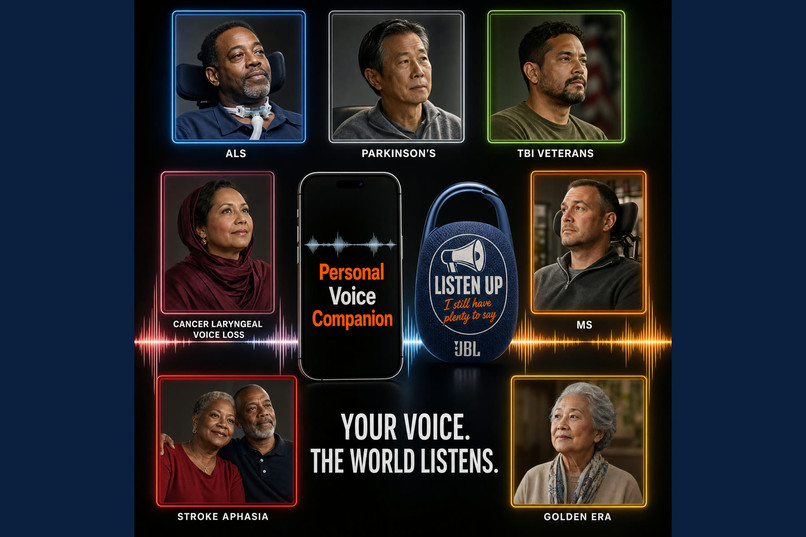
Communities we support
-
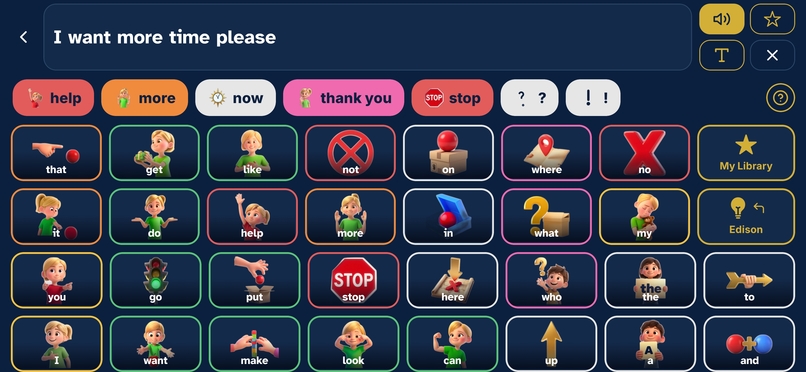
Grand Voice OS word board Suggested
-
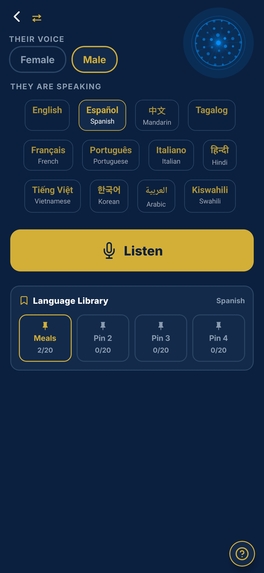
Grand Voice OS Conversation Translation
-
CORA speaking "Your Voice. The World Listens"
-
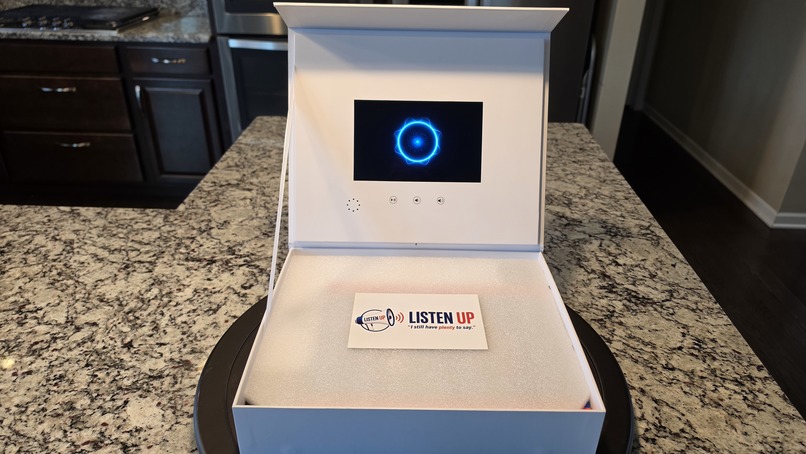
Grand Voice OS - Kit
-
Grand Voice OS - Kit
-
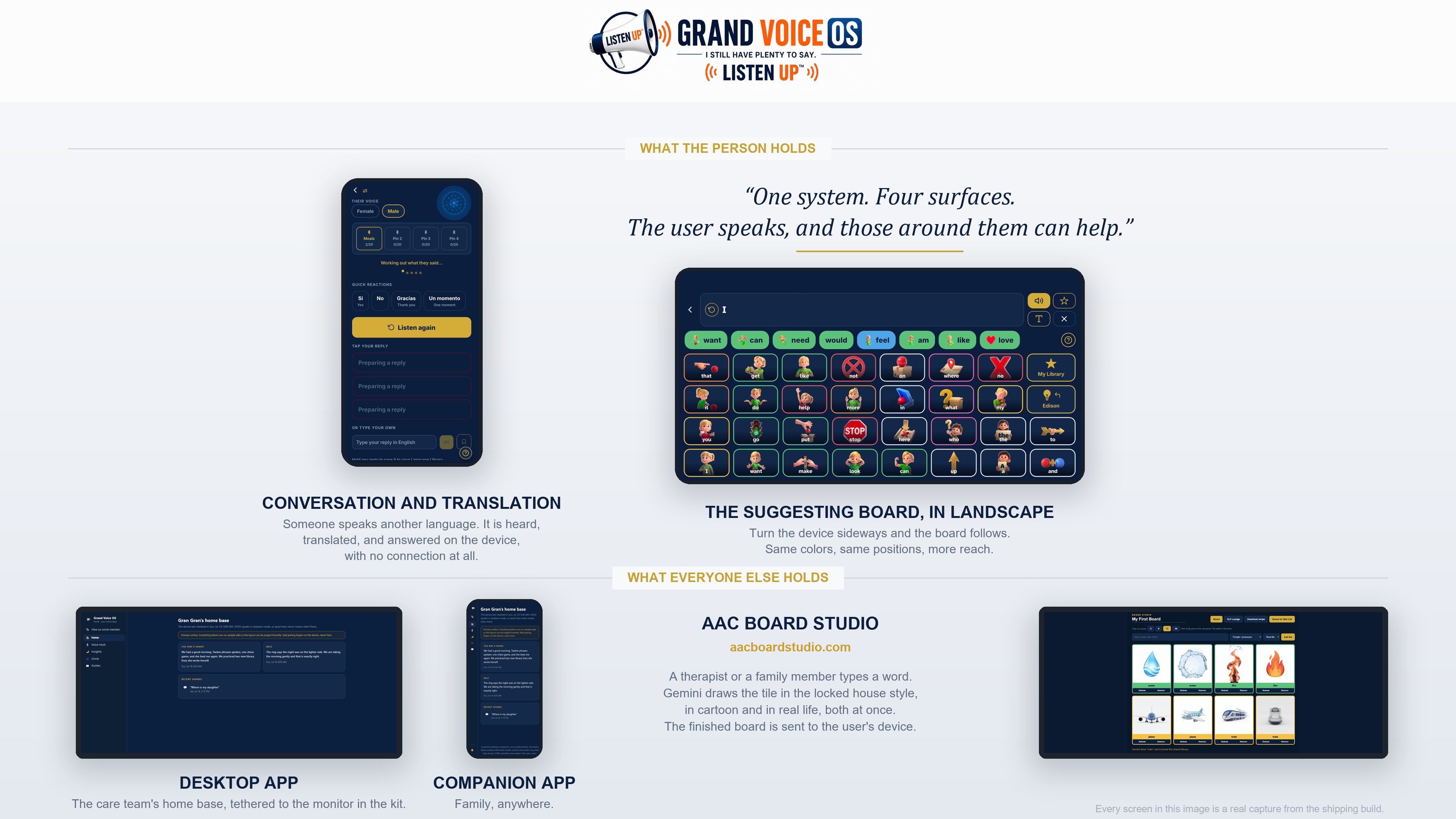
One System, Four Surface Ecosystem By Design
-
3-minute demo, the 15-module walkthrough, the system film, and Board Studio live
Inspiration
It speaks in airplane mode. Turn the internet off. Turn everything off. Grand Voice OS still listens, still thinks, and still speaks. When the storm knocks the wifi out, when the hospital blocks your network, when the dead zone swallows the drive home, the voice keeps working. For the people we built this for, that is not a feature. It is safety. It is the whole point.
My father-in-law is Gran Gran. When his ability to speak slipped away due to ALS, I went looking for answers, and what I found was disheartening and antiquated. Legacy systems start around fourteen thousand dollars and climb toward eighty thousand fully equipped. A mounting bracket alone runs $395.
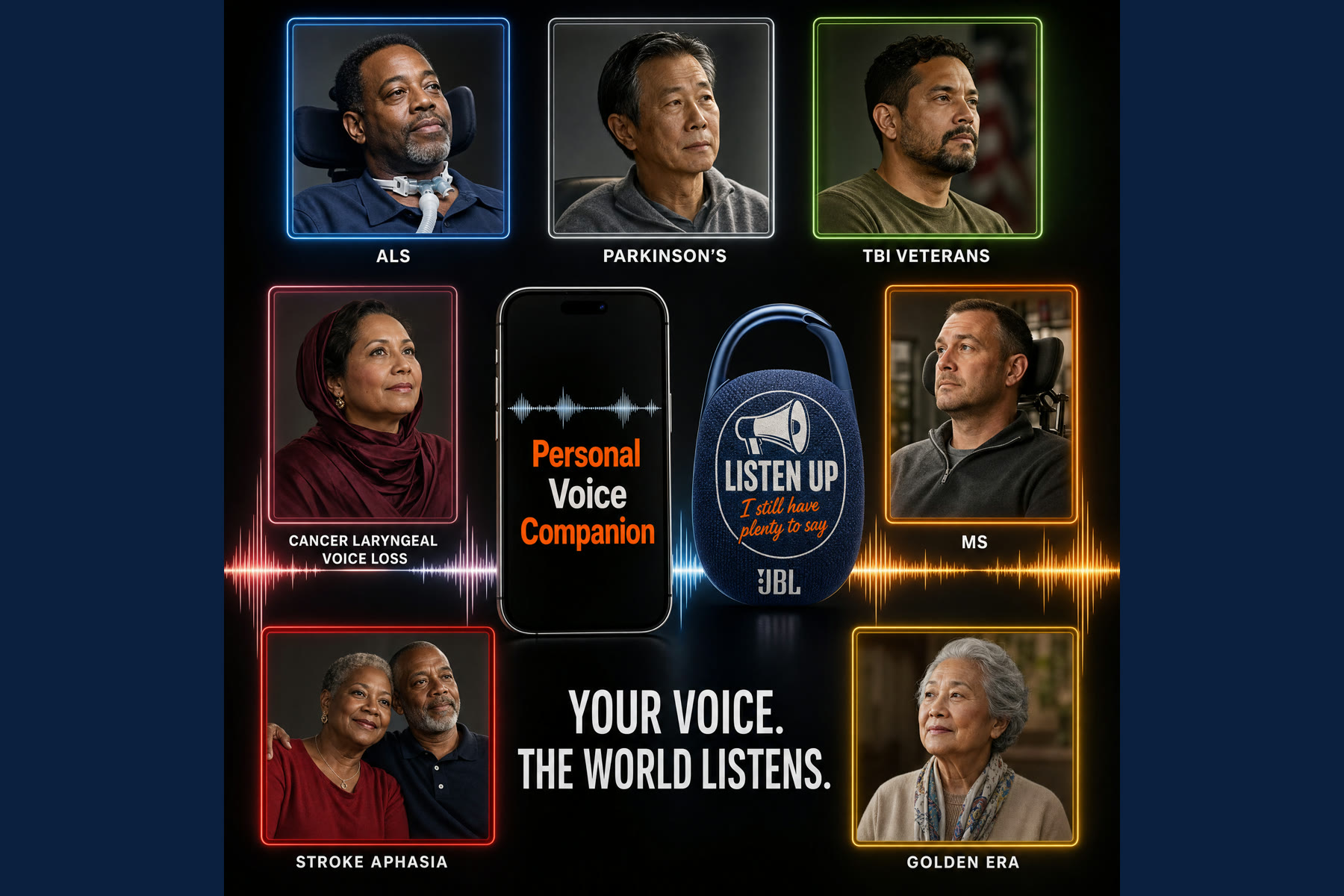
Insurance approval averages fourteen to eighteen months, and research shows voices are failing right around the time the paperwork clears. About one third of the devices that finally arrive end up abandoned in a drawer. This is not just his story. It is the story of people living with ALS, stroke, Parkinson's, cancer, autism, TBI (our veterans), and five other roads that lead to the same silent room.
We decided the answer should fit in the palm of your hand, on a phone a family already understands, carrying something no legacy box offers: "the user's own voice". Not a computer voice. There voice. From a 51 second recording, we now fully synthesize a person's voice from just 33.2 seconds of audio, speaking his words, his way, on demand, in real time.
Last night Gran Gran sent me a text: "Just wanted to let you know I used my communication device in a meeting at church for the first time tonight. It went really well and everyone was fascinated with it."
That is the product.
What it does
Our centerpiece is eye gaze control, built in-house from the ground up. 94 percent accuracy, measured in low light, handheld, in a moving car, read through the user's own glasses against the glare of oncoming headlights. Not mounted in a lab. A parent's hand is the mounting arm. And we keep retesting it across rooms, lighting, and glare, because families do not live in labs. Brain-computer implants achieve remarkable things for people who need them, reaching 94 to 97 percent at 18 to 24 words per minute, and we honor that work. We reach comparable accuracy with a phone camera and zero surgery.
Around that centerpiece:
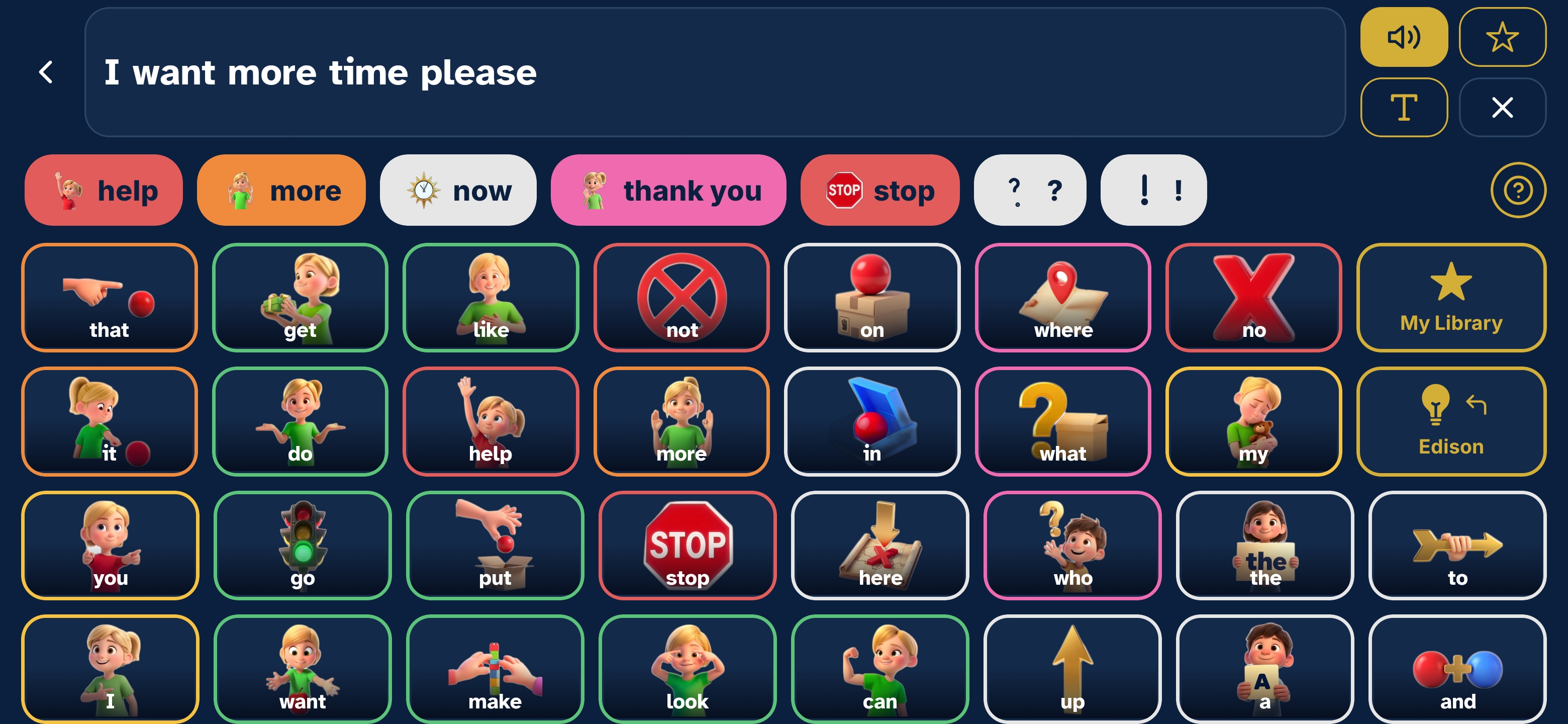
- Word boards that move. An owned symbol library in two art styles, hundreds of symbols and growing toward 1,500, organized by the Fitzgerald color key SLPs already teach with, and sign language motion on the core words. Press the tile and it performs the sign. The practitioner community asked for motion because kids learn signs from motion. Legacy boards are frozen clip art. Ours teach.
- Gestalt Studio. Many nonspeaking children speak in whole phrases before single words. A child quoting a favorite movie line may really mean pick me up. Gestalt Studio lets families record, mix, and honor those scripts as real language, the way modern speech therapy teaches, alongside My Library and personal phrase folders each family fills and decorates themselves.
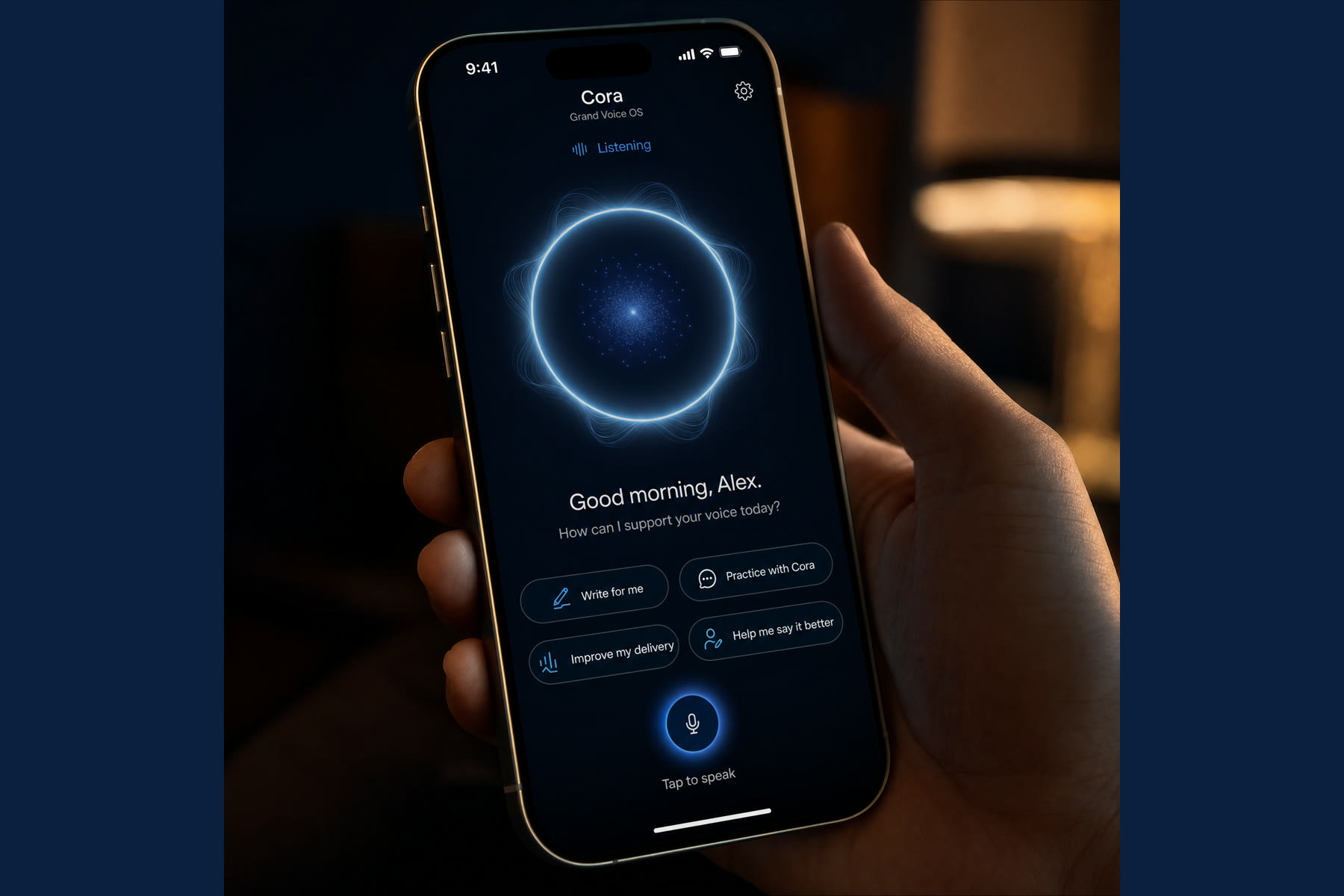
- CORA (Conversational Operating Relationship Ally). An on-device companion who listens, answers, and never speaks in the user's voice. The user's voice belongs to the user alone. And CORA grows with her user across the transitions nobody builds for, child to teen, teen to adult: Cooking with CORA and Cleaning Day are live, Budgeting with CORA and Planning My Week are coming, plus three skill games we built from the ground up.
- The Edison Loop. Our on-device learning loop reads the user's better days and harder days and adjusts daily. Over time, every device becomes one hundred percent customized to its user.
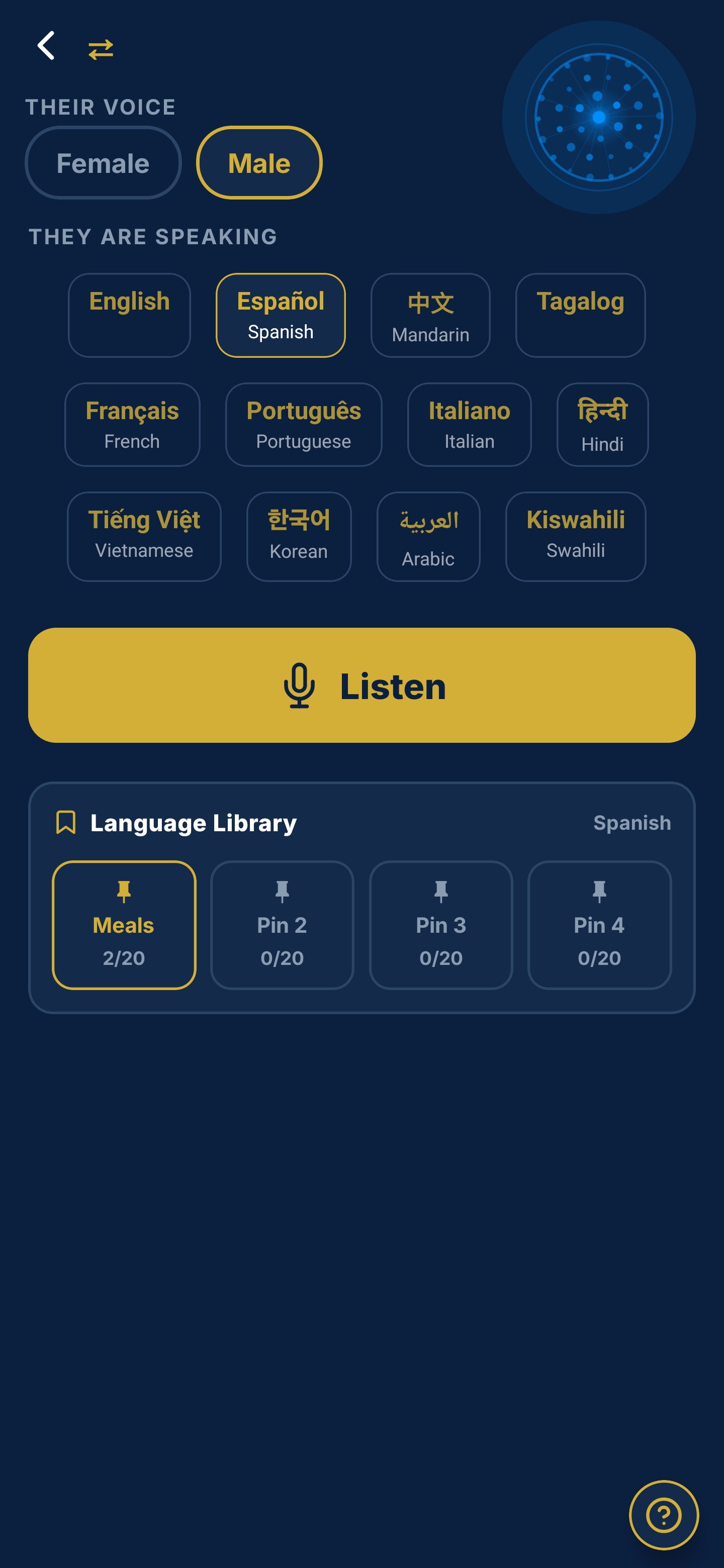
- Real-time Conversation Translation. Live translation between the user and caregivers, care teams, anyone, on the spot. It understands 99 languages offline and speaks ten and growing.
- Free voice banking at grandvoiceos.com. No funder on earth pays for voice banking because it must happen before diagnosis paperwork clears. So we give it away on our website, to anyone, before they ever buy anything.
- Sleep Mode, Hospital Mode, and a clean-screen wipe toggle, so the same device survives an ICU, a classroom, and a kitchen table. And because we enter this space as a consumer device and wearable rather than regulated medical equipment, no FDA approval gate stands between a family and a voice.
How we built it
On the device: Gemma. We did not pick it on faith. We ran a blind evaluation, ten purpose-built questions across every small model that could run on our hardware, loaded to mimic on-device conditions. Gemma won decisively and became the brain. Then we built an on-device harness around the open-weight model that extends what she can do: live searches, scheduling, writing to the calendar, and on-device memory that recalls conversations and appointments. In-window we moved her onto LiteRT with GPU acceleration, taking time-to-first-token from 20 seconds to under a second and a half, measured on the device itself.
In the studio: Gemini. Board Studio is our web surface where an SLP describes a student and Gemini drafts the communication board live, wearing our own symbol library. Therapists spend hours in legacy board software. Gemini spends seconds.
Offline by design. Online by desire.
And none of it was built in a vacuum. It was shaped by hours of working sessions with a district SLP director who oversees 41 therapists and has served both pediatric and geriatric users, elementary school SLPs, the school system's AAC hardware and technology specialists, the ALS association field team whose feedback directly produced Sleep Mode, and a parent-educator of an autistic child. Feedback went in, builds came out, and they reviewed the changes.
Inside The Kit
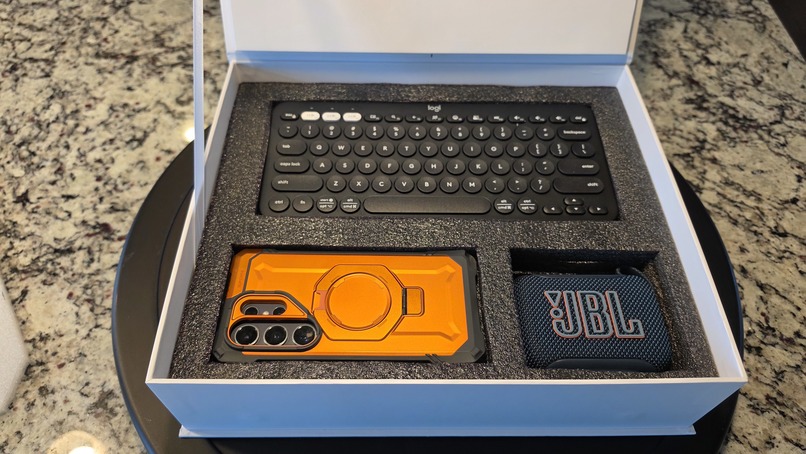
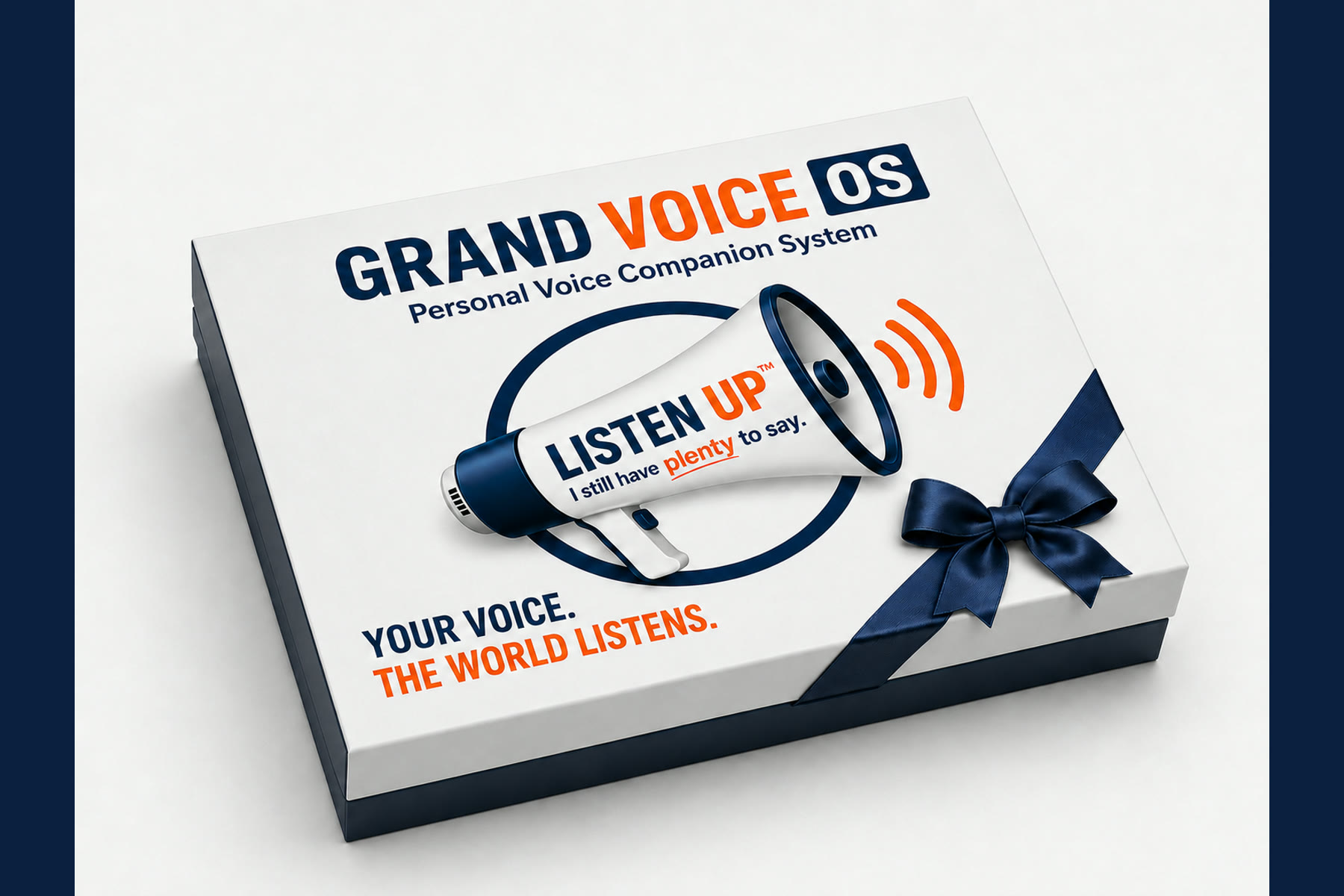
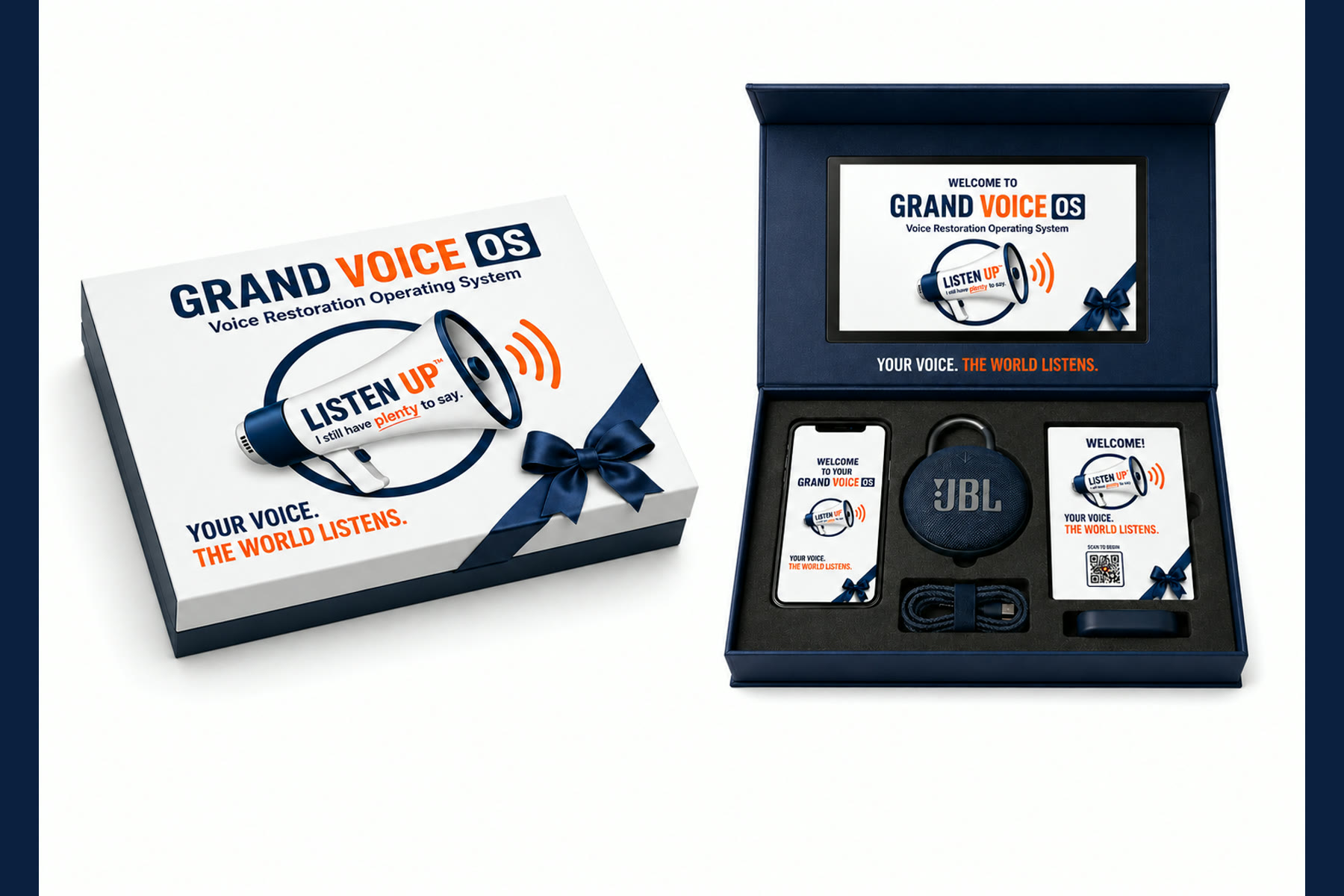
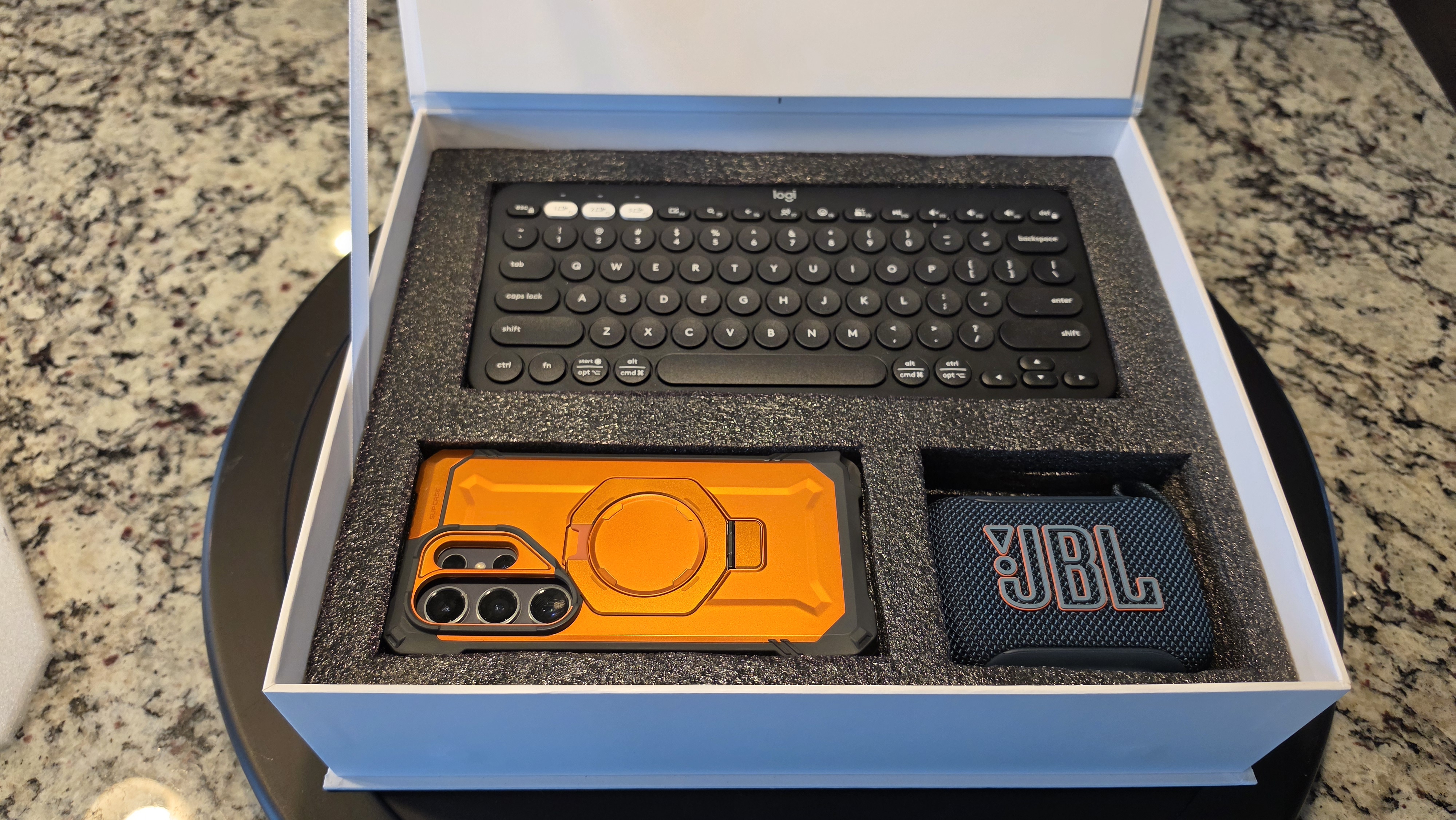
Grand Voice OS does not ship as an app you go find. It ships as one box, assembled around one person, and it speaks within minutes of opening. No app-store hunting, no setup maze, and no extra purchases discovered at midnight.
- The Grand Voice device (S26 Ultra or iPhone Pro Max 17 or newer)
- Upgrade to iPad or Tablet Available
- Military-grade protective case, with stand that doubles as an RFID-protected hard-case wallet
- Portable JBL speaker
- Portable monitor
- Keyboard and mouse
- External battery bank
- Tactical carrying bag
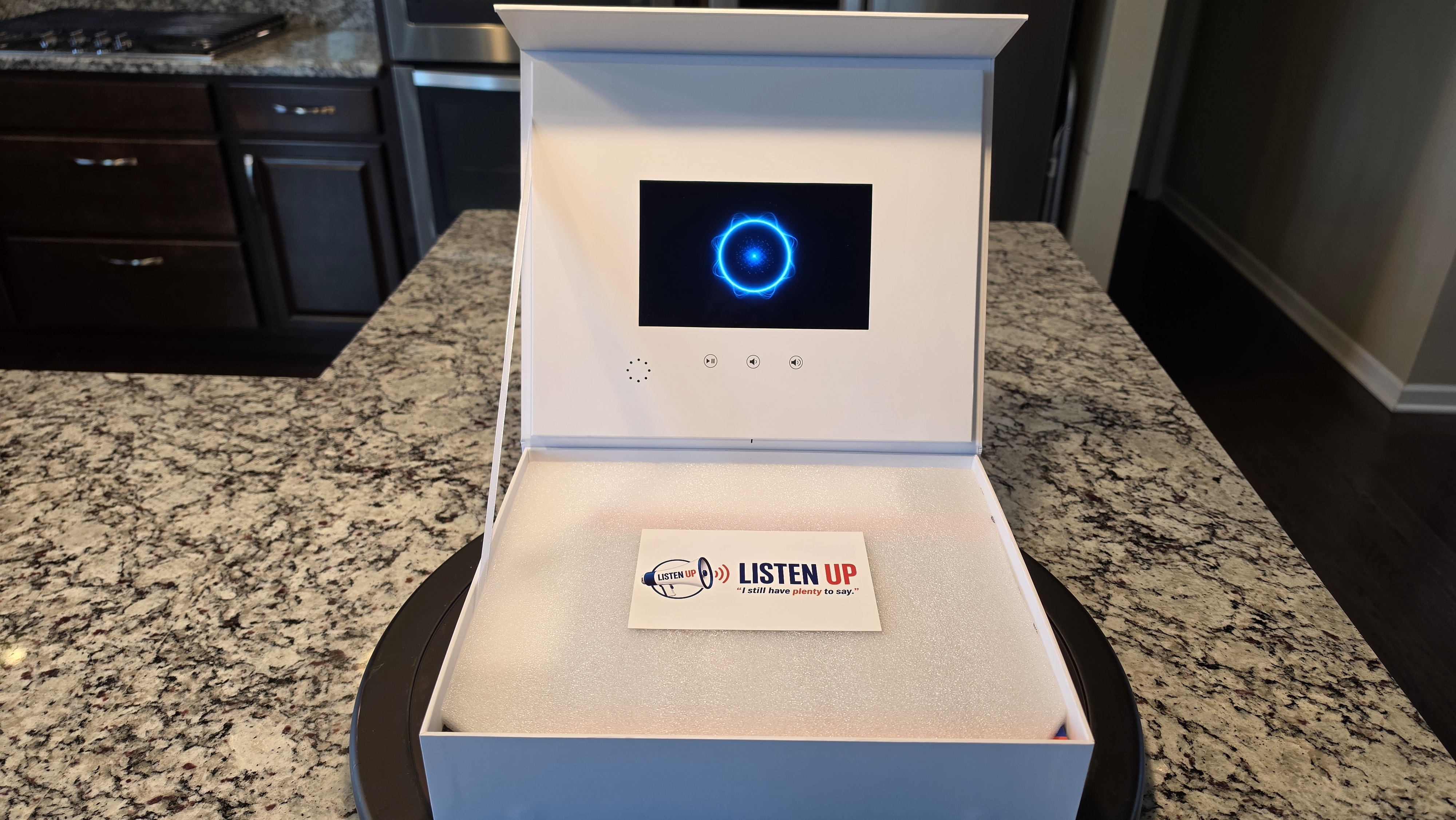
- Premium presentation box
- How to Talk with Me
- New Device Upgrade Every Two Years
On The Device, All Offline
Phrases: Whole thoughts, ready before they are needed, spoken in the user's own banked voice with a single tap.
Say Something: Type or paste anything at all and hear it spoken aloud in the users own voice, right away.
Lip Reading: When the volume is gone but the mouth still moves, the camera reads a silently mouthed phrase and speaks it out loud.
Eye Gaze: Compose and speak with gaze and blinks alone, using nothing but the front camera, with no headset, no infrared bar, and no surgery.
Word Builder: Build a sentence one tile at a time on a board where the colors teach the grammar and the positions never move, so the motor plan travels with the person who built it.
Gestalt Studio: For people who speak in scripts and whole remembered phrases, this treats those lines as real language instead of something to be corrected out of them.
Conversation Translation: Real-time language translation - Twelve languages and growing. Listen to someone speak in their language and the user speaks back matching the conversation.
CORA Live: An open conversation with CORA, who answers out loud in her own voice supporting the user on their journey even without internet.
Explore: Stories, games, and life skills built on the same boards, for the long afternoons and for the people reaching toward living on their own.
Build Your Library: Two hundred slots the user fills themselves, coached by CORA, so the device stops being generic and becomes theirs without waiting on a clinician, a dealer, or a purchase order.
Bank Your Voice: Ten guided sentences and about thirty three seconds, and the device synthesizes their real voice right there on the device, with nothing uploaded anywhere.
How to Talk with Me: A page written for everyone else, teaching visitors how to wait, listen, and leave room, because listening is half the gift.
Sleep Mode: The screen rests while the camera keeps watching for a blink, so a call for help at three in the morning still gets through.
Support: Their emergency number sits at the top of the page before anything else, with the walkthroughs and a direct line to a real person underneath it.
Settings: Customize the look, feel, and layout of your device. Everything from six full palettes that are dark on purpose, blink sensitivity, voice tuning, touch sensitivity, board layout and more. Customizable to meet each user where that are with the tools they need.
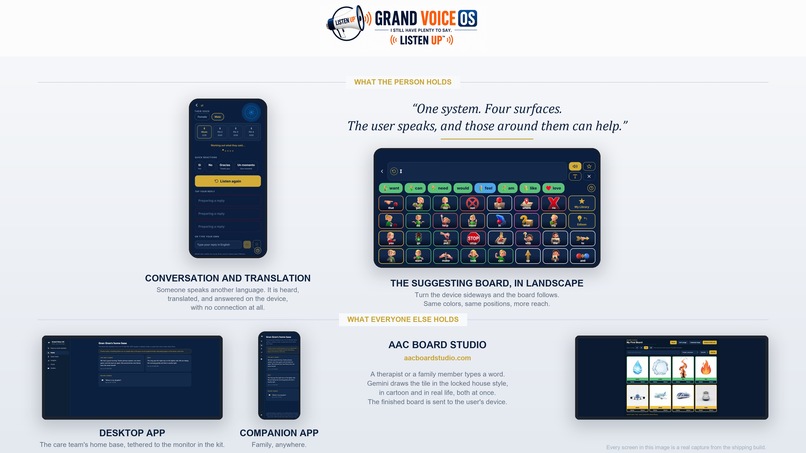
One System, Four Surface Ecosystem By Design
For The Family & Care Team
- Companion App: The care-circle portal where family send messages and stay close without being able to interrupt the person's device.
- Desktop App: The same portal on a full screen for longer sessions and setup work. SLP Training on how to use the device free of charge.
- AAC Board Studio: Where a speech therapist or a family member builds custom boards, generates tiles with Gemini in the locked house style, and sends the finished board to the user's device. In SLP Lounge, connect with your Peers across the country, for support and coaching included as a member of the users team.
- Free voice banking: For anyone who needs it, before buying anything and whether or not they ever do
Challenges we ran into
The latency war. Our first on-device brain took over 20 seconds to begin answering. A conversation partner who pauses 20 seconds is not a conversation partner. The road from 20 seconds to 1.5 ran through a model swap, a runtime swap, GPU acceleration, and streaming voice synthesis, and every step had to happen without touching the cloud.
Automated tests lie; hardware does not. More than once, a change passed every type check and build gate and then broke on the real device in the real kit. We adopted a hard law: nothing is called fixed until it has been verified on physical hardware with our own eyes. It slowed us down and it saved us, repeatedly.
AI can paint anything except the grammar of a hand. Generating our sign language motion frames, the image model could render a beautiful child but could not hold a precise handshape, no matter how the prompt was written. After repeated failures we stopped prompting harder and rebuilt the pipeline around reference images of the real signs, with every frame reviewed against the reference before it ships. Knowing when to stop pushing a tool and change the method was the lesson.
The keyboard that fought the math. Early on we built a letter-by-letter eye gaze keyboard, and the physics of an edge device fought back. On a phone-sized screen the keys sit so close together, and so near the camera, that the angular difference between one key and its neighbor is nearly invisible to gaze tracking. Worse, spelling a sentence one stared-at letter at a time is exhausting. So we stepped away from our own design instead of forcing the user to compensate for it. We rebuilt around larger word-level targets on the Fitzgerald color system, and we are finishing its successor now: a suggestion keyboard where each chosen word summons the next likely words, so the user assembles their own sentence, their words, never a canned statement. The user's experience decided the architecture. Our guess did not.
Physics does not negotiate. Eye gaze through glasses, glare, and motion is a solved fight. True darkness is not, yet. Infrared hardware is on the bench, and we say "not yet" out loud rather than pretend.
Accomplishments that we're proud of
The hardest part was not technical.
I built this alone. There is no one to turn to at three in the morning when the physics of a component finally clicks, and no one across the room at one thirty when I have been at the same problem for hours and it still will not work. The worst nights are the ones where I finish something, look at it, and understand it was built the wrong way from the start. It gets scrapped. I start again. Nobody sees any of it.
The victories are quiet and the failures are quiet. Both are lonely, in different ways.
I kept going because the person I am building this for does not have time for me to feel better about it first. Most mornings that is the only reason I have, and it has been enough. I learned more about what I am capable of doing over these three months, that my driving force, and life's purpose has evolved.
When this competition opened on May 19, our device could do exactly two things: show phrase pages and speak typed text. We preserved that build with a cryptographic hash. Everything above, the eye gaze system, CORA, the moving word boards, Gestalt Studio, the translation layer, the outcome instrumentation, the companion and desktop apps, and Board Studio, was conceived and built inside the window, roughly 275 shipped builds later. We invite the judges to place the baseline and the final build side by side and compare them, build by build.
And one more: a grandfather used his own voice at a church meeting last week, and everyone was fascinated.
What we learned
We read the published research before we drew a single board: work out of programs including Penn State, UNC Chapel Hill, Harvard, and MIT. Some of it surprised us. Parts of the literature favor simple high-contrast glyphs for fast recognition, yet the therapists and classrooms this device must live in are trained on rich pictorial symbols. So we built both: a high-quality pictorial library in two art styles with motion as the default, and the glyph set kept one toggle away. We learned not to fight the training of the people who teach with it.
We learned that the one replicated learnability finding in the field is consistency of symbol position, so a user's motor plans travel with them across every board in our system. We learned that a third of these devices get abandoned, and that support and personalization are the reasons, which is why the Edison Loop and the care plan exist. And we learned to measure instead of assume: the blind model evaluation that chose our brain taught us more in one afternoon than a month of opinions.
The business underneath it
A voice device only matters if families can get one and keep it. The full kit is $6,997 with a $127 monthly care plan that includes planned new hardware, a fraction of the legacy price. We ran funding research across all nine conditions to route every family to a payment path that works for them. And where legacy vendors must lock their devices down to keep insurance billing, we are not in that lane. Our device is designed to give each user the experience they desire with the dignity they deserve, an equal, never an outcast, whether they are a veteran, a student, or a grandfather at a church meeting. It is exactly what forward-thinking programs like the VA prefer.
What's next for Grand Voice OS
- Currently in our "Soft Launch" phase.
- ALS Nexus (August 2026) - Soft launch meetings and final review.
- ALS October 3, 2026 - "Walk To Defeat ALS" - Nashville TN.
- Public launch October 20-22, 2026 at Closing the Gap in Minneapolis, Minnesota.
- ALS October 24, 2026 - "The Walk To End ALS" - Soldiers Field Chicago IL.
The device is real, the family testing it is real, and the voice it protects is real. See it at grandvoiceos.com.
Grand Voice OS. Patent pending. For those who lost their voice, and those still finding it.
Your voice. The world listens.
https://aacboardstudio.com — access code GRAN-0810
Built With
- android
- expo.io
- gemini
- gemma
- google-cloud
- ios
- litert
- node.js
- onnx
- python
- react
- react-native
- sqlite
- typescript
- whisper


Log in or sign up for Devpost to join the conversation.