Inspiration
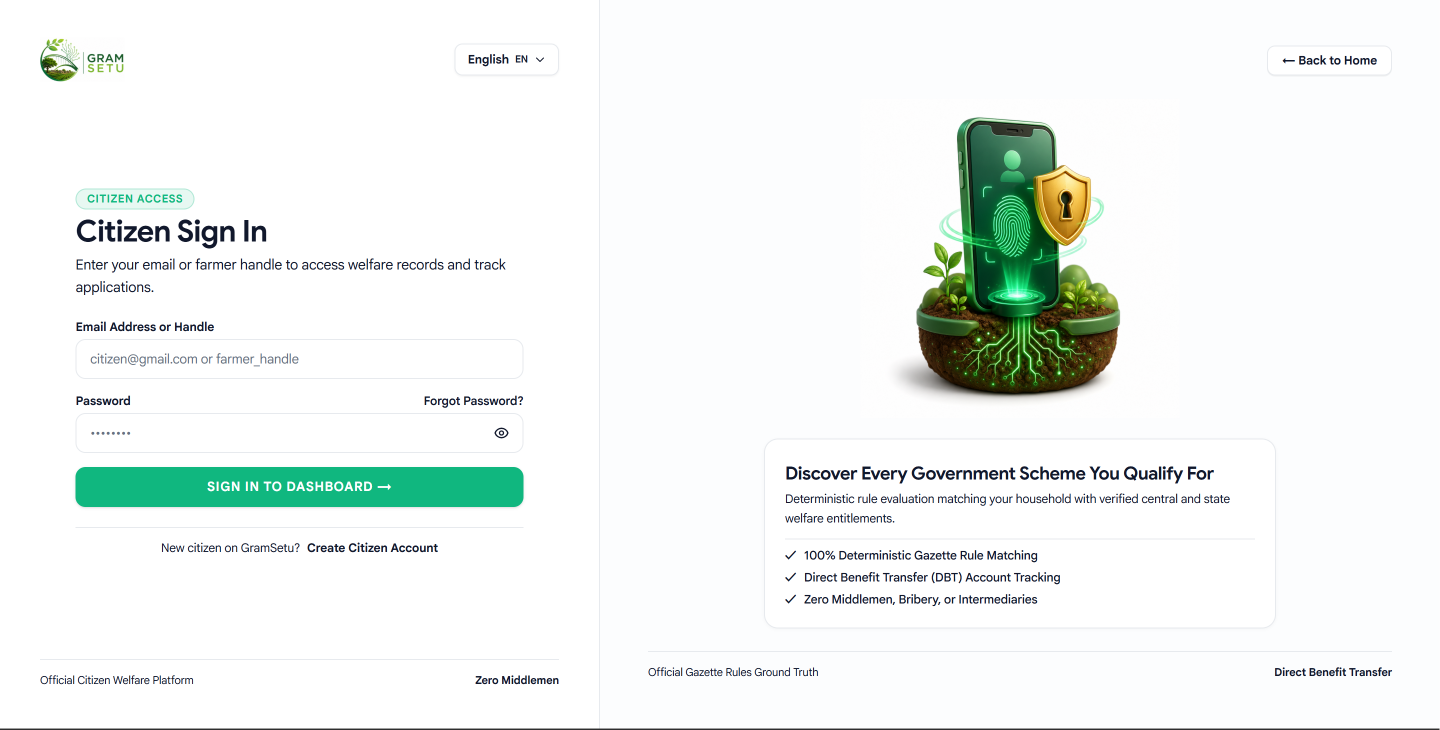
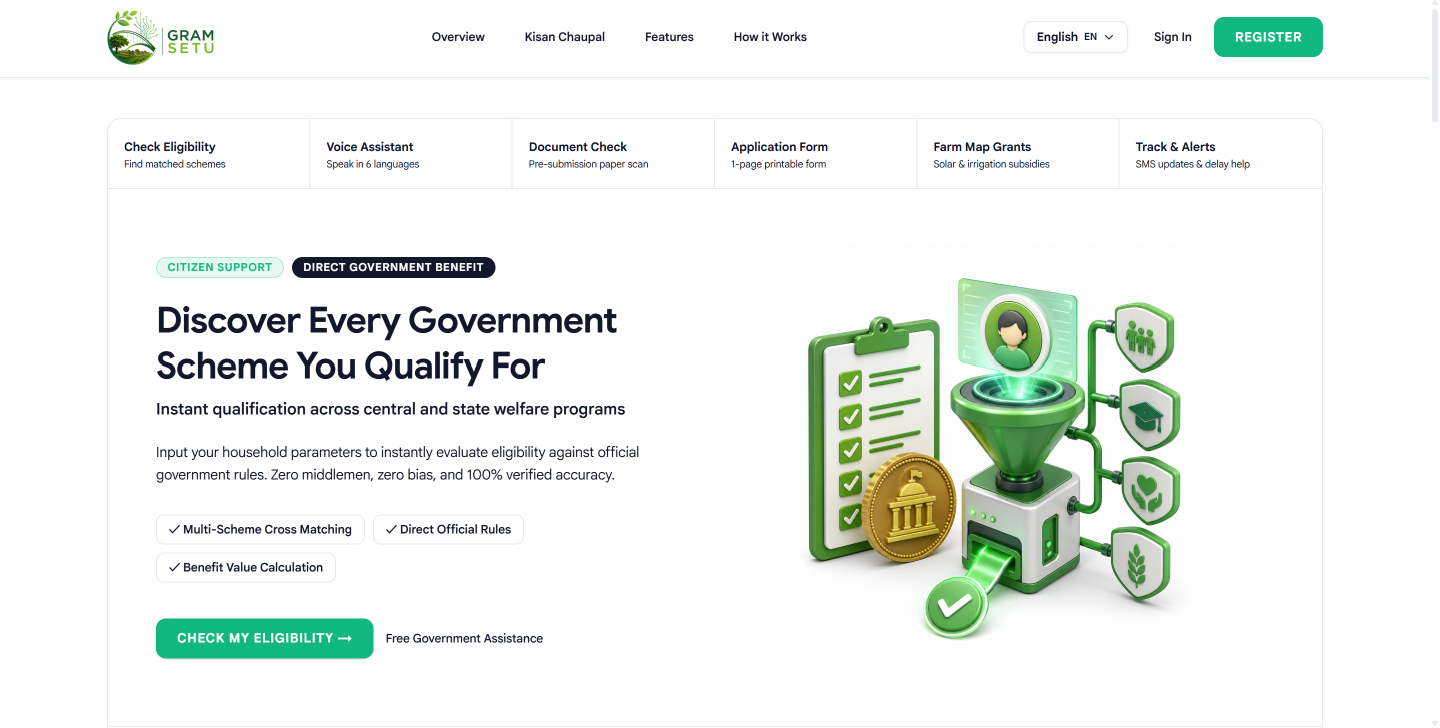
I was inspired by a simple but important problem: government welfare schemes and agricultural benefits can significantly improve people’s lives, but many rural citizens struggle to actually access them. Information is often spread across different sources, eligibility criteria can be difficult to understand, documentation requirements can be confusing, and language barriers make the process even harder. I wanted to build something that could simplify this entire journey. This led me to create GramSetu AI, a platform focused on helping citizens discover relevant government schemes, understand their eligibility, prepare the required documents, and take the right steps toward applying.
What it does
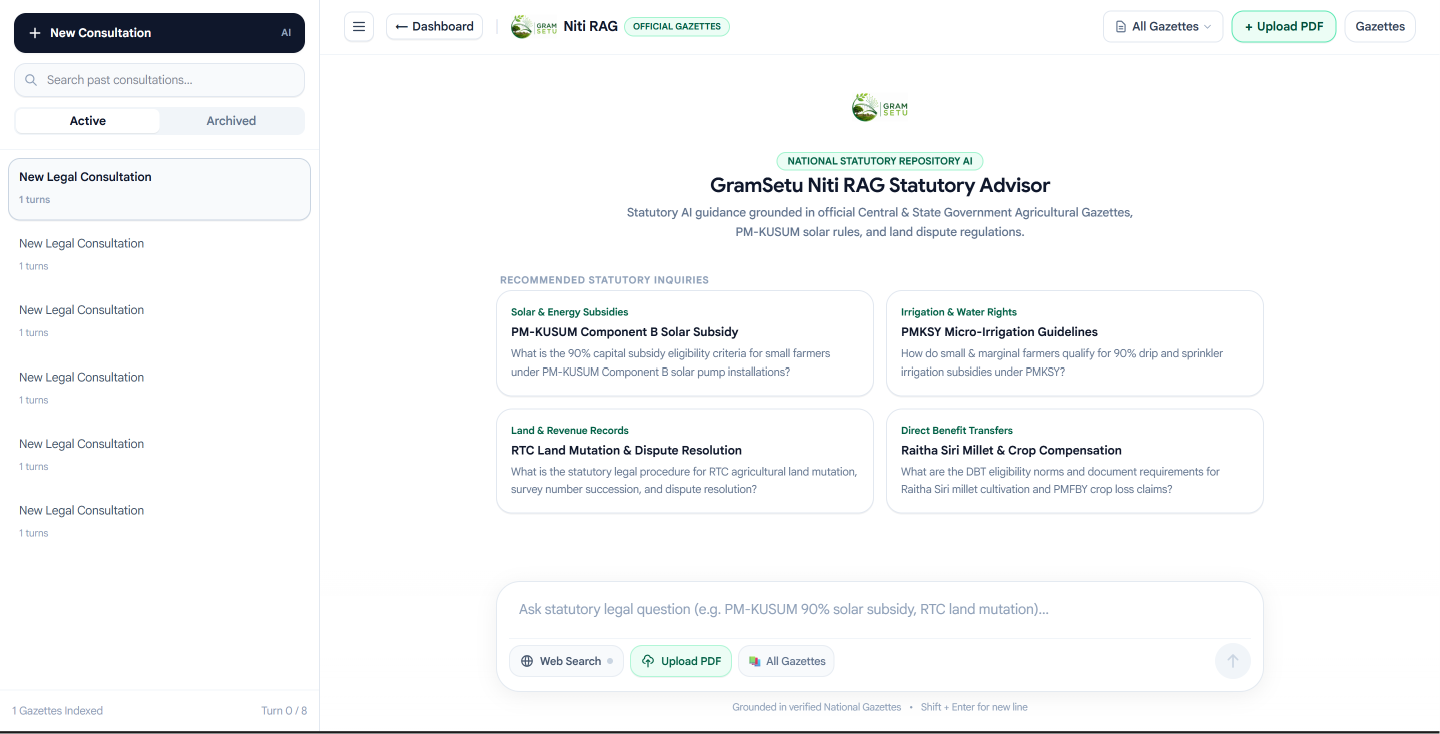
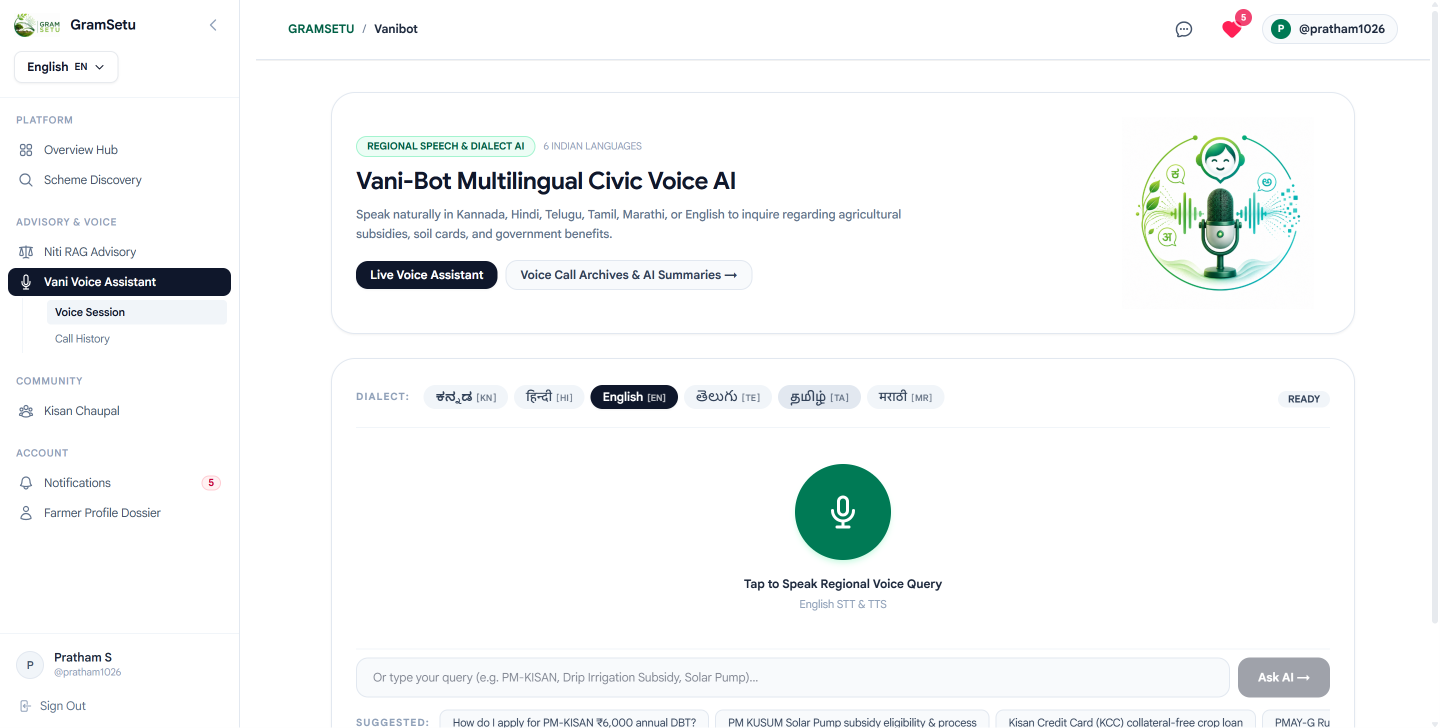
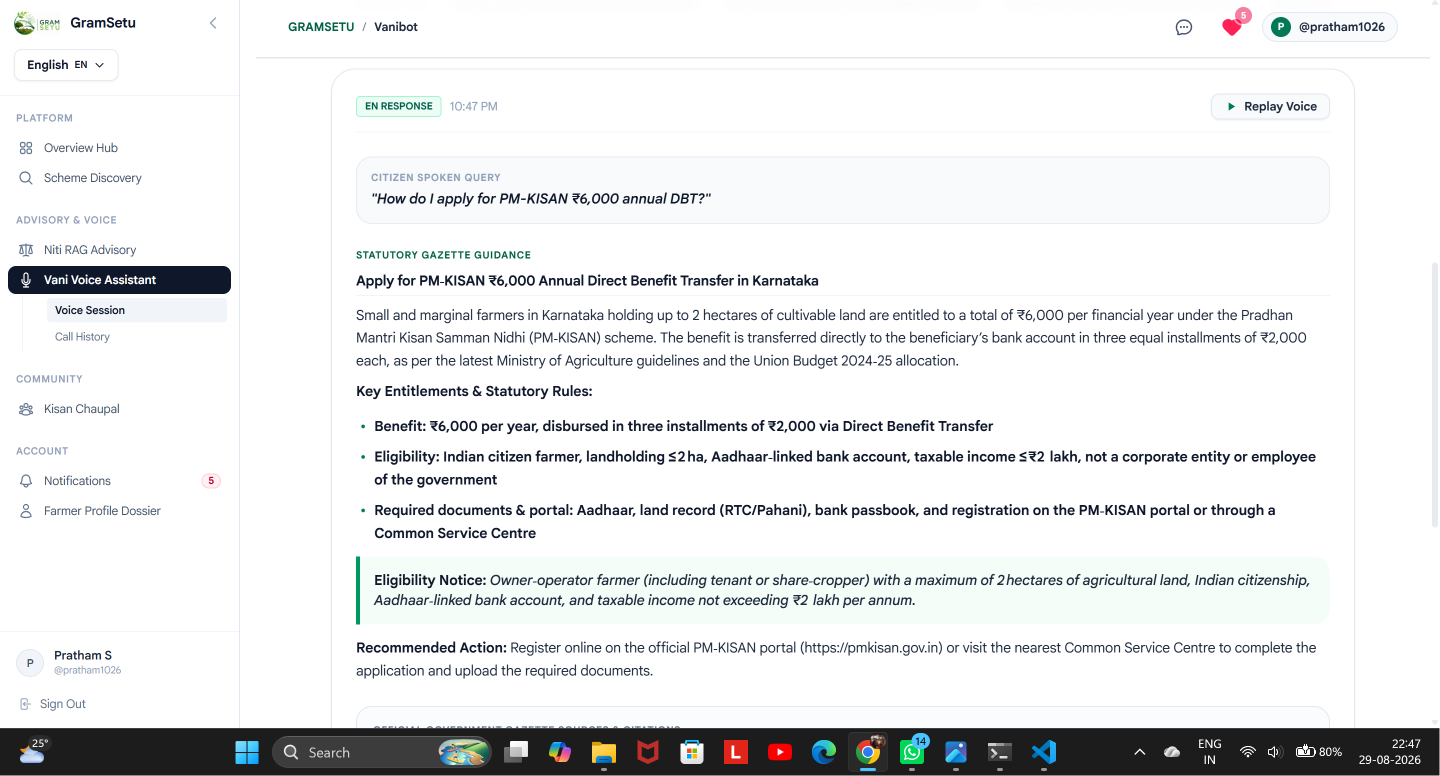
GramSetu AI acts as an AI-powered civic assistance platform that guides citizens from scheme discovery to application preparation. I designed YojanaMatch to evaluate citizen information against structured eligibility rules and identify relevant schemes. Vani provides conversational voice assistance in Kannada, Hindi, and Indian English, making information easier to access for users who may prefer speaking over typing. KagazCheck assists with document analysis and helps identify missing or potentially problematic documents. Parchaa generates a personalized application dossier containing relevant application information and document requirements. Together, these features turn a complicated government-benefit journey into a much simpler and more actionable experience.
How I built it
I built GramSetu AI using a modular full-stack architecture. The frontend uses React 19, Vite, TypeScript, and Tailwind CSS to provide a responsive and accessible interface. I developed the backend using Python and FastAPI, with Pydantic for request and response validation and SQLAlchemy for database interaction. I separated the major capabilities into dedicated services for eligibility matching, document intelligence, voice assistance, and PDF generation. I also structured the government scheme information around verified rules so that eligibility decisions can be handled deterministically instead of relying entirely on an AI model. This architecture makes the platform easier to extend with additional schemes, languages, and services.
Challenges I ran into
One of my biggest challenges was dealing with the complexity of government scheme eligibility criteria. Different schemes can depend on factors such as age, income, occupation, landholding, state, category, and other conditions. I needed to ensure that eligibility was evaluated consistently rather than allowing an AI model to make unreliable assumptions. I also had to think carefully about document processing, multilingual interaction, API integration, frontend responsiveness, and how to present complicated government information in a way that remains understandable to ordinary users. Connecting all these components into one smooth citizen journey required significant iteration and testing.
Accomplishments that I'm proud of
I am proud of turning the initial idea into a working end-to-end platform rather than building only an isolated AI demo. GramSetu AI brings together scheme discovery, deterministic eligibility matching, multilingual voice assistance, document intelligence, and application preparation within a single ecosystem. I am especially proud of the focus on solving a real-world accessibility problem. Instead of simply giving users information, I designed the platform to help them understand what they are eligible for, what documents they need, what problems may exist in their documentation, and what they should do next.
What I learned
Building GramSetu AI taught me that creating a useful AI product requires much more than integrating a powerful model. I learned the importance of reliable data, deterministic business rules, proper backend architecture, validation, user experience, and accessibility. I also learned how different technologies need to work together rather than being treated as separate features. Most importantly, I learned that AI becomes significantly more valuable when it is grounded in a real problem and designed around the actual journey of the person using it.
What's next for GramSetu AI
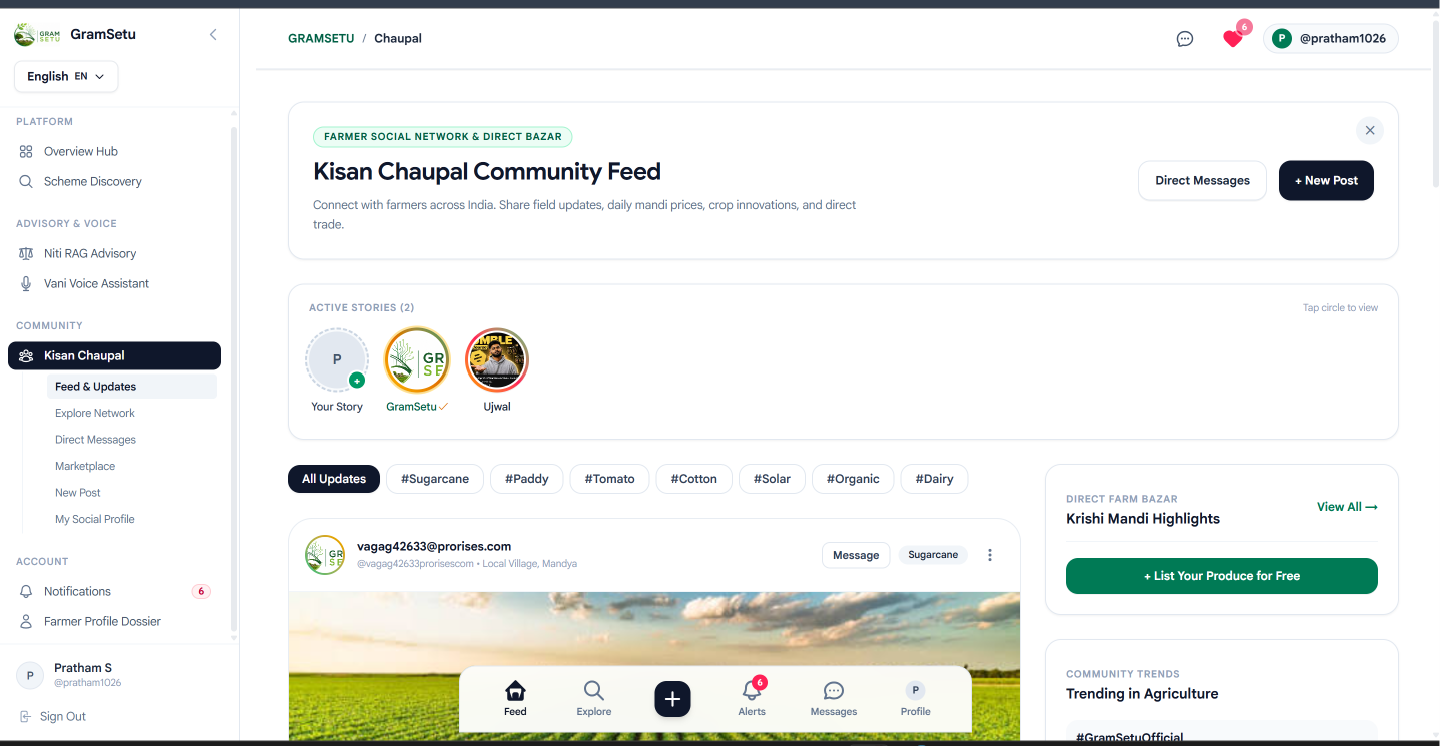
My next goal is to expand GramSetu AI beyond its current capabilities and make it useful to a much larger rural population. I plan to add more government schemes and datasets, support additional Indian languages, improve document intelligence, and provide more personalized scheme recommendations. I also want to strengthen application tracking, notifications, and step-by-step guidance so citizens can continue receiving support after discovering a scheme. In the longer term, I want GramSetu AI to become a broader digital bridge between citizens, government services, and agricultural opportunities, especially for people who face language, documentation, connectivity, or digital-literacy barriers.
Built With
- cloudinary
- fastapi
- gemini-embeddings
- git
- groq
- langchain
- langgraph
- llama
- mongodb-atlas
- ocr
- pydantic
- python
- react
- sarvam-ai
- sqlalchemy
- tailwind-css
- tavily
- trafilatura
- typescript
- vector-search
- vercel
- vite
- whisper

Log in or sign up for Devpost to join the conversation.