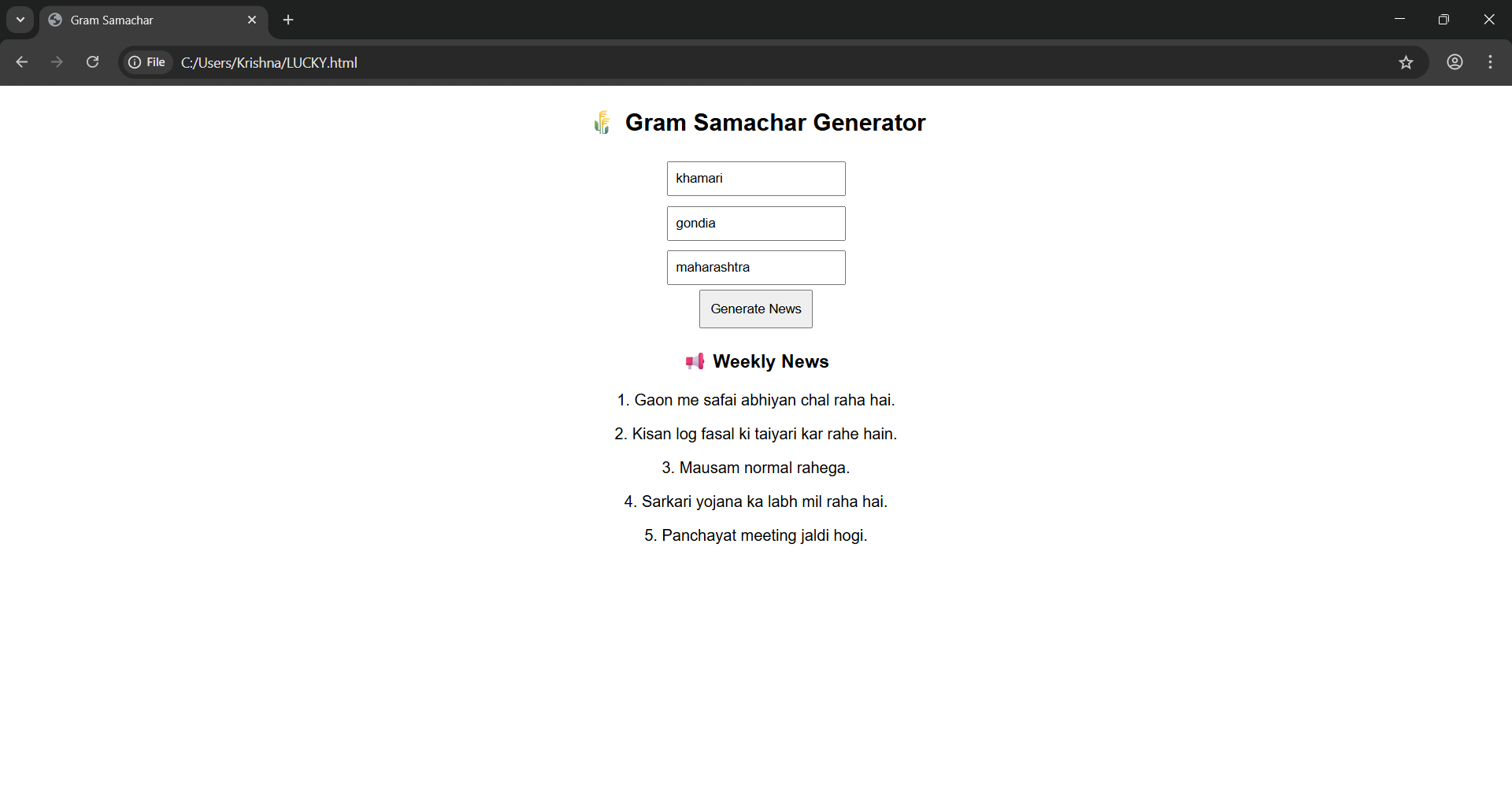
Inspiration Growing up, I noticed a significant information gap in rural areas. While the world is sprinting toward a digital future, many villages still rely on word-of-mouth or outdated news cycles. Important updates—like government schemes, local market rates, or even community health announcements—often arrive late or not at all. I wanted to create a bridge that ensures no village is left behind in the information age. Gram Samachar was born from the idea that every small community deserves a voice and a reliable source of truth.
What I Learned Building this project was a massive learning curve. I deepened my understanding of Natural Language Processing (NLP) to ensure the news generated is coherent and contextually relevant. More importantly, I learned about user-centric design: rural tech needs to be lightweight, fast, and accessible on basic smartphones, as high-end hardware isn't always available.
How I Built It The project was built with a focus on efficiency. I utilized: AI/LLMs: To scrape, verify, and summarize local data into digestible news bites. Mobile-First Development: Since I don't have a personal laptop, I developed the logic and prototypes using mobile coding environments (like Pydroid 3 and Replit), proving that high-impact tech can be built with just a phone and a vision. Multilingual Support: Ensuring the output is available in regional languages to maximize reach. Challenges I Faced The biggest challenge was data localization. National news is easy to find, but village-level news is sparse. I had to design a system that could pull from niche sources and community inputs without sacrificing accuracy. Additionally, developing a complex AI project entirely on a mobile device presented hardware and multitasking constraints, which forced me to be extremely disciplined with my code and resource management. Does this capture the vibe you were going for, or should we make it more technical?


Log in or sign up for Devpost to join the conversation.