-
-
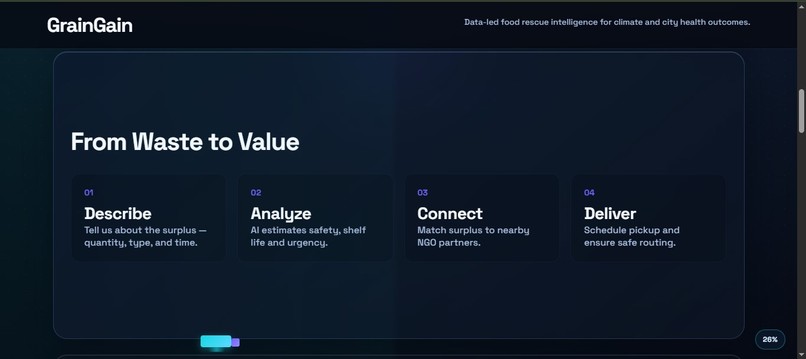
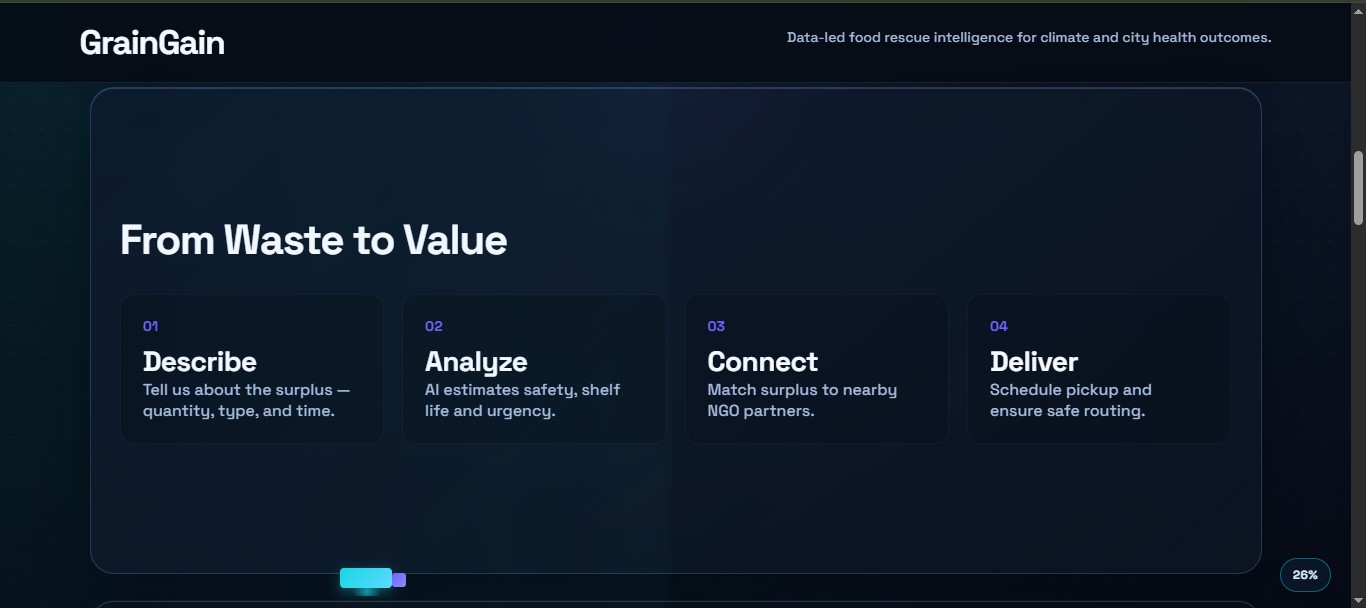
UserFlow
-
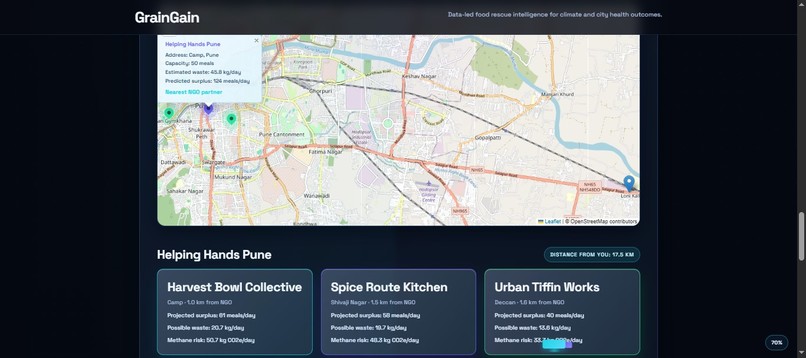
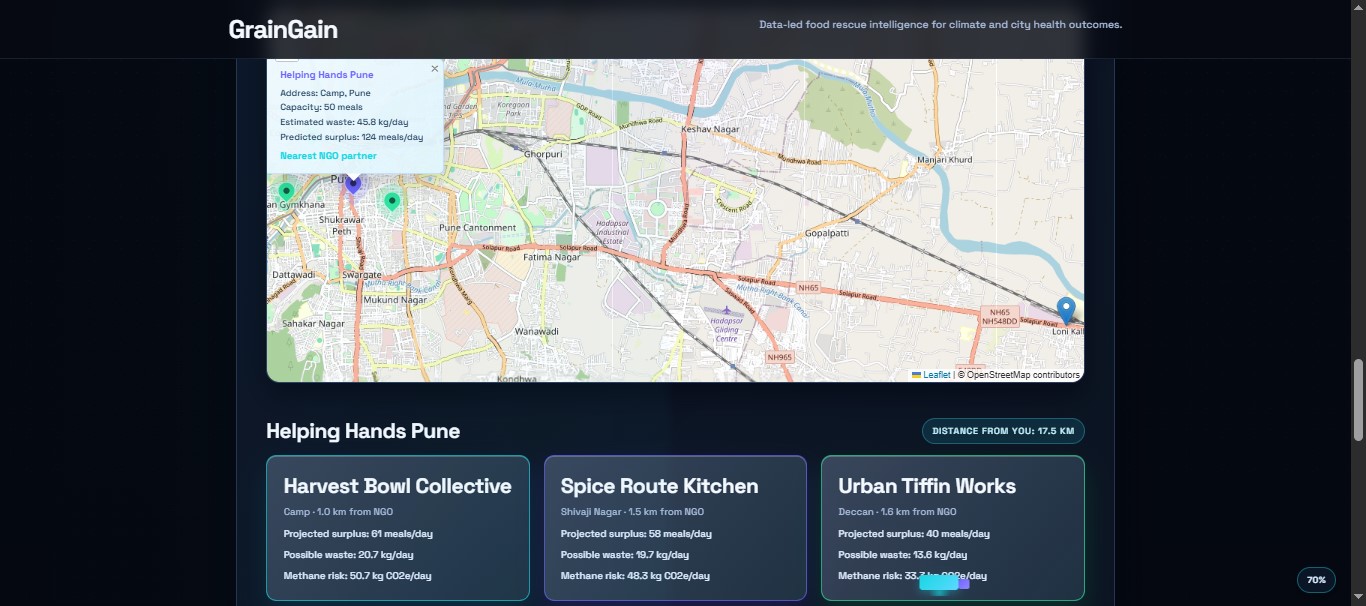
Nearest Restaurants to an NGO
-
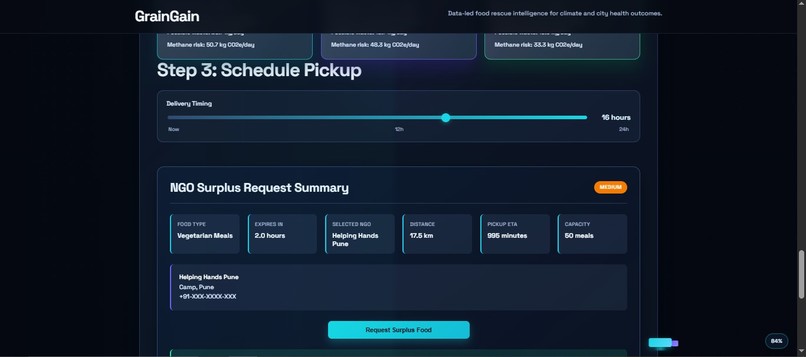
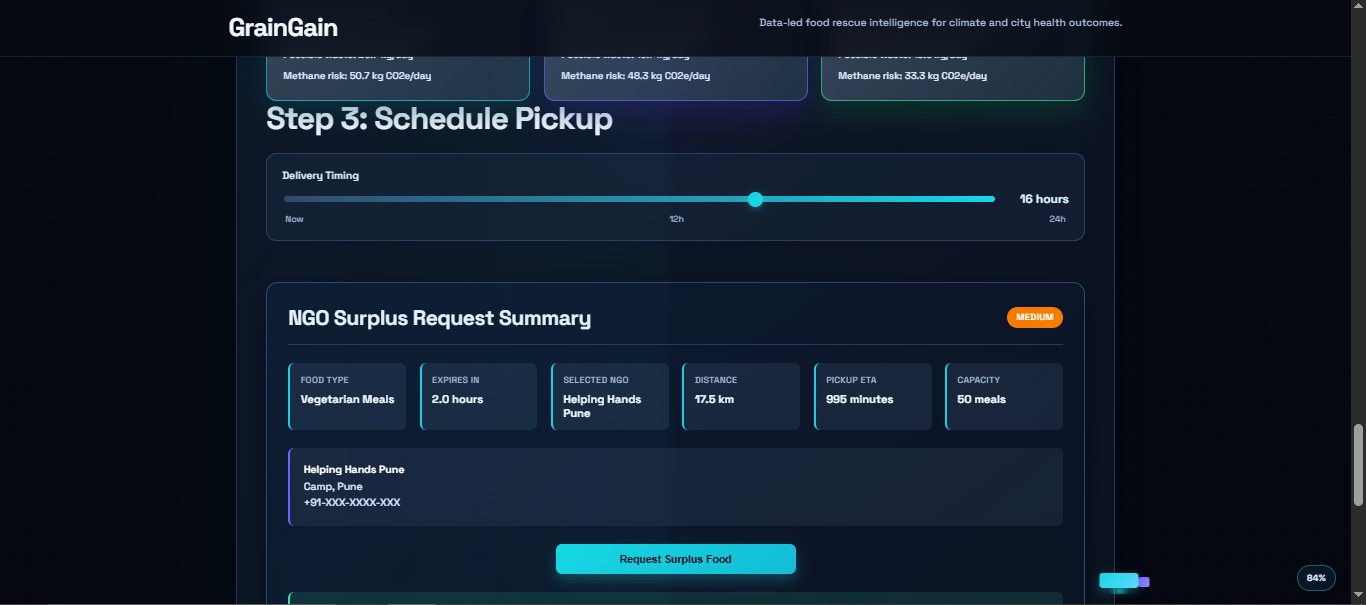
Scheduling Pickup
-
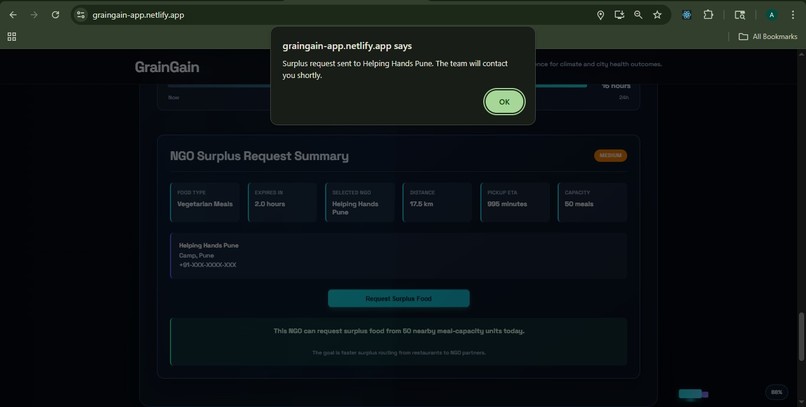
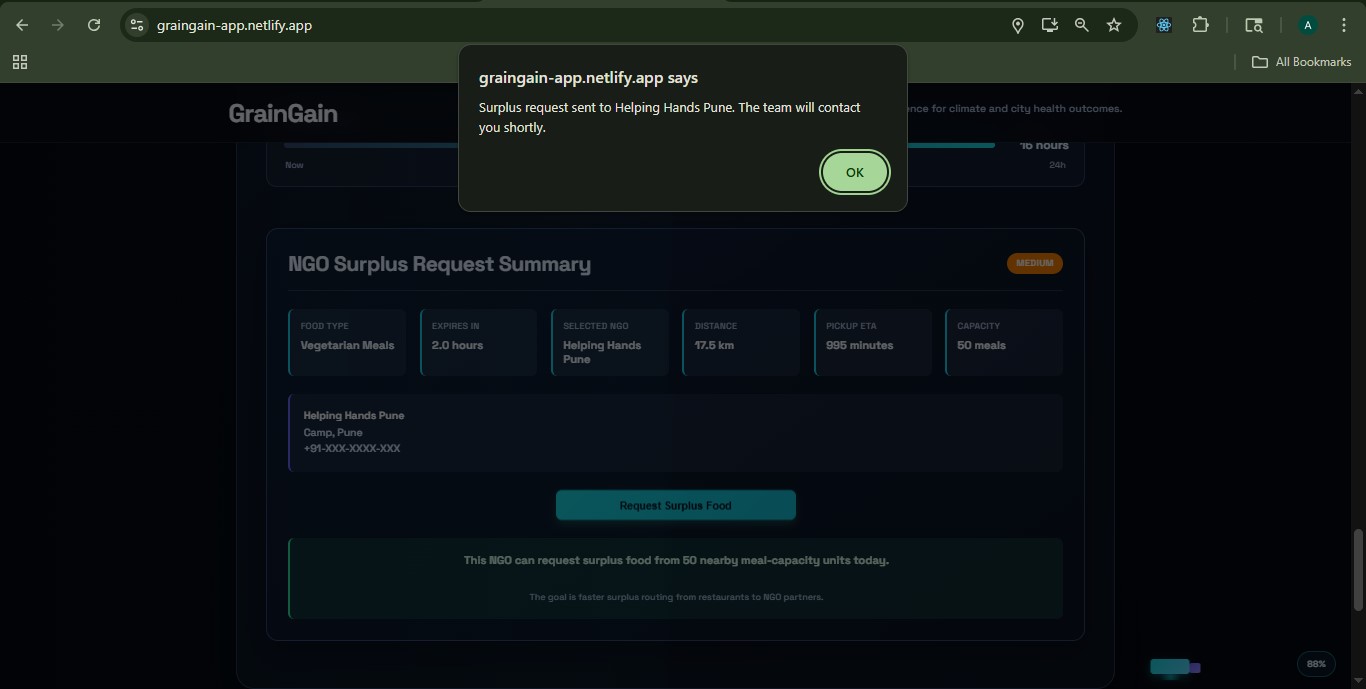
Successful Request
Inspiration
Every day, cities waste millions of tons of edible food while NGOs and food-insecure communities struggle to access fresh meals. We were inspired by a simple question: What if surplus food could find hungry people in minutes, not days? We imagined an AI-powered system that acts as a bridge between restaurants with excess inventory and nonprofits with urgent need. GrainGain emerged from the conviction that technology can solve real-world social problems with elegance and speed.
What it does
GrainGain is an AI-powered smart city platform that enables restaurants to instantly broadcast surplus food to nearby NGO partners. Users describe food, the AI analyzes freshness and urgency, and a map-based interface connects them with vetted nonprofits ready to pick up. The app calculates logistics (distance, ETA, food safety windows) and streamlines the request workflow — turning food waste into measurable social impact in real time.
How we built it
- Frontend: React with custom CSS animations and scroll-driven interactions for cinematic storytelling
- Maps & Location: Leaflet integration for interactive NGO and restaurant discovery
- AI Analysis: Featherless AI (Qwen3-4B) to analyze food descriptions and estimate safe time windows
- Backend: Node.js server handling food analysis requests and logistics calculations
- Deployment: Frontend on Netlify, backend on Render
- Data: Hardcoded NGO and restaurant datasets with geolocation for MVP proof-of-concept
Challenges we ran into
- Real-time accuracy: Balancing AI food analysis speed with accuracy — optimized for sub-second response times
- Map complexity: Managing interactive selections, filtering, and real-time updates without performance degradation
- Logistics math: Calculating realistic ETAs and food safety windows for accurate urgency signaling
- Responsive design: Creating a premium, cinematic experience across mobile, tablet, and desktop
- API latency: Coordinating AI inference with smooth UI feedback during loading states
Accomplishments that we're proud of
- Built a fully functional MVP with end-to-end AI workflow in limited time
- Created a cinematic, story-driven user experience that tells the impact narrative
- Integrated live maps with intuitive NGO selection and restaurant discovery
- Designed an AI-powered food analyzer that contextualizes urgency and safety
- Deployed both frontend and backend to production with live demo ready
- Implemented responsive design that feels premium across all devices
What we learned
- AI doesn't solve logistics problems alone — context, UI clarity, and urgency signals matter equally
- Story-driven design can make civic tech engaging and shareable
- Simple data models (hardcoded NGO/restaurant lists) are sufficient for MVP validation
- Fast, predictable AI inference is crucial for real-time user-facing applications
- Animated transitions and visual hierarchy dramatically improve conversion in social impact apps
What's next for GrainGain
- Database integration: Move from hardcoded data to real NGO and restaurant databases with live availability
- Notification system: SMS/email alerts to NGOs when food matches their needs
- Food safety scoring: Machine learning model trained on real food waste data to improve urgency predictions
- Pickup tracking: Real-time GPS tracking and photo evidence of successful food rescue
- Impact quantification: Blockchain or secure logging of meals rescued, CO₂ avoided, and community reach
- Mobile app: Native iOS/Android for faster restaurant and NGO adoption
- Partnership scaling: Integration with local food recovery networks and city governments
Built With
- css
- featherless-ai
- javascript
- leaflet.js
- netlify
- node.js
- react
- render

Log in or sign up for Devpost to join the conversation.