-
-
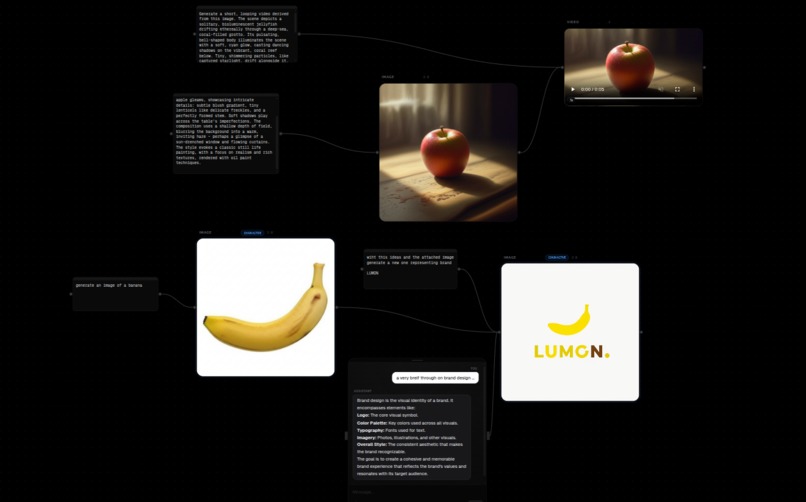
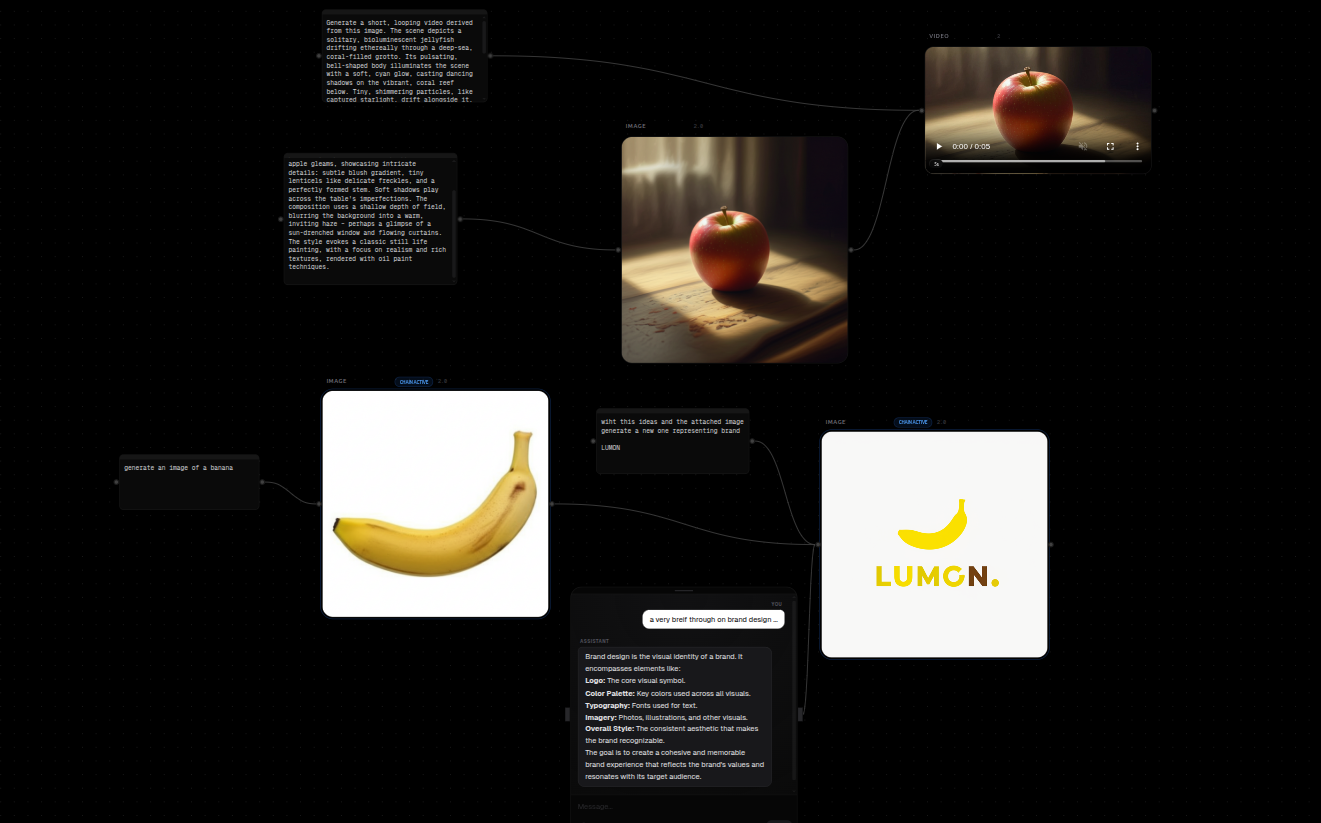
in app view of some workflow
-
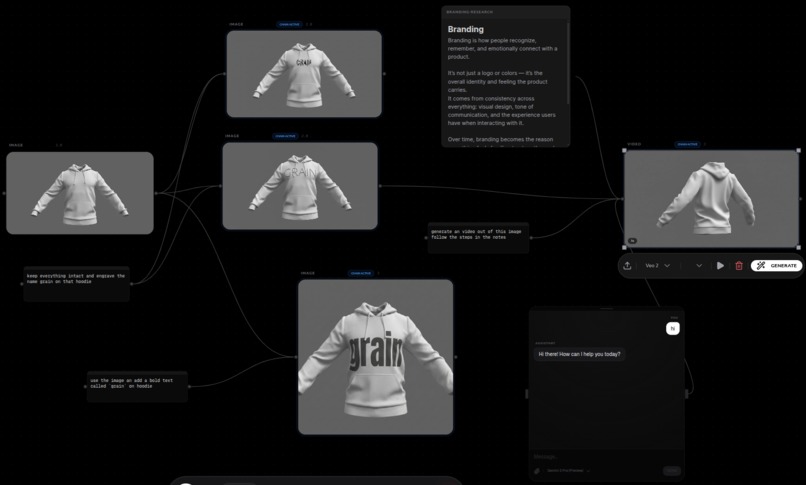
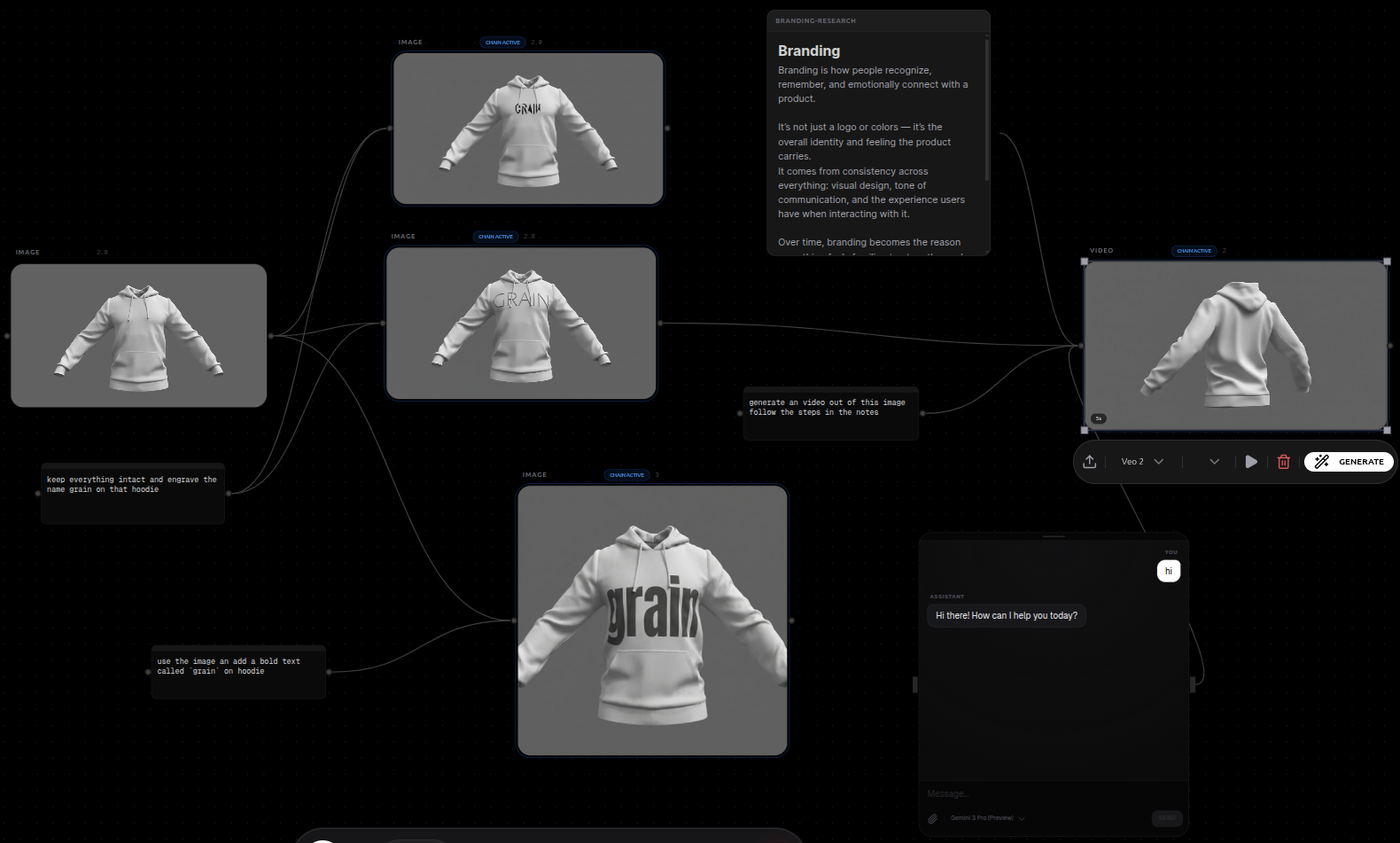
some asset generation and notes and chat nodes(advanced).
Inspiration
Grain started from a simple observation: most AI tools today focus on producing quick outputs, but creative work is rarely that linear.
Ideas evolve through exploration — connecting thoughts, references, experiments, and iterations. Tools like Notion and Miro are great for organizing or brainstorming, but they don’t fully support creative research workflows where AI becomes part of the process.
Grain was inspired by the need for a workspace where creativity, structure, and AI experimentation can exist together.
What it does
Grain is a creative canvas for building exploratory workflows.
It allows users to visually map ideas, connect steps, and integrate AI-driven generation into the same space. Instead of isolated prompts or static boards, Grain becomes a living workspace where:
- research trails can evolve
- creative workflows can be structured
- outputs become part of the thinking process
It’s not just a whiteboard or notes app — it’s a studio for exploration.
How we built it
We built Grain around the idea of a node-based canvas that feels intuitive for creatives and researchers.
The focus was on designing a smooth workflow experience: connecting modules, generating outputs, and keeping everything inside one cohesive workspace rather than scattered across tools.
Challenges we ran into
One of the biggest challenges was building an interaction-heavy canvas system — managing drag, connections, state, and usability.
Another challenge was making AI feel meaningfully integrated. The goal wasn’t to add AI as a feature, but to make it feel like a creative material inside the workflow.
Accomplishments that we're proud of
- Creating a canvas experience that blends creativity and structure
- Building a workflow-first approach beyond typical chat-based AI tools
- Designing Grain as something deeper than Notion or Miro: a space for research + exploration, not just organization
What we learned
This project taught us that the hardest part of building with AI isn’t generation — it’s designing the right environment around it.
We learned a lot about interaction design, creative tooling, and how workflows can shape better thinking.
What's next for Grain
Grain is just the beginning.
Next steps include expanding the workflow library, supporting richer research and creative nodes, collaboration, and making Grain a true creative operating space where ideas can grow into projects. Long-term, this opens the door to more spatial interfaces (and potentially 3D workspaces) for navigating research and creative systems.
Built With
- drizzleorm
- gemini
- neondb
- nextjs
- postgresql
- react
- reactflow
- tailwind
- typescript
- uploadthing


Log in or sign up for Devpost to join the conversation.