-
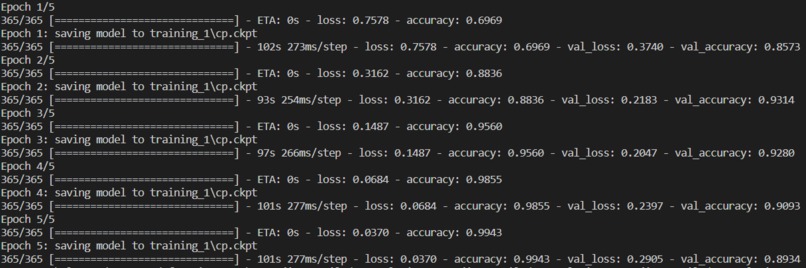
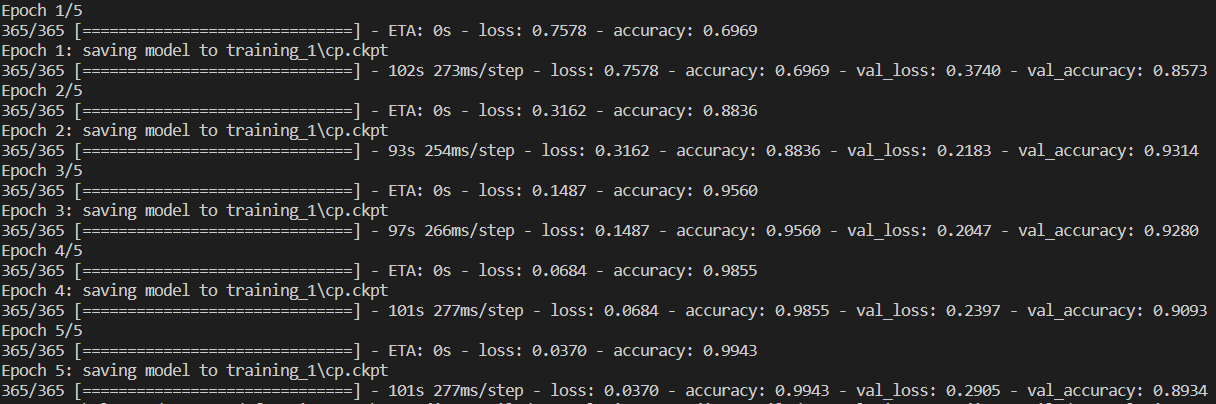
sample training output
Inspiration
TAMU Datathon's main challenge: create a program to solve scrambled 2x2 images. First prize? Extended knowledge in machine learning and a virtually intelligent machine!
What it does
This machine was trained on 1,200 images 3 times over in order to solve other images it hasn't yet seen.
How we built it
The model for the neural network was written in Python using TensorFlow and Keras APIs. We used a Convolution Neural Network architecture, then adjusted and tested various values in the training function.
Challenges we ran into
The time spent training made collecting accuracy data slow and difficult to analyze quickly. We also, originally, ran into issues with loading all 50,000 plus 25,000 of our own unsorted images. Loading so much data for training filled the RAM of our hardware, effectively ending testing then and there.
Accomplishments that we're proud of
Accuracy and effectiveness aside, much of our group had little to no experience in machine learning prior to this project, so we're proud of how much we learned in such a short time and that we could submit a working model as a result.
What we learned
We learned a lot about neural network architectures and how the data gets pushed through the different types of layers to become "meaningful" in the big picture of what's being identified in the individual images.
What's next for Graduate Puzzle Machine
This model could be implemented more robustly on a wider variety of images as well as trained on smaller random batches of images versus attempting to load all the images at once. Training could also be performed on better hardware for quicker debugging and analysis.

Log in or sign up for Devpost to join the conversation.