-
-
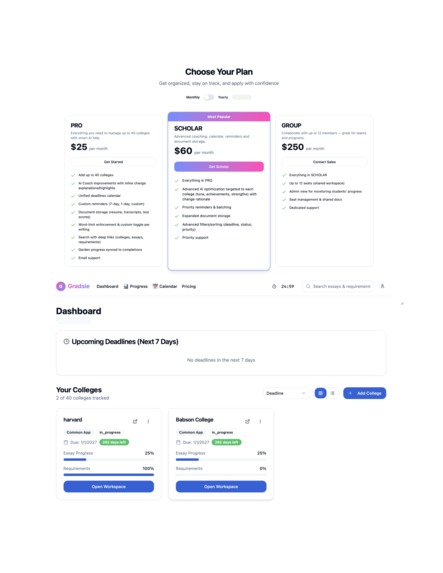
Gradsie Prototype 1
-
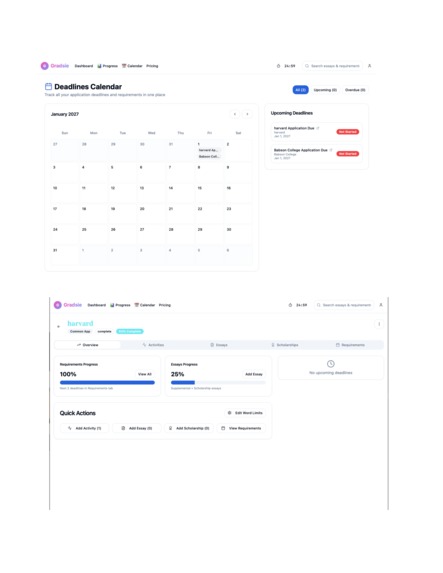
Gradsie Prototype 2
-
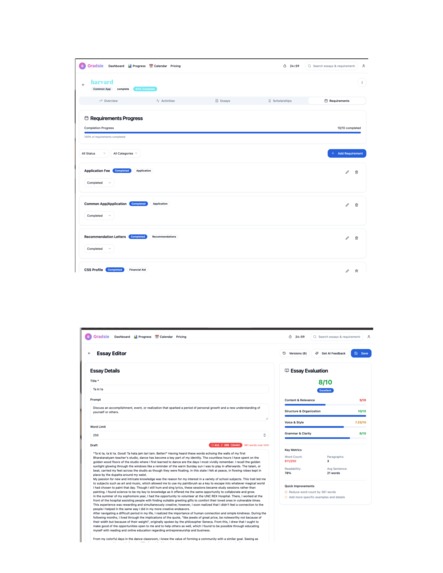
Gradsie Prototype 3
-
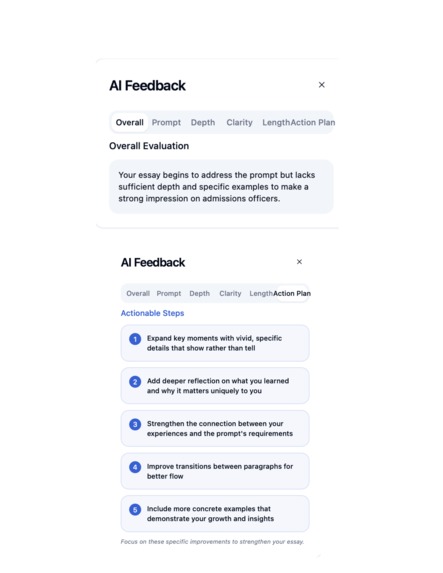
Gradsie Prototype 4
Inspiration
Gradsie was inspired by my experience in an environment where I observed how students work to do their best for high-stakes academic and career decisions. While attending a high-performing charter school, I noticed many students in my grade were already using AI tools to guide their applications and career paths, but in an unstructured and inefficient way. Many relied on common AI LLMs to make sense of their applications, whereas others found access to tools that were a bit more sophisticated, but still too rudimentary to benefit them in any actual way.
Despite the strong ambition and effort I saw, the students lacked a system to connect their actions in a valuable way. Internships, certifications, resumes, and long-term goals were not able to be formed into a cohesive strategy and were rather tacked together by the tools they depended on based on diluted information. This revealed a clear gap: students didn’t need more tools, they needed direction.
Gradsie was built to transform scattered decision-making into a structured, personalized career pipeline.
What it does
Gradsie is an AI-powered career pipeline that helps students make data-driven decisions about their future.
The platform: • Matches users to internships, certifications, and job opportunities • Identifies gaps in their profile such as in skills, experience, positioning) • Provides personalized recommendations and next steps • Continuously updates the system as the user progresses
Instead of offering one-time advice, Gradsie acts as an evolving system that guides users from education to career outcomes.
How we built it
Gradsie was built as a full-stack web application focused on rapid iteration and scalable architecture.
The platform was developed using Lovable for frontend and product deployment, combined with AI-assisted development through ChatGPT to accelerate logic design, feature implementation, and debugging.
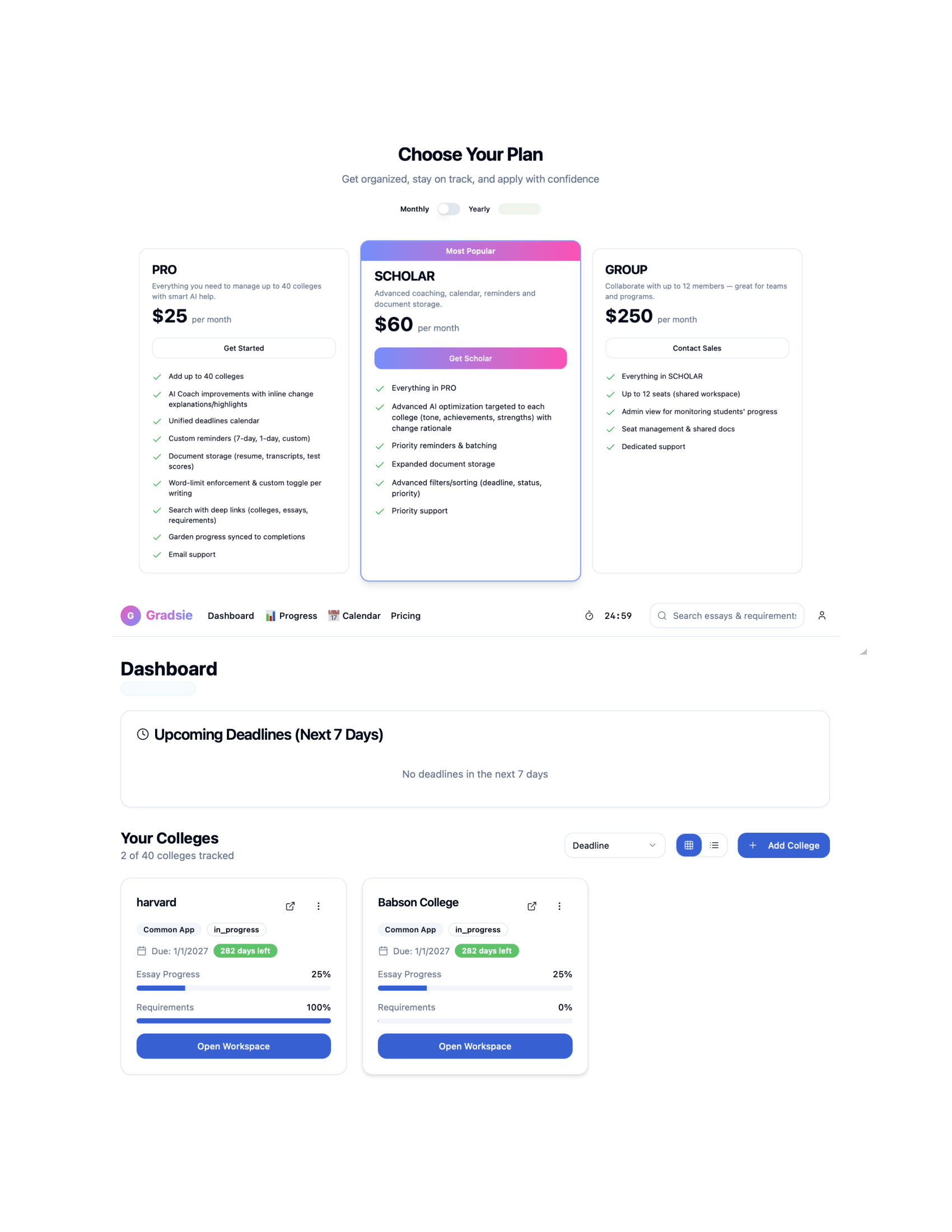
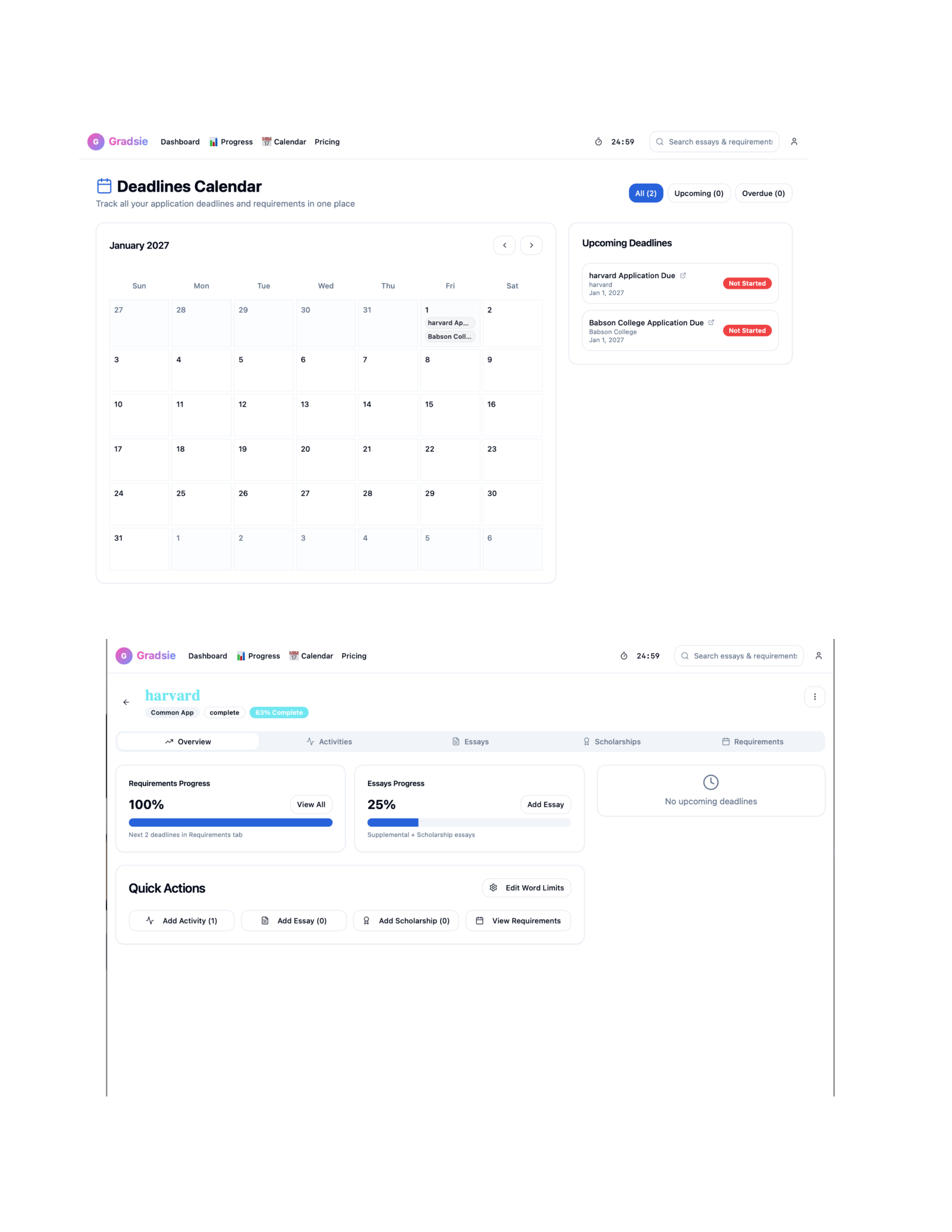
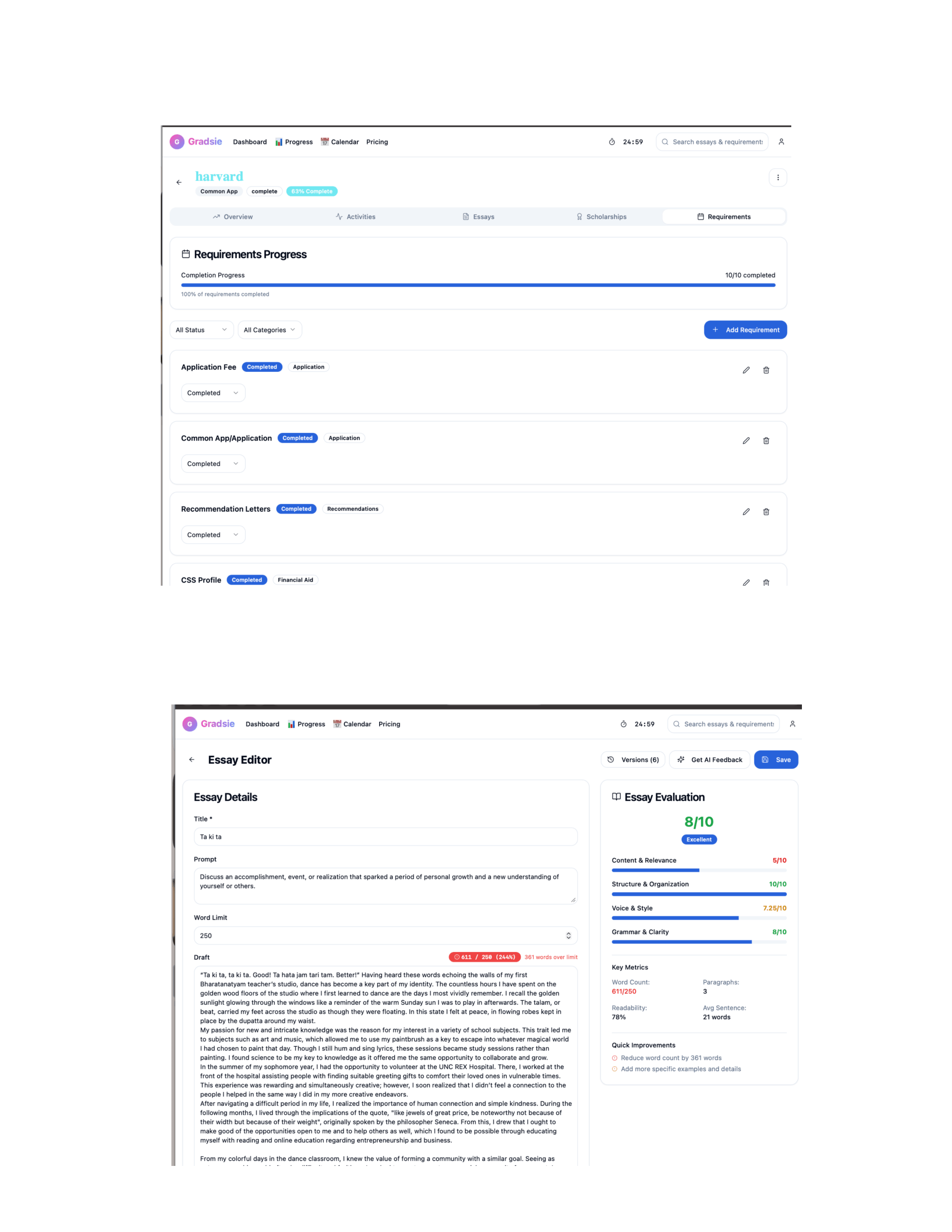
Key components include: • Dynamic dashboards that visualize user progress and career positioning • AI-powered recommendation systems that generate personalized next steps • Backend data structuring to track user behavior and continuously refine outputs
Rather than relying on static outputs, the system was designed to interpret user data and generate actionable insights in real time.
This approach allowed for fast prototyping while maintaining a strong focus on product functionality and user experience.
Challenges we ran into
One of the main challenges was transitioning from a simple AI-assisted application tool into a full career pipeline system.
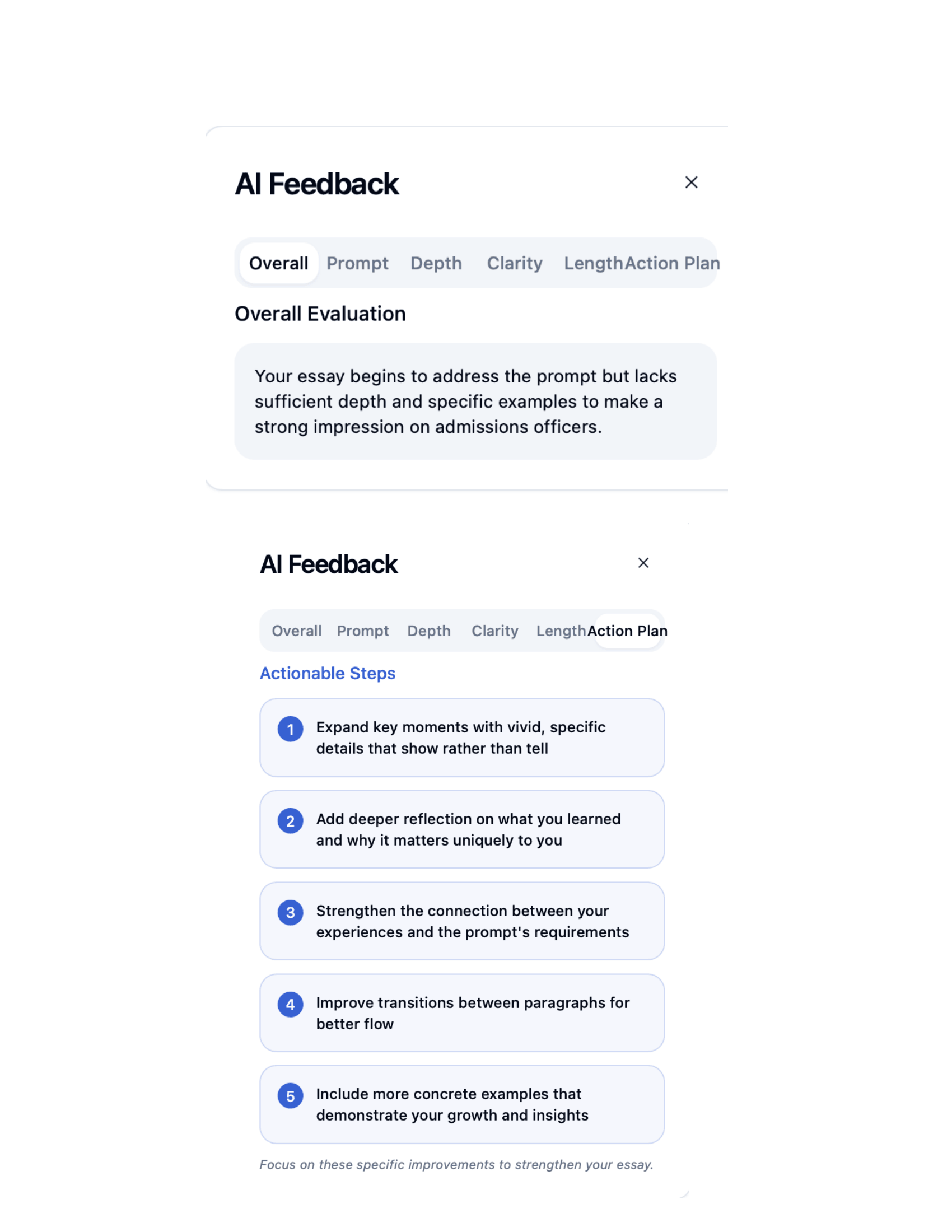
This required: • Rethinking the product from a feature-based tool to a system-based experience • Structuring data in a way that could support continuous recommendations • Ensuring that AI outputs were actionable, not just informative
Another challenge was balancing technical development with user validation, ensuring that the product remained aligned with real user needs.
Accomplishments that we're proud of
• Built a working full-stack platform with real dashboard functionality
• Developed AI-driven recommendation features based on user data
• Validated the idea through customer discovery and real user insights (notably a high school student preparing to apply to college and a grad student looking to apply for another university being highly interested in using the tool)
• Received positive feedback from experienced entrepreneurs at a 49er Foundry event, who identified the product as highly feasible
• Launched early social traction, gaining close to 100 followers within 24 hours
These milestones demonstrate both technical execution and early market validation.
What we learned
We learned that users don’t just want access to information, they want structured guidance.
The strongest insight from customer discovery was that students are looking for something that functions like a counselor: a system that understands their goals and tells them what to do next.
We also learned the importance of: • Building with user behavior in mind, not assumptions • Prioritizing clarity and simplicity in UX • Creating systems, not just features
What's next for Gradsie
Next, we are focused on: • Refining the recommendation engine for higher accuracy • Expanding testing with real student users • Improving personalization through better data integration • Building partnerships with schools and counselors
Long term, Gradsie aims to become the system that connects education, experience, and employment, helping users navigate their entire career journey with clarity and confidence.

Log in or sign up for Devpost to join the conversation.