Inspiration
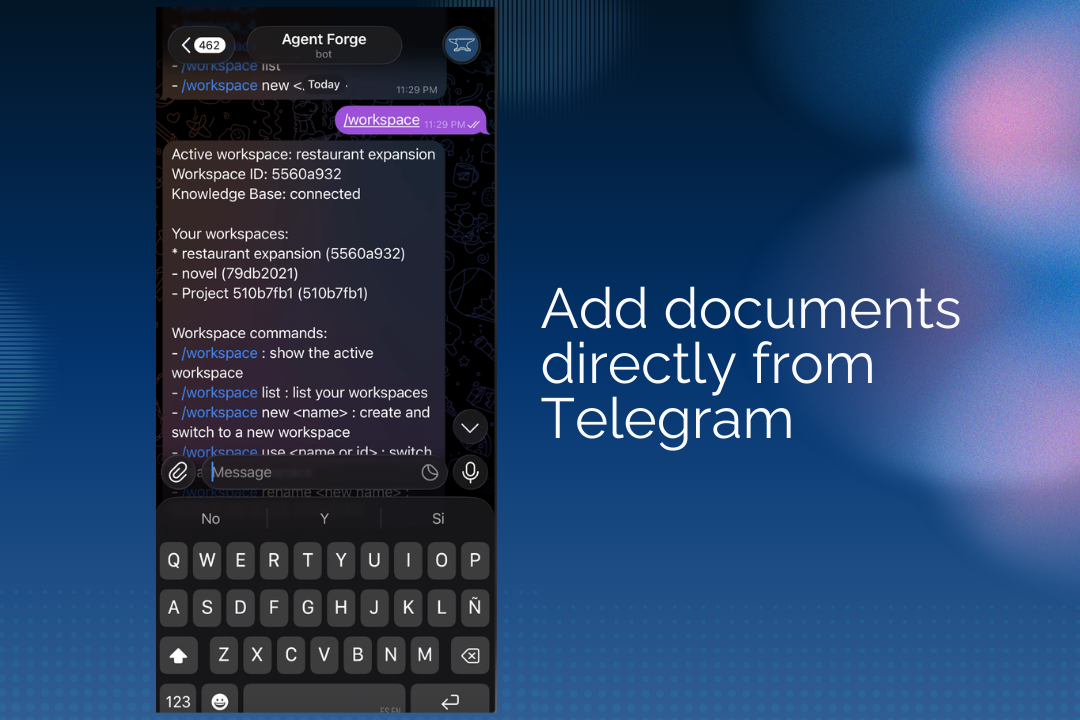
I wanted to create an agent that runs directly on your phone and can actually do work for you. It should not require a new account or another app. Everything should live inside tools people already use daily, like Telegram.
Telegram is secure, fast, and built for conversations. It feels natural to interact with an AI there. Instead of forcing users into new interfaces, I wanted to bring powerful capabilities into a familiar environment.
What it does
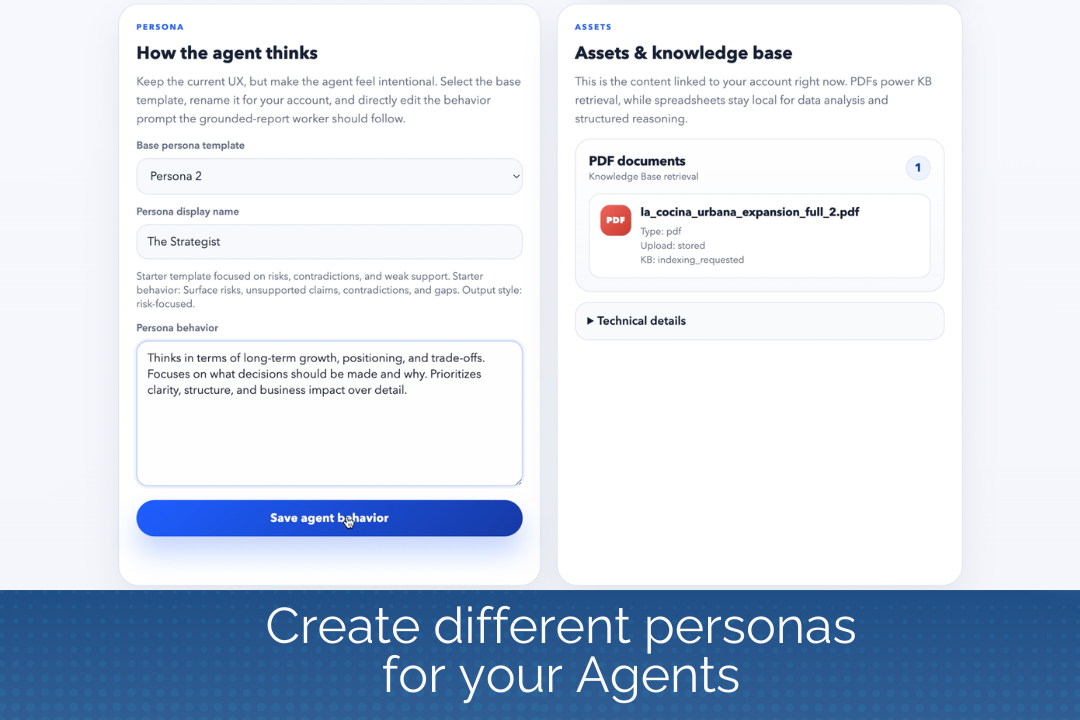
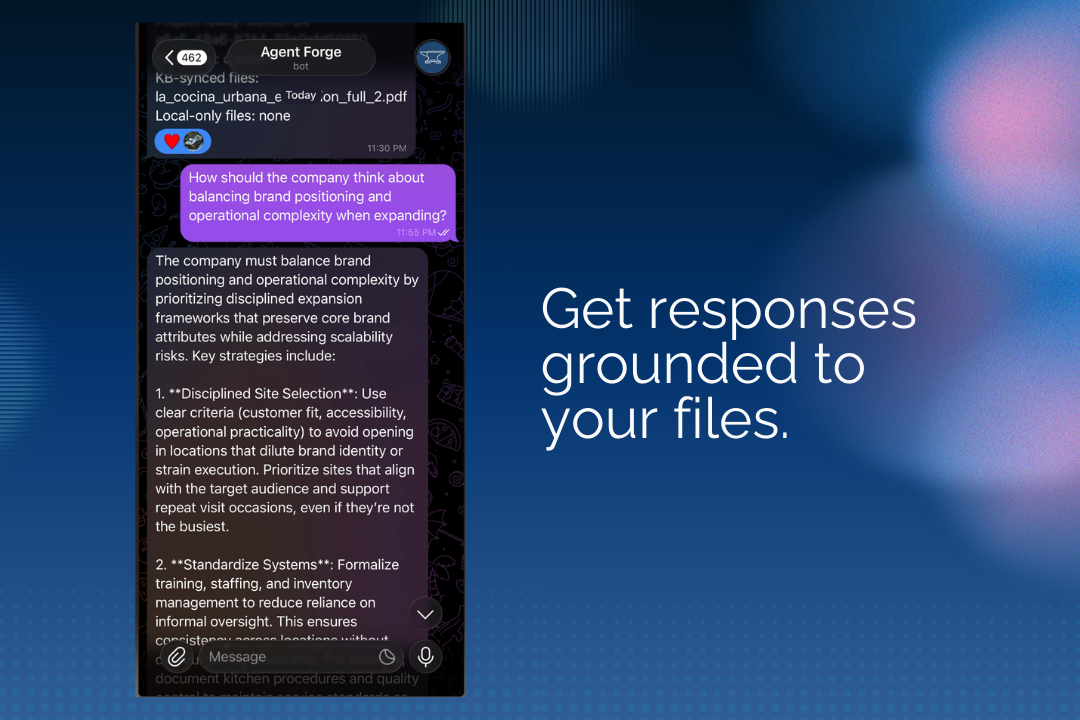
Gradient Agent Forge turns PDFs and spreadsheets into grounded answers, structured reports, and visual content through a simple Telegram chat.
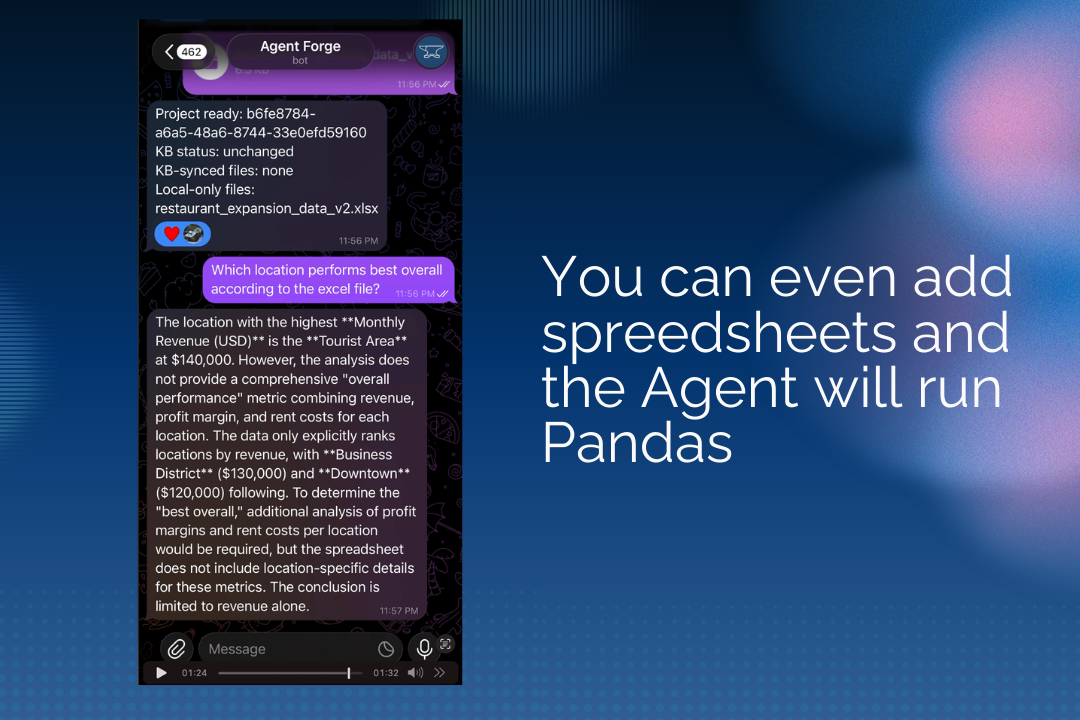
You can upload documents, ask questions, analyze data, and generate outputs like reports and images, all in one continuous workflow. The system combines document retrieval, spreadsheet analysis, and content generation to produce results that are actually useful, not just conversational.
How I built it
I built the system in Python using a single orchestrated workflow.
I use the Telegram API as the main interface, allowing users to interact with the agent, upload files, and trigger actions through simple commands. On the backend, I use DigitalOcean Gradient to create and manage knowledge bases, index documents, perform retrieval, and generate both text and images.
Spreadsheets are processed using pandas for real data analysis, while the agent coordinates everything through a structured pipeline that connects ingestion, retrieval, analysis, and generation.
Challenges I ran into
The main challenge was making the entire workflow work seamlessly inside Telegram.
I needed to handle file uploads, document indexing, retrieval, and analysis without relying on a traditional UI. Everything had to feel natural in a chat environment, even though the system is doing complex operations behind the scenes.
Balancing simplicity for the user with a powerful backend workflow was one of the hardest parts.
Accomplishments that I'm proud of
I built a complete system that can ingest documents, retrieve grounded information, analyze structured data, and generate reports and visuals, all from a chat interface.
The agent is not just answering questions. It combines multiple capabilities into a single workflow that produces real outputs. Doing all of this inside Telegram, without requiring additional tools or interfaces, is something I am especially proud of.
What I learned
I learned that the future of software is not more dashboards or more complex interfaces.
Users want to access tools, data, and functionality directly from environments they already understand. Chat is a powerful interface because it removes friction and makes advanced systems accessible.
The key is not just building AI features, but integrating them into workflows that feel natural and immediate.
What's next for Gradient Agent Forge
Next, I want to expand the system with more output formats, such as exporting reports to PDF and generating spreadsheets automatically.
I also plan to add voice interaction, allowing users to speak to the agent and receive voice responses. Support for additional media types like video and audio is another direction.
On the product side, I aim to add authentication, user management, and monetization features to make this a fully deployable and scalable solution.
Built With
- chatgpt
- digitalocean
- gradient
- python


Log in or sign up for Devpost to join the conversation.