-
-
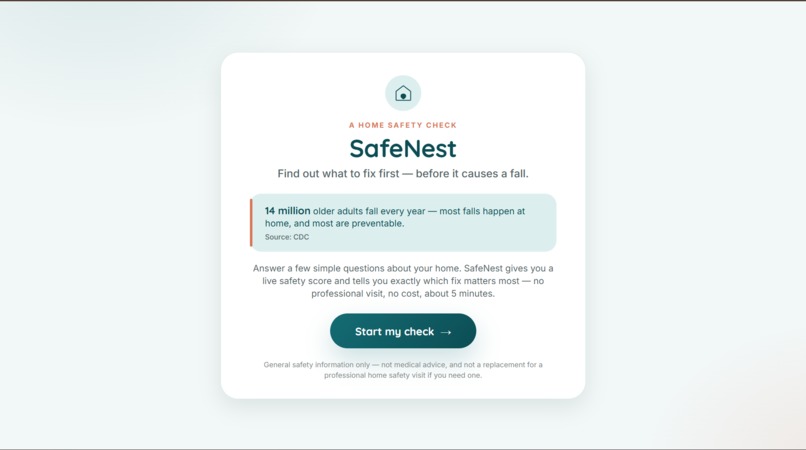
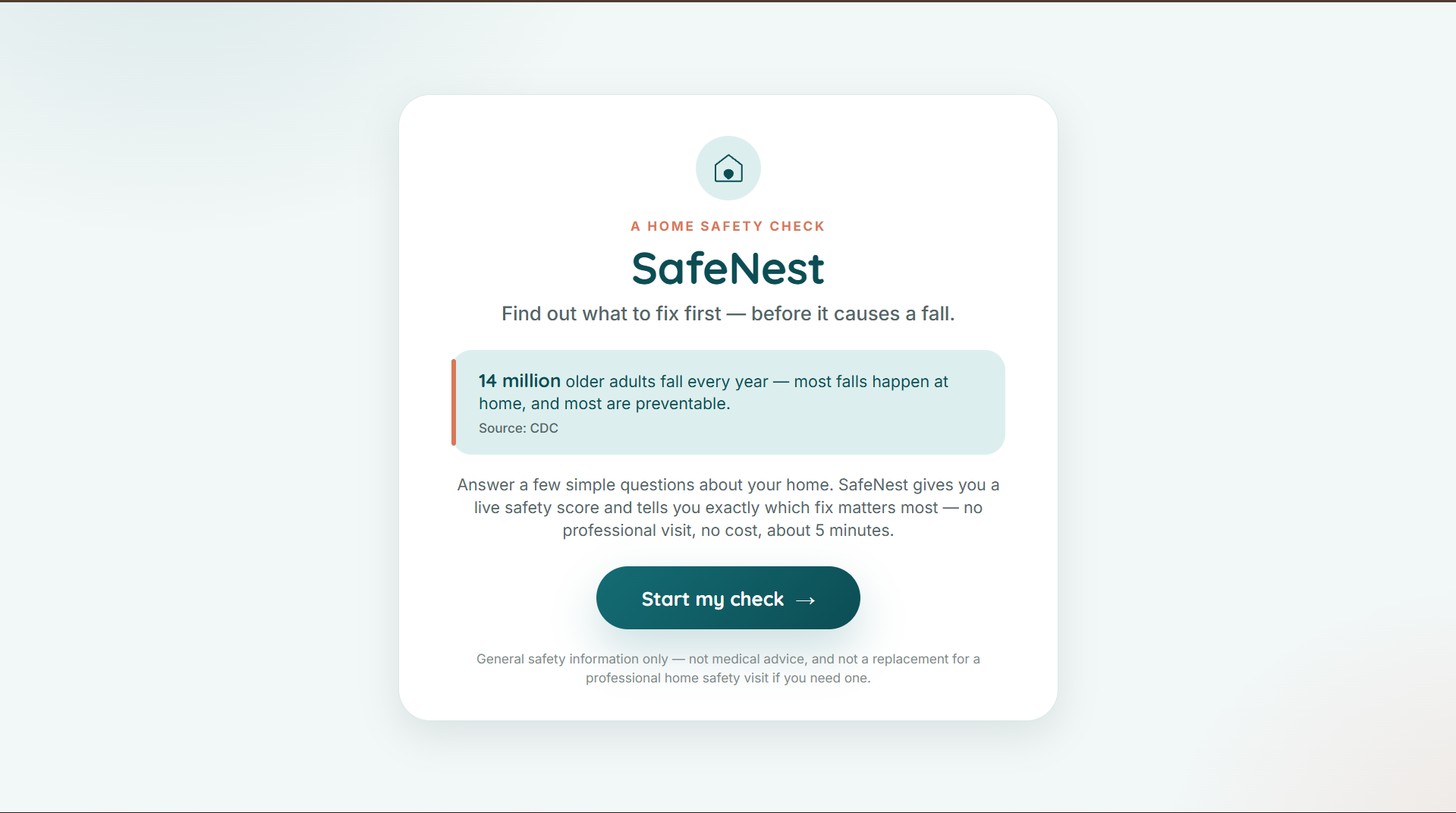
Homepage
-
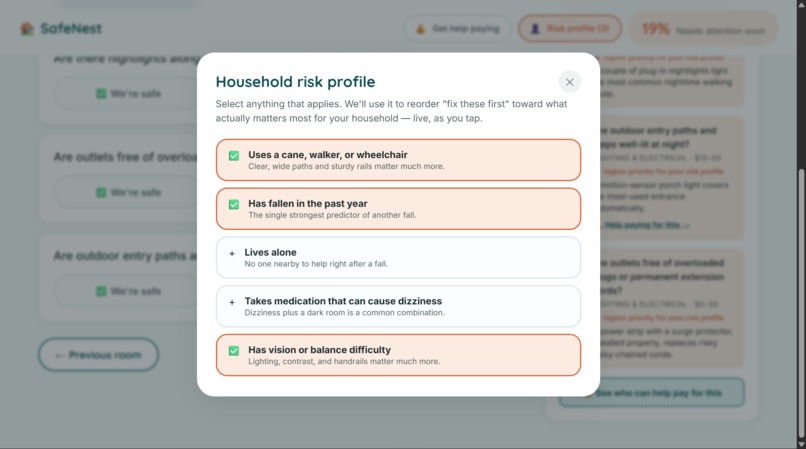
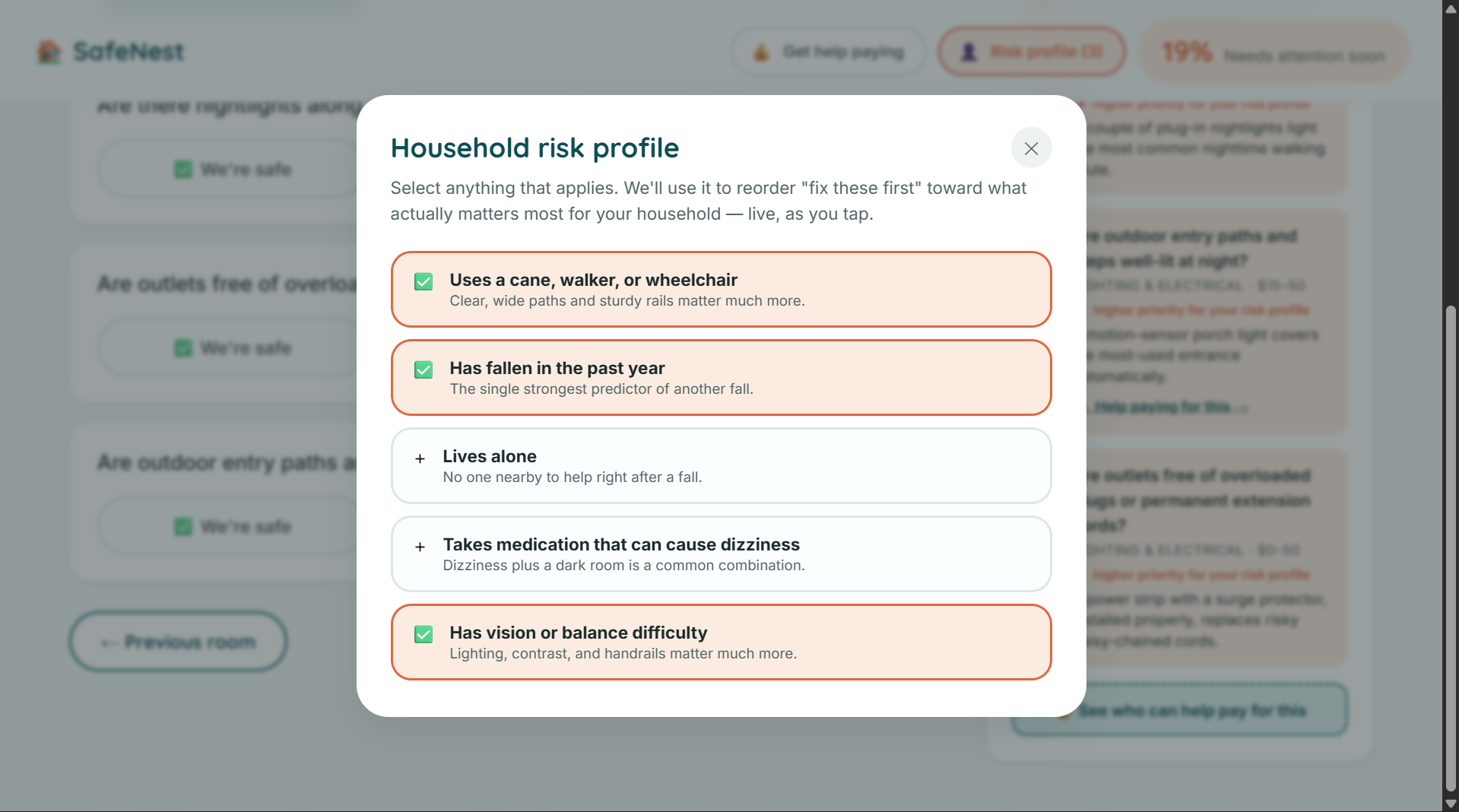
Risk Profile for rearranging what to fix first.
-
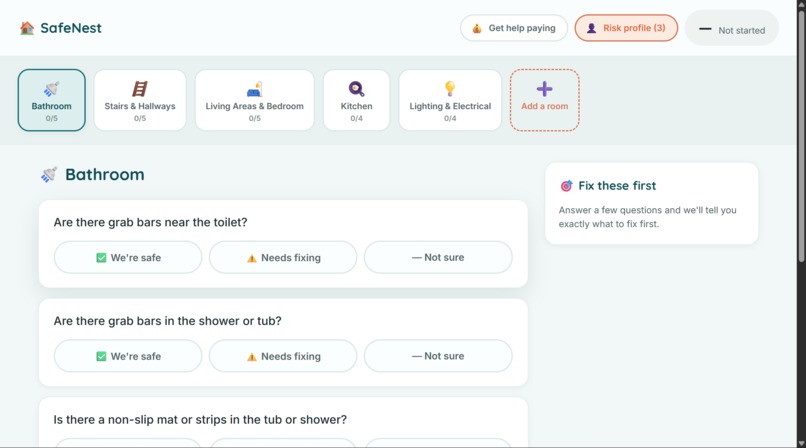
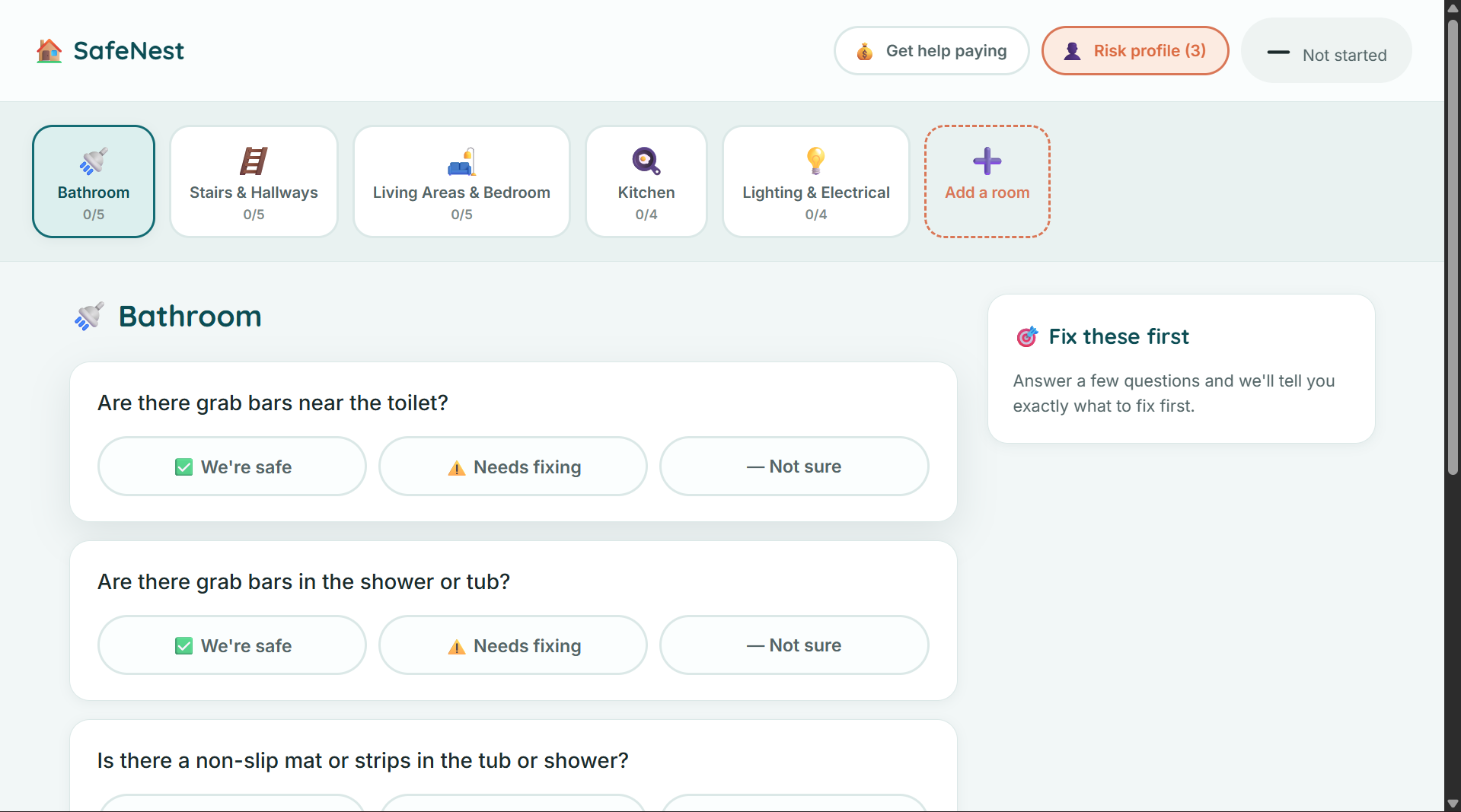
Bathroom Page
-
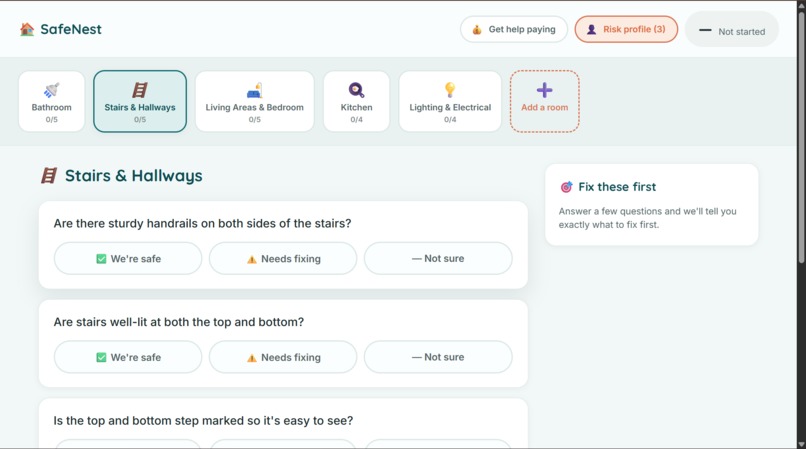
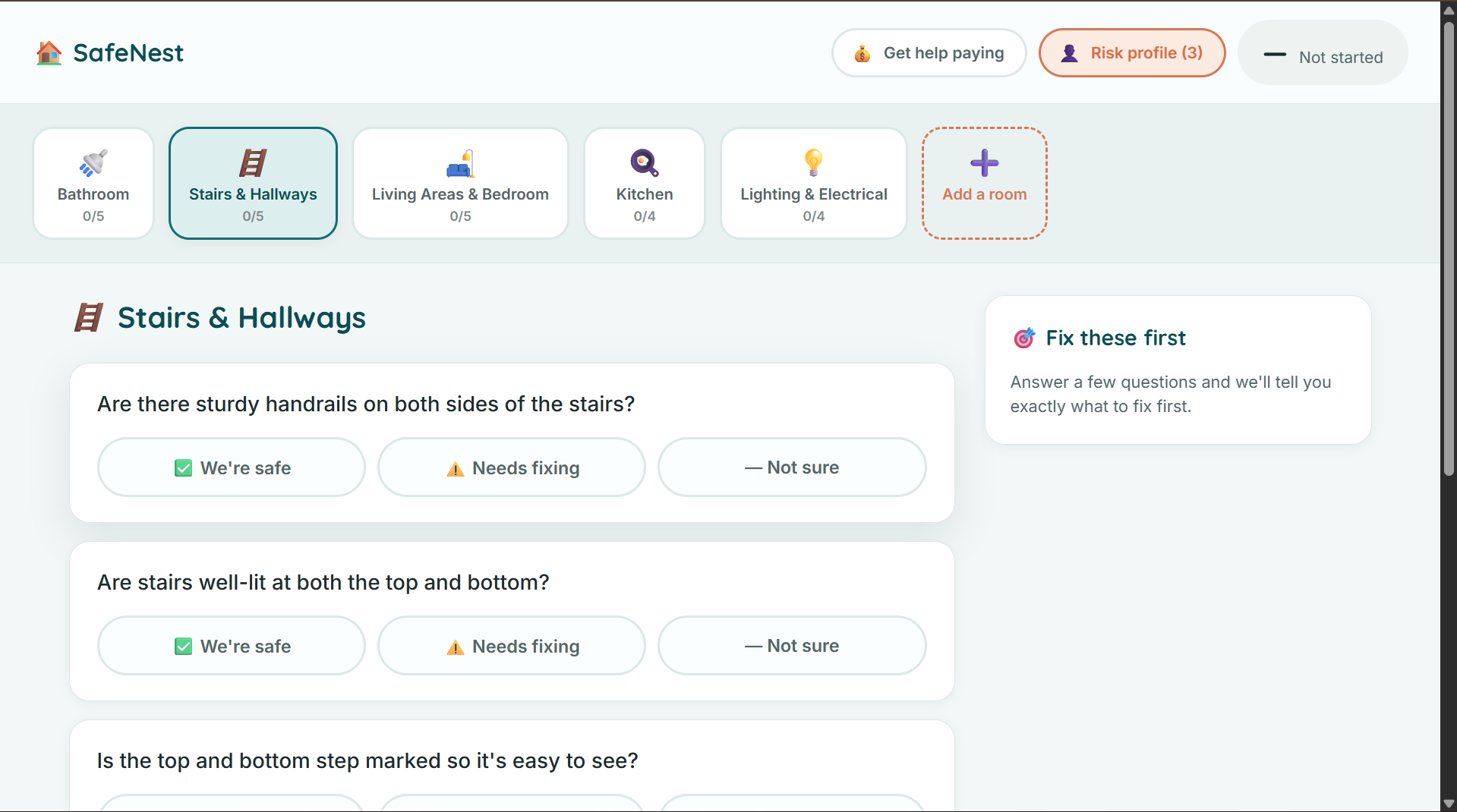
Stairs and Hallways Page
-
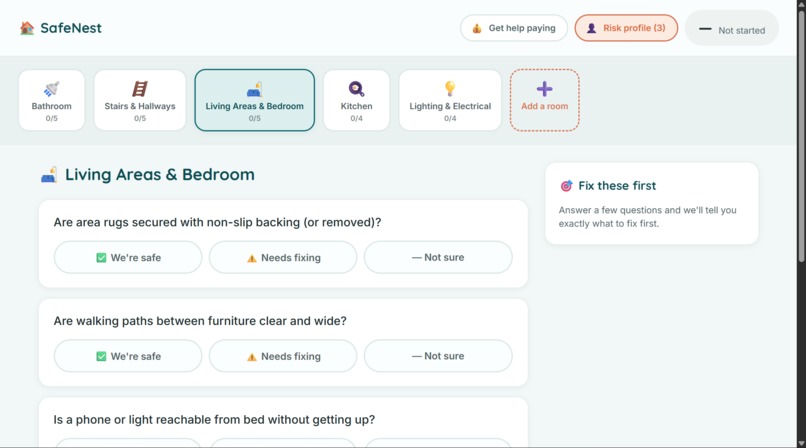
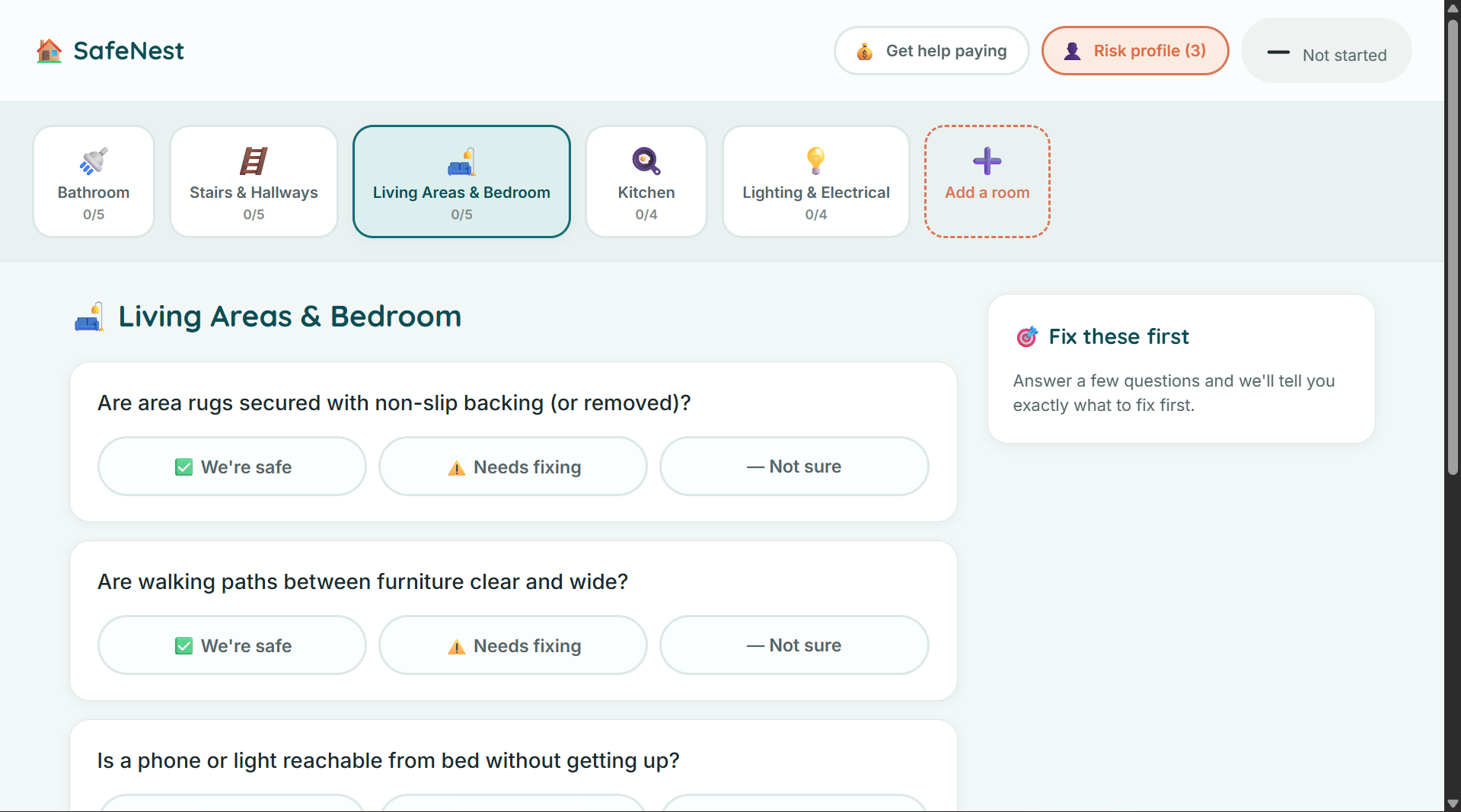
Living Areas and Bedroom Page
-
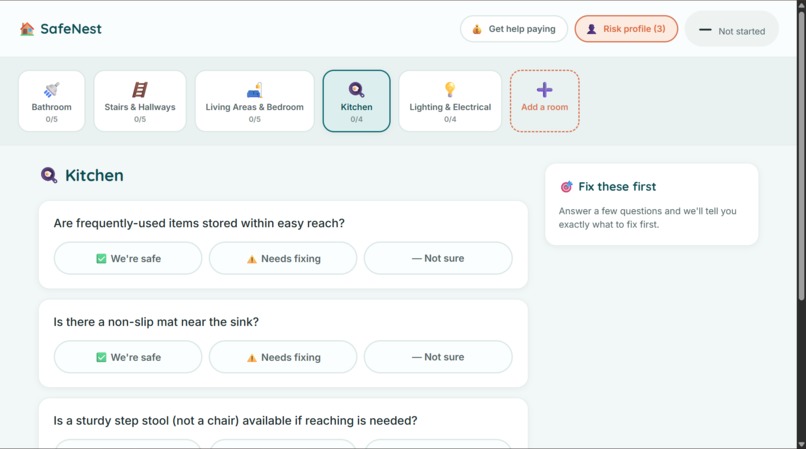
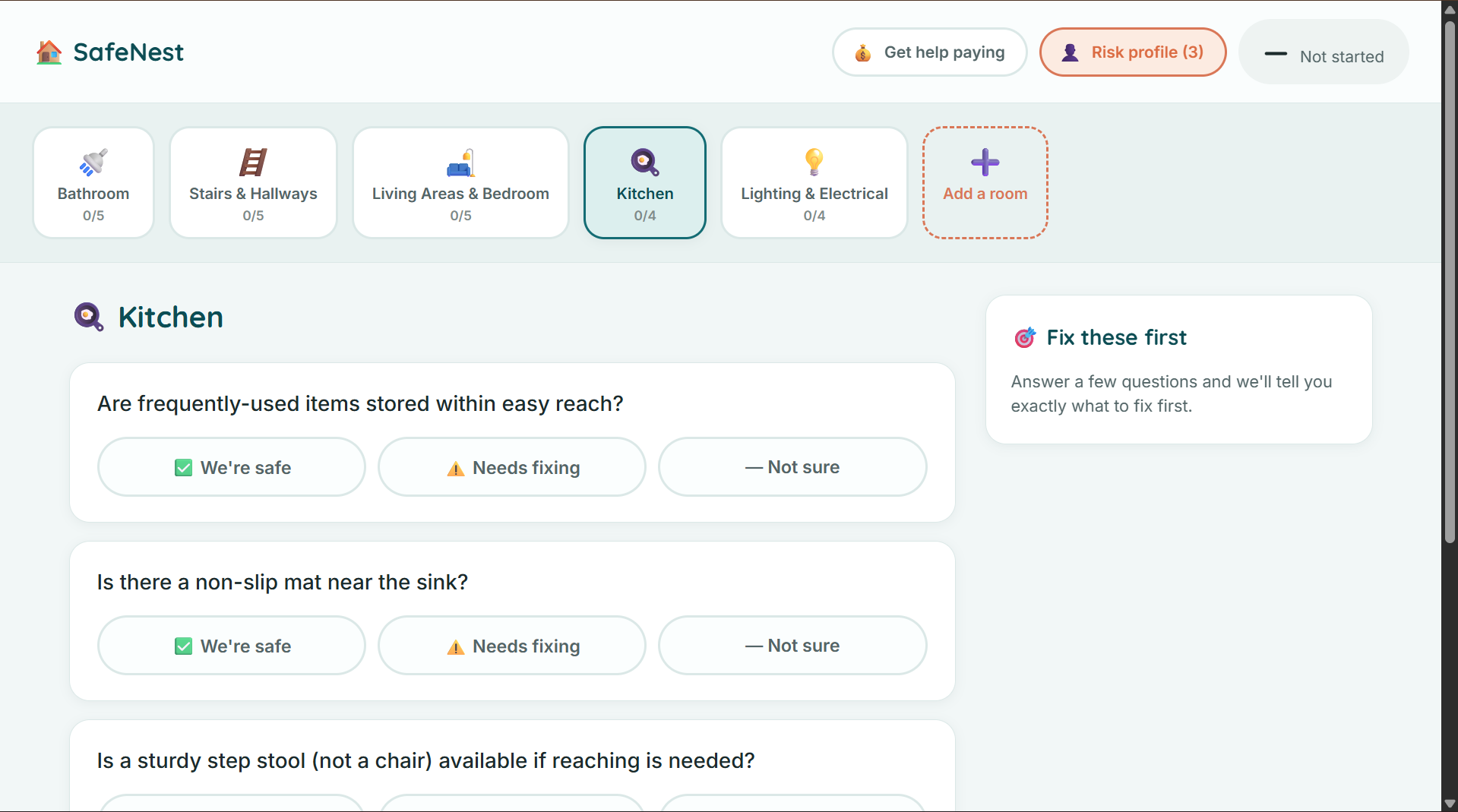
Kitchen Page
-
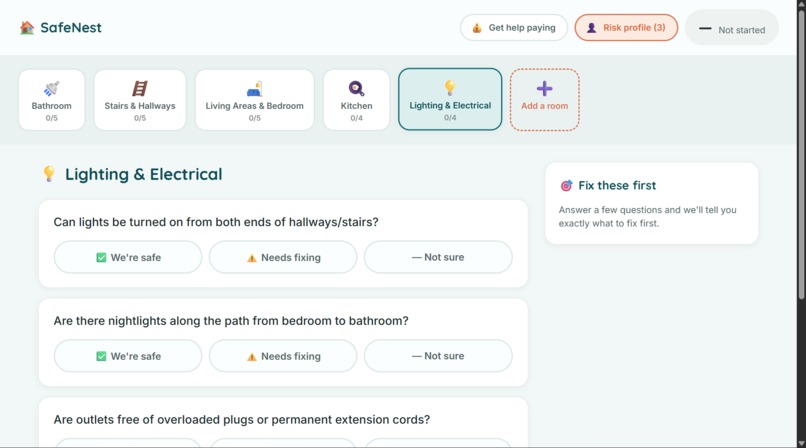
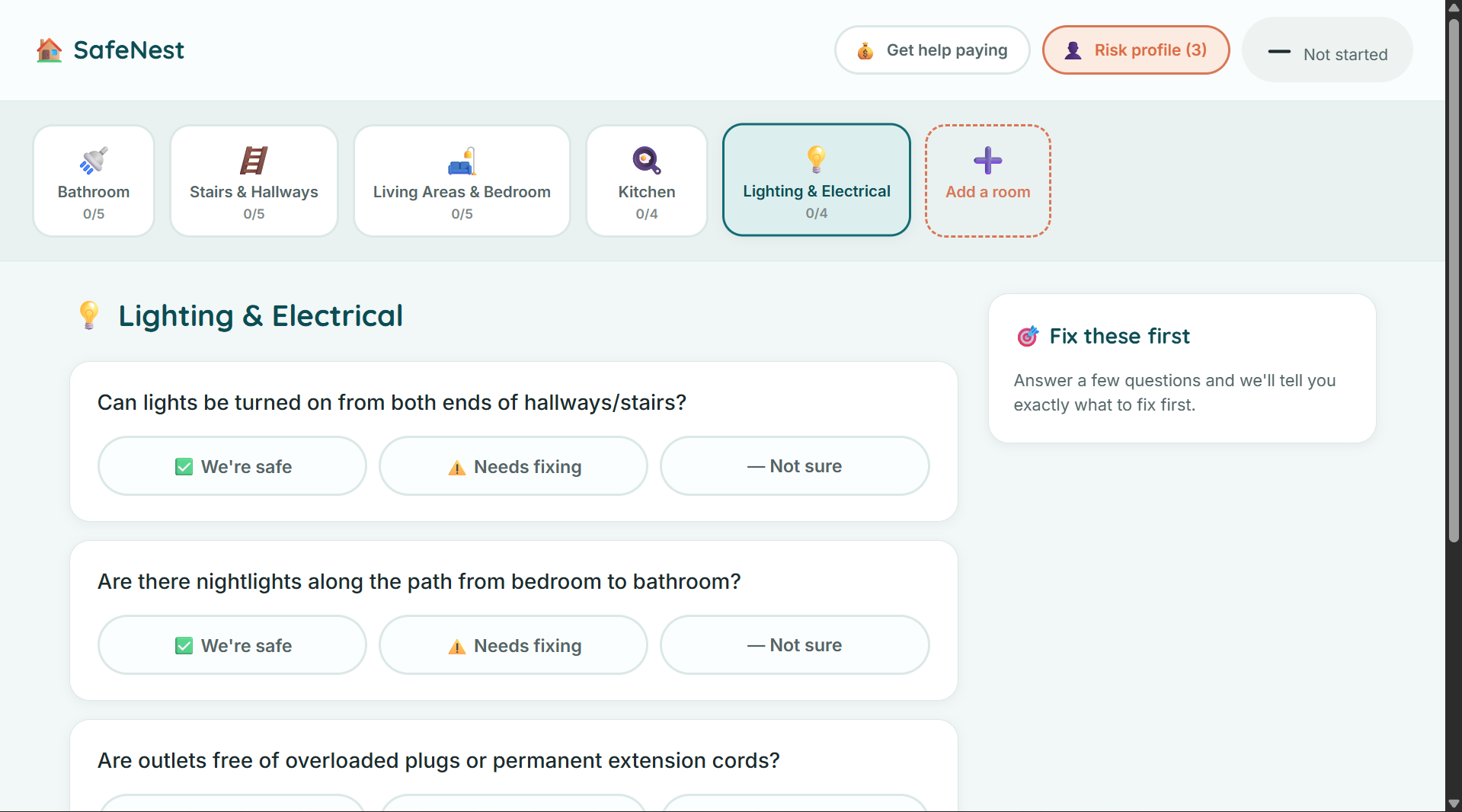
Lighting and Electrical Page
-
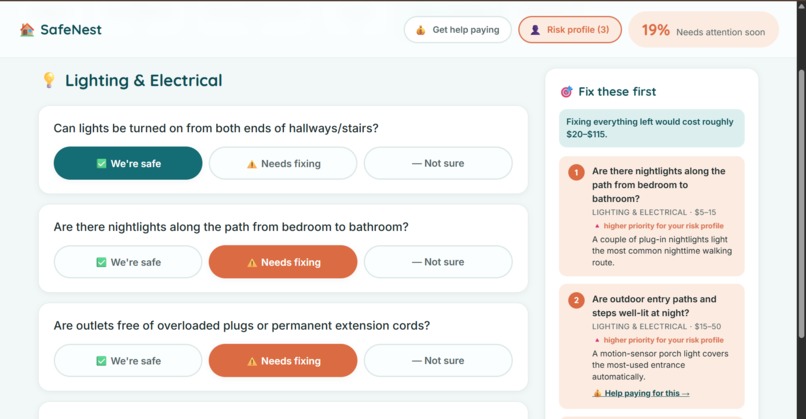
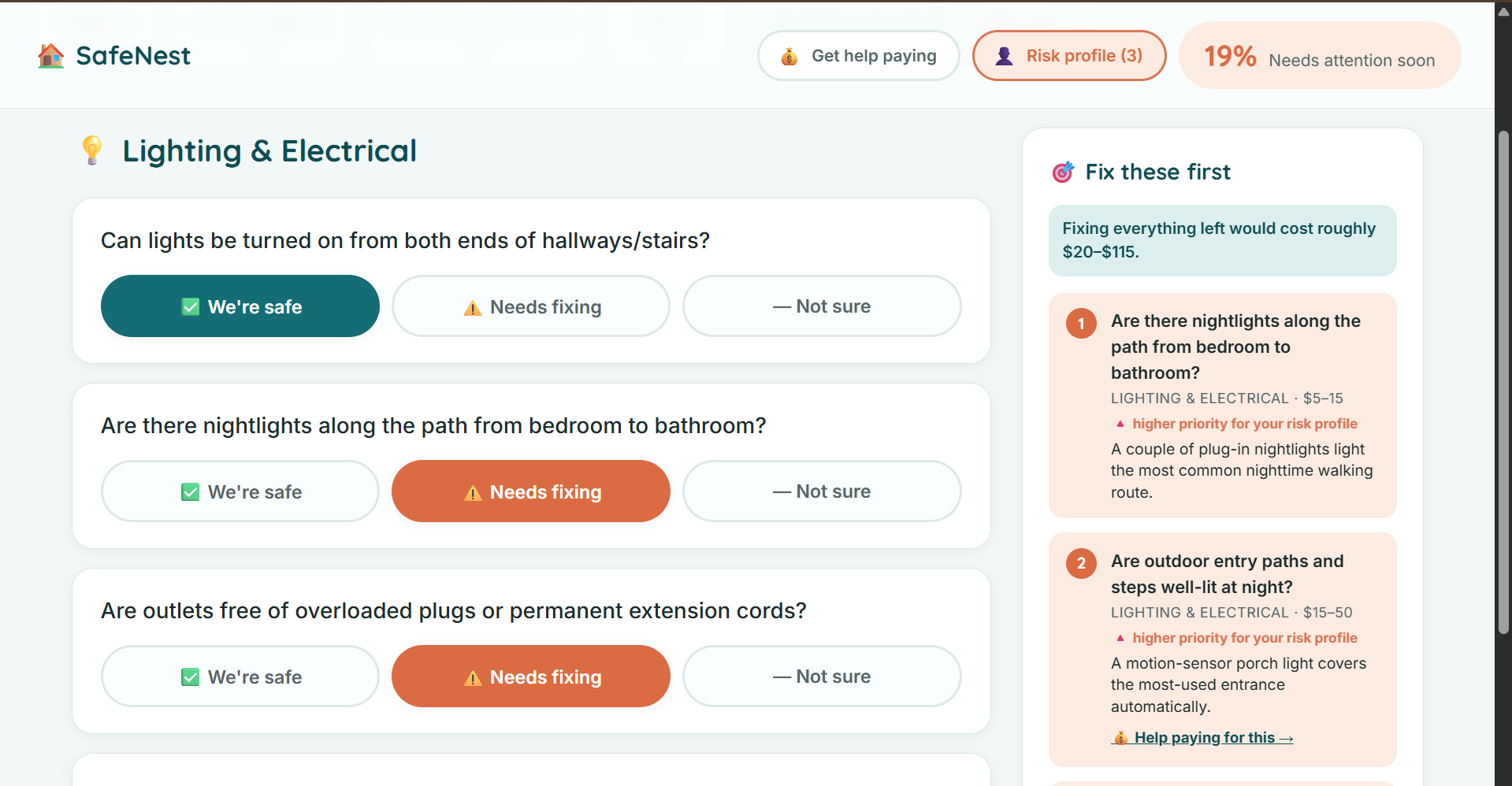
Fix these first feature and total price count.
-
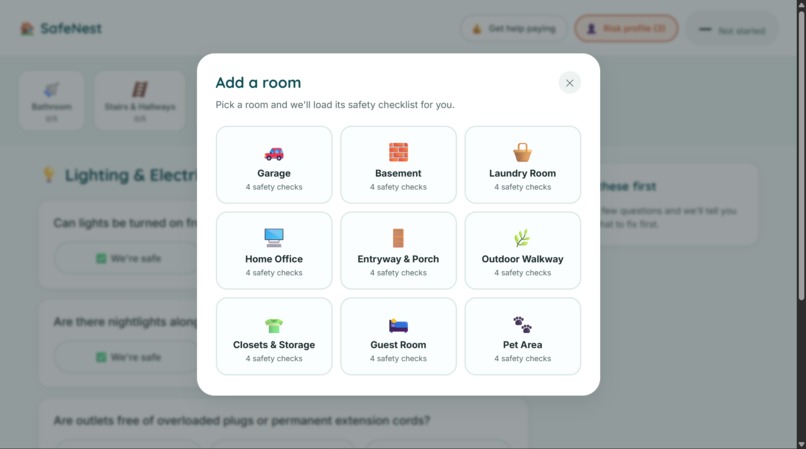
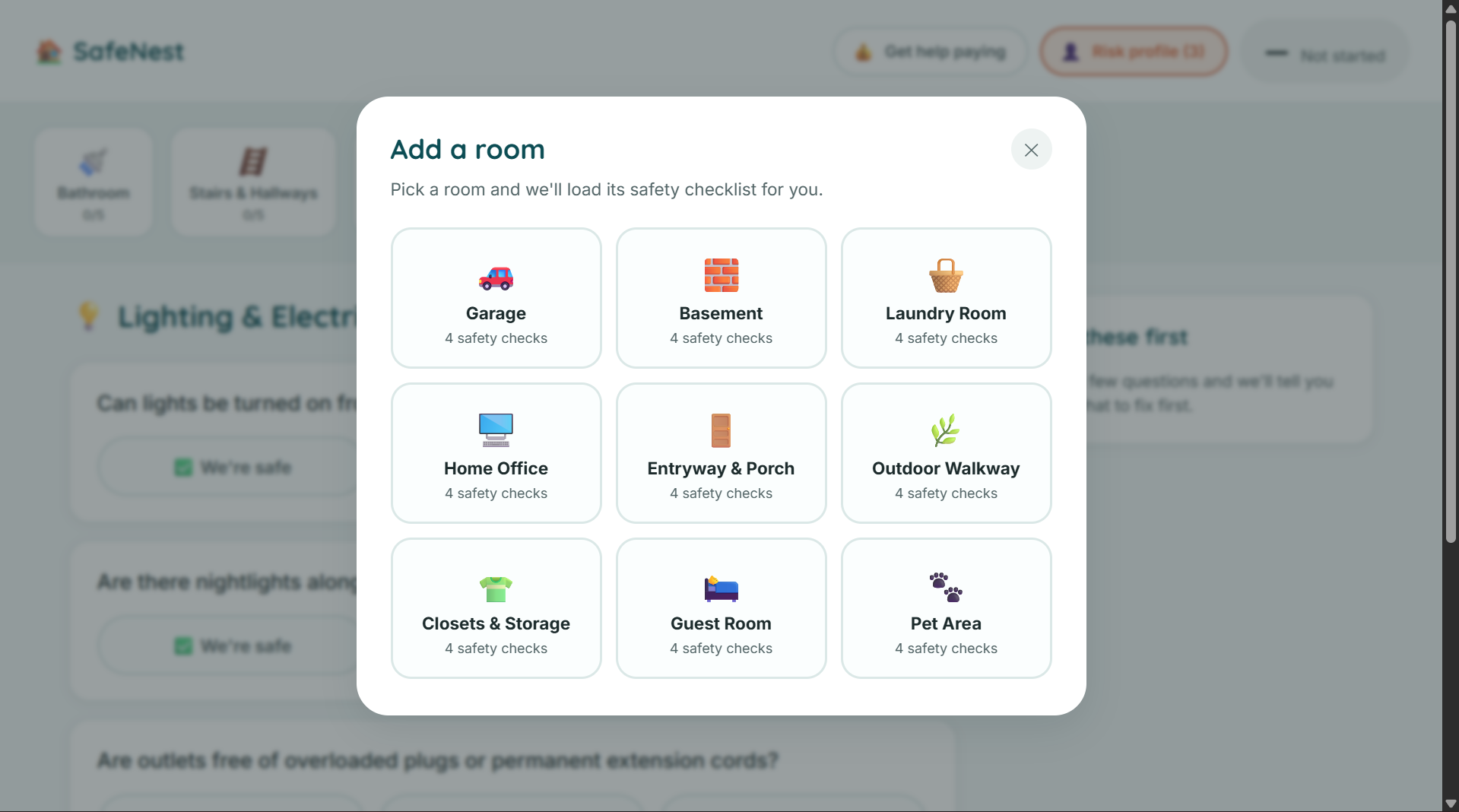
9 extra room options with preloaded questions.
-
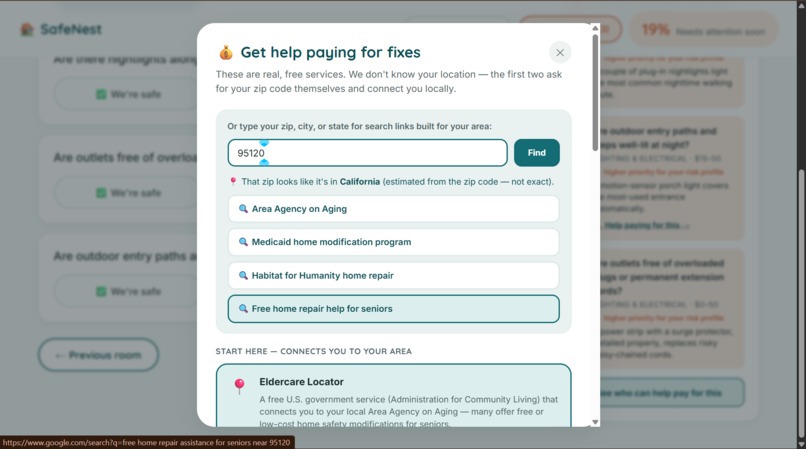
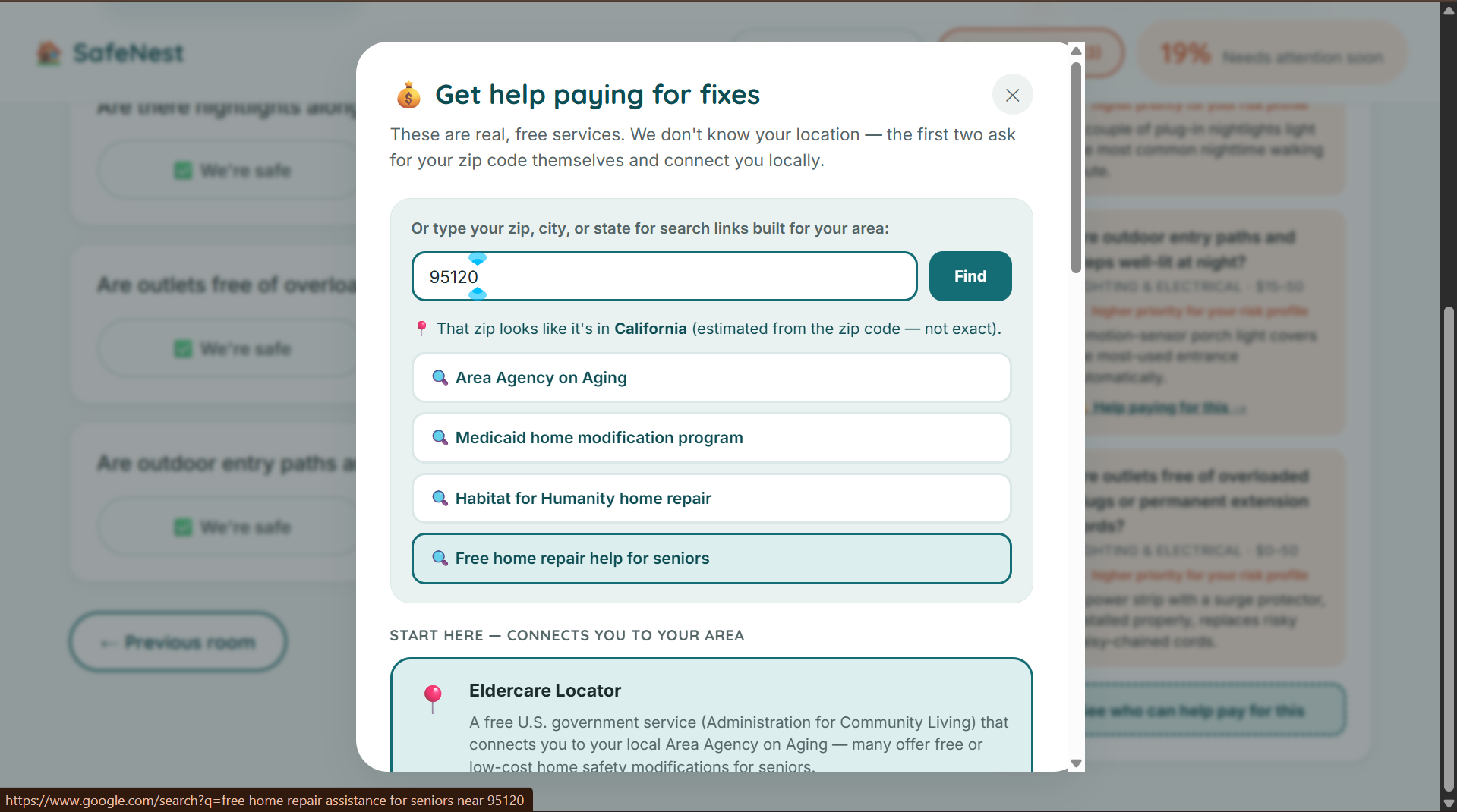
Get help paying pop-up with Zip code intake.
-
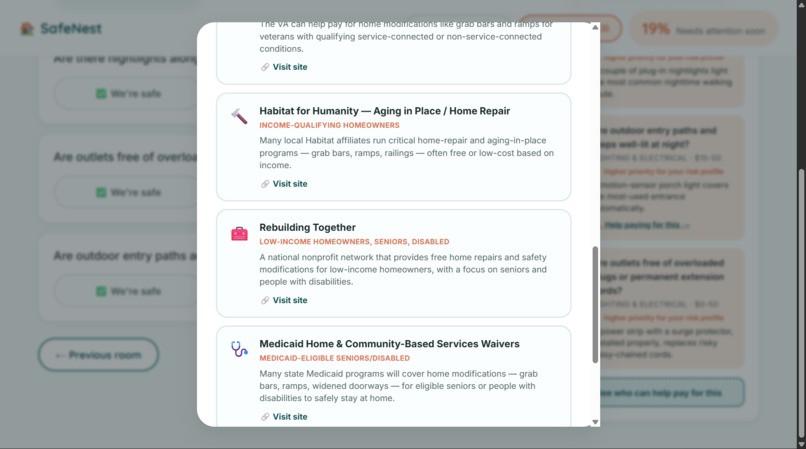
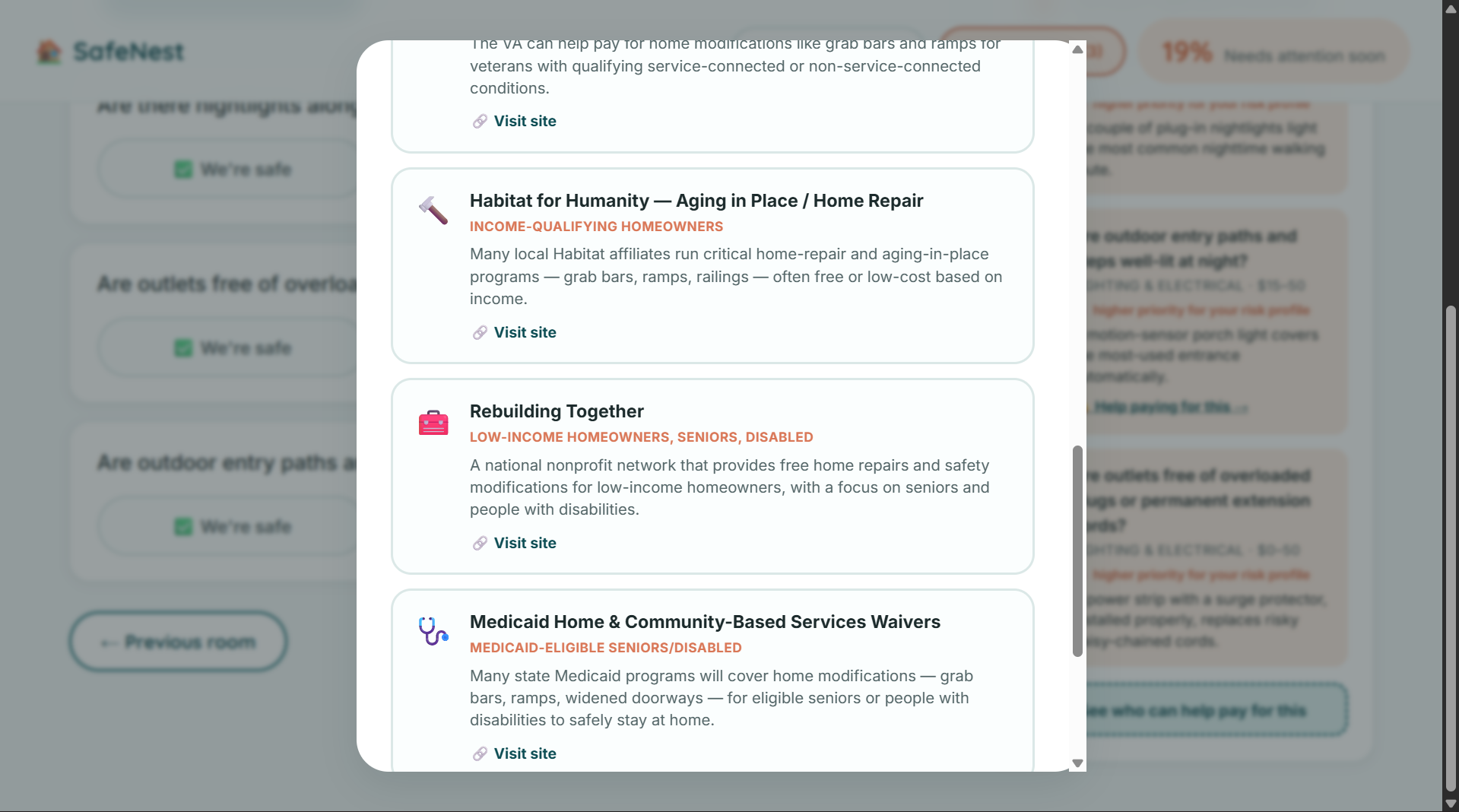
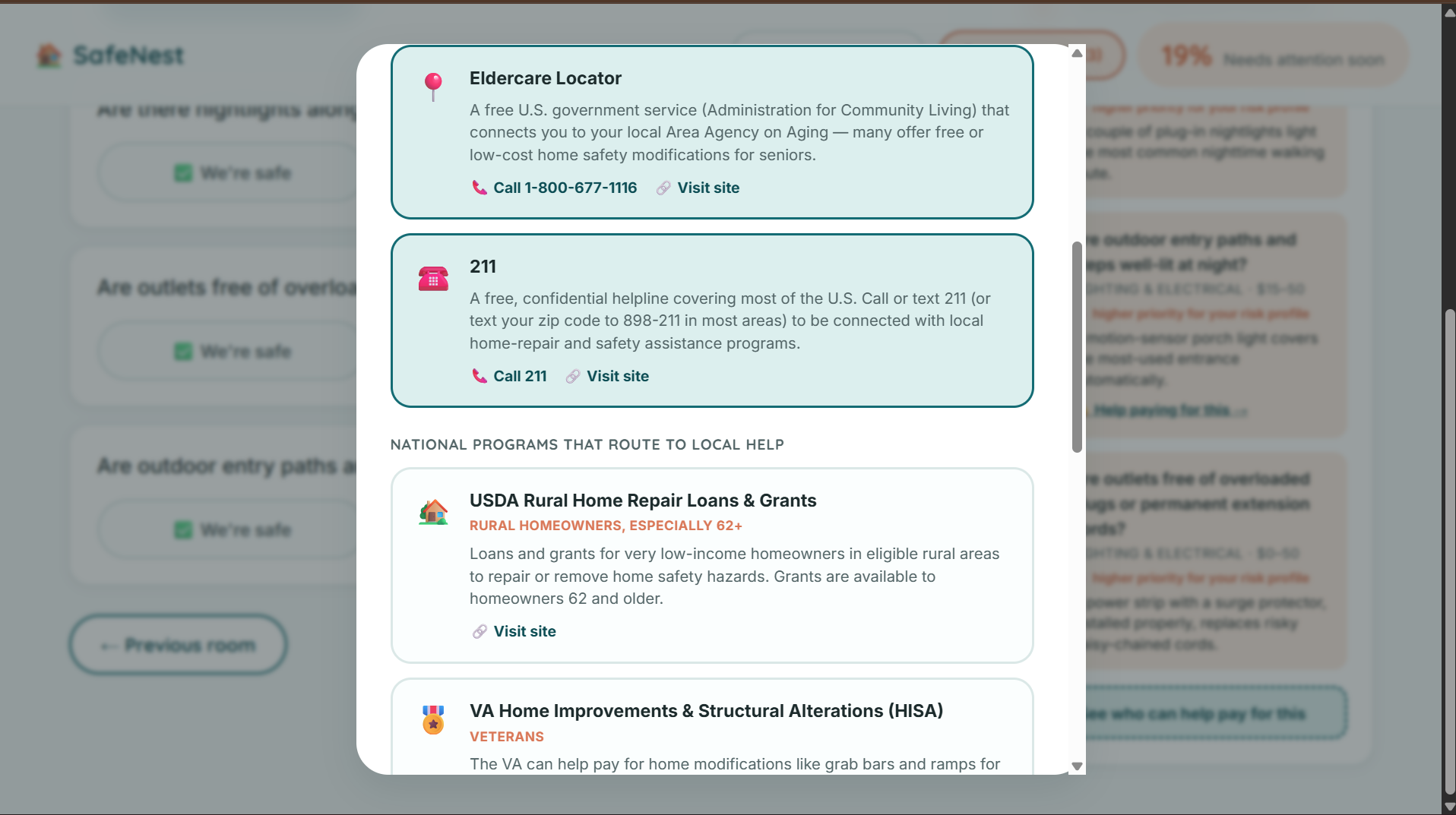
Options for paying renovations
-
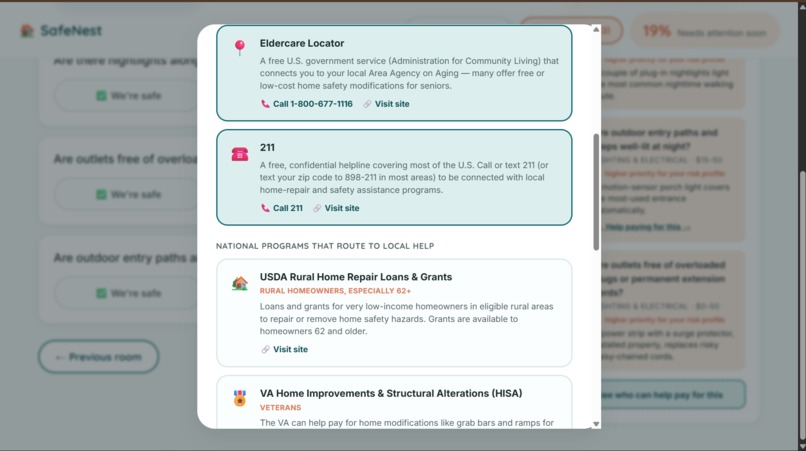
More options for paying renovations
Inspiration
14 million older adults fall every year, and most falls happen at home. That statistic is the kind of thing you read once and can't un-see — it's a massive, well-documented problem, and yet almost no consumer tool exists to help an ordinary person walk through their own house and do something about it.
Impact Statement
SafeNest closes the gap between "you have 12 problems, good luck" and someone actually fixing something. By ranking hazards by real risk-reduction-per-dollar and connecting people directly to free programs that can pay for the fix, it turns an overwhelming, expensive-feeling problem into one clear, affordable next step. It helps older adults stay safely independent in their own homes longer, gives family caregivers a concrete way to help from anywhere, and reaches the low-income and elderly homeowners who need these fixes most but are least likely to be able to afford a contractor or professional assessment.
What it does
Walks you through your home room by room with tap-only questions, shows a live safety score, ranks every flagged hazard by severity ÷ cost, personalizes that ranking to your household's real risk factors, estimates the total fix cost, and connects you to real free programs that can help pay for it.
How I built it
Zero dependencies, zero build step, zero backend — plain HTML, CSS, and JavaScript, with all scoring logic isolated into pure, independently unit-tested functions so the ranking and risk-weighting could be verified correct before ever touching the UI. Everything persists client-side via localStorage.
Challenges I ran into
I considered a "point your camera at a room and AI finds hazards" feature, and had to be honest that a real version needs a paid vision-model API and a backend, breaking the zero-cost design. Rather than fake it, I scoped down to a location box that gives an honest offline best-guess of your state plus real pre-built search links — smaller, but something we could fully stand behind.
Accomplishments that I'm proud of
The "fix these first" ranking and the "get help paying" directory. Most safety checklists stop at "here's what's wrong" — SafeNest tells you what matters most, then tells you who can help you afford to fix it.
What I learned
That the most valuable feature in an accessibility-focused tool is often restraint — cutting typing, cutting steps, cutting anything that isn't one obvious tap — and that personalization doesn't need to be complicated to be real.
What's next for SafeNest
A "mark as fixed" progress timeline, and a shareable read-only report a family member can check in on remotely.
Built With
- accessibility
- civic-tech
- css3
- elderly-care
- fall-prevention
- health
- home-safety
- html5
- javascript
- localstorage
- social-good
- vanilla-js

Log in or sign up for Devpost to join the conversation.