Inspiration
A majority of teens (61%) feel a lot of pressure to get good grades, often negatively impacting their health and well-being (Pew Research Center 2019). We decided to create a website to alleviate this problem that we can all collectively relate to: as students, we often face many stresses throughout the week, and no time to do things because of the heavy workload. We all saw this website as a way to create better, more balanced time management for ourselves and fellow students. We hope that other students will be able to use this website to its full potential and find it useful!
What it does
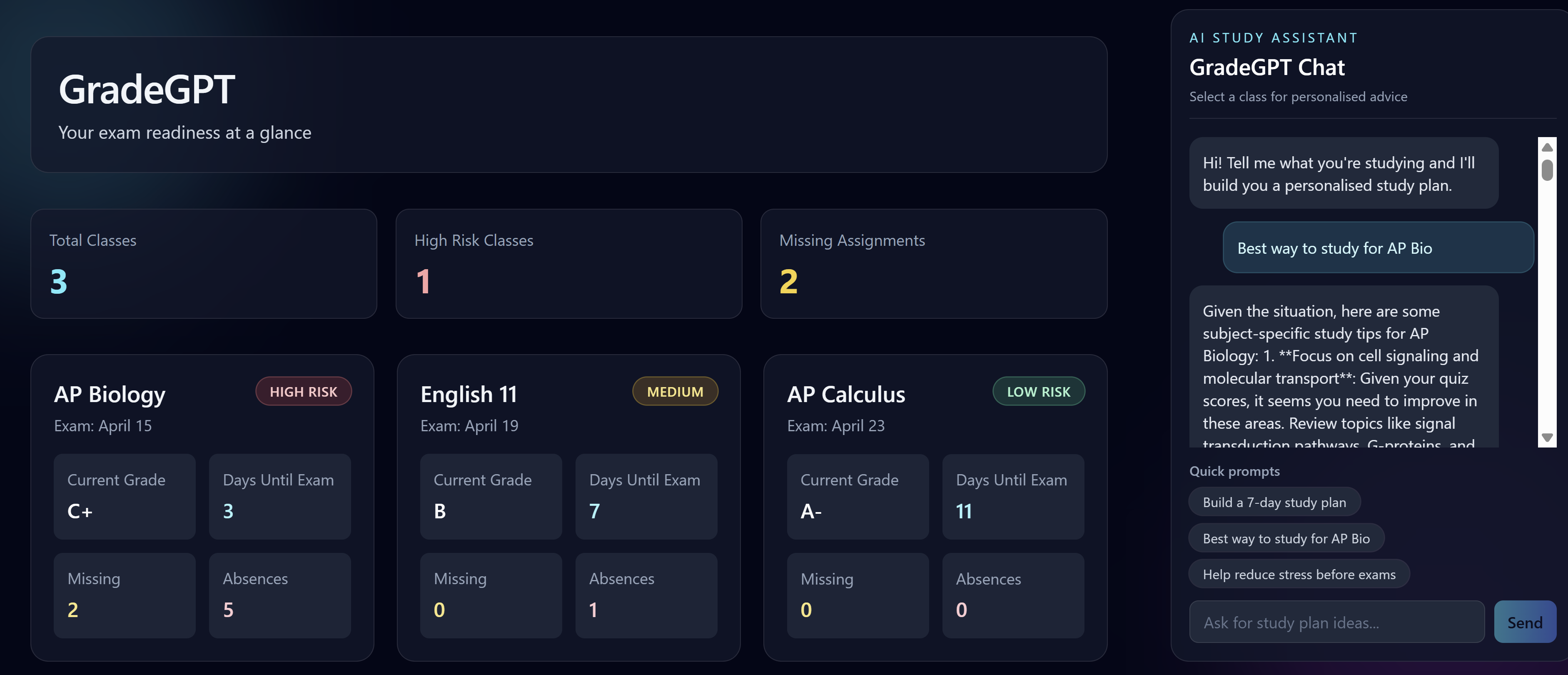
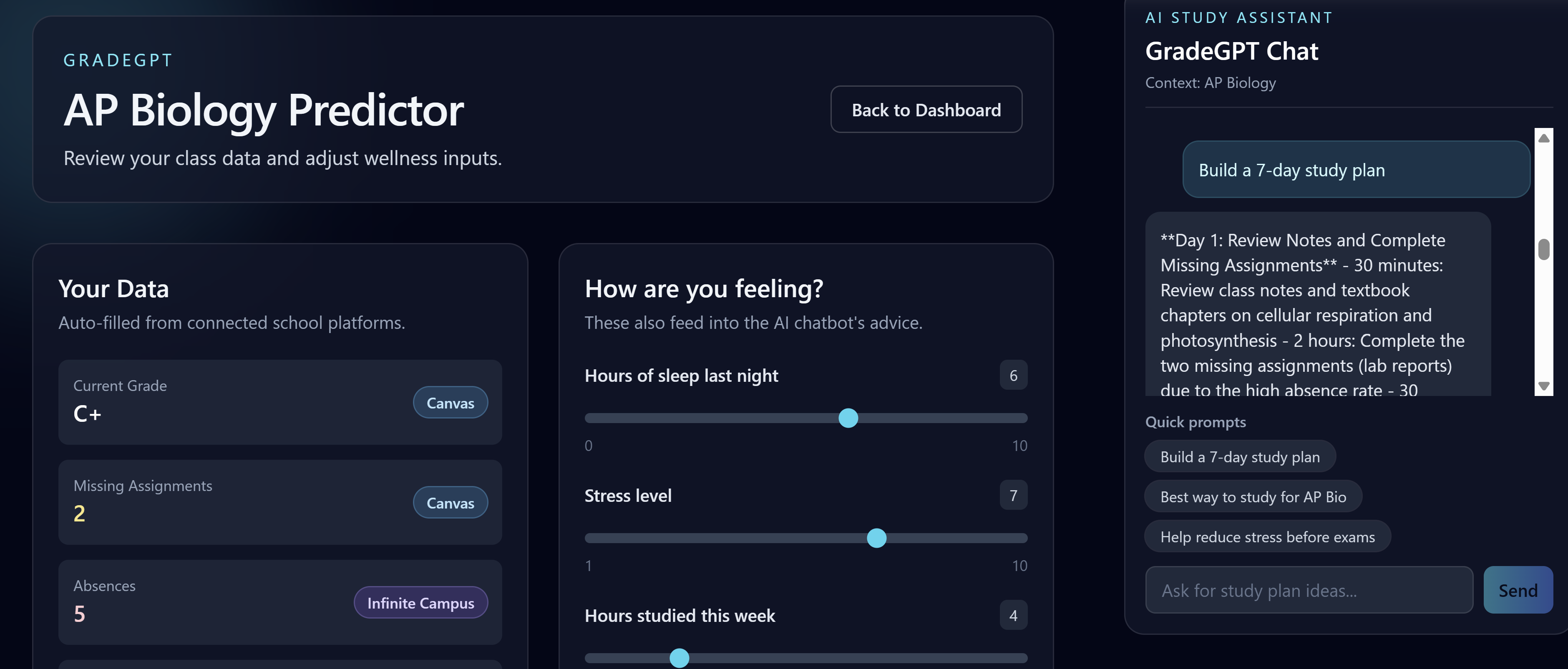
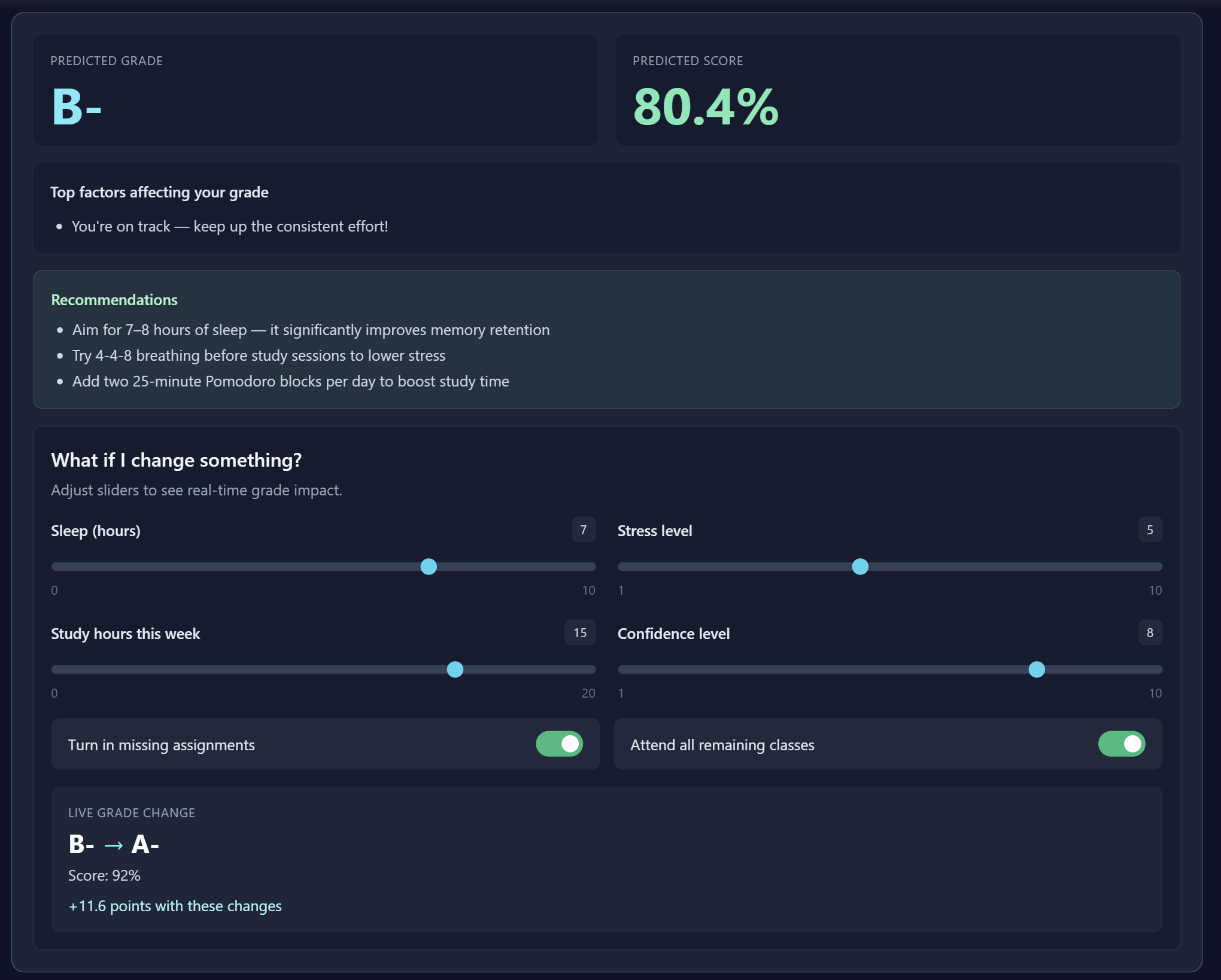
Our app lets the user play around with the sliders to test and see what would happen to their grade in certain scenarios. It keeps the student’s original grade in the class and predicts what it would be after the user moves the slider around. There is also a live predictor that appears after the user tries to predict their grade once. Our app also has an AI ChatBot feature where students can create study plans and discuss any other concerns that they may have.
How we built it
To build the front end, we primarily used HTML, CSS, and React. For the back end, we used Node.js and Express. Our grade prediction logic is based on custom functions that take in student data as input and determine how changes in different factors would affect the grade. For the AI Chatbot, we used Llama 3.1 8B through the Groq API to combine the student data with their prompt to return personalized responses. We used Railway to publish our app online.
Challenges we ran into
We ran into challenges collaborating on GitHub, specifically in dealing with merge conflicts, coordinating and running the website locally, and integrating the frontend and backend. We also struggled with integrating GenAI in our project, since none of our members had prior experience with that. We were able to work together to debug as well as seek help online and from the hackathon mentors to resolve these issues.
Accomplishments that we're proud of
We are really proud of how clean, professional, and easy-to-use the frontend turned out to be. We are also proud of our backend functionality, specifically persevering through integrating AI functionality for our chatbot. All of our teammates collaborated well and supported each other in debugging, which allowed us to create a strong first version of our website.
What we learned
We learned how to collaborate on GitHub, especially pushing code from VS Code to the GitHub repository, without erasing or ruining what our partners have done. We also learned how to create AI agents, and make them work smoothly within our constraints. Additionally, we learned to securely use APIs and publish online websites. We had to debug our code a lot, and through that we learned about iterating too.
What's next for GradeGPT
In the future, we can work on making accounts for people and connecting GradeGPT to a student’s Canvas, Google Classroom, or any other platform that they use for their classwork. This is what we intended to do at first, but were unsure how to implement it. We can also add graphs or charts which show a student’s improvement or where they are struggling. Through this, the AI can help create better and more effective study plans for the student and try its best to support it. Hopefully in the future, we can also turn this into an app for users to use on their phones.

Log in or sign up for Devpost to join the conversation.