-
-
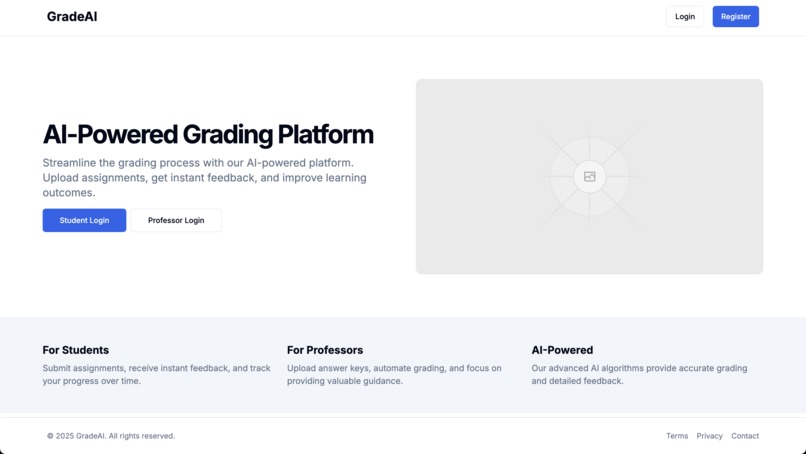
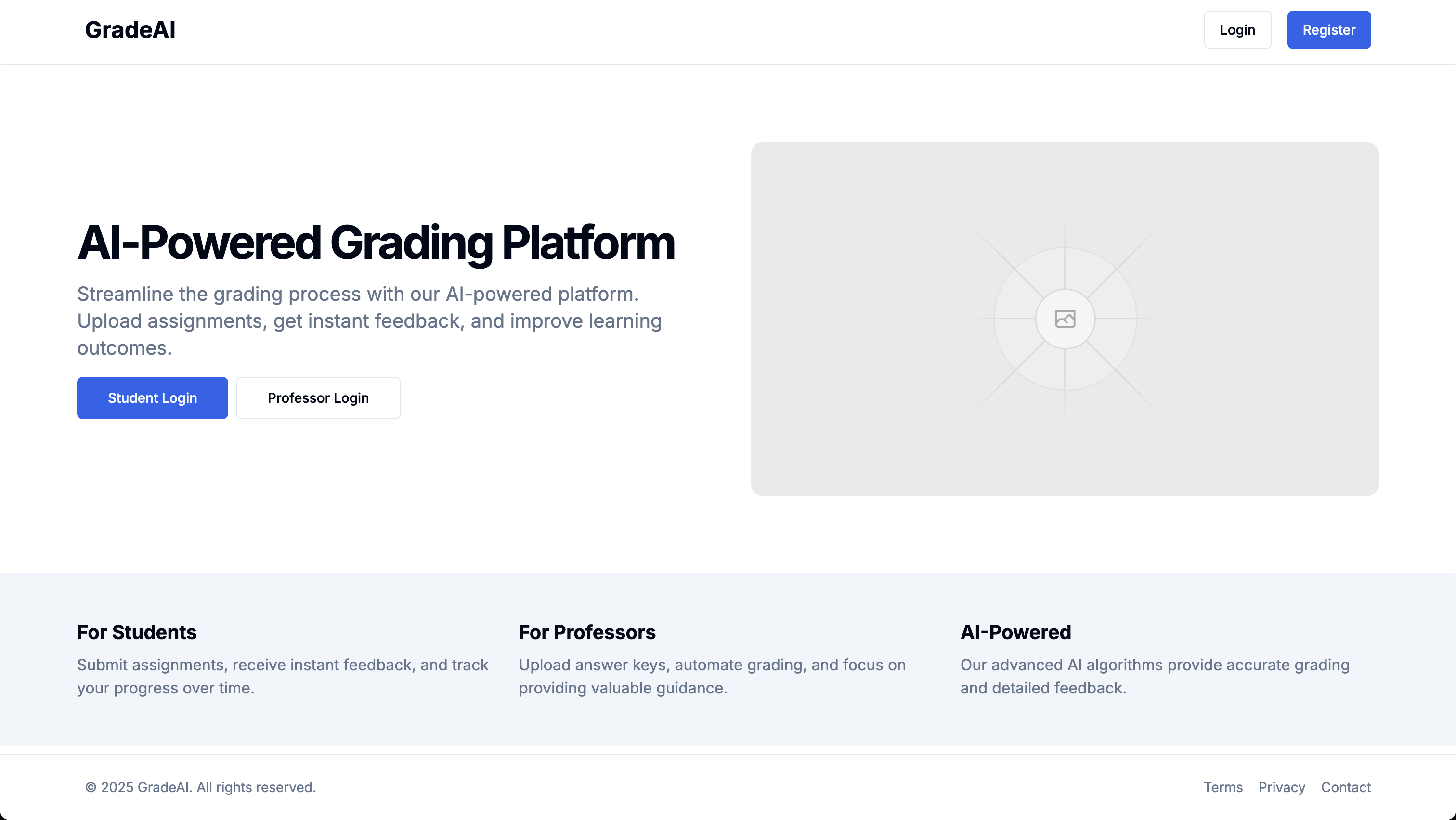
Landing Page
-
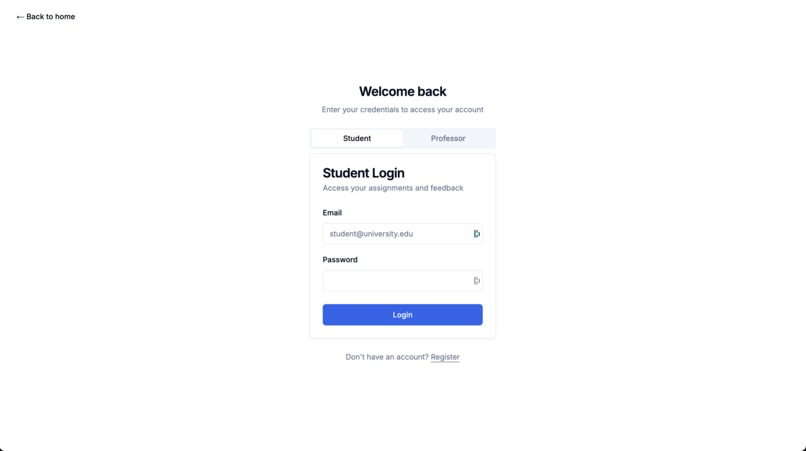
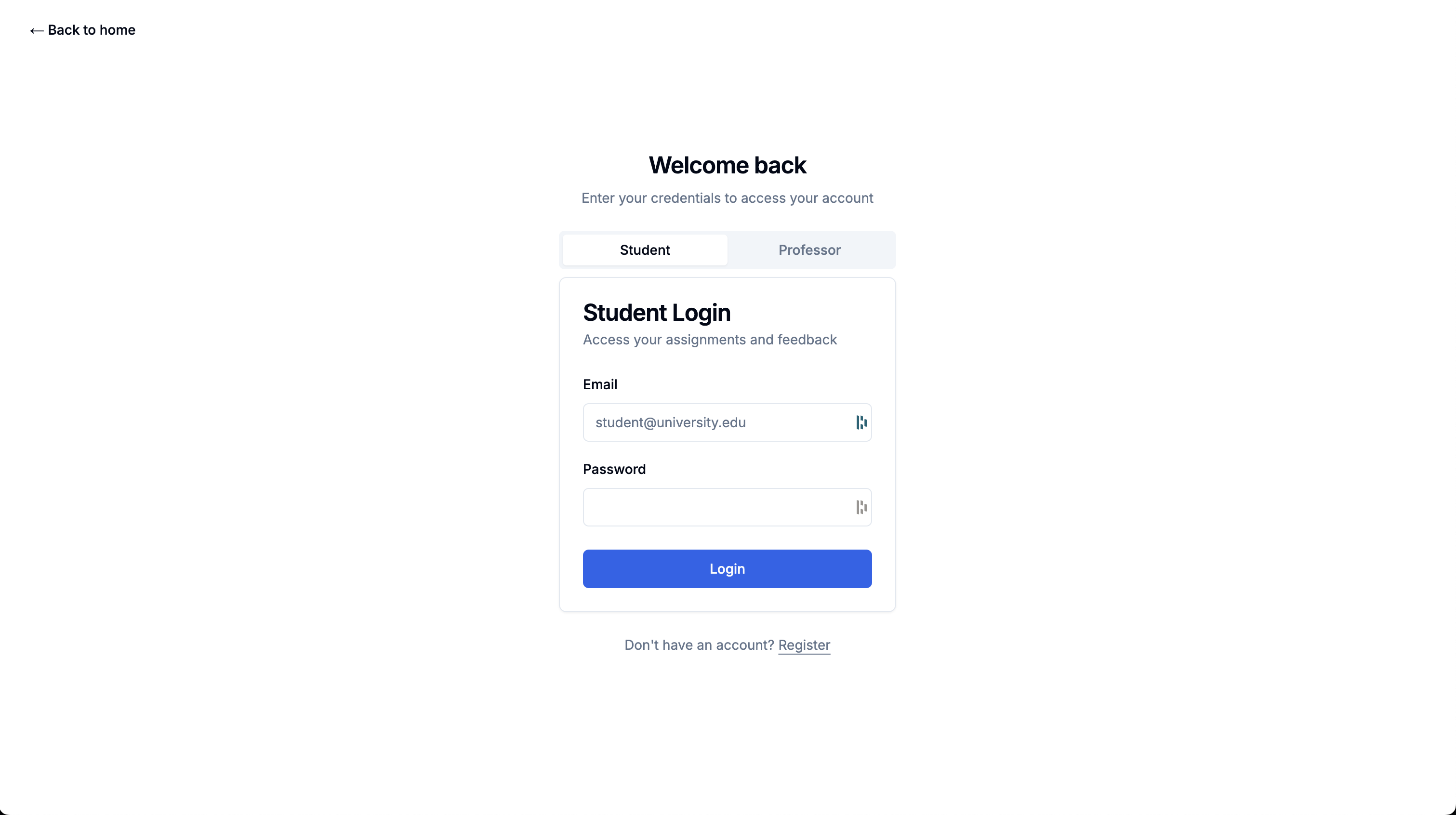
Login Page
-
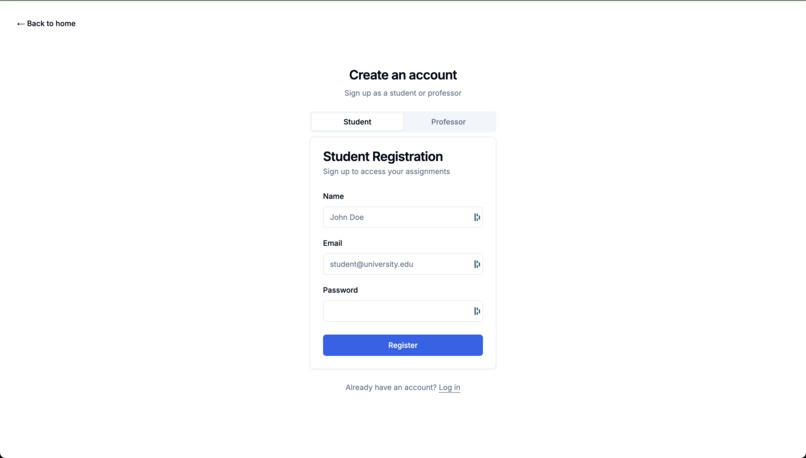
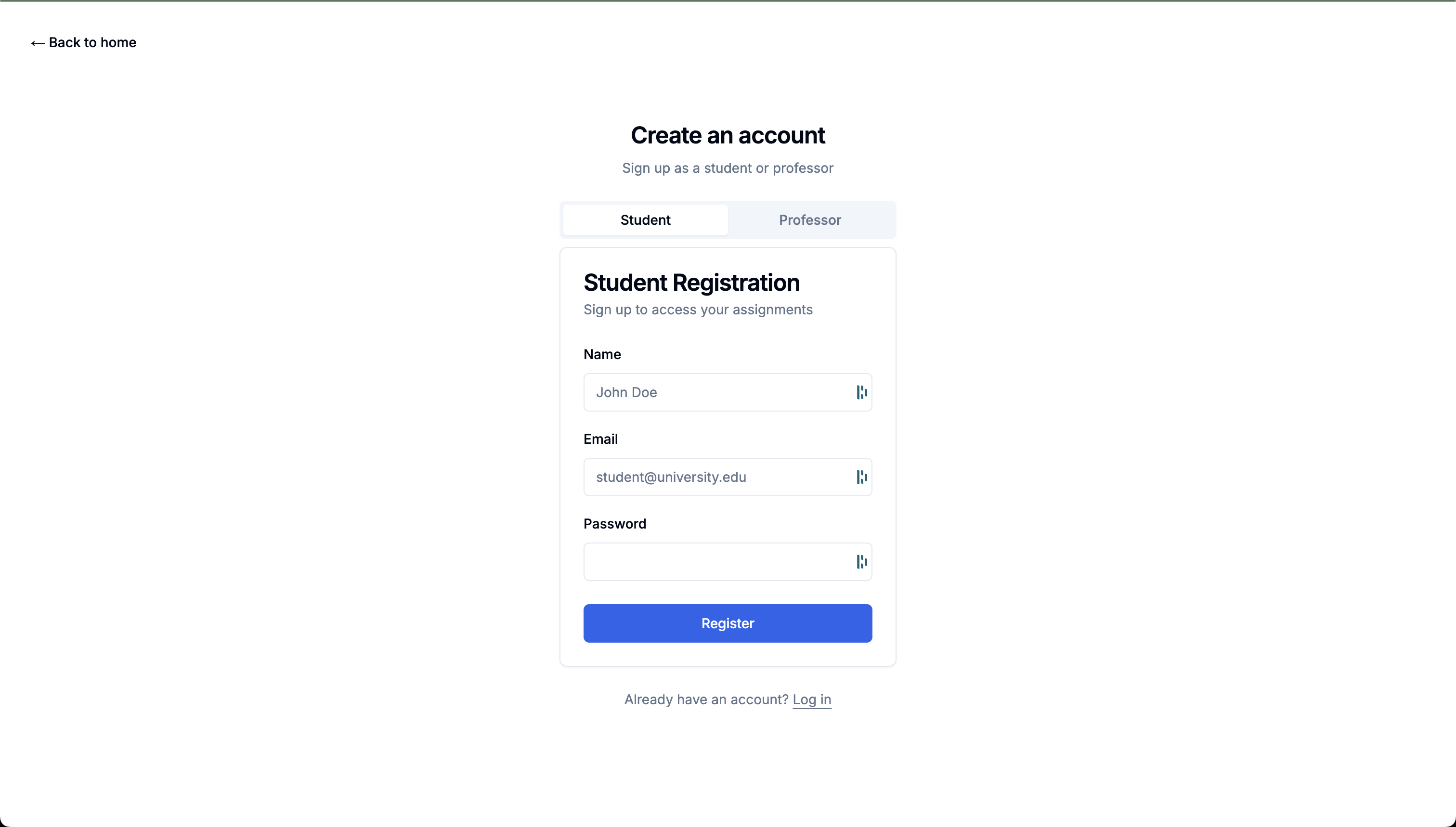
Register Page
-
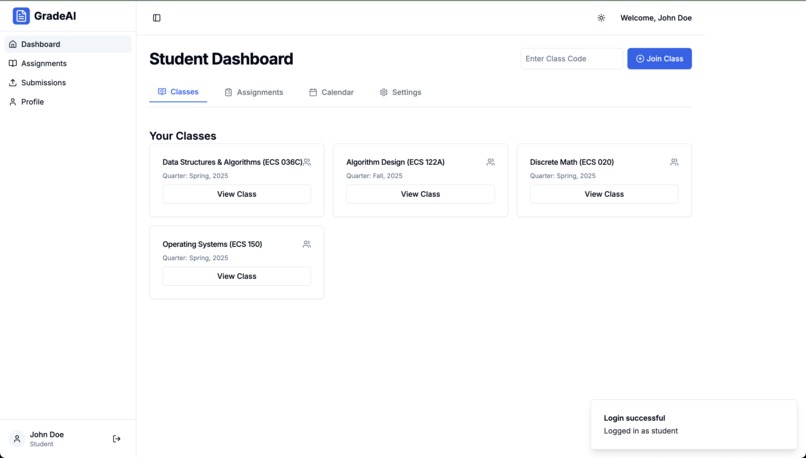
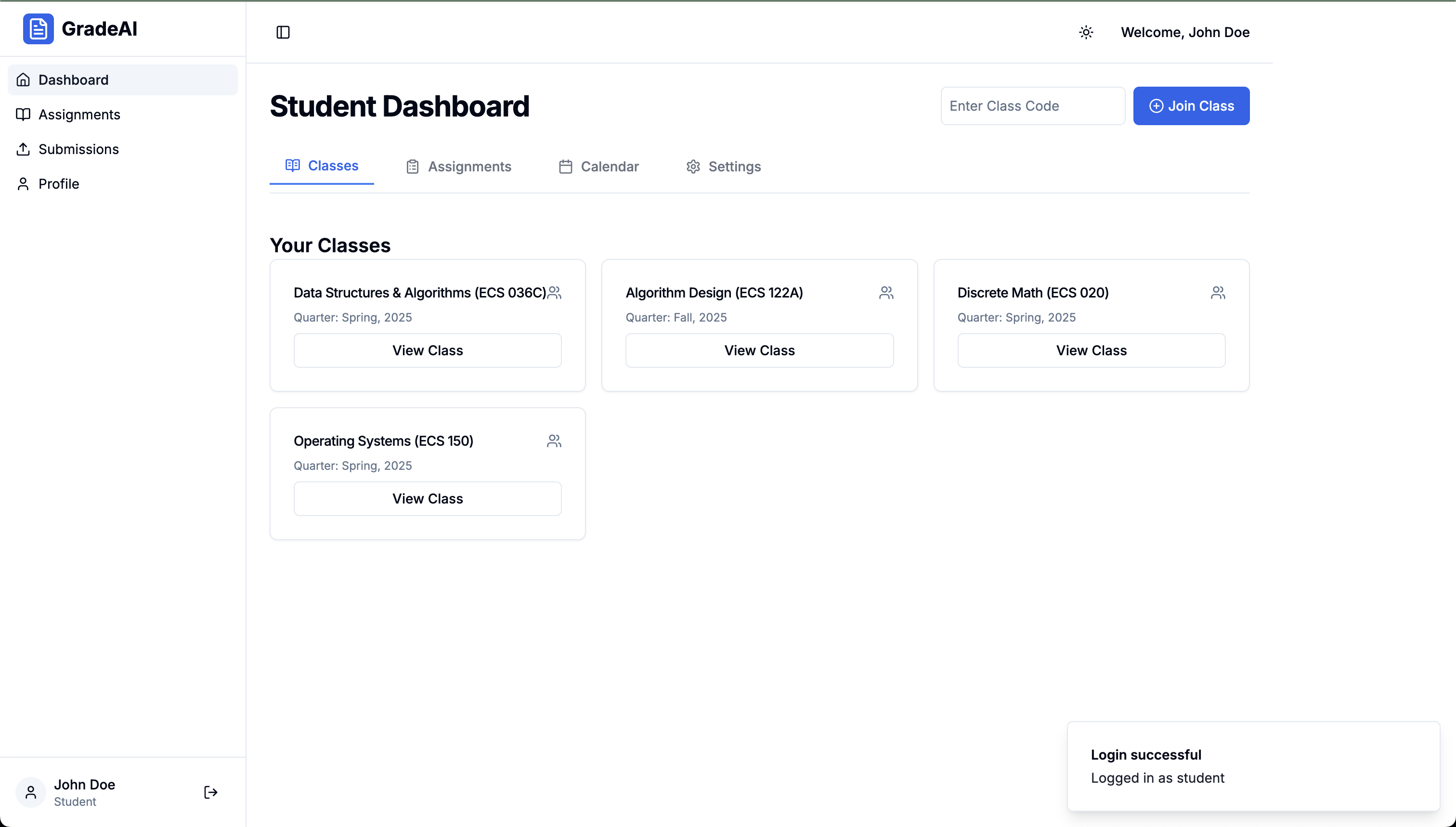
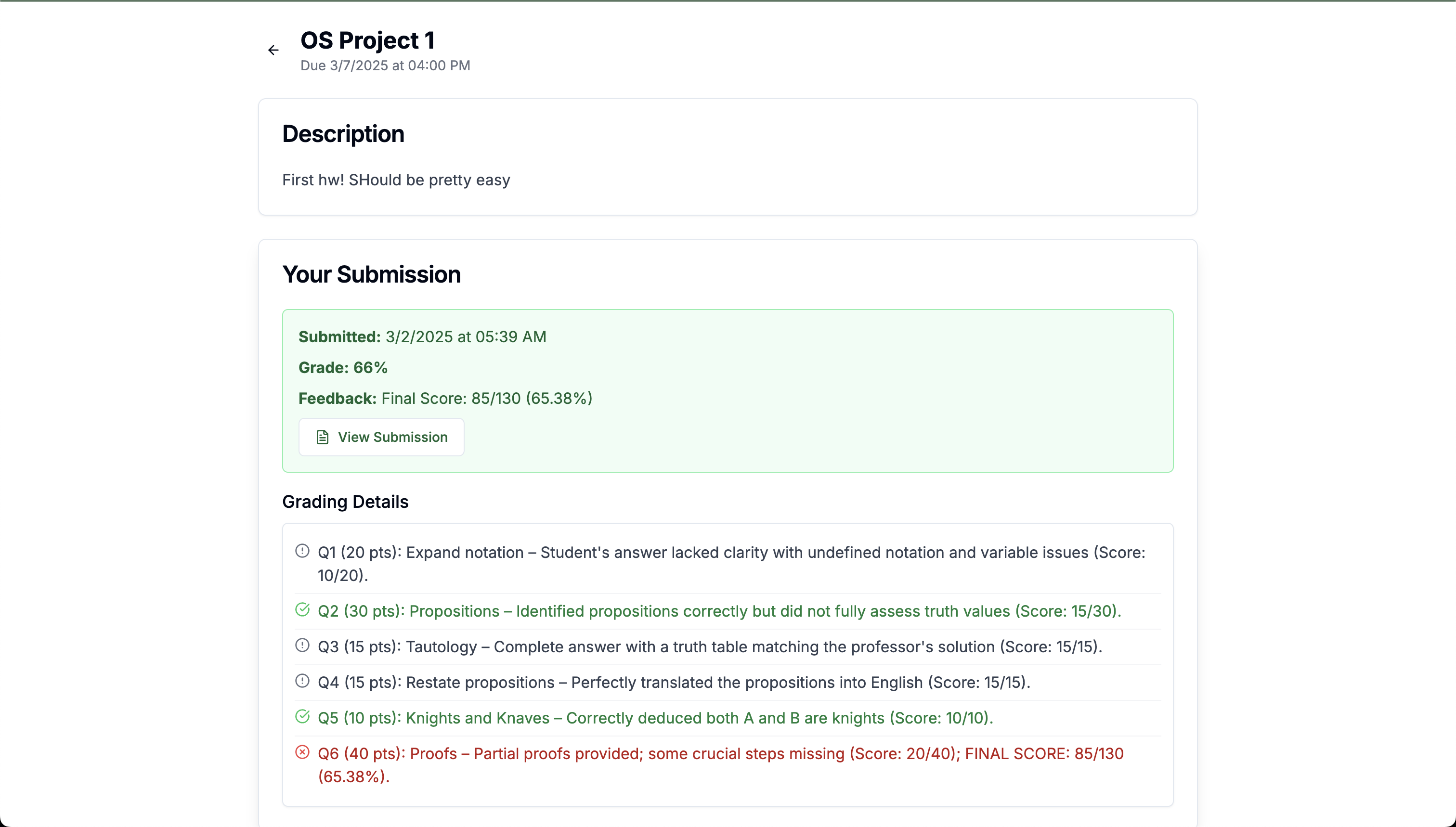
Student Dashboard
-
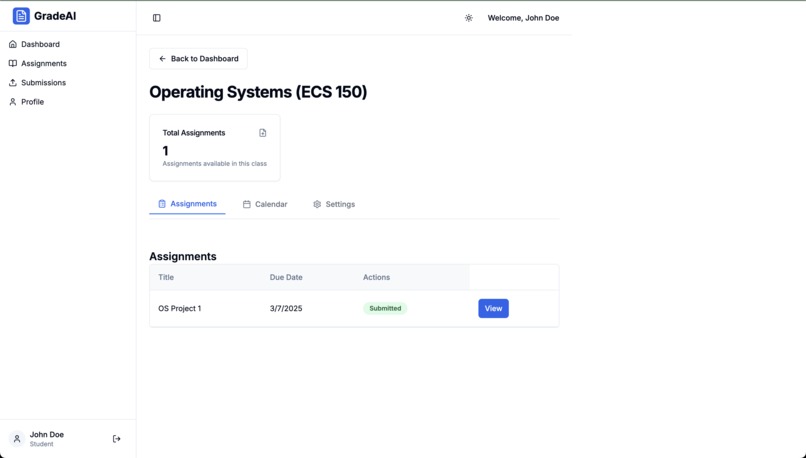
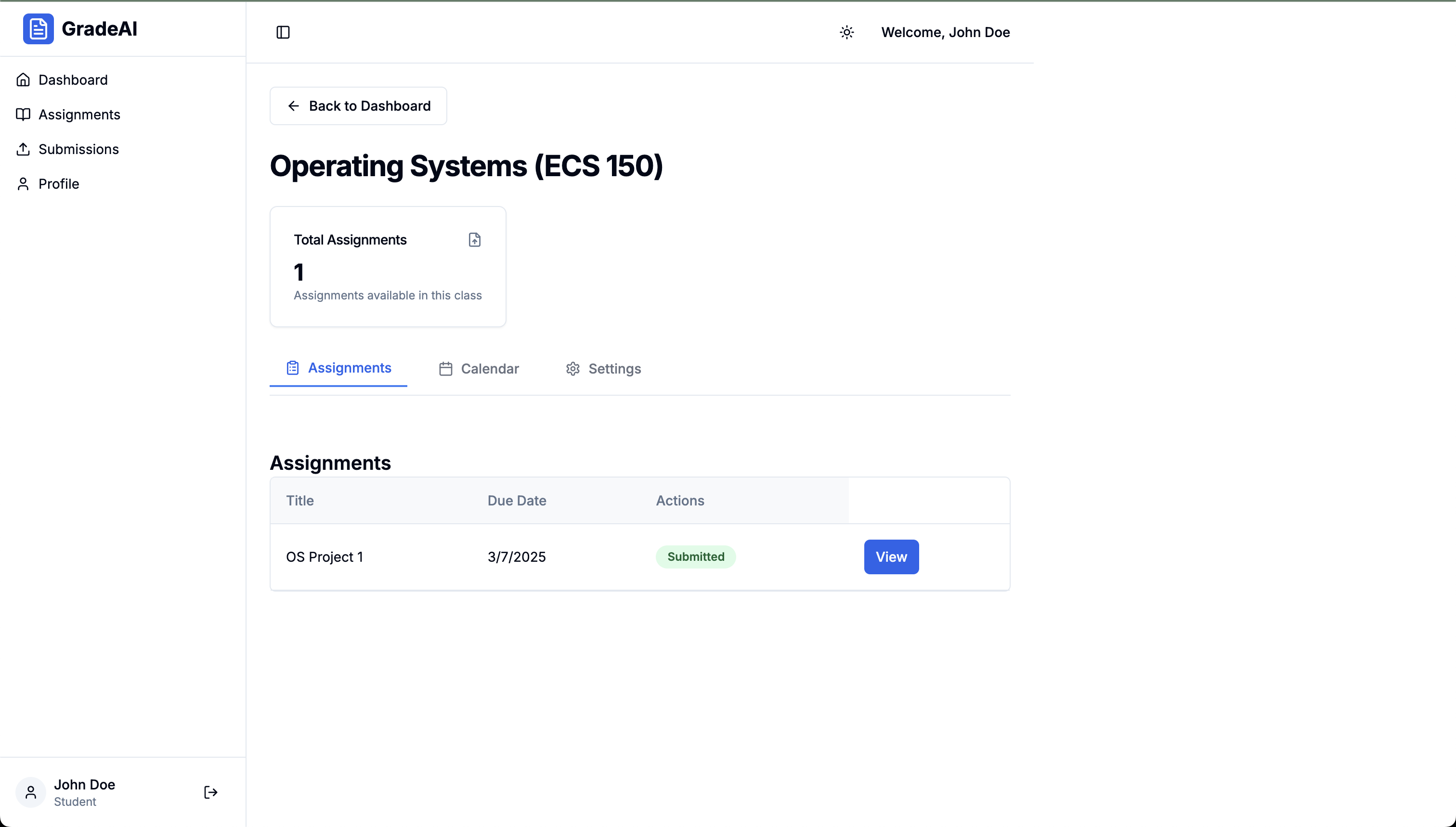
Student Class View
-
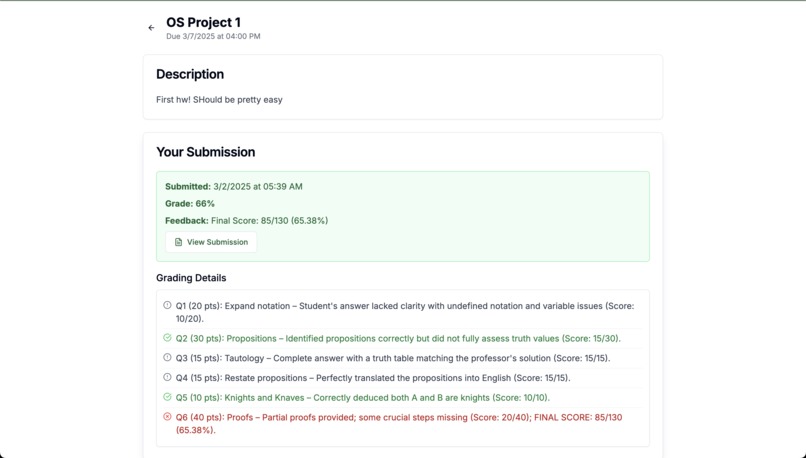
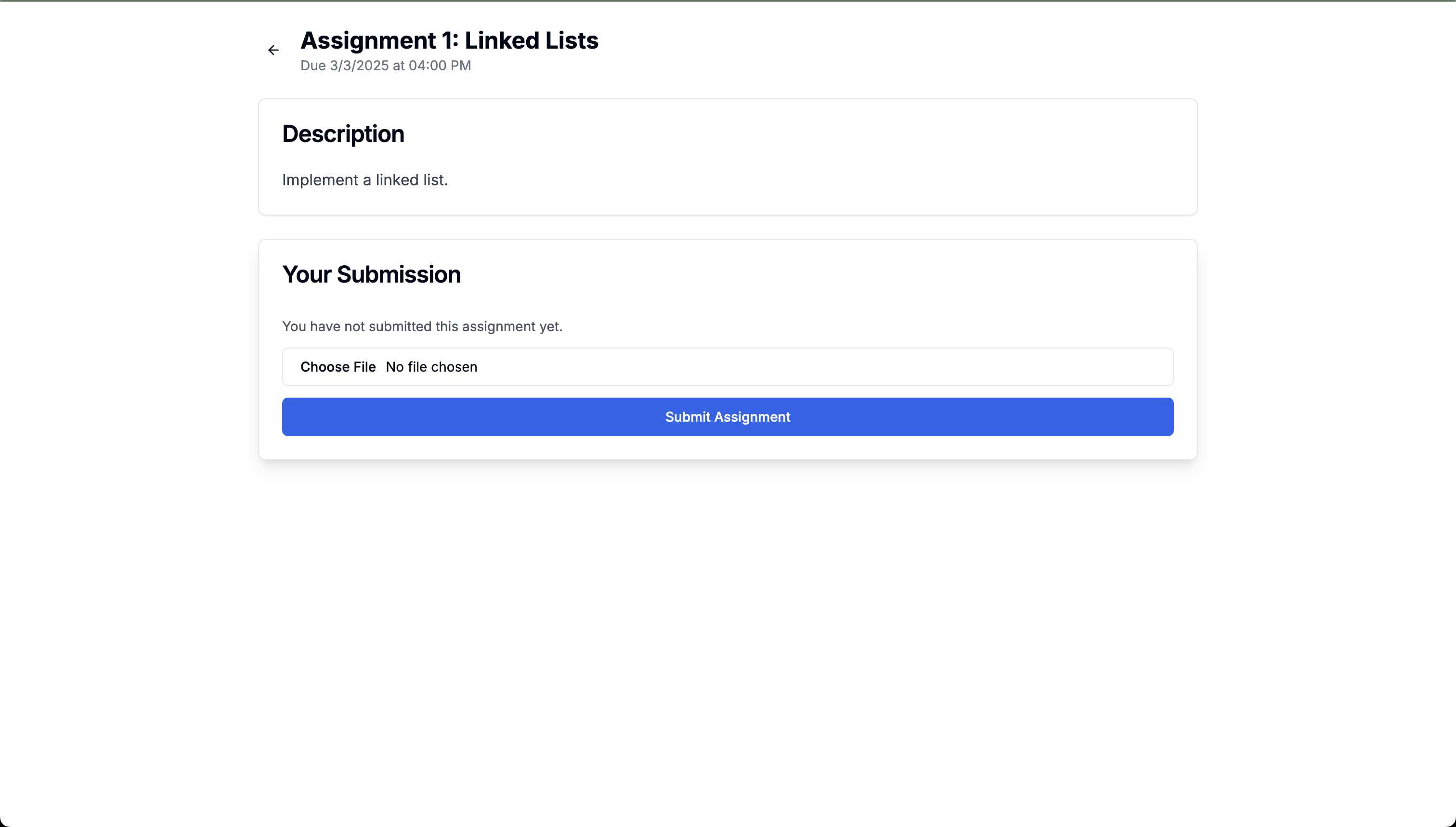
Student Assignment Submission
-
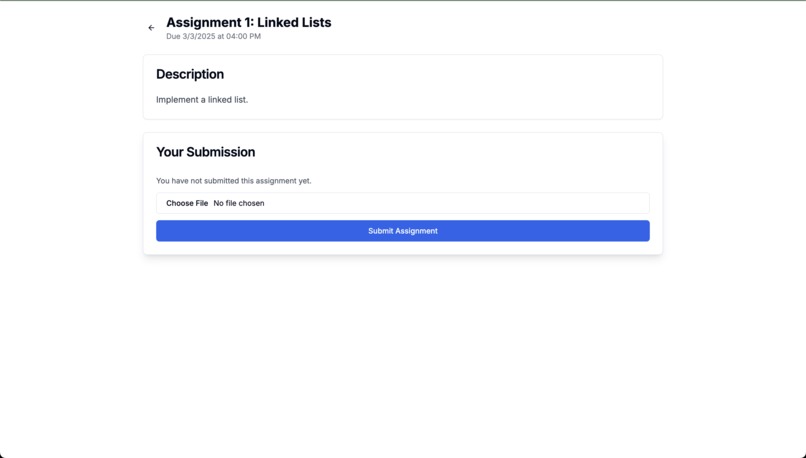
Student Assignment Submission 2
-
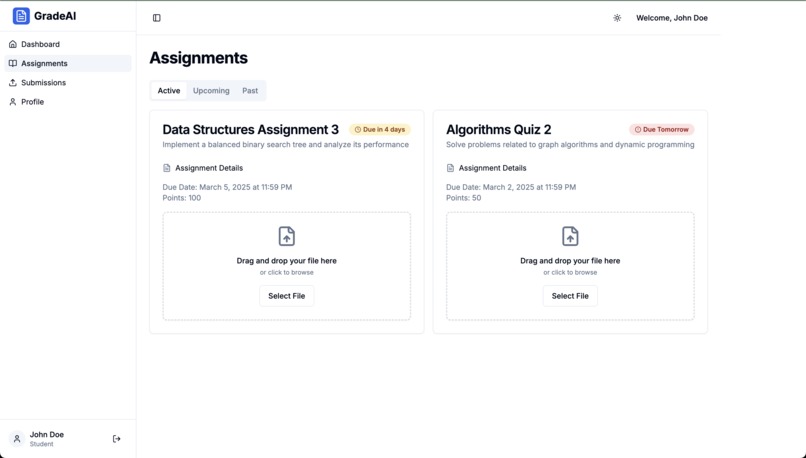
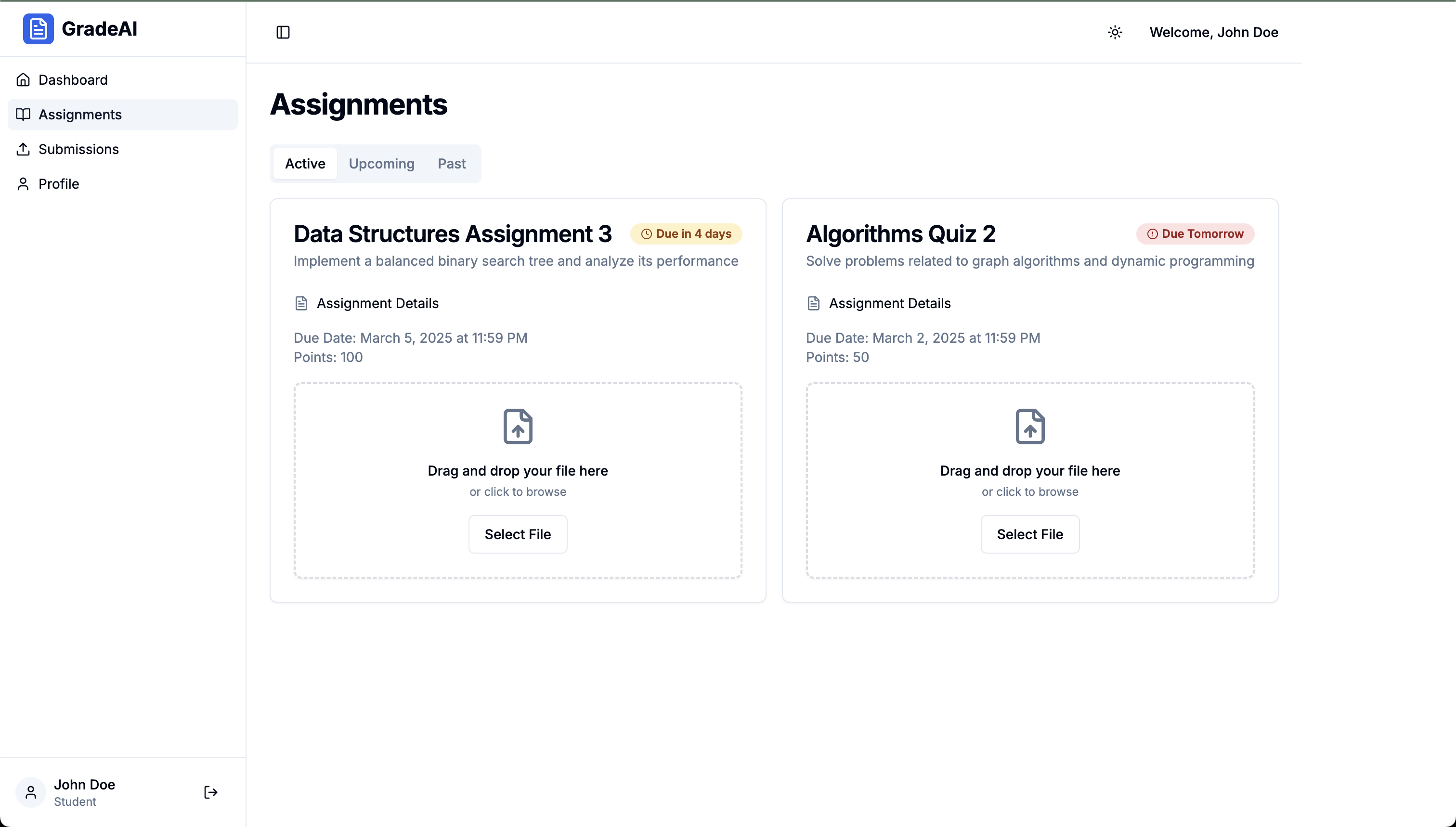
Student Assignments Tab
-
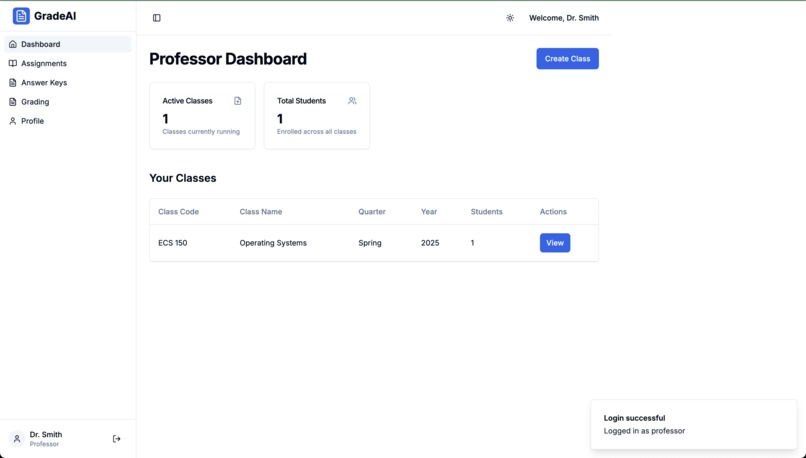
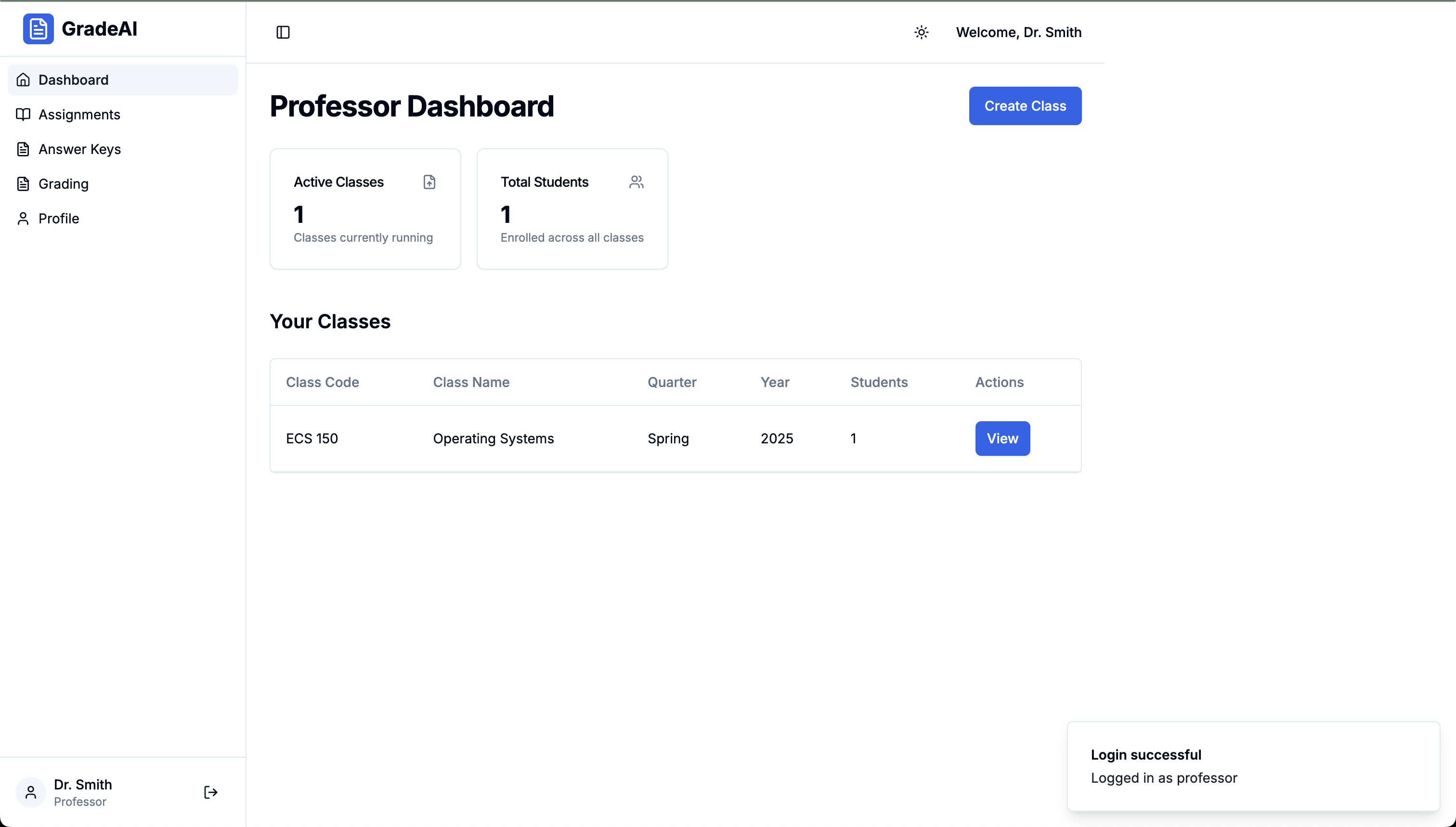
Professor Dashboard
-
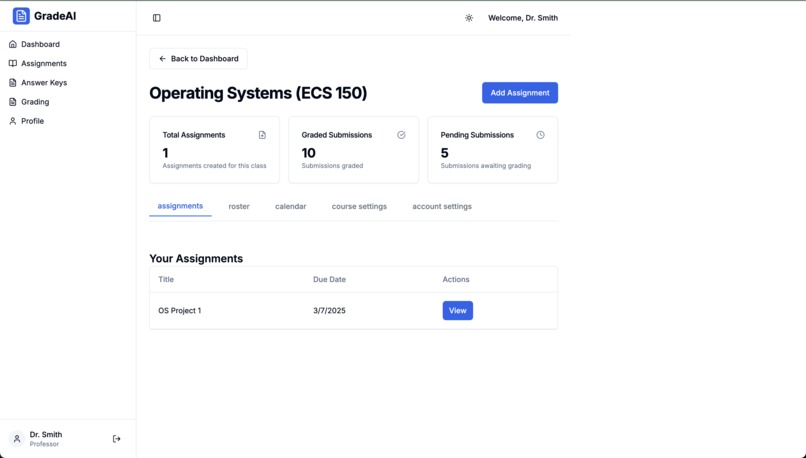
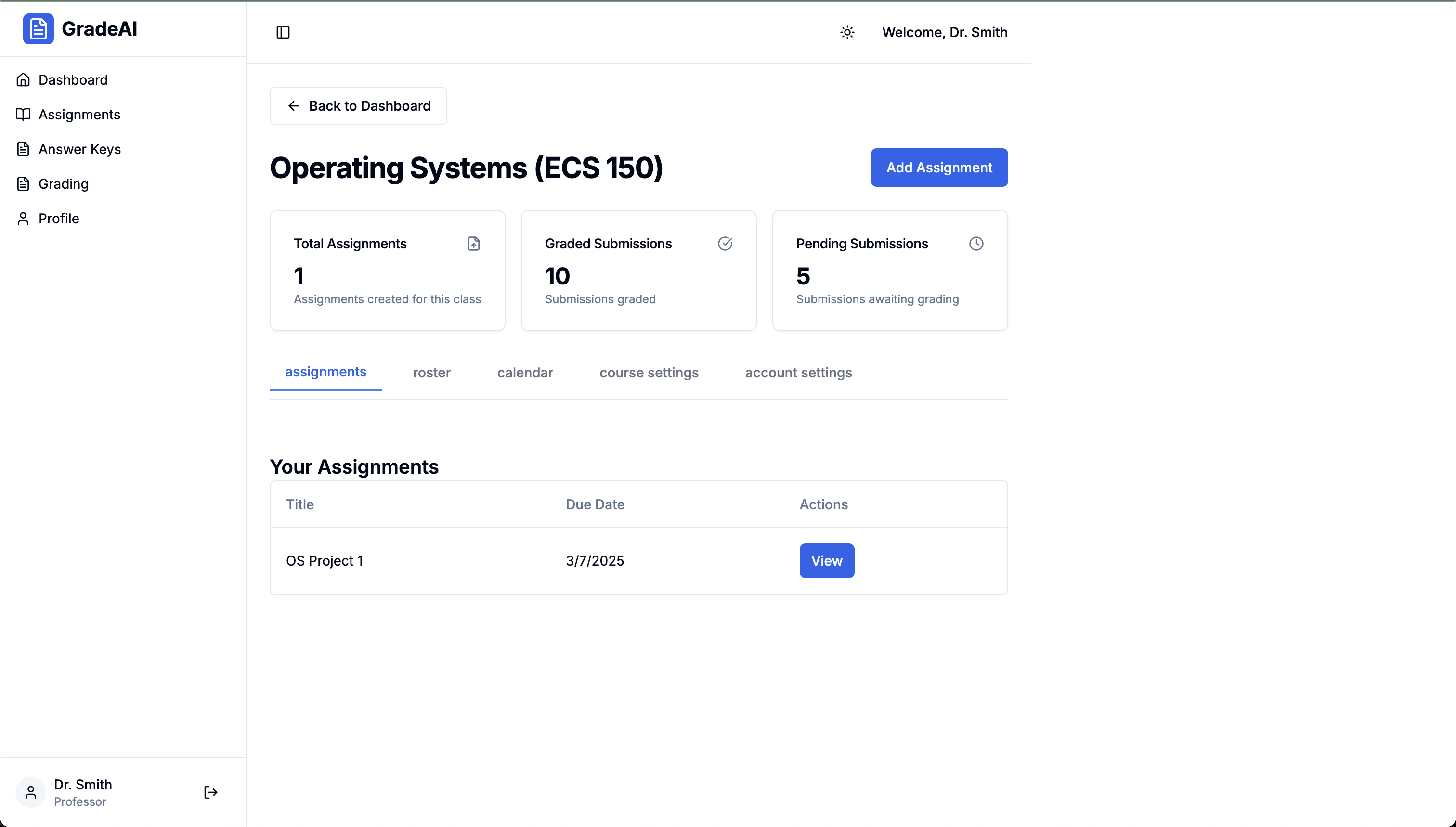
Professor Course Page
-
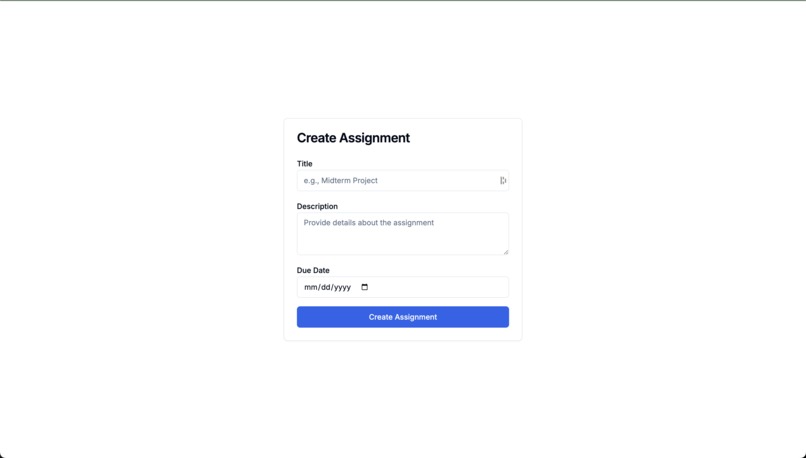
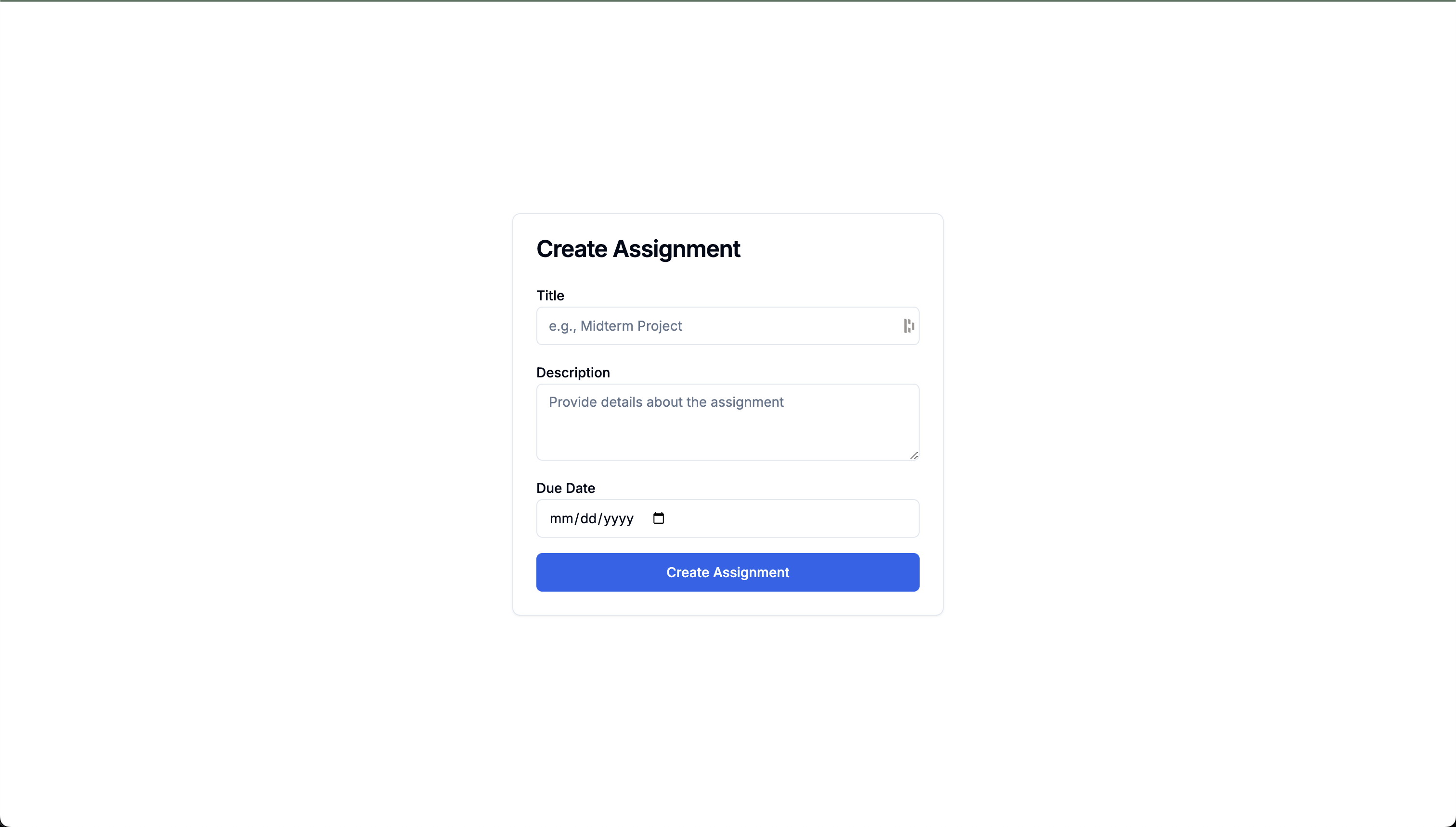
Professor Add Assignment Page
-
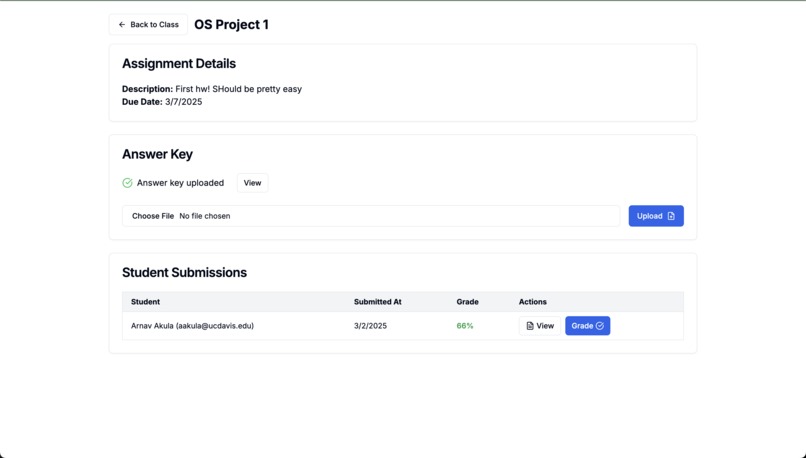
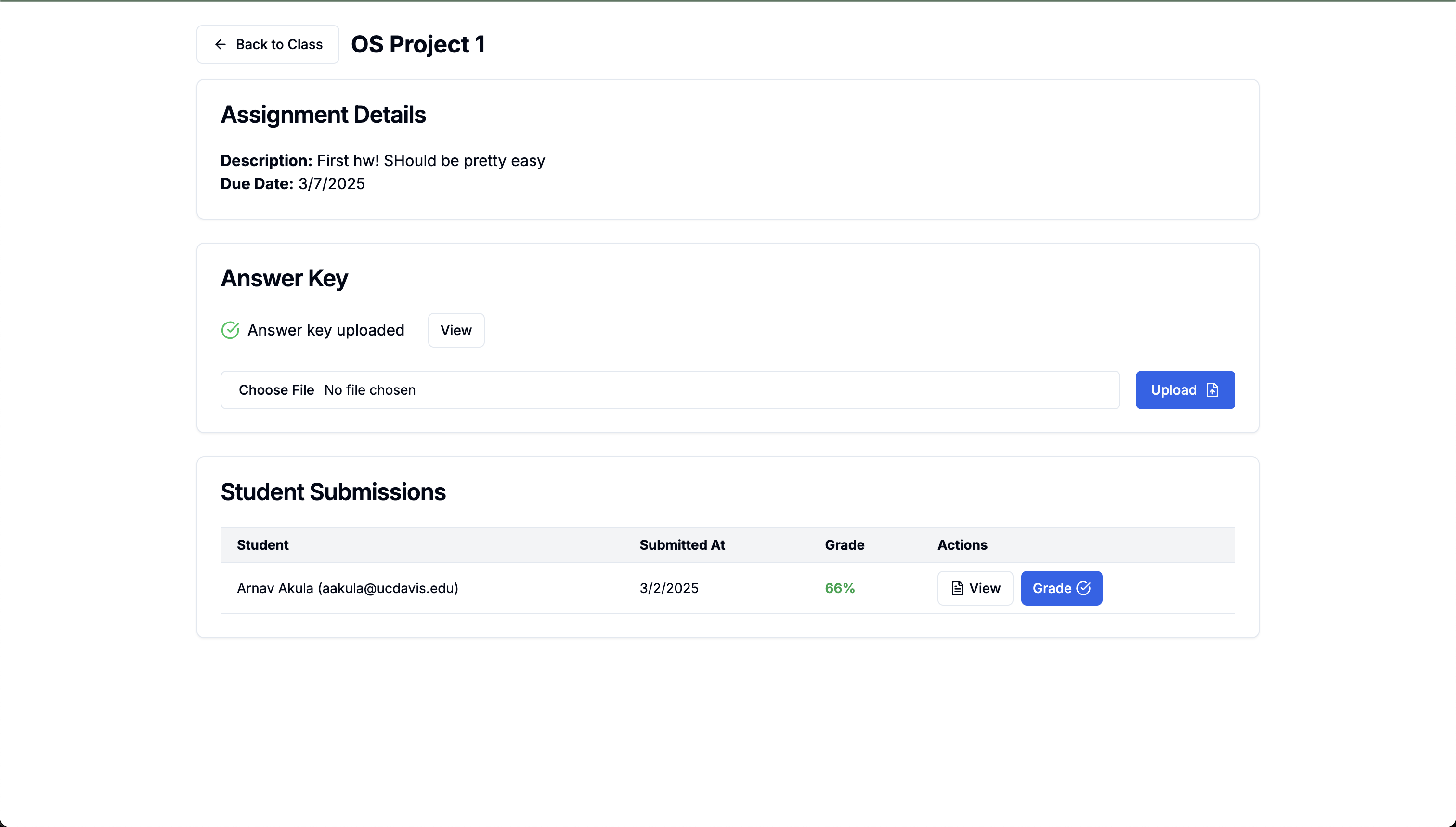
Professor Assignment View
Inspiration
During my freshman year, I observed firsthand the challenges surrounding the grading process. Midterm exam results were delayed by up to three weeks, significantly impacting both students and educators. I vividly recall a conversation where my TA mentioned it took him three weeks to grade an entire class—a process that was both laborious and inefficient. This recurring issue sparked my drive as an engineering student to seek out innovative solutions that could transform the traditional grading system.
What it Does
GradeAI is an AI-powered grading platform designed to revolutionize the assessment process. It streamlines grading by:
Leveraging OCR Technology: Accurately detects and processes handwritten text from student submissions. Utilizing OpenAI’s API: Summarizes and structures the detected text for clear interpretation. Matching Answers: Compares the student responses with the professor’s answer key to generate grades and provide detailed feedback. This technology not only accelerates grading but also enhances the learning process by enabling prompt and actionable insights for students.
How We Built It
The development of GradeAI integrated several cutting-edge technologies:
OCR Integration: We implemented optical character recognition to capture and digitize handwritten content with high precision. API-driven Summarization: Using the OpenAI API, we developed an agent that systematically summarizes and organizes the textual data. Similarity Matching Algorithm: A final agent compares the student responses with the provided answer key, assigning grades based on content similarity and providing targeted feedback. This combination of technologies allowed us to create a robust system that addresses both the grading workload and the educational feedback loop.
Challenges We Ran Into
Developing GradeAI was not without its challenges:
Accuracy of OCR: Handwritten text recognition posed difficulties, requiring extensive calibration to ensure precise detection across various handwriting styles. Integration of Multiple Agents: Coordinating between the OCR system, the summarization agent, and the similarity matching component necessitated a seamless integration process to maintain efficiency and accuracy. User Adaptation: Ensuring that the system met the diverse needs of educators and students across different educational institutions required iterative testing and feedback incorporation.
Accomplishments That We're Proud Of
We are proud of several milestones achieved during the development of GradeAI:
Reduced Grading Time: Our platform dramatically cuts down the time required to grade exams, allowing educators to focus more on teaching. Improved Feedback Mechanism: Students now receive prompt, detailed feedback, enabling them to review and learn from their mistakes in a timely manner. Broad Applicability: GradeAI is designed to be scalable and adaptable, making it a viable solution not only for colleges but also for schools and private institutions.
What We Learned
Throughout this journey, we gained invaluable insights:
Technological Synergy: Combining OCR, AI summarization, and similarity matching technologies can effectively address long-standing challenges in academic grading. User-Centered Design: Constant engagement with educators and students was crucial in refining the platform to meet real-world needs. Iterative Development: Continuous testing and feedback were essential in overcoming technical challenges and enhancing system performance.
What's Next for GradeAI
Looking ahead, our vision for GradeAI includes:
Expanded Functionalities: Integrating more advanced analytics to provide deeper insights into student performance. Wider Adoption: Collaborating with educational institutions to implement GradeAI on a larger scale. Continuous Improvement: Refining the system based on user feedback and the latest technological advancements to further enhance accuracy and usability. Customization Options: Developing tailored solutions to meet the unique needs of different educational environments, ensuring that both teachers and students benefit from a more efficient and effective grading process.

Log in or sign up for Devpost to join the conversation.