Inspiration
It all started with my YouTube channel, Sciencetadium. I’ve got about 40,000 students on there who used our content, and I started noticing a really painful pattern in the comments and DMs. Students who were crushing it with my A-level content would message me a few months later completely panicked about their first year at uni. They’d be taking Calculus I at Imperial and say, "Khan Academy isn't covering what I need, and I've watched 20 random videos but I still don't know if I'm studying the right stuff."
That was the lightbulb moment. The problem wasn't that the material was too hard; it was that online resources are too generic. A "Mathematical Methods" module at UCL is totally different from the one at Cambridge, different topics, different order, different depth. I validated this through the UCL Explore Entrepreneurship accelerator, interviewing over 50 students who all said the same thing: they were wasting hours every week just looking for the right things to study. I realized I could fix that.
What it does
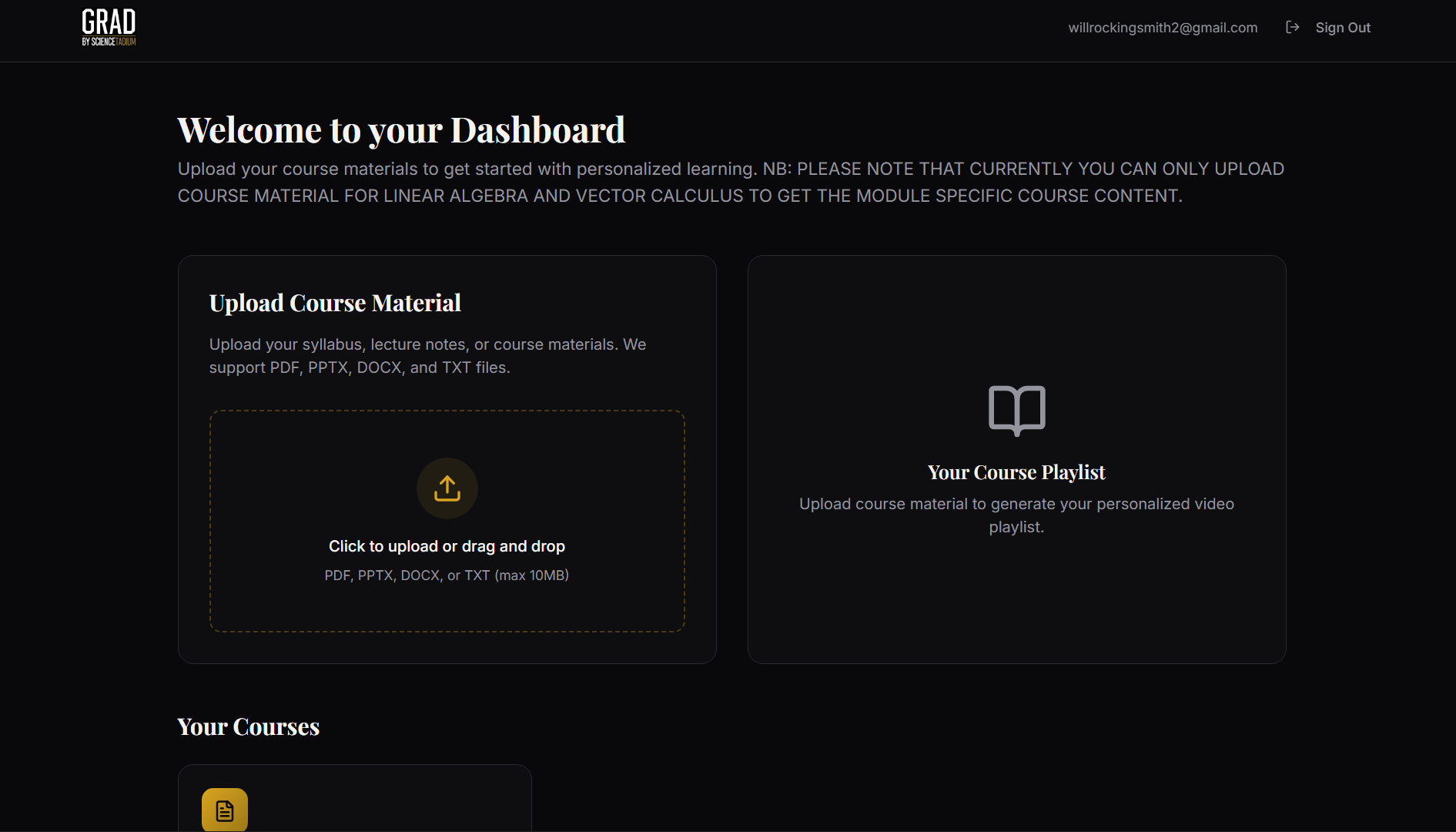
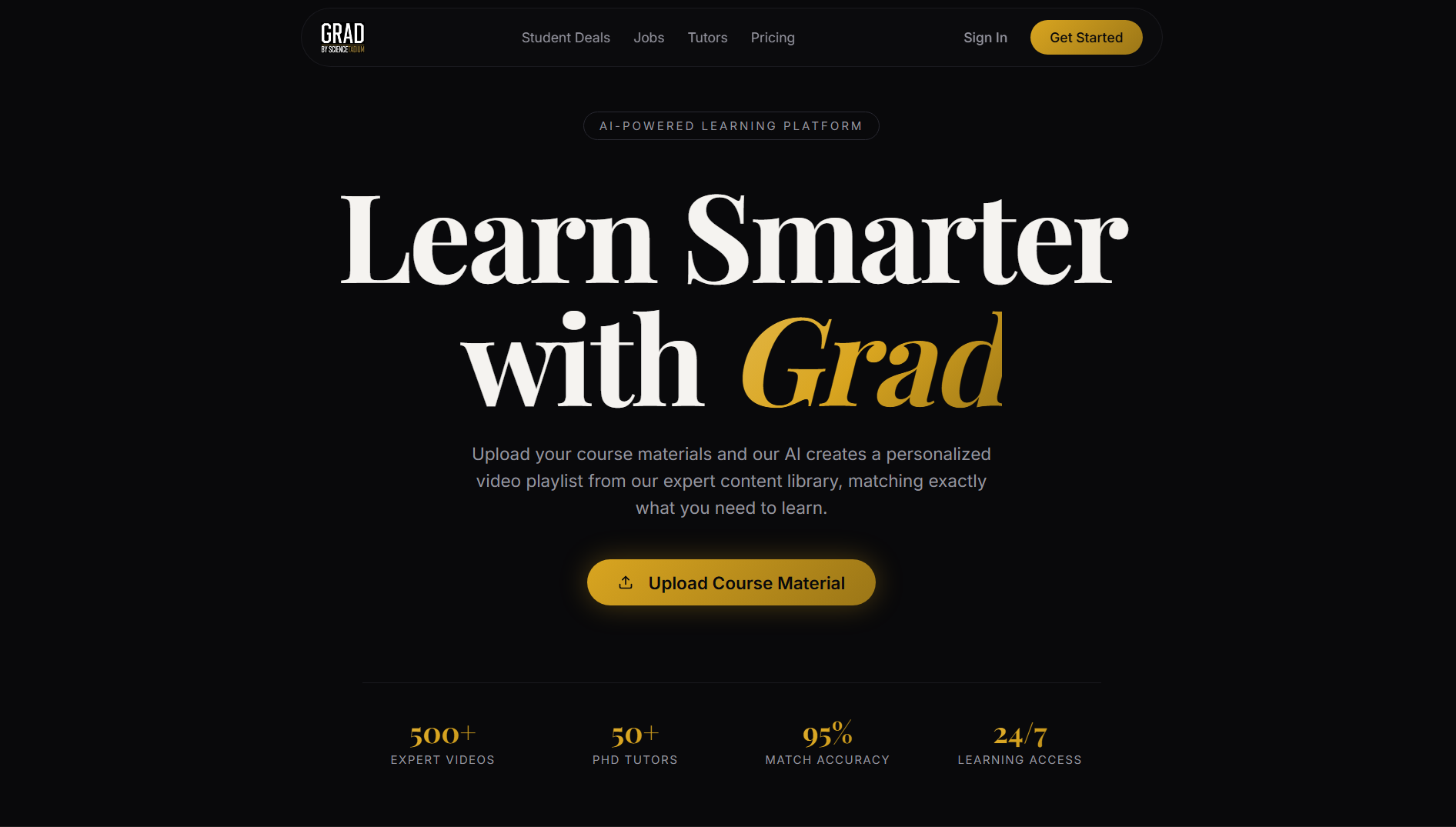
Grad by Sciencetadium basically builds a custom university course for you instantly. As a student, you just upload your specific module syllabus PDF, PowerPoint, whatever and our AI tears it apart to understand exactly what topics you need, the depth required, and how you’re going to be tested.
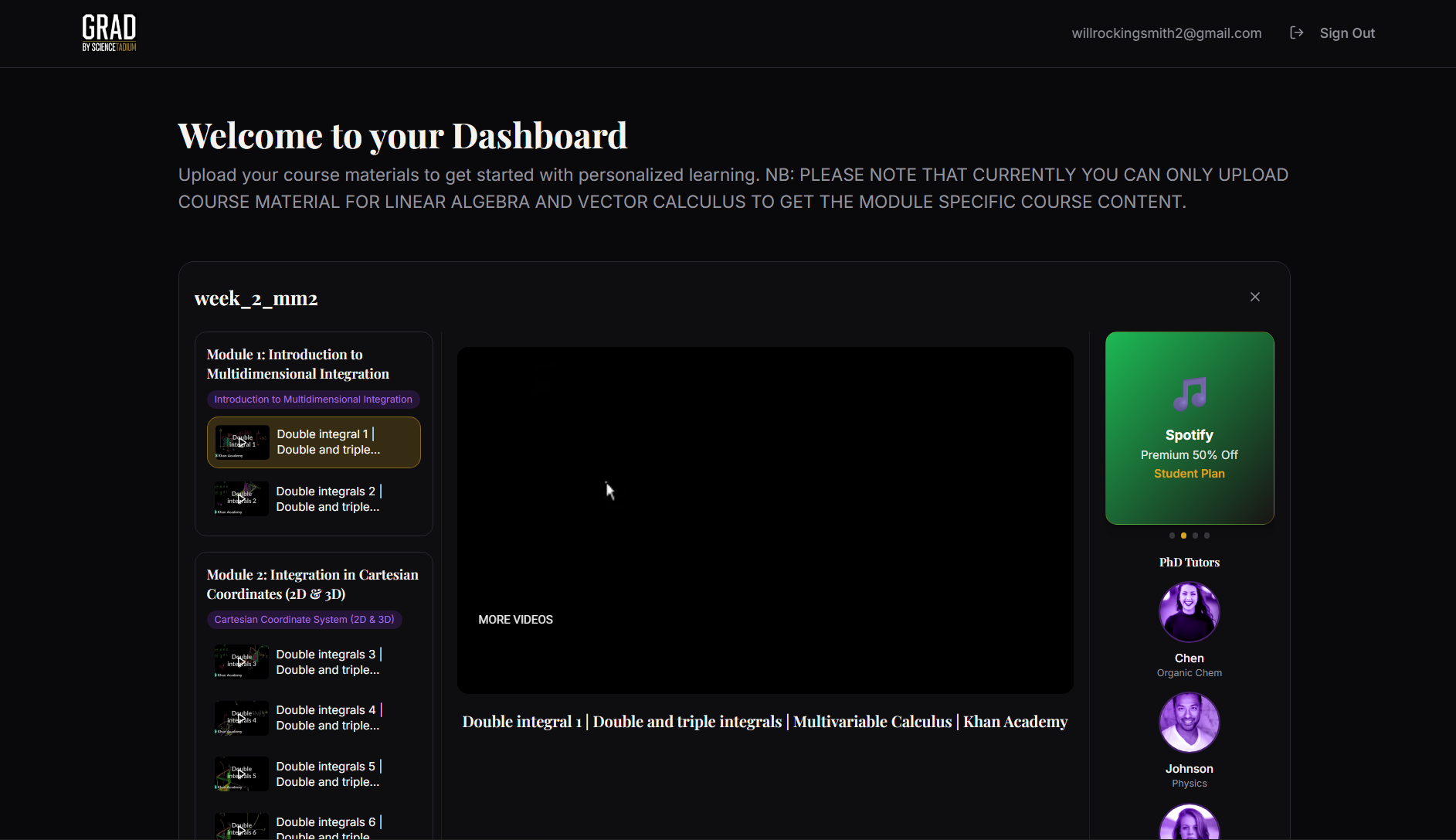
Then, it curates a perfect learning path using our content library. It picks out the exact videos, notes, and practice problems you need and arranges them in the specific order your professor follows (we’re testing this right now with vector calculus and linear algebra). I also threw in student-friendly job listings and an integrated community forum to connect students across different unis. It’s about putting everything you need in one place so you never have to waste time filtering through irrelevant content again.
How I built it
I built this using Lovable, which is this incredible AI-powered platform that lets you code through conversation. Instead of writing every single line by hand, I was describing features, reviewing the AI's implementation, and iterating on the fly.
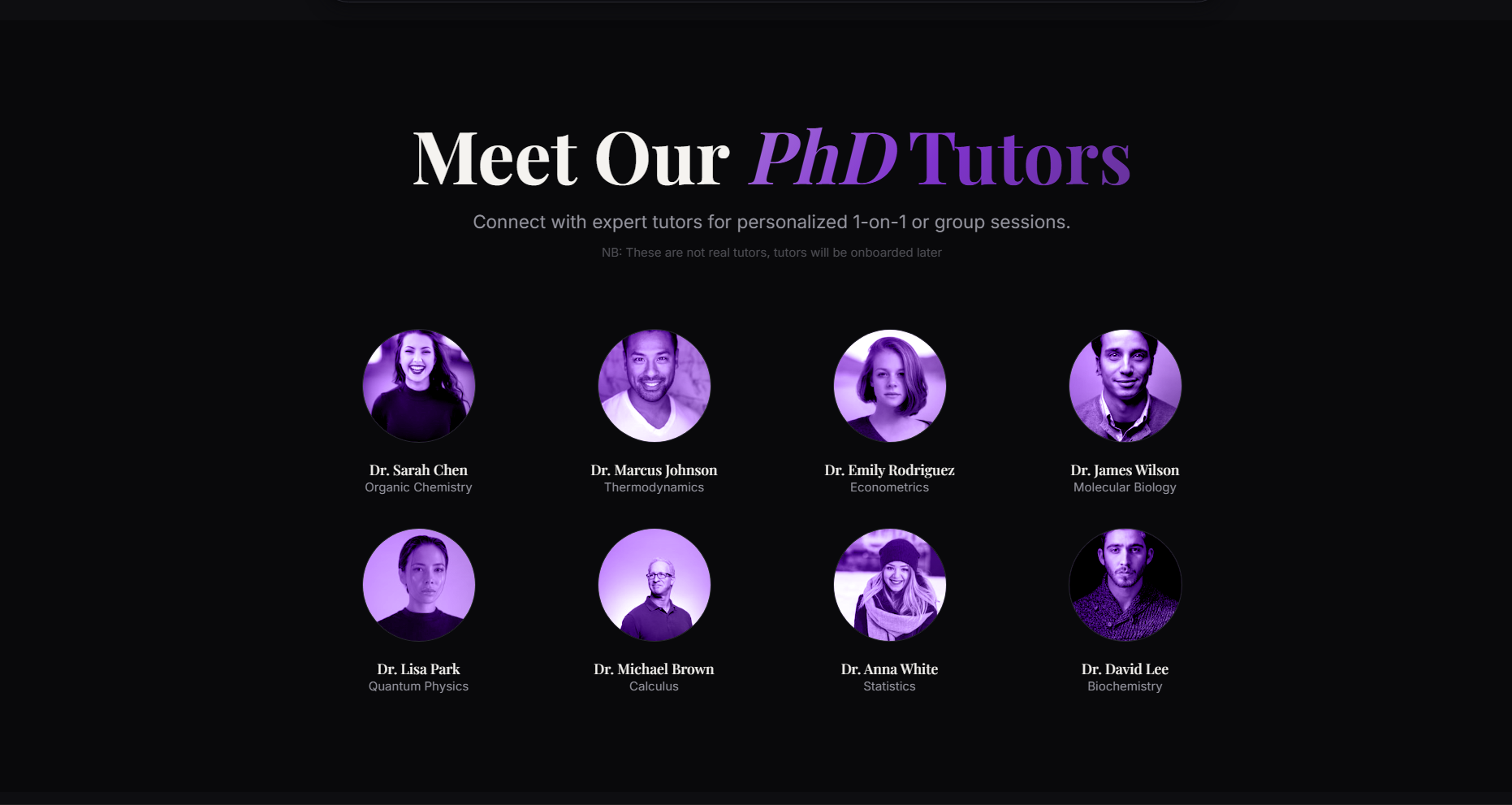
I used Supabase for the backend to handle the heavy lifting like authentication and user management. For the core feature, the course creation, I used YouTube APIs to read video content and match it against the syllabi. It was a super iterative process: I’d describe a feature, see what the AI built, test it, and then refine it. I also spent a lot of time on the database side, figuring out Row-Level Security policies to make sure anonymous submissions were secure but admins could still see the data. On the frontend, I went for a really distinct look, floating pill navbars with glassmorphism, massive typography, and animated marquees, all wrapped in our black, gold, and purple theme.
Challenges I ran into
The hardest part was definitely translation, not language, but translating complex educational needs into technical specs. I had to figure out how to tell the system to parse a syllabus, extract the topics, and then match them against a library while keeping strict data privacy. It sounds straightforward, but the logic gets messy fast.
Database security was another steep learning curve. Understanding permission cascades, setting up admin roles, and ensuring that the "write-only" policies actually worked took a lot of trial and error. It wasn't just about making it work; it was about making sure I didn't accidentally expose anyone's data.
Accomplishments that we're proud of
I managed to ship a fully functional beta with a production-ready file upload and processing system, which is huge. But honestly? The fact that I can look at this website, navigate through it, and say to myself, "Hey, I would actually use this,", that is quite a bit of an accomplishment. It’s not just code; it’s a tool that genuinely feels good to use.
What I learned
Building with Lovable taught us that product development is way more about clarity of vision than just raw coding speed. The best features came out when I knew exactly why I were building them. I also learned the hard way that you can't assume anything, every single feature I built came from a real pain point I heard in an interview, not just a guess.
I also embraced "progressive enhancement." I didn't try to build the perfect session management system on day one; I started with simple sign-ins and evolved it as I went. It really drove home the point that hybrid human-AI building is just faster and more effective than trying to automate everything perfectly from the start.
What's next for Grad By Sciencetadium
We’re hitting the gas on content. The next phase is expanding our library to cover the 10 most common first-year STEM modules across UK universities Calculus, Linear Algebra, Mechanics, etc. That covers about 60% of first-year STEM students. The goal is to onboard 100,000+ users this year and stop the "transition gap" from derailing anyone else's degree.
Built With
- css-glassmorphism
- css-keyframe-animations
- framer-motion
- lovable
- postgresql
- react
- react-router
- row-level-security-(rls)
- security-definer-functions
- supabase
- supabase-edge-functions
- tailwind-css
- typescript
- vite

Log in or sign up for Devpost to join the conversation.