Inspiration
Healthcare systems forget. Every time a patient arrives, clinicians manually piece together history from fragmented records while the patient waits. We built Gracestack AI to solve this — a multi-agent system with genuine cognitive memory that learns, retains, and reasons about patients over time.
What it does
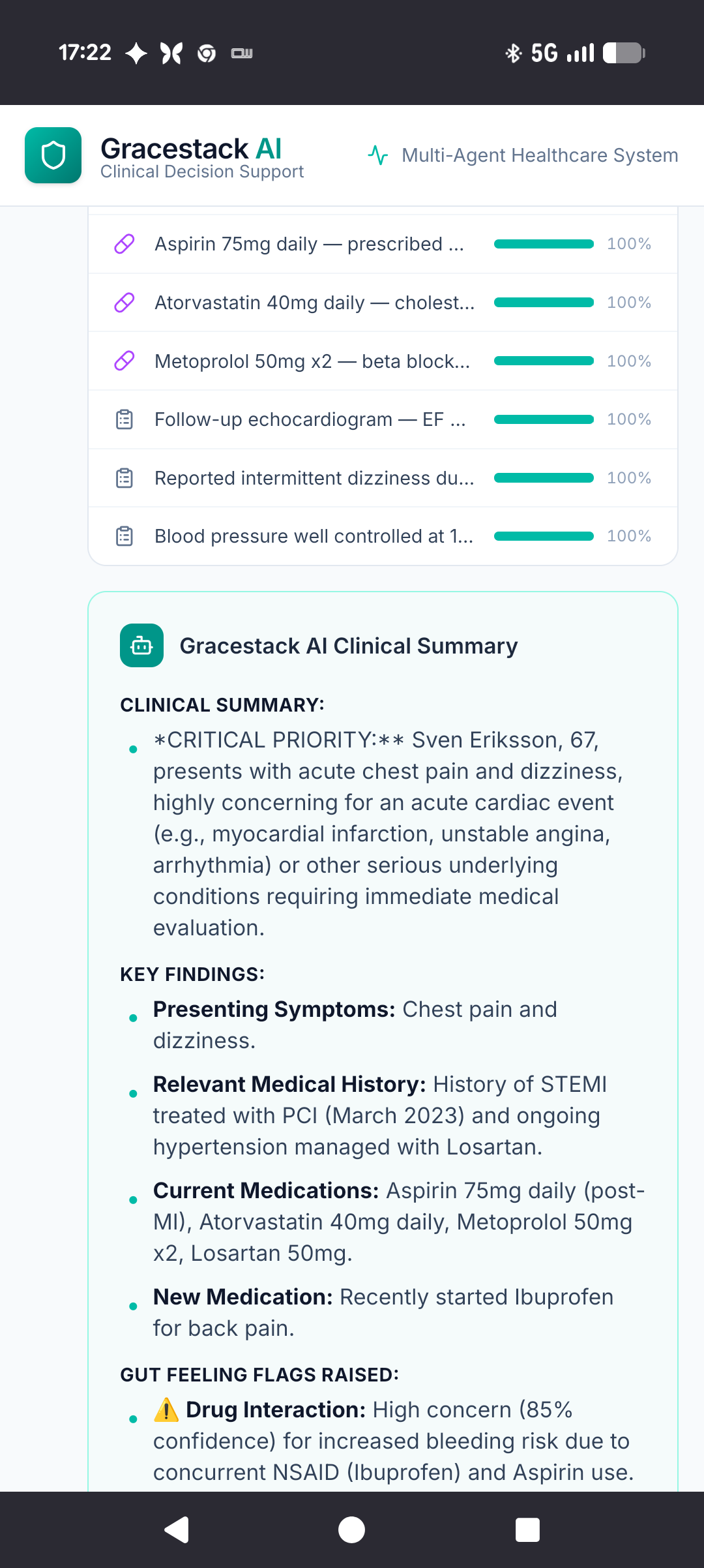
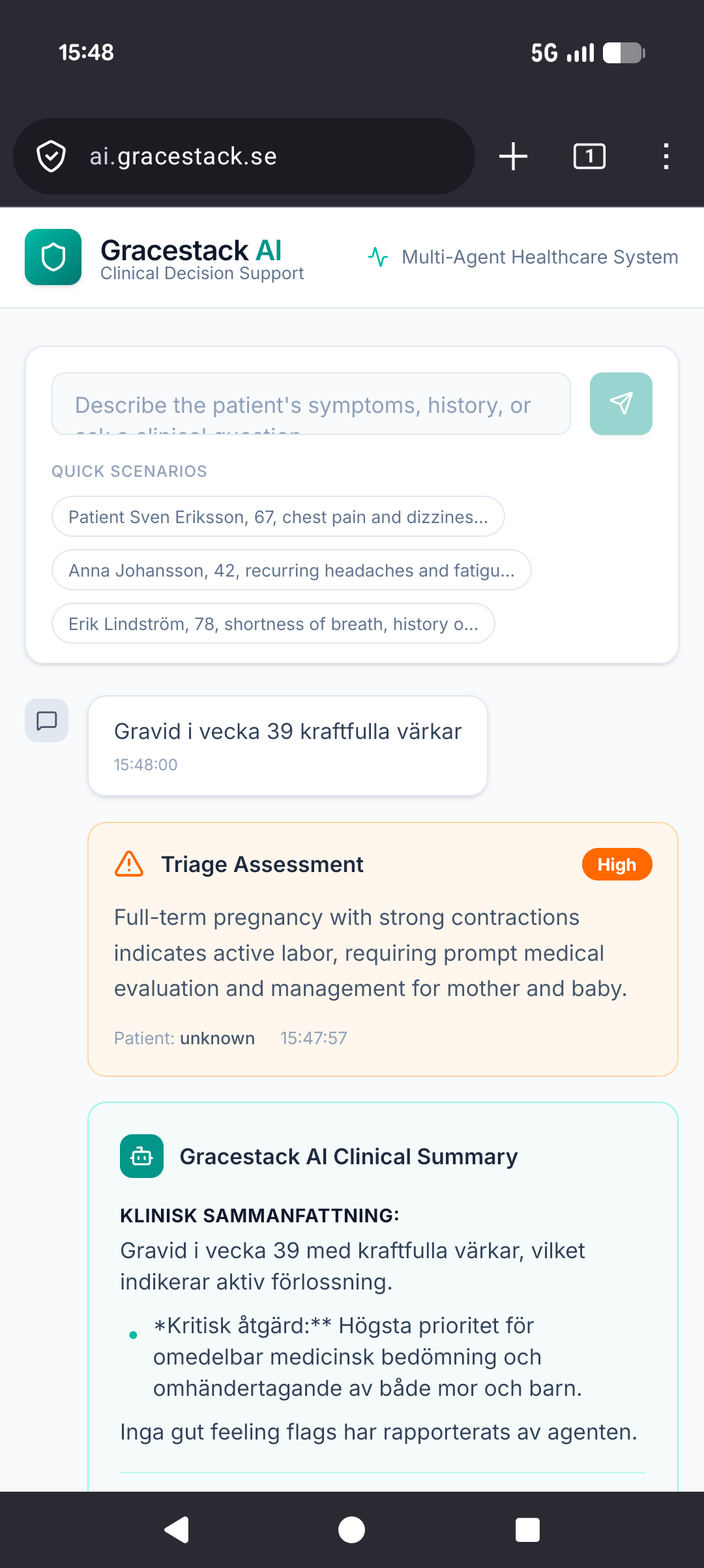
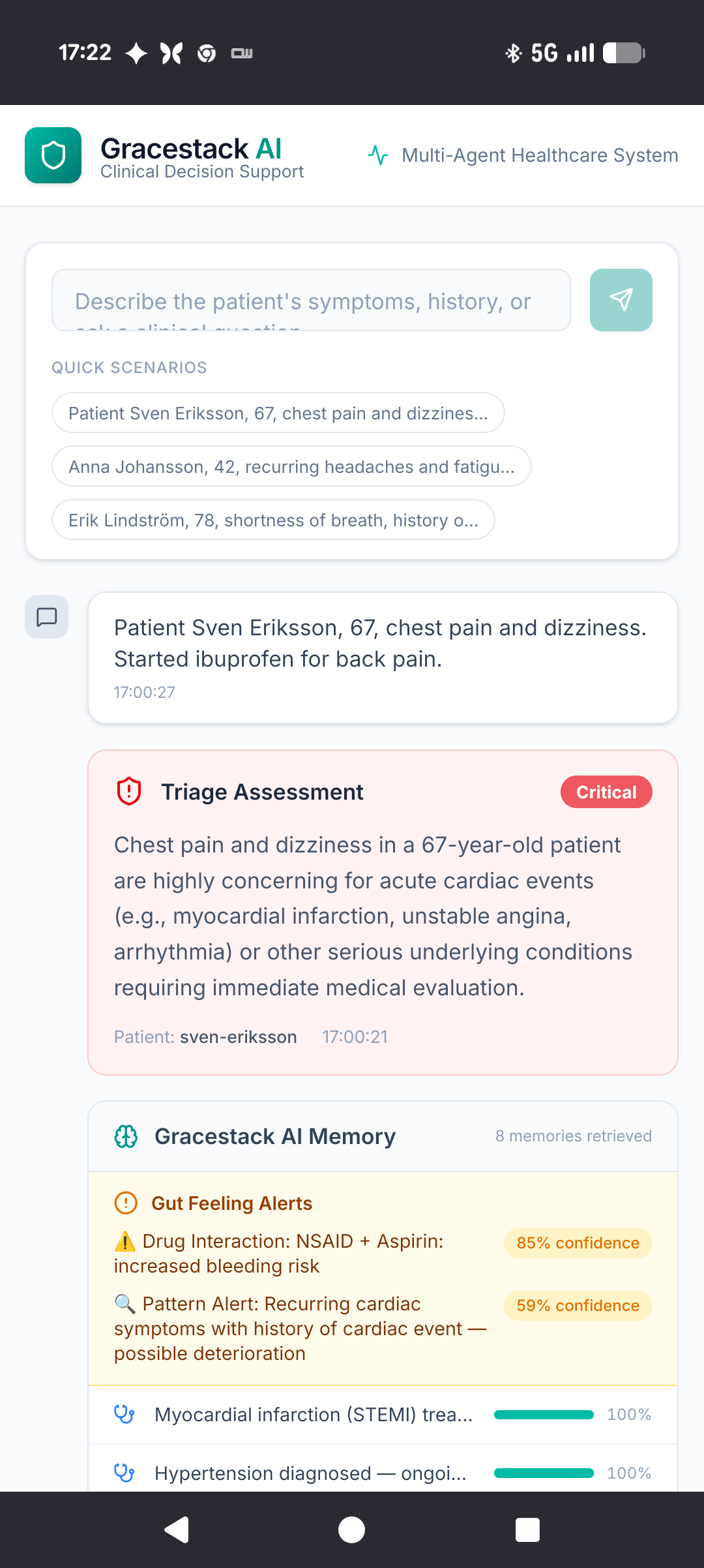
Gracestack AI is a live multi-agent Clinical Decision Support system. A clinician describes a patient in natural language and within seconds receives:
- Triage assessment (Low/Medium/High/Critical)
- Clinical summary with full patient history
- Drug interaction warnings with confidence scores
- Automatic FHIR R4 journal write
- Gut Feeling anomaly flags
How we built it
Three specialized agents coordinated via A2A protocol:
- Triage Agent (port 10020)
- Memory Agent — Gracestack cognitive core (port 10021)
- FHIR Agent (port 10028)
LLM backbone: Gemini Flash 2.5 Frontend: React | Backend: TypeScript + Rust Infrastructure: Self-hosted VPS Stockholm, Nginx + Docker
Challenges we ran into
Integrating A2A agent discovery with persistent cognitive memory required a custom bridge layer. FHIR R4 normalization from natural language needed careful prompt engineering and clinical validation.
Accomplishments that we're proud of
- Live system processing clinical scenarios in under 3 seconds
- Drug interaction detection at 85% confidence
- 8-memory patient history retrieval across sessions
- Full FHIR journal write on every interaction
- Swedish + English multilingual support
- Built and deployed in one day
What we learned
That the hardest part of healthcare AI is not the intelligence — it is the memory. Most systems are stateless. Gracestack AI proves that cognitive memory transforms a useful tool into a genuine clinical partner.
Built With
- a2a
- anthropic-claude
- docker
- fhir-r4
- gemini-flash-2.5
- hapi
- mcp
- nginx
- node.js
- postgresql
- react
- rust
- typescript


Log in or sign up for Devpost to join the conversation.