Inspiration
We grew up in the Bay Area. We know people this has happened to — friends, family, people in our community who got a layoff email and suddenly had 60 days to figure out their entire immigration situation or leave the country. Immigration attorneys are expensive and hard to get quickly. ChatGPT gives generic advice that might be wrong, and in immigration, a wrong deadline doesn't mean a bad grade — it means deportation. We built GracePeriod because the information exists to help these people. Nobody had made it accessible.
What it does
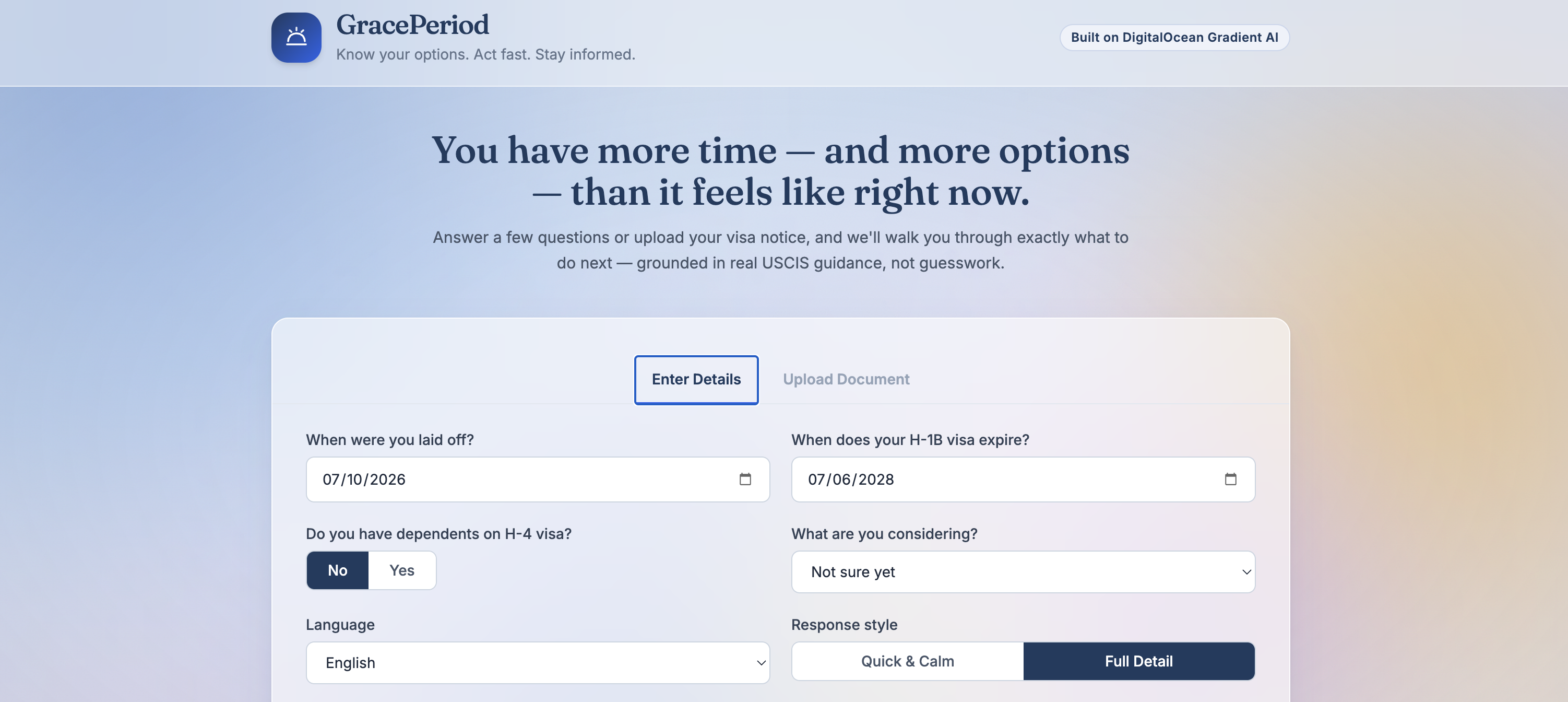
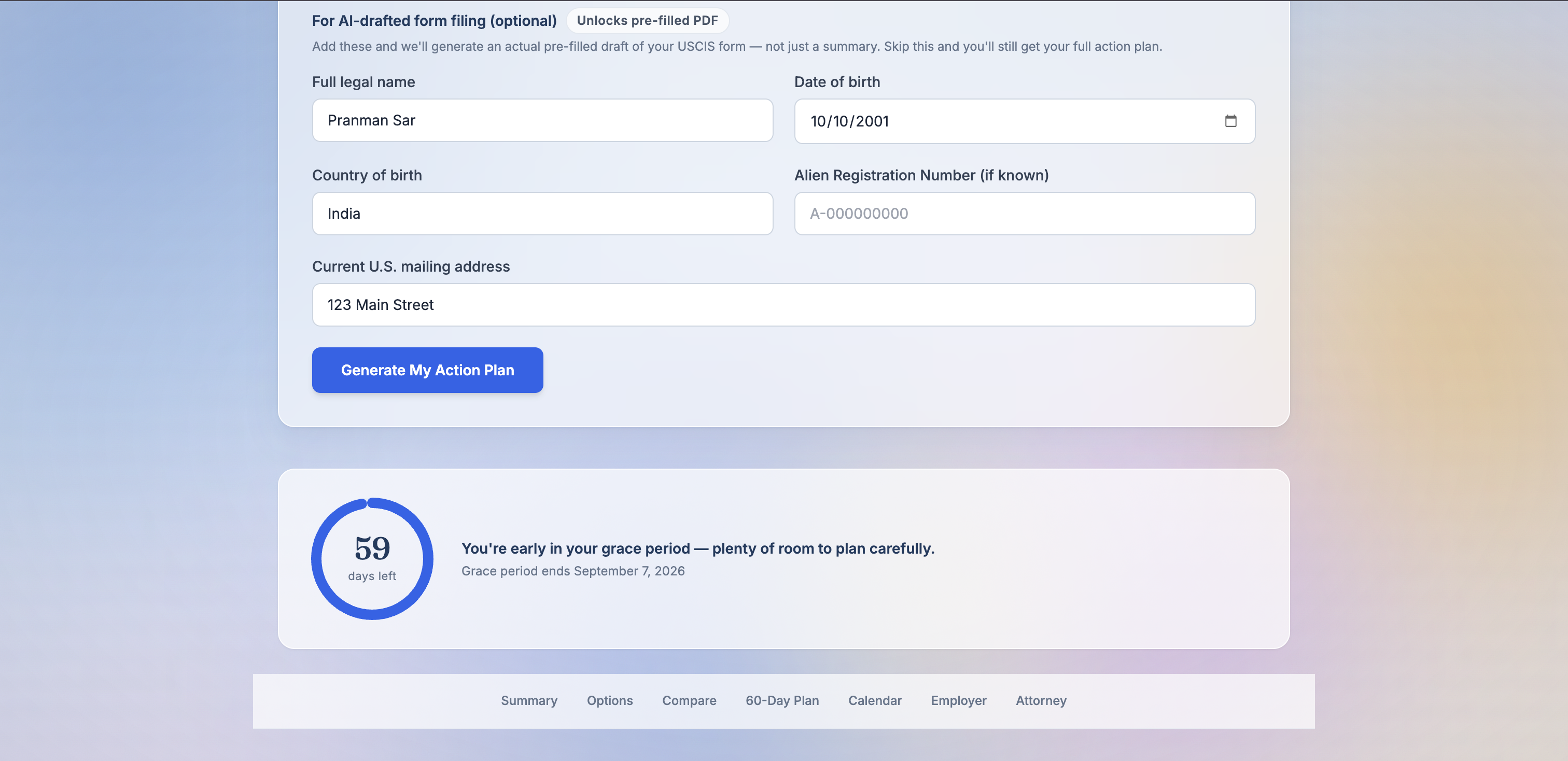
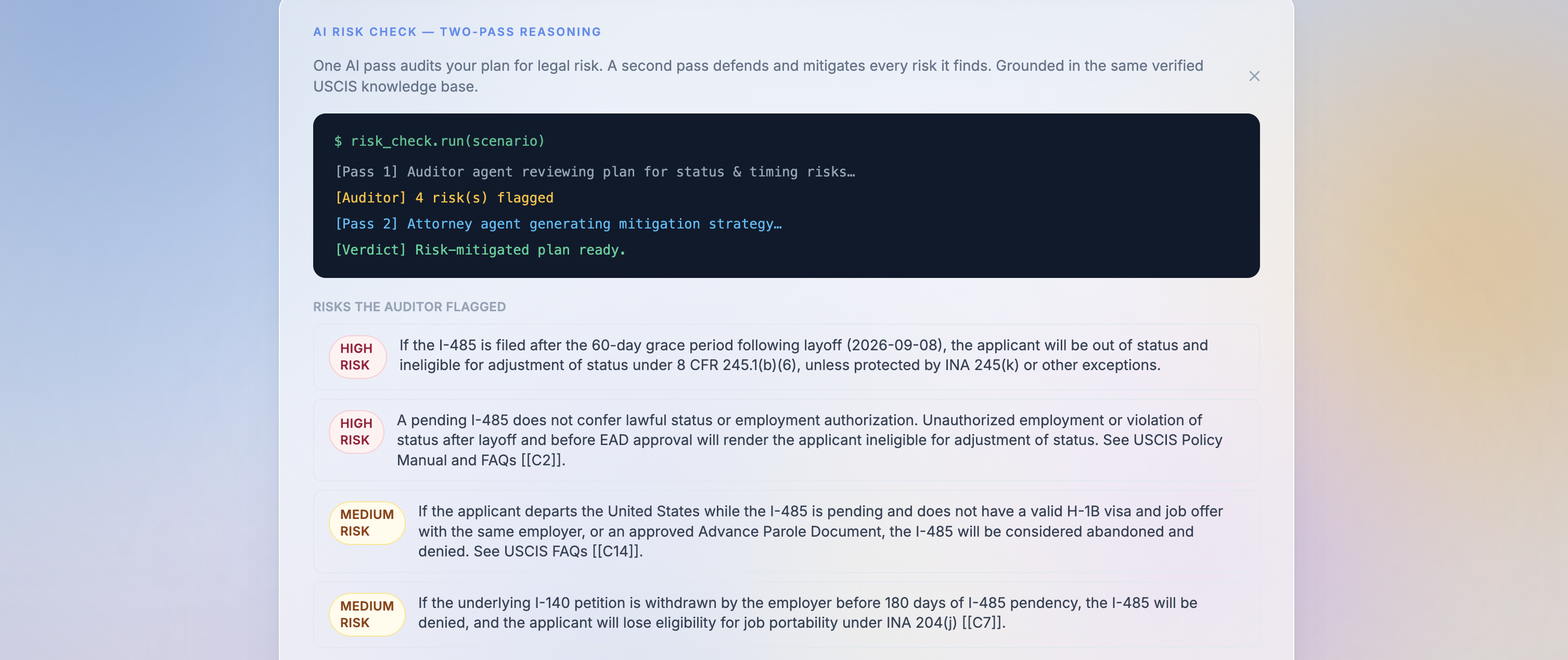
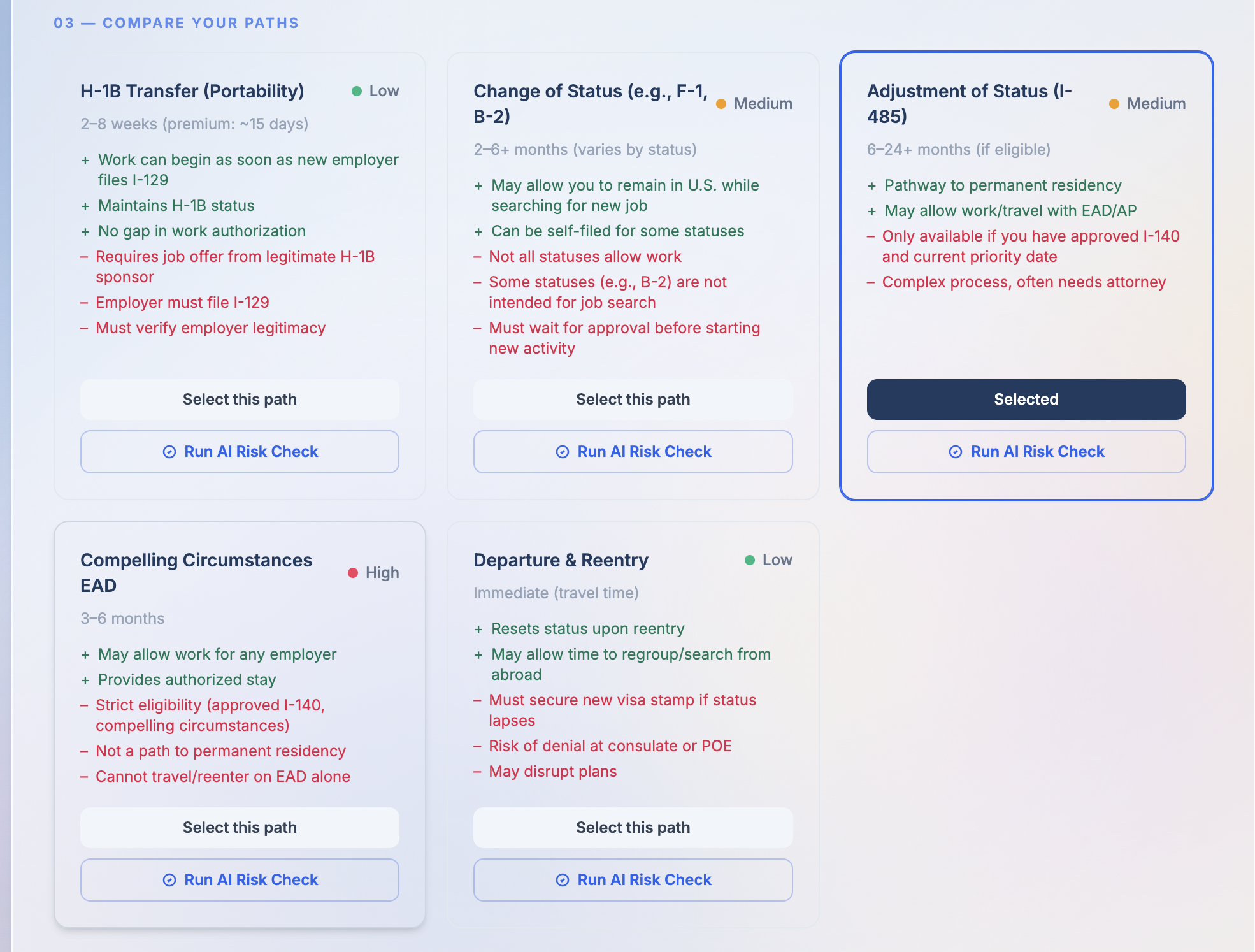
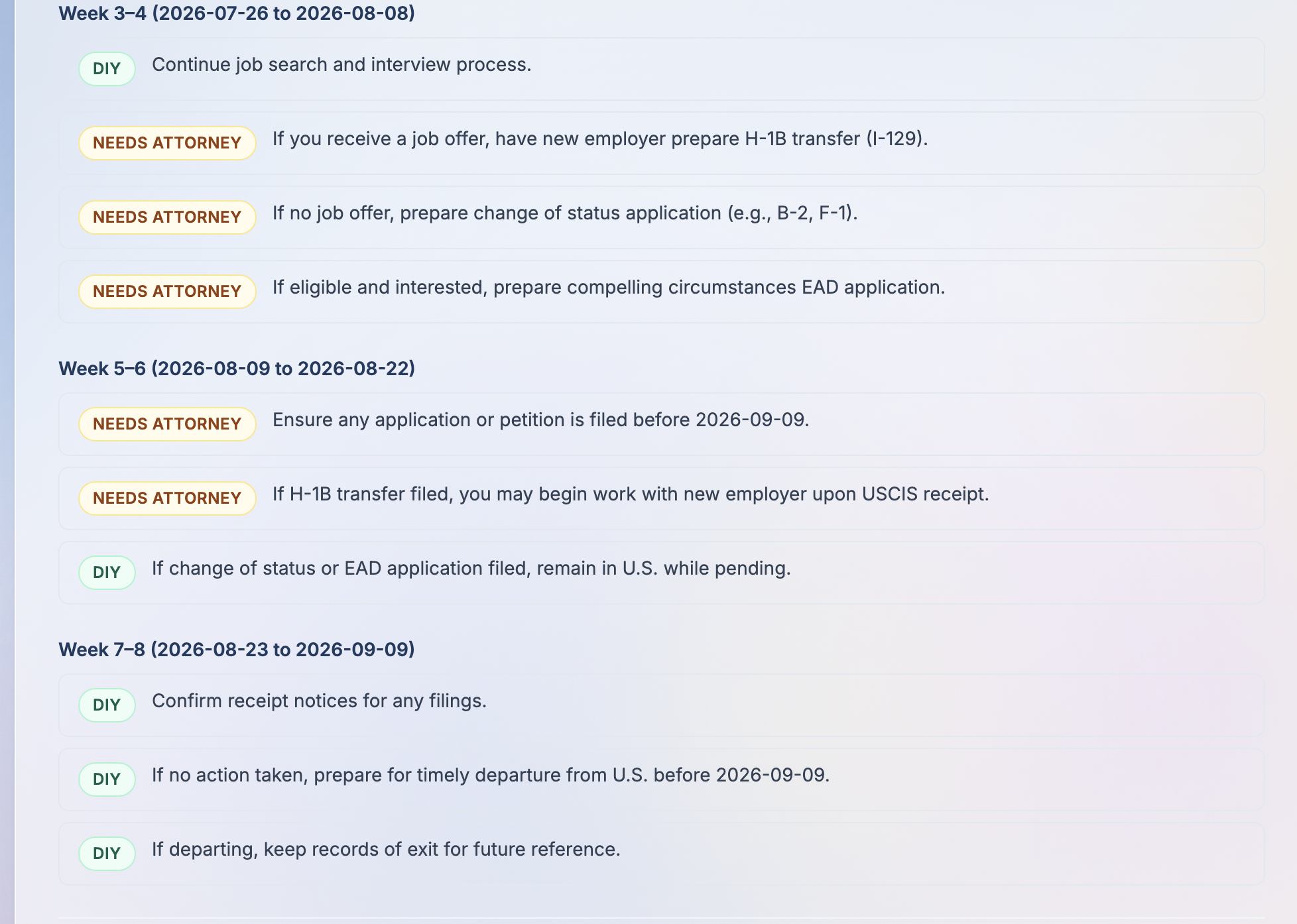
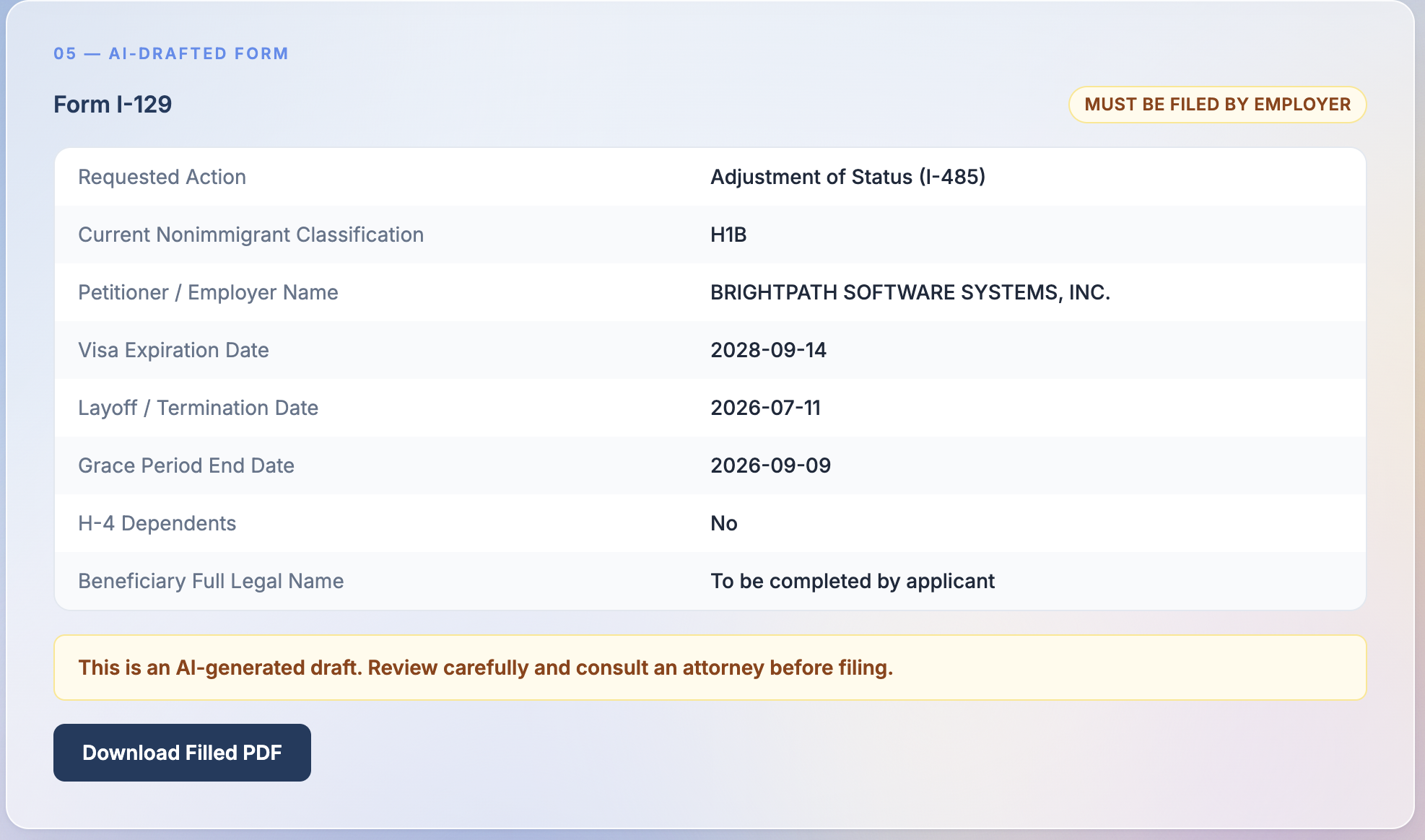
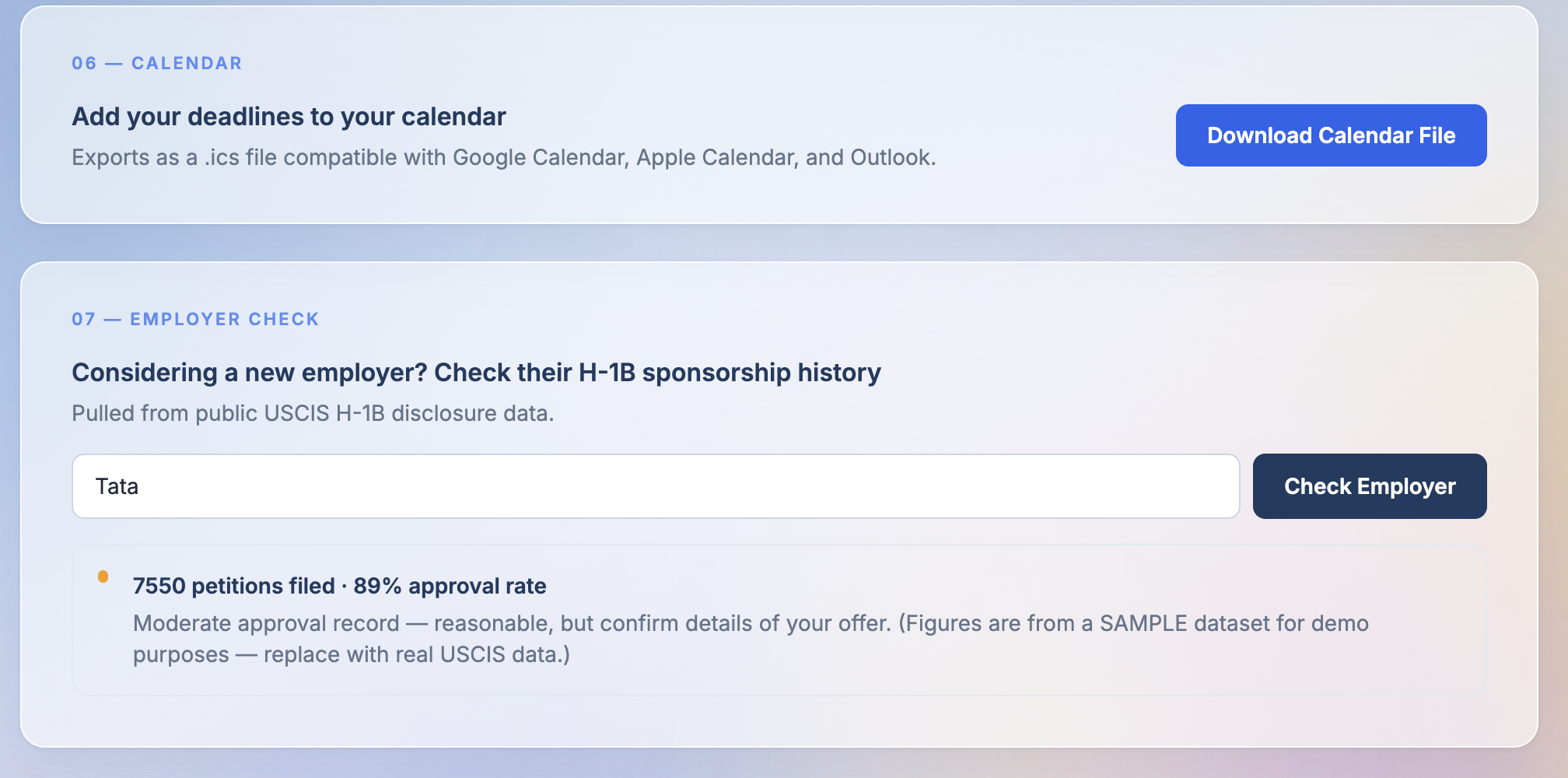
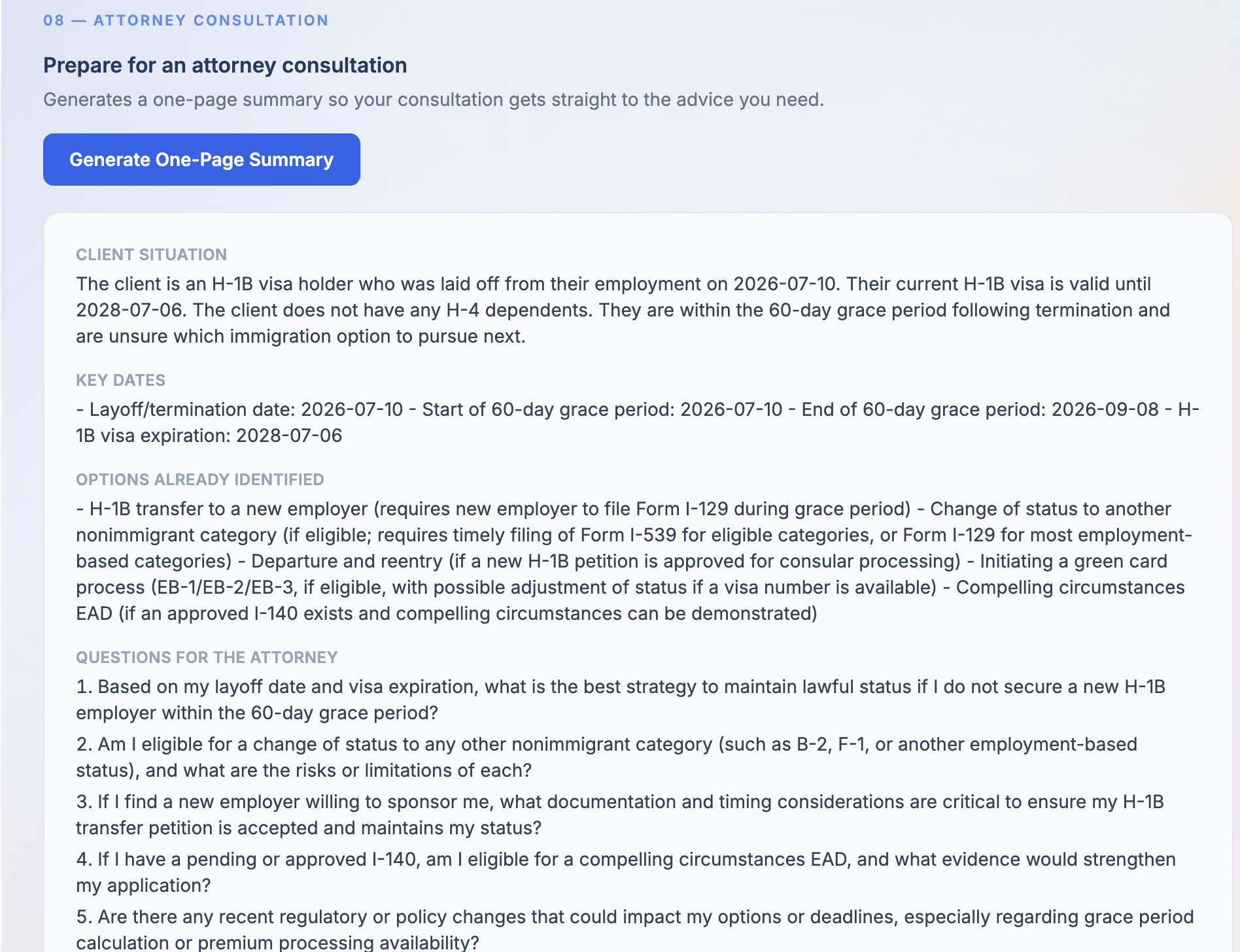
GracePeriod is an AI-powered navigator for H-1B workers who have just been laid off. A user fills in their layoff date and visa expiry, or uploads a photo of their I-797 approval notice, and gets back a complete personalized package: a week-by-week 60-day action plan with every step flagged as DIY or needs an attorney, a real pre-filled USCIS form PDF ready to review, an importable calendar file with every deadline as a real event with reminders, a two-pass AI risk audit that finds legal risks in their chosen path and then mitigates every one of them, an employer legitimacy checker that pulls real H-1B sponsorship data, and a one-page attorney consultation prep sheet. Everything is grounded in real USCIS documents with citations — not training data, not guesses.
How we built it
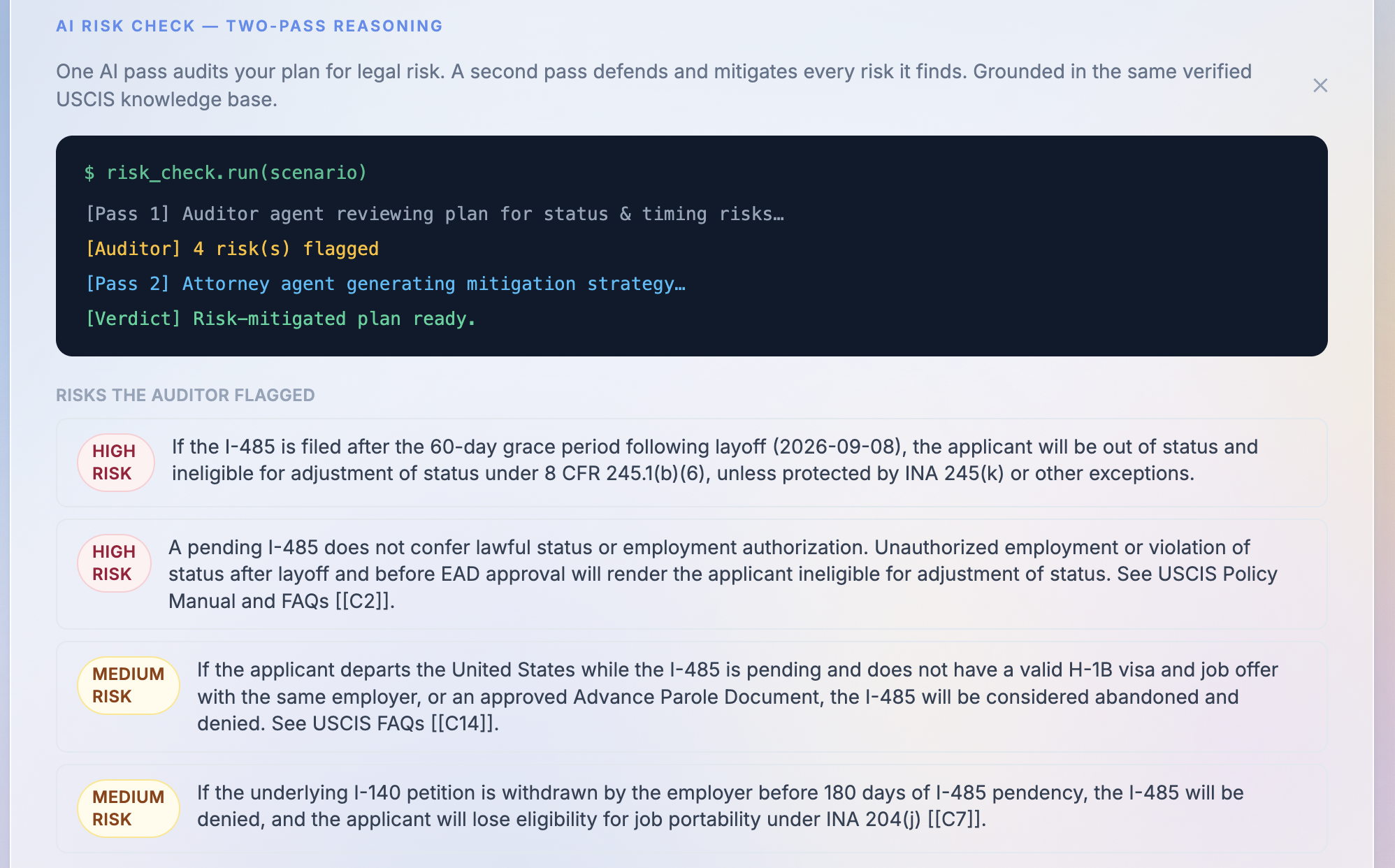
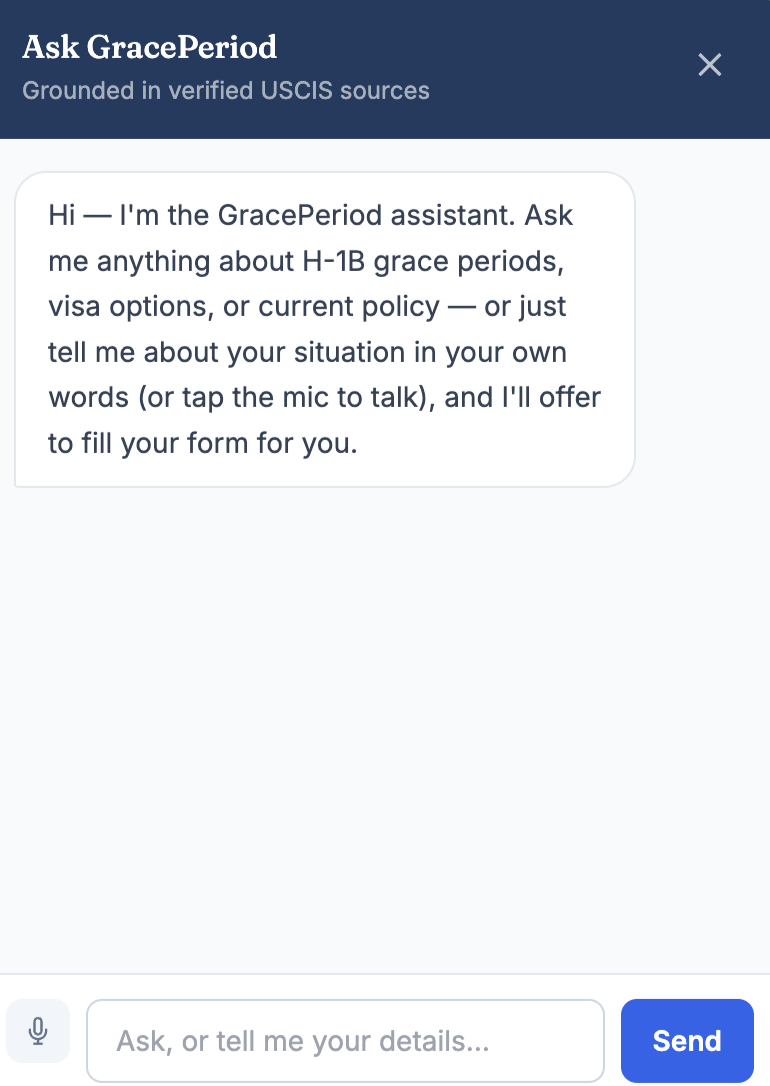
Three-part architecture: a React frontend, a Python/Flask backend, and a DigitalOcean Gradient AI agent with a RAG knowledge base of 10 real USCIS policy documents. The frontend never talks to the agent directly — everything routes through the backend, which orchestrates the AI calls, fills PDF forms programmatically using the real USCIS AcroForm fields, generates .ics calendar files, and queries a USCIS employer disclosure dataset. The most interesting part was the two-pass risk pipeline: the backend calls the same agent twice in sequence — first as a strict auditor finding every legal risk in a plan, then as an attorney who has to defend against every risk the auditor found. The second call is built dynamically from the first call's output.
Challenges we ran into
The Gradient AI endpoint only accepts plain string message content — it rejects the OpenAI multimodal format with a 422 error. We found this out at 2am when our chat route was silently returning placeholder data instead of real responses. The agent also ignores JSON response_format requests in favor of its own Markdown output style, which meant we had to build a full Markdown parser that handles the real format variation across runs. Both of those took hours to debug with no documentation. Once we understood the actual behavior we built around it, but it was a hard few hours.
Accomplishments that we're proud of
The form fill is the thing we're most proud of. We download the actual fillable USCIS I-539 PDF, map the user's data to the real AcroForm field names we read directly out of the government template, stamp it DRAFT, and return a real downloadable government form with the user's information in it. That's something ChatGPT structurally cannot do, and it's the clearest proof that this is a real product and not a chatbot. We're also proud of the two-pass reasoning pipeline — watching one AI call audit a plan and a second one defend against every finding it produced genuinely better output than anything a single prompt could do.
What we learned
You can orchestrate AI calls like a team. The auditor and the attorney aren't two agents — they're the same model, called twice with different instructions, where the second call's prompt is built from the first call's output. That simple idea produced something that felt qualitatively smarter than a single call, and it made us think differently about what AI-powered products can actually do when you stop treating the model as a black box and start treating it as something you can direct.
What's next for Grace Period
The 60-day navigator is just the beginning. The full vision is a tool that covers the entire H-1B lifecycle — initial petitions, annual renewals, employer transfers, and green card decisions — so workers never get caught off guard again, not just when crisis hits but at every step. We also want to expand beyond H-1B to cover other work visa categories, because the information gap isn't unique to one visa type. On the product side, we want to bring in real-time USCIS processing times, premium processing options, and attorney matching so users can go from "here's my plan" to "here's a vetted attorney who can file it" without leaving the app. We started with the worst moment because that's where the stakes are highest. But the people using this tool during their 60-day window are going to need help again in a year when their visa comes up for renewal, and we want to be there for that too.
Built With
- css
- digitalocean
- flask
- gradient
- ics-calendar
- pdf-generator
- python
- rag
- react
- tailwind
- uscis
- vite

Log in or sign up for Devpost to join the conversation.